Walking through Sofia’s streets with an expert guide who lived through the communist era is something every history enthusiast should experience. We’ve reviewed this tour extensively, and what emerges is a genuinely exceptional value: you’re getting three hours of specialized historical knowledge, personal insights from someone who actually lived through this period, and access to some of Sofia’s most significant—and often overlooked—landmarks for less than the cost of a decent dinner.
What makes this tour particularly special is the caliber of the guides and their willingness to weave together official history with lived experience. Travelers consistently mention how guides root their narratives in family experiences, making abstract historical concepts feel tangible and real. Beyond the educational value, you’re also getting an efficient introduction to Sofia’s geography and architecture, which means this tour serves double duty as both a history lesson and a practical city orientation.
The main consideration worth noting upfront: this is a serious walking tour covering considerable ground over three hours. The 4 p.m. start time in winter means you’ll finish in darkness, which some travelers found limiting for viewing monuments clearly. If you have mobility concerns or prefer a more leisurely pace, you’ll want to think carefully about whether this particular experience suits your travel style.
This tour is ideal for curious travelers who want to understand modern Bulgaria beyond surface-level impressions, history buffs who appreciate personal narratives alongside academic facts, and anyone seeking authentic cultural experiences that don’t break the bank.
- What This Tour Actually Covers
- Stop-by-Stop Breakdown: What You’ll See and Learn
- The Government and Administrative Heart (Stops 1-2)
- Religion Under Communism (Stop 3)
- The Presidency and Soviet Influence (Stop 4)
- The Heart of Communist Power (Stop 5)
- Remembering and Forgetting (Stop 6)
- The Royal Palace and Early Communist Days (Stop 7)
- The Soviet Army Monument
- The National Palace of Culture (NDK)
- The Berlin Wall Fragment
- The Guides: The Real Heart of This Experience
- Practical Details That Matter
- Duration and Pacing
- Group Size and Experience
- Timing Consideration
- Meeting Point and Navigation
- Value for Money: The Numbers Make Sense
- What to Expect: The Real-World Experience
- Who Should Book This Tour
- Frequently Asked Questions
- Final Thoughts
- The Best Of Sofia!
- More Walking Tours in Sofia
- More Tours in Sofia
- More Tour Reviews in Sofia
What This Tour Actually Covers
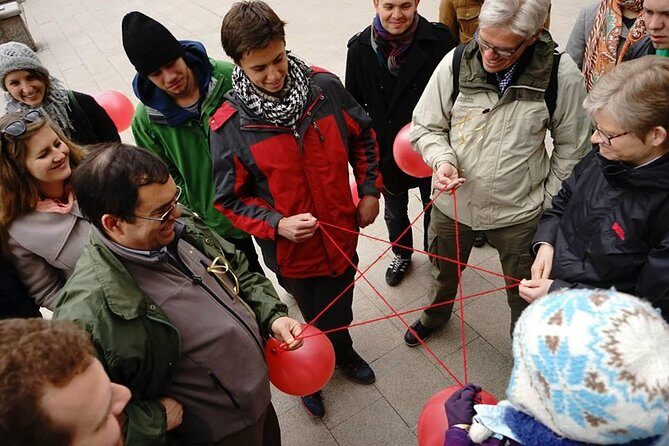
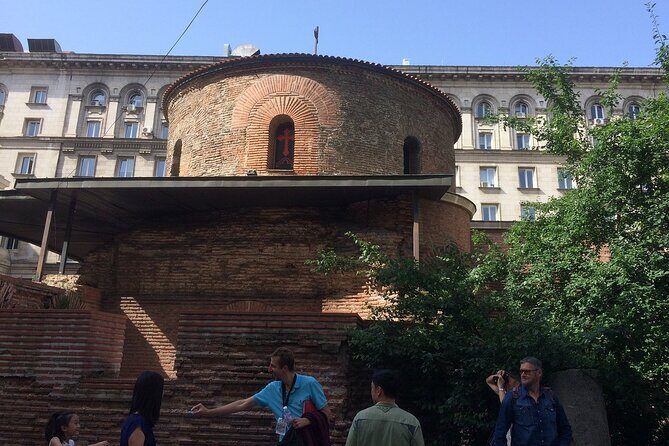
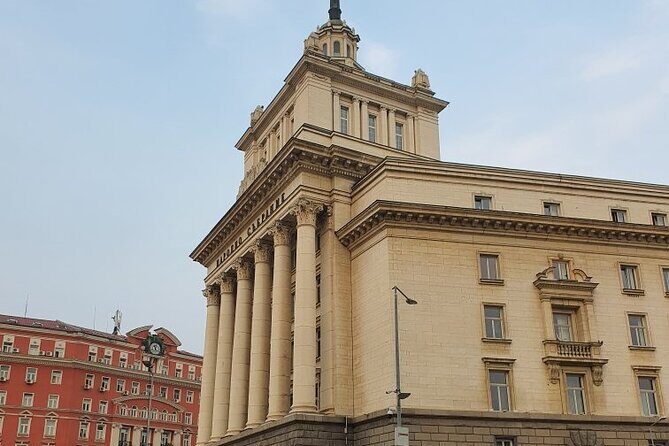
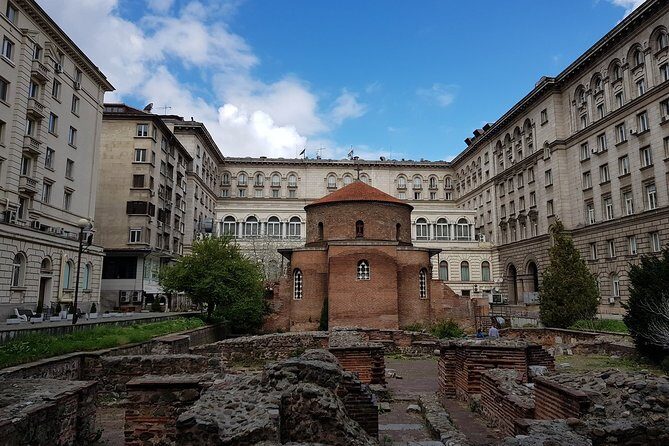
The Communist Walking Tour isn’t a bus ride where you sit passively while someone talks at you. Instead, you’re on foot for the full three hours, moving through Sofia’s city center and beyond, stopping at nine distinct locations that tell the story of Bulgaria’s communist period from roughly the 1940s through the 1990s.
The tour begins at Sofia City Courthouse in the Old City Center, where guides set the historical stage. From here, you’ll move through a carefully planned route that takes you past the Palace of Justice, down to a hidden Orthodox church, and through some of Sofia’s most politically significant locations. The route culminates near the National Palace of Culture with a final stop at a preserved section of the Berlin Wall.
What’s remarkable about the itinerary design is how it’s constructed to build understanding progressively. Early stops explain the foundations of communist ideology and how the Soviet Army’s arrival shaped Bulgaria. Middle stops explore daily life under communism, including how religion was suppressed and controlled. Later stops address the regime’s contradictions, uprisings against it, and ultimately its collapse.

👉 See our pick of the The 4 Top Workshops & Classes In Sofia: Which Is Best?
Stop-by-Stop Breakdown: What You’ll See and Learn
You can also read our reviews of more walking tours in Sofia
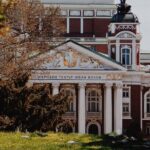
The Government and Administrative Heart (Stops 1-2)
Your journey begins at the Sofia Court House and moves immediately to the Palace of Justice, where the tour’s starting organization, 365 Association Sofia Tours, is based. These aren’t glamorous monuments—they’re working government buildings with communist-era architecture that reveals practical decisions made during that period. Your guide uses these locations to establish context: where power was concentrated, how the legal system functioned under communist rule, and what these buildings reveal about the regime’s priorities.
Religion Under Communism (Stop 3)
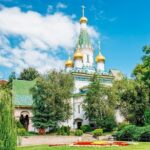
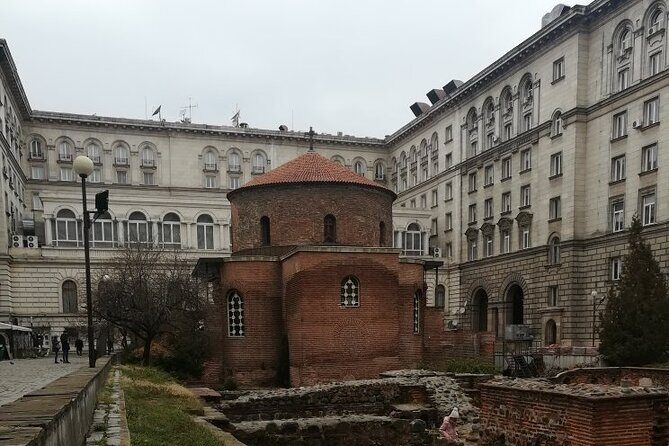
The Ancient Orthodox Church of Saint Parascheva—known locally as “the Old St. Petka”—is genuinely hidden. Most travelers walking past wouldn’t notice it. This stop is where guides typically explore one of communism’s most complex contradictions: how the officially atheist regime dealt with a deeply religious population. Travelers mention this stop as particularly enlightening because guides explain not just the official policy, but how ordinary Bulgarians navigated religious practice in secret.
The Presidency and Soviet Influence (Stop 4)
At the Presidency Building, guides discuss the Soviet Army’s arrival in Bulgaria and what that meant for the country’s trajectory. This isn’t presented as a simple good-versus-evil narrative. Instead, guides explain the complicated reality: how some Bulgarians initially welcomed Soviet protection from Nazi Germany, how that relationship evolved, and the long-term consequences of Soviet domination.
The Heart of Communist Power (Stop 5)
The Largo Complex—the former Bulgarian Communist Party Headquarters—is the tour’s centerpiece in many ways. Here you’ll see where the Red Star once stood, learn the story of Lenin’s statue, and understand the symbolism embedded in communist architecture. One traveler noted that their guide “combined this history with his knowledge from the experience of his family, making it a real great inside knowledge.” This is where personal narratives often become most powerful, as guides explain what these symbols meant to ordinary people living under their gaze.

Remembering and Forgetting (Stop 6)
The City Garden stop addresses the Mausoleum—a structure that no longer exists in its original form. This is where guides discuss how post-communist Bulgaria dealt with communist monuments. Some were destroyed, others were preserved as historical artifacts, and some disappeared entirely. The discussion here often touches on how societies process traumatic histories and decide what to keep, remove, or transform.
The Royal Palace and Early Communist Days (Stop 7)
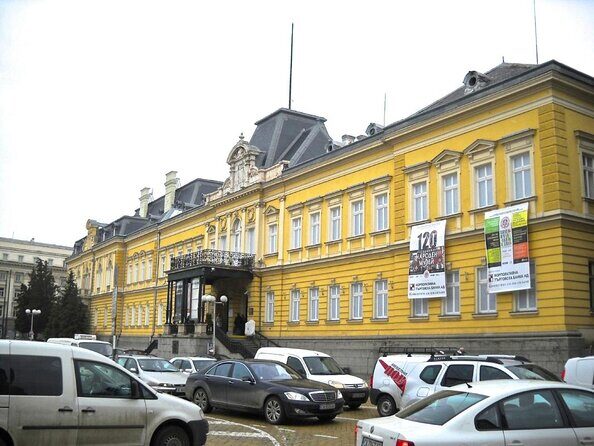
This stop explores how the transition from monarchy to communism happened in Bulgaria, what the former Royal Palace represents, and how architectural spaces were repurposed to serve new ideologies. It’s a tangible way to understand how thoroughly communism attempted to reshape society, even down to who got to occupy which buildings.
The Soviet Army Monument
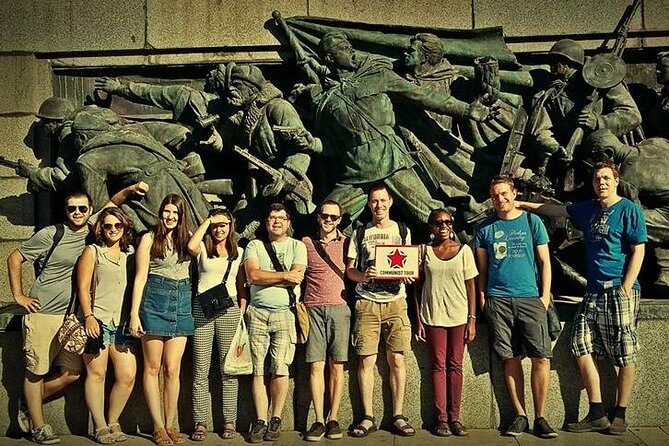
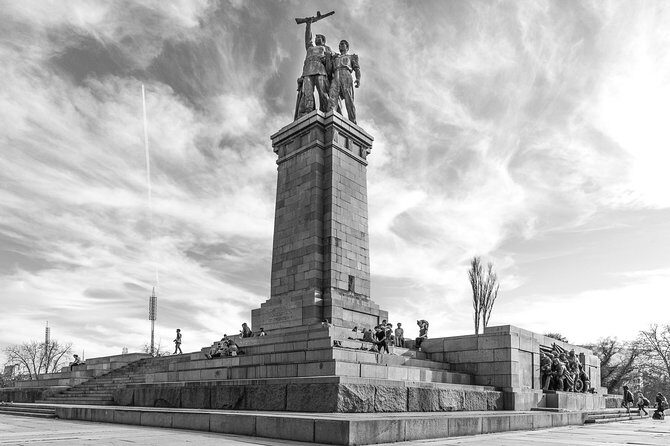
This is arguably the most famous and controversial stop on the tour. The monument itself has become a canvas for graffiti art and protest, which guides use to discuss how Bulgarians have expressed resistance to Soviet dominance—both during the communist period and after. Travelers consistently mention this as a highlight, with one noting: “Sofia’s most controversial monument and graffiti art. Early uprisings against the communist regime.” The guide’s discussion here typically covers actual resistance movements, including those that occurred decades before communism ultimately fell.
The National Palace of Culture (NDK)
The final major stop showcases Sofia’s largest communist-era landmark. What’s interesting about NDK is that it hasn’t been demolished or dramatically altered—it functions today as a cultural hub, hosting concerts, exhibitions, and events. This allows guides to discuss how post-communist Bulgaria has adapted rather than destroyed its architectural legacy. You’ll learn about the building’s original purposes, its symbolism, and how it represents a bridge between past and present.
The Berlin Wall Fragment
Your tour concludes at a preserved section of the Berlin Wall, now displayed in the park beside NDK. This final stop provides symbolic closure, representing the end of the Cold War and communism’s collapse across Eastern Europe. Guides typically use this moment to discuss how Bulgaria’s transition to democracy compared to other Eastern Bloc countries and what the decades since have meant for ordinary Bulgarians.
The Guides: The Real Heart of This Experience
Here’s something that becomes immediately obvious when you read through the reviews: this tour lives or dies based on guide quality. The good news is that the reviews are overwhelmingly positive about the guides, with travelers consistently praising their knowledge, passion, and ability to make history personal.
Multiple travelers mention guides by name—Nikola, Vasko, Stefan, Martin, Yoan—and describe them with genuine affection. One traveler noted: “His mixture of personal experience, history, and historic knowledge had forever turned me on to taking historical tours wherever I go.” Another said: “Martin is one of the best walking tour guides I’ve had. His passion for history is infectious, and his personal connection to Sofia and its history really brings it to life.”
What distinguishes these guides is their willingness to answer questions thoroughly. One traveler mentioned their guide was “patient and knowledgeable, answering a seemingly never ending flood of questions.” Another appreciated how their guide “made sure not a single question stayed unanswered.” This isn’t a scripted recitation—it’s a genuine conversation about history led by someone who knows the material deeply and cares about it.
The guides also demonstrate impressive balance. Multiple reviews mention guides presenting “pros and cons perspectives” on communism, avoiding simple good-versus-evil narratives. One traveler appreciated how their guide was “professionally balanced” while another noted the guide “interspersed details about communism with real life stories.”
Practical Details That Matter
Duration and Pacing
Three hours might sound long, but travelers consistently report that “it flew right by.” The tour involves substantial walking—one reviewer noted “A fair bit of walking involved (so not for those with limited mobility)”—but guides plan for breaks. Another traveler mentioned their guide “planed for plenty of breaks and chosen path was easy to walk.” This matters because it means you’re not being rushed, and you have time to absorb information and ask questions.
Group Size and Experience
With a maximum of 25 travelers per group, you’re in a small enough group that you can actually hear your guide and have your questions answered, but large enough that the tour runs regularly. This size also means you can move through Sofia without feeling like you’re part of an overwhelming tourist herd.
Timing Consideration
The 4 p.m. start time is worth considering carefully, especially if you’re visiting in winter. One traveler noted: “The 4pm start time is not optimal in winter because it gets dark early so you can’t see the monuments.” Another suggested that “for the tour to be earlier in the winter since it was very dark the last hour of the tour, and we couldn’t see much at the end.” If you’re visiting between November and February, you might want to inquire about earlier start times or plan accordingly.
Meeting Point and Navigation
The tour starts at Sofia City Courthouse on Vitosha Boulevard in the Old City Center. One traveler had a frustrating experience with GPS directions leading them to the end point rather than the start point, causing them to miss the first 30 minutes. We’d recommend confirming the exact meeting location with your confirmation email and arriving 10-15 minutes early.
Value for Money: The Numbers Make Sense
At $21.77 per person, this tour costs less than a cocktail at a nice Sofia bar. For that price, you’re getting three hours of expert historical guidance, a walking introduction to significant parts of Sofia, and access to sites you might otherwise miss or misunderstand.
Compare this to other Sofia walking tours: standard city tours cost roughly the same but cover more generic sites without the specialized knowledge. History-focused tours in other European cities often run $40-60 for similar duration. The fact that this tour delivers such consistent quality at this price point explains why 98% of travelers recommend it and why it maintains a 5.0 rating across nearly 700 reviews.
The mobile ticket system also adds convenience—no need to print anything or worry about paper confirmations. You’ll receive your confirmation immediately upon booking.
What to Expect: The Real-World Experience
Based on numerous traveler accounts, here’s what your actual experience will likely be: You’ll meet your guide at the appointed time and location. Within the first few minutes, you’ll sense whether your guide is someone who genuinely cares about this history or is just going through motions. With this tour, the reviews suggest you’ll almost certainly get someone passionate about the subject.
You’ll walk at a moderate pace, stopping frequently to discuss specific locations and answer questions. Your guide will likely share personal family stories that illustrate larger historical points. You might learn that a seemingly ordinary building was actually an interrogation center, or that certain dents in walls mark where communist symbols were deliberately chiseled away after the regime fell.
You’ll notice details most travelers miss: how architecture reflects ideology, how symbols of power were placed to influence behavior, how ordinary Bulgarians lived their daily lives amid political oppression. One traveler described this perfectly: “This tour helps you see hidden history of Sofia—dents in walls where communist symbols were chiseled off, restaurant back doors that used to be interrogation centers—so it’s a way to see the city with new eyes.”
If weather turns bad, guides have shown flexibility. One traveler mentioned their guide “let us take a short break in a nearby bar/Cafe to wait out the rain but then back to it.” Another took the tour in -6 degree weather and still rated it 5 stars.
Who Should Book This Tour
This experience works best for travelers who want to understand Bulgaria beyond surface-level tourism, who have genuine curiosity about recent history, and who appreciate learning from people with personal connections to the subject matter. It’s particularly valuable if you’re planning to spend several days in Sofia and want to understand the city’s context before exploring on your own.
It’s also excellent for educators or students of history, for people interested in how societies transition from authoritarianism to democracy, and for anyone who finds Cold War history compelling. Even if you’re not typically a “history person,” multiple reviews mention travelers who surprised themselves with how engaging this tour was.
The tour works less well if you have significant mobility limitations, if you prefer entirely scripted and controlled tour experiences, or if you’re visiting in deep winter and need maximum daylight to see monuments clearly.
Frequently Asked Questions
Q: What time does the tour start, and how long does it actually take?
A: The tour starts at 4:00 p.m. and lasts approximately three hours. This means you’ll finish around 7:00 p.m., which is important to know if you’re visiting in winter when it gets dark early.
Q: Is this tour suitable for children?
A: Children are welcome as long as they’re accompanied by an adult. One traveler mentioned taking their daughter and having a great experience. However, the three-hour walking duration means children should be comfortable with extended periods on their feet.
Q: Do I need to book in advance?
A: On average, travelers book this tour 12 days in advance, but you can book closer to your travel dates. You’ll receive confirmation immediately upon booking.
Q: What’s included in the tour price?
A: The price includes a local, professional guide for the full three hours. All sites visited are free to enter (admission is not required). The price does not include food, drinks, or any optional activities.
Q: What should I wear and bring?
A: Comfortable walking shoes are essential since you’ll be on your feet for three hours covering considerable distance. Dress for Sofia’s weather at the time of your visit. Bring water and consider bringing a notebook if you like taking notes on tours.
Q: Can I cancel if my plans change?
A: Yes, you can cancel up to 24 hours before the tour starts for a full refund. Cancellations made less than 24 hours before the start time forfeit the full amount.
Q: How many people will be on the tour?
A: The maximum group size is 25 people, which keeps the experience intimate enough to hear your guide and ask questions without feeling like you’re part of a massive tour group.
Q: What if the weather is bad?
A: The tour operates in most weather conditions. Guides have shown flexibility in the past, taking groups into nearby cafés to wait out heavy rain. Dress appropriately for Sofia’s weather and bring an umbrella if rain is forecast.
Q: Is this tour only for people who know a lot about communism?
A: Not at all. Multiple reviews mention travelers with little prior knowledge who found the tour incredibly educational and engaging. The guides are skilled at explaining context and making history accessible.
Q: Where does the tour end, and how do I get back to my hotel?
A: The tour ends at the National Palace of Culture (NDK) next to a preserved section of the Berlin Wall. This location is near public transportation, making it easy to reach your hotel from there.
Communist Walking Tour of Sofia
Final Thoughts
This Communist Walking Tour of Sofia represents exceptional value for travelers seeking authentic cultural understanding rather than superficial sightseeing. You’re paying less than $22 for three hours with an expert guide who will fundamentally change how you see Sofia’s streets and understand Bulgaria’s recent history. The consistency of positive reviews—nearly 700 five-star ratings—isn’t a fluke; it reflects guides who genuinely care about their subject matter and the tour’s thoughtful design. Whether you’re a history enthusiast or simply curious about how ordinary people lived through extraordinary times, this tour delivers insight, engagement, and perspective that justify booking it early in your Sofia visit.