
The Alcázar de los Reyes Cristianos in Córdoba is the kind of small-but-perfect historical site that kids prefer to the big famous ones — a real castle with proper battlements, formal gardens full of fountains, and a story that includes Columbus, Isabella, and the Spanish Inquisition. One hour here works better with kids than three hours at a bigger palace.
In a Hurry? Our Family Picks
Most popular guided tour: Alcazar Guided Tour + Skip-the-Line ($23) — 1-hour tour, 1,800+ reviews. Our top pick.
Shorter 1-hour tour: Alcazar of the Christian Monarchs 1h Tour ($22) — same length, different operator.
Entry ticket + guide: Alcazar Entry + Guided Tour Bundle ($24) — flexible 25-70 min tour length.
- In a Hurry? Our Family Picks
- Why this works with kids
- What you see on the visit
- 1. Courtyard of the Moriscos (entry, 10 min)
- 2. Hall of Mosaics (20 min)
- 3. The Towers and battlements (20-30 min — kids’ favourite)
- 4. The gardens (30-45 min — the main event)
- 5. The Royal Baths (10 min — optional)
- Our top picks to book
- 1. Alcazar Guided Tour + Skip-the-Line —
- 2. Alcazar of Christian Monarchs 1h Guided Tour —
- 3. Alcazar Entry Ticket + Guided Tour Bundle —
- Getting there
- Pairing with the rest of Córdoba
- If you’ve got more Córdoba time
- A short history
- Practical tips
- What to tell kids about the Columbus story
- Age-by-age take
- What if it rains?
- Before you book
Why this works with kids
The Alcázar has three things going for it as a family attraction: real castle architecture, hands-on gardens, and a bloody history. Kids aged 7+ engage with all three.
First, the scale is kid-manageable. The whole visit is 60-90 minutes. No marathon, no museum fatigue.
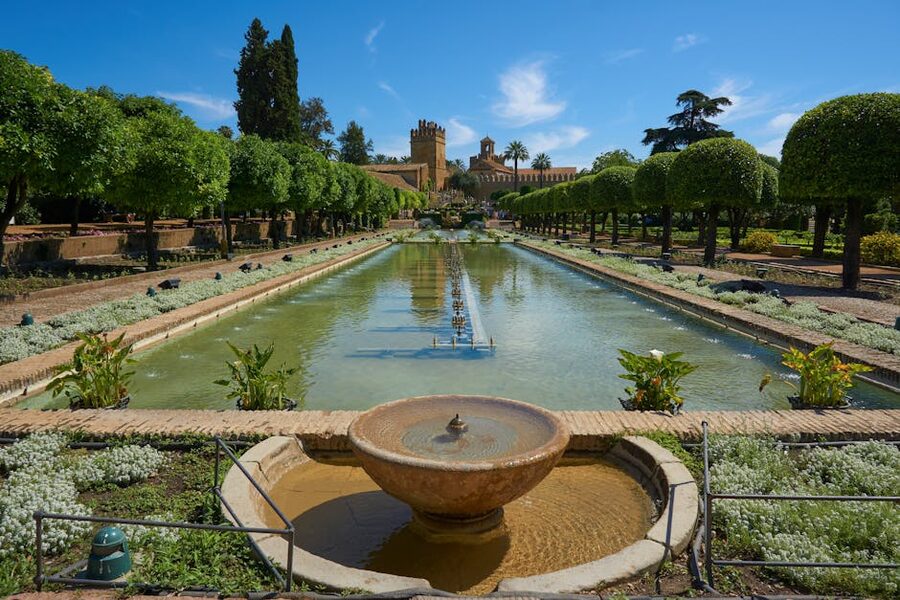
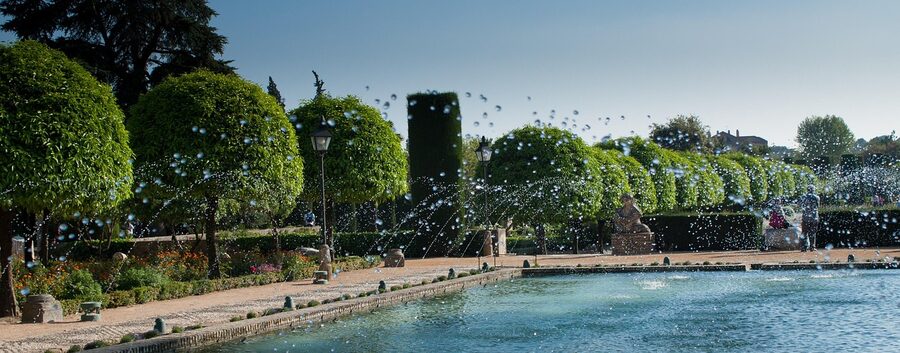
Second, the gardens are genuinely fun — long reflecting pools, topiary shaped like chess pieces, orange groves, and plenty of benches.
Third, the stories are dramatic. This is where Ferdinand and Isabella lived for 8 years while planning the Granada campaign. Columbus met them here in 1486 to pitch his “sail west to reach Asia” idea — and got turned down the first time. The Spanish Inquisition had its headquarters here. Plenty of real-history hooks kids can follow.
What you see on the visit
1. Courtyard of the Moriscos (entry, 10 min)
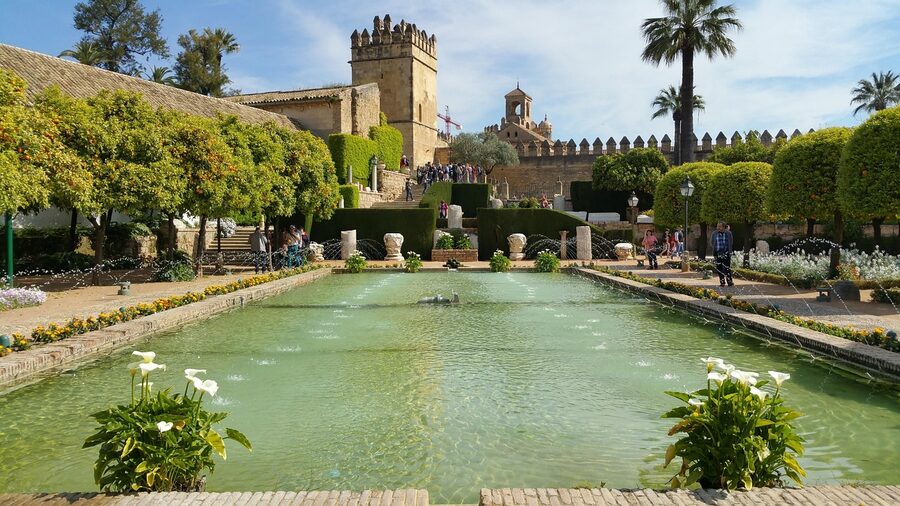
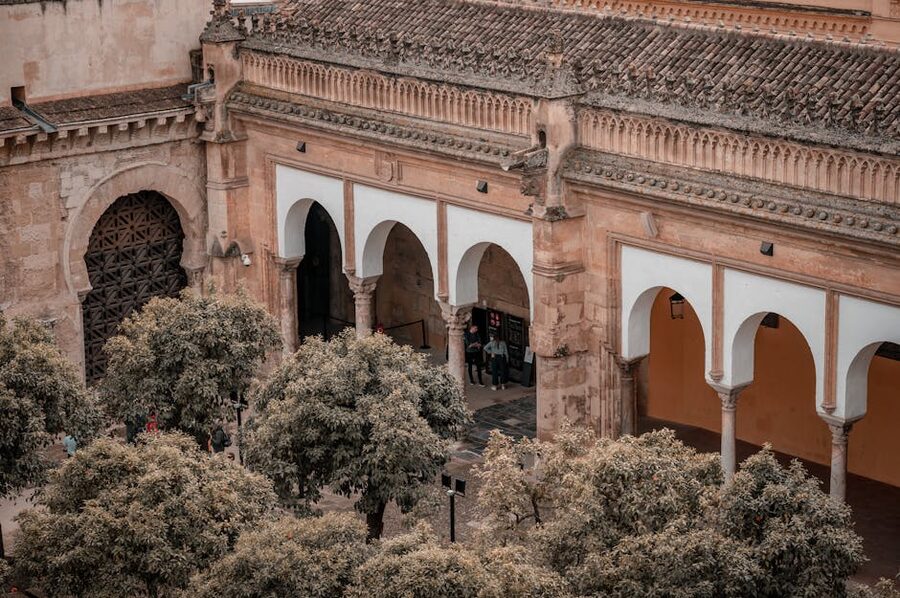
You enter through a small courtyard with a fountain and orange trees. Typical Andalusian palace opening — low, shaded, with a central pool. Kids get the “this feels foreign and old” impression immediately.
2. Hall of Mosaics (20 min)
Inside, the main hall displays Roman mosaics from the 2nd-3rd century AD, excavated locally. Kids like mosaics — easy to understand (“it’s tile-art, old”), colourful, and the scale is impressive (some are 3-4 metres across).
There’s also a 3rd-century Roman sarcophagus with carvings of mythological scenes. Kids can walk around it slowly; the carving detail is surprisingly fresh after 1,800 years.
3. The Towers and battlements (20-30 min — kids’ favourite)
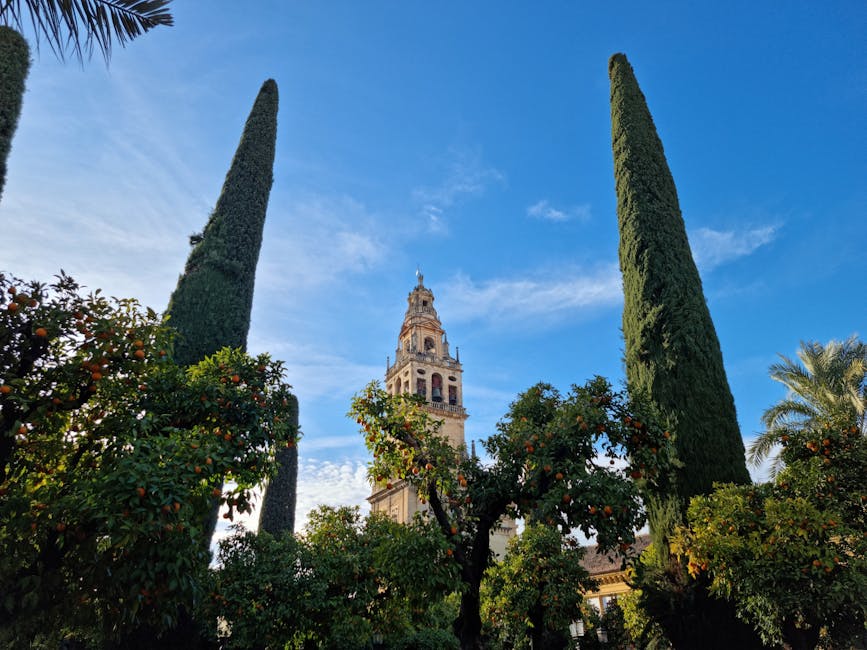
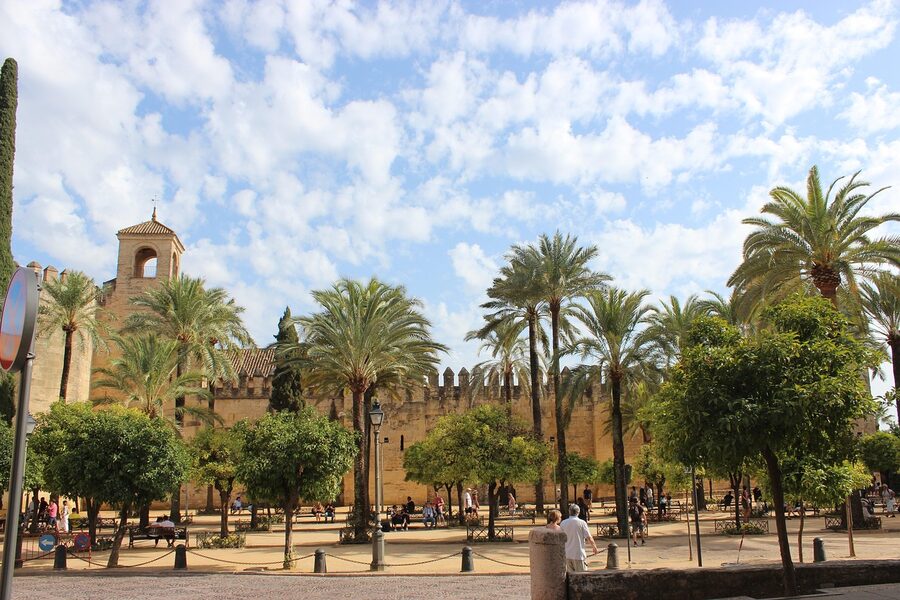
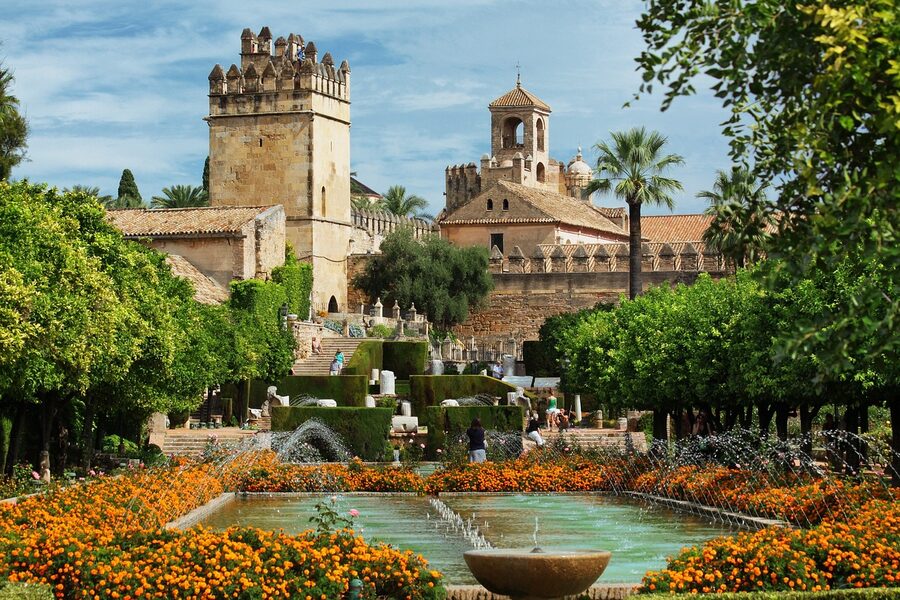
Four corner towers connected by walkable battlements. Kids can climb to the top, look out through defensive slits, and genuinely feel like they’re in a castle. The Torre de los Leones (Tower of the Lions) and Torre del Homenaje (Keep Tower) are the main climbing targets.
The walk along the battlements is moderately exposed — there’s a parapet but some kids nervous about heights may want to walk further from the edge. Parents hold hands when asked.
4. The gardens (30-45 min — the main event)
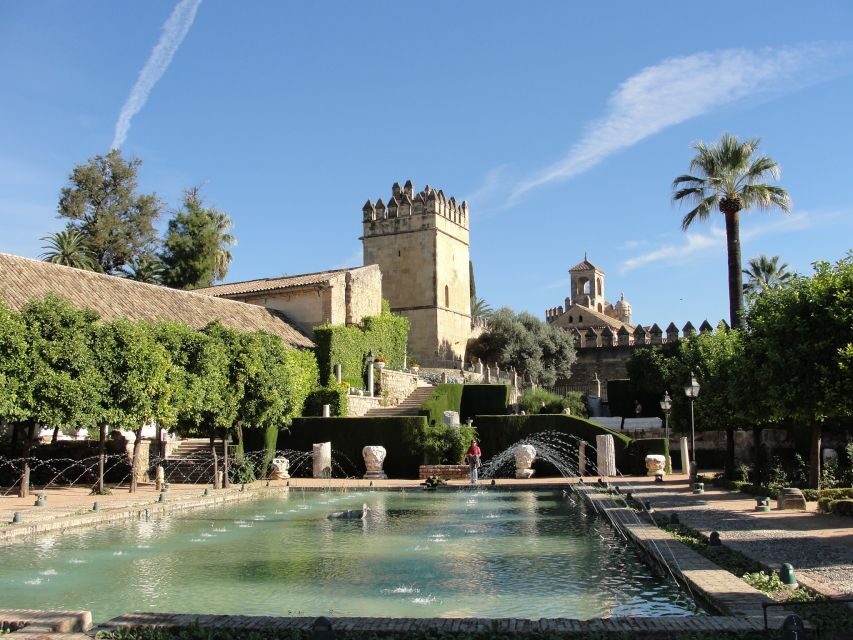
After the interior, you come out into the gardens and this is where most families spend the bulk of their visit. Three terraces descending from the palace, each with its own theme and fountains.

Upper terrace: the fountain courtyard nearest the palace. Small, cool, shaded.
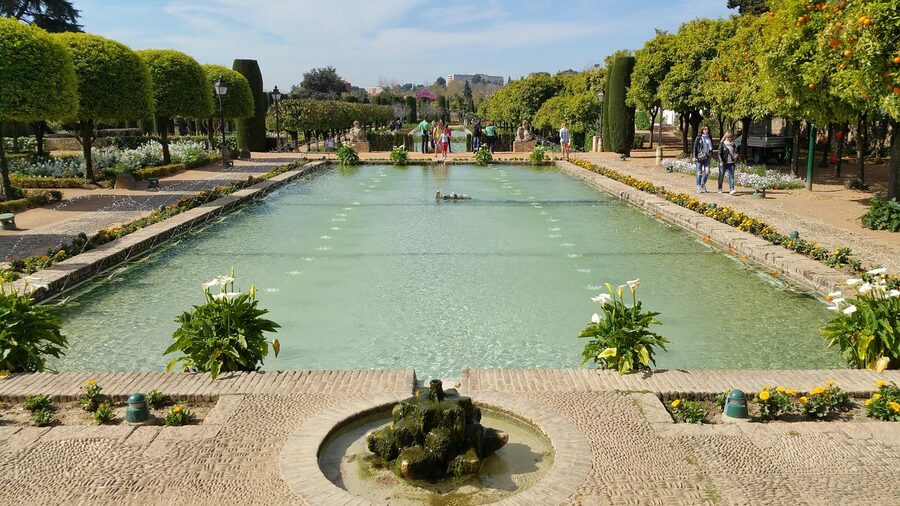
Middle terrace: the long pool surrounded by cypresses and topiary. Best photos here. Kids can run along the edges.
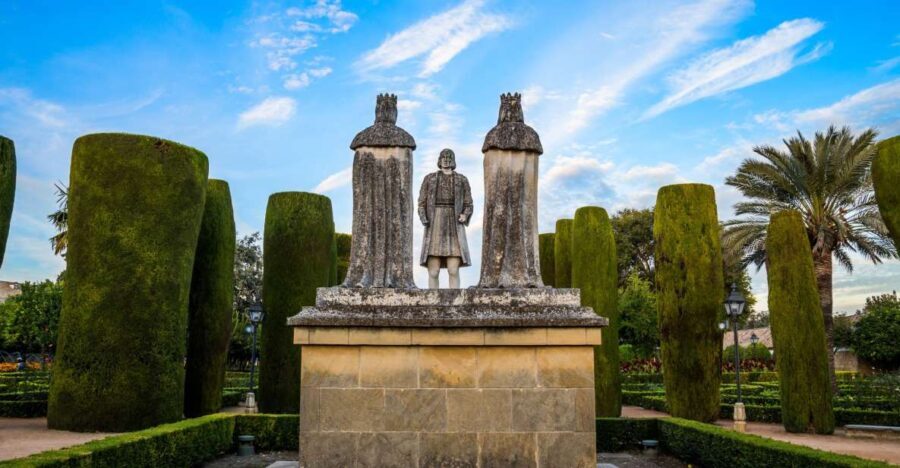
Lower terrace: the largest area, with orange trees and rose bushes. A statue of Columbus presenting his voyage plans to Ferdinand and Isabella stands near the centre — kids recognise the statue from history textbooks.
5. The Royal Baths (10 min — optional)
The Baños Califales (Caliph Baths) are across the road from the Alcázar, included in some tickets. Small, shaded, atmospheric — a preserved Moorish bath complex. 10 minutes’ visit. Skip with younger kids; interesting for 10+.
Our top picks to book
1. Alcazar Guided Tour + Skip-the-Line — $23
The default booking. 1-hour guided format includes all the main sections (mosaics, towers, gardens). Our Alcázar guided tour review covers which stops the guide focuses on and how the pace works with kids. Works for kids 7+; under-7s may find the mosaic hall slow but love the gardens.
2. Alcazar of Christian Monarchs 1h Guided Tour — $22

Same length as the top pick but from a different operator — use whichever has the time slot that fits your day. Our 1-hour Christian Monarchs tour review compares this to the alternative — content is essentially the same; availability varies. Best for family schedules needing a specific time slot.
3. Alcazar Entry Ticket + Guided Tour Bundle — $24
The format is “guided introduction then free time” — guide walks you through highlights in 25 minutes, then you’re free to re-visit the gardens, towers, or mosaics at your own pace. Our entry + guided bundle review covers whether the flexible format is worth it (usually yes for families with kids of different energy levels).
Getting there
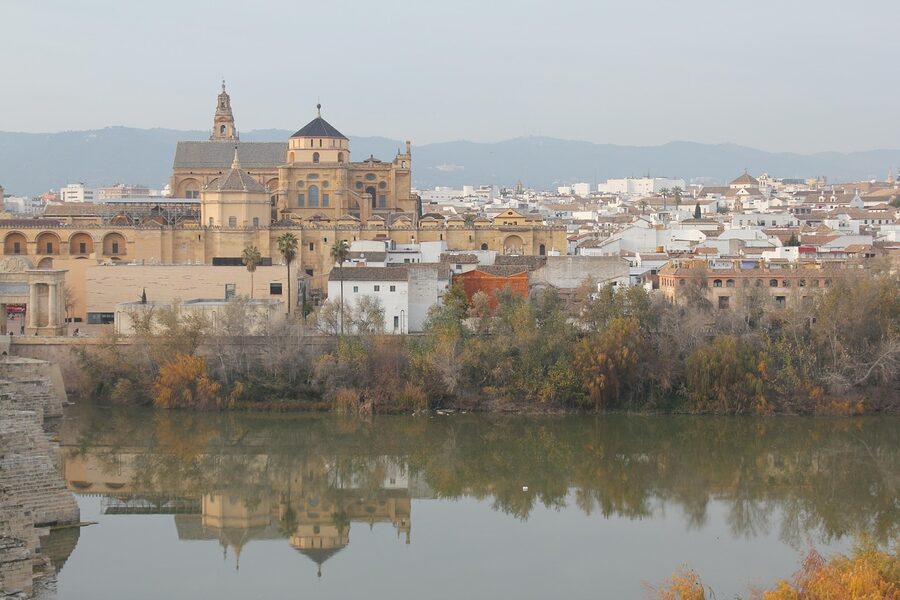
The Alcázar is 5 minutes’ walk from the Mezquita-Catedral, in the centre of Córdoba’s old town. Accessible from anywhere in the historic centre on foot.
From the train station: 20 min walk via the old town (signposted), or €7 taxi.
From the Mezquita: 5 min walk across the plaza and along Calle Amador de los Ríos.
Opening hours: 9am-6pm (slightly longer in summer). Closed Mondays. Free entry on Sunday afternoons (expect long queues).
Best time: 9:30-10:30am when it opens. The gardens are cool, empty, and the morning light is beautiful.
Pairing with the rest of Córdoba
The Alcázar pairs perfectly with the Mosque-Cathedral. Standard half-day Córdoba plan:
Morning: Mezquita (10am), walk through Jewish Quarter (15 min), Alcázar (11:30am). Lunch at 1pm in a patio restaurant. Leaves afternoon for tapas or travel.
Alternative: arrive Córdoba at 9am, Alcázar first (smaller, quicker), Mezquita at 11am, lunch, train out at 4pm. This works as a day trip from Seville.
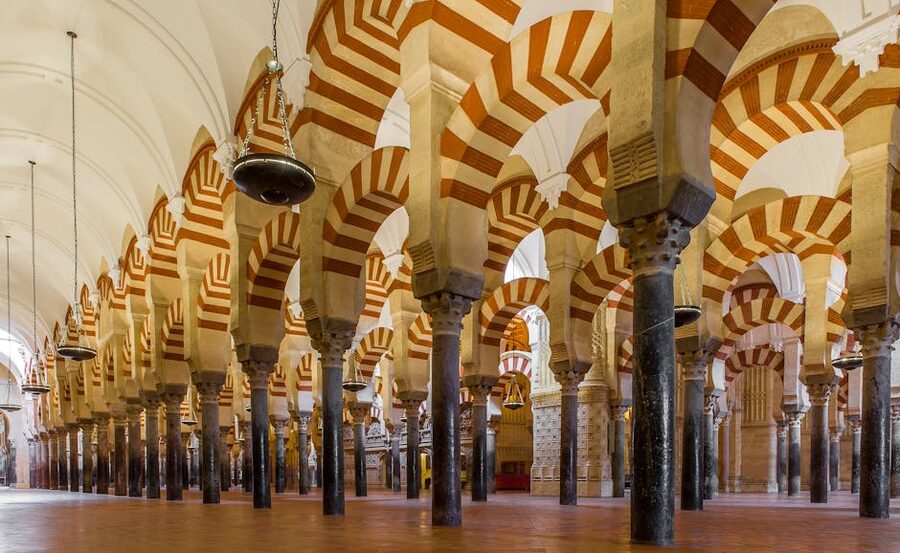
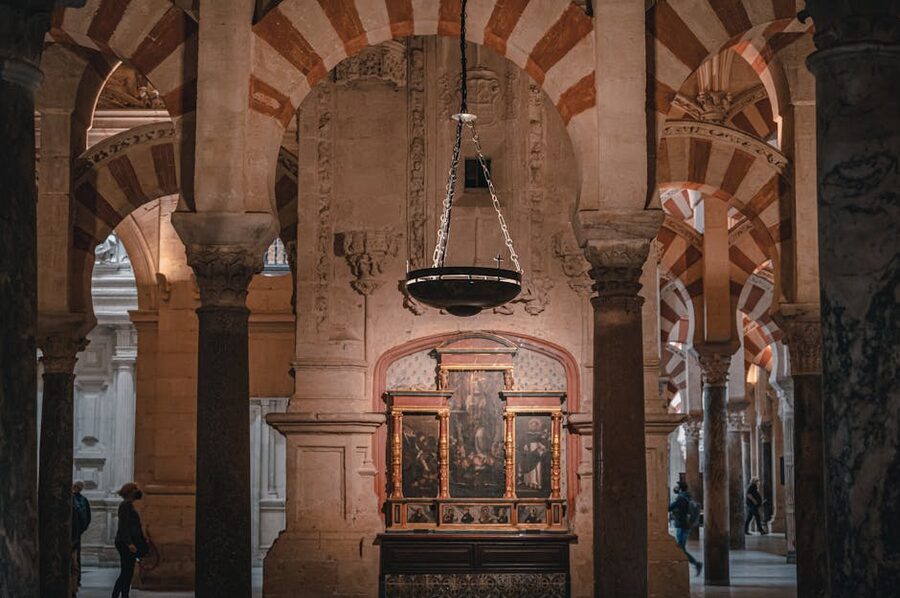
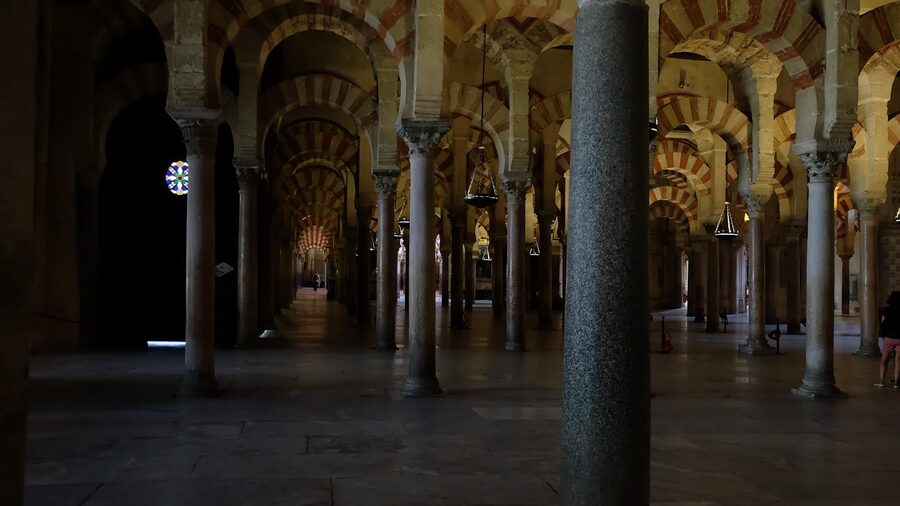
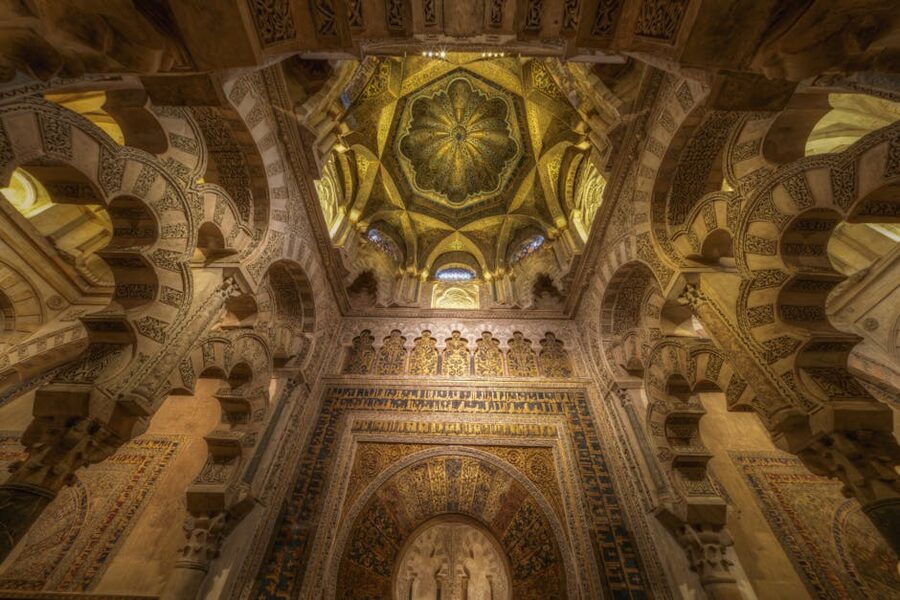
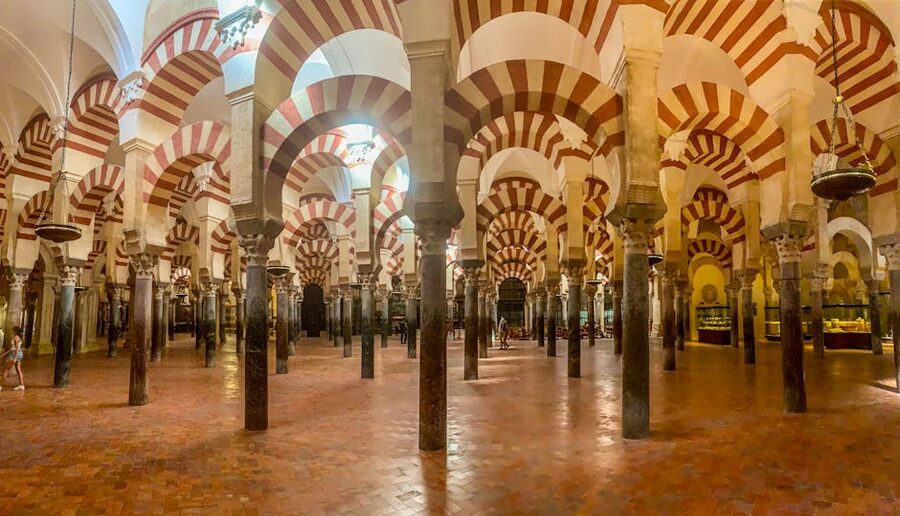
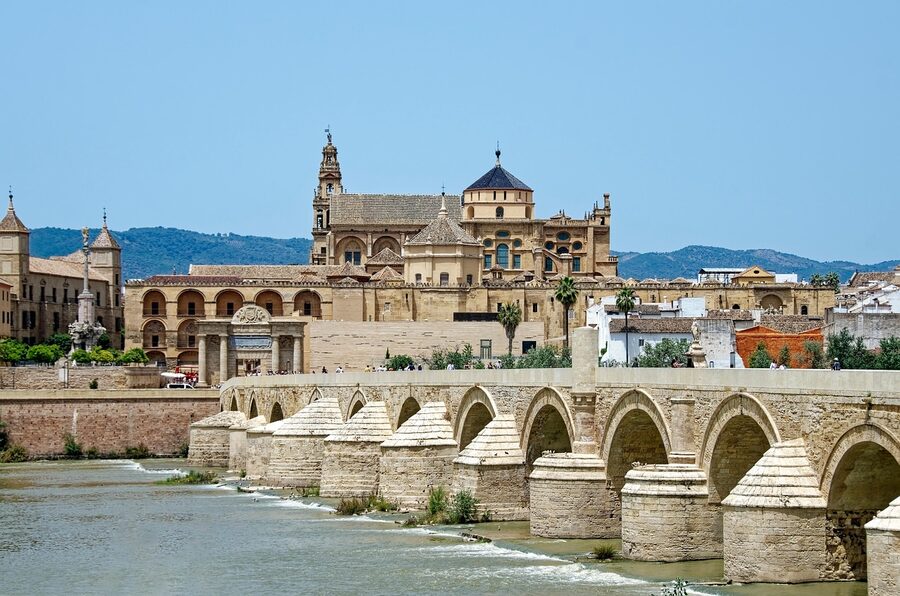
We’ve covered the Mezquita-Catedral in detail in our Mezquita family guide — the two sites are complementary, not competing. Do both on the same half-day.
If you’ve got more Córdoba time
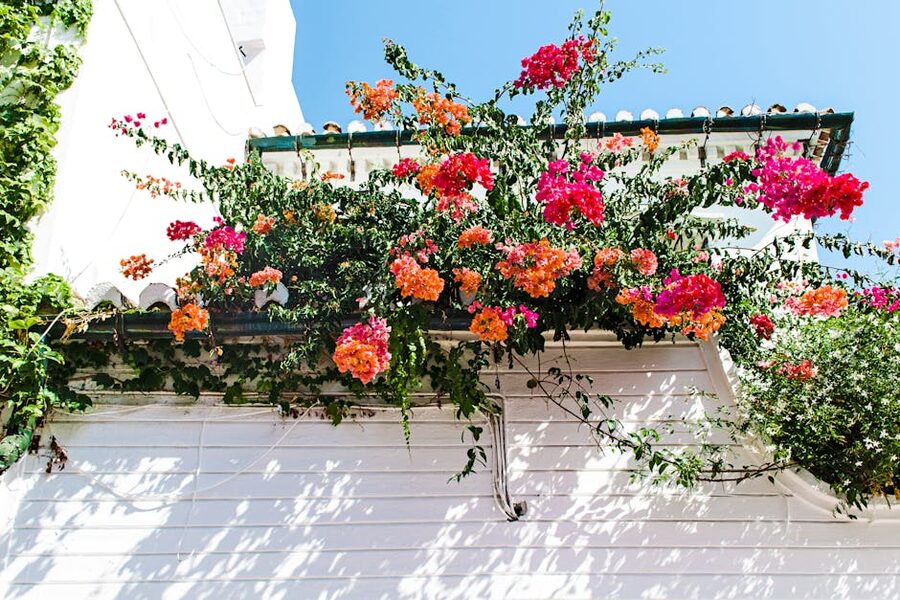
Cordoba patios (May only): self-guided walking tour of private courtyards opened to the public during the Patios Festival.
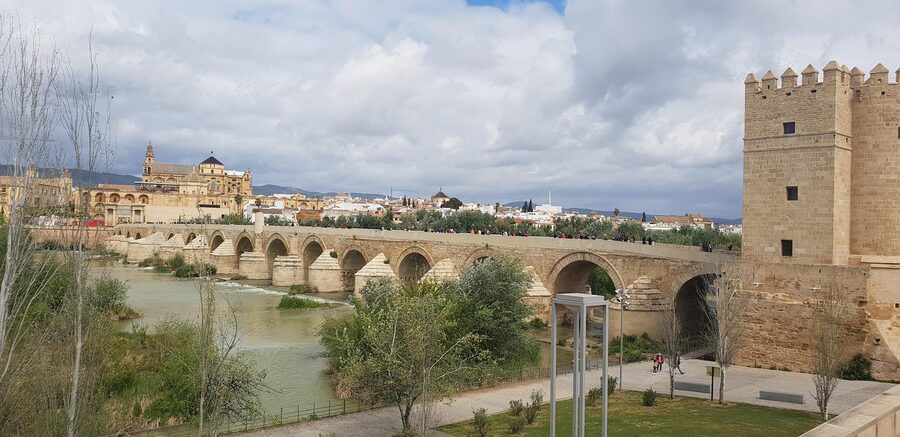
Roman Bridge + Calahorra Tower: 30-minute tapas walk across the bridge for coffee on the south bank.
Medina Azahara: 10th-century Moorish palace ruins about 8km outside the city. Bus or taxi. Interesting for teens; young kids find it abstract.
A short history
The site has been a fortress for at least 1,800 years. Phases:
Roman era: Roman fortifications on the site, later incorporated into Moorish defences. The mosaics in the current museum come from this period.
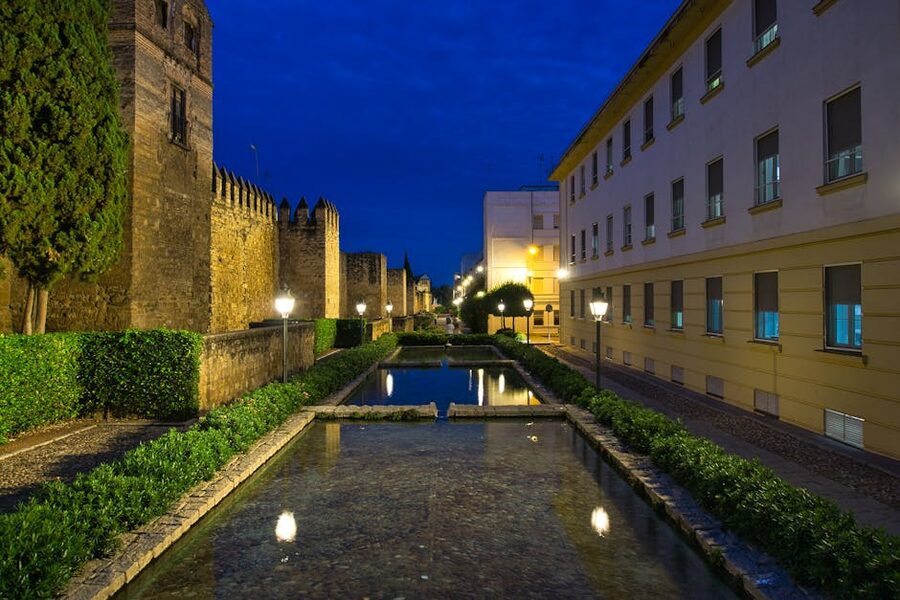
Moorish caliphate (756-1031): expanded as the Caliph’s fortress. Córdoba was the biggest city in Europe at this time; the Alcázar was part of the royal complex alongside the Mosque (now Mezquita).
Christian reconquest (1236): Ferdinand III took Córdoba. The Moorish Alcázar was mostly demolished.
Current Alcázar (1328): built by King Alfonso XI as a royal residence. Used by successive Castilian monarchs as their southern base.
Ferdinand and Isabella era (1482-1490): the Catholic Monarchs used the Alcázar as their headquarters during the Granada campaign. Columbus had two meetings here in 1486 and 1489 to pitch his voyage plans. His statue in the gardens commemorates the second meeting.
Spanish Inquisition (1490-1821): for 300+ years the Alcázar housed the Córdoba tribunal of the Spanish Inquisition. The cellars were used as prisons; some sections were torture chambers. This is mostly not shown to visitors but guides will mention it. Age-appropriate content for teens; may be too much for sensitive younger kids.
19th-20th century: used variously as a prison, a military base, and finally (from 1955) a public monument.
UNESCO World Heritage site since 1994 — listed as part of the Historic Centre of Córdoba.
Practical tips
Book skip-the-line. The ticket queue on Sunday afternoons (free entry) can be 1+ hour.
Closed Mondays. Check before you arrive.
Buggy access: most of the site is accessible; the battlements require climbing stairs. Leave buggy at the entrance or take a baby carrier.
Toilets: at the entrance. Clean. Baby-change available.
Food: no food inside. Plenty of tapas bars outside in the Judería.
Dress: casual. No dress code here (it’s not a church).
What to tell kids about the Columbus story
The Columbus-meets-Isabella story is the Alcázar’s best kid-hook. Here’s the version that lands:
In 1486, Christopher Columbus — a 35-year-old Genoese sailor with an unusual idea — came to Córdoba to pitch his voyage plan to King Ferdinand and Queen Isabella. He proposed sailing west across the Atlantic to reach Asia. Most educated people of the time knew the Earth was round; the argument was about distance. Columbus thought Asia was much closer (he was wrong; he was just lucky the Americas were in between).
Ferdinand and Isabella heard him out at the Alcázar. Their committee of experts examined his numbers and rejected the plan — correctly, on the maths. But Columbus kept pitching. Over the next six years he lobbied the Spanish court relentlessly, often waiting in Córdoba and Granada for audiences. He had a relationship in Córdoba (with a local woman, Beatriz Enríquez) and fathered a son there, Fernando.
Finally in April 1492, just months after the fall of Granada, Isabella agreed to fund the voyage. Columbus sailed from Palos de la Frontera in August 1492. The rest, as they say.
The statue in the Alcázar gardens shows Columbus presenting his maps to the monarchs. It’s a 19th-century sculpture, but the moment it captures is real — one of the most consequential meetings in European history. Kids who know the outline of the Columbus story find standing next to this statue genuinely moving.
Age-by-age take
Under 5: works for the gardens; interior rooms get skipped. Budget 45 min.
5-8: sweet spot — castle towers and gardens both land. 1 hour is right.
9-12: full historical engagement. Columbus and Ferdinand and Isabella lands.
Teens: appreciate the layered history. The Spanish Inquisition context is age-appropriate.
What if it rains?
Most of the visit is outdoors (gardens), so rain reduces the experience. Interior rooms are small; 20 minutes of covered visiting. If rain is forecast, swap with the Mezquita (fully indoor) for the morning and hope the gardens clear for afternoon.
Before you book
Book the standard guided tour for most families. The 1-hour format is right.
Morning slots are cooler and quieter.
Pair with Mezquita the same morning.
Skip if: you’ve already done the Royal Alcázar of Seville — the Córdoba version is smaller and less dramatic. Most families doing both cities find Seville’s wins.
Book the 9:30am tour, pair with the Mezquita afterwards, lunch in a patio restaurant. €23 well spent.