Cordoba’s Mosque-Cathedral is the big draw, but this tour keeps it practical: you get guided entry with skip-the-queue tickets and a walk through the city’s Judería right afterward. It’s a tight 2.5 hours, designed to help you see the essentials without getting stuck in long lines.
What I like most is the combo of two worlds in one go: the mosque’s architecture (columns, arches, Maqsura, Mihrab) and the Jewish Quarter’s street life and symbols. I also like that you’re not just wandering, because guides such as Jose, Monica, Gloria, Cristina, and Azahara have been praised for clear, knowledgeable storytelling.
One possible snag: hearing can be a challenge in the Mosque-Cathedral depending on acoustics and how close the microphone is positioned. If you’re sensitive to audio, it’s worth being aware and not waiting until you’re deep inside to ask for volume help.
- Key things to know before you go
- Mosque-Cathedral Fast Facts: from 8th-century mosque to Christian cathedral
- Where the tour fits in your day: 2.5 hours that don’t feel rushed
- Judería de Cordoba: what you’ll see on the walk
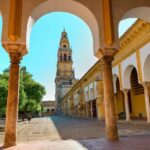
- Entering the Mosque-Cathedral: the forest of columns effect
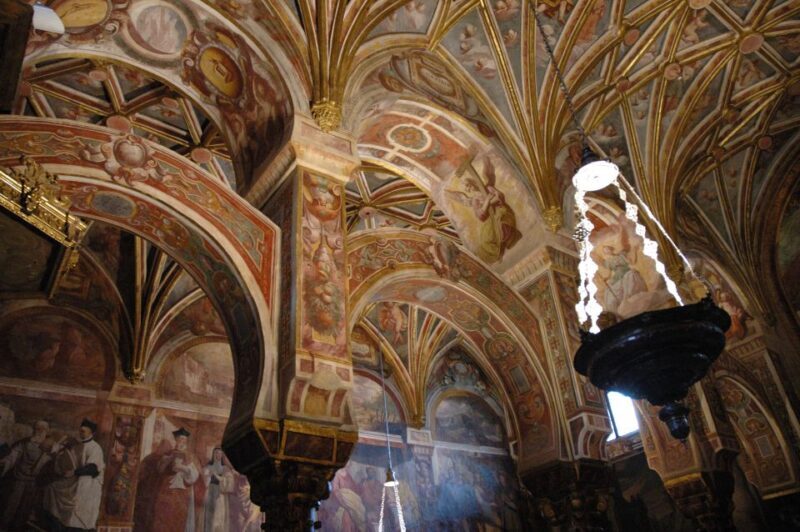
- The cathedral layer: what changed after Ferdinand III
- Skip-the-queue tickets: how to get value for your
- What the guides do well (and why it matters in Cordoba)
- Audio and microphone reality check: when sound can get tricky
- Timing inside: practical comfort in hot Cordoba days
- Tickets, ID, and small rules that affect planning
- Synagogue hours gotcha: when the Jewish Quarter can’t include everything
- Meeting point and drop-off: why it feels different depending on your option
- Who this tour is best for
- Price and logistics: is actually a good deal?
- Weather and crowd sense: what you can control
- Should you book this Cordoba Mosque & Jewish Quarter tour?
- FAQ
- How long is the Cordoba Mosque & Jewish Quarter tour?
- How much does the tour cost?
- What’s included in the price?
- What languages are available for the live guide?
- Is transportation included to the meeting point?
- Do I need to bring anything?
- Is the synagogue always open during the Jewish Quarter portion?
- The Best Of Cordoba!
- More Tickets in Cordoba
- More Tours in Cordoba
- More Tour Reviews in Cordoba
Key things to know before you go
- Skip-the-line tickets help you start sightseeing sooner at a top-ticket attraction
- Judería walk first, so you get historical context before you step into the mosque
- Architecture highlights include the Maqsura and Mihrab, not just the general wow-factor
- Photo-friendly pacing with time to stop and look, not a speed-run through monuments
- Synagogue closure rules can affect what you can visit in the Jewish Quarter
- Live bilingual guiding (Spanish/English) with audio reinforcement if needed
👉 See our pick of the We Rank Cordoba’s 12 Top Walking Tours
Mosque-Cathedral Fast Facts: from 8th-century mosque to Christian cathedral
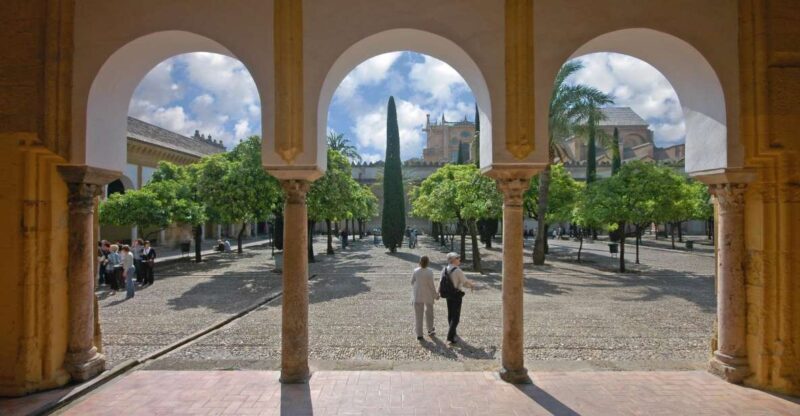
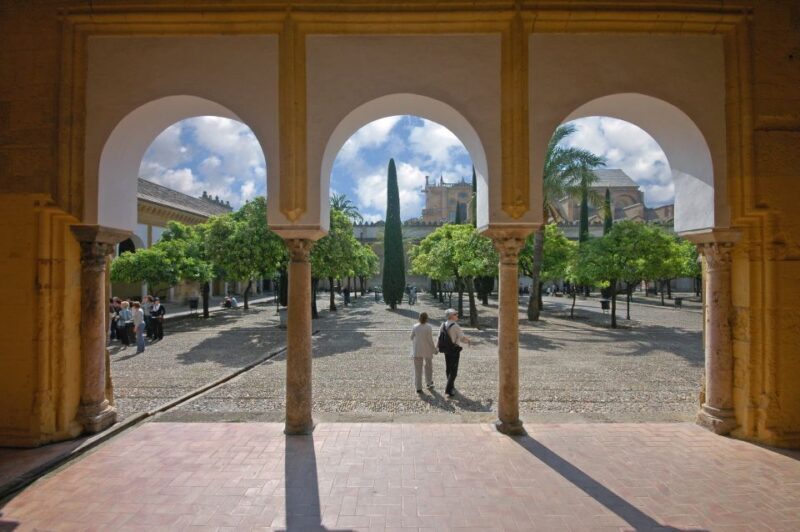
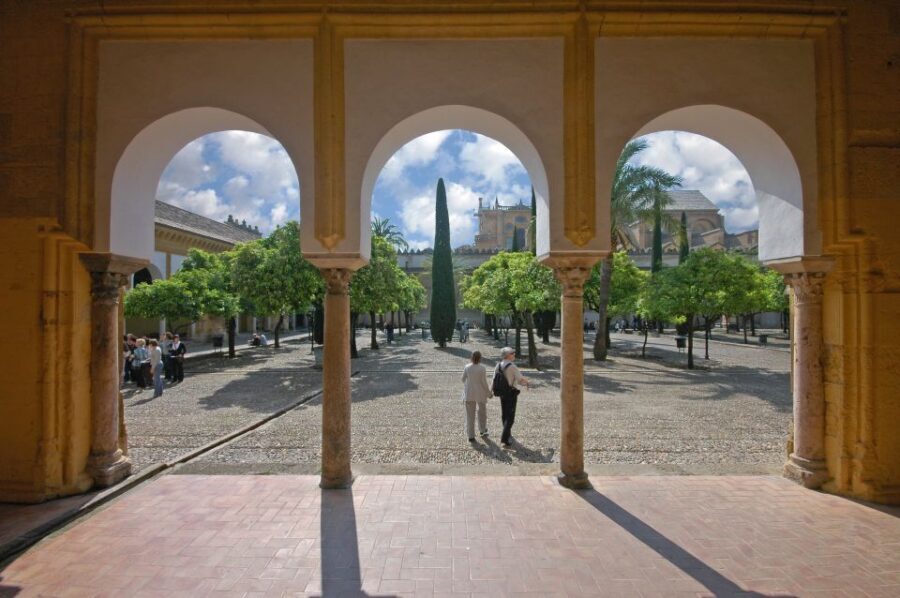
The star of this tour is the Mosque-Cathedral of Cordoba (Mezquita-Catedral). Construction began in the 8th century, and it grew into the second-largest mosque in the world. Later, in the 13th century under Ferdinand III, it was converted into a Catholic cathedral—so you’re seeing layered power, faith, and art in one single building.
That history matters for your visit because the Mezquita isn’t just pretty. It’s a visual argument: Islamic-era design language (like the repeating arches and columns) was built to inspire awe and direction, and the later cathedral additions created a different kind of sacred focus.
If you like places where eras overlap instead of being replaced, this is one of Spain’s best examples.
You can also read our reviews of more tours and experiences in Cordoba
Where the tour fits in your day: 2.5 hours that don’t feel rushed
This is a 2.5-hour guided walking tour built around two concentrated stops. You’ll spend about 1 hour in the Judería (Jewish Quarter) and about 75 minutes at the Mosque-Cathedral, with a total pace that’s meant to keep you moving without constantly being “on the go.”
Why this schedule works: the Jewish Quarter sets the stage. Once you understand street names, markets, and key figures tied to the city, the mosque feels even more meaningful when you finally step inside.
At the end, you’ll be dropped off at one of two convenient spots: Seneca café or Mezquita-Catedral de Córdoba, depending on the option you booked.
Judería de Cordoba: what you’ll see on the walk
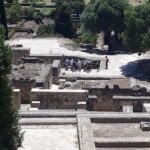
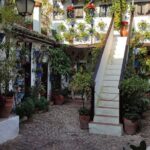
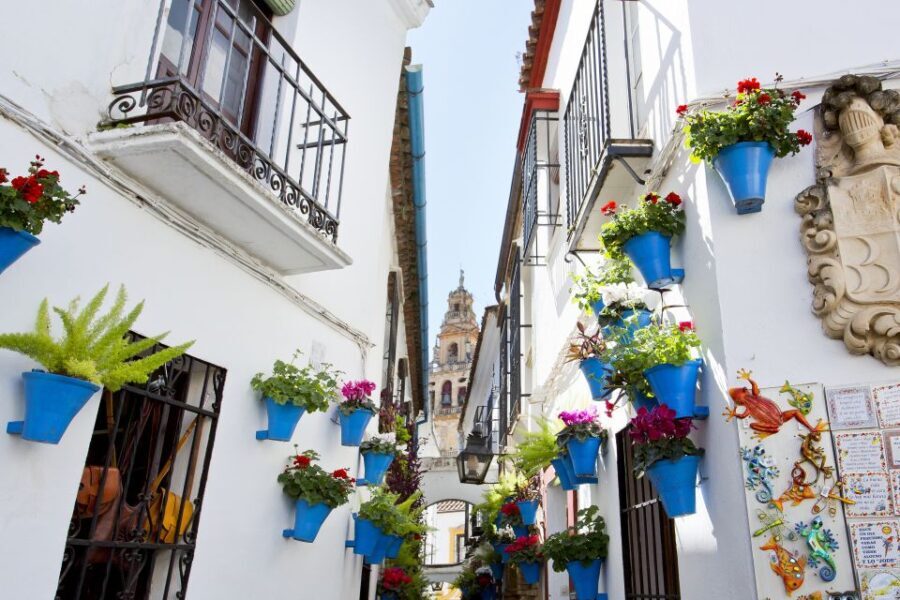
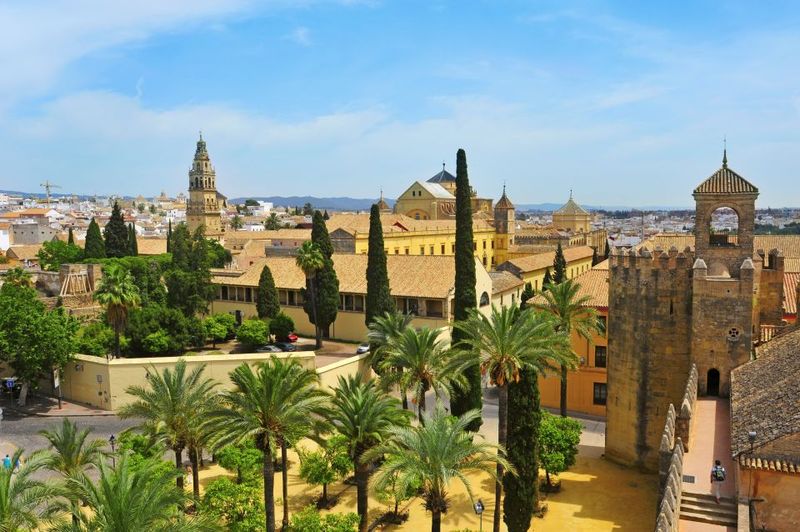
Your first real stop is the Judería de Cordoba, located close to the Mosque-Cathedral. This is one of Cordoba’s most visited historic areas, and for good reason: you get a compact dose of what life and learning looked like here over time.
On the walk, you’ll hear about and see:
- Jewish Street (the classic “start here” vibe)
- The Arabic market (Zoco), which helps you connect Cordoba’s multicultural past to something you can picture in your head
- A bronze statue of Maimonides, which anchors the story to a person tied to Jewish thought
What makes the Judería walk valuable on a guided tour is that you’re not just looking at old stones. You’re learning what the spaces were used for and why certain landmarks matter, so your photos come with context instead of captions that feel generic.
Entering the Mosque-Cathedral: the forest of columns effect
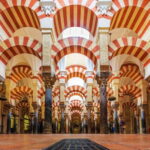
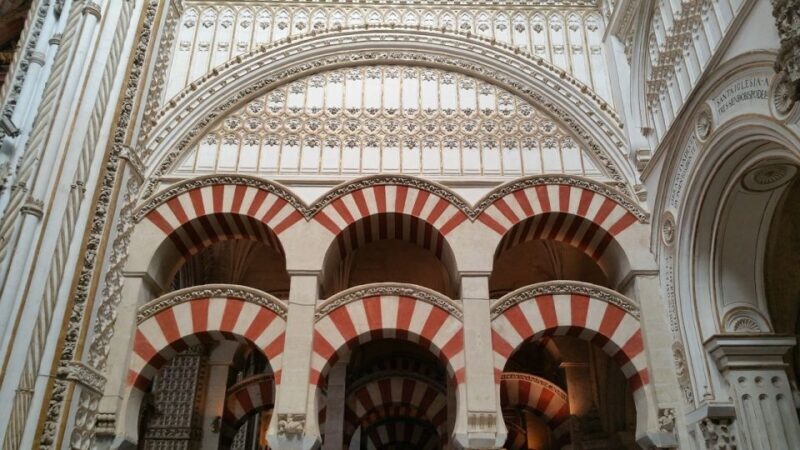
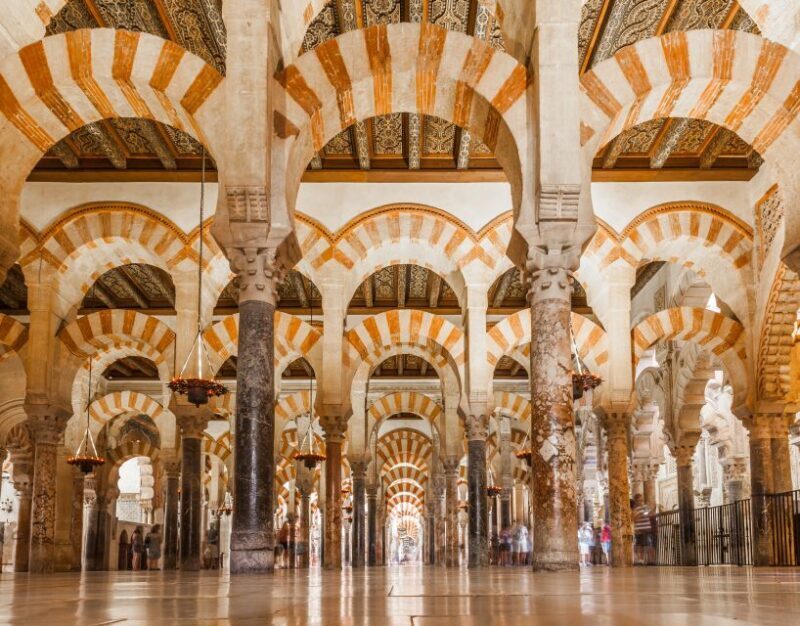
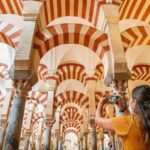
When you step inside the Mezquita, expect the first wave to be sensory. The interior is famous for a “forest” of columns and the rhythm of repeated arches. It’s not only dramatic—it’s readable. The guide helps you notice what you might otherwise miss: how the design pulls your eye and shapes movement through space.
You’ll also learn the terms that make the building click:
- Double arches and repeating patterns
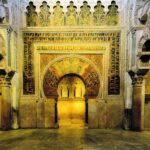
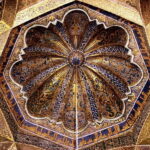
- Maqsura, a specific protected area within the mosque
- Mihrab, indicating the direction of prayer
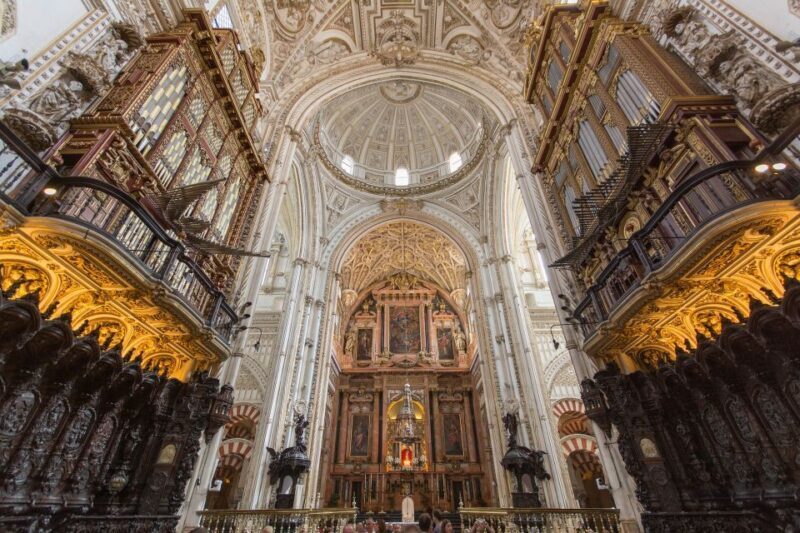
- The chorus area near the Mayor Chapel
This is the part where a guide earns their paycheck. Without explanations, you can still be amazed, but with explanations you’ll actually understand what you’re looking at and why the different sections feel different.
More Great Tours NearbyThe cathedral layer: what changed after Ferdinand III
In the 13th century, the building’s role shifted. Under Ferdinand III, the mosque was converted into a Catholic cathedral. You’ll get help connecting what you’re seeing now to that conversion, including how the sacred center and visual focus changed.
That doesn’t mean the building becomes “less Islamic” or “less impressive.” It means you’re watching history in motion: one community built something, another community reinterpreted it, and both left marks you can still identify today.
Skip-the-queue tickets: how to get value for your $40
At about $40 per person, this isn’t just a “tour.” It’s a ticket-and-guide package for one of the most visited monuments in Spain. The skip-the-queue detail is key for value because the Mezquita-Cathedral can be crowded, and time lost at the ticket line is time you can’t buy back.
You’re also paying for guidance that turns “I saw it” into “I understood it.” When guides are strong, that’s often what makes the difference between a good day and a memorable one.
Transportation to the meeting point is not included, so plan that part of your own day. Once you’re at the start, the experience is set up to keep friction low.
What the guides do well (and why it matters in Cordoba)
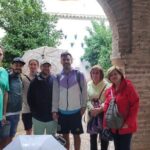
This tour runs with a live tour guide in Spanish or English, and audio reinforcement is included if needed. In past groups, guides like Jose and Monica have been highlighted as engaging, while Gloria and Cristina have been praised for expert explanations and clear pacing.
A strong guide changes how you experience both stops:
- In the Mosque-Cathedral, they help you map architecture terms to what you’re seeing
- In the Judería, they help you understand which places are more than just picturesque corners
If you’re the type who likes facts but also appreciates humor and clear structure, this style of guiding tends to click.
Audio and microphone reality check: when sound can get tricky
A recurring practical note: hearing the guide inside the mosque can depend on acoustics and microphone handling. Some travelers mentioned microphone clarity issues in certain spots, and others noted occasional audio-system hiccups like crackling or receiver connection problems.
Here’s how to handle that smoothly:
- Stand where you can hear best rather than drifting to the back
- If you can’t hear, don’t suffer quietly—ask for adjustment right away
- Expect the mosque itself to be echo-prone, so your best listening spot may change as you move
This isn’t a reason to avoid the tour, but it is a reason to stay engaged and positioned well.
Timing inside: practical comfort in hot Cordoba days
Cordoba can be warm, and the tour timing is built around efficient use of time inside the most weather-friendly big stop. Since a major chunk happens at the Mosque-Cathedral, you typically get substantial time in a cooler interior compared with spending the whole tour under open sky.
Still, bring basic comfort items. Even if most of the “wow” is indoors, you’ll walk through the Judería streets and stop for context.
Tickets, ID, and small rules that affect planning
Before you go, plan for the simple but real logistics:
- Bring passport or an ID card
- No pets
- No oversize luggage
Those rules are straightforward, but they matter because Cordoba’s historic streets and entry points aren’t built for large bags.
Also note the tour is walking-based, so wear shoes you’re comfortable in for uneven cobblestones and short stops.
Synagogue hours gotcha: when the Jewish Quarter can’t include everything
One important scheduling note: the synagogue is closed every Monday year-round, and it’s also closed in the evenings from 15 June to 15 September.
So if your visit lands on those dates or later in the day during summer, you might miss specific synagogue access. The rest of the Jewish Quarter walk should still make sense, but that particular component may not be available.
If synagogue access matters to you, check your calendar carefully before booking.
Meeting point and drop-off: why it feels different depending on your option
The meeting point may vary based on the option you choose. Don’t wait until the last second to find it, because Cordoba’s center can be busy and signage can be confusing.
Drop-off is also flexible: you’ll end at Seneca café or back near Mezquita-Catedral de Córdoba. That can be handy if you want to grab a drink or keep exploring right away without backtracking.
Who this tour is best for
This works especially well if you:
- Want a guided “highlights” visit without negotiating ticket lines
- Like architecture explanations that use real terms like Mihrab and Maqsura
- Want the city’s Jewish history and everyday landmarks connected to what you’ll see at the Mezquita
- Prefer a manageable walking day that doesn’t eat your whole schedule
If you’re already a Cordoba architecture nerd and plan to spend hours inside the Mezquita going point-by-point alone, you might find the time short. But for most travelers, 2.5 hours is a smart fit.
Price and logistics: is $40 actually a good deal?
Let’s break down what you’re getting for $40:
- A professional guide
- A guided walk that includes the Jewish Quarter
- Time with a guided visit inside the Mosque-Cathedral
- Skip-the-queue ticket handling at the box office
- Audio reinforcement if needed
- A tour duration of 2.5 hours, with set timing for both major stops
What’s not included is transportation to the meeting point. That’s normal for walking tours, but it’s something to factor into your day budget.
For the Mezquita-Cathedral alone, skip-the-queue handling plus expert interpretation is often the difference between “tourist fatigue” and “I got what I paid for.”
Weather and crowd sense: what you can control
You can’t fully control crowds at one of Spain’s top attractions, but you can control your experience:
- Go in with the understanding that you’ll be walking and stopping often, so build in patience
- Arrive a little early so you’re not rushing through the pre-tour shuffle
- Bring an ID and keep your bag practical for quick movement
If you time your visit well, you’ll feel the tour’s pacing more than the crowds.
Should you book this Cordoba Mosque & Jewish Quarter tour?
I’d book it if you want the smart, time-saving combo of skip-the-line tickets plus real guidance in two of Cordoba’s most important areas. The mosque segment can be mind-blowing on its own, but the Jewish Quarter adds the missing human context that turns the day from sightseeing into understanding.
Skip it only if you know you want a long independent visit to the Mezquita without a set walking plan, or if you’re visiting on a Monday and synagogue access is a must-have.
If you’re aiming for value, clear explanations, and a well-paced highlights day, this is a strong choice for Cordoba.
Cordoba Mosque & Jewish Quarter Tour with Tickets
FAQ
How long is the Cordoba Mosque & Jewish Quarter tour?
The tour lasts 2.5 hours.
How much does the tour cost?
It costs $40 per person.
What’s included in the price?
You get a professional guide, walking tour coverage, skip-the-queue ticket handling at the box office, and audio guide reinforcement if needed.
What languages are available for the live guide?
The live guide operates in Spanish and English.
Is transportation included to the meeting point?
No. Transportation to the meeting point is not included.
Do I need to bring anything?
Yes, bring your passport or ID card.
Is the synagogue always open during the Jewish Quarter portion?
No. The synagogue is closed every Monday year-round, and it’s also closed in the evenings from 15 June to 15 September.
You can check availability for your dates here: