
This 2-hour walking tour in Birmingham is a smart way to see the city center on foot, without getting stuck on the big roads. You start at the Library of Birmingham near Centenary Square, then work your way through the Jewellery Quarter, cathedrals, and a few key city squares.
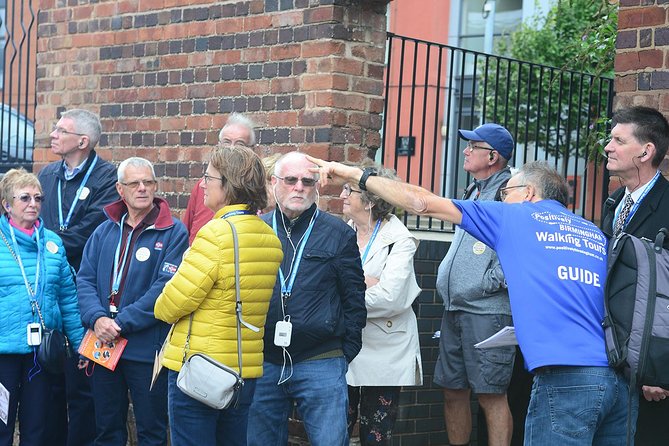
What makes it work is the guide. Guests repeatedly mention how knowledgeable and funny the leading guides can be, with story-telling that keeps you interested even in rain. I also like that you get an audio receiver, so you don’t have to constantly crane your neck to hear what’s going on.
One thing to consider: it’s still a walking tour. You’ll need moderate fitness, and the route may be adjusted for icy conditions, so come prepared for real weather.
- 6 key things you’ll notice on this tour
- Enter Birmingham from the Library: Centenary Square to start
- A secret canal route into the Jewellery Quarter
- Georgian charm and a church outside view (1779)
- Birmingham Cathedral and the stained-glass bonus
- St Chads and the question of what redevelopment does
- Returning via Victoria Square and Chamberlain Square
- Why the audio receiver is a real upgrade (not a gimmick)
- Guide-led energy: Jonathan Berg, Bernard, Ann, Maria
- Props, books, and how the tour can extend past the walk
- Price and value: .80 for a tight, well-shaped loop
- Timing and logistics you can actually plan around
- Who should book this walk?
- Should you book? My take
6 key things you’ll notice on this tour
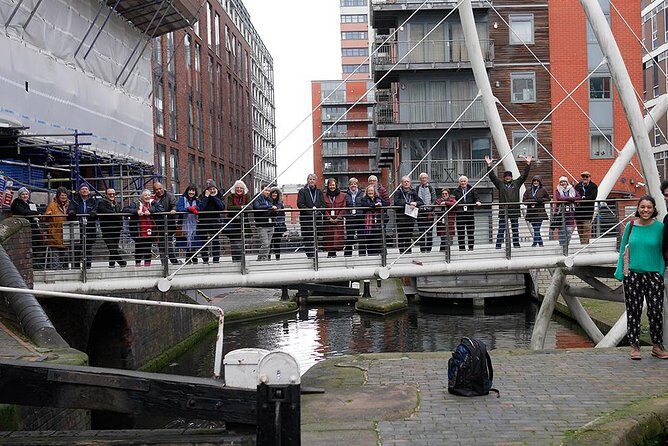
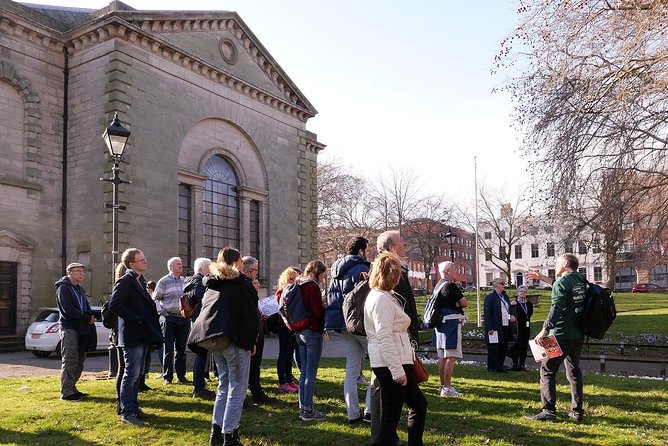
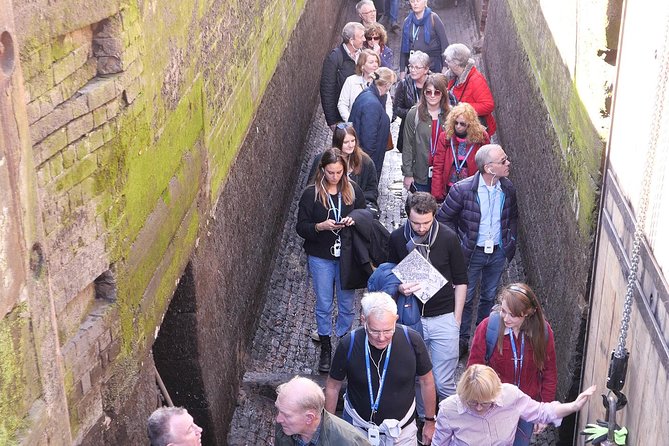
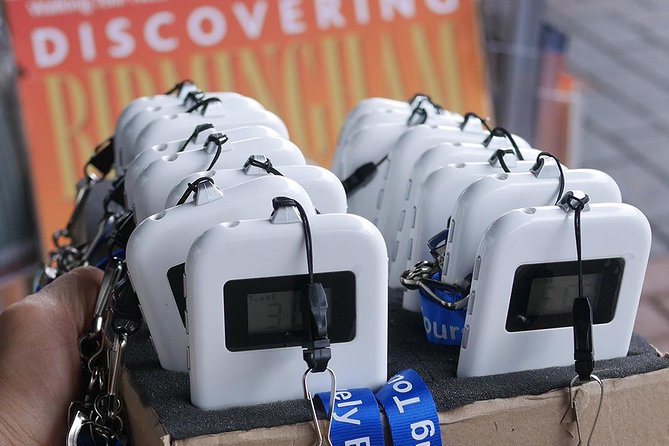
- A secret canal route into the Jewellery Quarter that even locals reportedly skip
- Audio receivers included, so you can hear the guide from a distance
- A concentrated loop of highlights in about 2 hours, not a half-day marathon
- Cathedral stop with options inside (Edward Burne-Jones stained glass only if timing allows)
- Georgian-to-modern Jewellery Quarter context, with practical views of how business changed
- A small group feel with a maximum of 40 travelers
Enter Birmingham from the Library: Centenary Square to start
The tour begins at the Library of Birmingham at Centenary Square (meeting point address listed as Centenary Sq, Birmingham B1 2ND). If you arrive a few minutes early, you’ll get your bearings fast. This is a good starting spot because it’s central and easy to reach by public transport.
Centenary Square is more than just a plaza. It’s where the guide sets the tone and helps you understand what you’re about to see. You’ll get a quick sense of how Birmingham grew, what kind of city it is (industrial, yes—but also full of reinvention), and how the center connects to the areas you usually only pass through.
Stop one is brief—about 20 minutes—but it matters. It gives you the map in your head. When you later spot streets that look quiet now, you’ll understand that they were once part of the engine room of the city.
A secret canal route into the Jewellery Quarter
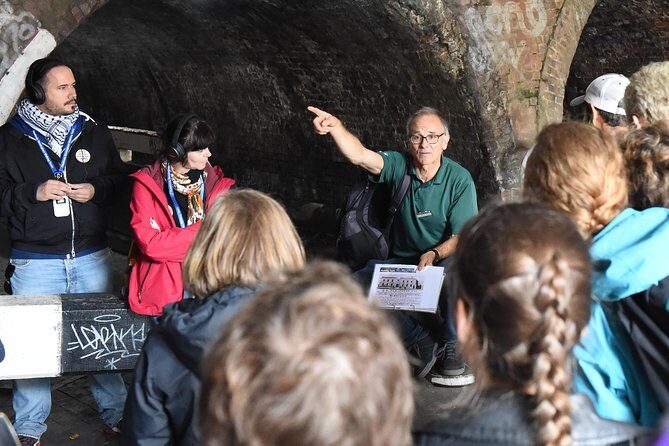
The main “wow” in the itinerary is the Jewellery Quarter segment. You don’t just walk in the usual way. You enter through a secret canal route that even locals reportedly don’t use. That single detail changes the vibe instantly. Instead of marching along obvious streets, you get a more human, back-alley rhythm.
Expect the guide to connect the dots on how the Jewellery Quarter developed. You’ll hear about how business grew there and how the area moved from older periods into the modern quarter you see today. The point isn’t to memorize dates. It’s to understand why this neighborhood looks the way it does and why the architecture and street layout matter.
This stop is around 30 minutes, so it’s long enough to get more than surface-level sightseeing. You’ll also get a sense of the contrast: the older workshop-and-craft character versus the current city role. Even if you’re not a jewellery person, the story is really about local industry and local grit.
Georgian charm and a church outside view (1779)
You’ll also have a stop to view the outside of the Jewellery Quarter church, described as a lovely example of Georgian architecture from 1779. Since the tour keeps entry logistics simple, you’re focusing on exteriors here.
Still, this kind of stop is useful. When you’re walking a neighborhood like the Jewellery Quarter, the temptation is to treat it like a themed district. Looking at a church like this helps you see it as part of everyday life—something local residents passed every day, not a museum set piece.
Birmingham Cathedral and the stained-glass bonus
Next up is Birmingham Cathedral. The tour frames it as a fine example of English Baroque style. Even if you only catch it from the outside at first, the guide will help you notice the features that make it distinct.
There’s also a potential inside bonus: on occasions, if there’s time and no conflicting events, you may go in to experience the Edward Burne-Jones stained glass. That’s a real advantage of doing this tour with a live guide and flexible timing. You’re not guaranteed entry, but you’re in the right place if conditions allow.
Time at this point is brief (about 5 minutes) in the plan. But the value is in the guide’s framing—how this cathedral fits into Birmingham’s bigger story, and what to look for if you do get that inside moment.
St Chads and the question of what redevelopment does
From the inner ring road, you’ll view St Chads. The key theme here is change over time—especially the post-war era when redevelopment prioritized cars.
This isn’t a stop that’s trying to sell you a clean story. Instead, it invites you to judge for yourself. From where you’ll stand, you can see how big infrastructure choices affect a historic area. It’s the kind of sight that makes your walking tour feel more like city thinking than just photo stops.
If you like “why does this place look like this?” questions, this is one of the most interesting pauses of the tour. If you’re expecting only pretty buildings with zero commentary, this may feel more reflective than flashy—and that’s not bad. It’s part of understanding Birmingham.
Returning via Victoria Square and Chamberlain Square
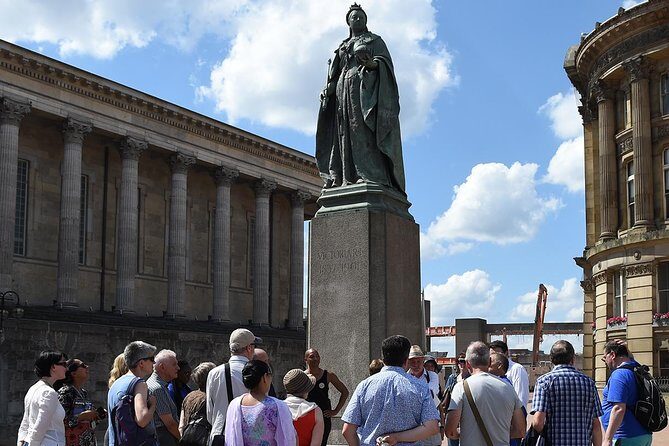
The tour loops back toward the Library of Birmingham using important city squares. First is Victoria Square (about 10 minutes). This is where the walk starts to feel like the center of the city closing in—less neighbourhood texture, more civic space.
Between earlier stops and this return segment, you’ll also see St Philip’s Cathedral and other points in between. The tour’s structure is smart: you get one strong craft/industry area (Jewellery Quarter), then big landmarks (cathedrals), then you come back through the squares that show how the city organizes public space.
Next is Chamberlain Square (around 5 minutes). You’ll look at a renovated square and get a quick explanation of how the city is reconfiguring for the future. These shorter stops are helpful because they keep the pace moving without turning the tour into a long lecture.
Why the audio receiver is a real upgrade (not a gimmick)
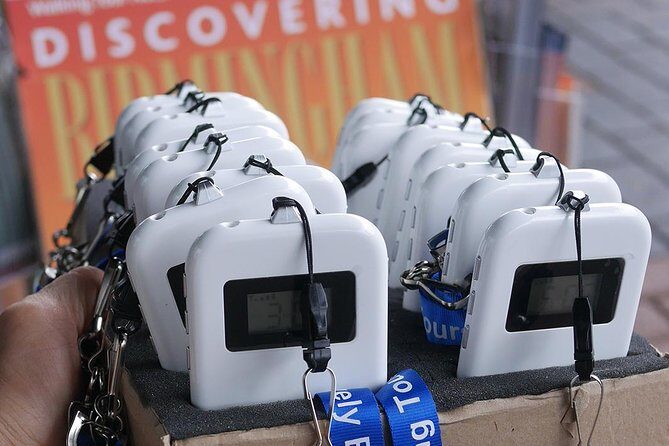
Many walking tours fail for one basic reason: you lose the guide’s voice as the group stretches out. Here, the tour loans you an audio receiver, so you can hear even from a distance.
That matters on a route with turns, canals, and a mix of surfaces. You’ll spend less time trying to guess what the guide is saying and more time actually looking at what you’ve come to see. It also helps keep a group of up to 40 together in a way that still feels calm.
It’s also included, so you’re not paying extra for the simplest comfort upgrade.
Guide-led energy: Jonathan Berg, Bernard, Ann, Maria
A theme from guest comments is guide quality. People describe guides who are both knowledgeable and genuinely entertaining. Names that show up include Jonathan Berg, and other guests mention guides such as Bernard, Ann, and Maria.
So what does that mean for you? It means you’re likely to get more than facts. You’ll get story beats, small details, and a sense that the guide actually loves Birmingham. One guest even mentioned props used during the walk, which suggests the tour leans interactive rather than stiff.
If you’re the type who enjoys hearing how someone connects a city’s past to what you see today, this is a strong match.
Props, books, and how the tour can extend past the walk
One review detail stands out: a guest said the guide handed out one of his books during the tour, and another mentioned that the tour book and map helped them explore more during the rest of their stay.
That’s practical. A good tour shouldn’t end when the two hours do. Even a small take-home resource can help you plan a second day on your own—maybe to revisit the Jewellery Quarter, or to chase a square or sight the guide pointed out.
If you want value in the literal sense—more than just the walk—this kind of added material can make the price feel even more reasonable.
Price and value: $20.80 for a tight, well-shaped loop
At $20.80 per person for about 2 hours, this tour competes well for central Birmingham sightseeing. Here’s why it feels like good value:
- You’re paying for a local guide, not self-guided wandering
- You get audio receivers (that’s often the difference between a fun walk and an exhausting one)
- The stops cover multiple landmark types: civic squares, cathedrals, and an industry neighborhood
- There are no entry tickets required as part of the tour plan
- The group size cap (up to 40) keeps it manageable
If you’re visiting for a short time and want a quick, coherent city overview—this is a good buy. If you have all day and want museum-level depth, you’d likely add separate stops. But for a focused introduction, this price is easy to justify.
Timing and logistics you can actually plan around
This experience is scheduled to start at 1:30 pm. Confirmation is received at booking, so you’ll have a plan locked in before you go.
You’ll also want to factor in weather. The tour tries not to cancel in adverse conditions. If it’s raining, bring a suitable coat or umbrella. If it’s icy, the route may be adapted, which is a sensible safety move.
Start point clarity helps too: the meeting point is the Library of Birmingham, right by Centenary Square. It’s one of those places you can find without turning the whole day into a transit puzzle.
Who should book this walk?
This tour fits best if you want:
- A lively city-center introduction in a short time
- Strong guide-led storytelling and a more human walking pace
- A look at the Jewellery Quarter beyond postcards
- Practical hearing via audio receivers
It’s also a decent option if you’re staying near the center and want to get out of “bus only” sightseeing. One highlight is that you can access parts of the area that coaches or cars can’t reach comfortably. That makes the backstreets and alleys feel more real.
If you struggle with uneven sidewalks or long standing stretches, note the moderate fitness requirement and bring comfortable walking shoes.
Discovering Birmingham 2 hour Walking Tour to the Jewellery Quarter
Should you book? My take
Yes, you should book this Birmingham Jewellery Quarter walking tour if you want a compact, well-organized way to see the city’s old craft side and its civic landmarks in one go. The biggest selling points are the guide, the audio receiver that keeps the walk enjoyable, and the sense that you’ll learn more than you would by simply wandering.
Skip it only if you dislike walking in the rain or you want guaranteed cathedral interior access. The stained glass inside depends on time and events, but even without that bonus, the outside viewpoints and the Jewellery Quarter storytelling should still make it worth your afternoon.