
Eating in Japan With Kids
Before our first trip to Japan, I spent far too long worrying about what the children would eat. Three trips later, I can tell you this: Japan is one of the easiest countries in the world to feed kids. Genuinely. The food is fresh, portions are sensible, and there’s an almost absurd number of places serving things your children will actually put in their mouths without complaint.
Here’s what we’ve learned about feeding a family in Japan — the honest version, not the one where everyone happily eats sea urchin.
- Conveyor Belt Sushi: The Restaurant That Sells Itself
- Ramen: Worth the Faff
- Japanese Curry: The Secret Weapon
- Family Restaurants: Cheap, Cheerful, and Absolutely Fine
- Convenience Stores: Don’t Be a Snob
- Vending Machines: They’re Everywhere and They’re Brilliant
- What Fussy Eaters Will Actually Eat
- High Chairs, Etiquette, and Things to Know
- A Note on Allergies
- How Much to Budget for Food
- The Bottom Line
Conveyor Belt Sushi: The Restaurant That Sells Itself
If your kids won’t sit still in restaurants, take them to a kaiten-zushi place. Problem solved.
Conveyor belt sushi is exactly what it sounds like — small plates of sushi travel past on a belt, and you grab whatever takes your fancy. Each plate costs around ¥100 to ¥150 (roughly 50p to 80p). Yes, really. My two would happily sit there for an hour, watching plates go round, completely entertained. It’s dinner and a show.
Most kaiten-zushi chains have touch-screen ordering as well, so you’re not limited to what’s on the belt. You can order tamago (sweet egg sushi), plain rice, edamame, chips — all the things kids actually want. The plates arrive on a separate express lane, which my son thought was the greatest invention of all time.
We like Genki Sushi, which has locations across Tokyo and Osaka. It’s not the fanciest sushi you’ll eat, but for families it’s brilliant. Expect to pay around ¥2,000 to ¥3,000 for a family of four (roughly £10 to £16). That’s a proper meal. In central London you’d barely get a sandwich.
Ramen: Worth the Faff
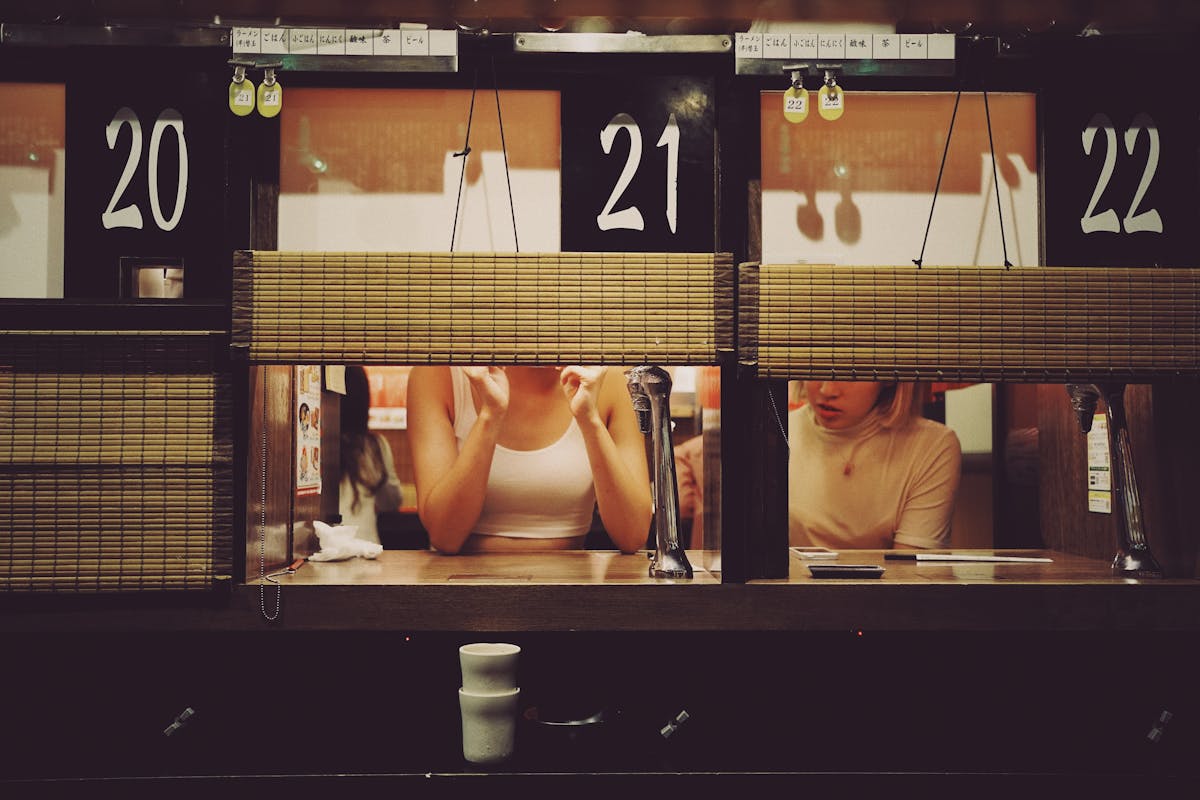
Ramen shops have a reputation for being intimidating to travelers, and the ordering system doesn’t help. Most ramen restaurants use a vending machine by the door. You put your money in, press buttons to choose your bowl and any extras, collect your tickets, and hand them to the staff. Simple enough once you know what’s happening. Baffling the first time.
A bowl of ramen typically costs ¥800 to ¥1,200 (about £4 to £6). Some places do half portions for children, though not all. We usually order one adult bowl and share, or get a full bowl each and accept that leftovers happen.
Now, the solo booth places — Ichiran is the famous one. You sit in a tiny individual cubicle and eat your ramen in near-silence. It’s an experience. But with small children it’s impractical. You can’t supervise a four-year-old in the next booth. Stick to regular counter or table ramen shops when the kids are along. Ichiran can wait for date night.
The good news: most children like ramen. It’s noodles in soup. You can ask for mild broth. The noodles are the star, and kids tend to slurp them up happily. Speaking of which — slurping is not only acceptable in Japan, it’s encouraged. Tell the children. They’ll be thrilled.
Japanese Curry: The Secret Weapon
This is the one I recommend to every family heading to Japan for the first time. Japanese curry is nothing like a British curry. It’s thick, mild, slightly sweet, and served over rice. Think of it as a very gentle stew. Children love it.
CoCo Ichibanya (locals call it CoCo Ichi) is the big chain, and it’s everywhere. You choose your rice amount, spice level, and toppings. The mildest level is essentially zero heat — perfect for small ones. A kids’ meal runs about ¥500 (around £3), and adult portions are ¥600 to ¥800 (£3 to £4). They have picture menus. They have high chairs. They have the patience of saints when your toddler drops rice on the floor.
Our daughter, who at home refuses anything that isn’t beige, ate Japanese curry three times in one week. I nearly fell off my chair.
Family Restaurants: Cheap, Cheerful, and Absolutely Fine
Japan has a category of restaurant that doesn’t really exist in the UK: the “family restaurant” or famiresu. These are big, affordable chain restaurants designed specifically for families. Gusto, Royal Host, Saizeriya, Jonathan’s — you’ll see them in every neighbourhood.
What makes them good for kids:
- Picture menus, sometimes with English translations
- High chairs available
- Drink bars — pay once (usually ¥200 to ¥300, about £1 to £1.50), refill unlimited soft drinks, juices, teas, and sometimes soups
- Huge variety: pasta, rice dishes, hamburger steaks, pizza, salads, desserts
- Nobody bats an eye at noisy children
Saizeriya deserves special mention. It’s an Italian-Japanese chain where you can get a margherita pizza for about ¥400 (£2). The food isn’t going to win awards, but it’s perfectly decent, and when you’re travelling with tired, hungry children at 5pm and everyone’s about to melt down, a cheap pizza and unlimited juice is worth its weight in gold.
Royal Host is a step up in quality and price, but still very reasonable. Think ¥800 to ¥1,200 per person (£4 to £6). The kids’ menu comes with a toy. It works.
Convenience Stores: Don’t Be a Snob
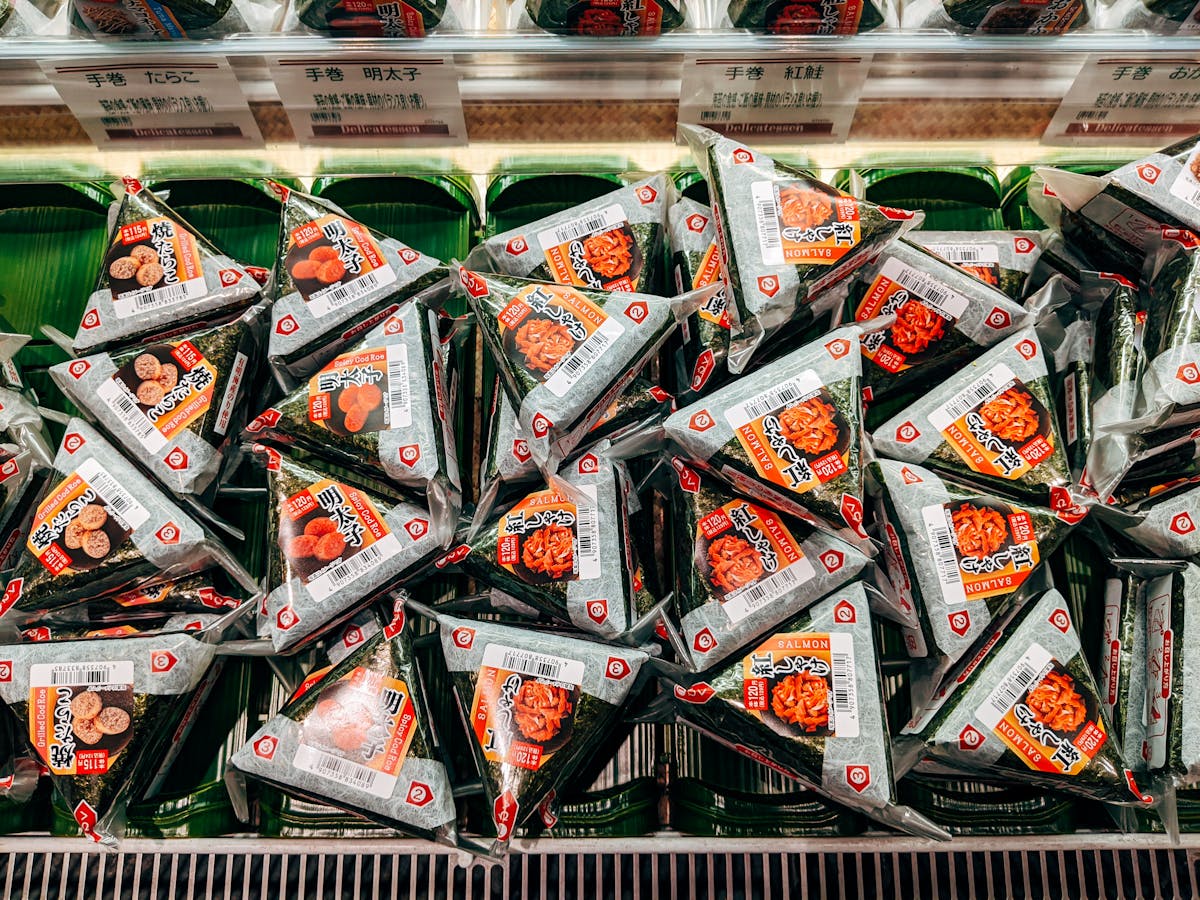
I’m going to say something that might upset food purists: some of the best meals we had in Japan came from 7-Eleven.
Japanese convenience stores — 7-Eleven, Lawson, and FamilyMart are the big three — are nothing like their British equivalents. Nothing. The food is made fresh, the quality is genuinely good, and the range is enormous. Onigiri (rice balls with various fillings) cost ¥120 to ¥200 each (about 60p to £1). Sandwiches are soft, crustless, and come in flavours kids recognise: egg mayo, ham and cheese, strawberry and cream. Bento boxes with rice, chicken, and vegetables run ¥400 to ¥600 (£2 to £3).
For fussy eaters, convenience stores are a lifeline. There’s always something familiar. Plain bread. Cheese. Fruit. Those little packs of Anpanman biscuits that Japanese toddlers seem to survive on.
We made a habit of grabbing breakfast from the nearest conbini most mornings. A couple of onigiri, a banana, a carton of milk — done. Quick, cheap, no waiting, no wrestling a pushchair into a restaurant at 7am.
Vending Machines: They’re Everywhere and They’re Brilliant
Japan has roughly 5 million vending machines. You will never be more than a few metres from a cold drink, which when you’re dragging children around temples in August is an absolute godsend. Most sell water, tea, juice, and coffee for ¥100 to ¥160 (50p to 85p). Some sell hot drinks in winter. Some sell soup. We found one that sold bananas.
They take coins and notes, and increasingly accept IC cards like Suica and Pasmo. Teach the kids to use them. It keeps them occupied for a surprisingly long time.
What Fussy Eaters Will Actually Eat
Let’s be realistic. Not every child is going to embrace raw fish and fermented soybeans. Here are the reliable options we’ve found across multiple trips with two children of varying levels of pickiness:
Rice. It’s everywhere. It’s plain. It’s fine.
Plain udon noodles. Thick, white, slippery noodles in a mild broth. Available at most restaurants and convenience stores. My safe bet for any meal where the kids are being difficult.
Chicken karaage. Japanese fried chicken. Crispy, juicy, boneless pieces. I have yet to meet a child who doesn’t like this. Available at convenience stores, family restaurants, izakayas, and pretty much anywhere that serves food.
Edamame. Salted soybeans in pods. Surprisingly popular with children because they get to pop the beans out, which is fun. Available as a side dish almost everywhere.
Tamago (egg sushi). Sweet omelette on rice. No raw fish involved. A staple at conveyor belt sushi places.
Gyoza. Pan-fried dumplings, usually filled with pork and vegetables. Crispy on the bottom. Cheap. Kids approve.
Japanese pancakes and crepes. For when bribery is required. Street stalls selling crepes are common in areas like Harajuku and Dotonbori.
Honestly, we’ve never had a day in Japan where the children went hungry. Worst case scenario, there’s a McDonald’s. They’re everywhere, and the Japanese menu has some interesting additions, but fundamentally it’s still chips and nuggets.
High Chairs, Etiquette, and Things to Know
Most family-friendly restaurants have high chairs or booster seats. The fancier or smaller the restaurant, the less likely they are to have them, but we’ve rarely been stuck.
A few things worth knowing:
Shoes off. Some restaurants, particularly traditional ones, require you to remove shoes at the entrance. There’ll be a shoe rack or lockers. If you’re sitting on tatami mats on the floor, shoes are always off. With small children who can barely manage their own shoes, this adds five minutes to every meal. Factor it in.
Oshibori towels. You’ll be given a hot or cold wet towel at the start of most meals. It’s for wiping your hands. With children, you’ll use it approximately forty-seven times before the food even arrives. They’re wonderful.
Slurping is fine. I mentioned this already but it bears repeating. Slurping noodles and soup is perfectly polite in Japan. Your children will fit right in.
Water is free. Most restaurants serve free water or tea, often from a self-service jug or machine. You don’t need to order drinks unless you want to.
Tipping doesn’t exist. Don’t leave a tip. It’s not expected, and in some places it can cause confusion. One less thing to think about.
A Note on Allergies
This is the one area where eating in Japan gets tricky. If your child has food allergies, you’ll need to prepare carefully.
Japanese food labelling is actually quite thorough — packaged items in convenience stores list the major allergens. But in restaurants, allergen information is often only available in Japanese. English-speaking staff are less common outside major tourist areas. Cross-contamination is rarely discussed.
Soy, wheat, egg, and seafood are in almost everything. Soy sauce alone contains both soy and wheat. If your child has coeliac disease or a soy allergy, eating out will require significant planning.
My strongest recommendation: get allergy translation cards printed before you go. Several websites sell downloadable cards in Japanese that explain specific allergies clearly. We’ve also had success using Google Translate’s camera function to scan menus and ingredient lists, though it’s not perfect.
For severe allergies, self-catering accommodation with a kitchen gives you the most control. Many Airbnbs and serviced apartments in Japan have full kitchens, and supermarkets are well-stocked and affordable.
How Much to Budget for Food
Japan has a reputation for being expensive. For food, it really isn’t — not if you eat where locals eat.
A realistic daily food budget for a family of four, mixing convenience store breakfasts, a casual lunch, and a proper sit-down dinner: ¥6,000 to ¥10,000 (roughly £32 to £53). That’s comfortably less than you’d spend in London, and the quality is better.
You can absolutely spend more if you want to, but you don’t have to. Some of our favourite meals in Japan have cost under a tenner for the whole family.
The Bottom Line
Japan is a fantastic country for eating out with children. The combination of cheap, high-quality food, child-friendly restaurants, and convenience stores on every corner makes feeding a family remarkably easy. Even fussy eaters will find things they like. Even toddlers are welcome.
Don’t overthink it. Don’t pack seventeen boxes of Ella’s Kitchen pouches in your suitcase. Japan has got you covered.
For more on planning a family trip, see our complete guide to family travel in Japan.