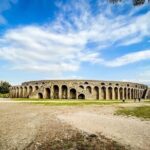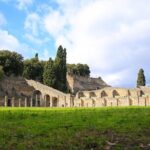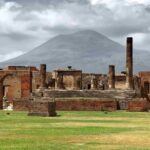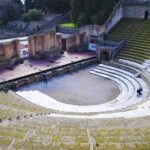
Pompeii in two hours is a tall order, but this archaeologist-guided walk helps you hit the big stops without getting lost or stuck in boring waiting time. You get skip-the-line entry and a guide who can explain what you’re seeing, not just point at stones.
What I like most is the small group size (up to 20), which makes it easier to ask questions and actually hear answers. I also like that the route covers both famous landmarks and the everyday parts of Roman life, from squares to baths to a brothel.
One thing to consider: it’s a lot of walking over uneven ground, and a couple of stops can still feel crowded inside the ruins. This tour is best for travelers who want a strong “greatest hits” version of Pompeii fast, especially families and first-timers.
Our tour guide Mario Celentano was very informative and knowledgeable about Pompeii, and he was very patient to answer all of our questions. Thank you Mario for all the fun facts! Your English is great! – From the American guy in blue vest who probably asked too many questions today
The guide was great with our kids and explained everything very well. Made it fun for the whole family! Would highly recommend!
Having a knowledgeable guide was invaluable. Julia walked us through the highlighted areas and educated us every step of the way.
- Key Points
- A Practical Look at This Pompeii Tour
- Meeting Point and Getting Started Smoothly
- Skip-the-Line: Why It Really Changes Your Day
- The Group Size Sweet Spot (and Why It Matters)
- Itinerary Breakdown: What You See and Why Each Stop Counts
- Stop 1: Archaeological Park of Pompeii (Porta Marina Superiore)
- Stop 2: Foro de Pompeya (Main Square)
- Stop 3: Basilica (Court House)
- Stop 4: Lupanar (Brothel)
- Stop 5: Granaries of the Forum
- Stop 6: House of Menander
- Stop 7: House of the Faun
- Stop 8: Stabian Baths (Terme Stabiane)
- Stop 9: Via dell’Abbondanza (Main Street)
- Stop 10: Thermopolium VI (Thermopolium)
- Stop 11: Teatro Grande (Theater)
- Stop 12: Casa dei Vettii (House of the Vettii)
- What’s Included (and What’s Not)
- Accessibility, Comfort, and the “Bring This” List
- Timing, Timing, Timing: The Two-Hour Reality Check
- How Good Are the Guides, Really?
- Value for Money: Is .67 Worth It?
- Cancellation and Booking Notes
- Should You Book This Pompeii Tour?
- FAQ
- h2 Should I bring my own tickets?
- h2 How long is the tour?
- h2 Where do I meet the guide?
- h2 Is the tour in English?
- h2 Are headsets provided?
- h2 What parts of Pompeii will we see?
- h2 What should I bring for comfort?
- h2 What’s the cancellation policy?
- More Tour Reviews in Pompeii
Key Points
- Skip-the-line entry helps you start seeing Pompeii sooner
- Archaeologist guidance means clearer context for what each building and street was for
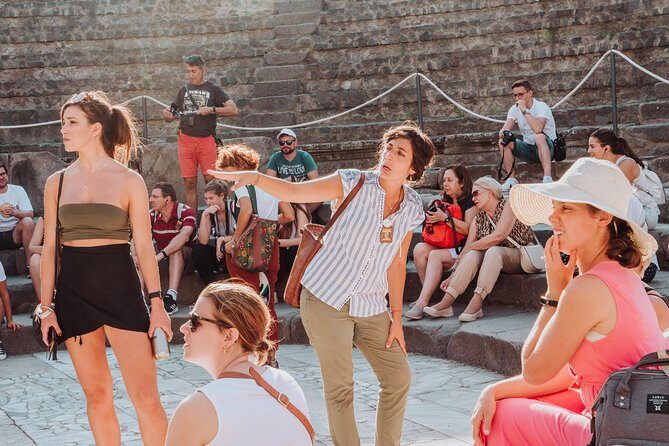
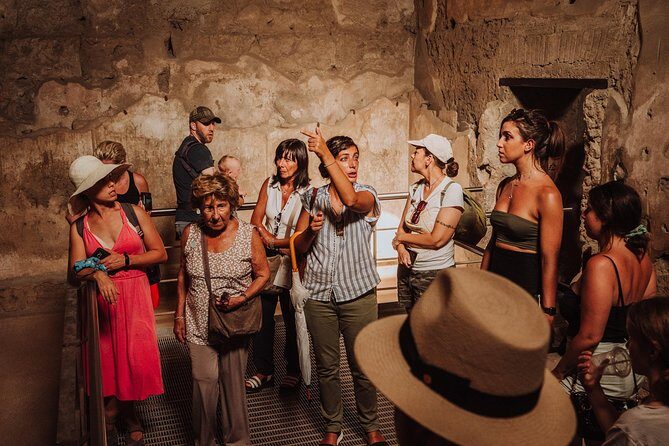
- Small groups (max 20) make Q&A more realistic than big-bus tours
- 12 major stops in ~2 hours hits the Forum, houses, baths, theater, and more
- Headsets are available for groups of 16+ to improve audio
- Plan extra time on your own after the tour if you want to linger
A Practical Look at This Pompeii Tour
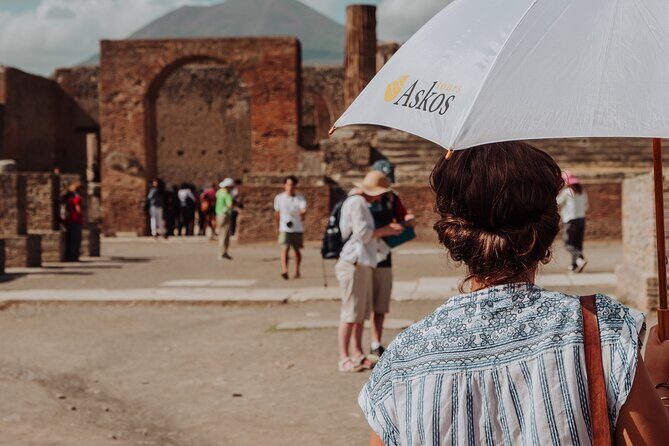
This is a 2-hour Pompeii walking tour focused on major highlights, led by an expert archaeologist guide. You meet at the main entrance area of the archaeological park at Porta Marina Superiore—your guide will hold a sign with Askos Tours at the top. From there, the tour moves through a well-chosen route designed to cover a lot of ground efficiently.
At $35.67 per person, the big value is not just the admission. You’re also paying for structured guidance, skip-the-line access, and a format that keeps the group small enough to ask real questions. For many travelers, that combination is what turns Pompeii from “cool ruins” into “wait, I get it now.”
The reviews you’ll find are very consistent on one point: the guides tend to be the reason people love the day. Names like Mario, Alexandra, Julia, Antonio, and Rosanna come up again and again, with comments praising clear explanations, patience, and a pace that doesn’t feel like a sprint. There’s one notable caution too: a couple of guests felt the experience didn’t match expectations due to pacing and interaction. That’s a good reminder to pick a time when you’re ready for guided structure, not total free-roaming.
You can also read our reviews of more tours and experiences in Pompeii.


Meeting Point and Getting Started Smoothly
You start at Via Villa dei Misteri, 2, 80045 Pompei NA, Italy, and the tour ends at Piazza Esedra, 80045 Pompei NA, Italy. That matters because you’re not ending right where you started. You’ll likely want to plan your next move—lunch, trains, or even more exploring—after the tour.
When you arrive, look for the guide at the archaeological entrance: Porta Marina Superiore with a sign that includes Askos Tours. This is one of those tours where being easy to spot actually helps your stress level. You can skip the “where do I stand” guessing game.
The tour also includes a 10-minute segment at the start with admission ticket included, so you’re not waiting around while someone sorts out entry. That’s a small thing that makes a big difference when Pompeii is busy.
Soooo worth your time and money! Our guide Alexandra was so knowledgeable, to the point and made you really appreciate and value Pompeï! We learned a lot, laughed a lot and enjoyed every second! Grazie mille Alexandra! Inez & Sue
Our guide is quite professional, and explain clearly the exhibits. Good control in timing, and very kind to reply our questions thoroughly.
Ilaria was wonderful! Knowledgeable, kind, and she knew her stuff! I am so grateful see was our guide! Thank you!!!
Skip-the-Line: Why It Really Changes Your Day
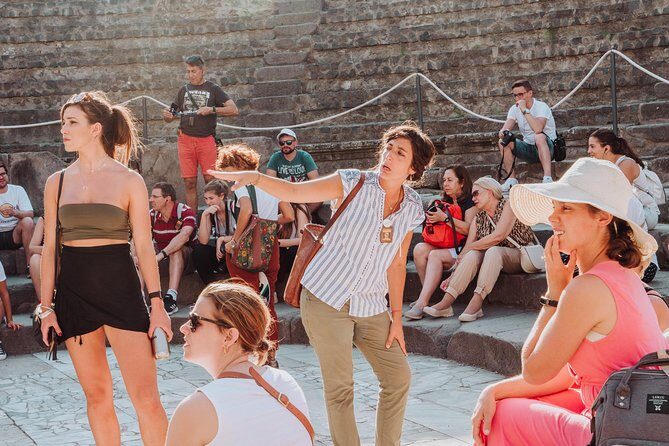
Pompeii can feel like a place where time disappears fast. Even when you’re excited, you can get stuck in queues, and then the whole afternoon turns into damage control.
This tour includes skip-the-line admission tickets. That means you can get moving through the site sooner. In a short 2-hour experience, those minutes aren’t “nice to have”—they’re the difference between seeing the highlights and just surviving the entrance.
One review also mentioned being late by about 20 minutes and the company being friendly and helpful, shifting the tour to the next available slot. That’s not guaranteed for everyone, but it’s a sign the operation tries to handle real-world timing issues.
The Group Size Sweet Spot (and Why It Matters)
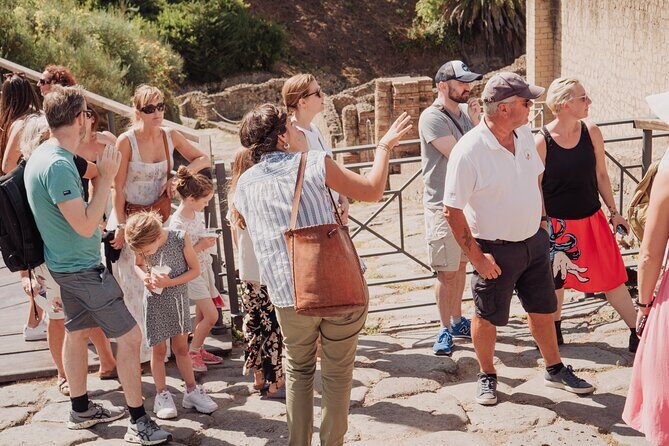
The group size is capped at 20 travelers per guide, and for larger groups, headsets are used for those in groups of 16 or more.
This setup is practical. In Pompeii, sound carries badly between ruins, and people often cluster around the same viewpoints. Reviews repeatedly mention the value of audio support—“ear phone amp.” shows up—plus guides who kept an appropriate pace and checked in if they were going too fast or slow.
That pacing detail is underrated. When a guide constantly watches the group, your tour feels calmer. People don’t end up stretching their necks and missing the explanation while they try to catch up.
Itinerary Breakdown: What You See and Why Each Stop Counts
This tour moves through 12 stops plus a short walk on Via dell’Abbondanza. Each stop gets roughly 10 minutes of guided time (except the street segment, which is 10 minutes free for the admission part).
Here’s what that means in real traveler terms: you’re not getting a “deep reading” of one single house for an hour. Instead, you’re getting a guided snapshot of Pompeii’s main roles—city center, public buildings, neighborhoods, daily life, and entertainment.
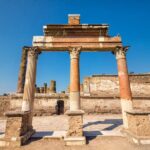

Stop 1: Archaeological Park of Pompeii (Porta Marina Superiore)
You meet at Porta Marina Superiore and begin inside the archaeological park. The guide holds the Askos Tours sign so you can confirm you’re with the right group.
This first stage is where your guide can set the stage: what Pompeii is, how it was laid out, and what to pay attention to before you start seeing the floors, walls, and street plans everywhere. You also get admission included here.
Stop 2: Foro de Pompeya (Main Square)
The Forum is Pompeii’s public heartbeat. In a short tour, this is a smart use of time because it gives you a mental map of civic life.
You’ll walk through the idea of Pompeii as a working city, not just a museum of collapsed buildings. Think: gatherings, official buildings, public events—everything that made the city run.
Stop 3: Basilica (Court House)
The Basilica was a court and a place for business-adjacent meetings. Guides often help you connect the architecture to the daily rhythm of law and commerce.
In a two-hour visit, this stop helps you move beyond “pretty ruins” and into “how people lived, argued, traded, and worked.”
Stop 4: Lupanar (Brothel)
Yes, it’s a famous stop. And yes, it can feel awkward if you’re expecting only wholesome postcards.
But it’s also one of the most effective ways to understand that Pompeii was a full city with all the social layers you’d find anywhere—advertising, commerce, and entertainment in everyday places. Your archaeologist guide’s job here is to keep it grounded in context, not shock value.
Stop 5: Granaries of the Forum
The granaries matter because food supply is power. If you want a sense of how a Roman city stayed fed, grain storage is a key clue.
This is one of those stops that can feel “less exciting” at first glance. But with an archaeologist guide, it usually turns into a practical explanation about organization, storage, and the city’s ability to handle normal life.
Stop 6: House of Menander
This is a highlight house stop. You’ll see how wealthy Romans lived, and you’ll get guided commentary that usually points out design choices and what the space meant.
In a fast tour, houses can blur together. Having a guide who can differentiate what makes one home distinct (layout, features, decorative style) is the difference between “I saw a house” and “I understand what that house is telling me.”
Stop 7: House of the Faun
Another major house stop. This is often where the scale starts to impress you more than the details.
If you’re traveling with kids, this is the type of stop that can still work well. One review specifically praised the guide’s ability to make it fun for families and kids of different ages, and houses are usually where that storytelling lands.
Stop 8: Stabian Baths (Terme Stabiane)
Baths are a big deal in Roman life, and the Stabian Baths are one of Pompeii’s best ways to understand the social side of daily routines.
Your guide’s explanation here is what makes the ruins feel alive: why people went, how spaces were used, and what “public hygiene + social time” looked like. Multiple reviews mention guides bringing buildings and streets to life, and baths are a natural place for that.
Stop 9: Via dell’Abbondanza (Main Street)
This is a street segment: Via dell’Abbondanza, listed as 10 minutes admission free. This is where you get a quick sense of how Pompeii moved—literally the street plan and the rhythm of walking through the city.
It’s also a nice breathing point. Streets let you reset your brain between major buildings. You can look for shops, thresholds, and the sense of how commercial life sat alongside public spaces.
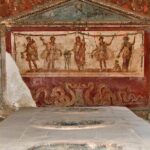
Stop 10: Thermopolium VI (Thermopolium)
A thermopolium is a kind of Roman street food spot—something like a warm-food counter you could grab quickly.
In other words: it’s Pompeii’s version of “grab and go.” This stop is great if you’re the type who likes to picture what daily life felt like. With good guidance, you can connect food service to street layout and how commerce worked.
Stop 11: Teatro Grande (Theater)
The Theater brings a different side of Pompeii: entertainment and public gatherings. A guided visit here helps you see the intended audience experience—where people sat, how performances fit into life, and why entertainment mattered.
Also, this is often a good place to understand Pompeii’s community energy beyond politics and commerce.
Stop 12: Casa dei Vettii (House of the Vettii)
The tour ends with another famous home: the House of the Vettii. House stops often serve as a final “aha” because they show private life after you’ve just seen public buildings and streets.
The ending location is Piazza Esedra, which makes sense if you want to keep exploring on your own right after the guided route.
What’s Included (and What’s Not)
Included:
- Dedicated guidance and assistance
- Small group (max 20)
- Expert archaeologist
- Pompeii admission fee
- Headsets for groups of 16+
- Skip-the-line admission tickets
Not included:
- Transportation
- Food and drinks
That matches reality. You still need to get yourself to Pompeii and you’ll want water, especially in warmer months. One review advice line was simple and practical: bring a fan in summer and bring a refillable bottle, since water is available from fountains.
Accessibility, Comfort, and the “Bring This” List
Most travelers can participate. Service animals are allowed, and the meeting point is near public transportation.
But the reviews make one theme clear: Pompeii involves a lot of walking. Uneven surfaces are part of the experience. If you’re dealing with mobility limitations, plan carefully and expect slower going even with a guide.
Also, consider weather. Multiple reviews mention heat and sun protection (umbrella/hat). This is one of those places where shade can be scarce, and the ruins don’t stop the sun.
Timing, Timing, Timing: The Two-Hour Reality Check
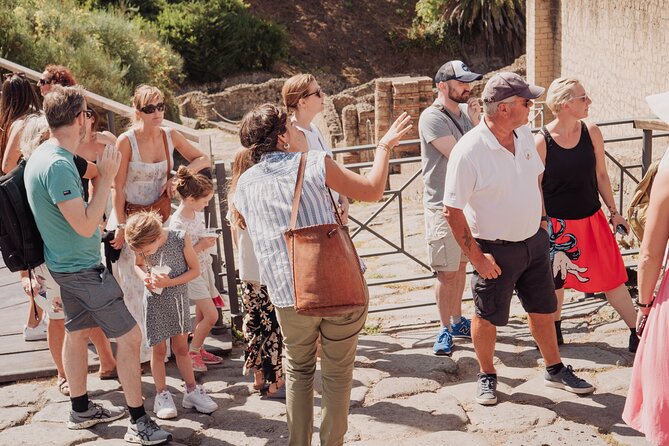
This is a 2-hour tour. That’s ideal if you want to see a lot and then continue on your own. Several reviews mention staying longer to explore after the tour, and one said to plan at least a couple of hours more on your own.
So think of this as:
- 2 hours: guided “best of” Pompeii with context
- extra time: your slower, more personal wandering
If you try to do Pompeii like it’s a theme park ride—one quick lap—you’ll miss the point. The guide helps you set up the right questions so that your self-guided time feels more rewarding.
How Good Are the Guides, Really?
The tour gets a 4.9 rating with 511 reviews and 98% recommending it. The most common praise is about guides being:
- knowledgeable
- patient
- clear and confident in English
- willing to answer questions
Examples that stand out:
- Mario is praised for being informative and patient, with great English.
- Alexandra is praised as knowledgeable and making Pompeii feel worth every minute.
- Julia and Teresa are praised for walking people through key areas and explaining step by step.
- Antonio is praised for pacing and for being able to answer questions.
- One review highlighted a guide being flexible about timing changes when the group arrived late.
There’s also a cautionary review: one traveler felt the guide spoke too slowly and didn’t leave room for questions. That’s not the majority story, but it’s the kind of mismatch that can happen with any guided product. Small group tours still rely on the specific guide and the day’s flow.
Value for Money: Is $35.67 Worth It?
For a short, well-structured Pompeii visit, $35.67 can be good value—especially because it includes:
- admission
- skip-the-line entry
- an archaeologist guide
- small-group format
If you’d otherwise arrive and try to piece together sights on your own, you’d spend time figuring out what you’re looking at. That’s expensive in your most limited resource on vacation: time.
The only “cost” to watch is your expectations. This tour isn’t trying to cover every dig site or every room in detail. It’s a highlights route with explanation. If that matches what you want, it’s a smart buy. If you want a slow, deep, room-by-room excavation story, you might want a longer or private option.
Cancellation and Booking Notes
You can cancel for free up to 24 hours in advance for a full refund. If you cancel less than 24 hours before start time, it’s not refunded.
Confirmation happens at booking time. Service animals are allowed. There are also rules for pets: only dogs up to 10 kg and 40 cm height are permitted, must be on a leash, and must be held in arms inside buildings with excrement cleanup required.
Should You Book This Pompeii Tour?
If you want a guided highlights route that makes Pompeii easier to understand fast, I think this is a strong choice. The skip-the-line entry and archaeologist-led explanations are exactly what help most first-timers feel confident instead of overwhelmed.
I’d especially book it if you’re traveling with family, you want a manageable 2-hour plan, or you like asking questions while you walk. The main reason to hesitate is if you need a very slow pace or you’re hoping to focus on current digging areas (this tour is built around classic major stops).
FAQ
h2 Should I bring my own tickets?
h3 No. Admission is included, and the tour also uses skip-the-line admission tickets.
h2 How long is the tour?
h3 It runs about 2 hours.
h2 Where do I meet the guide?
h3 The tour starts at Via Villa dei Misteri, 2, Pompei. The guide meets you at the archaeological entrance called Porta Marina Superiore and holds a sign with “Askos Tours.”
h2 Is the tour in English?
h3 Yes, it’s offered in English.
h2 Are headsets provided?
h3 Headsets are provided for groups of 16 or more.
h2 What parts of Pompeii will we see?
h3 You’ll visit the archaeological park entrance area and then make stops including the Forum, Basilica, Lupanar, Granaries of the Forum, House of Menander, House of the Faun, Stabian Baths, Via dell’Abbondanza, Thermopolium VI, Teatro Grande, and Casa dei Vettii.
h2 What should I bring for comfort?
h3 Since you’ll be walking on uneven surfaces and can be in sun, bring sun protection like a hat or umbrella. A refillable water bottle can also help, especially in warmer weather.
Explore Pompeii with an Archaeologist
"Our tour guide Mario Celentano was very informative and knowledgeable about Pompeii, and he was very patient to answer all of our questions. Thank ..."
h2 What’s the cancellation policy?
h3 You can cancel up to 24 hours before for a full refund. Changes within 24 hours of the start aren’t accepted.