
If you’re short on time but still want Pompeii that actually makes sense, this Sharing Tour of Pompeii is a smart way to go. It runs about 2 hours 30 minutes, starts at Pompei Scavi Villa Dei Misteri, and aims you at the ruins that help you understand how daily life worked before Vesuvius buried everything.
I especially like that you get a private tour guide (not a crowd-guiding situation), and that the stops are tightly chosen: a Roman temple, a standout domus known for Roman art, and the lupanari—the brothel district that’s still readable in the layout.
One thing to plan for: the Pompeii entrance ticket is not included (listed as €20 per person), so your total cost will be higher than the tour price. Also, because there’s a minimum-traveler requirement, you should stay alert to any last-minute schedule changes.
- Key Points
- A 2.5-hour Pompeii plan that won’t eat your whole day
- Where you meet, and how pickup usually works
- What the small group format really means
- The guide: the part travelers seem to trust most
- Stop 1: A Roman temple buried and recovered
- Why this temple stop is a good first move
- Stop 2: Casa dei Vettii and the feel of Roman domestic life
- What to pay attention to here
- Stop 3: The lupanari—commercial sex in Roman Pompeii
- A reality check (and why it’s still worth seeing)
- Tickets, price, and the real cost of going
- How to think about value
- Duration and pacing: what 2 hours 30 minutes buys you
- Language and tickets: English and mobile access
- Booking timing: what “about 50 days in advance” signals
- Cancellation policy: free refund, but watch the timing
- A practical tip to avoid stress
- Who this tour is best for
- What you’ll leave with (beyond photos)
- Should you book this Pompeii sharing tour?
- FAQ
- How long is the Pompeii sharing tour?
- What is the price for the tour?
- Is the Pompeii entrance ticket included?
- Is there pickup from my hotel or near my location?
- Where do we meet the guide?
- What language is the tour in?
- What’s the cancellation policy?
- The Best Of Pompeii!
- More Tours in Pompeii
- More Tour Reviews in Pompeii
Key Points
 1 / 6
1 / 6 2 / 6
2 / 6 3 / 6
3 / 6 4 / 6
4 / 6 5 / 6
5 / 6 6 / 6
6 / 6- Up to 8 people means you get more real guide time than big-bus tours.
- 2.5 hours is a workable Pompeii sprint if you pick your priorities carefully.
- Entrance ticket is extra at €20 per person, so budget for it up front.
- English mobile tickets and clear meeting logistics make it easier to start smoothly.
- You’ll hit three high-impact stops that explain religion, home life, and sex commerce in Roman Pompeii.
- Free cancellation up to 24 hours helps if your travel plans are fluid.

👉 See our pick of the The 8 Best Workshops & Classes In Pompeii
A 2.5-hour Pompeii plan that won’t eat your whole day
Pompeii can feel like a sea of stones. So the value here isn’t only that you see famous ruins—it’s the way the tour is structured to help your brain build a timeline. In about 2 hours 30 minutes, you go from a public sacred space, to a wealthy home, and then to a place tied to commercialized sex.
You’ll be moving at a human pace. This matters because Pompeii ruins are spread out, and getting lost costs time you won’t get back. The meeting point is also specific: Pompei Scavi Villa Dei Misteri (80045 Pompei), and you’re told to find the guide with the Sharing Tour of Pompei sign.
You can also read our reviews of more tours and experiences in Pompeii.



Where you meet, and how pickup usually works
Logistics can make or break an early start. This tour lists pickup offered, but even with pickup, you still anchor at the start point: Pompei Scavi Villa Dei Misteri. In practice, you’ll look for the guide holding the correct Sharing Tour of Pompei sign.
If you’d rather manage yourself, the listing also says the meeting area is near public transportation, which is useful if you’re not using the pickup option. Either way, the format is designed to get you into the right place without stress.
What the small group format really means
This is described as a private tour/activity, but it’s also labeled sharing with a cap of up to 8 people. The practical takeaway: you won’t be swallowed by a huge group, and you should get more chances to ask questions.
That’s a big deal at Pompeii, where the same wall, doorway, or street corner can tell different stories depending on context. A guide can turn what looks like ruins into something readable fast.
The guide: the part travelers seem to trust most
The strongest theme behind this tour is simple: guides. At Pompeii, that isn’t a nice-to-have. It’s how you figure out what you’re looking at—what each place was for, what social life looked like, and why certain details matter.
Even if you’ve read about Pompeii before, having a guide connect the dots helps you avoid the common trap: walking past “big things” without understanding daily life around them.
Stop 1: A Roman temple buried and recovered
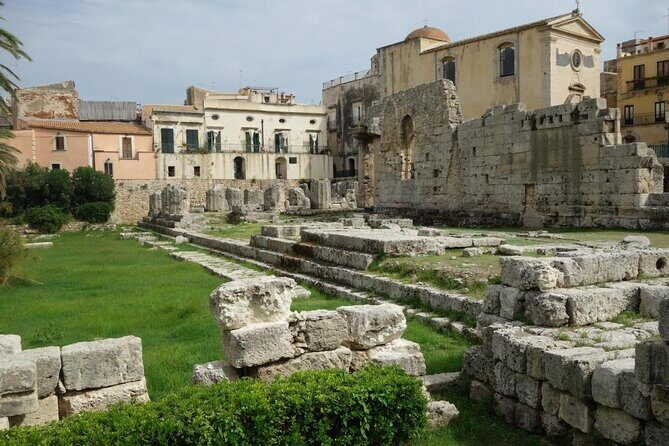
Your tour starts with a Roman temple that was buried by the eruption of Vesuvius in 79 and then recovered through archaeological excavation. Temples in Roman towns were more than just buildings; they were tied to public identity, ritual calendars, and community life.
On this stop, you should expect the guide to help you interpret the surviving structure and explain what makes a temple a temple in this kind of city. The value is orientation: once you understand how sacred space worked, the rest of the town feels less random.



Why this temple stop is a good first move
Starting with a temple gives you a framework. You learn that Pompeii wasn’t only houses and shops. There were places built for worship, and those spaces shaped how people organized their lives. It sets the tone, and it helps you notice patterns as you move on.
Stop 2: Casa dei Vettii and the feel of Roman domestic life
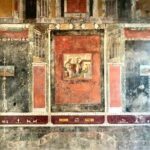
Next is the Casa dei Vettii, described as a Roman domus—a household—also buried during Vesuvius in 79 and found through excavation. This place is especially important because it’s highlighted as one of the great examples of Roman art of the first century, and it’s named after the owners (the Vettii).
Even without turning this into a museum lesson, a domus stop does something valuable: it makes you think about scale and routine. You’ll be looking at a home that belonged to real people, with choices that reflect wealth, taste, and status in Roman society.
What to pay attention to here
Since the tour is built for understanding, I’d focus less on trying to memorize features and more on listening for what makes this house significant. Ask yourself: what does “great Roman art” mean in the context of a private home? How would the layout have shaped movement and social visits?
A good guide will keep the explanation tied to what you can see in front of you, not just history books.
Stop 3: The lupanari—commercial sex in Roman Pompeii
The last stop is the lupanari, from Latin lupa (prostitute). The tour description frames it clearly: these were places for mercenary sexual pleasure, essentially brothels and appointment houses in the Roman period. This is one of those topics people recognize from Pompeii—but the tour helps ground it in real, visible ruins.
You should expect a frank, interpretive walk-through rather than squeamish guessing. The point isn’t shock value. It’s the reality that ancient cities had commerce systems we still recognize in different forms.
A reality check (and why it’s still worth seeing)
If you’re worried about this stop being uncomfortable, you’re not wrong to think about it. But for me, what makes it worthwhile is the balance: you’re not only seeing wealth and religion, you’re also seeing how the city functioned, including the parts people didn’t advertise politely.
That’s the whole Pompeii lesson. It wasn’t curated. It was life.
Tickets, price, and the real cost of going
The tour price is listed as $193.49 per group (up to 8). On paper, that can look like a steal—especially if you’re traveling with others. But there’s a key cost you must plan for: the Pompeii entrance ticket is not included and is listed as €20 per person.
How to think about value
If you fill the group (8 people), your tour cost per person is roughly $24. If your group is smaller, the tour portion rises. Either way, the entrance ticket becomes a meaningful fixed cost that you can’t ignore.
So the value equation is this:
- If you can share the group cost, the tour part is very reasonable.
- If you’re solo, it’s more expensive, and you’ll feel the entrance fee even more.
Also note: this tour says they buy Pompeii entrance tickets daily for customers. That’s helpful, but it still doesn’t change the fact that the ticket itself is an added €20 per person.
Duration and pacing: what 2 hours 30 minutes buys you
At 2 hours 30 minutes, you’re not doing “every ruin you’ve ever seen on Instagram.” You’re doing a curated route that aims to cover three different slices of Pompeii:
- Public religion (temple)
- Private wealth and art (Casa dei Vettii)
- Commercial sex economy (lupanari)
This pacing is ideal if you want clarity, not just volume. Pompeii is too big to chase everything in one day unless you want sore feet and a foggy head afterward.
Language and tickets: English and mobile access
This tour offers English, and it lists a mobile ticket. That’s practical. You don’t want to spend the first part of your trip fumbling for paperwork.
Confirmation is said to be received at the time of booking, and service animals are allowed. If you’re traveling with accessibility needs, this at least signals a willingness to accommodate.
Booking timing: what “about 50 days in advance” signals
The listing notes it’s typically booked around 50 days in advance. That’s a useful clue: Pompeii tours can sell out, especially in busy seasons or on limited time slots.
If you have a specific travel window, don’t wait for last minute deals. Book when your dates are firm.
Cancellation policy: free refund, but watch the timing
You get free cancellation up to 24 hours before the experience’s start time for a full refund. The rule is straightforward:
- Cancel at least 24 hours ahead to get a full refund.
- Cancel later than that, and you likely won’t get your money back.
- Changes within 24 hours aren’t accepted.
One extra point: the tour requires a minimum number of travelers. If it doesn’t meet the minimum, it can be canceled, and you’ll be offered an alternative date or a full refund.
A practical tip to avoid stress
Because there’s a minimum-traveler rule, I’d keep an eye on your confirmation details and messages close to departure. Some travelers report last-minute changes in similar situations, so treat final day timing like it matters.
Who this tour is best for
This tour fits best if you:
- Want a high-impact Pompeii visit without getting overwhelmed.
- Prefer a guided explanation over wandering.
- Like understanding how different aspects of city life connect.
- Travel in a small group where the per-group pricing works in your favor.
It might be less ideal if you want a long, unbroken self-guided exploration, or if you’re the type who wants to hit dozens of stops. This is a focused route.
What you’ll leave with (beyond photos)
After this tour, you should feel like Pompeii is readable. The temple teaches you about public ritual and sacred space. Casa dei Vettii helps you picture domestic life and the role of art in private status. The lupanari makes you understand the city’s commercial reality, not just its grand viewpoints.
That mix is why this kind of itinerary works. It turns Pompeii from ruins into a functioning place with social layers.
Should you book this Pompeii sharing tour?
I’d book it if you want a confident, guided Pompeii visit in 2.5 hours, especially with English guidance and a small group up to 8. The route is designed to give you a fast but coherent picture: sacred space, elite home life, and the parts of daily commerce people didn’t hide.
I would think twice if you want the cheapest possible deal or you’re traveling solo. With the €20 per person entrance ticket added on top, you’ll want to make sure the guide-driven format is worth it for you. Also, due to the minimum-traveler rule, keep your plan flexible enough to handle potential last-minute changes.
If you like your Pompeii with context—not just walking—this is a strong option.
Sharing Tour of Pompeii
FAQ
How long is the Pompeii sharing tour?
The tour runs for about 2 hours 30 minutes.
What is the price for the tour?
The price is $193.49 per group, up to 8 people.
Is the Pompeii entrance ticket included?
No. The listing states the Pompeii entrance ticket is not included and is listed as €20 per person.
Is there pickup from my hotel or near my location?
Pickup is offered. You’ll also find details for where to meet the guide, including that you should look for the guide with the Sharing Tour of Pompei sign at the start point.
Where do we meet the guide?
The meeting point is Pompei Scavi Villa Dei Misteri, 80045 Pompei. The tour ends back at the meeting point.
What language is the tour in?
The tour is offered in English.
What’s the cancellation policy?
You can cancel for a full refund if you do it at least 24 hours before the experience’s start time. The rules are based on local time, and the tour may also be canceled if the minimum number of travelers isn’t met.