Florence’s Accademia Gallery is one of those stops where planning really matters, and this ticket focuses on the key win: priority entrance and reserved timing so you can spend your energy inside, not queuing outside. You get access to Michelangelo’s unforgettable David, then move through the surrounding collections, finishing with the old instrument displays.
What I like most is the combo of blockbuster and surprise. First, you’re guaranteed your moment with the 17-foot marble David from Michelangelo. Second, the visit doesn’t end with statues; the Cherubini Conservatory collection of old instruments (including antique violins and early keyboard instruments) is a fun gear-shift that many first-time visitors don’t expect.
One drawback to consider: you’re not getting a full-on guided tour included. There’s an English host/greeter for entry and ticket handling, but if you want deep, long explanations throughout the rooms, you may need to add that elsewhere or rely on what’s available on-site.
- Key takeaways before you go
- Accademia Gallery priority entry: the real value in Florence
- Finding your meeting point: Piazza delle Belle Arti and the Elvis sign
- Your 2-hour plan: how the visit flows without feeling rushed
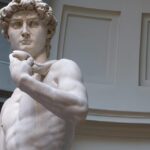
- Michelangelo’s David: the 17-foot impact you feel in your body
- Why David mattered: civil liberties, Florence, and the Medici shadow
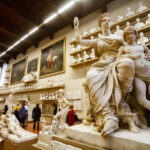
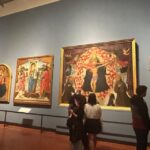
- The surrounding galleries: former convent rooms and academy collections
- Old musical instruments at the Cherubini Conservatory: the pleasant surprise ending
- Skip-the-line in practice: what to expect when crowds hit
- Price vs. value: is really worth it?
- Is it a guided tour or self-paced entry?
- Accessibility and what you should bring (and not bring)
- Who should book this Accademia ticket?
- Quick tips so your visit feels effortless
- Should you book it?
- FAQ
- What is the duration of the Accademia Gallery experience?
- Where do I meet for the ticket pickup?
- Is skip-the-line access included?
- Do I need a passport or ID?
- Is the experience wheelchair accessible?
- What languages are available?
- Are luggage or large bags allowed inside?
- What is the cancellation policy?
- More Museum Experiences in Florence
- More Tickets in Florence
- More Tour Reviews in Florence
Key takeaways before you go
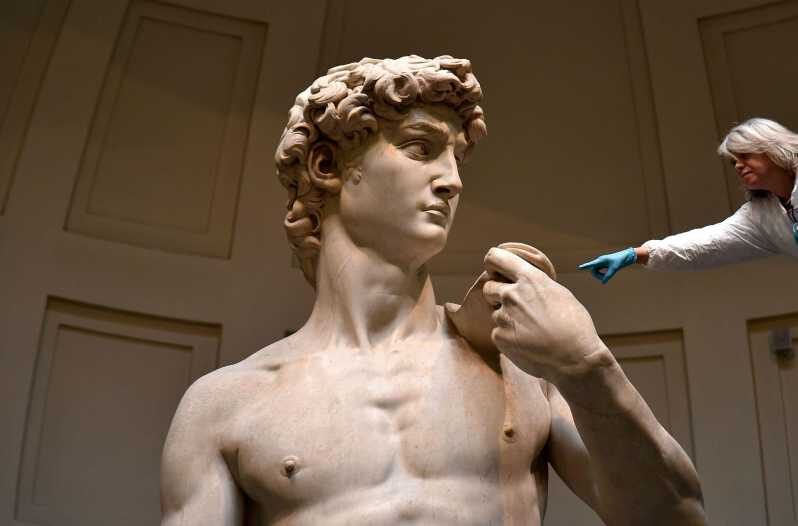
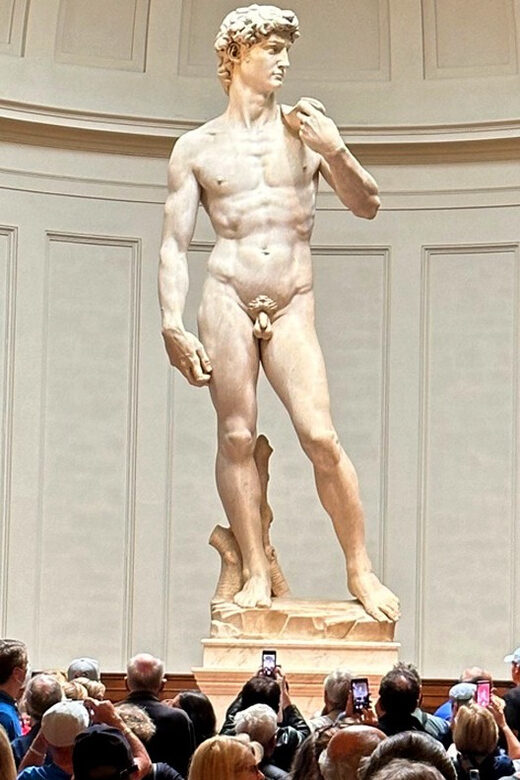
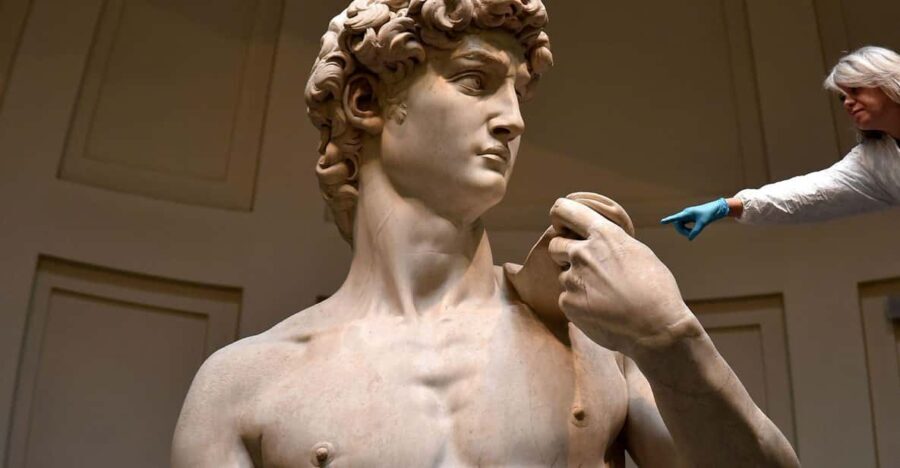
- Priority entrance via a separate entrance helps you beat the worst queue time in Florence.
- 17-foot marble David is the star, and you’ll have time to circle your view angle.
- Former convent rooms add variety beyond the headline artwork.
- Old musical instruments at the end make the 2 hours feel more complete than a quick hit.
- Meet at Piazza delle Belle Arti and find the staff sign before you head to the reserved line.
Accademia Gallery priority entry: the real value in Florence
The Accademia is famous, and that means it’s busy. A normal ticket can mean standing around while tour groups shuffle forward. With this setup, you’re using a skip-the-line approach and entering through a separate entrance, which is the difference between a smooth visit and a day that starts to fray.
At about $41 per person for a 2-hour visit, you’re paying for convenience. Is it expensive? It can feel that way, until you picture the heat, the lines, and the time you lose if you go “standard” and hope for the best. Many visitors report that with these passes, entry is fast—often in only a few minutes once you’re at the right spot.
You can also read our reviews of more tours and experiences in Florence


Finding your meeting point: Piazza delle Belle Arti and the Elvis sign
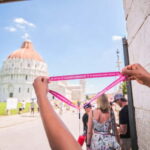
Your start matters because ticket pickup happens in the real world, not by magic. You meet in Piazza delle Belle Arti in front of the Galleria dell’Accademia. Look for a sign reading Florence with Elvis Guided Experience.
A few travelers mentioned a hiccup: on arrival, it wasn’t obvious at first where to grab the tickets. The lesson is simple—show up a bit early, scan the plaza carefully, and double-check you’ve been directed to the right pickup before you head for the reserved line.
The good news: once you’re matched up with the host/greeter, the process is usually straightforward. Several people reported quick ticket handover and easy routing to the priority entrance.
Your 2-hour plan: how the visit flows without feeling rushed
This experience is designed to land you inside the gallery efficiently, then let you move at a comfortable pace. You’re there for about two hours, which is long enough to properly enjoy David, but short enough that you can still see other parts of Florence the same day.
A common rhythm looks like this:
- Enter via priority access and orient yourself fast
- Spend your time on Michelangelo’s David (the main event)
- Browse the surrounding rooms with Renaissance-era and academy collections
- Finish with the old instruments displays, which give the visit a memorable ending
One interesting point from visitor comments: the museum can feel very “manageable.” Some people loved that they could enjoy it in about an hour, while others spent closer to two (especially if they took time with photos and slower room-to-room walking).
Michelangelo’s David: the 17-foot impact you feel in your body
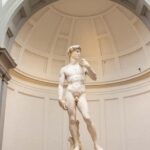
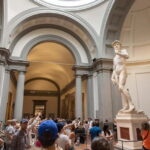
David is famous for a reason, but what surprises many first-timers is the scale. The statue stands at about 17 feet tall, and it’s not just impressive in a poster way—it’s impressive in a physical way. Up close, you’ll notice how Michelangelo carved movement into stone: the stance, the tension, the facial expression.
The best part is that you’re not stuck with only one angle. You’ll have chances to view David from different positions as you navigate the room. If you like art, you can spend time on details. If you’re more of a “show me the masterpiece” person, David still hits hard even without a lecture.
Many travelers also mentioned that David can be moving even if they’re not usually museum-people. If you’re unsure whether you’ll care, this is still a good bet.
Why David mattered: civil liberties, Florence, and the Medici shadow
David wasn’t just art-by-art. It carried a message tied to Florence’s civic identity. The statue symbolizes the defense of civil liberties associated with the Republic of Florence—an independent city-state facing pressure from larger rivals and from the influence of the Medici family.
Even if you only catch this idea briefly, it changes how you look. You start seeing the statue as more than a body in marble. You see it as a symbol: strength, vigilance, and identity under threat.
If you’re visiting with a curious mindset, this is where a few minutes of context pay off. It turns the masterpiece into a story you can carry with you as you walk through the rest of the collection.
You can also read our reviews of more museum experiences in Florence


The surrounding galleries: former convent rooms and academy collections
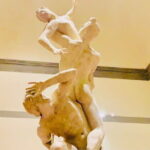
After David, the Accademia keeps things interesting with more than one “type” of art. You’ll pass through adjacent rooms that were formerly convents, and you’ll see works connected to the academy and the collections that came from suppressed convents.
That matters for a simple reason: it breaks the “one big room, then done” feeling. Instead of only chasing one famous object, you’re walking through spaces that feel historically layered, and the art shifts as you go.
Also, David tends to be the emotional peak. The surrounding rooms are your chance to come down gently while still learning something. If you don’t read every label, you can still enjoy the flow—just don’t expect every room to be equally jaw-dropping.
Old musical instruments at the Cherubini Conservatory: the pleasant surprise ending
Here’s the part that often makes people smile at the end of the visit. The Accademia wraps up with the Collection of Old Musical Instruments from the Cherubini Conservatory.
You’ll see:
- Old instruments like centuries-old violins
- Early keyboard instruments (described as one of the first keyboards in existence)
- Old wind instruments
Why this works: it gives your brain a new category. You went from sculpture to paintings and academy collections, and then you land in a gallery that feels like history you can almost hear. Even if music isn’t your main interest, it adds variety and makes the total experience feel complete.
If you’re the kind of traveler who enjoys cultural “side quests,” don’t skip this final room. It’s a great way to end a 2-hour visit with something distinctive.
Skip-the-line in practice: what to expect when crowds hit
The whole point of priority entrance is reducing the most annoying part of the Accademia experience: waiting. Travelers commonly report that they walked in quickly once they were routed to the correct entrance, which is huge when Florence weather is unpredictable.
People also mentioned that it can be easier to enter even when it’s raining or when you’re arriving after a shift in your schedule. One traveler noted they were almost late and still got help to stay within the plan. Another mentioned staff accommodated a change of time when plans ran over, though you shouldn’t count on that happening every time.
The real takeaway: show up with your confirmation ready, find your pickup spot, and then follow the host/greeter to the reserved entrance line.
Price vs. value: is $41 really worth it?
Let’s talk value in human terms. You’re paying roughly $41 for a 2-hour experience that includes entry plus skip-the-line access. A standard ticket may cost less, but the hidden cost is time and stress. In peak seasons, “cheap” can become expensive when you lose hours and end up rushing your visit once you finally get in.
This ticket pays for:
- Fast entry through a separate route
- A smoother start (ticket pickup handled for you)
- A visit structure that includes the big attraction plus the instrument collection
When it’s worth it:
- If you’re visiting during busy hours
- If you hate lines
- If you’re only in Florence for a short time
- If you want to see David and still have energy left for other sites afterward
When you might reconsider:
- If you have plenty of time and truly don’t mind waiting
- If you’re the type who can go slow only when the crowds are gone (and you’re flexible enough to change your day)
One more practical note: a couple of visitors felt it was pricey compared to buying directly. If you love price-hunting, you might check alternative options. But if your top goal is a clean, reliable entry, this ticket often earns its keep.
Is it a guided tour or self-paced entry?
The ticket includes entry and skip-the-line access, with an English host/greeter handling meetup and ticket logistics. The listing also states that a tour guide isn’t included.
In real life, travelers describe different levels of help. Some people felt they were essentially self-guided and loved moving through at their own pace. Others mentioned a host or guide provided stories and context, including a memorable experience led by an English speaker named Elisa in some cases.
So here’s the best expectation to set: you’re getting organized access, and you may get extra context depending on who you connect with. If you want structured, in-depth teaching throughout, you’ll need to confirm that separately.
Accessibility and what you should bring (and not bring)
This experience is wheelchair accessible, which is a big deal at older sites with tight corridors and crowd flow.
Bring:
- A passport or ID card (a copy is accepted)
Not allowed:
- Luggage or large bags
This last point matters more than people think. If you’re carrying big luggage (or even a bulky day bag), you may have to rethink how you travel that day. Keep your load light so you don’t get slowed down at security or inside.
Who should book this Accademia ticket?
This is a great match for:
- First-time visitors who don’t want to gamble with lines
- Travelers who love Renaissance art but also want a surprise ending (the instrument collection)
- Anyone short on time who still wants a satisfying visit length (about two hours)
It may be less ideal for:
- People who specifically want a fully guided lecture-style tour for the entire museum
- Travelers who truly don’t mind waiting and can flex their schedule to avoid peak times
Quick tips so your visit feels effortless
- Arrive early enough to find the staff sign in Piazza delle Belle Arti without stress.
- Have your ID ready (passport or ID; copy accepted).
- Keep your bag small since large bags aren’t allowed.
- If you care about photos, plan to spend a little extra time around David, because the viewpoint you choose changes the feel.
- Don’t skip the old instruments rooms at the end. They’re often the most memorable “bonus” part.
Should you book it?
If your goal is to see Michelangelo’s David and enjoy a smooth, low-stress museum visit, I’d book this. The priority entrance is the heart of the value, and the extra collection of old musical instruments makes the visit feel more rounded than a quick statue-and-leave plan.
If you have budget flexibility and you hate lines, this ticket is a smart way to turn a famous but crowded museum into a pleasant 2-hour stop. Just remember: it’s built for entry and access, not a full guide-led lecture the whole time—so if that’s what you want, look for an option that explicitly includes deeper guiding.
Florence: Accademia Gallery & David Skip-the-Line Ticket
FAQ
What is the duration of the Accademia Gallery experience?
It lasts about 2 hours.
Where do I meet for the ticket pickup?
Meet in Piazza delle Belle Arti in the main square of the Galleria dell’Accademia. Look for a sign with the name Florence with Elvis Guided Experience.
Is skip-the-line access included?
Yes. The ticket includes entry with skip-the-line access through a separate entrance.
Do I need a passport or ID?
Yes. You should bring a passport or ID card. A copy is accepted.
Is the experience wheelchair accessible?
Yes, it is wheelchair accessible.
What languages are available?
English.
Are luggage or large bags allowed inside?
No. Luggage or large bags are not allowed.
What is the cancellation policy?
Free cancellation is available up to 24 hours in advance for a full refund.
You can check availability for your dates here:More Museum Experiences in Florence


More Tickets in Florence

More Tour Reviews in Florence
- Tuscany Day Trip from Florence: Siena, San Gimignano, Pisa and Lunch at a Winery
★ 5.0 · 21,634 reviews - The Best tour in Florence: Renaissance & Medici Tales – guided by a STORYTELLER
★ 5.0 · 12,316 reviews