
I’m going to review a small-group guided tour of the Uffizi Gallery that’s designed for busy Florence days: priority entrance, a guided highlight route, and headsets so you don’t miss the story. You’ll see major Renaissance and Baroque works, including Botticelli’s Birth of Venus and Michelangelo and Leonardo favorites, in about 1.5 hours.
What I like most is how much the guides can pack into a short visit without making it feel like a sprint. Guides like Pam and Vittoria (and others named across different departures) are often praised for being both clear and genuinely enthusiastic, plus the group setup makes it easier to ask questions. The other win is the practical side: you get skip-the-line entry help and a smooth meeting point process.
One thing to keep in mind: with only 1.5 hours, you’re getting the best highlights, not a complete sweep of the entire museum. If you’re the type who wants to linger room-by-room for hours, you may still want extra self-guided time after.
- Key Points You’ll Care About
- Why This Uffizi Tour Works in Real Life
- Meeting at Nicola Pisano: Get There Early for an Easy Start
- Skip the Ticket Line and Headsets Mean Less Stress
- The 1.5-Hour Plan: A Highlight Route You Can Actually Enjoy
- What that means for your viewing
- What it doesn’t mean
- Botticelli, Leonardo, Michelangelo: The Works You’ll Be Thinking About Later
- Botticelli’s Venus and Primavera energy
- Leonardo’s detail and storytelling
- Michelangelo’s power on display
- How the Guide Adds Context (and Keeps It from Turning Into a Lecture)
- The Building Itself: Why the Uffizi Isn’t Just a Room With Art
- Can You Ask Questions? Yes, and That Changes Everything
- Time, Crowds, and Practical Stuff You Should Know
- Metal detector and security
- Photography limits
- Luggage and what not to bring
- Accessibility
- What to bring for kids
- Languages: You Can Usually Get a Guide You Understand
- Price and Value: Is Fair for 1.5 Hours?
- Best Fit: Who Should Book This Uffizi Tour?
- After the Tour: What to Do Next (Without Overplanning)
- Should You Book? My Honest Take
- FAQ
- How long is the Uffizi small-group guided tour?
- Where do I meet the guide?
- Does the tour include entry tickets to the Uffizi Gallery?
- Are headsets provided during the tour?
- What languages are available for the live guide?
- Is there a cancellation policy?
- More Tickets in Florence
- More Tours in Florence
- More Tour Reviews in Florence
Key Points You’ll Care About


- Priority entrance + skip-the-line access helps you beat the worst of the queue.
- Headsets included make the guide’s explanations easy to follow in a crowded gallery.
- A tight highlight route covers the big names: Botticelli, Leonardo da Vinci, Michelangelo, plus other key works.
- Small-group format keeps questions and conversations realistic (not just background talk).
- Accessible logistics: wheelchair accessible and meeting-point assistance are part of the package.
Why This Uffizi Tour Works in Real Life
Florence has a talent for making the biggest art museums feel like a group project. The Uffizi can be overwhelming fast: lots of rooms, huge crowds, and masterpieces that deserve your full attention. This tour keeps it sane.
You get a guided visit of about 1.5 hours with museum entry included. The format is small-group, and you’re also given headsets, which matters because the Uffizi isn’t exactly quiet. The result is a guided route that helps you see the famous works and understand why they mattered, without forcing you to study labels for hours.
You can also read our reviews of more tours and experiences in Florence


Meeting at Nicola Pisano: Get There Early for an Easy Start
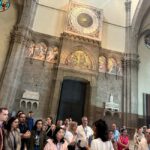
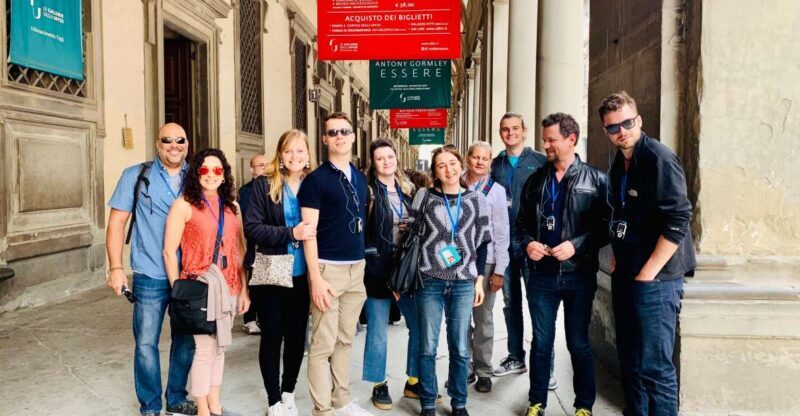
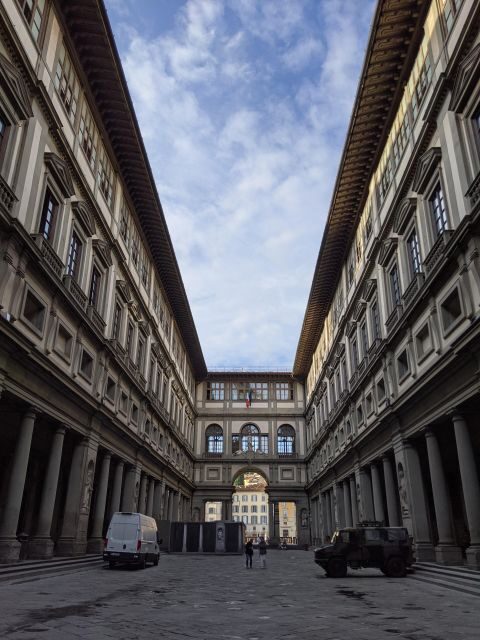
The tour starts outside the museum area at the Statue of Nicola Pisano in Piazzale Degli Uffizi (address: Piazzale Degli Uffizi, 6, 50122, Florence). The meeting point is listed as close to the Uffizi information point.
Plan to arrive 15 minutes early. That buffer is useful because everyone has to go through a metal detector, and you’ll want time to check in calmly. One practical perk here: there’s assistance at the meeting point, so you’re not left playing museum hide-and-seek.
Skip the Ticket Line and Headsets Mean Less Stress
The big “vacation day math” with this tour is simple: you pay for guidance plus entry, and the payoff is time saved in a museum line. The tour includes Uffizi gallery entry tickets and skip the ticket line access (described as priority entrance).
Then you add headsets, which are a quiet upgrade. Even with a good guide, group tours in big galleries can turn into whisper-scramble. Headsets keep the narration clear, and they help you focus on the paintings instead of searching for your guide’s voice.
The 1.5-Hour Plan: A Highlight Route You Can Actually Enjoy
This is not a marathon. It’s designed to hit the main attractions with enough context to make them meaningful.
What that means for your viewing
You’ll move through the museum with a guide who knows where to focus, so you don’t spend your precious time wondering which room matters most. Many visitors are happy with this approach—especially first-timers—because it prevents the classic Uffizi problem: seeing 20 rooms and remembering almost nothing.
You can also read our reviews of more guided tours in Florence
- The Best tour in Florence: Renaissance & Medici Tales – guided by a STORYTELLER
★ 5.0 · 12,316 reviews


What it doesn’t mean
It also means you won’t see everything. One visitor note that stands out: if you want an in-depth tour of all paintings and sculptures, you’ll likely want something longer after this one.
Botticelli, Leonardo, Michelangelo: The Works You’ll Be Thinking About Later
The tour is built around the Uffizi’s biggest magnets, and those names aren’t random. They’re anchors for how Renaissance art developed.
Botticelli’s Venus and Primavera energy
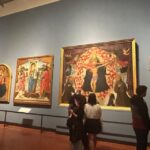
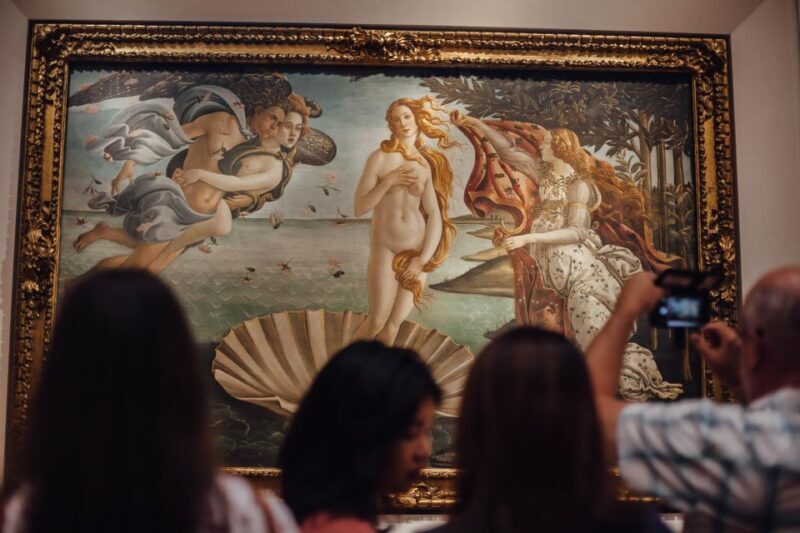
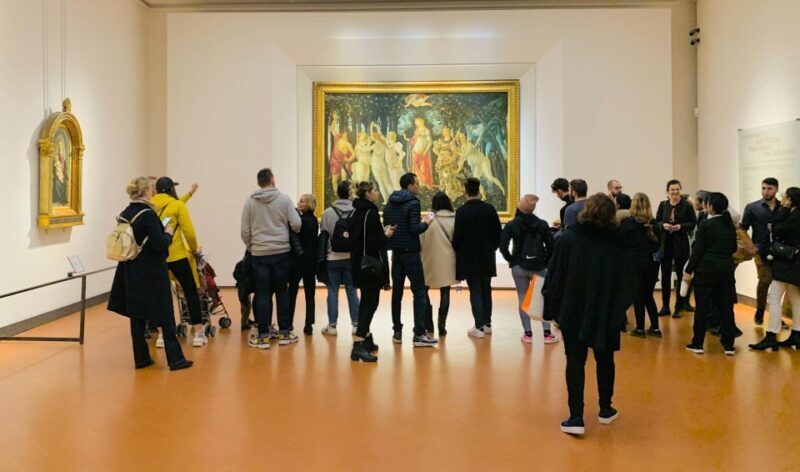
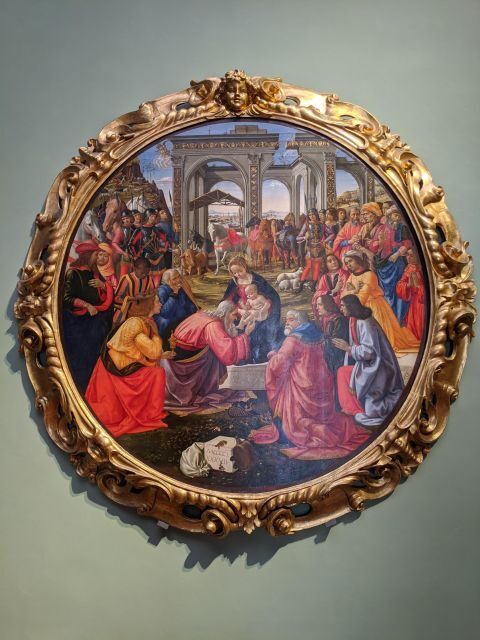
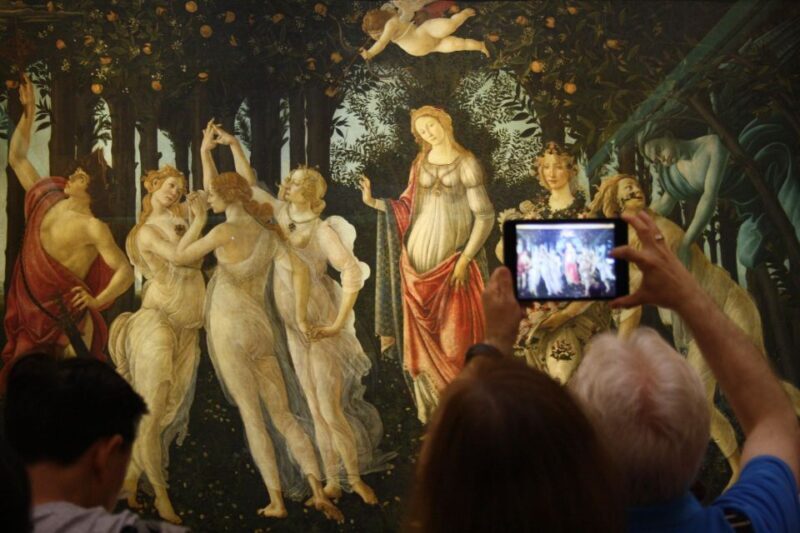
Botticelli’s The Birth of Venus is one of the headline stops. It’s the kind of artwork that looks famous even before you get there, but understanding its symbolism changes how you see it. You’ll also visit other major pieces attributed to Botticelli, including Primavera.
Leonardo’s detail and storytelling
Leonardo da Vinci’s Annunciation is another listed highlight. The guide’s job here is key: Leonardo’s work is all about subtle decisions—composition, expressions, and realism that feels surprisingly human. With a guide, you’re less likely to miss the small things that make it great.
Michelangelo’s power on display
You’ll also see Michelangelo’s Tondo Doni as part of the highlight set. Michelangelo’s style can feel intense and immediate. A good guide helps you connect that style to the broader artistic evolution you’re watching across the tour.
How the Guide Adds Context (and Keeps It from Turning Into a Lecture)
A major strength of this experience is the guidance quality. Across visitor comments, guides are repeatedly described as knowledgeable, enthusiastic, and skilled at explaining art in a way that feels clear—not like a textbook.
You’ll hear history and art context tied to the works you’re standing in front of. That matters because the Uffizi can feel like a collection of individual masterpieces unless you know what connects them. The guide’s interpretation helps you connect the dots across centuries and styles.
It also helps that many visitors mention guides moving at a pace that works. For example, some notes mention that even when lines at entry were longer than expected, the tour itself wasn’t rushed, and the guide still made sure key works were covered.
The Building Itself: Why the Uffizi Isn’t Just a Room With Art
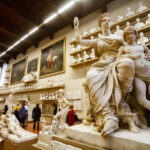
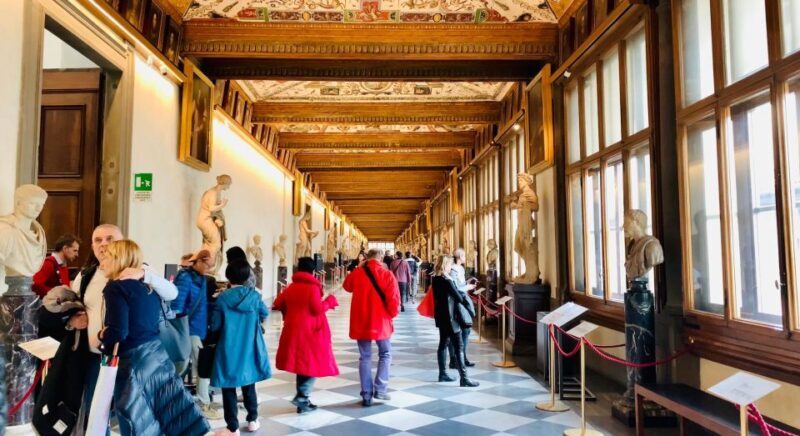
This tour includes time inside the Uffizi’s magnificent halls, and the architecture is a big part of the experience. You’re not just looking at paintings; you’re also in a historic setting with ornate ceilings and classic museum grandeur.
That sounds like “nice to have,” but it’s practical too. When you’re moving through a complex building, a guide’s structure keeps the experience coherent. The setting makes the art feel more connected to Florence itself.
Can You Ask Questions? Yes, and That Changes Everything
Small-group tours are often marketed as intimate, but here’s the real value: you have a chance to interact. You can ask questions, get clarifications, and talk through what you’re seeing.
If you’re traveling with someone who’s curious but not an art-history person, this format can be ideal. One common feedback theme: first-timers felt they got enough context to understand the famous pieces, and repeat visitors still appreciated direction on what to focus on.
Time, Crowds, and Practical Stuff You Should Know
Metal detector and security
All visitors pass through a metal detector. This is standard, but it affects your timing. Arrive early at the meeting point.
Photography limits
Flash photography is not allowed. Plan on taking photos without flash if you’re allowed to do so under museum rules.
Luggage and what not to bring
Avoid oversize luggage. The tour also lists no weapons or sharp objects, and no food and drinks in the vehicle (if any transport is involved).
Accessibility
The tour is listed as wheelchair accessible. If anyone in your group needs accessible routing, it’s worth confirming at booking, but the activity itself is marked as accommodating.
What to bring for kids
Bring a passport or ID card for children.
Languages: You Can Usually Get a Guide You Understand
The tour guide language options are listed as: Portuguese, Spanish, English, French, Italian, German, Russian.
That sounds straightforward, but it’s one of those details that impacts the whole experience. If you don’t feel fully confident in English, booking a departure in your preferred language is a big quality upgrade.
Price and Value: Is $76 Fair for 1.5 Hours?
At $76 per person, this isn’t a budget throwaway. But it can be good value if you care about two things: avoiding wasted time and getting real explanations.
Here’s how the value adds up:
- Entry tickets are included, so you’re not paying separately for the museum admission.
- You get priority entrance/skip-the-line access, which can be the difference between enjoying art and standing in discomfort.
- Headsets reduce frustration and let you hear your guide clearly.
- You’re getting a curated highlight route, which is often the smart move for travelers who don’t want to spend a half day figuring out what to see.
If you love art and you’re happy to tour on your own, you might spend less. But for most visitors, this balances time and understanding in a way that feels worth it.
Best Fit: Who Should Book This Uffizi Tour?
You’ll likely love this if:
- You’re short on time and want the big works covered well.
- You prefer a guide who can explain the why behind the what.
- You don’t want to gamble on museum navigation while crowds are thick.
- You want a group experience that still allows questions.
You may look elsewhere if:
- You want an ultra-comprehensive, room-by-room tour of the entire collection.
- You prefer long unstructured browsing with no “highlight” focus.
After the Tour: What to Do Next (Without Overplanning)
This tour ends at the Uffizi Gallery, which is convenient because you can keep going on your own right away. Many travelers appreciate the guide’s structure, then spend extra time lingering where they felt the strongest connection.
A small tip: since this is only 1.5 hours, treat it as a springboard. Let the tour point you toward the sections that genuinely grab you, then go back for extra time in those rooms.
Also, food isn’t included in the tour. If you need a break, you can plan a café stop around your own pace. One visitor specifically mentions enjoying a coffee break after the guided portion, which is the kind of practical reset that helps you keep your momentum.
Should You Book? My Honest Take
Book it if you want a smart, guided Uffizi visit with priority entrance, clear narration through headsets, and a focused path through the museum’s most famous works. For the price, the combination of entry + skip-the-line + guide explanation is what makes it feel fair.
Skip it (or add more time elsewhere) if you’re expecting a full survey of the entire Uffizi collection in 90 minutes. This one is about highlights done well, not about checking off every painting.
If you’re traveling with limited time in Florence, I’d treat this as your best “art history shortcut” that still feels personal and enjoyable.
Florence: Uffizi Gallery Small-Group Guided Tour with Ticket
FAQ
How long is the Uffizi small-group guided tour?
The tour duration is 1.5 hours.
Where do I meet the guide?
Meet your guide in front of the Statue of Nicola Pisano, Piazzale Degli Uffizi, 6, 50122, Florence, close to the Uffizi info point.
Does the tour include entry tickets to the Uffizi Gallery?
Yes. The package includes Uffizi Gallery entry tickets.
Are headsets provided during the tour?
Yes. Headsets are included so you can hear the guide clearly.
What languages are available for the live guide?
The live tour guide is offered in Portuguese, Spanish, English, French, Italian, German, and Russian.
Is there a cancellation policy?
There is free cancellation up to 24 hours in advance for a full refund.
You can check availability for your dates here:More Tickets in Florence


More Tours in Florence
- The Best tour in Florence: Renaissance & Medici Tales – guided by a STORYTELLER
★ 5.0 · 12,316 reviews


More Tour Reviews in Florence
- Tuscany Day Trip from Florence: Siena, San Gimignano, Pisa and Lunch at a Winery
★ 5.0 · 21,634 reviews - The Best tour in Florence: Renaissance & Medici Tales – guided by a STORYTELLER
★ 5.0 · 12,316 reviews