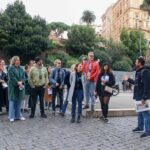
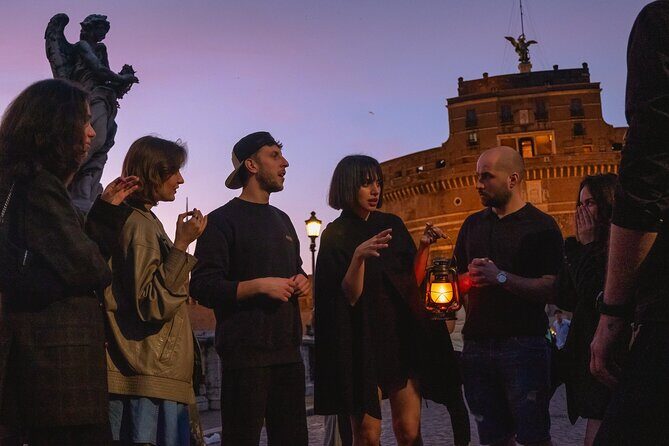
Rome at night has a different volume. You get cooler temperatures, calmer streets, and a guided walk that treats the city like a crime scene map. This Haunted Rome Ghost Night Walking Tour is built for exactly that: a tight, 2-hour route from Campo de’ Fiori to Castel Sant’Angelo, with spooky tales that lean more “dark history” than cheap jump-scares.
What I like most is the way the guide connects everyday landmarks to the worst parts of Rome’s past, so you’re not just saying, I’ve seen that. You’re asking, how did that happen here? It’s also very guide-driven. Travelers repeatedly mention guides by name (like Youssef, Antonio, and Ana) and highlight how knowledgeable, funny (in a good way), and attentive they are.
One consideration: it’s a group walk, and on at least one trip the guide was harder to hear over street noise. If you’re sensitive to audio, consider bringing or borrowing headphones so you catch every story.
One of the best walking tours I've taken. Super interesting, packed with history, and entertaining without being campy. Youssef was a great guide.
I booked this tour for myself and two teenage daughters. It was really great! Our tour guide was really knowledgeable, walking us through the streets of Rome at night. There were so many things she explained and pointed out that I would never have noticed. It was more historical spooky stories rather than ghost stories. we were afraid it was going to be cheesy but it was not. It was nice to walk around after dinner exploring apart of the city not on your typical tour.
Absaloutly amazing walking tour & in perfect walking distance, we learned a few interesting facts that we would never of knew otherwise, our tour guide antonio was very friendly and very helpful throughout the tour, i would definitely recommend to anyone staying in Rome
- Key points / Takeaways
- A night-only Rome route that skips the heat and crowds
- Price and value: why .07 can feel like a bargain
- Where you start and where you end: Campo de’ Fiori to Castel Sant’Angelo
- How the walk “stacks”: short stories at famous corners
- Campo de’ Fiori at night: the piazza that began with punishment
- Piazza Farnese: secret passage vibes and a pope-flavored legend
- Via del Mascherone and Vicolo dei Venti: the “little madonnas” that weren’t just decoration
- Ponte Sisto: the oldest bridge and the stories that cling to it
- Fontana del Mascherone: a warning fountain, not a carefree one
- Chiesa di Santa Maria dell’Orazione e morte: church time with a bone-chill reminder
- Via di Monserrato: a haunted apartment block with prison-era weight
- Chiesa di Santa Maria in Monserrato degli Spagnoli: Spanish church, saucy story energy
- Via Giulia: from a bar to a cosmetics-that-kills tale
- Via dell’Arco dei Banchi: Mastro Titta’s executioner legacy
- Castel Sant’Angelo: angels overhead, Cenci tragedy below
- Guides are the real star: Youssef, Antonio, Ana, and others
- How spooky is it: more dark history than jump-scare ghosts
- What to bring and how to prepare for a 2-hour night walk
- Private upgrade: when you want more attention and flexibility
- Booking timing, tickets, and the free cancellation window
- Should you book the Haunted Rome Ghost Night Walking Tour?
- FAQ
- How long is the Haunted Rome Ghost Night Walking Tour?
- How much does it cost?
- Is the tour in English?
- Where does the tour start and end?
- Is a mobile ticket used?
- What is the cancellation policy?
- More Private Tours in Rome
- More Tours in Rome
- More Tour Reviews in Rome
Key points / Takeaways
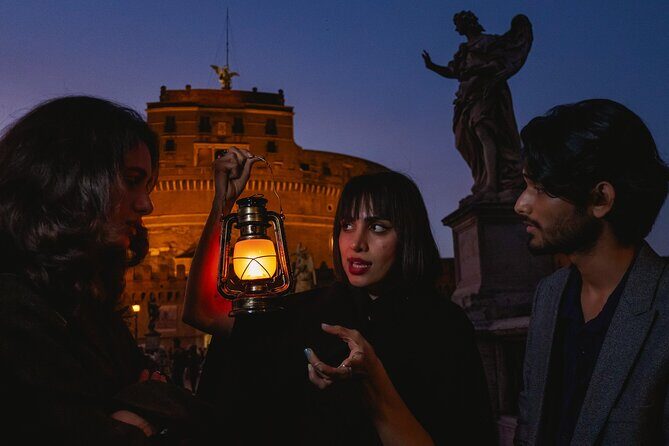
- Dark history, not cheesy ghosts: stories feel grounded in places and events you can actually see.
- Super practical timing: about 2 hours in the evening, with short stops that keep you moving.
- Strong guides: many travelers single out guides like Youssef, Ana, Dominica, and Dinara for clarity and energy.
- Good value: $35.07 for a guided night route plus free entry where noted.
- Max 20 people: smaller groups make it easier to follow the route and questions.
- Easy logistics: mobile ticket, English tour, near public transportation, and a finish at Castel Sant’Angelo.
A night-only Rome route that skips the heat and crowds
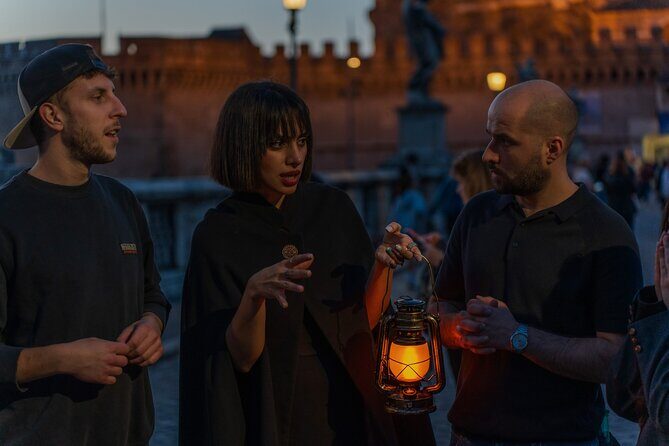
If you’ve got limited time in Rome, evening walking tours can be the smartest choice. You avoid the midday crush, and the streets feel more cinematic after dinner. This tour starts in a central piazza and ends near a major landmark, so you finish in a spot that’s easy to explore further on your own.
The pace also helps. Each main location is covered briefly (about 10 minutes each), so you’re getting a lot of context without standing around. For first-timers, that’s a big win. For repeat visitors, it’s a way to see familiar corners with a totally different lens.
You can also read our reviews of more private tours in Rome


Price and value: why $35.07 can feel like a bargain
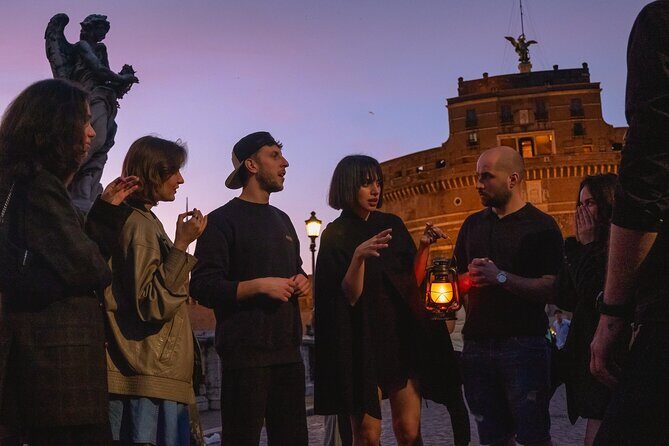
At $35.07 per person for about 2 hours, you’re paying mainly for expert storytelling plus a curated route that links multiple famous streets and sights. What makes the value better is that the tour is set up for walking efficiency and includes free admission entries where listed, so you’re not paying surprise add-ons to keep the tour going.
Also, group sizes are capped (up to 20 travelers). Smaller groups tend to make for better communication and less bottlenecking at each stop, especially at tight street corners.
This was an awesome tour by Antonio. Definitely recommend doing a night tour as the walk is spectacular. Very interesting stories!
We had a great night for our first night in Rome learning about ton of haunted history. Would definitely recommend you signing up.
Tour was okay, guide was extremely hard to hear and understand. I would recommend this company get headphones for guest to hear the guides as road noise and other guest aren’t always quite.
If you’re traveling with friends, there can be group discounts, which helps even more. And since it’s English, it’s a lower-friction option if you don’t want to juggle language on a night walk.
Where you start and where you end: Campo de’ Fiori to Castel Sant’Angelo
The meeting point is Piazza Campo de’ Fiori, and the tour finishes at Castel Sant’Angelo on the Lungotevere side. That matters because it avoids that annoying problem: ending miles from anywhere fun.
By the end, you’re dropped in the area of one of Rome’s most famous structures, where you can keep going—walk along the river, grab a drink, or just enjoy the views from a major viewpoint zone.
And because the route is in central Rome and says it’s near public transportation, you’re not stuck planning complicated transfers late at night.
Yusef was the absolute best troy guide. tons of fascinating stories and great knowledge of the area.
Let me start by saying our guide Ana was awesome! Such great energy for such a fun (scary) tour! The tour was very interesting. We stopped at a number of places of historical importance to the city. Ghosts or not, the information makes the hair on the back of your neck stand up!! If you do this in the colder months, bundle up!!!
Dominica was an excellent guide through the darker side of Rome. The thorough and enthusiastic stories were engaging and interesting. Her knowledge will stay with us through the rest of our trip as we look for the hidden Madonnas. Definitely an excellent excursion in Rome!
How the walk “stacks”: short stories at famous corners

This isn’t a long lecture in the middle of the street. It’s a series of quick scene changes, with a guide pointing out details you’d normally miss. You’ll spend roughly ten minutes per main location, which keeps attention from drifting and helps you fit the whole experience into a single evening.
It’s also the kind of tour where you’ll likely start noticing patterns. Little icons in walls. Old bridge corners. Tiny churches tucked into side streets. By the time you get near the end, the city starts to feel like one connected story instead of separate monuments.
Campo de’ Fiori at night: the piazza that began with punishment
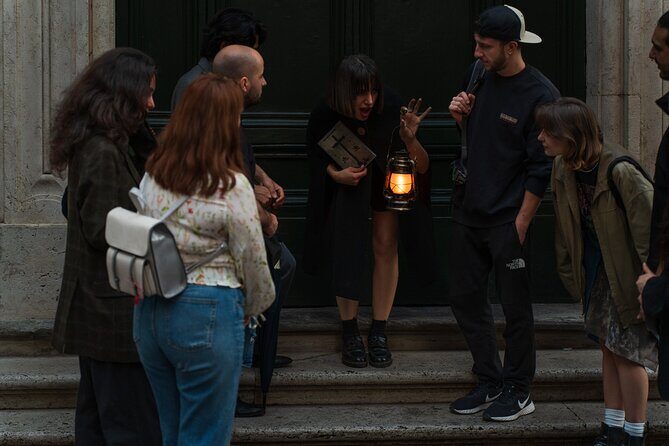
You start where a lot of first-time Rome memories are made: Campo de’ Fiori. Today it’s known for lively bars and restaurants, but the tour reframes it with a darker origin story as an execution site.
Starting here makes sense. It’s easy to find, busy enough to feel safe at night, and familiar enough that the guide can quickly set the tone. It also helps you understand why the tour is called “haunted” without turning it into a costume show. The creepiness comes from what happened in places people still use today.
The tour guide was amazing and gave very interesting and entertaining stories. She, also, gave amazing recommendations for Rome. Thoroughly enjoyed this.
A great way to spend your evening, and learn about the area. Dinara was a wonderful guide. Highly recommended
This tour totally lived up to my expectations Very much enjoyed my evening it certainly showed parts of Rome that I wouldn’t have considered
If you’re hungry after the walk, you’re also starting in an area where it’s natural to grab a post-tour bite and keep the evening going.


Piazza Farnese: secret passage vibes and a pope-flavored legend
Next up is Piazza Farnese, a gorgeous square that feels like it belongs in a postcard. On this tour, it’s not just pretty. You’ll hear about a scandalous legend involving a secret passageway and two popes.
That’s a key theme of the tour: Rome’s power stories show up in architecture. Squares weren’t just gathering spots. They were stages—where politics, secrecy, and punishment could intersect.
Expect the guide to point out what you can actually see, then connect it to the legend so you’re not left guessing.
This was really interesting and sarah made it really enjoyable and inclusive. She told the stories in a really engaging way. It wasn’t necessarily a ghost tour but more about the darker history of Rome. It was certainly a different way to experience Rome and highly Recommend
Wow! This was a great experience for someone who loves history and ghost stories. Dinera was a wonderful tour guide and had a great way of storytelling that was entertaining and engaging. Highly recommend this tour!
Anna was our tour guide and her knowledge of the history of the area where we were walking was impressive… we had been in Rome for 4 days by the time we took her tour and we learned so much we had no clue of. Rome is a city of incredible tragedy, amazing architecture, ancient history, and untold violence. Anna’s recounting of some of the untold tales of Rome were so fun to learn that I highly encourage anyone interested in the off the beaten path history of Rome to take her tour! Be on the lookout for the Virgin Mary’s on the streets of Rome.
Via del Mascherone and Vicolo dei Venti: the “little madonnas” that weren’t just decoration
As you continue, you’ll walk through Via del Mascherone and Vicolo dei Venti, where the guide talks about madonelles, or “little madonnas.” These street shrines were part of daily city life.
What’s fascinating here is the practical purpose: they weren’t only for beauty or faith. You’ll learn how they were used to help stop crime. So the superstition isn’t presented as spooky for its own sake—it’s explained as a community response to fear and wrongdoing.
If you like tours that teach you to look harder at the small details in a neighborhood, this segment is a good one.
Ponte Sisto: the oldest bridge and the stories that cling to it
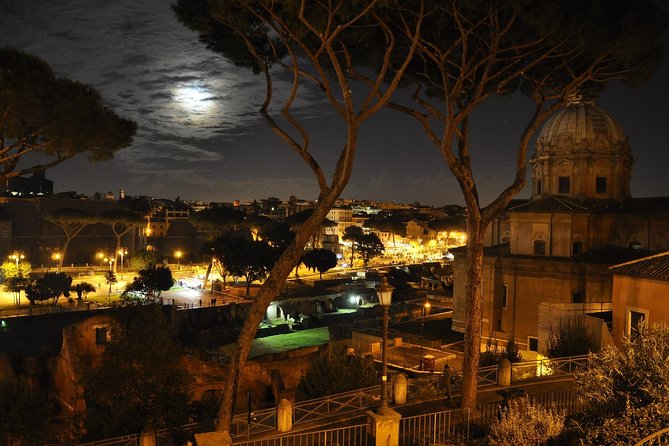
Rome’s bridges are full of myths, but Ponte Sisto is where the tour leans especially hard into tragedy. You’ll hear about a gruesome past that includes tragic accidents, power struggles, theft, and suspicious deaths.
Bridges are great tour stops because you can see multiple angles at once. A guide can point out how people moved, where conflict could happen, and why a bridge might become a symbol for warning and consequence.
If you’re a photo person, this is also a good area to slow down and capture the bridge views—just don’t get so absorbed you lose the group pace.
Fontana del Mascherone: a warning fountain, not a carefree one
The next fountain, Fontana del Mascherone, comes with a twist. Unlike many fountains you’ll see in Rome, this one has a warning for those who dare to drink from it.
That single detail is exactly why this tour works. It takes familiar Roman street scenery and puts it under a spotlight. You start to see how Rome leaves “instructions” and warnings in public spaces, long before modern signage became normal.
Chiesa di Santa Maria dell’Orazione e morte: church time with a bone-chill reminder
At Chiesa di Santa Maria dell’Orazione e morte, the tone turns more intense. This 17th-century church is decorated with human remains from long ago, and the message is blunt: death is close, even in a beautiful place of worship.
This is one of the more emotionally heavy stops. If you don’t like morbid displays, you’ll still hear the story in a guided, respectful way, but you should mentally prepare for it.
For travelers who do like history that isn’t sanitized, it’s also one of the most memorable sights on the route.
Via di Monserrato: a haunted apartment block with prison-era weight
Then you’ll walk to Via di Monserrato, described as a haunted apartment block with one of Rome’s worst prisons in its past.
This is one of those moments where the city’s layers hit. You’re looking at everyday streets and buildings, but the tour insists on imagining what life was like when those walls were built for confinement instead of living.
It’s a darker kind of “Rome is history” lesson, but it’s also the reason people keep saying the guide made them see familiar areas differently.
Chiesa di Santa Maria in Monserrato degli Spagnoli: Spanish church, saucy story energy
Next, you’ll visit Chiesa di Santa Maria in Monserrato degli Spagnoli, tied to a story the tour describes as saucy enough for a telenovela.
The point isn’t shock value. It’s how Rome’s religious buildings overlap with human behavior—sometimes messy, sometimes political, sometimes both. Expect the guide to balance what’s documented with how legends were passed down through the neighborhood.
If you’ve grown tired of tours that only talk about emperors and stones, this kind of human story can feel like a breath of fresh air.
Via Giulia: from a bar to a cosmetics-that-kills tale
Via Giulia is where the tour shifts into a story about substances and danger. The walk connects an earlier bar history with a tale about cosmetics that can kill.
Even if you don’t know Rome’s cosmetics history before this, you’ll come away with a clearer sense of how beauty culture, social status, and risk have long existed in the city. And since Via Giulia is an actual street you can walk later during daylight, it’s an easy one to re-check after the tour.
Via dell’Arco dei Banchi: Mastro Titta’s executioner legacy
The tour then points you toward Via dell’Arco dei Banchi, linked to Mastro Titta, Rome’s most famous executioner.
This stop is another reminder of how public punishment shaped the city’s layout and social fears. The guide’s job here is to connect the name to the reality of what it meant to live near that kind of history.
It’s also a good stop for anyone who thinks executioners are just footnotes. In Rome, they shaped the street-level story.
Castel Sant’Angelo: angels overhead, Cenci tragedy below
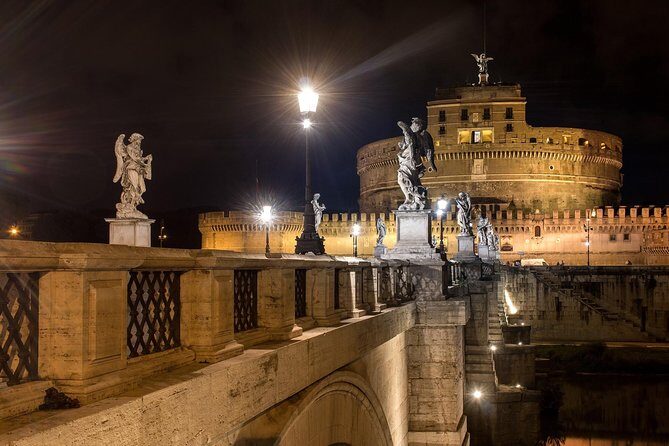
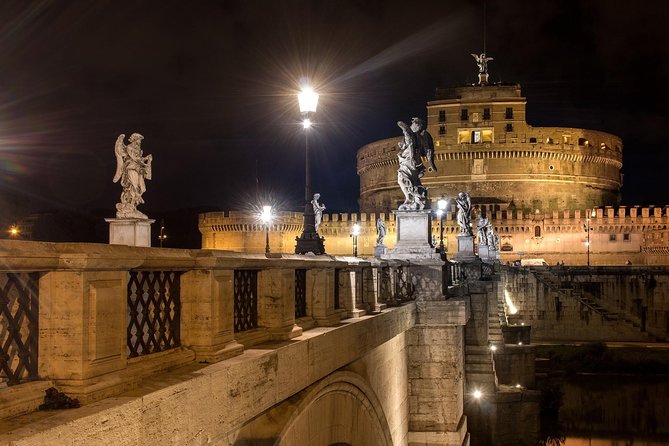
Finally, you reach Castel Sant’Angelo, where the stories land hard and then turn outward. You’ll hear about the bridge and how it was used to expose executed bodies as warnings, and how the site later became surrounded by angel statues and Cenci family tragedy.
Finishing here is smart because it’s a major landmark. You can choose to linger for views or continue your evening river walk. And since the tour ends at a place people already associate with drama and history, the last stop feels like a payoff instead of a hard stop.
Guides are the real star: Youssef, Antonio, Ana, and others
The biggest pattern in traveler feedback is simple: the guide quality makes or breaks this kind of tour. People repeatedly mention specific names and describe the same strengths—clear storytelling, strong local knowledge, and a sense of humor that doesn’t cross into cheesy.
You’ll see mentions of guides like Youssef, Antonio, Ana, Dominica, Dinara, and Anna. Common threads include being very knowledgeable, making the group comfortable, and sharing practical suggestions for seeing Rome beyond the tour.
There’s also a “choose-your-spook” effect. Some guides lean more into historical narrative and less into ghost theater. That’s why many travelers say it’s not campy, just genuinely chilling in a grounded way.
How spooky is it: more dark history than jump-scare ghosts
Based on what people say, this is best described as historical spooky stories rather than full-on supernatural acting. You’ll hear about executions, crime deterrents, prison history, warnings, and tragic family stories—but presented with context tied to what you’re looking at.
That balance is why families and teenagers often enjoy it too. One traveler even described it as engaging enough that their teens loved it, and another noted it was not cheesy.
So if you want a tour that’s scary because you’re learning what really happened, you’re in the right place. If you want ghosts you can see in the dark, you might find it more intellectual than theatrical.
What to bring and how to prepare for a 2-hour night walk
This is a nighttime, mostly outdoor walk. The tour duration is about 2 hours, so plan for standing and walking rather than sitting.
A good rule: dress for the evening weather. One traveler specifically suggested bundling up in colder months. If it’s raining, you’ll want a plan too—some guides are noted for helpfulness, like umbrella sharing.
Most importantly: if you’re worried about hearing, bring small audio support if you use it. One traveler recommended headphones because road noise and group chatter can make a guide harder to hear.
Private upgrade: when you want more attention and flexibility
The tour offers an option to upgrade to a private tour. If you’re traveling with kids, have accessibility needs, or simply prefer more direct answers and a less “group-paced” experience, private can be worth considering.
With a private format, you can also ask follow-up questions without worrying about the pace of a larger group. If group dynamics sometimes feel distracting for you, this is a sensible step.
Booking timing, tickets, and the free cancellation window
You receive confirmation at booking time, and the tour uses a mobile ticket. It’s also described as near public transportation, so you’re not locked into complicated last-mile plans.
For timing, it’s commonly booked about 27 days in advance on average. If you have a narrow travel window, book earlier rather than waiting for the last week.
Cancellation is free, with a full refund if you cancel up to 24 hours before the start time. If you cancel later than that, the amount paid won’t be refunded.
Should you book the Haunted Rome Ghost Night Walking Tour?
You should book if you want:
- A 2-hour evening plan that’s easy to fit into your first days.
- A route that makes you look closely at places like Campo de’ Fiori, Ponte Sisto, and Castel Sant’Angelo.
- Funny, clear, guides who focus on stories tied to what you’re seeing.
You might skip or switch tours if:
- You’re expecting a fully theatrical ghost show and lots of spooky effects.
- You’re very sensitive to audio issues in a group setting (road noise can be a factor, and at least one traveler noted hearing problems).
My verdict: this is strong value for anyone who likes walking tours but doesn’t want them to feel like a scripted slideshow. The “haunted” label works because the city’s past is already dramatic. You’re just getting the guide who knows how to connect the dots.
FAQ
How long is the Haunted Rome Ghost Night Walking Tour?
It runs about 2 hours (approx.).
How much does it cost?
The price is $35.07 per person.
Is the tour in English?
Yes, the tour is offered in English.
Where does the tour start and end?
It starts at Piazza Campo de’ Fiori and ends at Castel Sant’Angelo (Lungotevere Castello, 50).
Is a mobile ticket used?
Yes, it’s a mobile ticket experience.
Haunted Rome Ghost Night Walking Tour
"One of the best walking tours I've taken. Super interesting, packed with history, and entertaining without being campy. Youssef was a great guide."
What is the cancellation policy?
You get free cancellation up to 24 hours before the experience. If you cancel less than 24 hours before start time, the amount paid is not refunded.