When you’re planning a trip to Belgium’s most underrated city, you want something that goes beyond the typical tourist shuffle. This historical walking tour through Antwerp’s old center strikes that rare balance between substance and accessibility. We’ve reviewed the feedback from nearly 1,900 travelers, and what emerges is a clear picture of a tour that genuinely connects people with the city’s remarkable past.
What makes this experience particularly appealing is the combination of knowledgeable local guides who actually seem to care about what they’re sharing, paired with an itinerary that packs serious historical content into just two hours. The price point—at $3.62 per group of up to six people—is almost shockingly reasonable, especially when you realize this is a tip-based model where guides are motivated by passion rather than corporate metrics.
The one consideration worth noting upfront: this is a walking tour with substantial ground to cover, and the experience depends partly on group size and weather conditions. If you’re traveling with mobility challenges or prefer a more leisurely pace, you’ll want to discuss this with the tour operator beforehand.
This tour works best for history enthusiasts, art lovers, and anyone who wants to understand why Antwerp became one of Europe’s most important Renaissance cities. It’s equally valuable for first-time visitors who want to orient themselves efficiently, or seasoned travelers looking to go deeper than the surface-level attractions.
- The Real Value Behind the Price
- Understanding the 10-Stop Itinerary
- The Starting Point: Grote Markt
- Hendrik Conscience Square and Intellectual Heritage
- Carolus Borromeus Church: Rubens and Sacred Art
- Handelsbeurs Antwerpen: The First Wall Street
- The Rubenshuis: Into the Master’s World
- MoMu and the Fashion Quarter
- Museum Plantin-Moretus: A UNESCO Hidden Gem
- Vlaeykensgang: The Most Photographed Medieval Street
- Nello and Patrasche Statue: The Sentimental Stop
- Cathedral of Our Lady: The Grand Finale
- What the Guides Bring to the Experience
- Practical Considerations for Your Visit
- Timing and Booking
- Weather and Comfort
- Group Size and Acoustics
- Accessibility and Logistics
- The Cancellation Policy: Peace of Mind
- Frequently Asked Questions
- The Bottom Line: Exceptional Value Meets Authentic Expertise
- The Best Of Antwerp!
- More Walking Tours in Antwerp
- More Tours in Antwerp
- More Tour Reviews in Antwerp
The Real Value Behind the Price
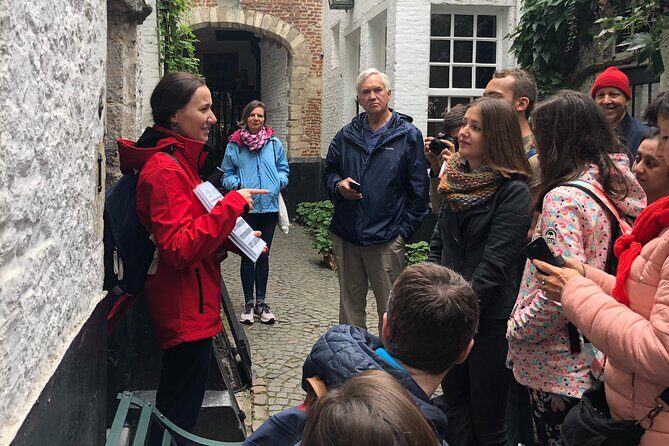
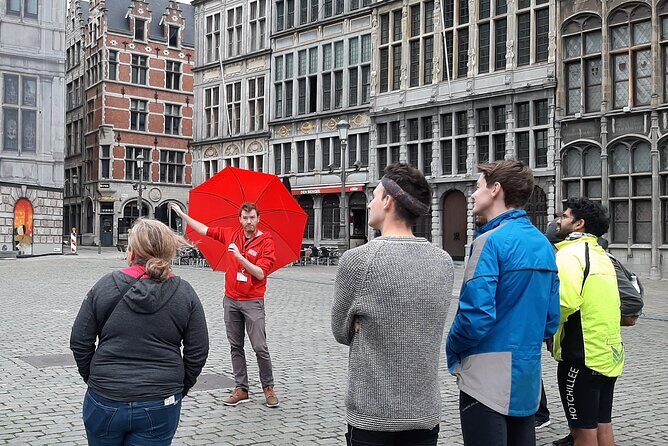
Let’s address the elephant in the room right away: at $3.62 per group, this tour costs less than a fancy coffee. That’s not a typo. One traveler captured the secret perfectly: “Fees are tip based so open to everyone so the guides seem more enthusiastic.” This isn’t budget-conscious tourism by accident—it’s a deliberate model where guides volunteer their knowledge and expertise because they love their city.
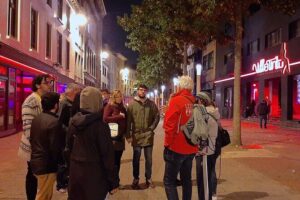
What you’re actually getting for that minimal upfront cost is access to passionate local historians who’ve spent years understanding Antwerp’s intricate past. The reviews consistently praise guides like Luc, Beren, Arie, and Birke for their deep knowledge combined with genuinely engaging storytelling. One traveler noted that their guide “brought history alive as we relived a walk in the past with him,” while another observed that the experience felt like “time travel invented by Luc B.”
This model also means the tour remains accessible to budget travelers, families, and anyone who wants to test the waters before investing in more expensive experiences. You’re not paying for corporate overhead or slick marketing—you’re paying for genuine expertise and local passion.
👉 See our pick of the The Top 14 Antwerp Walking Tours
Understanding the 10-Stop Itinerary
The tour covers substantial ground in two hours, visiting ten distinct locations that collectively tell Antwerp’s story from the Middle Ages through its Golden Age to the modern era. Here’s what you can expect at each stop and why it matters.
You can also read our reviews of more walking tours in Antwerp
The Starting Point: Grote Markt
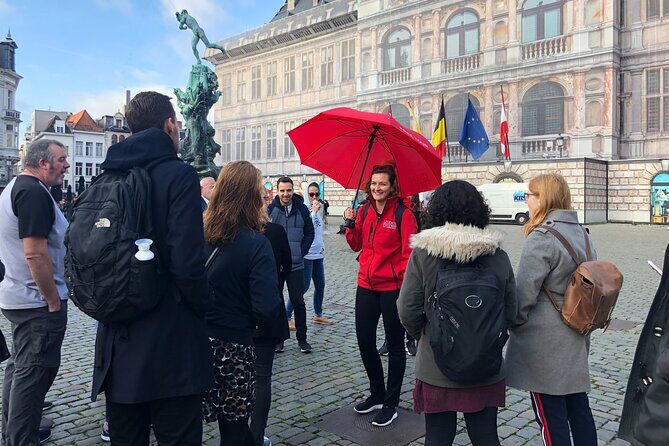
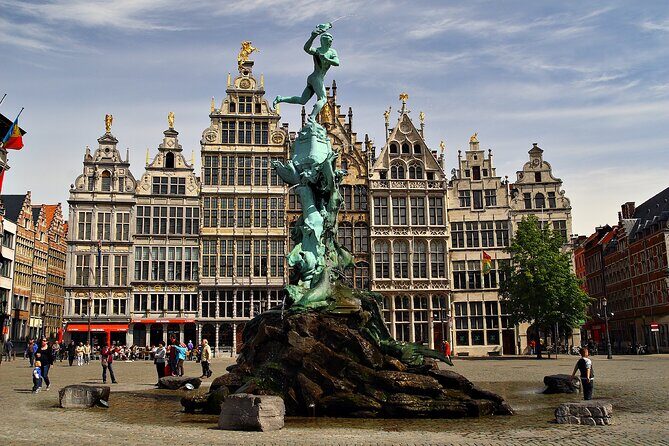
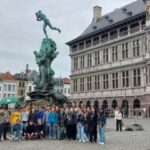
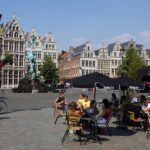
Your journey begins at the Grote Markt, Antwerp’s beating heart and one of Europe’s most visually stunning squares. This isn’t just any town square—it’s surrounded by ornate medieval guild houses that showcase the wealth generated by the city’s merchant class. The City Hall dominates one side, while the Brabo Fountain in the center tells its own legendary tale.
Your guide will spend about ten minutes here explaining the history embedded in the architecture. This stop is crucial because it establishes context for everything that follows. You’ll understand why these guild houses matter, what they represented about power and commerce in medieval times, and how Antwerp’s geography made it an inevitable commercial superpower.
Hendrik Conscience Square and Intellectual Heritage
Moving from commerce to culture, you’ll reach the square named after Flemish writer Hendrik Conscience. This five-minute stop introduces you to Antwerp’s intellectual side. The baroque church here and the old city library represent the city’s commitment to preserving knowledge and fostering creative thought. Your guide will help you see how this wasn’t separate from commerce—it was woven into the city’s identity.
Carolus Borromeus Church: Rubens and Sacred Art
Now you arrive at one of the tour’s highlights—the 17th-century Baroque church that showcases Peter Paul Rubens’ influence on Antwerp’s artistic landscape. This ten-minute stop includes entry to the church during opening hours, allowing you to see Rubens’ paintings and understand his contribution to the city’s visual culture.
What makes this stop special is understanding that Rubens wasn’t just painting for wealthy patrons—he was reshaping how religious art was conceived and executed. The church represents the intersection of commerce, religion, and artistic genius that defined Antwerp’s Golden Age.
Handelsbeurs Antwerpen: The First Wall Street
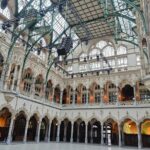
This is where the tour gets genuinely fascinating. The Bourse of Antwerp literally pioneered the concept of organized trading that would eventually become the modern stock exchange. Spend ten minutes here understanding how Antwerp’s geographic position at the confluence of major trade routes made it inevitable that merchants would develop sophisticated systems for trading goods, futures, and credit.
Your guide will explain why this matters: the financial innovations developed in this building influenced how commerce functions globally. When you stand here, you’re standing in one of history’s most consequential locations for economic development.
You can also read our reviews of more historical tours in Antwerp


The Rubenshuis: Into the Master’s World
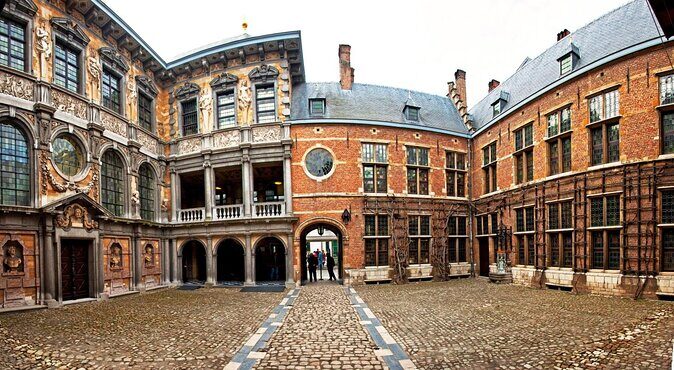
The former home and workshop of Peter Paul Rubens gets another ten-minute exploration. Unlike the church visit where you see his religious work, here you’ll learn about Rubens as a person, entrepreneur, and artist. He wasn’t just painting masterpieces—he was running a workshop that produced hundreds of works, managing apprentices, and navigating the politics of patronage.
One reviewer noted that their guide shared “secrets behind the artist’s success,” suggesting these stops include insights beyond what you’d find in a guidebook. Understanding Rubens’ practical approach to art production helps explain why he was so influential.
MoMu and the Fashion Quarter
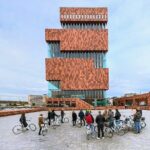
This ten-minute stop through the designer’s quarter addresses a question many visitors have: why is Antwerp a global fashion capital? The Museum of Modern Art (MoMu) represents this modern identity. Your guide will point out where contemporary designers have their studios and ateliers, connecting the city’s historical merchant tradition to its current status in high fashion.
This stop bridges historical and contemporary Antwerp, showing how the same spirit that made the city a trading center in the 16th century drives its fashion influence today.
Museum Plantin-Moretus: A UNESCO Hidden Gem
One of the tour’s best-kept secrets, this museum tells the story of printing and book production across centuries. Your guide will spend ten minutes here, usually including access to the historical garden during opening hours. What makes this stop special is its status as the first museum designated as UNESCO World Heritage—a distinction based on its architectural and historical significance.
The museum brings to life how printing transformed knowledge distribution and democratized learning. You’ll see original printing presses, manuscripts, and understand why this innovation mattered as much as any political or military event.
Vlaeykensgang: The Most Photographed Medieval Street
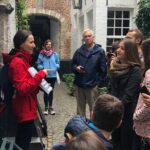
This narrow alley is described as the best-preserved medieval street in Antwerp, and the tour dedicates ten minutes to navigating it. The guides acknowledge that many locals aren’t even familiar with this spot, making it genuinely special. Your guide will help you visualize what life was like in medieval Antwerp—cramped quarters, narrow passages, the practicality of medieval urban design.
The fact that it’s “not easy to find on your own” (as the tour description notes) makes this a genuine value-add. You’re getting access to something that would be frustratingly difficult to locate independently.
Nello and Patrasche Statue: The Sentimental Stop
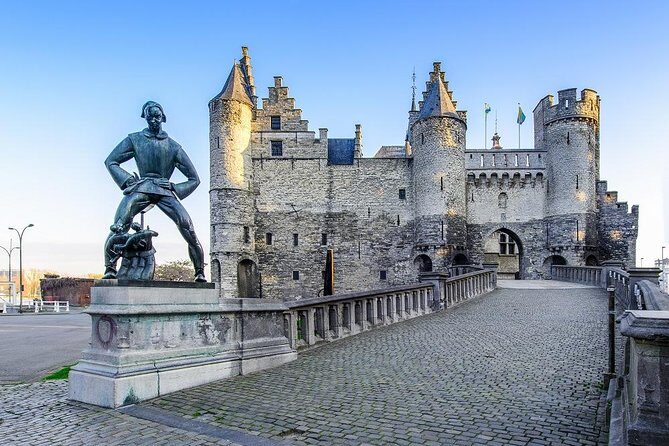
This five-minute stop at the statue of Nello and Patrasche introduces you to a story that drives many visitors to Antwerp, particularly from Asia. The guides happily share the backstory, which adds emotional resonance to the tour. Even if you’re not familiar with the tale, learning about why it’s culturally significant helps you understand global tourism patterns and how stories transcend borders.
Cathedral of Our Lady: The Grand Finale
The tour concludes with fifteen minutes at the Cathedral of Our Lady, one of Europe’s most impressive Gothic structures. Your guide will share the construction history and curious facts that bring the building to life. This final stop serves as both a visual punctuation mark and a practical moment where guides provide recommendations for the rest of your Antwerp visit.
What the Guides Bring to the Experience
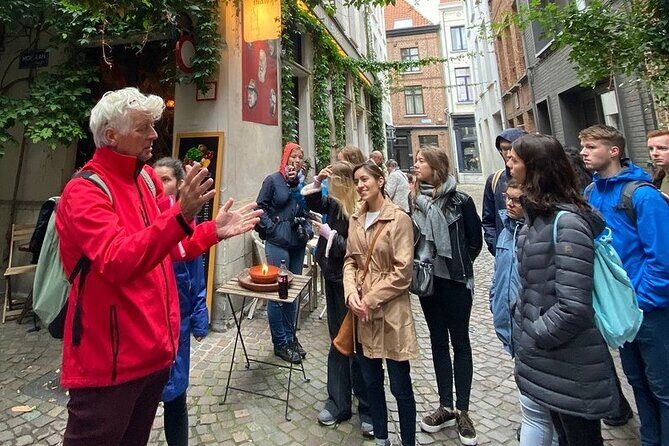
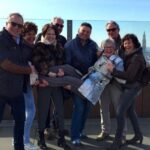
The reviews consistently highlight guide quality as the tour’s greatest strength. Names like Luc, Beren, Arie, Birke, and others appear repeatedly with glowing descriptions. One traveler described their experience as “time travel” thanks to the guide’s storytelling abilities. Another noted that a guide was “passionate about Antwerp, knowledgeable about the history and as a local shared fun information from her perspective.”
What’s striking is how guides manage large groups—the tour allows up to 35 people—while maintaining engagement. One reviewer mentioned their guide “expertly navigated the crowds and kept a good pace, all the while peppering his commentary with interesting and humorous anecdotes.” This suggests guides have developed real skills in group management and pacing.
The volunteer model appears to attract guides who genuinely want to share their knowledge. Multiple reviews mention guides checking in with participants, being attentive to questions, and adjusting their delivery based on group interest.
Practical Considerations for Your Visit
Timing and Booking
The tour operates in English and requires advance booking, with travelers typically reserving about 14 days ahead on average. You’ll receive a mobile ticket, making logistics straightforward. The two-hour duration is manageable for most fitness levels, though it involves substantial walking.
Weather and Comfort
One honest review mentioned a 32-degree Celsius day with too much standing in sun: “Very hard on the legs, especially for us older people.” This isn’t a criticism of the tour itself but important context. Weather in Antwerp can vary dramatically. Comfortable shoes aren’t optional—they’re essential. Consider checking the forecast and dressing appropriately.
Group Size and Acoustics
The tour accommodates up to 35 people, which means you might be part of a larger group. One reviewer mentioned difficulty hearing the guide “when we are in a group of 30 and there is a lot of background noise,” particularly in crowded public spaces. If you’re sensitive to noise or prefer more intimate experiences, you might request information about group size before booking.
Accessibility and Logistics
The tour starts at Grote Markt and ends at Handschoenmarkt, both centrally located and near public transportation. The itinerary includes free admission to most stops, with exceptions being the Rubenshuis and MoMu (neither included). This transparency about what’s covered helps with budgeting.
Service animals are allowed, and the tour notes that “most travelers can participate,” suggesting flexibility for various ability levels. However, the walking distance and pace should be confirmed if you have specific mobility concerns.
The Cancellation Policy: Peace of Mind
You can cancel up to 24 hours before the tour for a full refund, which provides flexibility for changing plans. This is particularly valuable given the tip-based model—you’re not locked into paying a large upfront fee if circumstances change.
Frequently Asked Questions
Is this really a free tour, or is the pricing misleading?
The $3.62 per group cost is the actual booking fee. The tour operates on a tip-based model, meaning guides rely on voluntary gratuities rather than set wages. This structure keeps the experience accessible while allowing guides to earn based on the value they provide. Most travelers tip generously based on review feedback.
How much walking is involved, and is it suitable for older travelers?
The tour covers substantial ground across ten stops in two hours. One reviewer with mobility concerns found the walking challenging on a hot day, while another described it as “not an excessive amount of walking.” Fitness level and weather conditions significantly affect the experience. Wearing comfortable shoes is essential, and you should assess your personal fitness level before booking.
Can I join if I don’t speak English fluently?
The tour is offered in English only. If English is your second language, guides appear to speak clearly and adjust their pace for comprehension. Multiple reviews praise guides for speaking clearly and being attentive to questions, suggesting they’re accustomed to international audiences.
What’s included versus what costs extra?
Admission to most stops is included: Grote Markt, Hendrik Conscience Square, Carolus Borromeus Church, Handelsbeurs, Museum Plantin-Moretus, Vlaeykensgang, Nello and Patrasche Statue, and Cathedral of Our Lady. The Rubenshuis and MoMu are not included, though you pass by them. Budget accordingly if you want to enter these attractions.
How large are the groups typically?
The tour accommodates up to 35 people, though the actual group size varies. One reviewer on New Year’s Eve 2025 noted it was “one of the larger Free Walking Tours we have taken,” but the guide “managed the group size well.” If group size is important to you, you could contact the operator before booking to ask about current typical group sizes.
What should I bring or wear?
Comfortable walking shoes are non-negotiable. Dress for the weather—Antwerp can be quite warm in summer or chilly in winter. Consider bringing water, especially on warm days. The tour involves standing and listening in public spaces, so dress accordingly.
How do I find the starting point?
The tour begins at Grote Markt in central Antwerp (address: Grote Markt, 2000 Antwerpen, Belgium). This is Antwerp’s main square and easily accessible by public transportation. The specific meeting location details will be included in your mobile ticket confirmation.
What if I’m not interested in art and history?
This tour is specifically designed for people interested in history and legends. If you prefer food tours, nightlife exploration, or modern Antwerp, the same operator offers alternative experiences like “The Dark Side of Antwerp” evening tour or “A Taste of Antwerp” tasting tour. This particular tour’s value proposition centers on historical understanding.
Historical Walking Tour: Legends of Antwerp
The Bottom Line: Exceptional Value Meets Authentic Expertise
This tour represents one of those rare travel experiences where you genuinely get more than you pay for. At $3.62 per group, the financial investment is negligible, but the actual value—in terms of knowledgeable local guides, access to significant historical sites, and an efficiently organized itinerary—far exceeds what you’d expect. The 4.9-star rating from nearly 1,900 reviews isn’t inflated praise; it reflects consistent delivery across multiple guides and dates. You’re getting passionate locals who love their city, sharing insights that transform Antwerp from a place you walk through into a place you understand. The tour works best if you enjoy history, appreciate good storytelling, have comfortable shoes, and can handle two hours of walking through potentially crowded public spaces. For anyone visiting Antwerp—whether it’s your first time or your fifth—this tour efficiently establishes the historical foundation that makes everything else you see in the city more meaningful.