
Rome at night has a different pace, and this Jewish Ghetto and Campo de’ Fiori by night tour uses that darker evening mood to tell an important story. You start near Piazza Mattei and move through the Jewish Ghetto area toward Campo de’ Fiori, then finish around Largo di Torre Argentina, with stops timed for food, drinks, and sights along the way.
What I like most is the combo of knowledgeable local guides and real food momentum. In the reviews, guides like Maria, Fabrizia, Andrea, and Marco are praised for sharing history without dodging the tough parts, while still keeping the evening social and fun.
One consideration: if you want a deep, museum-level visit inside the Jewish sites, this tour does not include the interior synagogue visit, and reviews note that the time in and around the actual Jewish quarter can feel limited for some travelers.
- Key points worth knowing before you go
- Why this Rome night tour feels practical (not just “touristy”)
- Meeting point: Piazza Mattei and the start-fast plan
- How the night tour is paced (and why the time works)
- Stop 1: Antico Quartiere Ebraico and the Jewish Ghetto area
- Stop 2: Campo de’ Fiori and the pizza-and-beer rhythm
- Teatro di Pompeo ruins: history you can miss if you’re not looking
- Stop 3: Piazza Navona and tiramisù for the reset
- Stop 4: Basilica di Sant’Eustachio for espresso and gelato
- Stop 5: Largo di Torre Argentina and the Julius Caesar story
- Wine, beer, and why the drink selection adds real value
- Food you’ll recognize, plus a few you might not
- Vegetarian options: good to know the limits
- Accessibility and fitness: what moderate walking really means
- Weather and comfort: rain or shine
- Group vibe: small, social, and question-friendly
- Guides: what travelers consistently loved
- What some travelers may want more of
- Price and logistics: is it a good deal?
- Should you book this Rome night food-and-history tour?
- FAQ
- What is the duration of the tour?
- What time does the tour start?
- Where do I meet the guide?
- Where does the tour end?
- Is the interior of the Jewish synagogue included?
- Are vegetarian options available?
- Can this tour accommodate vegan, gluten-free, or dairy-free diets?
- What’s included for food and drinks?
- What is the cancellation policy?
Key points worth knowing before you go
 1 / 9
1 / 9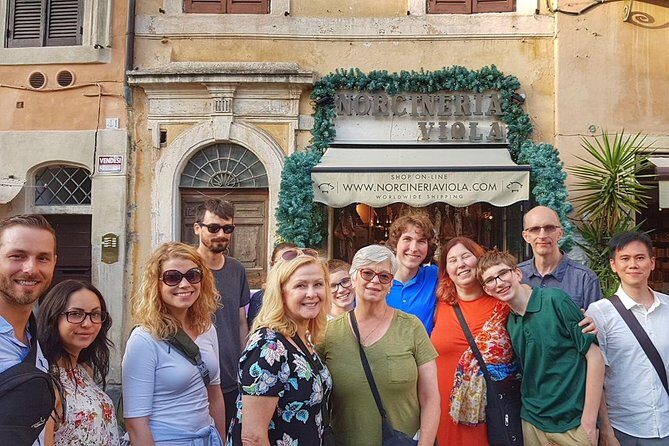 2 / 9
2 / 9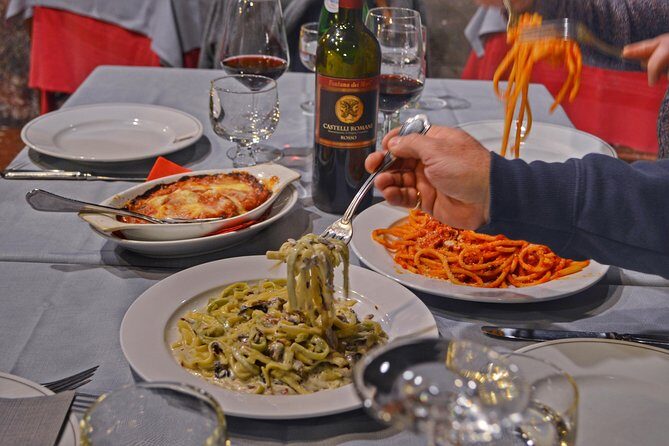 3 / 9
3 / 9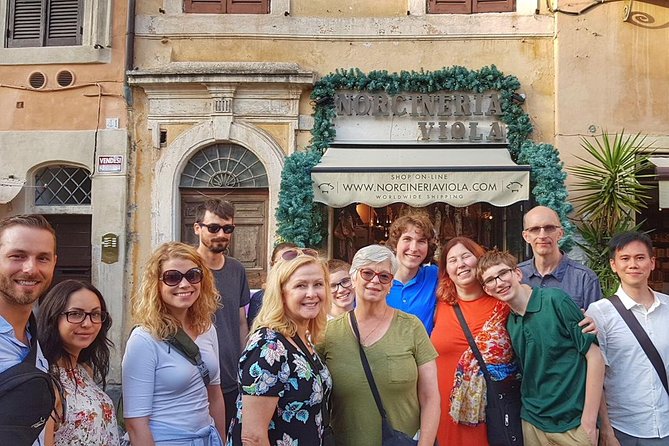 4 / 9
4 / 9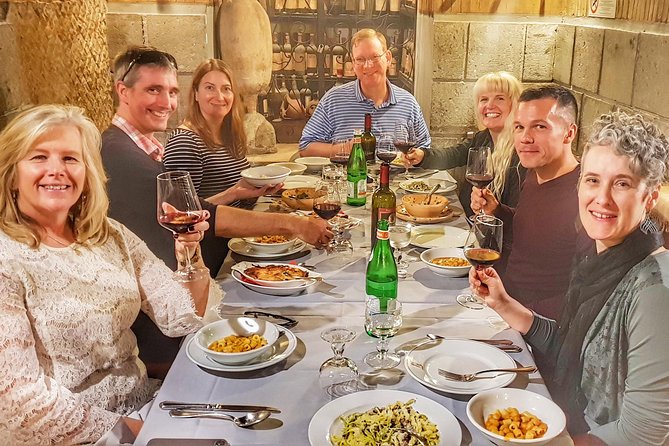 5 / 9
5 / 9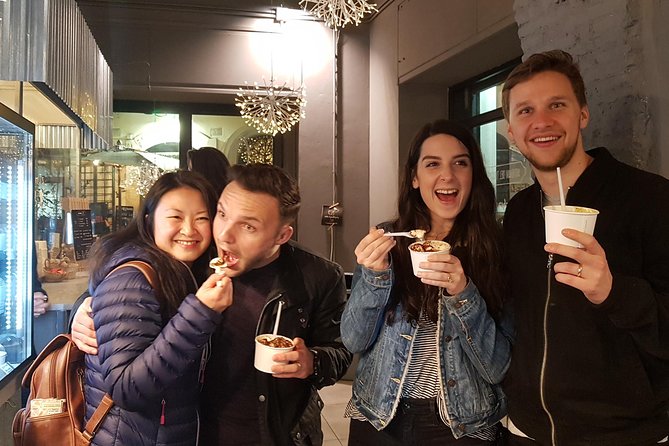 6 / 9
6 / 9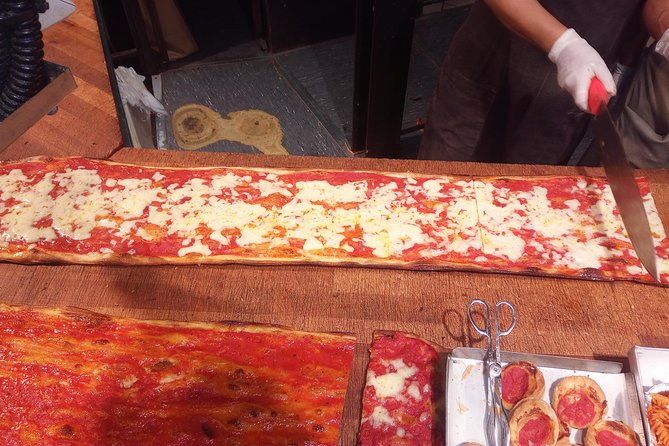 7 / 9
7 / 9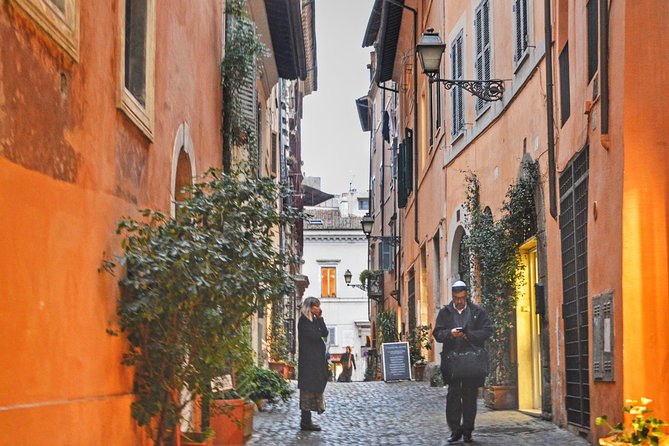 8 / 9
8 / 9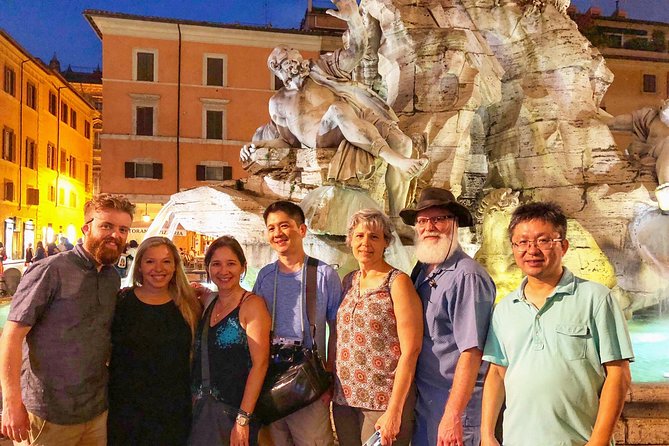 9 / 9
9 / 9- Small group size (max 15) keeps things friendly and easy to ask questions.
- 10+ tastings plus wine and beer means you eat like you planned a meal, not just snacks.
- Night walking with “darker history” context gives meaning to places like Campo de’ Fiori and Largo Argentina.
- Vegetarian options are possible, but vegan and gluten/dairy-free diets can’t be accommodated.
- Smart casual dress plus moderate walking makes planning your evening easier.
Why this Rome night tour feels practical (not just “touristy”)
A lot of Rome food tours are basically restaurant hopping. This one does food, yes, but it also organizes your evening so the history stays attached to what you’re eating and where you’re standing. That matters because the Ghetto and the surrounding neighborhoods aren’t just scenery. They’re layered places where Roman-era ruins sit close to later Jewish life, and that contrast turns a stroll into a real understanding of Rome.
You’re also starting in the early evening (5:45 pm), which is a smart time. You get cooler temperatures for walking and lighting that makes squares feel cinematic without being overly late. The pacing is built for mingling, tasting, and then absorbing a few key stories before the next plate shows up.
Meeting point: Piazza Mattei and the start-fast plan
You’ll meet at Piazza Mattei (00186 Roma) and the listed landmark is in front of the turtles fountain. If you’ve ever shown up late in Rome, you know how quickly the group can vanish into narrow streets. This tour is small, so I’d plan to arrive a few minutes early, not just at the minute.
From a logistics angle, this is also convenient: the meeting point is near public transportation, and since hotel transfer isn’t included, you’ll want to use taxi or bus to get there. If you’re staying central, that usually keeps the hassle low.
How the night tour is paced (and why the time works)
This is about 4 hours of walking and tasting, with multiple stops. The tour format is designed so you don’t spend the whole evening queuing or waiting around. Reviews mention that in busy places, food arrived without long delays, which is a huge quality-of-life factor on a food tour.
The walking is described as moderate, and the guidance says it’s not ideal for people with walking issues. If you’re generally comfortable on city sidewalks, you’re fine—but Rome evenings still mean uneven pavement and some standing.
Stop 1: Antico Quartiere Ebraico and the Jewish Ghetto area
The Jewish Ghetto stop is where the tour starts building context. You’ll learn how this area was different for centuries compared to how it looks today. You’ll also see major landmarks in the area, including the new synagogue and nearby ruins tied to Roman history, such as the Portico di Ottavia and Teatro Marcello.
Food here is part of the storytelling. You’ll try a classic Jewish-Ghetto street-food style dish mentioned on the tour: carciofo alla giudìa (artichokes prepared in the Jewish-Roman tradition). It’s the kind of bite that helps you connect the geography with the cuisine instead of treating food like an add-on.
A practical note from the tour info: this stop is around 30 minutes, and admission ticket is listed as free. That’s helpful because it means you’re not stuck negotiating extra ticketing while the evening is moving.
Stop 2: Campo de’ Fiori and the pizza-and-beer rhythm
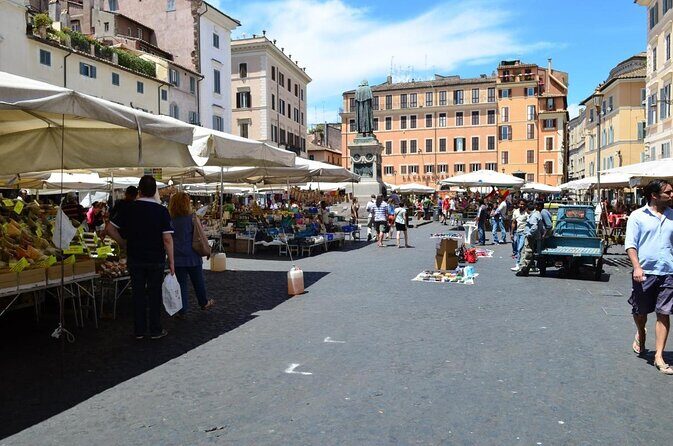
Once you leave the Ghetto area, the walk heads toward Parione and Campo de’ Fiori. The square itself is a big character in this tour. You’ll hear that it was historically used for executions, including the deaths of philosophers and heretics tied to the period’s conflict over ideas. This is one of those moments where the guide’s tone matters, and reviews consistently praise guides who don’t shy away from the hard side of history.
Food at Campo de’ Fiori is very Roman-food first. You’ll be served Pizza Margherita with a light beer, and you’ll also learn the difference between Roman and Neapolitan pizza. Even if you think you already know pizza, this kind of comparison teaches you what to notice—style, dough character, and how the regional traditions show up.
Then you get cured meats and cheese with Italian wine, plus a tasting that shifts from street snack energy to a more meal-like, savory course. Reviews talk about the amount of food feeling “perfect” for the time, and that tracks with the structure here: several small tastings that add up quickly.
Teatro di Pompeo ruins: history you can miss if you’re not looking
This part of the tour also brings you past hidden ruins linked to the Teatro di Pompeo. You’ll discover where the ruins are tucked away nearby, and you’ll try traditional Roman-style pasta along with wine. If you like Rome because it rewards attention, this is the sort of stop that gives you a payoff: the city reveals something you’d otherwise walk right past.
Stop 3: Piazza Navona and tiramisù for the reset
As the tour transitions, Piazza Navona becomes your dessert-and-baroque-story moment. You’ll stop at a tiramisù place described as one of the best in Rome, and then you’ll learn about the square’s Baroque buildings and sculptures by two major artists: Bernini and Borromini.
This is a good “digest and absorb” stop. You get sweetness, but you’re also being guided through why the square looks like it does and how the area was used in the past. Reviews mention the tour includes stages that feel like a full progression—appetizers to dessert—so Piazza Navona acts like the evening’s emotional punctuation mark.
The stop is listed as about 30 minutes, with free admission.
Stop 4: Basilica di Sant’Eustachio for espresso and gelato
Next is Basilica di Sant’Eustachio, where you’ll enjoy an Italian espresso in a classic Roman café setting. The tour info points out that the espresso is tied to the Sant’Eustachio coffee tradition (founded/open from 1938), and that’s the kind of detail that gives your coffee stop a real local anchor, not just a caffeine refill.
Then gelato shows up—made on site with organic products and “a lot of passion.” Since this tour runs in the evening, the gelato also functions like a palate reset before the finish at Largo Argentina.
This stop is short at about 30 minutes, but it’s memorable because it blends a very Roman coffee culture moment with a dessert that’s clearly part of the tour’s plan rather than an optional add-on.
Stop 5: Largo di Torre Argentina and the Julius Caesar story
The tour ends at Area Sacra di Largo Argentina (the end point listed as Largo di Torre Argentina). Here you’ll see an important archaeological site associated with Roman history, with the tour describing it as the place where Julius Caesar was killed according to historians.
The tour also includes an entertaining layer: ruins excavated under Mussolini, plus a legend that claims Julius Caesar still wanders there. Whether you buy the spooky stuff or not, it gives the evening a final narrative hook.
The final food stop includes gelato again (the tour info repeats it here), and the structured timing keeps you from feeling rushed at the end. This last stop is also around 30 minutes, and admission tickets are listed as free.
Wine, beer, and why the drink selection adds real value
At $107.68 per person for about four hours, the value depends on whether you actually get enough food and drink to justify the price—and you do. The tour includes wine, beer, and soft drinks, plus 10+ different tastings.
In the reviews, wine quality gets called out positively, and that matters more than people expect. If a tour includes wine but it’s low-quality or limited, the experience can feel overpriced. Here, the drink is treated as part of the itinerary, paired with food stops in a way that matches how Italians pace an evening.
Also, the wine and beer servings help you stay energized for walking. By the time you reach Campo de’ Fiori and the later dessert stops, you’re not just tired and hungry. You’re synced to the evening.
Food you’ll recognize, plus a few you might not
This tour is very friendly to first-time Rome visitors because it includes iconic flavors—pizza, pasta, tiramisù, espresso, gelato—but it also includes dishes tied to the Jewish-Roman story. Trying carciofo alla giudìa is a good example: it’s not the default tourist dish, and that’s why it feels special.
The overall format also helps if you prefer variety over heaviness. Instead of one big sit-down meal, you get small tastings that build into a full-feeling dinner by the end. Reviews frequently mention being “stuffed,” with portions that feel right for the time.
Vegetarian options: good to know the limits
Vegetarian options are included, and the booking note says vegetarians can be accommodated if advised in advance. That’s great for many travelers.
However, the tour explicitly says it cannot accommodate vegan, gluten-free, or dairy-free diets. It also says it’s not recommended for travelers with severe allergies to nuts and dry fruits.
If you have dietary needs, I’d treat this tour as “vegetarian-friendly, but not allergy-safe.” You’ll want to message the operator during booking (the tour info says to use the special requirements field) so you’re not guessing at the last minute.
Accessibility and fitness: what moderate walking really means
The guidance states a moderate physical fitness level and “a moderate amount of walking.” It also says it’s not recommended for travelers with walking issues.
So if your mobility is limited, plan carefully: you’ll likely be standing during explanations and walking between areas with uneven surfaces. If you’re fine for typical city wandering, you’ll probably enjoy this. If you need lots of breaks or step-free routes, this might be a tougher match.
Weather and comfort: rain or shine
The tour takes place rain or shine. Rome weather can switch quickly, especially in shoulder seasons. Dress smart casual as instructed, but also plan for wet pavement and cooler air if it’s windy.
For comfort, I’d bring a light layer and wear shoes with grip. You’ll be moving through squares and streets where wet stone can be slippery.
Group vibe: small, social, and question-friendly
This is capped at a maximum of 15 travelers, and reviews mention lively, social groups. That’s not just a personality perk—it changes how the tour feels. With a smaller group, you can ask questions without feeling rushed, and the guide can steer conversation toward your interests.
Reviews repeatedly praise guides for being patient and welcoming. That shows up in the way the stories are told: not just facts, but a sense of why people lived the way they did in this neighborhood.
Guides: what travelers consistently loved
Several guide names come up in traveler feedback: Maria, Fabrizia, Andrea, and Marco. Across the comments, the themes are consistent:
- guides who know the area well
- guides who connect food to history and culture
- guides who handle the darker parts of history responsibly
- guides who keep the pace lively and the group engaged
If you’re the type who likes a guide who answers follow-up questions, this tour seems made for you.
What some travelers may want more of
A few reviews suggest the history time around the Jewish quarter may feel light if you’re expecting a deeper deep-dive. Also, since the synagogue interior isn’t included, travelers looking for that specific experience may feel they need to schedule it separately.
So think of this as a “guided night overview with food.” You’ll get context and key sights, but it’s not billed as a full archaeological or synagogue interior program.
Price and logistics: is it a good deal?
Let’s do the value math in plain terms. You’re paying $107.68 for about 4 hours, a guided walk, 10+ tastings, and wine + beer + soft drinks. That’s not just a meal; it’s a curated sequence of courses and drinks across multiple stops.
For many travelers, the big cost savings is time and organization. Instead of researching where to eat (and then piecing together a timeline for drinks), a guide handles pacing and food quality. Reviews also mention convenience, including fast service in busy places.
The only real logistical “cost” is getting to the meeting point on your own and handling moderate walking. If you’re already planning to be out exploring at night, that’s minor.
Should you book this Rome night food-and-history tour?
You should book if:
- you want a night walk that mixes food with meaningful context
- you enjoy learning while eating, and you like guides who explain both the pleasant and hard parts of the past
- you want solid value with multiple tastings and included wine/beer
- you’re traveling with a group that appreciates social, small-group vibes
You might skip or rethink if:
- you specifically want a tour that includes the interior of the Jewish synagogue
- you need vegan, gluten-free, or dairy-free accommodations
- you have severe allergies to nuts or dry fruits
- you have limited mobility and can’t do moderate walking on uneven streets
Jewish Ghetto and Campo Dè Fiori By Night Food, Wine and Sightseeing Tour
FAQ
What is the duration of the tour?
The tour lasts about 4 hours.
What time does the tour start?
The start time listed is 5:45 pm.
Where do I meet the guide?
You meet at Piazza Mattei, 00186 Roma RM in front of the turtles fountain.
Where does the tour end?
The tour ends at Largo di Torre Argentina, 00186 Roma RM (Area Sacra di Largo Argentina).
Is the interior of the Jewish synagogue included?
No. The tour does not include a visit to the interior of the Jewish Synagogue.
Are vegetarian options available?
Yes. Vegetarian options are included, and you should advise the operator in advance using the special requirements field.
Can this tour accommodate vegan, gluten-free, or dairy-free diets?
No. It says it cannot accommodate vegan, gluten-free, or dairy-free diets.
What’s included for food and drinks?
The tour includes over 10 different food tastings, plus wine, beer, and soft drinks.
What is the cancellation policy?
You can cancel for a full refund up to 24 hours in advance. If you cancel less than 24 hours before the start time, the amount paid is not refunded.
If you want, tell me your travel dates and whether you’re vegetarian or have any allergies, and I’ll help you decide if this is the right Rome evening for your group.