
Kyoto With Kids
Kyoto is the Japan you pictured before you ever booked a flight. Wooden temples against forested hillsides. Geisha disappearing down lantern-lit alleyways. Torii gates marching up a mountainside in endless orange rows. It’s stunning. And it absolutely works with children — as long as you don’t try to cram in too much.
That last bit is important. Kyoto has over 2,000 temples and shrines. You will not see them all. You shouldn’t even try. What you should do is pick a handful, build in plenty of downtime, and let the city work its quiet magic on your family. We learned this the hard way on our first visit, when we attempted six temples in a single day and our youngest had a meltdown next to a 600-year-old rock garden. Not our finest moment.
Here’s everything we know about making Kyoto brilliant with kids.
- How Many Days Do You Need in Kyoto?
- Getting to Kyoto from Tokyo
- Where to Stay in Kyoto With Kids
- Near Kyoto Station
- Gion District
- Best Things to Do in Kyoto With Kids
- Fushimi Inari Shrine
- Kinkakuji (Golden Pavilion)
- Arashiyama
- Nishiki Market
- Kimono Rental
- Nintendo Museum
- Kyoto Railway Museum
- Getting Around Kyoto
- Eating in Kyoto With Kids
- The Temple Fatigue Warning
- Best Time to Visit Kyoto With Kids
- Practical Tips for Kyoto With Kids
- Is Kyoto Worth It With Kids?
How Many Days Do You Need in Kyoto?
Two days is the absolute minimum. Three is better. Four if you want to include day trips and actually relax.
With two days, you can cover the major highlights — Fushimi Inari, Kinkakuji, Arashiyama — but it’ll feel rushed. Three days lets you add Nishiki Market, a kimono rental, maybe the Railway Museum, and still have breathing room for an afternoon spent just wandering. That wandering time matters. Kyoto’s backstreets are full of tiny shops, quiet shrines tucked between houses, and little cafés serving matcha everything. You miss all of it if you’re sprinting between big-ticket sights.
If you’re planning a wider Japan trip, our family travel Japan guide covers how Kyoto fits into a two-week itinerary.
Getting to Kyoto from Tokyo
The shinkansen. Always the shinkansen. The Hikari service from Tokyo Station takes about 2 hours 15 minutes and drops you right at Kyoto Station. If you’ve got a JR Pass, it’s fully covered — just reserve seats at the ticket office before you board. Free. Done.
Without a JR Pass, a one-way ticket costs around ¥13,320 (£70) per adult. Children aged 6-11 are half price. Under 6s ride free as long as they sit on your lap or share a seat.
The Nozomi is slightly faster (2 hours 10 minutes) but isn’t covered by the JR Pass. Unless you’re paying out of pocket and those five minutes genuinely matter, stick with the Hikari.
One tip: sit on the right side of the train heading west. On a clear day, you’ll get views of Mount Fuji about 40 minutes into the journey. The kids will lose their minds. So will you, honestly.
Where to Stay in Kyoto With Kids
Two main options, and they suit different families.
Near Kyoto Station
This is the practical choice. Kyoto Station is the transport hub for everything — buses, trains, the shinkansen back to Tokyo. There are department stores, restaurants, a massive underground shopping arcade, and convenience stores on every corner. If you’re arriving late or leaving early, being walkable to the station takes so much stress out of the equation.
Hotels around the station tend to be larger chain properties. Rooms are still small by British standards, but you’ll find more family-friendly options here. MIMARU Kyoto Station is worth a look — it’s an apartment-style hotel with kitchenettes, washing machines, and enough space for a family to spread out without climbing over each other. Expect to pay around ¥25,000-35,000 (£130-185) per night for a family room.
Gion District
If atmosphere matters more than convenience, stay in Gion. This is old Kyoto — narrow streets, traditional wooden machiya townhouses, the occasional geiko (that’s the Kyoto word for geisha) heading to an evening appointment. It’s genuinely magical at dusk. Our kids were fascinated.
The trade-off is that you’re further from the station and reliant on buses or taxis to reach sights on the other side of the city. But Gion itself is walkable to Kiyomizudera, Nishiki Market, and the river, so you’re not isolated.
Whichever area you choose, book a place with a washing machine if you can. Kyoto involves a lot of walking in warm weather, and getting through clothes quickly is just reality with kids.
Best Things to Do in Kyoto With Kids
Right. The good stuff.
Fushimi Inari Shrine
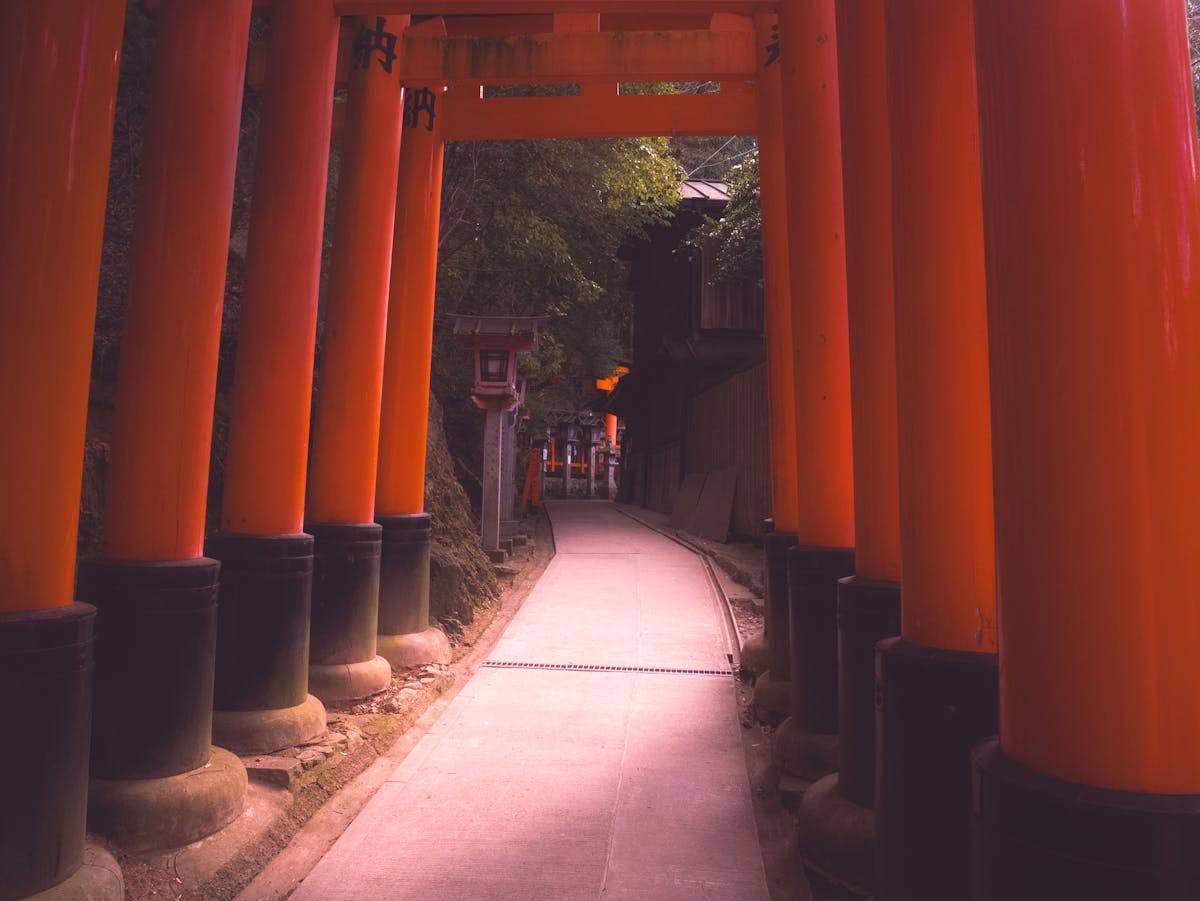
This is probably the single most iconic image of Kyoto — thousands of bright orange torii gates lining a path up Mount Inari. It’s free. It’s open 24 hours. And children absolutely love it.
The gates create a kind of tunnel effect, and kids can’t resist running through them. Ours treated it like a giant obstacle course, which isn’t exactly the spiritual experience the shrine intended, but they had an incredible time.
Now for the honest bit. The first section — from the main shrine up to the Yotsutsuji intersection — takes about 30-45 minutes and is where 90% of visitors turn around. It’s steep in places. On a hot day, it’s hard work. Beyond that intersection, the crowds thin dramatically and the walk becomes much more peaceful, but the full loop to the summit takes 2-3 hours and is genuinely demanding with young children.
Our advice: do the first section, stop at the intersection for the view over Kyoto, and call it done. That’s the best bit anyway.
Go early. Really early. By 9am in peak season, the lower gates are rammed with tour groups and Instagram posers doing their thousandth pose. At 7am? Almost empty. The light filtering through the gates in early morning is worth dragging reluctant children out of bed for.
Kinkakuji (Golden Pavilion)
A pavilion covered in actual gold leaf, reflected in a mirror-still pond. It’s gorgeous. Kids say “cool” and are ready to leave after four minutes.
That’s basically Kinkakuji. It costs ¥500 (£2.60) per person, the grounds are lovely, and the whole visit takes 30-45 minutes. Don’t build your day around it — slot it in on the way to or from something else. The ticket is actually a paper charm, which kids like collecting.
One thing: you can’t go inside the pavilion. You view it from across the pond. Manage expectations with your children beforehand, or you’ll hear “but I wanted to go IN it” approximately forty times.
Arashiyama
Arashiyama deserves — and gets — its own article. We’ve written a full Arashiyama with kids guide covering the bamboo grove, monkey park, river, and everything else. It’s easily a half-day trip, possibly a full day if you take the scenic train.
Short version: don’t skip it. The bamboo grove is extraordinary, the monkey park gives kids something active to do (climbing a hill to feed wild macaques), and the whole area feels slightly less intense than central Kyoto. Bring snacks.
Nishiki Market
A covered market running five blocks through central Kyoto, packed with food stalls and shops selling pickles, sweets, seafood, and all manner of things on sticks. It’s our favourite food experience in the city with kids.
Children can graze their way through. Tamagoyaki (sweet rolled omelette on a stick, about ¥200/£1) is an easy win. Mochi in every colour and flavour. Matcha soft serve. Grilled seafood skewers. Pickled vegetables if your kids are the adventurous sort — ours aren’t, but we live in hope.
The market gets crowded by mid-morning and stays packed until late afternoon. It’s narrow, so pushchairs are a nightmare. If you’ve got a buggy, either leave it at the hotel or prepare for a lot of awkward manoeuvring and apologetic looks.
For more on navigating Japanese food with children, our eating in Japan with kids guide covers the wider picture.
Kimono Rental
This is one of those activities that sounds naff in advance and ends up being a highlight. Dozens of shops in the Gion area rent kimono and yukata for the day. You get dressed by staff, hair done, the works. Then you wander around Kyoto looking fabulous.
Kids’ rentals run about ¥3,000-5,000 (£16-26). Adult sets are ¥4,000-8,000 (£21-42). Most shops are open 9am to 6pm and you return the kimono before closing.
Our daughter was absolutely beside herself. Our son needed convincing but came around once he saw how many other boys were doing it. It’s completely normal in Kyoto — hundreds of visitors walk around in rented kimono every day, and you blend in rather than stand out.
One practical note: wearing a kimono changes how you walk (shorter steps) and sit (carefully). It’s not ideal for a day of serious sightseeing with lots of stairs. Plan a more gentle day — Gion streets, Kiyomizudera approach, Nishiki Market — rather than anything involving a mountain hike.
Nintendo Museum
Opened in late 2024, the Nintendo Museum sits in Uji, about 30 minutes south of Kyoto by train. If your children are even vaguely interested in Mario, Zelda, or Pokémon, this is a pilgrimage.
Here’s the catch. Tickets are allocated by lottery. You apply on the official Nintendo Museum website for your preferred date, and they let you know if you’ve got a spot. It’s not first-come-first-served, it’s genuinely random. Apply as early as the system allows and have backup plans in case you don’t get in.
We haven’t managed to get tickets yet. Twice rejected. The frustration is real. But everyone who’s been says it’s brilliant — interactive exhibits, playable classic games, a gift shop that will empty your wallet. We’ll keep trying.
Kyoto Railway Museum
If you have a train-obsessed child, clear half a day for this. The Kyoto Railway Museum is about a 20-minute walk from Kyoto Station (or a short bus ride) and it’s fantastic.
Real trains. Dozens of them, including retired shinkansen you can climb aboard. A working turntable. A massive model railway layout. And — the big draw — train driving simulators that kids can actually operate. Our son spent 45 minutes on the shinkansen simulator and had to be physically removed.
Admission is ¥1,500 (£8) for adults and ¥500 (£2.60) for children aged 3-11. Genuinely good value for the amount of time you’ll spend here. There’s a café on site shaped like a dining car, which is a nice touch.
Getting Around Kyoto
This is where Kyoto gets slightly annoying. Unlike Tokyo and Osaka, where the train network covers everything, Kyoto’s sights are spread across the city and the main transport is buses. And the buses are… fine. Just fine.
The bus system works. Routes are colour-coded, most major sights are signposted in English, and a day pass costs ¥700 (£3.70). But the buses are frequently packed — standing room only, pushchairs barely fit, and working out which stop to get off at while wrestling two children and a backpack is properly stressful. During peak season, the buses on popular routes (particularly the 100 and 205) are sardine tins.
Alternatives that work better for families:
- Taxis: More expensive but infinitely less stressful. A taxi from Kyoto Station to Kinkakuji costs about ¥2,000-2,500 (£10-13). Split between two adults, it’s not outrageous, and you’ll arrive with your sanity intact. Kyoto taxis are everywhere and the drivers are unfailingly polite.
- Cycling: Kyoto’s centre is flat, and cycling is a genuinely brilliant way to get around. Several rental shops near the station offer bikes from ¥1,000 (£5.25) per day. Some have child seats or kids’ bikes. The city has decent cycling infrastructure by Japanese standards. We loved it — covered more ground than walking, avoided the bus crush, and the kids treated it as an activity rather than just transport.
- Walking: Kyoto is more walkable than you’d think. The eastern part of the city — Gion, Kiyomizudera, Philosopher’s Path — can be covered entirely on foot. Just pace yourself. Comfortable shoes. Water.
- Trains: The JR line and private Hankyu/Keihan lines cover some routes well. The JR line runs from Kyoto Station to Inari (for Fushimi Inari — just two stops) and to Saga-Arashiyama. These are covered by the JR Pass.
Eating in Kyoto With Kids
Kyoto’s food scene leans traditional. This is the home of kaiseki (multi-course haute cuisine) and Buddhist temple food, neither of which screams “child-friendly.” But dig a little deeper and there’s plenty for families.
Yudofu (hot tofu): Kyoto’s signature dish. Soft tofu simmered in a light kombu broth, served with dipping sauce. It sounds boring. It’s actually delicious, and the mild flavour works well for kids who aren’t keen on strong tastes. Restaurants around Nanzenji temple specialise in it — Junsei and Okutan are both well-known. Expect to pay ¥2,500-4,000 (£13-21) per set.
Matcha everything: Kyoto is matcha central. Ice cream, cake, lattes, Kit-Kats, even matcha soba noodles. Uji (just south of Kyoto) is where the best tea comes from, and the main street is lined with tea shops offering tastings and sweets. Kids who like green tea flavours will be in paradise. Kids who don’t will still eat the ice cream.
Nishiki Market grazing: Already mentioned above, but worth repeating as a meal strategy. Skip a formal lunch and just eat your way through the market instead. It’s more fun, costs less, and fussy eaters can pick and choose.
Regular kid-friendly options: Ramen, udon, curry rice, gyoza — all the Japanese staples that children reliably eat are available everywhere. Don’t feel guilty about taking your kids to a ramen shop instead of a kaiseki restaurant. We certainly don’t.
The Temple Fatigue Warning
This needs its own section because it’s the single biggest mistake families make in Kyoto.
Do not visit more than two temples or shrines per day with children. Possibly just one, if it’s a big one. After two, they all blur together. Your kids stop caring. You stop caring. That beautiful 14th-century moss garden becomes just another place where they’re told to be quiet and not touch anything.
Mix it up. One temple in the morning, then something completely different — the Railway Museum, a bike ride, kimono rental, Nishiki Market. Come back to another temple the next day when everyone’s fresh. The temples have been there for centuries. They’ll wait.
Also worth knowing: many temples charge ¥300-600 (£1.60-3.15) admission. Individually that’s nothing, but if you’re hitting four or five a day across a family of four, it adds up surprisingly fast for places your children are actively resenting.
Best Time to Visit Kyoto With Kids
Autumn is the obvious answer. Late November in Kyoto is extraordinary — the maple trees turn every shade of red, orange, and gold, and the temples against that backdrop are genuinely some of the most beautiful scenery in Japan. We visited in late November once and I still think about it regularly.
But. The crowds. Everyone knows autumn in Kyoto is special, so everyone comes. Hotels triple in price. The buses are impossible. Popular temples like Tofukuji have queues stretching down the road. With kids, the combination of crowds and cold-ish weather (around 8-12°C) can take the shine off.
Spring cherry blossom season (late March to early April) is equally gorgeous and equally rammed. Same caveats apply.
For families, the shoulder seasons are our pick. Early June — after the spring rush, before the worst of the summer heat and the rainy season’s peak — is lovely. Late October to early November gives you the start of the autumn colours without the full madness. You trade peak foliage for thinner crowds and lower prices. Fair swap, we think.
Avoid July and August if you can. Kyoto in summer is brutal. The city sits in a basin surrounded by mountains, which traps the heat and humidity like a greenhouse. Temperatures hit 35-38°C with suffocating humidity. Walking between temples becomes genuinely unpleasant. If summer holidays are your only option, plan for very early mornings, long air-conditioned breaks in the middle of the day, and carry more water than you think you need.
Practical Tips for Kyoto With Kids
A few things we wish someone had told us before our first visit.
- Coin lockers are your friend. Kyoto Station has hundreds of them in various sizes. Dump your big bags before check-in time and explore unencumbered. Prices are ¥400-700 (£2.10-3.70) depending on size.
- Carry cash. Kyoto is more traditional than Tokyo and Osaka. Many smaller temples, market stalls, and local restaurants are cash only. 7-Eleven ATMs accept foreign cards reliably.
- Shoes off, shoes on. You’ll be removing shoes constantly at temples. Slip-on shoes for everyone save enormous amounts of time and frustration. Avoid lace-ups. Trust us on this.
- Bring a portable fan and water bottle. Even outside peak summer, Kyoto is warmer than you expect. A clip-on fan for the buggy or a handheld one for older kids makes a genuine difference.
- Temple etiquette with kids: Keep voices low, don’t climb on things, don’t touch the wooden structures. Most temple staff are patient with well-meaning families, but actively destructive behaviour will get you stern looks. Brief your children before each visit rather than trying to correct them in the moment.
- Vending machines are everywhere. Cold drinks for ¥130-160 (70-85p). In summer, this is a lifeline. The kids will want to try every flavour of Calpis and Pocari Sweat. Let them. Pick your battles.
- Pushchairs work, but barely. Kyoto’s older streets are narrow and sometimes have steps instead of kerb ramps. Temples almost always involve gravel paths and stairs. A lightweight, compact stroller is fine for getting between places, but expect to fold it frequently. A carrier is often more practical for under-3s.
Is Kyoto Worth It With Kids?
Without question. Yes.
Kyoto is a different pace to Tokyo and Osaka. It’s quieter, more traditional, and requires a bit more patience from children. But the things they’ll remember — running through those orange gates, feeding monkeys in Arashiyama, wearing a kimono through ancient streets, eating mochi from a market stall — those are the moments that make a Japan trip feel complete.
Don’t rush it. Don’t over-schedule it. Don’t feel guilty about skipping the famous temple everyone says you must see if your kids need a rest day. Kyoto rewards slow mornings, long lunches, and afternoons spent just being somewhere beautiful.
For more on planning your wider Japan trip, start with our complete family guide to Japan. And for all the detail on getting between cities with children, our JR Pass guide for families covers everything you need to know.
Useful resources: Japan National Tourism Organization has excellent up-to-date information on Kyoto attractions, transport, and seasonal events.