
We’ve reviewed countless food tours across Europe, and this Lisbon experience deserves serious consideration if you’re looking for an efficient, genuinely local introduction to Portuguese cuisine. What really impresses us about this tour is the combination of accessibility—it’s affordable at under $80 per person, manageable at just three hours, and genuinely small groups that rarely exceed 14 people—paired with a thoughtfully curated route through Lisbon’s historic center that actually takes you where locals eat, not where tour buses park.
The one thing you need to know upfront: this tour leans heavily into traditional Portuguese food and wine. If you follow restrictive diets—particularly vegan, celiac, or Kosher/Halal—you should look elsewhere. The tour operator is honest about this limitation, noting that traditional venues simply can’t accommodate these needs. But if you’re comfortable with the omnivorous approach to Portuguese gastronomy, you’re in for a memorable afternoon.
This experience works best for travelers who want to eat well without spending half a day on a food tour, people who appreciate wine and beer pairings, and anyone arriving in Lisbon who wants immediate insider knowledge about where locals actually spend their euros on lunch. It’s particularly valuable for first-time visitors who want to understand Portuguese food culture quickly and authentically.
- What Makes This Tour Different
- The Itinerary Broken Down: Where You’ll Go and What You’ll Taste
- The Wine and Beverage Program
- Group Dynamics and the Guide Experience
- Practical Considerations: Timing, Location, and Physical Demands
- The Value Proposition: What You’re Actually Getting
- Dietary Considerations and Honest Limitations
- Real Reviews: What Travelers Actually Said
- Booking Information and Cancellation Policy
- Who Should Book This Tour
- Frequently Asked Questions
What Makes This Tour Different
 1 / 8
1 / 8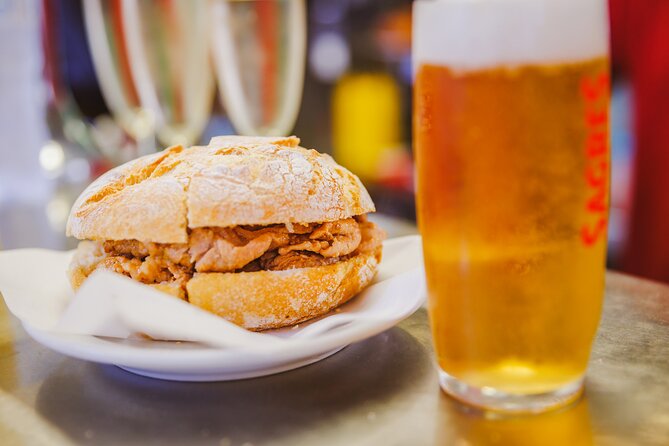 2 / 8
2 / 8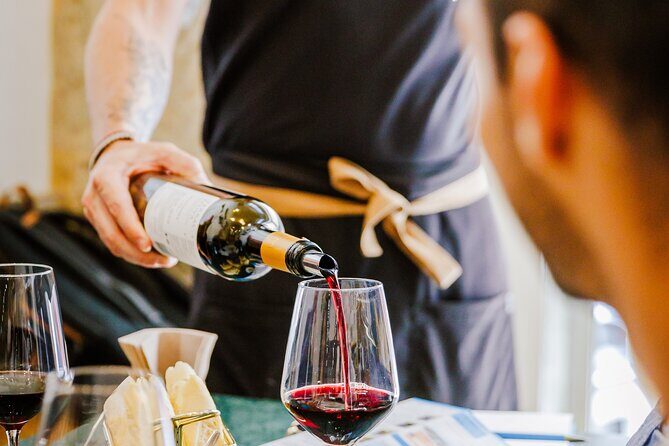 3 / 8
3 / 8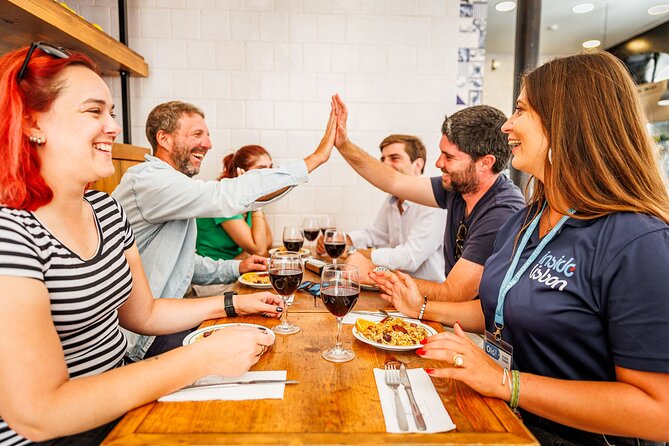 4 / 8
4 / 8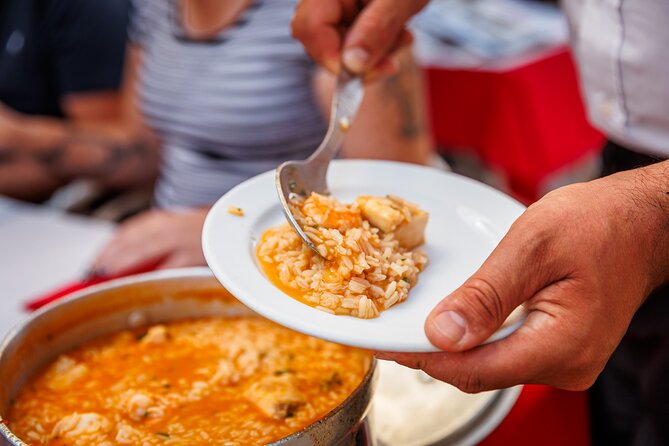 5 / 8
5 / 8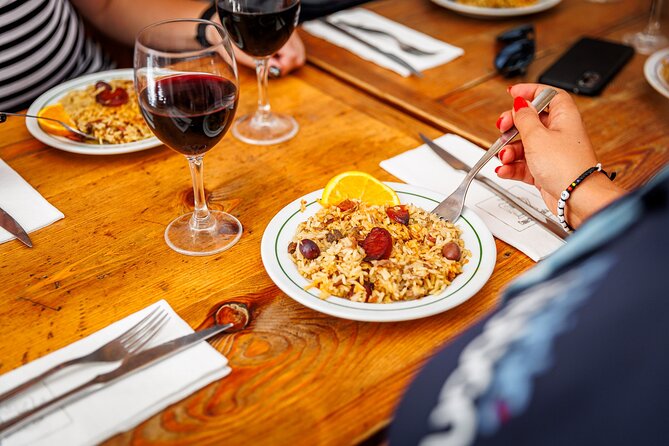 6 / 8
6 / 8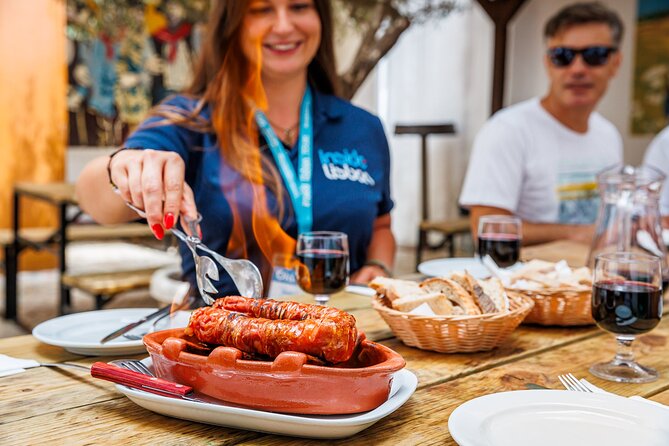 7 / 8
7 / 8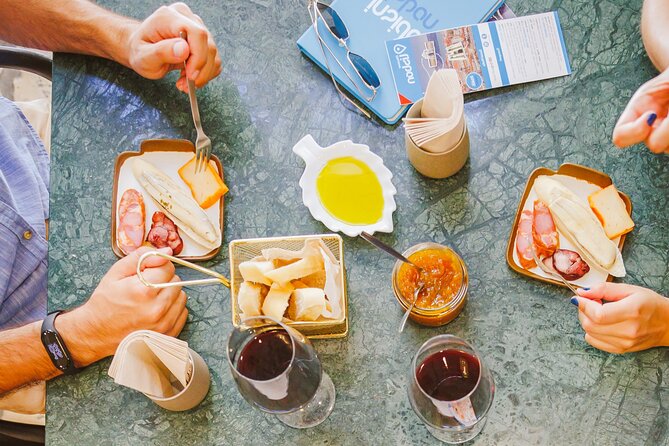 8 / 8
8 / 8Most food tours feel like you’re being herded through a predetermined script. What distinguishes this particular experience is the emphasis on small group sizes and guides who genuinely know their subject. With a maximum of 14 travelers and groups often running closer to 4-8 people, you get the kind of attention and flexibility that larger commercial tours can’t offer.
The guides consistently receive praise for their knowledge and personality. One traveler noted that their guide “adjusted for weather with a diverse food and wine tasting experience we would not have had otherwise.” This kind of flexibility matters. You’re not locked into a rigid itinerary—your guide can make real-time decisions based on what’s working and what isn’t.
The price point deserves attention. At $76.19 per person, you’re getting six distinct stops featuring over 15 individual tastings of food and drinks. That works out to roughly $5 per tasting—a remarkable value when you consider that a single glass of quality wine or a decent bifana sandwich in a tourist area might cost that much independently. You’re essentially getting the experience at cost, which suggests the tour operator prioritizes customer satisfaction over margin maximization.
The Itinerary Broken Down: Where You’ll Go and What You’ll Taste
Starting at Rossio Square: The Iconic Cod Cake and Vinho Verde
Your journey begins at Praça do Rossio, Lisbon’s most recognizable public square. This isn’t a subtle introduction—Rossio is the city’s nerve center, bustling with energy and history. You’ll meet your guide here and immediately taste one of Portugal’s most iconic dishes: pastéis de bacalhau, the golden fried codfish cakes that have become synonymous with Portuguese food culture.
The pairing matters here. These cakes arrive warm and crispy, and they’re accompanied by Vinho Verde, Portugal’s refreshing green wine. One reviewer described the experience perfectly: “Get ready to understand the portuguese obsession: Cod Fish. as you taste it, harmonized with a refreshing glass of Vinho Verde.” This isn’t a throwaway introduction—it’s setting the stage for understanding why these foods matter to Portuguese identity.
Baixa de Lisboa: Six Stops Through Historic Lisbon
The bulk of your tour happens in Baixa, Lisbon’s historic lower city. This is where the real culinary exploration unfolds across six distinct stops, each chosen for ingredient freshness and local character. The tour weaves through several iconic locations that most visitors walk past without understanding their significance.
You’ll encounter the ruins of a Gothic church, a triumphal arch that survived the 1755 earthquake (a reminder of how recent Lisbon’s modern reconstruction actually is), and navigate Rua Augusta, the main artery of the historical center. Each location serves as context for understanding Lisbon’s food culture within its broader history. You’re not just eating; you’re learning how these foods evolved from the city’s past.
Rua da Madalena: The Bifana and Portuguese Draft Beer
By the time you reach Rua da Madalena, you’ve already sampled several items, but this stop introduces you to what many locals consider the true Lisbon sandwich: the bifana. This is a thin-sliced pork sandwich served in a soft roll, often with a simple sauce, eaten standing at a bar counter with a cold Super Bock or Sagres draft beer.
One traveler captured the experience well: “We listed as a starter, but for many it is a meal on its own. The sandwich of Lisbon! Also learn how to order a draft beer in this city!” This is the kind of practical knowledge that makes food tours valuable—you’re learning not just what to eat, but how to order it like someone who belongs in the space. You’ll visit a family-owned tasca (small neighborhood restaurant), the kind of place that’s been serving the same customers for decades.
Largo de São Domingos: Ginjinha and Two Centuries of Tradition
Ginjinha deserves its own moment of attention. This sour cherry liqueur has been served in Largo de São Domingos since 1840, and you’ll taste it at the original location where this tradition began. The square itself is architecturally stunning—Portuguese pavement patterns, street vendors, and an atmosphere that feels distinctly local rather than touristy.
The ritual of ginjinha involves a choice: “com” (with the cherry) or “sem” (without). Your guide will explain this tradition and help you understand why this drink became so embedded in Lisbon culture. It’s a small moment that reveals how deeply food and drink are woven into local identity.
The Wine and Beverage Program
Over the course of three hours, you’ll encounter a range of Portuguese wines and beverages that provides a genuine education in what the country produces. We’re talking about Vinho Verde (the light, slightly sparkling white wine), quality red wines, Port wine (one of the world’s oldest protected wines), and that memorable ginjinha.
One reviewer noted: “Lots of drinking! Port, wine and a cherry liquor. Great bits of history by Jose.” This isn’t subtle—you should come prepared for a genuine beverage program. Another traveler mentioned arriving “very hungry and left very full and very happy,” which tells you that the food portions are substantial enough to balance the alcohol consumption.
The wine selections aren’t random. Your guide will explain pairings and the reasoning behind each choice. This context transforms what could be a simple “taste this” experience into actual education about Portuguese wine regions and production methods.
Group Dynamics and the Guide Experience
The reviews consistently praise the guides, and it’s worth understanding why this matters. With groups capped at 14 people, your guide can actually interact with everyone. They’re not shouting over a megaphone or rushing people along.
Multiple reviews mention guides by name—Martin, Jose, Filipe, Alex, Carlos, Franco—and describe them as “fun,” “knowledgeable,” “enthusiastic,” and “passionate.” One traveler wrote: “Jose our tour guide had a great sense of humour and introduced us to some of the food on offer in Lisbon and all together you probably have the equivalent of a full meal on your way round—plus a few drinks of course!”
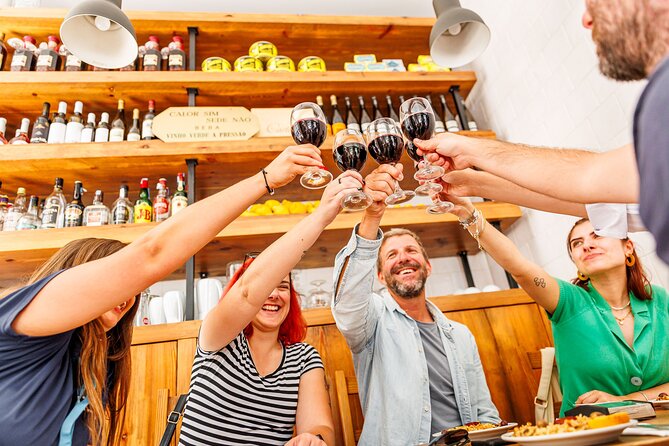
The social aspect shouldn’t be overlooked. Several reviewers mentioned making friends with other tour participants. One group of college girlfriends noted: “We were a group of eight college girlfriends and there were two others who made our tour group; we all became great friends by the end of the tour.” This speaks to the intimate nature of small-group experiences—you’re not anonymous in a crowd of 40 people.
Practical Considerations: Timing, Location, and Physical Demands
The tour runs approximately three hours, which is precisely long enough to feel substantial without eating up your entire day. It’s scheduled mid-morning to early afternoon, which means you can do this tour and still have the rest of your day free for sightseeing or relaxation. One traveler specifically noted: “Booked this tour for our first night in Lisbon and would highly recommend,” suggesting it works well as an orientation experience.
The meeting point at Rossio Square is accessible by public transportation, and the tour itself stays in the lower, flatter parts of Lisbon—meaning you’re not climbing the city’s famous steep hills. One reviewer who was concerned about mobility mentioned: “I like walking but it wasn’t a physically challenging tour at all, so I think it would be suitable for people with limited mobility or those who don’t want to walk too much.”
The route is manageable because it’s concentrated in Baixa, the historic center. You’re walking between neighborhoods, yes, but you’re not doing a 10-kilometer trek. The walking is purposeful—it connects the food stops and takes you through historically significant areas, but it doesn’t exhaust you.
The Value Proposition: What You’re Actually Getting
Let’s be direct about pricing. At $76.19 per person, you’re getting six stops with over 15 individual tastings of both food and beverages. If you were to recreate this experience independently, you’d spend considerably more. A single glass of quality Port wine, a cod cake at a tourist restaurant, a bifana, and a ginjinha could easily total $40-50 on your own. Add in a local guide’s knowledge and the curated route, and this pricing becomes genuinely competitive.
The inclusion of a “friendly local guide” isn’t just marketing language—it’s the foundation of the experience. You’re getting insider knowledge about where locals actually eat, what’s worth trying, and why these foods matter culturally. One traveler put it simply: “Jose had lots of history to share and local recommendations.”
Mobile tickets mean you can book this online and confirm immediately. There’s no waiting for physical confirmation or worrying about paperwork. The free cancellation policy (up to 24 hours in advance) provides real flexibility—if your plans change, you’re not locked in.
Dietary Considerations and Honest Limitations
We need to be clear about this: the tour operator is transparent about dietary limitations, which we actually appreciate. Traditional Portuguese restaurants, particularly the small family-owned places that make this tour authentic, simply cannot accommodate vegan, celiac, Kosher, or Halal diets. The operator states this directly rather than promising accommodations they can’t deliver.
For vegetarians and those with gluten sensitivities, options are available but “not guaranteed in all the stops.” This is honest language—it means some stops might work and others might not, depending on what’s being served that day. One reviewer who didn’t eat fish noted: “The guide was really accommodating as we don’t eat fish or seafood and whilst there was fish on the menu, they arranged alternatives.” This suggests the guides will try to help, but you need to communicate your needs clearly when booking.
Pregnant women are also noted as a group that might find limited options. If you fall into any of these categories, reach out to the operator directly before booking rather than assuming accommodations will be available.
Real Reviews: What Travelers Actually Said
The 3,972 reviews speak volumes, with 96% of travelers recommending the experience. But beyond the statistics, the actual comments reveal what people valued most. A group that arrived in Lisbon on their first night said: “We were met at Rossio Square and taken on a tour where we sampled local food such as Bifana, Cornbread with cheese and jelly, more cheese, beef stew, bread and spring rolls together with drinks such as Super Bock, Vinho Verde, red wine, Ginja white wine. Good value for money and we weren’t left hungry.”
Another traveler summarized the group experience perfectly: “We had an amazing time doing this food and wine tour! The range of dishes was really good, the alcohol pairings were also perfect. Filipe was very knowledgeable and shared really interesting information about Portugal cuisine and it’s history and also Portugal altogether.”
Perhaps most tellingly, multiple people mentioned returning to specific stops after the tour ended. One reviewer noted: “A lovely way to spend a few hours in Lisbon. We visited places that we would have just walked past and had fabulous food and drinks—so much so that we went back to several.” This is the real measure of a successful food tour—it doesn’t just feed you, it introduces you to places you want to return to independently.
Booking Information and Cancellation Policy
You can book through Viator with mobile ticket confirmation, meaning you’ll have everything you need on your phone. The experience requires a minimum number of travelers to operate, so there’s a small possibility it could be canceled if not enough people book—though with 3,972 reviews, this seems unlikely during peak season.
The cancellation policy is straightforward: cancel up to 24 hours in advance for a full refund. Cancel within 24 hours and you lose your money. This is standard for small-group tours and reflects the reality that guides are hired and restaurants are reserved based on confirmed bookings.
Who Should Book This Tour
Book this tour if: You’re visiting Lisbon for the first time and want to understand Portuguese food culture quickly. You enjoy wine and beer. You’re comfortable with traditional omnivorous Portuguese cuisine. You want to eat well without spending hours on a tour. You appreciate small groups and personalized attention.
Skip this tour if: You follow vegan, celiac, Kosher, or Halal diets. You’re pregnant and have specific dietary needs. You prefer large, more casual group experiences. You want to avoid alcohol. You’re on a very tight budget and need to minimize food spending.
Lisbon Small-Group Portuguese Food and Wine Tour
Frequently Asked Questions
Q: How much food will I actually eat on this tour?
A: Multiple reviewers mentioned arriving hungry and leaving “very full” or even in a “food and alcohol coma.” With six stops and over 15 tastings, you’re looking at the equivalent of a full meal spread across the tour. Come hungry, but don’t expect three-course restaurant portions at each stop—these are tastings designed to sample variety rather than fill you completely at any single location.
Q: What if I have a dietary restriction that’s not mentioned?
A: Contact the tour operator directly before booking. The operator is transparent about what they can and cannot accommodate. If your restriction isn’t explicitly listed as unavailable, it’s worth asking—guides have shown flexibility in arranging alternatives when possible, but you shouldn’t assume accommodations will work without confirming first.
Q: How small is “small group”?
A: The maximum is 14 travelers, but groups often run smaller—several reviewers mentioned tours with only 3-4 people, while others were in groups of 6-9. This variation means you might get an intimate experience or a moderately sized group depending on the day. Either way, it’s substantially smaller than typical commercial tour groups.
Q: Is this tour suitable if I’m not an experienced wine drinker?
A: Yes. Your guide will explain the wines, their origins, and why they pair with each food. This is educational rather than pretentious. One reviewer who mentioned “lots of drinking” appreciated the experience, suggesting the focus is on enjoying and learning rather than impressing anyone with wine knowledge.
Q: What’s the physical difficulty level?
A: Low to moderate. The tour stays in the flatter historic center and doesn’t climb Lisbon’s famous hills. One reviewer with mobility concerns noted it “wasn’t a physically challenging tour at all.” You’ll walk between stops, but distances are reasonable for someone with average fitness.
Q: Can I book this for a specific date if I’m visiting Lisbon?
A: The tour is offered regularly, but availability depends on the season and current bookings. Book at least 24 hours in advance, though the tour operator notes that on average, this tour is booked 37 days ahead, suggesting it’s popular and you might want to plan ahead during peak season (April-October).
If you’re landing in Lisbon wanting to understand what Portuguese food culture actually tastes like without spending half your day on a tour, this experience delivers real value. The combination of affordable pricing, guides who genuinely enjoy their work, small groups that feel personal rather than commercial, and a curated route through authentic neighborhood spots makes this a legitimate highlight of a Lisbon visit. You’ll leave with a full stomach, expanded wine knowledge, and a mental map of places worth returning to. Just come hungry, be prepared to drink, and embrace the local approach to eating—which is to say, without apology or pretense.