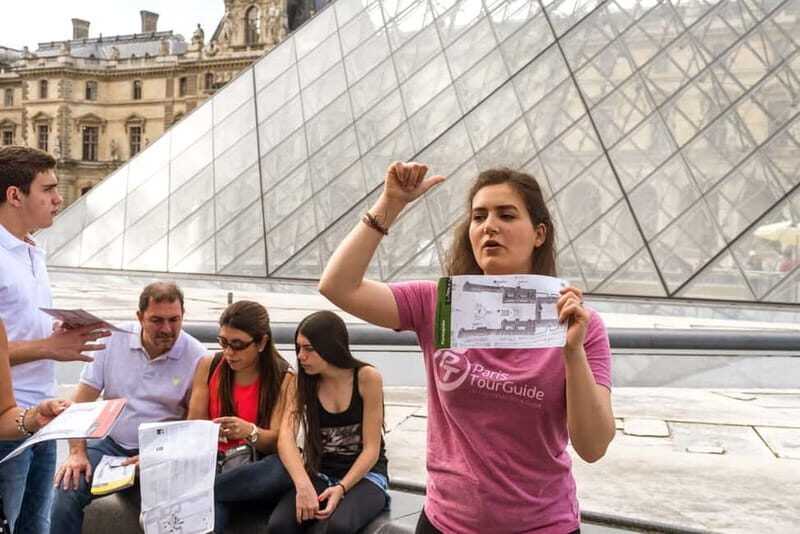
I like tours that help you understand what you’re seeing fast. This one is built for that: a small group stroll through the Louvre highlights with skip-the-line Priority Access, a licensed guide, entrance ticket, and a headset so you can actually hear the story.
Two things I really like. First, you’re guided along a planned route that hits the big names without turning the visit into a wander-fest. Second, the stops are specific and varied, from Leonardo da Vinci’s Mona Lisa to the Egyptian rooms with a sphinx and mummies, plus Napoleon’s former apartments.
One consideration: even with priority entry, you may still face a security wait. In peak season, that wait can run up to 20 minutes, so plan your day with some flexibility.
- Key highlights worth planning for
- The real value: saving time without skipping the point
- Skip-the-line Priority Access: what it does and what it doesn’t
- Small group pacing: why “up to 10” matters here
- Your guide: the difference between facts and meaning
- Where you start: meeting points and finding the right location
- First stop energy: Louvre Pyramid pass-by and immediate orientation
- Venus de Milo: why that statue is the perfect early win
- Mona Lisa and the Renaissance core: more than a photo moment
- Napoleon’s apartments: the décor stop you’ll remember
- The Egyptian department: sphinxes and mummies without the hunt
- The Louvre below ground: castle foundations at the end
- What’s included (and what to double-check)
- What to bring (so you don’t waste your day)
- When to go: Tuesday closures and timing reality
- Who this tour is best for
- Value for money: 9 for what you actually buy
- What the tour feels like in real life
- Should you book this Louvre highlights tour?
- FAQ
- How long is the Louvre skip-the-line small group tour?
- What’s included in the price?
- Does the tour really skip the ticket lines?
- Will there be a wait even with priority access?
- What items are not allowed in the museum?
- Which days is the Louvre closed?
- The Best Of Paris!
- More Guided Tours in Paris
- More Tours in Paris
- More Tour Reviews in Paris
Key highlights worth planning for



- Small group size (up to 10 people): easier pacing and more chances to ask questions.
- Priority Access through a separate entrance: you bypass the main ticket lines.
- Headset included: helps a lot in busy rooms, where guides get drowned out.
- Napoleon’s apartments stop: the décor feels like a time capsule of imperial taste.
- Egyptian department included: you’ll see the sphinx and mummies without having to chase them yourself.

👉 See our pick of the 3 Best Shopping & Market Tours In Paris (With Reviews & Prices)
The real value: saving time without skipping the point
The Louvre is not a museum you “finish.” It’s a museum you curate—which sections you choose, and why. For most first-timers, the hardest part isn’t seeing famous works. It’s seeing them in a way that makes sense: dates, artists, and the logic behind what’s where.
That’s where a timed, guided format helps. In 2–3 hours, you’re not trying to cover everything. You’re getting a clear overview of major wings and themes, plus enough context to make the masterpieces feel less like random spotlights.
And yes, skipping the main ticket lines is a real time-saver. During busy periods, the difference between waiting in a long queue versus entering quickly can turn a stressful hour into a relaxed museum start.
You can also read our reviews of more guided tours in Paris



Skip-the-line Priority Access: what it does and what it doesn’t
This tour includes skip-the-ticket-line access via a separate entrance. That’s great, because the classic Louvre problem is arriving ready to enjoy art and then spending that energy standing still.
Still, don’t assume you’ll stroll in the second you show up. Even with priority access, security can add delays—up to 20 minutes during high season. The good news: once you clear security, the guided route kicks in and keeps you moving efficiently.
Small group pacing: why “up to 10” matters here
You’re capped at a small group of 10 participants. That’s not just a comfort feature. It usually changes the entire experience: you walk as a unit, you stop longer when something matters, and you’re less likely to get lost in the crowd.
Several guests also mention that when groups get too large for the original size, you might be split into different groups (if you’re more than 6 people). That’s worth knowing if you’re traveling with a family and want everyone staying together the whole time.
Your guide: the difference between facts and meaning
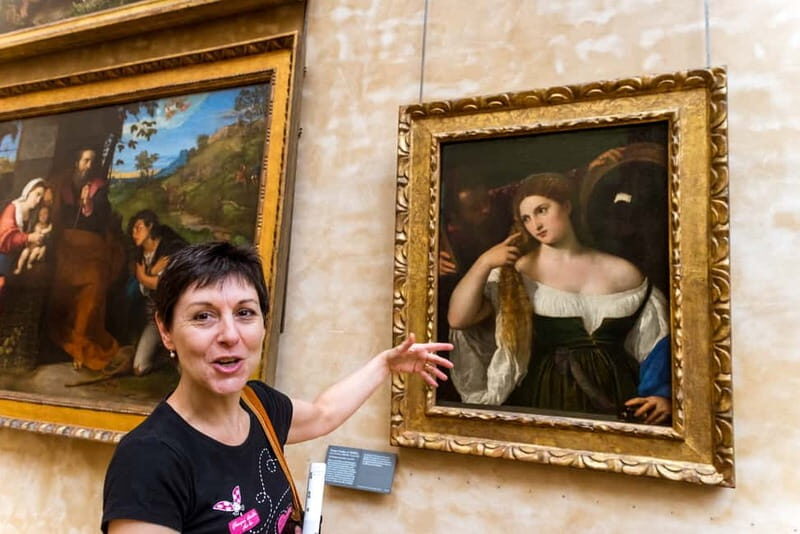
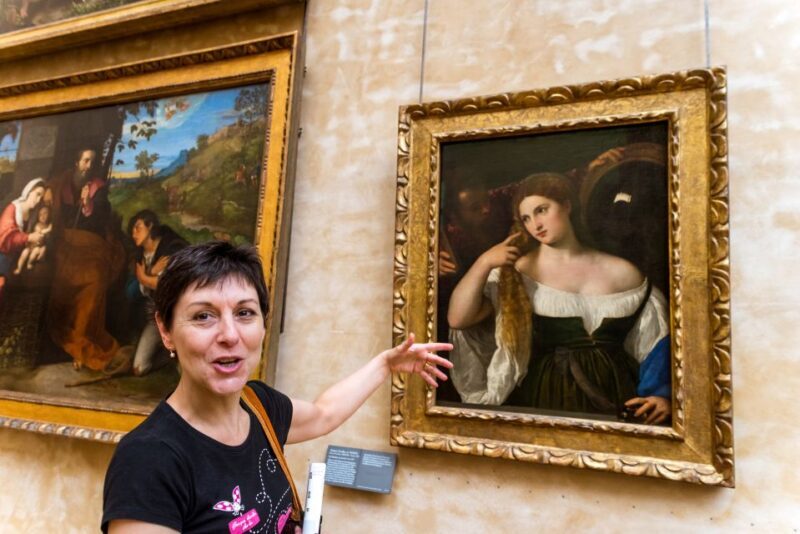
This tour uses a licensed guide, and that’s the heartbeat of the visit. In guest feedback, certain guides came up again and again for being knowledgeable and engaging—people specifically praised guides like Ivan, Frédérique, Frederic, Federico, Laurent, Merve, and Benedict for turning art into something you can follow.
The best guides in the Louvre do two things:
1. They give you the “why” behind the work (not just the artist name).
2. They manage the crowd so you’re not stuck watching other people watching the painting.
If you care about context—who commissioned it, where it fits in time, what it meant in its own era—this is the kind of tour that makes that happen.
More Great Tours NearbyWhere you start: meeting points and finding the right location
The meeting point may vary depending on the option you book. Some options start around Rue de Rivoli (162 Rue de Rivoli is listed), but the exact address can differ, so you’ll want to check your confirmation details carefully.
Practical tip: because the Louvre area can be confusing (lots of signage, streets that funnel people toward entrances), give yourself a little buffer to reach the correct spot. A few travelers mention that their maps sometimes sent them to the wrong street nearby—so let your booking instructions lead.
You can also read our reviews of more museum experiences in Paris



First stop energy: Louvre Pyramid pass-by and immediate orientation
At the start, you’ll pass the Louvre Pyramid. Even as a quick moment, that’s useful. It helps you orient yourself—where you are in relation to the museum’s major spaces—before you dive into the highlights.
From there, the tour moves into big, recognizable works and museum “anchors” that set the rhythm. Think of it like a guided road trip: first you get the map in your head, then you start hitting the signature landmarks.
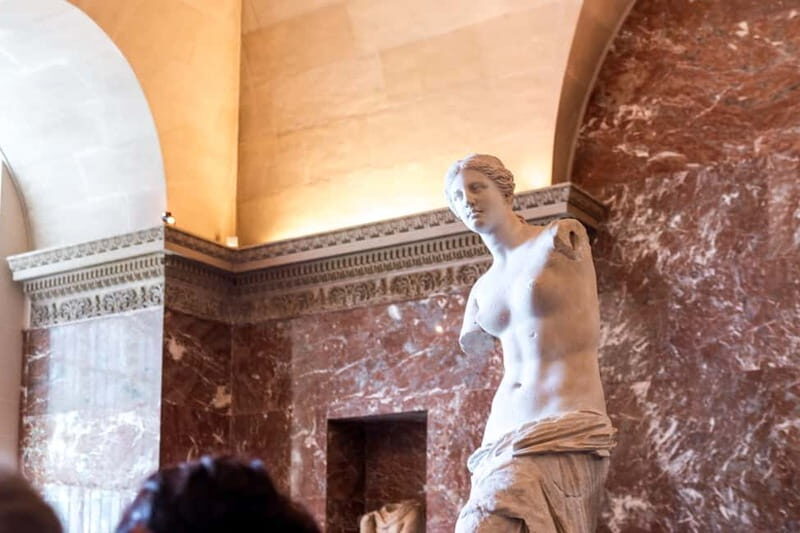
Venus de Milo: why that statue is the perfect early win
You’ll visit Vénus de Milo. This is a smart early stop because:
- It’s instantly recognizable.
- It’s visually strong even if you’re tired from travel.
- It gives you a clean transition into sculpture and art history storytelling.
In a short tour, choosing an early “wow” matters. It settles you in, then the guide can start adding context without you feeling like you’re still warming up.
Mona Lisa and the Renaissance core: more than a photo moment
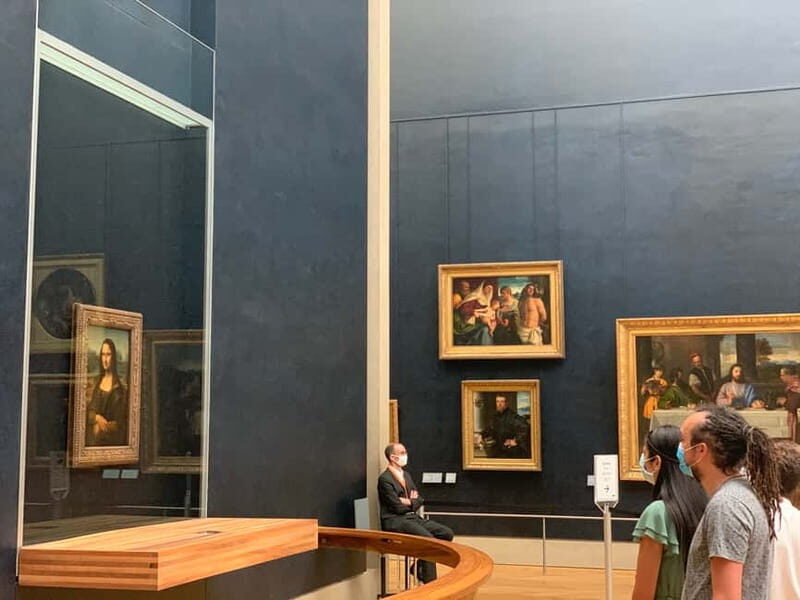
This is the stop everyone waits for: Leonardo da Vinci’s Mona Lisa. With a guided format, you don’t just see it—you learn how to read it. The guide’s job here is to give you the story around what you’re looking at, so the painting doesn’t feel like a checklist item.
Also on the Renaissance side, you’ll have stops that highlight range, including:
- Antonio Canova’s Psyche Revived by Cupid’s Kiss (an emotional, theatrical sculpture)
- Gericault’s Raft of the Medusa (a dramatic narrative painting)
These works help you understand the Louvre’s “big shifts” across time: sculpture and painting can both be about drama, symbolism, and power—not just technique.
Napoleon’s apartments: the décor stop you’ll remember
One of the most distinct parts of this tour is going to Napoleon’s former apartments. This isn’t just about art. It’s about atmosphere.
The apartments are known for their stunning décor, and you’ll also see a collection of crown jewels during this segment. For travelers, this is often where the Louvre stops being only “rooms of paintings” and starts feeling like a real building with real political history layered into it.
If you’re the type who likes to connect art to the people and the era that commissioned it, you’ll get extra value here.
The Egyptian department: sphinxes and mummies without the hunt
You’ll visit the Egyptian section, including a sphinx and mummies. For many first-timers, the Egyptian rooms are the surprise highlight—partly because they’re so different from the rest of the museum’s tone.
It’s also a practical win. Without a guide, it’s easy to under-plan this area and end up passing it by when the clock runs out. On this tour, the Egyptian highlight is built into the route, so you’re not leaving it to chance.
The Louvre below ground: castle foundations at the end
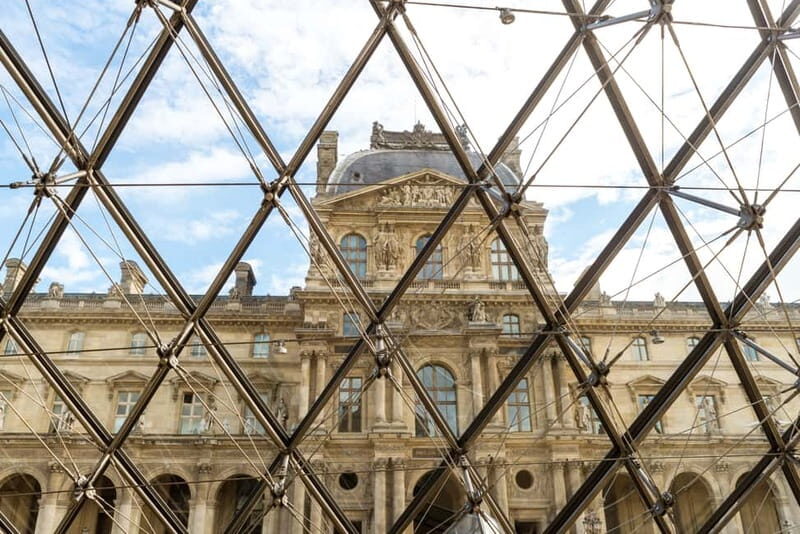
The route also includes a stop in the basement to see the foundations of the castle that once stood on the site. This is one of those moments that makes the Louvre feel bigger than a single building.
Even if you’re not a “buildings nerd,” the underground foundations give you a physical sense of layers—how the museum grew and changed where it sits now. It’s a tidy way to end a highlights tour: you finish with perspective.
What’s included (and what to double-check)
Included:
- Licensed guide
- Louvre Museum tour
- Entrance ticket
- Head set (headphones)
Not included:
- Transportation to and from the Louvre
That headset matters more than you’d think. Several guests praised the guides for knowledge and clarity, and at least one traveler noted that in crowded areas it can be hard to hear without audio support. Since a headset is listed as included, it’s smart to ask right at the start if yours is working.
What to bring (so you don’t waste your day)
Bring comfortable shoes. You’ll be walking through busy galleries and transitions between areas, and the Louvre is not a museum where “cute shoes” reward you.
Also think about your bag. The tour notes:
- No luggage or large bags
- Items exceeding 55×35×20 cm aren’t permitted in the museum
If you’re carrying a big backpack, plan ahead for the locker rules outside the museum entry area.
When to go: Tuesday closures and timing reality
The Louvre is closed on Tuesdays. If your dates fall on a Tuesday, you’ll need a different plan—this tour won’t operate then.
Also, peak season means more crowds and more bottlenecks at security. The tour is designed to reduce the biggest time sink (ticket lines), but security is still part of the day.
Who this tour is best for
This works especially well if:
- You’re visiting the Louvre for the first time and want the highlights with context
- You prefer a plan over wandering
- You want to see major works in a shorter time window
- You’re traveling with teens or group members who might get bored with long, unstructured museum time
It may be less ideal if:
- You want a slow, self-paced Louvre day with long stays in one gallery
- You plan to bring large luggage (since bag rules can complicate logistics)
- You want a visit that avoids all waits—because security can still add time
Value for money: $129 for what you actually buy
At $129 per person for 2–3 hours, you’re paying for three main things:
1. A licensed guide who helps you prioritize and understand what you see
2. Entrance ticket included, so you’re not juggling separate purchases
3. Priority access that reduces one of the worst visitor bottlenecks (ticket lines), with headsets to keep the experience usable
In practice, this price starts to make sense when you consider what costs you time in Paris: lines, indecision, and having to figure out where to go next while everyone else is also trying to figure it out.
If you’re the type who likes to feel “I used my time well,” this is a solid spend.
What the tour feels like in real life
The vibe is efficient and friendly. Guests repeatedly mention that the guides answer questions, keep the pace moving, and manage the crowd so you actually get to see the works—not just stand near them.
A few travelers even noted moments where guides helped with accessibility logistics—like finding elevators for seniors—or assisted when plans shifted. That kind of responsiveness is exactly what you want from a guide in a huge complex building.
And because it’s a small group, the experience doesn’t feel like you’re trapped in a lecture line. It’s more like you’re walking through major Louvre themes with a teacher who knows the route.
Should you book this Louvre highlights tour?
Yes—if you want a strong “first Louvre” experience. I’d book it if:
- Your time is limited and you want the Mona Lisa, Venus de Milo, and the Egyptian highlights without stress
- You care about context, not just photos
- You want Napoleon’s apartments included (that’s a standout part of this route)
I would not book it if you’d rather go at your own pace for half a day and linger in one wing. Also, if your schedule is tight during high season, remember security can still add up to 20 minutes even with priority entry.
Louvre Museum: Skip-the-Line Small Group Guided Tour
FAQ
How long is the Louvre skip-the-line small group tour?
It runs 2–3 hours, depending on the starting time you select.
What’s included in the price?
The tour includes a licensed guide, a Louvre Museum tour, an entrance ticket, and a head set.
Does the tour really skip the ticket lines?
Yes. You get skip-the-line access through a separate entrance, though there can still be a wait at security.
Will there be a wait even with priority access?
Yes. Even with priority, you may wait at security. In high season, that wait can be up to 20 minutes.
What items are not allowed in the museum?
The tour notes no luggage or large bags, and items larger than 55×35×20 cm are not permitted.
Which days is the Louvre closed?
The Louvre is closed on Tuesdays.
You can check availability for your dates here: