
I’m reviewing a classic Paris neighborhood route that hits Montmartre’s biggest landmarks in one focused walk, then tops it off with the postcard views from Sacré-Cœur. Expect cobblestones, uphill climbs, and lots of artist stories tied to places you can actually point to—plus a guided visit inside Sacré-Cœur when it’s open.
What I like most is the guide-led storytelling (people repeatedly mention how knowledgeable and patient guides like Maria, Francois, Hugo, Eden, and Tamari were). I also love that you get the highest-point panoramas from Sacré-Cœur, plus smart stops around the artist quarter so you’re not just collecting photos—you’re building a sense of place fast.
One drawback to consider: this is a hilly, step-heavy walk. It’s not described as brutal, but moderate fitness helps, and weather changes can shift the route on national celebration days.
- Key highlights worth showing up for
- Montmartre and Sacré-Cœur: the fastest way to get your bearings
- Price and logistics: what you’re actually buying
- Your guide matters more than you think
- Stop-by-stop: what you’ll see, and why each place earns its spot
- Starting at the Moulin Rouge area and climbing into Montmartre
- Sacré-Cœur: the summit, the mosaic, and the big photo moment
- Place Dalida and Montmartre’s music legacy
- Jardin Sauvage de St-Vincent: the wild-plant pocket in the hills
- Le Clos Montmartre: the hidden vineyard behind the postcard buildings
- The bohemian cabaret vibe: Au Lapin Agile
- Place du Tertre: where artists set up and the neighborhood “performs”
- Van Gogh’s house (external) and the Rue Lepic connection
- Dali Museum Paris and Espace Dali (photo pass only)
- Le Bateau-Lavoir: artist residences and discussion spaces
- La Maison de Dalida and Place des Abbesses
- How long is the tour, and will it feel like a lot of walking?
- Weather, route changes, and what to pack
- Tickets and admissions: what’s included vs. what isn’t
- The big takeaway: why this tour feels worth it
- Who should book this tour?
- Should you book it? My practical verdict
- FAQ
- How long is the Montmartre and Sacré-Cœur walking tour?
- What language is the tour offered in?
- Is the tour private or small-group?
- Where does the tour start and end?
- Is Sacré-Cœur included and can you go inside?
- Are attraction tickets included for every stop?
- Is the tour suitable for people with limited mobility?
- What is the cancellation policy?
Key highlights worth showing up for
 1 / 7
1 / 7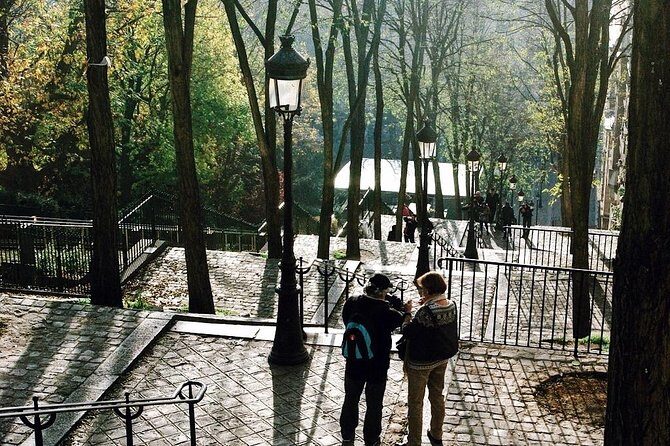 2 / 7
2 / 7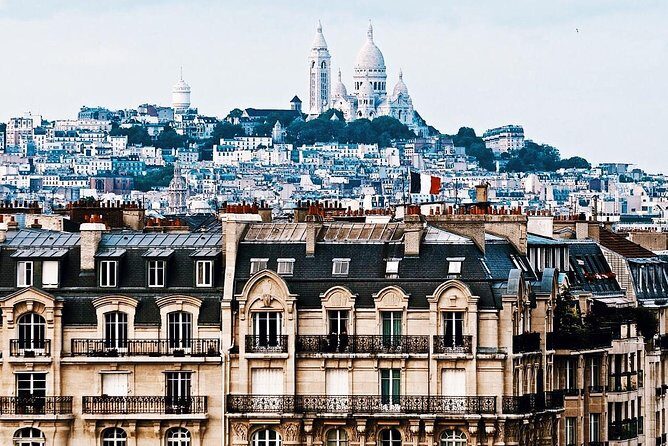 3 / 7
3 / 7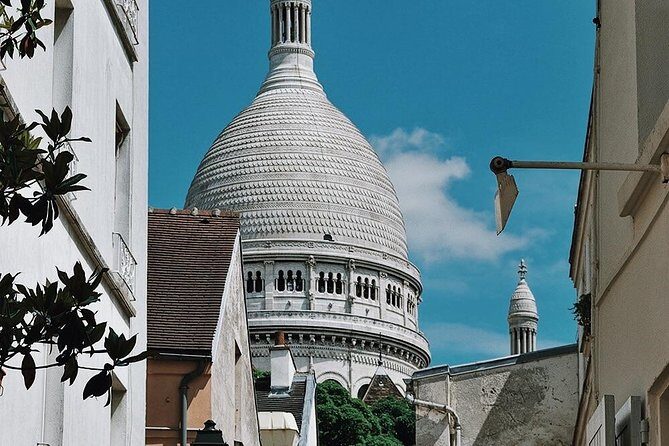 4 / 7
4 / 7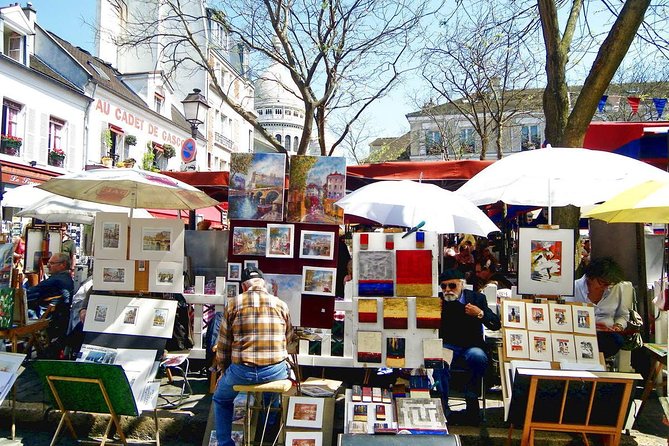 5 / 7
5 / 7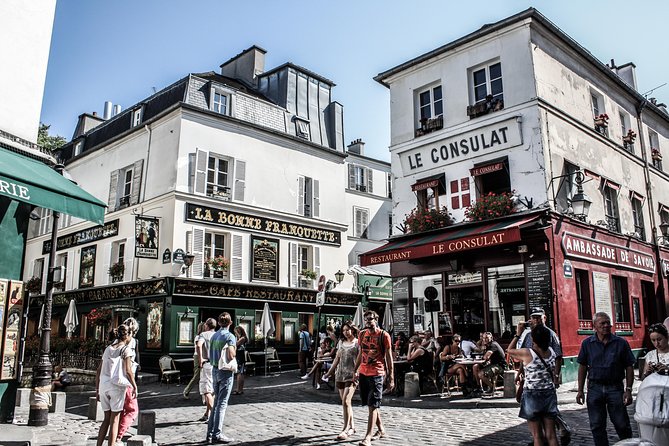 6 / 7
6 / 7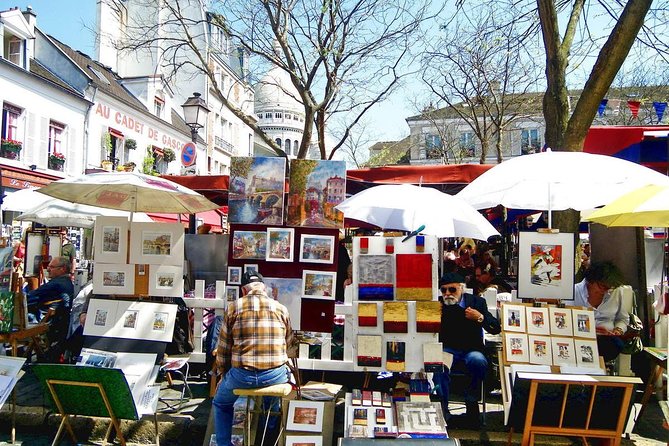 7 / 7
7 / 7- Sacré-Cœur summit views: a top-of-the-hill photo stop with time to explore the basilica
- Artist Montmartre in one route: stops linked to Van Gogh, Dalida, Dali, and the bohemian scene
- Clos Montmartre vineyard: a rare green pocket in central Paris that adds texture to the neighborhood
- Rain or shine: it runs in all weather, so you’ll want practical layers and shoes
- Mobile ticket + flexible timing: choose from several departure times, near public transportation
- Guides get praised by name: readers call out guides like Hugo, Eden, Francois, and Tamari
Montmartre and Sacré-Cœur: the fastest way to get your bearings
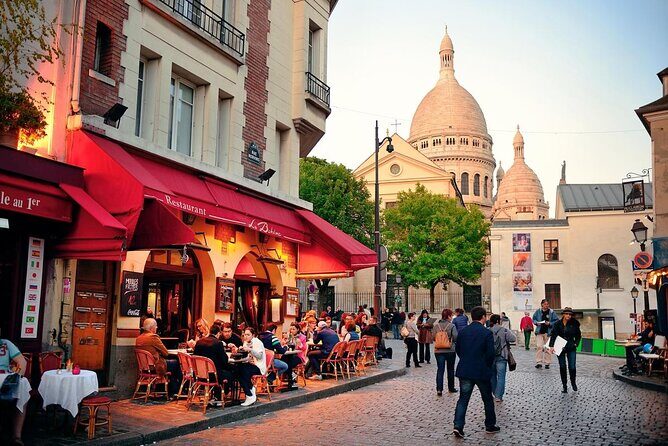
Montmartre is one of those Paris neighborhoods that feels like its own little world—steep streets, sketchy corners (in the best way), and sudden views that make you stop mid-walk just to stare. This tour is designed for exactly that moment when you think, I want the highlights, but I also want the meaning.
You start in the Blanche area (meeting at Blanche75018 Paris) and end back in Montmartre, 75018 Paris. The walking loop is paced for a 2.5-hour experience that works well for first-timers and repeat visitors alike. If you’ve got only a half-day free, this route gives you a clear “map” of Montmartre: where the art world clustered, where music legends were honored, and why Sacré-Cœur dominates the skyline.
And because this is rain or shine, you’re not paying for a fair-weather fantasy. You’re paying for guidance and structure.
Price and logistics: what you’re actually buying
The price is $59.69 per person for roughly 2 hours 30 minutes. That’s not “budget,” but Montmartre tours can balloon once you start adding the most popular sites. Here’s the value angle: this tour is built around a tight set of landmarks and short walks between them, which means you spend less time figuring out routes and more time at the places that matter.
A few practical notes that affect your day:
- You’ll get a mobile ticket.
- The tour is offered in English.
- You need to provide a mobile phone number with country code.
- It’s near public transportation, which helps with pre- and post-tour timing.
Also, there’s an upgrade path: the description mentions small-group options and a private tour alternative. The fine print says a “SAVE! BOOK SEMI-PRIVATE” option may change whether it’s fully private.
If you hate wasting vacation time with transfers, this setup is a good fit.
Your guide matters more than you think
The consistent theme in traveler comments is the guide. People don’t just say the guide was nice. They say the guide was very knowledgeable, spoke clear English, handled questions well, and adjusted pacing for the group.
Names that come up again and again:
- Maria: praised for being considerate and answering lots of questions
- Francois: repeatedly called out for enthusiasm, humor, and tailoring to preferences
- Hugo Kennedy: highlighted for excellent English pronunciation and history knowledge
- Eden M.: mentioned for warm storytelling and thoughtful attention to everyone
- Tamari/Tamarie: praised for French history explained clearly and for helping everyone feel comfortable (especially in hot weather)
That matters because Montmartre can be confusing without context. You’ll see signs, buildings, and squares that seem random—until a guide connects them to the artists and eras that created the neighborhood’s vibe.
Stop-by-stop: what you’ll see, and why each place earns its spot
This tour strings together viewpoints and “anchor locations,” so you understand Montmartre as a whole rather than a collection of snapshots.
Starting at the Moulin Rouge area and climbing into Montmartre
You begin at the base area and climb the butte/hills. The first big charm factor is that you start near Moulin Rouge where the windmill still spins slowly. From there, the guide walks you through cobblestoned streets and the kind of views that make you understand why artists loved this spot.
This early section is also where you’ll get orientation: why Montmartre developed its identity, how the artistic community clustered, and why certain streets feel like they’re built for wandering.
You’ll also get a quick Moulin Rouge look. The ticket note indicates that admission is not included there, so think of it as a sight-and-stories stop rather than a long entry visit.
Sacré-Cœur: the summit, the mosaic, and the big photo moment
The highlight for many people is the arrival at Sacré-Cœur. You get time to step inside the basilica as well as enjoy the views from one of the highest points in Paris.
Why it’s worth structuring this day around: Sacré-Cœur isn’t only a landmark. It’s the “why” behind Montmartre’s visual drama. From the top, Paris looks like a stage set, and you can see how this neighborhood earned its role as a lookout over the city.
Inside, the description notes one of the world’s largest mosaics depicting Jesus Christ. Even if you’re not a church fanatic, that’s the kind of thing that makes the interior stop feel purposeful.
Place Dalida and Montmartre’s music legacy
You move through Place Dalida, a square dedicated to Dalida. It’s described as a secluded spot that fans and travelers visit to pay tribute. It’s an easy stop, but it adds variety beyond paintings and famous artists.
This kind of stop is what prevents the tour from becoming a one-note “artist museum.” It shows how Montmartre’s fame spreads across art forms.
Jardin Sauvage de St-Vincent: the wild-plant pocket in the hills
Then you get a small stroll past Jardin Sauvage de St-Vincent, where gardeners left land in a fragile state to observe ecosystem and biodiversity. It’s an on-the-ground reminder that Montmartre isn’t only stone and stairs. Even in the middle of the city, you can find wild plants, ivy, and pockets of insects.
If you like streetscapes and small nature moments, this is a nice pause.
Le Clos Montmartre: the hidden vineyard behind the postcard buildings
One of the coolest “not what you expect in central Paris” stops is Vigne du Clos Montmartre. It’s described as a hidden vineyard tucked away in the streets behind Sacré-Cœur and one of the last remaining vines in central Paris.
This is the closest thing in the tour details to any wine-related theme. There’s no tasting listed, but the stop gives you a real sense of how Montmartre’s identity isn’t only theatrical—it has older roots tied to cultivation.
The bohemian cabaret vibe: Au Lapin Agile
Next you’ll see Au Lapin Agile, described as a cabaret connected to the Montmartre bohemian set until 1914. You’ll also notice the sign, which is described as a memorable symbol of Montmartre.
Admission here is noted as not included, so again: it’s a glance with context, not a full ticketed event.
Place du Tertre: where artists set up and the neighborhood “performs”
You’ll pass Place du Tertre, famous for artists setting up easels near Sacré-Cœur. This is a reminder of how Montmartre became a modern-art mecca—and how the neighborhood still leans into that identity today.
It’s also a good spot to slow down for photos, because the area tends to feel like a living postcard.
Van Gogh’s house (external) and the Rue Lepic connection
You’ll also see Van Gogh’s house on Rue Lepic, the home of the artist and his brother from 1886. Like several other named sights, it’s presented as a view/exterior stop with a short time window.
This is where a guide’s stories can do a lot of work. Without context, you might walk by and think, okay, this is a building. With context, you start connecting where you are to where creativity happened.
Dali Museum Paris and Espace Dali (photo pass only)
The tour includes a pass by the Espace Dali (also referred to as Dali Museum Paris), described as having around 300 original artworks devoted to Salvador Dali’s sculptures and engravings. Admission is not included, so expect it as a stop for sights and orientation rather than a full museum visit.
If you’re a big Dali fan, this tour can act like a sampler that helps you decide whether you want a separate museum visit later.
Le Bateau-Lavoir: artist residences and discussion spaces
You’ll see Le Bateau-Lavoir, described as one of the most famous places for artistic creation in Montmartre. From 1889 it was principally known as an artist’s residence and a place to live and discuss, connected with painters, writers, actors, and art sellers.
This is one of those stops that explains why Montmartre always feels “creative” even when you’re not looking at a canvas.
La Maison de Dalida and Place des Abbesses
You’ll also pass La Maison de Dalida, where Dalida lived between 1962 and 1987, noted as the location where she committed suicide in 1987. The tour keeps it historical rather than sensational.
Near the end you reach Place des Abbesses, close to the metro station Abbesse, featuring Art Nouveau architecture designed by Hector Guimard. The details about the metro entrance being one of the surviving examples make this a stop that’s more than just a pretty facade.
How long is the tour, and will it feel like a lot of walking?
It runs for 2 hours 30 minutes. The fitness requirement is moderate, and the route includes climbing hills and navigating cobblestones and steps. Many Montmartre travelers know this already, but it’s still worth stating clearly: this isn’t a flat sightseeing stroll.
That said, traveler comments often describe the pace as manageable, and some mention patience for slower walkers. A good guide can also help you “ride” the walking—meaning you keep moving while getting stops that feel like mini-payoffs rather than endless uphill.
Weather, route changes, and what to pack
The tour runs rain or shine. You’ll get the message to dress appropriately, and the notes suggest practical items:
- comfortable shoes
- bottle of water
- umbrella in case of rain
- hat during summer
Here’s the important logistics detail: the route may be affected by national celebrations. When that happens, the tour uses an alternative route to still see all highlights. In those cases, the notes say refunds or discounts aren’t available.
No large bags or suitcases are allowed, so keep it simple—small day bag, phone, wallet, water.
Tickets and admissions: what’s included vs. what isn’t
Not every named stop includes admission. The tour notes list some as free and others as not included.
A few practical ways to think about it:
- Sacré-Cœur is described as free for the basilica stop and includes time to explore inside.
- Several other stops are described as free (like Van Gogh house is mentioned as a 10-minute stop with admission not included, while some squares/areas are free passes).
- Places clearly marked as not included include things like Moulin Rouge, Van Gogh’s house, Au Lapin Agile, and Dali Museum Paris.
So plan your expectations: you’re paying for a guided route that includes sights and context, with certain interiors available and others mainly exterior or pass-by.
The big takeaway: why this tour feels worth it
I like the way this experience is built around understanding. You’re not just stacking famous points. You’re walking through the neighborhood’s logic: hilltop views, artist squares, music tributes, bohemian hangouts, and even a surviving vineyard.
And if you’re the kind of traveler who hates guessing what to do next, you’ll probably appreciate the guide’s end-of-tour recommendations. Multiple reviews mention that guides gave helpful suggestions after the walk, including what to do in the rest of the evening and what to avoid.
Who should book this tour?
This is a great match if:
- You want Montmartre highlights in one structured walk
- You care about artist stories tied to real places
- You’d prefer a knowledgeable English-speaking guide who handles questions
- You want the Sacré-Cœur views without spending your whole day planning
It’s less ideal if:
- You dislike hills and steps
- You’re hoping for lots of long ticketed museum entries (some sites are pass-by only)
- You can’t handle route adjustments during busy public events (alternative routes happen)
Should you book it? My practical verdict
If it fits your walking comfort level, I’d lean yes. The reviews point to guides who are truly good at explaining what you’re seeing, and the route is built around the places that most travelers want—without forcing you into a dozen separate tickets and transit hops.
Book it especially if you’re visiting Montmartre for the first time and want views, context, and a clean route plan in a single afternoon or late-day outing. If you’re already comfortable navigating independently, you might weigh whether you’d rather spend that time exploring museums on your own—but for most first trips to Paris, a guided Montmartre walk like this is a smart shortcut.
Montmartre District and Sacre Coeur – Exclusive Guided Walking Tour
FAQ
How long is the Montmartre and Sacré-Cœur walking tour?
It lasts about 2 hours 30 minutes.
What language is the tour offered in?
The tour is offered in English.
Is the tour private or small-group?
It’s set up as a private walking tour/activity, where only your group participates, but there’s also a semi-private SAVE option mentioned in the tour details.
Where does the tour start and end?
The meeting point is Blanche75018 Paris, France, and the tour ends in Montmartre, 75018 Paris, France.
Is Sacré-Cœur included and can you go inside?
The basilica stop includes time to explore inside, and the tour notes indicate Sacré-Cœur admission is free for that stop.
Are attraction tickets included for every stop?
Not all stops include admission. Some are listed as not included (for example Moulin Rouge, Van Gogh’s house, Au Lapin Agile, and Dali Museum Paris), while others are listed as free.
Is the tour suitable for people with limited mobility?
The tour notes say travelers should have moderate physical fitness, and the route involves climbing hills and walking on uneven terrain.
What is the cancellation policy?
You can cancel for free up to 24 hours in advance for a full refund. If you cancel less than 24 hours before the start time, the amount paid is not refunded.