After reviewing hundreds of traveler experiences and detailed feedback, we believe this 12-hour Normandy day trip from Paris deserves serious consideration if you’re interested in WWII history. What makes this tour genuinely special is the combination of keeping group size to just eight people—which fundamentally changes how you experience these profound sites—and the fact that you’ll have a guide who can actually engage with your group rather than lecturing to a crowd of 50. That said, the quality of your experience does depend significantly on which guide leads your tour, and you’ll want to budget for lunch separately since it’s not included.
This experience works best for history enthusiasts, American visitors with family connections to D-Day, or anyone seeking a more thoughtful way to understand one of history’s most consequential military operations. If you’re the type of traveler who wants to stand quietly on a beach and absorb the weight of what happened there—rather than rush through a checklist—you’ll find real value here.
- What You’re Getting: A Full Day of Normandy’s Most Important Sites
- Stop One: Omaha Beach—Standing on Sacred Ground
- Stop Two: The Overlord Museum—Seeing the Hardware of War
- Stop Three: Batterie Allemande de Longues-sur-Mer—The German Perspective
- Lunch Break: Tasting Local Normandy Cuisine
- Stop Four: Pointe-du-Hoc—Climbing the Cliffs
- Stop Five: American Cemetery at Colleville-sur-Mer—The Emotional Core
- Stop Six: Ferme de la Sapinière—A Lighter Note
- Understanding the Real Value: Group Size and Guide Quality
- What to Pack and Practical Considerations
- The Cancellation Policy: Peace of Mind
- Who This Tour Is Really For
- Frequently Asked Questions
- The Bottom Line
- The Best Of Paris!
- More 1-Day Tours in Paris
- More Food & Drink Experiences in Paris
- More Tour Reviews in Paris
What You’re Getting: A Full Day of Normandy’s Most Important Sites
 1 / 8
1 / 8 2 / 8
2 / 8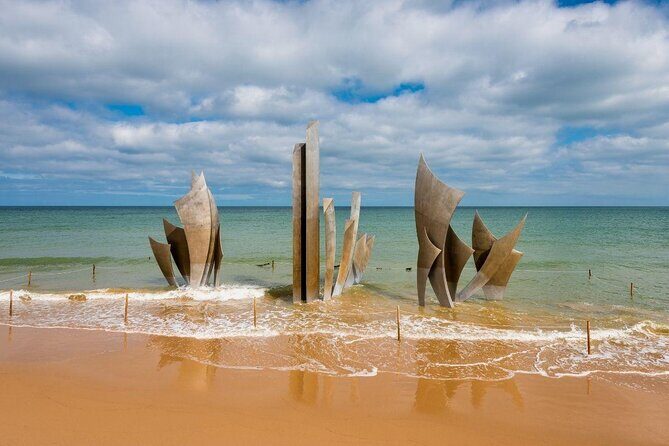 3 / 8
3 / 8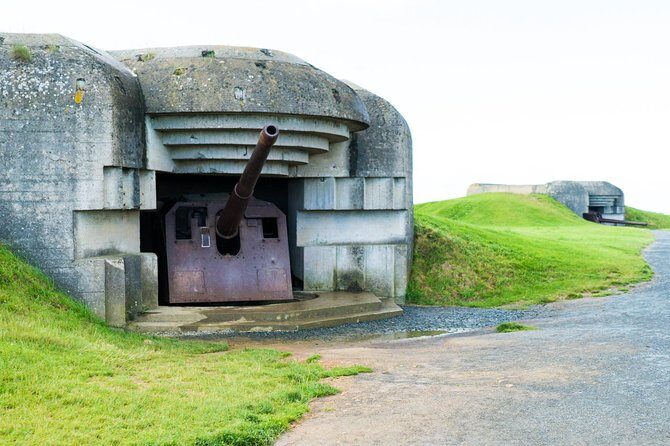 4 / 8
4 / 8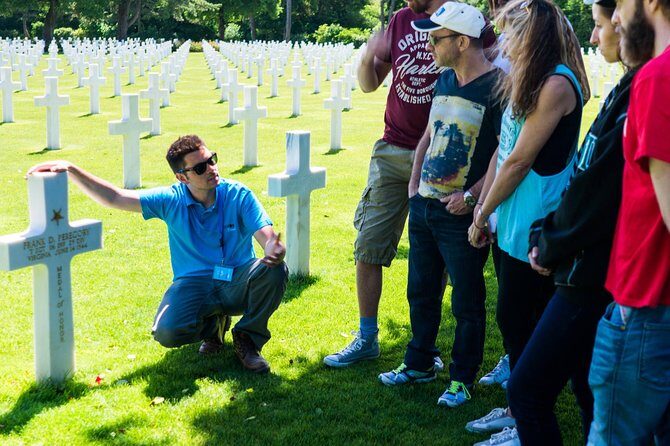 5 / 8
5 / 8 6 / 8
6 / 8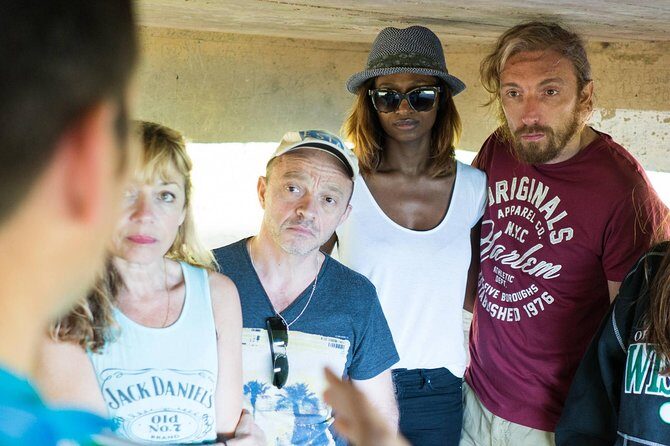 7 / 8
7 / 8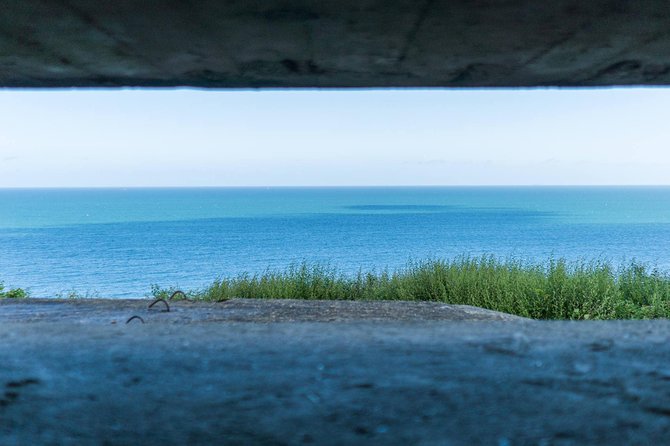 8 / 8
8 / 8The tour departs early from central Paris at 7:00 AM, giving you roughly 13 hours on the road and at various stops. Your guide will pick you up at 6 Avenue de Wagram in the 8th arrondissement, which is convenient to public transit if you’re staying elsewhere in the city. From there, you’re in an air-conditioned minivan for about a two-hour drive north to the Normandy coast.
The logistics matter more than they might initially seem. You’re not squeezed onto a coach with 40 other people, competing for the guide’s attention or struggling to hear explanations over background noise. With eight people maximum, you can actually ask questions, move at a pace that feels comfortable, and experience these sites with a sense of contemplation rather than rushed tourism.
👉 See our pick of the 3 Best Shopping & Market Tours In Paris (With Reviews & Prices)
Stop One: Omaha Beach—Standing on Sacred Ground
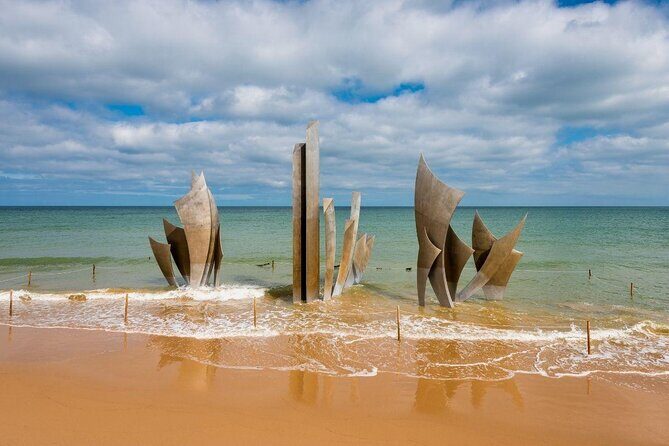
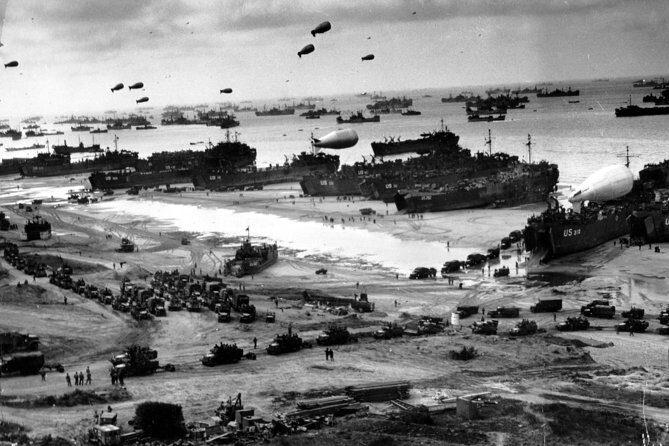
Your first major stop is Omaha Beach, where you’ll spend about 30 minutes walking on the same sand where American troops landed on June 6, 1944. This isn’t just a photo opportunity. Standing on Omaha Beach is genuinely moving, particularly when your guide contextualizes what you’re seeing.
One traveler described it perfectly: “Standing on the vast, quiet sands, it is difficult to reconcile the peaceful modern scenery with the horrific events of June 6, 1944.” Another reflected on the tactical reality: “Standing on Omaha Beach and imagining the soldiers coming ashore in a barrage of artillery and machine guns was very powerful.”
What makes this stop valuable is understanding the scope of the challenge. Omaha was known as the most difficult objective during the invasion planning. The youngest and most inexperienced American soldiers were assigned here because commanders believed the task was nearly impossible. Walking that beach with a guide who can explain the landing craft operations, the machine gun positions overlooking the sand, and the human cost transforms a simple beach walk into a history lesson that stays with you.
You can also read our reviews of more food & drink experiences in Paris



Stop Two: The Overlord Museum—Seeing the Hardware of War
You’ll spend about an hour at the Overlord Museum, and this is included in your tour price with skip-the-line access. This museum houses an exceptional collection of military equipment—the kind of authentic artifacts that you won’t see in every history museum.
The museum features a full-sized Higgins boat with its front ramp down, allowing you to understand how soldiers actually disembarked. There are Sherman and Panzer tanks on display, giving you a visceral sense of the machinery involved in the operation. One reviewer noted: “The WWII museum was an incredible collection and really gave a taste of what was happening on the front lines.”
The value here is having time to explore at your own pace within a small group. You’re not battling crowds or trying to keep up with a massive tour. You can spend extra time on exhibits that interest you, ask your guide questions about specific equipment, and actually absorb the information rather than just checking boxes.
Stop Three: Batterie Allemande de Longues-sur-Mer—The German Perspective
This German artillery battery is one of the more unique stops on the tour. You’ll spend about 45 minutes here exploring fully intact bunkers, including the command center, with 150mm guns still in place. This is where you get to understand D-Day from the German defensive perspective—what Rommel’s “Atlantic Wall” actually looked like from the inside.
Climbing into these bunkers isn’t a casual walk-through. You’re literally inside the fortifications that German soldiers manned on June 6th. Your guide can explain the defensive strategy, the limitations of the German position, and why this battery was ultimately overcome despite its formidable appearance. It’s the kind of tactical understanding that makes the broader invasion strategy click into place.
Lunch Break: Tasting Local Normandy Cuisine
Around midday, you’ll stop at a local restaurant (typically something like Résidence l’Hostéière) for lunch. This isn’t included in the tour price, and you should plan to spend €10–20 for a meal. The appeal here is authentic. You’re eating at the kind of place locals actually visit—simple, fresh food rather than tourist-oriented establishments.
One traveler mentioned enjoying “a quaint crepe restaurant,” while another highlighted that their guide helped with “food recommendations, help with ordering, and help to sort out restaurant bills.” This matters because if you don’t speak French fluently, having a guide who can help navigate the menu and assist with the check reduces stress and helps you get better recommendations.
The lunch stop also gives you a chance to chat with your small group and decompress before the afternoon’s more emotionally intense sites.
Stop Four: Pointe-du-Hoc—Climbing the Cliffs
Pointe-du-Hoc is where you’ll encounter something visually striking: massive bomb craters and a 110-foot seaside cliff. This German defensive position overlooked both Omaha and Utah beaches and was a top priority to capture on D-Day. You’ll spend about 45 minutes here.
The dramatic part of the story is how American Rangers captured this position. They used rocket-powered grappling hooks and bayonets to climb the cliff face—a feat that seems almost impossible when you’re standing at the base looking up. One reviewer captured the impact: “We went to Pointe Du Hoc where soldiers had to climb the cliffs, they trained for 2 years to do this. It amazes me looking at it now how they managed to do it.”
Walking around the crater field and standing at the cliff edge gives you a tangible sense of the terrain and the challenge soldiers faced. Your guide can explain the tactical importance and the human cost in ways that make the landscape tell its own story.
You can also read our reviews of more tours and experiences in Paris


Stop Five: American Cemetery at Colleville-sur-Mer—The Emotional Core
This is the tour’s most moving stop, and you’ll have about an hour here. The American Cemetery contains 9,388 white marble graves arranged in perfect rows, overlooking Omaha Beach. It’s one of the most powerful memorials in Europe.
Your guide will provide context about the cemetery itself, point out Medal of Honor recipients, and discuss the Niland brothers—whose real-life story inspired “Saving Private Ryan.” But the real value is time for quiet reflection. One traveler described it this way: “The meticulous rows of white crosses and Stars of David, stretching out perfectly across the bluff overlooking Omaha Beach, are an unforgettable sight. The somber silence of the grounds encourages deep introspection.”
Several reviewers mentioned the moving experience of witnessing the flag ceremony at the end of the day, when the flag is lowered at sunset. If timing allows, this becomes a profoundly emotional moment. One visitor noted: “We arrived just in time for the flag lowering at the end of the day—very moving to say the least.”
Stop Six: Ferme de la Sapinière—A Lighter Note
Your final stop before returning to Paris is a local apple orchard where you’ll taste Normandy’s famous cider. This 20-minute break is included in your tour price and serves as a nice tonal shift after the emotional intensity of the cemetery.
Normandy has been growing apples and making cider for centuries, and sampling authentic local products—not the mass-produced versions you’d find in supermarkets—gives you a taste of regional culture. Your guide may share stories about local traditions, and you’ll meet the orchard owners. One traveler appreciated that “the owner was very entertaining!” It’s a reminder that Normandy is more than just its WWII history.
Understanding the Real Value: Group Size and Guide Quality
The price of $320.46 per person might seem high until you understand what you’re actually getting. Compare this to a massive 50-person bus tour, and the difference becomes clear. You’re paying for intimacy, attention, and the ability to ask questions without holding up 40 other people.
However, the reviews do reveal an important caveat: guide quality varies. Most reviewers praised their guides as knowledgeable and passionate—guides like Augustin (described as having “unique insights as to the culture and historical influences”), Cesar (noted as “knowledgeable, thoughtful and absolutely delightful”), and Will (praised for being “attentive and shared all kinds of helpful information”). But a small number of travelers had experiences with guides who rushed through stops or provided minimal context, essentially offering “a really expensive ride to Normandy.”
This isn’t a reflection on the tour operator—it’s a reality of any tour business. What matters is that the company takes feedback seriously and works to improve. When negative reviews were posted, management responded professionally and asked for details to investigate.
What to Pack and Practical Considerations
Normandy’s weather can be unpredictable. The tour operates in all weather conditions, so dress appropriately. Comfortable walking shoes are essential since you’ll be on your feet at multiple sites. The minivan is air-conditioned, which matters on warm days and makes the two-hour drives comfortable.
The tour is suitable for most fitness levels, though you will be walking. The minimum age is seven years old, so families with older children can participate. You’ll receive a mobile ticket, which is convenient for modern travelers.
Bring cash for lunch (euros, obviously) and consider bringing a camera or phone with good battery life. You’ll want to photograph Omaha Beach, the cemetery, and the dramatic cliffs at Pointe-du-Hoc. Some travelers also bring notebooks to jot down information their guides share.
The Cancellation Policy: Peace of Mind
The tour offers free cancellation up to 24 hours in advance, which is genuinely helpful if your plans change. This flexibility matters when you’re traveling and circumstances shift.
Who This Tour Is Really For
This experience resonates most with travelers who have a genuine interest in WWII history or personal connections to the events. Veterans, descendants of D-Day participants, history students, and anyone seeking to understand this pivotal moment in modern history will find the day meaningful.
It also works well for people who prefer smaller, more intimate group experiences over large coach tours. If you value conversation with your guide and the ability to ask detailed questions, the eight-person limit becomes a real advantage.
That said, if you’re looking for a quick, casual day trip with minimal walking and maximum comfort, this might feel like work. The day is long (12-13 hours), and there’s genuine emotional weight to processing these sites.
Frequently Asked Questions
Q: Is lunch included in the tour price?
A: No, lunch is not included. You’ll stop at a local restaurant around midday, and you should budget €10–20 for a meal. Your guide can help with menu recommendations and ordering.
Q: What time does the tour start and end?
A: The tour departs at 7:00 AM from 6 Avenue de Wagram in Paris and returns to the same location. The total duration is approximately 12 to 13 hours.
Q: Are entrance fees included?
A: The Overlord Museum entrance is included, and you’ll skip the line. The cider tasting at Ferme de la Sapinière is also included. Other sites (Omaha Beach, the German battery, Pointe-du-Hoc, and the American Cemetery) have free admission.
Q: How many people will be on the tour?
A: The tour is limited to a maximum of eight people, which is significantly smaller than typical coach tours.
Q: What should I wear?
A: Wear comfortable walking shoes and dress appropriately for Normandy weather, which can be unpredictable. You’ll be walking at multiple sites, so avoid impractical footwear. A light jacket is usually a good idea.
Q: Is this tour suitable for children?
A: The minimum age is seven years old. The tour is educational and emotionally significant, so it works best for children with some maturity and interest in history.
Q: Do I need to speak French?
A: No, the tour is offered in English. Your guide will help with restaurant ordering and communication at local stops if needed.
Q: Can I cancel if my plans change?
A: Yes, you can cancel up to 24 hours before the tour starts for a full refund. Cancellations made less than 24 hours before departure are not refunded.
Normandy D-Day Small-Group Day Trip with Omaha Beach, Cemetery & Cider Tasting
The Bottom Line
This small-group D-Day tour offers genuine value if you’re genuinely interested in understanding WWII history and are willing to invest a full day in visiting these significant sites. The eight-person limit fundamentally changes the experience compared to massive coach tours—you’ll actually hear your guide, ask questions, and move at a thoughtful pace through places that deserve contemplation rather than rushed tourism. The combination of Omaha Beach, the Overlord Museum, German bunkers, Pointe-du-Hoc’s dramatic cliffs, and the profoundly moving American Cemetery creates a comprehensive narrative of D-Day from multiple perspectives. Yes, it’s pricey, and yes, guide quality varies, but the nearly 2,800 reviews averaging 4.8 stars suggest that most travelers find the day transformative. This is best suited for history enthusiasts, people with family connections to the invasion, and travelers who prefer intimate group experiences. Budget for lunch separately, wear comfortable shoes, and arrive with realistic expectations about the emotional weight of what you’ll experience. If you’re looking for a casual, easy day trip, this isn’t it. But if you want to truly understand one of history’s most consequential military operations while standing on the actual ground where it happened, this tour delivers.