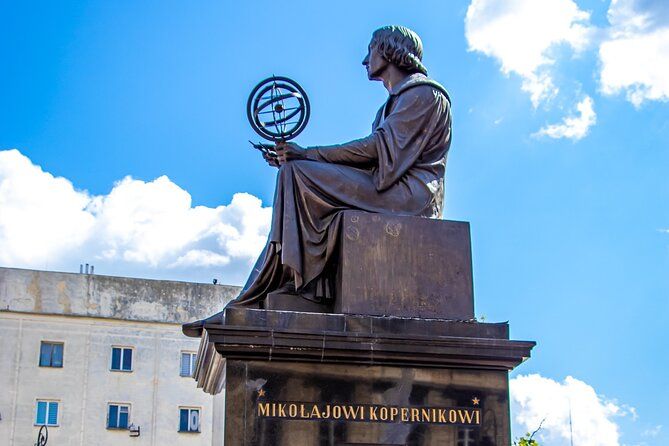
I’m a big fan of tours that help you place a city in your head fast, and this Old Town walk does that well. You start near the Nicolaus Copernicus Monument, end at the Warsaw Barbican, and get a guided thread that connects royal history, WWII scars, and Poland’s modern identity.
What I like most is the quality of the guiding and the structure of the route. Multiple guides are praised for being knowledgeable, funny, and easy to follow in English—names like Aga, Andrzej, Jack, Oliwia, Ania, Andres, and Josek come up often—so you feel like you’re learning from a real Warsaw local, not a script.
The main thing to consider is audio and pace fit. It’s a walking tour with moderate fitness needed, and a couple of travelers note that accent or the microphone can make understanding harder—so bring patience, and stand where you can hear.
- Key Points at a Glance
- Why This Walk Is a Smart First Stop in Warsaw
- Price and What You’re Really Paying For
- Meeting Points: Easy Start, Clear End
- The Group, the Language, and the Audio Reality
- Stop 1: Krakowskie Przedmieście and Chopin’s Heart
- Stop 2: Old Town (Stare Miasto) and the WWII Reconstruction Story
- Stop 3: New Town Square, Maria Skłodowska-Curie, and the Barbican Finale
- How the Tour Pace Works (and Who It Fits Best)
- The Real Win: Guides Who Tell a City Story
- Don’t Miss the Small Details Your Guide Points Out
- Weather, Tickets, and Practical Booking Notes
- Cancellation Policy: Flexible Enough to Plan Without Fear
- Should You Book This Old Town Warsaw Walking Tour?
- FAQ
- How long is the Old Town Warsaw walking tour?
- What is the price per person?
- Is the tour offered in English?
- Where do I meet and where does the tour end?
- Is hotel pickup included?
- Is the tour outdoors and does it run in bad weather?
- Is the tour suitable for children?
- What is the cancellation policy?
- The Best Of Warsaw!
- More Walking Tours in Warsaw
- More Tours in Warsaw
- More Tour Reviews in Warsaw
Key Points at a Glance
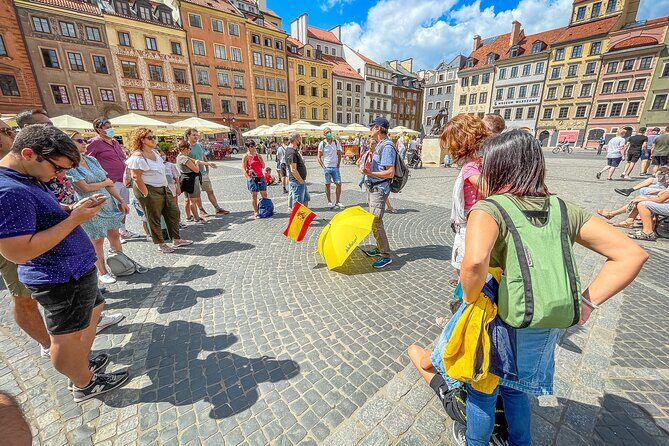
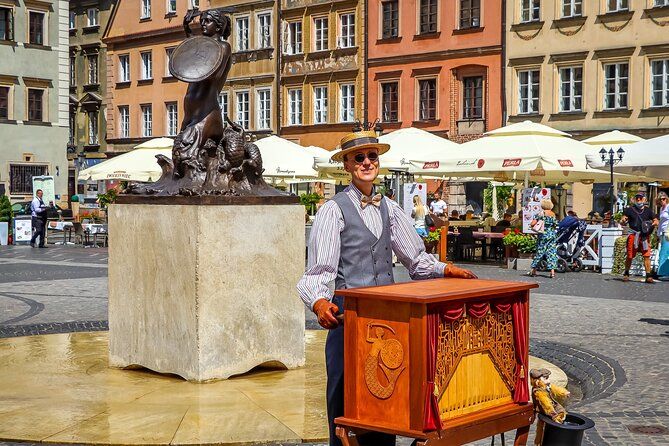
- Small group size (max 40): easier to ask questions and stay together.
- English-speaking guides with strong storytelling: humor plus clear historical context.
- 2.5 hours is a smart start: enough time to understand Old Town without tiring out.
- Pay-what-you-wish setup: your reservation covers a base amount, then you decide your reward.
- All-weather operation: dress for rain or cold; the plan stays the plan.
- Stops hit major identity markers: Chopin’s heart, Old Town reconstruction, and Maria Skłodowska-Curie’s birthplace.

👉 See our pick of the Warsaw’s 10 Best Workshops & Classes
Why This Walk Is a Smart First Stop in Warsaw
Warsaw can feel like two cities at once: one with a long memory, and one that had to rebuild itself almost from scratch. This tour helps you hold those ideas in your head at the same time, walking a line from the grand boulevards of the past into the carefully rebuilt heart of Stare Miasto.
It also keeps things practical. The route is planned for about 2 hours 30 minutes, the group is capped at 40, and you’re not expected to sprint from one landmark to another. Instead, your guide gives you a story you can repeat later when you’re wandering on your own.
And at about $26.60 per person, it’s priced like an efficient “orientation + highlights” tour, not a premium museum day. For first-timers, that can be a good value if your goal is understanding as much as sightseeing.
You can also read our reviews of more walking tours in Warsaw

Price and What You’re Really Paying For
The headline price is $26.60, and that’s helpful because you can compare it to the cost of doing similar sightseeing with tickets and separate guide services.
But the real value is how your money is used in the tour’s structure. This experience works as a general pay-what-you-wish style tour: the amount you pay covers a reservation fee and the guide’s payment, and you can add a tip/reward based on how it went. If you want a smaller private tour, the provider says you can ask them to arrange that.
So think of this as: a guided walk that’s already organized for you, plus flexibility to reward your guide appropriately.
Meeting Points: Easy Start, Clear End
You’ll meet at the Nicolaus Copernicus Monument on Krakowskie Przedmieście (00-333 Warszawa). The walk finishes at the Warsaw Barbican at Nowomiejska 15/17 (00-257 Warszawa).
This matters more than you might think. A tour that ends in a walkable, historic area makes it easier to keep exploring after the guide releases you. Ending at the Barbican also gives the route a “close the loop” feel because it sits between the Old and New Town areas.
The Group, the Language, and the Audio Reality
This tour is offered in English and runs with a local guide / professional guide setup. It also notes a moderate physical fitness requirement, and that you’ll be walking in all weather.
A couple travelers mention that microphone/audio setup can be tricky for some ears, and accent can affect clarity. My practical advice: arrive a few minutes early, stand where you can hear clearly, and don’t hesitate to ask for repeats if something lands muffled.
If you’ve ever had trouble with outdoor audio, bring it up to yourself as a small planning note. You can still get a lot from the guide’s storytelling, especially because the stops are visual and your guide ties the meaning to what you’re seeing.
Stop 1: Krakowskie Przedmieście and Chopin’s Heart
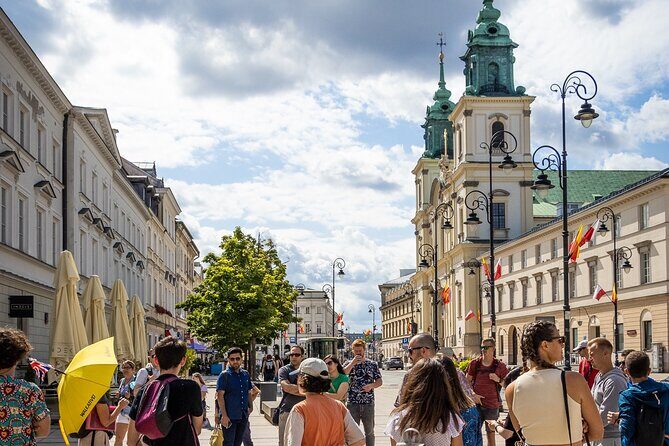
The first stretch is on Krakowskie Przedmieście, Warsaw’s main boulevard vibe—grand, formal, and full of historical echoes. This isn’t a random starting street. It sets the tone: royal-era splendor, important buildings, and parks/monuments that make the city feel larger than a quick Old Town loop.
Your guide points out landmarks along the way, including:
- the Presidential Palace area
- the Bristol Hotel
- St. Cross Church, tied to a major Polish music story: the heart of Chopin is interred there
What makes this stop valuable is that it anchors your later Old Town visits. When you understand what kind of nation this is—music, culture, political symbolism—you read the reconstructed Old Town with more meaning. You’re not just looking at pretty facades. You’re learning what people fought to preserve and rebuild.
Good to know: this portion is listed as about 1 hour, with admission marked as free where applicable.
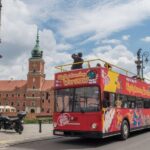
Stop 2: Old Town (Stare Miasto) and the WWII Reconstruction Story
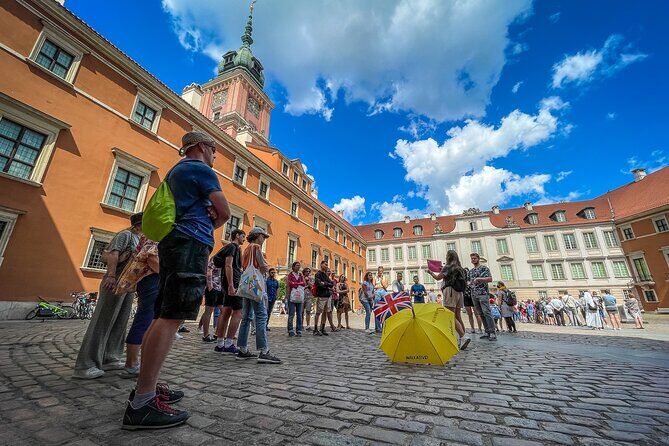
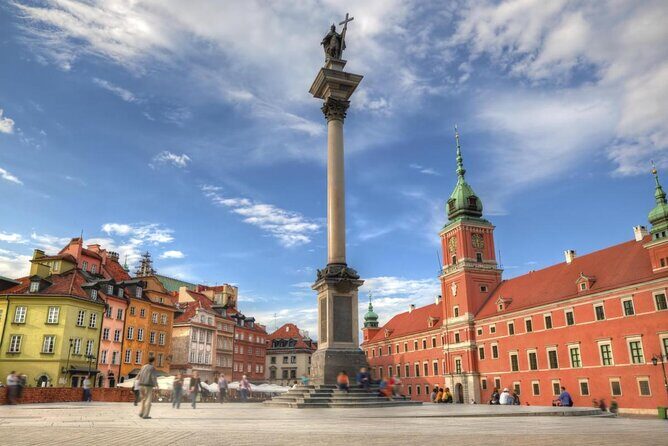
Next comes the centerpiece: Old Town with its red roofs, colorful houses, and the Royal Castle area. This is the part that most travelers picture when they imagine a “classic” Warsaw view.
Here’s the emotional twist your guide will likely emphasize: Old Town is an unlikely UNESCO site because much of it was destroyed during World War II. The major story is that the area was reconstructed with such care that it can be hard to tell what’s newly rebuilt versus what’s authentically old.
That’s not just trivia. It changes how you experience the buildings. You start noticing details with a different question in mind: not only what you’re seeing, but why it was rebuilt that way, and what that says about identity and memory.
This stop is allocated about 1 hour. You’ll get time to absorb the look of the square/streetscape and hear the narrative behind it—plus a chance to ask questions, which many travelers say the guides handle well.
Admission is listed as free for this segment, which helps keep the tour feeling like a true “guided value” experience.
Stop 3: New Town Square, Maria Skłodowska-Curie, and the Barbican Finale
The final stretch brings you to New Town Square, sometimes confusingly named given the old/new layout you’ll be walking through. This area also traces back to the Middle Ages, so it’s not a modern add-on.
The big connection here is that it’s linked to the birthplace of Maria Skłodowska-Curie. That’s a smart pairing with the Old Town story, because it stretches the meaning of Warsaw beyond kings, castles, and wars. Poland isn’t only a history of damage and rebuilding—it’s also a history of science and achievement.
Your walk concludes at the Barbican, which sits between Old and New Town. Think of it as both a visual landmark and a story punctuation mark. If Old Town is about the “rebuilt heart,” the Barbican is about defense, planning, and how cities protect themselves.
This segment is about 30 minutes. It’s a shorter final chapter, which helps keep the overall tour from feeling too rushed or too long.
How the Tour Pace Works (and Who It Fits Best)
The timing is about 2 hours 30 minutes. The walk is described as having moderate fitness needs, and it runs in all weather. That means you’re not likely to be taking huge breaks, but you also aren’t stuck doing nonstop marathon steps.
Who this fits well:
- First-time visitors who want an organized intro
- History-minded travelers who like a clear storyline
- People who prefer a small group over big bus tours
- Anyone who’s curious about the human side of Warsaw history (music, science, rebuilding)
Who might find it less ideal:
- Travelers with very limited mobility, since it’s still a walking itinerary
- People who struggle with outdoor audio—stand close and communicate if you can’t hear
The Real Win: Guides Who Tell a City Story
The biggest recurring strength is the guiding. Travelers consistently praise guides for being knowledgeable and funny, and for blending facts with a clear narrative that connects events.
You’ll see guide names pop up repeatedly, including Aga, Andrzej, Jack, Oliwia, Ania, Andres, and Josek. Even when different personalities show up, the pattern is similar: the guide tends to be engaging, attentive to questions, and good at explaining what’s original versus reconstructed.
If you’re the type who gets bored by dates on repeat, that’s a good sign. These guides seem to translate major events—especially WWII destruction and reconstruction—into a story you can actually follow while you’re standing in front of the results.
Don’t Miss the Small Details Your Guide Points Out
This tour gives you a lot of “watch for this” moments, and that’s where the experience clicks from sightseeing into understanding.
A few examples of what your guide is likely to help you notice, based on the stated stops:
- The boulevard-style grandeur of Krakowskie Przedmieście
- The cultural weight of Chopin’s heart at St. Cross Church
- The visual logic behind Old Town reconstruction after WWII
- The science achievement link to Maria Skłodowska-Curie in New Town
- The way the Barbican frames the transition between areas
When you get these anchors, you’ll enjoy wandering afterward more. You’ll recognize what you saw and why it matters.
Weather, Tickets, and Practical Booking Notes
This tour runs in all weather conditions, so plan for rain, wind, and cold if you’re visiting in shoulder season. It’s also marked as near public transportation, which can make getting to the meeting point easier.
You’ll receive a mobile ticket, which is convenient if you don’t want to manage paper vouchers in crowds.
Confirmation is received at booking, and children must be accompanied by an adult. The group size is capped at 40, so booking ahead is often smart if you have tight dates. The tour is commonly booked around 22 days in advance on average.
Cancellation Policy: Flexible Enough to Plan Without Fear
If your schedule might shift, this is a friendly policy. You can cancel free of charge up to 24 hours in advance for a full refund.
- Cancel at least 24 hours before the start time: full refund
- Cancel less than 24 hours before: no refund
If the minimum traveler requirement isn’t met, the provider says you’ll be offered another date/experience or a full refund.
Should You Book This Old Town Warsaw Walking Tour?
If you’re asking me for a clear yes/no: yes, if you want a fast, guided sense of Warsaw’s identity. This is especially compelling for first-timers because you get a coherent route through the city’s most symbolic spaces—boulevard grandeur, reconstructed Old Town, and New Town links to major Polish figures.
Book it if:
- you want knowledgeable, humorous English guides
- you like a structured walk rather than random wandering
- you want value at a price that doesn’t balloon with add-ons
- you want to understand why Old Town looks the way it does today
Skip it (or at least be cautious) if:
- outdoor audio is a big concern for you
- you have mobility limits that make walking hard
- you prefer long museum-style time instead of a compact narrative route
In short: for a focused introduction to Warsaw that teaches you how to read the city, this walk is a strong bet.
Old Town Warsaw Walking Tour
FAQ
How long is the Old Town Warsaw walking tour?
It runs for about 2 hours 30 minutes.
What is the price per person?
The price is $26.60 per person.
Is the tour offered in English?
Yes, it’s offered in English.
Where do I meet and where does the tour end?
You start at the Nicolaus Copernicus Monument on Krakowskie Przedmieście and end at the Warsaw Barbican on Nowomiejska 15/17.
Is hotel pickup included?
No. Pickup and drop-off are from designated meeting points, not from hotels.
Is the tour outdoors and does it run in bad weather?
It operates in all weather conditions, so you should dress appropriately.
Is the tour suitable for children?
Children must be accompanied by an adult.
What is the cancellation policy?
You can cancel up to 24 hours in advance for a full refund. If you cancel within 24 hours, the amount paid is not refunded.