
Osaka With Kids
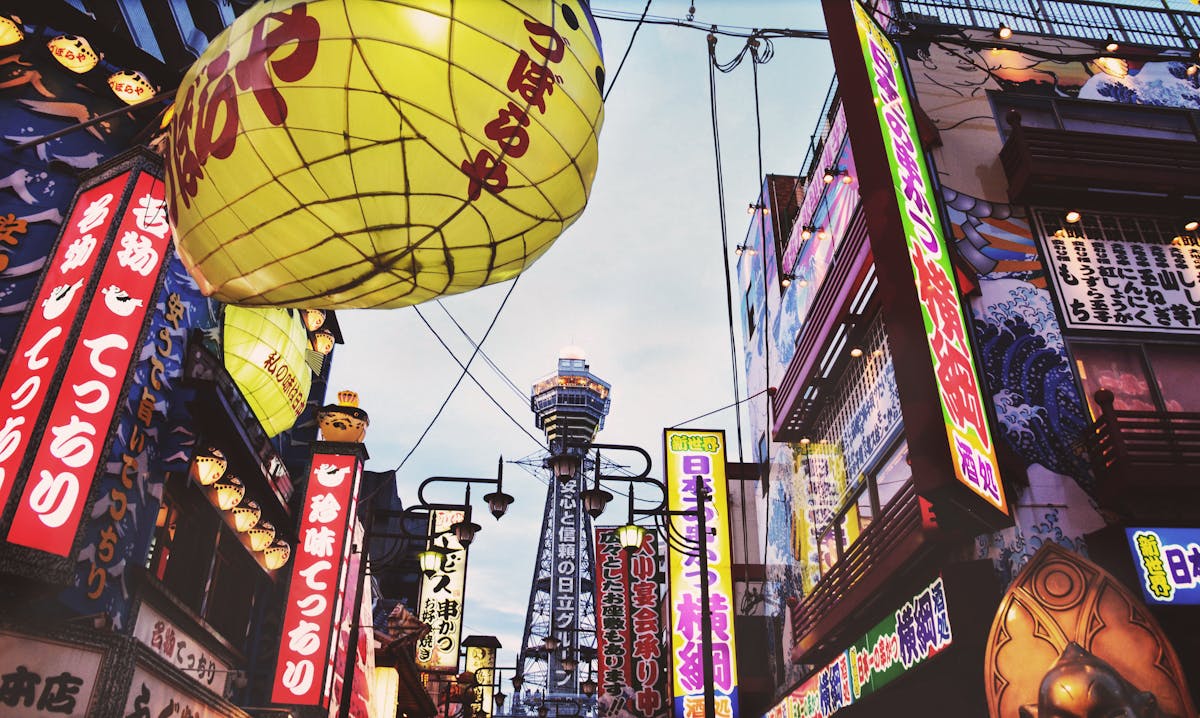
If you’re planning a trip to Japan with children and feeling slightly terrified by the thought of navigating Tokyo, let me point you towards Osaka. We spent time in both cities on our last Japan trip and honestly? Osaka stole the show. It’s smaller, friendlier, and the entire city revolves around food — which, when you’re travelling with hungry little people, is basically the dream.
Osaka doesn’t get the same attention as Tokyo in most family travel guides, and that’s a real shame. It’s easier to get around, the locals are warmer (they’ll actually chat to your kids), and the street food culture means you’re never more than a few steps from something delicious and cheap. Tokyo is brilliant, but it can be overwhelming with small children. Osaka feels like Japan with the volume turned down just enough.
How Many Days Do You Need in Osaka?
Two to three days is the sweet spot. You could stretch to four if you want a slower pace or plan to visit Universal Studios Japan, which takes a full day on its own. Three days gave us enough time to see the main sights, eat our body weight in takoyaki, and still have energy for a day trip to Nara.
The other brilliant thing about Osaka is its location. Kyoto is only 15 minutes away on the Shinkansen (or about 45 minutes on a cheaper local train), so you can easily base yourselves in Osaka and do day trips. We preferred this to actually staying in Kyoto — Osaka has better food, more affordable hotels, and a livelier atmosphere in the evenings.
Where to Stay in Osaka With Kids
Two areas stand out for families.
Namba/Dotonbori is where you want to be if food and atmosphere are your priority. This is the heart of Osaka’s street food scene, and stepping out of your hotel in the evening feels like walking into a party. The kids will be wide-eyed at the neon signs and the smell of grilling meat. Loads of mid-range hotels here, and you’re well connected to the metro.
Umeda/Osaka Station is the better choice if you’re using Osaka as a base for day trips. It’s the main transport hub, so getting to Kyoto, Nara, or the airport is straightforward. The area is slightly more polished and quieter at night, which suits families who prefer an earlier bedtime. Plenty of department stores with food halls in the basements too — a lifesaver when you need a quick, reliable meal.
We stayed near Namba and wouldn’t change a thing. Being able to wander out for okonomiyaki at 7pm without planning anything was worth it.
Top Things to Do in Osaka With Kids
Dotonbori
This is the one you’ve seen in photos — the canal lined with enormous neon signs, the famous Glico Running Man, and food stalls absolutely everywhere. It’s loud, it’s bright, and children adore it. We went in the early evening and the kids treated it like a theme park.
The thing to eat here is takoyaki — octopus balls. Don’t let the name put the children off. They’re crispy on the outside, soft inside, and covered in sauce and bonito flakes. About ¥500 (roughly £2.60) for a portion of six or eight. Our kids demolished them. You’ll find takoyaki stands on practically every corner, and honestly the ones from random street stalls were just as good as the famous shops with queues.
Get the obligatory photo in front of the Glico Running Man sign. Everyone does it. No shame.
Osaka Castle
The castle grounds are free to enter and they’re massive — perfect for letting kids run wild after a morning of metro travel. Cherry trees everywhere (spectacular in spring), wide paths, and plenty of space for a picnic. Japanese families do this too, so you won’t feel out of place sitting on a blanket with onigiri from the nearest convenience store.
Inside the castle is a museum (¥600/£3.15 for adults, free for under-15s) with exhibits about the castle’s history. It’s fine but not essential. The real value is the grounds themselves. We spent a good two hours here and the children were perfectly happy.
Osaka Aquarium Kaiyukan
One of the largest aquariums in the world, and it absolutely lives up to the reputation. The centrepiece is a colossal tank with whale sharks — actual whale sharks — and you spiral down around it on a long walkway, seeing different ocean zones at each level. It’s beautifully designed and even our teenager was impressed, which is saying something.
Tickets are ¥2,700 (£14.20) for adults and ¥1,200 (£6.30) for children aged 7-15, with under-3s free. Not cheap, but worth every penny for a rainy day or when everyone needs a break from temples. Allow about two to three hours. There’s a touch pool area near the end where kids can handle sharks and rays, which was a highlight.
Universal Studios Japan
Yes, Universal Studios is in Osaka. It deserves its own article — and we’ve written one. Head over to our Universal Studios Japan with kids guide for the full breakdown on tickets, Express Passes, and which areas suit which ages. Budget a full day for it.
Shinsekai District
Shinsekai is gloriously retro. Think old-school neon, slightly rough around the edges, packed with kushikatsu restaurants. Kushikatsu is deep-fried skewers of meat, vegetables, and cheese — basically Japanese fish and chips but better. Kids love pointing at the menu and choosing what gets fried next. Most skewers are ¥100-200 each (50p-£1), so it’s a ridiculously cheap meal.
Tsutenkaku Tower is here too. It’s not the most exciting observation deck in the world, but children enjoy the novelty and it gives decent views over the city. Entry is ¥900 (£4.75). We went up, looked around for fifteen minutes, came back down. Fine. Not life-changing. The food in this neighbourhood is the real draw.
Cup Noodle Museum Osaka Ikeda
This was a surprise favourite. For ¥500 (£2.60) per person, the kids designed their own cup noodle — chose the pot design, picked the soup flavour, selected toppings — and brought it home as a souvenir. They were absolutely chuffed. The museum itself covers the history of instant noodles (invented in Osaka, as it happens) and there’s a brilliant section where you walk through the production process.
It’s about 20 minutes north of central Osaka on the Hankyu line. Book the cup noodle making activity in advance if you can, especially during school holidays. Weekday mornings are quieter. This is hands-on, genuinely educational, and even the adults enjoyed it more than expected.
Kuromon Market
Known as the “Kitchen of Osaka,” Kuromon Market is a long covered arcade packed with seafood stalls, fruit sellers, and grilled meat vendors. It’s touristy now — let’s be honest about that — but still worth a visit, especially in the morning before the crowds build.
Our kids liked the fruit on sticks (melon, strawberry, mango) and the grilled scallops. Prices have crept up in recent years, so don’t expect it to be cheap, but it’s a fun way to try different Japanese foods without committing to a full restaurant meal. Good for fussy eaters who want to graze.
Day Trip to Nara
You cannot visit Osaka and not go to Nara. It’s 45 minutes on the Kintetsu line, and it was probably our children’s favourite day of the entire Japan trip.
Nara is famous for its wild deer — over a thousand of them roaming freely through the park and temple grounds. You buy deer crackers (shika senbei) for about ¥200 (£1) and the deer will bow to you before eating from your hand. Or mob you, depending on their mood. Our five-year-old thought this was the greatest thing that had ever happened.
Todai-ji temple houses an enormous bronze Buddha — genuinely enormous, the kind of thing that makes adults go quiet for a moment. There’s a famous pillar inside with a hole at the bottom that’s said to be the same size as the Buddha’s nostril, and if you crawl through it, you’ll be granted enlightenment. The kids were far more interested in this than the actual Buddha, obviously.
The park and deer are free. Todai-ji entry is ¥600 (£3.15) for adults. Pack a lunch and make a full day of it.
Getting Around Osaka
The Osaka Metro is brilliant for families. It’s clean, well-signed in English, and much simpler than Tokyo’s web of competing train lines. Most of the main attractions are on the Midosuji line (the red one), so you can get by without memorising the entire network.
Get an IC card (like a Suica or ICOCA) and load it up. Tap in, tap out. Children under 6 ride free, and there are child-rate IC cards for ages 6-11. We found the metro far less stressful than Tokyo — fewer transfers, shorter distances between stops, and it rarely felt crushingly packed.
Walking is also very doable. Namba to Shinsekai is about 20 minutes on foot, and Osaka is flat, which helps with pushchairs.
Eating in Osaka With Kids
Osaka calls itself Japan’s food capital. Bold claim. Completely justified.
The big four are takoyaki (octopus balls), okonomiyaki (savoury pancakes cooked on a griddle in front of you), kushikatsu (deep-fried skewers), and gyoza (dumplings). All of these are brilliant with children — they’re cheap (¥300-800 per dish, roughly £1.60-4.20), quick, interactive, and not remotely fancy. Nobody cares if your toddler drops something.
Okonomiyaki is especially good because many restaurants cook it at your table on a hot plate. Kids find this fascinating. You can choose your own fillings — pork, prawn, cheese, sweetcorn — so even fussy eaters can find something they’ll eat.
Convenience stores (konbini) are also a secret weapon. 7-Eleven, Lawson, and FamilyMart sell genuinely good food — onigiri rice balls, sandwiches, steamed buns, and decent coffee for the adults. Perfect for breakfast or emergency snacks. We relied on these more than we’d probably admit.
For more detail on navigating Japanese food with children, we’ve got a full guide on eating in Japan with kids.
Practical Tips for Osaka With Kids
Osaka people are different from Tokyo people. There. I’ve said it. They’re louder, funnier, friendlier, and far more likely to strike up a conversation or make a fuss of your children. If Tokyo is London, Osaka is somewhere between Liverpool and Glasgow — warmer, less polished, more character. This makes it a brilliant city to start a Japan trip if you’re nervous about the culture shock.
The city is generally very child-friendly. Most metro stations have lifts, restaurants often have child seats, and the Japanese attitude towards children in public is wonderfully tolerant. We never once felt unwelcome anywhere with the kids.
Toilets in Japan are famously excellent, and Osaka is no exception. Heated seats, bidet functions, the lot. Shopping centres and metro stations always have clean facilities, and many have dedicated baby-changing rooms. This sounds like a small thing but it makes a massive difference when you’re travelling with little ones.
Summer (July-August) is hot and sticky — 35°C with humidity that hits you like a wall. Spring (late March-April) is perfect for cherry blossom season, and autumn (October-November) brings lovely weather and fewer crowds. We’d avoid the peak of summer with young children unless you’re prepared to duck into air-conditioned malls regularly.
For more on planning a family trip to Japan, have a look at our Japan family travel guide, and the Japan National Tourism Organisation website is useful for up-to-date practical information.
Is Osaka Worth Visiting With Kids?
Absolutely. Without hesitation. It’s friendlier than Tokyo, cheaper than Kyoto for accommodation, and the food scene is perfect for families. Our children still talk about the takoyaki and the Nara deer months later. If you’re building a Japan itinerary and wondering whether to include Osaka — do it. You won’t regret it.