Pompeii is one of those places where you can stand in the middle of a street and feel time freeze. On this Pompeii guided tour with an archaeologist, you get a smart route through the best sights, plus skip-the-line entry so you spend more time looking and less time waiting.
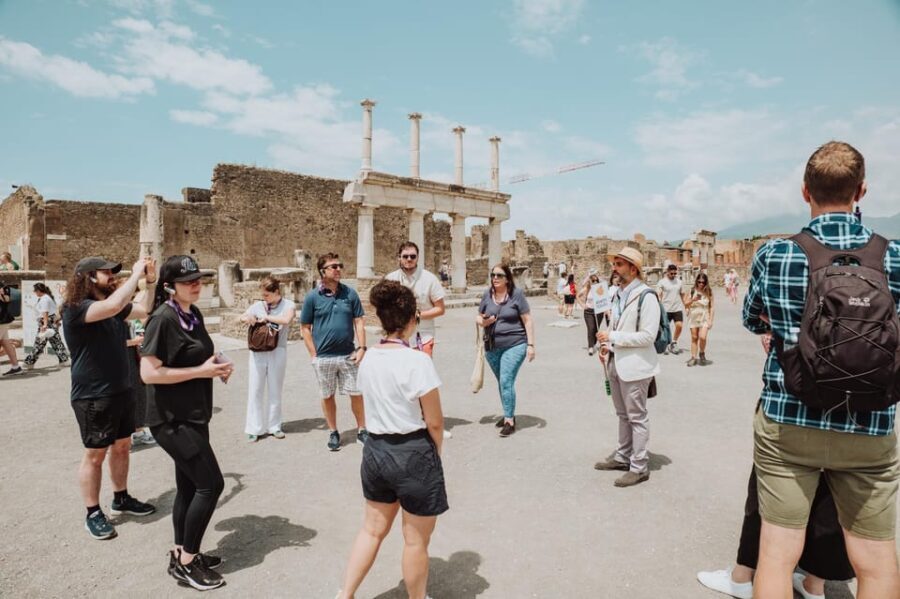
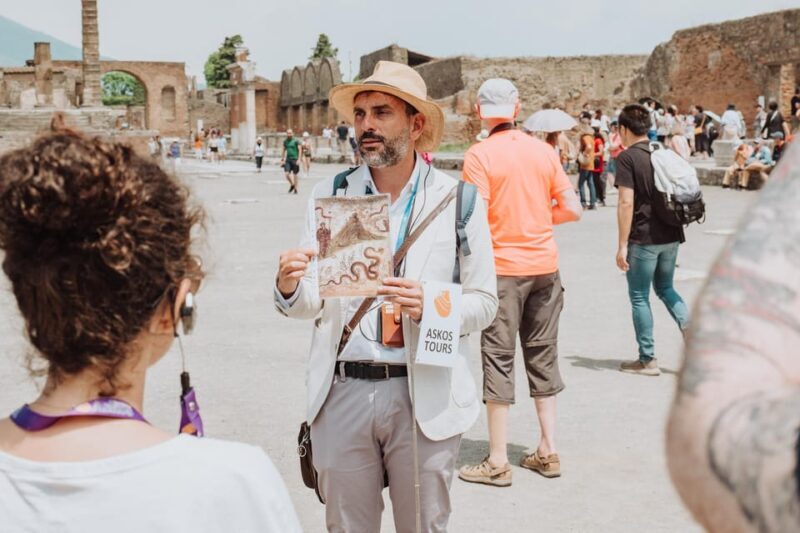
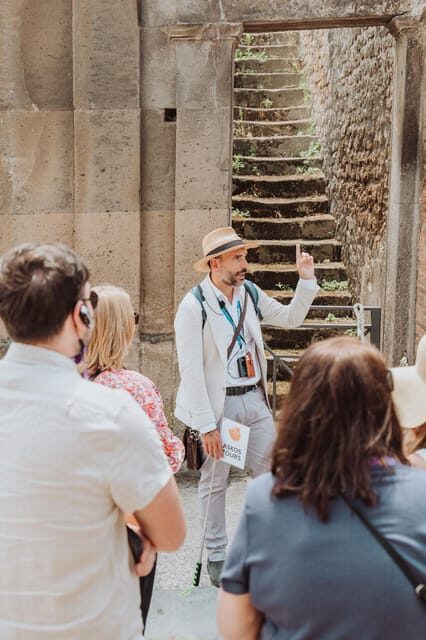
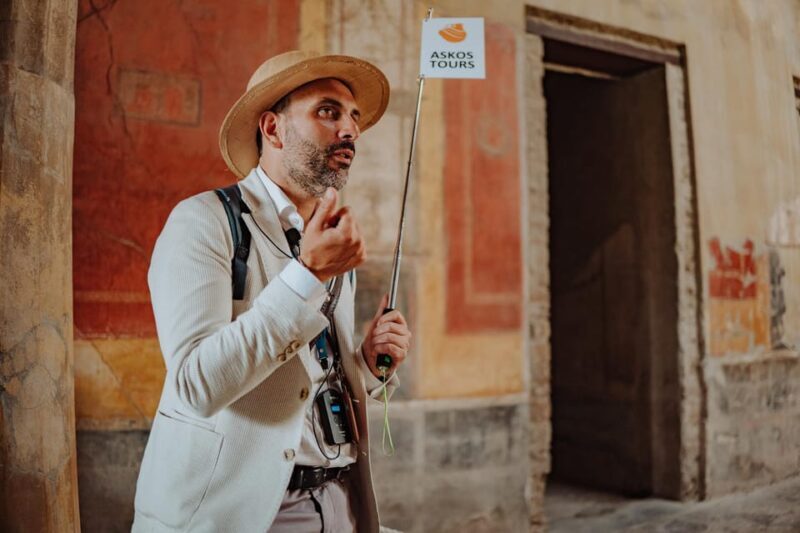
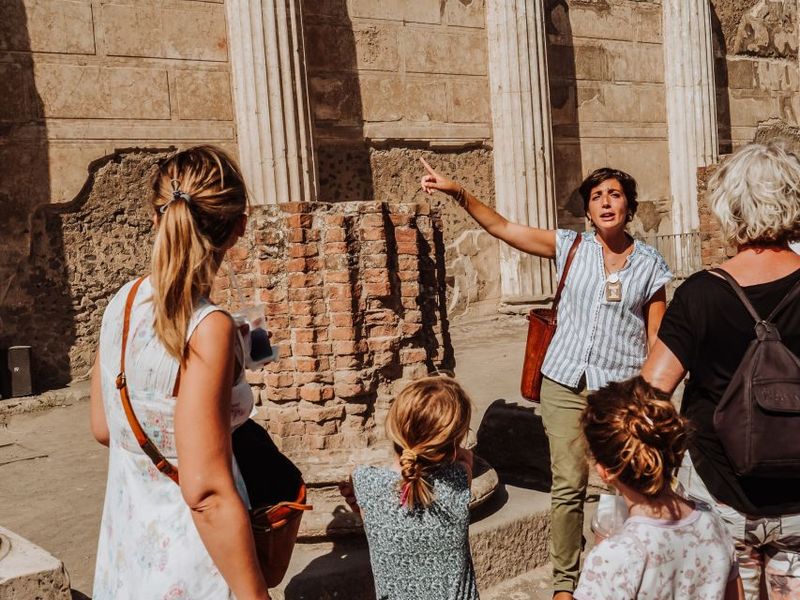
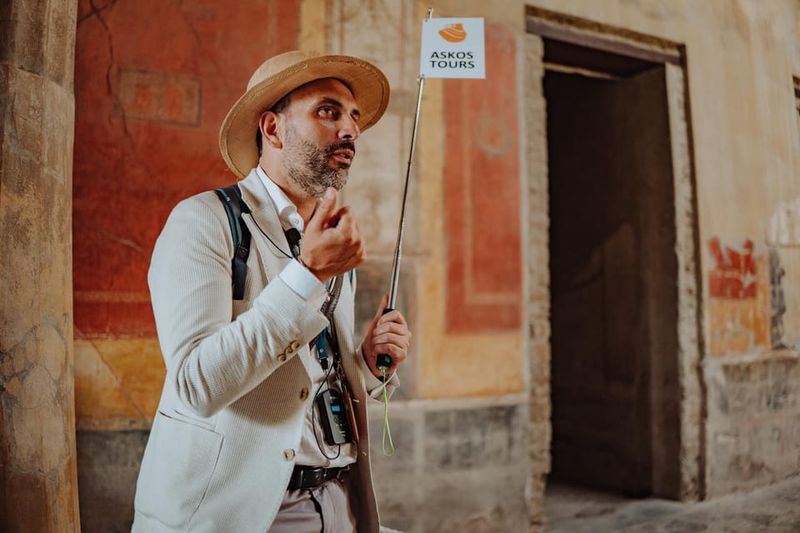
I especially like the guide setup: a true archaeologist guide leads a small group (up to 20), and you’ll often get headsets if your group is large. I also like how the tour pushes past big-name monuments to the smaller, human details—house layouts, everyday spaces, and how people actually lived there.
One thing to plan for: this is a walking tour on uneven ancient surfaces. If you’re sensitive to steps or long walks, it may not feel great.
- Key things to know before you go
- Pompeii with an archaeologist guide: what you’re really buying
- Skip-the-line entry: why that extra effort is worth it
- Small group size (up to 20): a calmer way to see a big site
- Headsets for 10+ guests: useful in real-world crowd noise
- Meeting point options: arriving without stress
- Start of the walk: Porta Marina and Temple area context
- Foro Civile di Pompei: where public life takes the stage
- House of the Faun: the tour’s architectural “wow” stop
- The Lupanar: Pompeii’s most talked-about stop, handled with context
- House of Menander: mosaics and daily detail
- Macellum and forum-side life: markets, meals, and movement
- Forum Baths: public health as a social habit
- Beyond the big rooms: plaster casts, theaters, and the city’s texture
- The human factor: guides who bring Pompeii to life
- Price and value: is per person a fair deal?
- What’s not included: food, drinks, and transport
- Accessibility and rules: know what this tour can’t accommodate
- Practical tips that make the tour feel easy
- Who this tour is best for
- Should you book this Pompeii archaeologist tour?
- The Best Of Pompei Campania!
- More Tickets in Pompei Campania
- More Tours in Pompei Campania
- More Tour Reviews in Pompei Campania
Key things to know before you go
 1 / 10
 2 / 10
 3 / 10
 4 / 10
 5 / 10
 6 / 10
 7 / 10
 8 / 10
 9 / 10
 10 / 10
- Skip-the-line ticket means you start faster and keep the day moving.
- Small group up to 20 helps you actually hear and see what your guide points out.
- Headsets for groups of 10+ make crowded sections much easier to manage.
- You’ll hit standout stops like the House of the Faun, Lupanar, and House of Menander.
- The route includes major civic and street-life areas like the Forum and baths.
- It’s 2 hours, so pace is tight—wear shoes that can handle Pompeii’s uneven ground.
👉 See our pick of the The Top 12 Walking Tours In Pompei Campania
Pompeii with an archaeologist guide: what you’re really buying
Paying for a guide here isn’t just about convenience. Pompeii is huge, and without context you can end up staring at stone and wondering what you’re looking at. With an archaeologist leading your group, you’re given the “why” behind what you see: room purpose, social meaning, art and symbolism, and what life looked like right before the 79 AD eruption of Mount Vesuvius.
This tour also makes practical sense. It’s 2 hours, it’s a small group, and it includes your entry ticket plus skip-the-line access. For many travelers, that combination is the difference between a great day and a long, confusing day.
You can also read our reviews of more tours and experiences in Pompei Campania

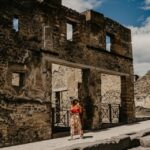
Skip-the-line entry: why that extra effort is worth it
Pompeii’s entrances can get crowded, especially in peak hours. Getting skip-the-line access changes your visit rhythm immediately. Instead of burning time in queues, you’ll arrive at the ruins while your energy is still high—and you’ll be able to follow the guide’s route without feeling rushed.
This matters because your attention is your main “ticket.” When the tour starts smoothly, you’re more likely to notice the small details your guide will call out.
Small group size (up to 20): a calmer way to see a big site
A group of up to 20 sounds small, and it is—especially for Pompeii. You’ll be able to hear instructions, see inside key spaces at the right moment, and move at a pace that’s designed for walking (not sprinting).
Also, smaller groups tend to make questions feel natural. You’re not just passively absorbing. You can ask what something means, how a space worked, or why a feature is significant.
Headsets for 10+ guests: useful in real-world crowd noise
If your group is bigger, you’ll get headsets. That’s a smart inclusion because Pompeii can get noisy around popular rooms and viewpoints. You’ll spend less time trying to lean in and more time listening to what matters—your guide’s explanations of layout and everyday life.
A quick practical note: even with headsets, you’ll still need to pay attention during the busiest sections. Your guide may be moving you through stops where lots of visitors are filming, pausing, and clustering.
More Great Tours NearbyMeeting point options: arriving without stress
Your meeting point may vary depending on which option you book. The tour company notes that it’s not one single fixed address for everyone, so double-check your confirmation for the exact start location.
If you’re coming by train, you may want a buffer in your schedule. One traveler mentioned that a train delay happened, and the organizers accepted a reschedule to the next time slot. That’s the kind of flexibility you hope for when travel goes sideways.
You can also read our reviews of more guided tours in Pompei Campania


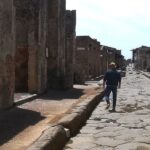
Start of the walk: Porta Marina and Temple area context
After you meet up, the tour begins with a quick pass by key entry and temple zones. You’ll get a feel for Pompeii’s structure—how the town is organized and where civic life connects to residential streets.
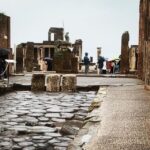
You may see areas like Porta Marina and the Temple of Apollo along the way. These moments work like an orientation map. Even if you think you know Pompeii from photos, seeing how these spaces connect in person helps everything that follows make more sense.
Foro Civile di Pompei: where public life takes the stage
Next comes the civic core—the Forum area. This is where the Romans did business, politics, religion, and social life, all in one dense, walkable footprint.
What I like about visiting this with a guide is that you don’t just see columns and paving stones. You get help imagining the flow: people moving in different directions for different reasons, spaces designed for gatherings, and how power and daily life overlapped.
Heads-up: this area can be visually busy. With a guide, that’s fine—because someone is there to point to the features your eyes would otherwise skip.
House of the Faun: the tour’s architectural “wow” stop
The House of the Faun is one of Pompeii’s big attractions, and your guide typically spends time showing you why. This is where the differences between grand private space and everyday city space become clear.
You’ll likely get a tour-style walk through key rooms and areas tied to how wealthy Pompeians lived—how space signaled status, how daily routines were structured, and what art and design choices meant in context. One common theme from experienced archaeologically-minded guides: they connect physical layout to human behavior.
Practical tip: this stop involves walking through uneven ground and steps. Wear shoes you can trust.
The Lupanar: Pompeii’s most talked-about stop, handled with context
The Lupanar (often translated as a brothel) is one of those places that draws attention for obvious reasons. What makes it work in a guided tour is how the guide frames it—not as sensational theater, but as part of the city’s social system.
In many Pompeii visits, people rush through this area because it’s uncomfortable or hard to imagine. With a guide, you can slow down enough to understand how it functioned as a commercial space, how rooms were arranged, and what the site tells you about city life and gendered work in the Roman world.
This is also a good example of why an archaeologist guide matters. You’re less likely to end up with a one-note, shock-value interpretation.
House of Menander: mosaics and daily detail
The House of Menander is another highlight where you’ll see how elite interiors communicated taste, culture, and identity. This stop is especially satisfying if you like art and design, since Pompeii is famous for things like frescoes, mosaics, and painted surfaces.
With a guide, you’ll learn what to look for. Instead of guessing which room is which, you’ll understand the purpose of spaces and how visitors would have moved through the property.
If you love “small clues,” this is where Pompeii rewards you.
Macellum and forum-side life: markets, meals, and movement
The tour route typically includes a Macellum stop (market area). This is one of the best ways to understand Pompeii as a real town, not just a museum of ruins.
Markets are where social life and food economy meet. Even if you don’t consider yourself a “food person,” it’s still the place that helps you picture everyday routines: where people got supplies, how goods were displayed, and how neighbors interacted.
One useful mindset: when you see the market spaces, think like a regular shopper—what would you buy, where would you pass through, and what would you notice first?
Forum Baths: public health as a social habit
The Forum Baths add another layer. Baths weren’t only about cleanliness; they were a routine, a meeting point, and a place to spend time.
This stop helps balance the tour. You see civic life, then domestic or semi-domestic spaces, and then you step into a public facility where people gathered and chatted. It’s a reminder that Pompeii was loud with ordinary human activity—just frozen in stone.
Beyond the big rooms: plaster casts, theaters, and the city’s texture
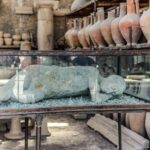
Even within a tight 2-hour schedule, the tour is designed to cover more than one-dimensional highlights. You may also catch references to features that help explain Pompeii’s human story, like plaster casts of victims, ancient baths, and theaters, along with main streets and other points that show how the city worked day to day.
These stops are valuable because they remind you Pompeii wasn’t just wealthy homes. It was a full city with varied social classes, public routines, and shared spaces.
If you’ve only ever seen Pompeii through wide-angle photos, this is where the visit becomes more personal.
The human factor: guides who bring Pompeii to life
A huge part of the value here is the guide quality. Travelers have highlighted archaeologist-level expertise and clear, engaging explanations from guides including Teresa, Anna Sorrento, Giancarlo, Alfredo, Sergio, Mario, and Paolo, along with others like Raffaella, Jolanda, Diego, and Alexandra.
What matters for you isn’t the name on the ticket—it’s the delivery. Many guides use humor, keep facts connected to real life, and help you notice the details you’d otherwise miss.
One traveler also emphasized that guides can shape the whole visit after the tour ends. That’s the best kind of guide advice: practical, tailored to what you just saw.
Price and value: is $35 per person a fair deal?
At $35 per person for a 2-hour archaeologist-led tour with skip-the-line entry, this is priced like a serious “quality” add-on—yet it’s still often better value than doing Pompeii independently while trying to make sense of everything.
Here’s why it can be good value:
- You’re getting the entrance ticket bundled in.
- You’re paying for expert interpretation, not just route guidance.
- The small group limits time lost and boosts the chance you’ll actually understand what you’re seeing.
- When headsets are included, it reduces the common problem of struggling to hear in crowded areas.
Main trade-off: you don’t get the freedom of a full-day self-guided wander. But if you want the “greatest hits,” plus real context, this format is hard to beat.
What’s not included: food, drinks, and transport
This tour does not include food and drinks, and it doesn’t include hotel pickup or drop-off. You’ll need to plan your own timing for lunch/snacks and get to Pompeii on your own.
That’s a small drawback, but it’s also an opportunity: you can choose something nearby based on your preferences and energy. If you want a calmer day, schedule a meal after your tour ends—when you’ll be ready to sit, hydrate, and decompress.
(And yes, pack water. Even when the weather cooperates, Pompeii walking adds up fast.)
Accessibility and rules: know what this tour can’t accommodate
This is an important section to read carefully.
Not suitable for:
- People with mobility impairments
- Wheelchair users
Not allowed:
- Mobility scooters
- Unaccompanied minors
Pets: only small dogs are permitted (max 10 kg, height 40 cm). They must be on a leash and held in arms inside buildings, and you must collect their excrement.
If you’re traveling with someone who needs more mobility support, consider a different tour style—or plan a shorter, less intense visit.
Practical tips that make the tour feel easy
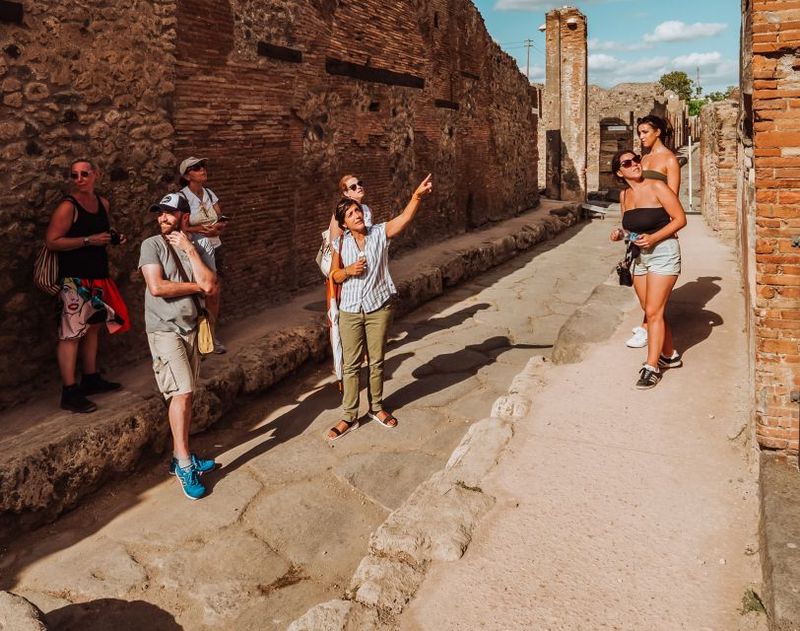
Pompeii’s surfaces are uneven, and some stops involve steps. A recurring piece of advice from travelers: wear good, comfortable shoes and be ready for a bit of climbing.
Also:
- Bring water, especially if you’ll be outside before and after the tour.
- If you don’t love wearing headsets, be aware you may need to adjust them in busy areas so you can hear your guide.
- If you tend to get lost easily in big sites, use the tour as your orientation. Many people mention they didn’t realize how much Pompeii they hadn’t seen until the guide route gave them a map in their head.
Who this tour is best for
This is a strong pick if:
- You want a smart route through major Pompeii highlights in 2 hours
- You care about understanding what you’re looking at, not just ticking off photos
- You like small-group walking, with a guide who can answer questions
- You appreciate archaeologist-level context, especially for houses and public spaces
You might skip this format if:
- You want a long, slow, self-paced day
- You need wheelchair access or mobility assistance
- You’re very sensitive to uneven ground and steps
Pompeii: Entry Ticket and Guided Tour with an Archaeologist
Should you book this Pompeii archaeologist tour?
If your goal is to leave Pompeii with real understanding—not just impressions—then yes, I’d book it. $35 for a guided, skip-the-line, archaeologist-led small group can be excellent value, especially for first-timers who don’t know where to look.
I’d be cautious only if mobility is an issue for you or your group. For everyone else, this tour is a practical way to see the best parts of Pompeii and get the meaning behind them, while still leaving you time to explore more afterward with clearer direction.
You can check availability for your dates here: