
I like this Pompeii private tour because it’s built around what most visitors miss when they wander on their own: the big story behind the streets and buildings, told in a clear sequence. You’ll move efficiently through the main Pompeii highlights in about 2 hours, with a guide to keep the ruins readable instead of random stone.
Two things stand out fast: the knowledgeable archaeologist-level guiding (guests repeatedly mention passion and strong explanations), and the route itself, which hits the theaters, Forum spaces, and daily-life zones like shops and bathing. One consideration: the 19€ entrance ticket isn’t included, and the skip-the-line advantage depends on you having the right ticket in hand.
If you’re the type who wants shortcuts and context in equal measure, this is a strong fit. Just budget for the ticket, and you’ll get a tour that feels like a fast, well-planned “best-of” walk through a very big site.
- Key Points Before You Go
- Pompeii in 2 Hours: What You’re Really Buying
- Price and Logistics: The 19€ Entrance Ticket Catch
- Where You Meet: Piazza Esedra (and How to Start Smooth)
- The “Skip the Line” System: How It Works for You
- What’s Included (and What Isn’t)
- Your Pompeii Route: From Theaters to Daily Life
- Stop 1: Pompeii Archaeological Park (The Big Opening Walk)
- Crossing Via dell’Abbondanza: Pompeii’s Main Street
- Stop 2: Teatro Grande (Great Theater) for About 15 Minutes
- Stop 3: Granai del Foro (Forum Granaries and the Casts)
- Stop 4: Stabian Baths (Terme Stabiane) for About 15 Minutes
- Stop 5: Foro di Pompei (The Forum Square)
- Stop 6: Pompei La Basilica (Courthouse and Justice)
- Temple of Jupiter (Quick but Important)
- Stop 7: Quadriporticus of the Theatres and Gladiator Barracks
- Stop 8: Vicolo del Lupanare (The Brothel Street)
- Stop 9: Temple of Venus and Casa del Fauno (Big Residential Ending)
- Why the Guide Changes Everything (Names People Mention)
- Crowds, Heat, and How the Route Feels in Real Life
- Weather and Cancellation: Don’t Let Rain Ruin the Plan
- Who This Tour Suits Best (And Who Might Want a Different Style)
- Should You Book This Pompeii Private Tour?
- FAQ
- What time does the tour last?
- Is the Pompeii entrance ticket included?
- How do I skip the ticket office line?
- How many people are in the group?
- Where do we meet?
- What languages are available?
- Is food or drinks included?
- What’s the cancellation policy?
- What happens if weather is bad?
Key Points Before You Go
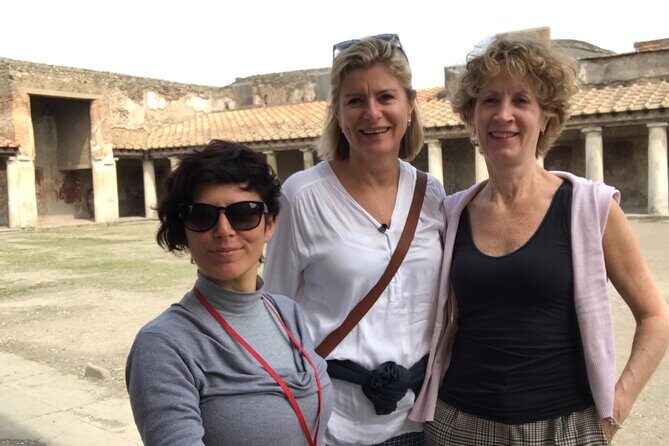
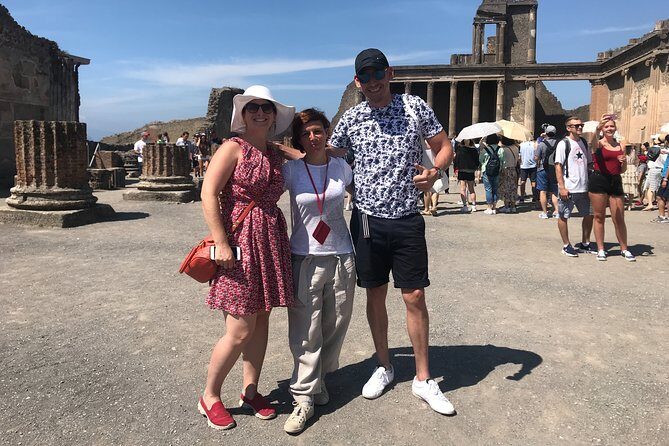
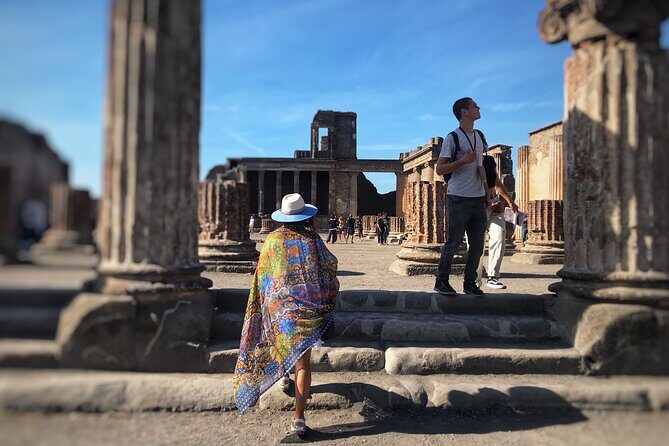
- Skip-the-line is ticket-dependent: Entrance tickets cost 19€ per person and are not included.
- A smart 2-hour circuit: The itinerary targets the areas that explain how Pompeii worked day to day.
- Archaeology-focused guiding: Multiple guests call out guides like Luisa and Eliana Sandretti for making Pompeii click.
- Small-group private feel: It’s private for your group (up to 10), which helps with pacing and questions.
- Know where you’ll spend time: Several stops are about 10–15 minutes, so you’ll see variety but not every corner.
- Weather matters: If it’s canceled due to poor weather, you’ll choose another date or get a full refund.
Pompeii in 2 Hours: What You’re Really Buying
This is a private Pompeii tour for up to 10 people, led by an authorized guide and described as archaeologist-led. For the money, you’re not paying just for a walk-through. You’re paying for someone to connect what you’re seeing: the layout of the city, what each public space was for, and how everyday life shows up in details.
In practice, the “2 hours” matters a lot. Pompeii is huge, and two hours is more like a sprint with good coaching than a full “see everything” day. The payoff is that you get a curated route: theaters, Forum landmarks, baths, gladiator training spaces, and homes with standout features.
Price and Logistics: The 19€ Entrance Ticket Catch
The tour price is $375.05 per group (up to 10) for about 2 hours, and it advertises skip the line. Here’s the key detail: the archaeological site entrance ticket is not included. The ticket costs 19€ per person (and is free for under-18 visitors with ID/passport).
So the real value equation looks like this:
- You pay for the private guide + skip-the-line support for your group.
- You still pay 19€ per person for the site entry itself.
A few guests mention confusion because the wording around skip the line can feel misleading if you don’t read the ticket notes carefully. The clear takeaway for you: buy the entry ticket in advance, then the “skip the line” part becomes meaningful.
Where You Meet: Piazza Esedra (and How to Start Smooth)
Meet at Piazza Esedra, 10, 80045 Pompei NA, Italy, and the tour ends back at the meeting point. That matters because Pompeii’s internal walking can be a maze. Starting and ending in the same place helps you avoid losing time to transit or re-finding your way.
In guest feedback, people repeatedly describe clear meeting communication and guides showing up prepared. One family even noted the guide waited with a sign bearing their name, which is the kind of small detail that makes the first five minutes less stressful.
The “Skip the Line” System: How It Works for You
The operator says they’ll send you a link one day before the tour so you can purchase tickets online and avoid the ticket office line. They also point out that in high season you should buy ahead.
Here’s the practical approach I’d use:
1. Book your tour.
2. Buy the 19€ entrance ticket using the link provided (or the official site).
3. Arrive ready with what you need for entry.
If you show up without your entry ticket, you’ll likely lose the time you thought you were saving. With Pompeii’s crowds, that can be the difference between seeing the best parts and spending your day stuck near entrances.
What’s Included (and What Isn’t)
Included:
- Authorized tour guide and assistance during the tour
- Private tour with an archaeologist
- Skip the line (with proper ticketing)
- Coverage of the main Pompeii attractions
- Tailor made experience
- A link before the tour to buy online tickets
Not included:
- Food and drinks
- Tip
- Entrance tickets: 19€ per person
Because food isn’t included, you should plan for quick breaks on your own if you need them. One guest mentioned grabbing coffee and pastries while waiting out rain, which is a good reminder: you can still get a quick recharge, just not as part of the tour price.
Your Pompeii Route: From Theaters to Daily Life
The itinerary is built as a high-impact loop. You start with Pompeii’s Archaeological Park and then move through key zones: theaters, the Forum area, baths, gladiator spaces, and residential highlights.
Even within short stops (often 10–15 minutes), the guide’s job is to give you a mental map. That’s why this tour tends to rate so well: people don’t just see buildings; they understand what they were for.
Stop 1: Pompeii Archaeological Park (The Big Opening Walk)
This is the “foundation” segment where you cover a lot of ground. The entrance ticket to the park isn’t included, but once you’re in, the guided route hits the following areas:
- Theaters
- Temples
- A rich house (luxury home style)
- Stabian baths (spa area)
- Shops and fast food
- The Lupanar area (brothel zone)
- The Forum (main public square)
- The Area of the Gladiators
- The casts of people who died during the eruption of 79 AD
You also make a quick stop to visit the Small Theater (Odeion) to hear how Romans recreated acoustics. That detail is small on paper but memorable in person. It turns a ruin into a functioning idea: sound, crowds, and performance.
Possible drawback here: because so much is packed into the first part, you’ll want to ask questions early. If you wait until the end, you may run out of time for the topics you care about most.
Crossing Via dell’Abbondanza: Pompeii’s Main Street
You cross via dell’Abbondanza, the main street of Pompeii. That’s a smart move because it gives you scale and context. It also helps you connect the Forum area to the everyday commercial side of town.
For many travelers, this street-level walk is where Pompeii starts to feel less like a museum and more like a city you could have visited.
Stop 2: Teatro Grande (Great Theater) for About 15 Minutes
Next up is Teatro Grande, the most important theater in the park. You’ll spend around 15 minutes here, which is enough to understand why theaters weren’t just entertainment. They were public glue—where announcements, performances, and social life met.
The guide can make a huge difference in how you perceive this space. Without context, a theater is just seating. With it, you start noticing the structure and what it implies about gathering and daily rhythms.
Stop 3: Granai del Foro (Forum Granaries and the Casts)
You then visit Granai del Foro, the granaries linked to the Forum area. You’ll also see casts—people preserved from the eruption.
This stop is powerful because granaries point to logistics: food storage, supply, and how a city kept going. The casts bring the human side in a way that’s hard to match on your own.
Stop 4: Stabian Baths (Terme Stabiane) for About 15 Minutes
Pompeii’s Stabian Baths are the “Roman spa” highlight. The tour describes them as the best SPA of the Roman Empire in Pompeii. Whether you take that as hyperbole or pure marketing, the site is still a standout because baths show comfort, routine, and status.
In a short visit, you’ll likely get the main layout and how people moved through bathing spaces. It’s also a good area to notice architecture details that aren’t obvious from the street.
Stop 5: Foro di Pompei (The Forum Square)
You’ll visit the Foro di Pompei, the main square with markets and temples. This is the heart of civic life—speaking broadly, this is where business met religion and politics met entertainment.
Stop length is about 10 minutes, so think of it as a guided orientation. You’ll leave knowing where the Forum is in the bigger city picture.
Stop 6: Pompei La Basilica (Courthouse and Justice)
Next is Pompei La Basilica, where justice was administered. Even if you don’t care about legal history, the basilica helps you understand how the city organized authority.
The stop is about 15 minutes, and that’s a sweet spot: long enough to grasp function, short enough to keep momentum.
Temple of Jupiter (Quick but Important)
You also visit the Temple of Jupiter, present in the main square area. This is the sort of “don’t skip it” stop because it ties the Forum’s civic space to religious power.
Stop 7: Quadriporticus of the Theatres and Gladiator Barracks
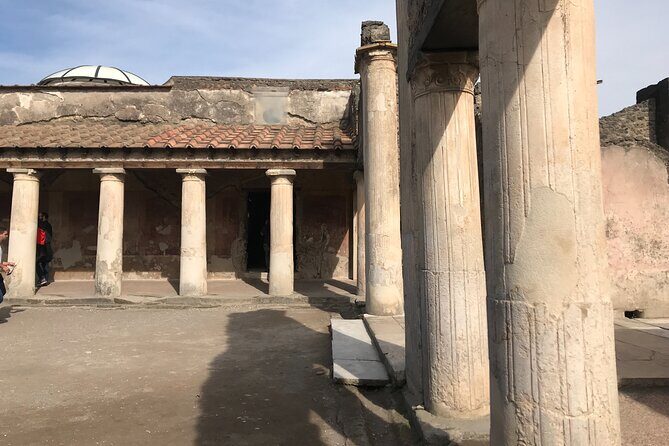
Then you move into the area around the theaters and the Gladiator Barracks, including training apartments. This is where Pompeii gets less “public official” and more “how bodies trained and lived.”
The tour gives you about 15 minutes here, which is enough to understand the relationship between training space and performance venues.
Stop 8: Vicolo del Lupanare (The Brothel Street)
You visit Vicolo del Lupanare, the ancient red-light district area, and this stop is listed as free. It’s included because Pompeii’s story includes the parts people pretend not to notice.
It’s also a useful test of whether you’re enjoying the tour: a good guide can talk about this area without turning it into cheap shock. The goal is understanding social life, not gossip.
Stop 9: Temple of Venus and Casa del Fauno (Big Residential Ending)
The tour finishes with two memorable anchors:
- Temple of Venus, where the city’s divinity was venerated
- Casa del Fauno, one of the richest and most luxurious residences in Pompeii
Casa del Fauno is one of those places where even first-timers feel a jolt. You start noticing how wealth expressed itself through space, design, and everyday status symbols.
Expect about 15 minutes at this last residential highlight.
Why the Guide Changes Everything (Names People Mention)
This tour leans hard on guiding. And the guest feedback is consistent: knowledgeable, enthusiastic guides are a big reason people recommend it so often.
Some guests specifically call out guides like Luisa and Eliana, praising how they made Pompeii feel alive and answered questions in detail. There are also mentions of guides such as Antonio, Danilo, Viktoria, Mattia, Roberto, Francesco, and Marina, with consistent themes: strong knowledge, good pacing, and a route that avoids the worst crowd bottlenecks.
One family described a guide tailoring the content for kids and finding shady spots during hot weather. Another noted guides helping with photo opportunities. That’s practical stuff: when you’re moving quickly, the guide’s “where to stand” choices matter.
Crowds, Heat, and How the Route Feels in Real Life
Pompeii crowds are real. This tour is private for your group, and that helps you slip through in a smoother flow. Several guests also mention avoiding crowds and using back ways in when conditions are tough (like rain).
The itinerary is tight, with multiple 10–15 minute stops. That’s good for first-timers who want highlights, but it means:
- You won’t linger in one area for long.
- You’ll want to take photos quickly and move when the guide calls it.
If you’re traveling with older adults or kids, the private nature plus a tailor-made approach can help. In one review, a guide adjusted where she took people to suit elderly parents without cutting out the essentials.
Weather and Cancellation: Don’t Let Rain Ruin the Plan
This experience requires good weather. If it’s canceled due to poor weather, you’ll be offered a different date or a full refund.
Cancellation is flexible:
- Free cancellation up to 24 hours before the experience for a full refund.
If you’re planning around a strict schedule, this policy is reassuring. And because Pompeii is open-air, weather can change fast, so the option to reschedule matters.
Who This Tour Suits Best (And Who Might Want a Different Style)
You’ll probably love this tour if you:
- Have limited time and want the best-of Pompeii route
- Prefer guided context over wandering through ruins with no map
- Like a pace that keeps things moving (but still allows questions)
- Want a private group experience rather than a long bus-style crowd
You might rethink this tour if you:
- Want to spend lots of time inside only a few buildings
- Don’t want to handle extra logistics for the 19€ entrance ticket
- Are highly sensitive to moving quickly through multiple zones in 2 hours
For many people, the “sweet spot” is: book this as your first Pompeii visit, then explore more slowly on your own if you fall in love with it.
Should You Book This Pompeii Private Tour?
I’d book it if your goal is simple: see the core Pompeii highlights fast, understand what you’re looking at, and keep the crowds from swallowing your day.
It’s a good value when you factor in:
- a private guide
- archaeology-level storytelling
- a route that covers Forum, theaters, baths, and major residential areas
- strong guest praise for guide skill and clarity
Just go in with two expectations set:
1. Budget the 19€ entrance ticket per person (it’s not included).
2. Accept that 2 hours is a curated sprint, not a complete “see every room” day.
If that sounds like your kind of Pompeii visit, this tour is a solid choice.
Pompeii Private Tour with an Archaeologist and Skip The Line
FAQ
What time does the tour last?
It’s listed as about 2 hours.
Is the Pompeii entrance ticket included?
No. The Pompeii entrance ticket is not included. The cost is 19€ per person (free for under 18 with ID or passport).
How do I skip the ticket office line?
The operator says they send you a link one day before the tour so you can buy online tickets in advance.
How many people are in the group?
It’s a private tour for your group, with a maximum of up to 10 people.
Where do we meet?
The meeting point is Piazza Esedra, 10, 80045 Pompei NA, Italy, and the tour ends back there.
What languages are available?
The tour is offered in English. Other languages can be requested.
Is food or drinks included?
No. Food and drinks are not included.
What’s the cancellation policy?
You can cancel for a full refund if you cancel at least 24 hours before the start time. If you cancel later than that, the payment is not refunded.
What happens if weather is bad?
The experience requires good weather. If it’s canceled due to poor weather, you’ll be offered another date or a full refund.