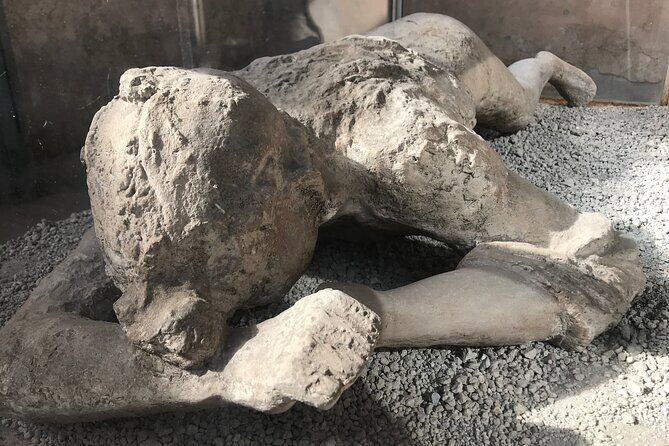
There’s something about wandering through Pompeii with someone who actually understands what you’re looking at that transforms the experience entirely. We’ve reviewed this private archaeology-led tour extensively, and what consistently emerges from hundreds of traveler accounts is how a guide can turn a pile of ancient ruins into a compelling story about real people, their daily lives, and a catastrophic moment frozen in time.
We love two things about this tour in particular: first, you’re getting actual archaeologists—not just tour guides who’ve memorized facts—leading you through the site. Second, you avoid the grinding ticket lines and crowds that can turn a historical visit into an exercise in patience management. That said, here’s the important catch: entrance fees aren’t included in the tour price, which has caught some travelers off guard.
This tour works best for history enthusiasts, curious travelers who ask lots of questions, and anyone who wants to make sense of Pompeii’s layout rather than wandering aimlessly. If you’re someone who prefers to move at your own pace without commentary, or if you’re traveling on a tight budget, you’ll want to factor in those entrance costs carefully.
Amadeo was a fantastic tour guide who truly made our Pompeii experience incredible. Deeply knowledgeable, friendly, and very welcoming, he made our visit so memorable– we cannot recommend him and this operator, Sandretti Tours, more highly! Thank you Amadeo.
We really enjoyed the knowledge and company of our guide, Amadeu, on our private walking tour of Pompeii. He shared interesting facts and kept everyone in our group interested and engaged. Highly recommend skipping the line and booking a tour with Amadeu to avoid the crowds and maximize your time here at this amazing historical site.
Great guide, Louisa,
- What You’re Actually Getting
- The Itinerary: A Carefully Curated Walk Through Ancient Life
- The Guide Experience: Where This Tour Really Shines
- Practical Considerations and Logistics
- The Value Question: Is It Worth the Price?
- Booking Details and Cancellation Policy
- Frequently Asked Questions
- More Private Tours in Pompeii
- More Tours in Pompeii
- More Tour Reviews in Pompeii
What You’re Actually Getting
Let’s be direct about the pricing. At $302.32 per group (pricing for one person), this tour sits at a premium price point. But here’s what matters: you’re paying for expert-level archaeological knowledge, skip-the-line access, and a completely private experience where the guide tailors the tour to your interests. Add in the entrance fee (€19 per adult, free for under-18s), and you’re looking at roughly $320+ per person for the full experience.
One traveler put it perfectly: “We had an amazing time. It made all the difference to have an experienced archaeologist.” That’s the real value proposition. You’re not paying for a bus and a microphone; you’re paying for someone who understands the architectural decisions, the social structures, the daily routines, and the context that makes Pompeii more than just old buildings.
The three-hour timeframe is thoughtfully designed. You won’t rush through in two hours or get overwhelmed by a full-day marathon. It’s enough time to see the main attractions while actually absorbing information and asking questions—something that becomes impossible on crowded group tours where you’re competing for the guide’s attention.
The Itinerary: A Carefully Curated Walk Through Ancient Life
The tour flows logically from Porta Marina Superiore to Porta Marina Inferiore, which means you’re not backtracking or zigzagging through the site. This matters more than it sounds—it saves energy and keeps you oriented.
The Theaters and Gathering Spaces
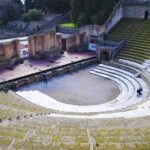
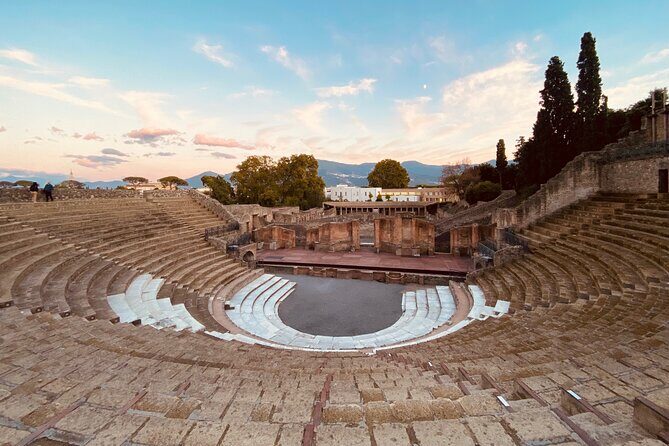
You’ll start with the Odeon (Small Theater), a more intimate venue that hosted about 1,400 people for musical performances and poetry readings. The Teatro Grande (Large Theater) follows—this amphitheater could hold 5,000 spectators and showcases the Romans’ engineering prowess. One reviewer noted that their guide “brought the historical construction of Pompeii and everyday life for its citizens, as it was in 79 AD, to life,” and these theaters are where that comes alive. Imagine sitting in those stone seats and picturing the performances, the social mixing, the cultural life of a prosperous Roman city.
Lots of walking. Lots to steps and slippery surfaces. Moderate balance required. So much to see it’s amazing!! Our tour guide was so helpful she was very knowledgeable and professional. A great guide!! 100%
You know when you are on a good tour when others try to stop and listen to your information! Perfect morning with so much information still taking time to process everything- thank you so very much
Great experience with expert and charming guide. Pompei was made really interesting and her knowledge was superb.
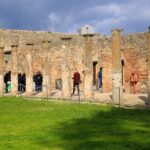
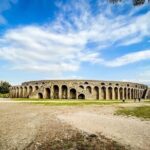
The Quadriporticus of the Theaters—the gladiators' barracks—reveals a completely different side of Pompeian society. The contrast between the refined theaters and the brutal reality of gladiatorial training creates a more nuanced picture of the city than you'd get from guidebooks.
The Civic Heart: Forum, Markets, and Government
The Forum represents Pompeii's civic center, where business, politics, and social life intersected. The Granai del Foro (Forum Granaries) shows where grain was stored—practical information that connects you to the city's economy and food systems. The Basilica served as the courthouse and commercial center. These weren't monumental structures for their own sake; they were functional buildings that reveal how Romans actually organized their society.
The Macellum (meat and fish market) and the Edificio di Eumachia (wool market) get at something most travelers skip: where people bought groceries. Your guide will explain the social hierarchy visible in these spaces, the role of commerce, and how these markets connected Pompeii to trade networks across the Mediterranean. As one traveler mentioned, guides on this tour excel at "stories about everyday Roman life."
The Intimate Side: Houses, Baths, and Daily Life
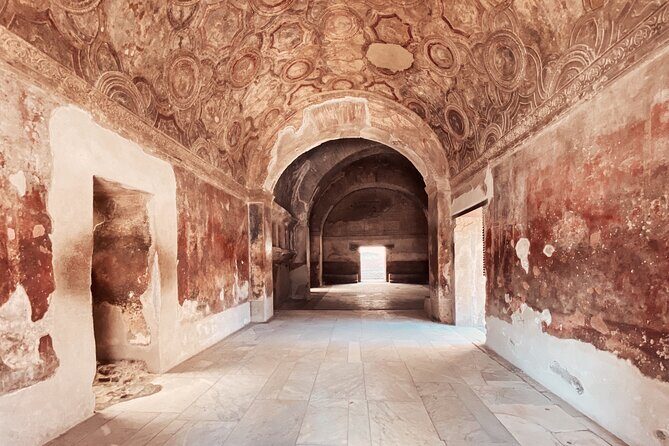
The Stabian Baths reveal bathing culture—not as a luxury but as a central social ritual. Romans didn't just get clean here; they exercised, socialized, conducted business, and relaxed. The Casa del Poeta Tragico (House of the Tragic Poet) with its famous "Cave Canem" (Beware of Dog) mosaic shows how even middle-class homes featured sophisticated art and mosaics. The Casa del Menandro offers a more elaborate example with elaborate frescoes and mosaics that suggest significant wealth.
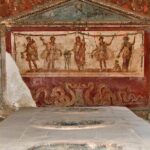
The Termopolio di Vetuzio Placido is particularly illuminating—it's essentially a Roman fast-food restaurant with a counter where customers could grab hot food. These establishments reveal that not everyone had servants preparing meals at home; there was an entire working class that relied on prepared food, much like modern urban dwellers.
The Fullonica di Stephanus (laundry) might sound mundane, but it's where the tour guide's expertise becomes invaluable. They'll explain the urine-based cleaning process, the labor involved, and what this tells us about the city's working poor. These aren't glamorous spaces, but they're authentic glimpses into how ordinary people lived.
The Controversial Stop: The Lupanar
The Lupanar (brothel) appears on this itinerary, and it's worth noting that it generates some of the most engaged conversations on tours. The explicit frescoes and graffiti provide uncomfortable but honest evidence about sexuality, gender roles, and social stratification in Roman society. A skilled guide will contextualize this without sensationalizing it—explaining the economics, the legal status of workers, and what the space reveals about Roman attitudes toward sexuality and labor.
You can also read our reviews of more private tours in Pompeii


The Guide Experience: Where This Tour Really Shines
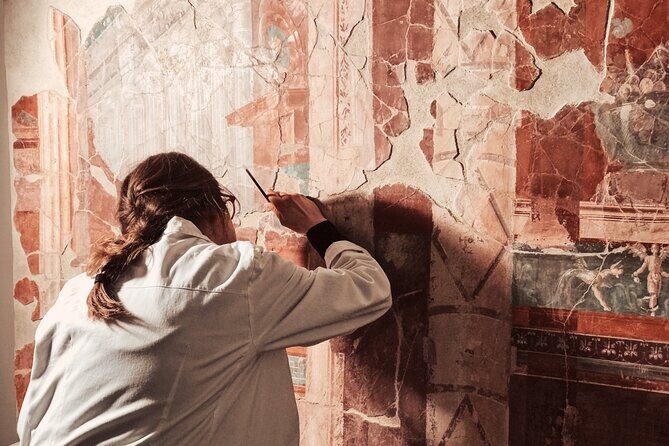
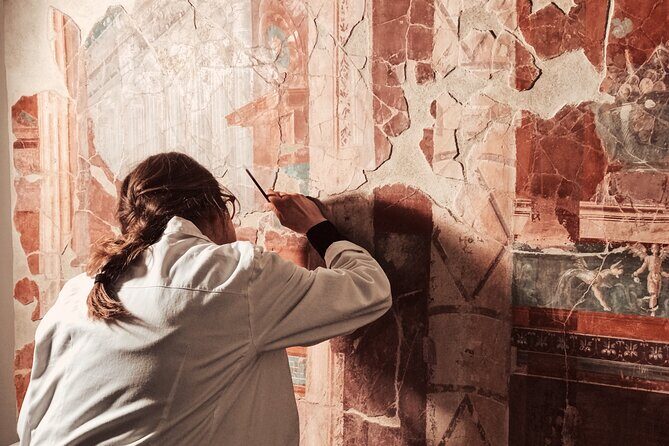
Flipping through the reviews, the single most consistent praise goes to the guides themselves. Travelers mention specific names repeatedly: Luisa, Amadeo, Eliana, Maria, Roberto, Mariagrazia. That's not accidental—these are real people with genuine expertise and passion for the subject.
One traveler wrote: "Her passion for archeology and history was evident in her detailed explanations and vivid storytelling." Another noted: "You know when you are on a good tour when others try to stop and listen to your information!" That last comment is telling—the quality of the guide is so evident that random travelers literally stop to eavesdrop.
Several reviews specifically mention guides adapting to travelers' physical needs, managing crowds skillfully, and fielding detailed historical questions without missing a beat. One guest with mobility challenges noted their guide "adapted the tour to my mobility challenges and pace so that i could keep up." Another mentioned their guide was "super helpful" with "steep steps and slippery surfaces." This isn't generic customer service; it's professional attentiveness.
The guides also demonstrate real flexibility. Multiple reviews mention guides tailoring the tour based on travelers' interests—spending more time on architecture if that's your interest, focusing on social history if that matters more to you, or adjusting the pace based on the crowd conditions that day. One traveler said: "She was able to steer us to spots to fill up water and catered our tour to our interests."
Practical Considerations and Logistics
Skip-the-Line Access
The skip-the-line feature requires advance planning. You need to purchase entrance tickets online beforehand—the tour operator provides a link, but the transaction happens separately. This isn't included in the tour price, which caught at least one traveler off guard. Budget €19 per adult, and note that children under 18 get free entrance. One reviewer was frustrated by this, noting: "You will be asked to stand on the road following a website only in Italian language trying to purchase your entrance." Fair warning: the Italian government website isn't always intuitive for international visitors, but it's doable if you plan ahead.
The benefit of skip-the-line is substantial, especially during peak season. You're not losing 45 minutes to an hour in queues—time you can spend actually seeing the site with expert commentary.
Timing and Group Size
The tour books about 55 days in advance on average, which suggests it's popular but not impossible to arrange on moderate notice. The private nature of the experience means no competing for your guide's attention with 30 other travelers. One traveler noted: "We had a private tour for 5 of us and very much appreciated the small size of the group as we could ask as many questions as we liked."
The three-hour duration is actually well-calibrated. It's long enough to see the major sites and absorb information, but short enough that you're not exhausted by the heat, the walking, or the cognitive load of processing ancient history. If you want a more comprehensive experience, you might combine this with a museum visit to the Pompeii museum in Naples, or book a longer tour that includes Herculaneum.
Meeting Point and Transportation
You'll meet at Hortus Pompei, a restaurant and garden bar near Porta Marina Superiore, and the tour ends at the same location. This is convenient if you're already in Pompeii, but you'll need to arrange your own transportation to get there. Pompeii is accessible via train from Naples (about 30 minutes on the Circumvesuviana line), and the meeting point is near the main entrance. The tour is near public transportation, so you're not isolated.
Weather Considerations
The tour operates rain or shine, but poor weather triggers a cancellation and rebooking option. Pompeii in summer heat can be intense—you're walking through ancient streets with minimal shade. Bring water, sun protection, and comfortable walking shoes. Multiple reviews mention "lots of walking, lots of steps and slippery surfaces," so this isn't a leisurely stroll. You're doing real hiking through archaeological terrain.
The Value Question: Is It Worth the Price?
At roughly $320+ per person all-in, this tour isn't budget travel. But let's contextualize it. A self-guided visit to Pompeii will cost you €19 in entrance fees and potentially hours of confusion trying to understand what you're looking at. A large-group tour might run $80-120 and give you 20 minutes of rushed commentary at each site while you're jostling with 40 other travelers.
This tour gives you three hours with an actual archaeologist, skip-the-line access, and the ability to ask detailed questions. One traveler summed it up: "Having a private tour guide was the best way to see Pompeii. It not only gave structure rather than roaming but provided us with incredible historic information."
If you're a history enthusiast, someone who asks lots of questions, or a traveler who values understanding over just checking boxes, this tour delivers exceptional value. The 4.9-star rating across 564 reviews—with the vast majority being five stars—suggests consistent quality across multiple guides.
If you're on a tight budget or prefer solitary exploration, skip this and do a self-guided visit with a good guidebook. But if you want to actually understand Pompeii rather than just see it, this tour is worth the investment.
Booking Details and Cancellation Policy
The tour requires advance confirmation at time of booking. You can cancel up to 24 hours before the tour for a full refund, which provides reasonable flexibility. Changes made less than 24 hours out won't be accepted, and poor weather can trigger a reschedule or refund.
Service animals are allowed, and the tour accommodates most fitness levels—though the walking and stairs are genuine challenges. One traveler noted: "Lots of walking. Lots of steps and slippery surfaces. Moderate balance required." This isn't a tour you do on a bad knee or while pushing a stroller, but people with mobility challenges can participate if they communicate their needs in advance.
The confirmation comes via mobile ticket, so you don't need to print anything or worry about lost paperwork.
You can also read our reviews of more tours and experiences in Pompeii


Pompeii Private Tour with an Archaeologist and Skip The Line – 3 hours
"Amadeo was a fantastic tour guide who truly made our Pompeii experience incredible. Deeply knowledgeable, friendly, and very welcoming, he made ou..."
Frequently Asked Questions
Q: Is the entrance fee to Pompeii included in the tour price?
A: No, entrance fees are separate. Adults pay €19 (roughly $21 USD), and children under 18 enter free. The tour price of $302.32 covers only the guide and skip-the-line access. You'll purchase entrance tickets online before your tour date.
Q: How far in advance should I book this tour?
A: The tour books about 55 days in advance on average, but that's not a hard deadline. You may find availability with shorter notice, especially during shoulder seasons. We'd recommend booking at least 2-3 weeks ahead to secure your preferred guide and date.
Q: Will I really skip the ticket lines?
A: Yes, if you purchase your entrance tickets online in advance as instructed. You'll avoid the main ticket queues and go directly into the site with your mobile ticket. This saves 30-60 minutes during peak season.
Q: What's the physical difficulty level of this tour?
A: The tour involves considerable walking, multiple sets of stairs, and uneven surfaces. Reviewers specifically mention "lots of steps and slippery surfaces" requiring "moderate balance." It's not suitable for people with significant mobility limitations, though guides can adapt the pace and route if you communicate your needs in advance.
Q: Can I customize the tour based on my interests?
A: Yes. Multiple reviews mention guides tailoring the tour to travelers' specific interests—spending more time on architecture, social history, daily life, or other aspects. Communicate your interests when booking or at the start of the tour.
Q: What time of day does the tour operate, and how long does it take?
A: The tour lasts approximately 3 hours. Specific start times aren't listed in the available information, so you'll need to confirm timing when you book. The tour is offered in English.
Q: What should I bring for this tour?
A: Bring plenty of water, sun protection (hat, sunscreen, sunglasses), and comfortable walking shoes with good grip—the ancient stone surfaces can be slippery. The site offers minimal shade, so plan for heat exposure if visiting in summer months.
Q: What's the cancellation policy if my plans change?
A: You can cancel free of charge up to 24 hours before the tour starts. Cancellations made less than 24 hours before the tour won't be refunded. If poor weather forces cancellation, you'll be offered a different date or full refund.
Bottom Line: This private archaeology-led tour transforms Pompeii from a confusing jumble of ancient stones into a coherent, compelling story about how Romans actually lived. You're paying a premium price, but you're getting expert-level knowledge, skip-the-line access, and a completely private experience tailored to your interests. The guides consistently earn praise for their passion, flexibility, and ability to connect historical details to human experience. If you're genuinely interested in understanding ancient Roman civilization—not just photographing famous ruins—this tour delivers exceptional value. Budget the entrance fee separately, plan for considerable walking and heat, and bring water. But if you do those things, you'll come away from Pompeii with a far richer understanding than you would on your own.