
Rainy Days in Tokyo With Kids
It rained for three of our five days in Tokyo. Properly rained — not a gentle drizzle, but thick sheets of water bouncing off pavements. The children stood at the hotel window looking devastated. I’ll be honest: so did I, for about ten minutes. Then we grabbed cheap umbrellas from the 7-Eleven downstairs and had some of the best days of our entire trip.
Here’s the thing about rain in Tokyo. It doesn’t stop anything. The city is built for it. Stations connect to underground shopping malls. Department stores have entire floors of entertainment. Museums are world-class and half of them are free for children. Nobody cancels plans because of rain in Japan — they just carry on, umbrella in hand, and so should you.
Tokyo’s rainy season runs roughly from June to early July, but rain can catch you out at any time of year. Autumn typhoon season brings downpours. Spring has its damp patches. Even winter mornings can turn grey without warning. We’ve visited three times now and been rained on during every trip. It has never ruined a day. Not once.
Your Rainy Day Survival Kit
Before we get into the good stuff, a quick practical note. The moment you see clouds gathering, pop into any convenience store — 7-Eleven, Lawson, FamilyMart, they’re on every corner — and buy a clear plastic umbrella. They cost ¥500–800 (~£2.60–4.20) and they’re brilliant. Transparent, so the kids can see where they’re going, sturdy enough for a proper downpour, and cheap enough that you won’t care if someone nicks one from the umbrella stand at a restaurant (this happens constantly, to everyone, and it’s the only minor crime in Japan).
For smaller children, the 100-yen shops — Daiso, Seria, Can Do — sell plastic ponchos for next to nothing. Buy several.
Waterproof shoes help. Tokyo pavements get slippery and some station platforms have smooth tiles that turn into skating rinks. If you’ve packed wellies, great. If not, shoe shops are everywhere.
And remember: trains are dry. The Tokyo Metro connects to almost everywhere on this list without stepping outside. A rainy day in Tokyo is mostly a “walk fifteen metres in the rain between the station exit and the building entrance” kind of day.
Free Museums (Yes, Really Free)
The National Museum of Nature and Science in Ueno Park is completely free for under-18s. Let me say that again, because I still find it staggering. A full-scale, multi-floor science museum with dinosaur skeletons, a space exhibit, hands-on experiments, and a massive blue whale suspended from the ceiling — free for every child in your group. Adult tickets are a token fee. You could spend half a day here without trying.
Our kids gravitated straight to the dinosaur hall (obviously) and then refused to leave the interactive physics section where they could build earthquake-resistant structures and watch them shake on a vibrating table. Whole thing felt like the Natural History Museum in London, except less crowded and with better signage.
If your children lean more towards technology, Miraikan (the National Museum of Emerging Science and Innovation) on the Odaiba waterfront is outstanding. It’s ¥630 (~£3.30) for adults and free for under-6s. There’s a humanoid robot that gives presentations, an entire floor about the earth’s systems, and an incredible globe display showing real-time weather patterns. Our eight-year-old called it “the coolest thing I’ve ever seen,” which given he’d been to the Pokémon Center the day before, felt like high praise.
Indoor Play Centres That Actually Deliver
KidZania Tokyo is the one every parent in our travel group raved about. It’s a miniature city where children take on real jobs — firefighter, pilot, dentist, pizza chef, news anchor — and earn pretend money they can spend in the KidZania shops. Tickets run ¥3,500–5,500 (~£18–29) for children depending on age and time slot, which isn’t cheap, but you’ll get four to five hours out of it easily. Our daughter wanted to be a surgeon. Our son wanted to be a bus driver. Both emerged flushed with achievement and absolutely shattered. Perfect.
Then there’s teamLab. If you haven’t seen photos of this, you will — it’s the one with the immersive digital art installations where light and colour pour across floors, walls, and ceilings in constantly shifting patterns. teamLab Planets has you wading through water while projections of koi fish scatter beneath your feet. teamLab Borderless (now relocated to Azabudai Hills) is a labyrinth of rooms where art bleeds from one space to the next. Tickets are ¥3,800 (~£20) for adults and ¥1,500 (~£8) for children.
I’ll be blunt: I thought it would be gimmicky. It wasn’t. The kids were open-mouthed. So was I. Even our teenager, who makes a point of being unimpressed by everything, stood in the infinity mirror room and quietly said “okay, that’s actually incredible.” Worth every penny, but particularly good on a grey day when you need something that feels like pure magic.
Department Stores Are Not What You Think
British department stores are for buying towels and feeling slightly depressed. Japanese department stores are theme parks in disguise.
Takashimaya in Shinjuku has entire floors devoted to toys, games, and children’s clothing. Isetan, also in Shinjuku, has a kids’ section that our lot could have browsed for hours. Many of the big department stores have rooftop play areas — some covered, so they work perfectly in the rain — where small children can burn off steam while you sit with a coffee and pretend you’re not exhausted.
For specific obsessions: the Pokémon Center in Shibuya is vast. Wall-to-wall merchandise, exclusive items you can’t get anywhere else, and a general atmosphere of barely contained hysteria among children aged four to forty. The Nintendo Store is right next door in the Shibuya Parco building, spread across multiple floors, and if your kids are into Mario or Zelda, you should budget at least an hour. Probably two. We lost our youngest in the plushie section for a genuinely alarming twelve minutes.
Akihabara for Older Kids and Teens
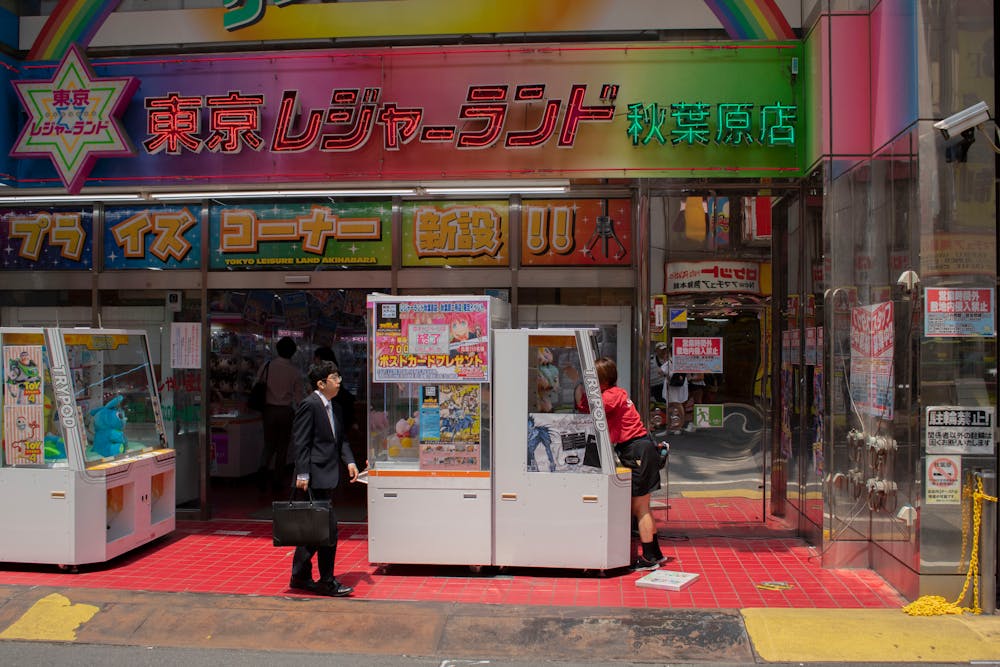
If your children are past the soft-play age and into anime, gaming, or electronics, Akihabara is a rainy-day goldmine. This is Tokyo’s famous “Electric Town” — blocks and blocks of multi-storey buildings stuffed with arcade games, manga shops, collectible figurines, retro game consoles, and general geek paradise.
The arcades alone can eat an entire afternoon. Games start from ¥100 (~50p) per play — rhythm games, crane games (the kids won approximately nothing but had a wonderful time trying), racing simulators, photo booths that make you look like an anime character. Many buildings are connected or have covered walkways, so you barely need your umbrella.
Fair warning: some shops in Akihabara cater to adult tastes and the signage doesn’t always make this obvious. Stick to main streets and larger buildings — Yodobashi Camera, Mandarake (adult sections clearly marked), and the various Sega and Taito arcade buildings.
Tokyo Station: Underground Everything
Tokyo Station has a secret weapon for rainy days: you never need to go outside. Not once. The underground area beneath and around the station is enormous, and two spots in particular are perfect for families.
Character Street is an underground shopping arcade with official shops for every Japanese character brand you can think of. Sanrio. Ghibli. Snoopy. Rilakkuma. Ultraman. About 30 shops in a single corridor. We came for twenty minutes and stayed for ninety.
Ramen Street is in the same underground complex. Eight hand-picked ramen restaurants, all excellent, all with picture menus that make ordering with children straightforward. We tried Rokurinsha, famous for its tsukemen dipping noodles — one of the best meals of our trip. Queues can be long but they move fast. For more on eating in Japan with kids, we’ve written a separate guide.
Between Character Street, Ramen Street, and the various station shops, you could happily spend two or three hours at Tokyo Station without a single raindrop touching you.
Aquariums
Tokyo has two aquariums that are genuinely worth the entrance fee, not just “well, it’s raining, I suppose this will do” territory.
Sumida Aquarium sits inside the Tokyo Skytree complex, so you can combine it with a trip up the tower if the weather clears. Tickets are ¥2,500 (~£13). The jellyfish section is beautiful. The penguin enclosure is one of the best we’ve seen — open-topped, with penguins doing that thing where they stand very still and then suddenly sprint for no reason. Children find this endlessly hilarious. So do I.
Maxell Aqua Park Shinagawa is the flashier option — think aquarium meets nightclub, with light shows, music, and a dolphin performance that’s choreographed to projections. Also ¥2,500 (~£13). It’s right next to Shinagawa Station, making it dead easy to reach. Smaller than Sumida but more immediately impressive. Our kids preferred this one. I preferred Sumida. Both are good rainy-day picks.
Odaiba: Indoor Everything
Odaiba is a man-made island in Tokyo Bay and it’s packed with indoor entertainment. Getting there on the Yurikamome monorail is half the fun — the driverless train crosses Rainbow Bridge with views across the water (sit at the front, the kids will love it).
Once there, DiverCity Tokyo Plaza has the famous life-size Gundam statue outside (worth a look even in the rain — it’s enormous) and plenty of shops inside. Decks Tokyo Beach has Legoland Discovery Centre, Madame Tussauds, and trick-art museums.
Joypolis is Sega’s indoor theme park — rollercoasters, VR rides, arcade games. Noisy, flashy, and teenagers love it. Anyone over about eight should have a brilliant time.
Between Miraikan, the malls, and Joypolis, Odaiba fills a full rainy day easily. Add lunch at a food court and you’ve got a complete plan that doesn’t involve a single umbrella.
Karaoke With Kids
Do this. Seriously. Even if you think it sounds terrible.
Japanese karaoke is nothing like the pub version back home. You get a private room — just your family, no strangers — with a touch-screen song system that has thousands of English-language tracks alongside Japanese ones. Tambourines. Disco lights. A phone on the wall to order drinks and snacks directly to your room.
Prices start from about ¥300 (~£1.60) per person for 30 minutes, and most places offer family-friendly daytime rates that are even cheaper. Chains like Big Echo, Joysound, and Karaoke Kan are everywhere and all welcome children. Our kids belted out Disney songs for a solid hour and declared it the highlight of their week.
It’s also genuinely useful as a pit stop. Tired children? Overstimulated toddler? Book a room, order some juice, and sit in blissful semi-darkness while the kids entertain themselves. Nobody minds if you don’t sing. Though you will.
Don’t Let the Rain Put You Off
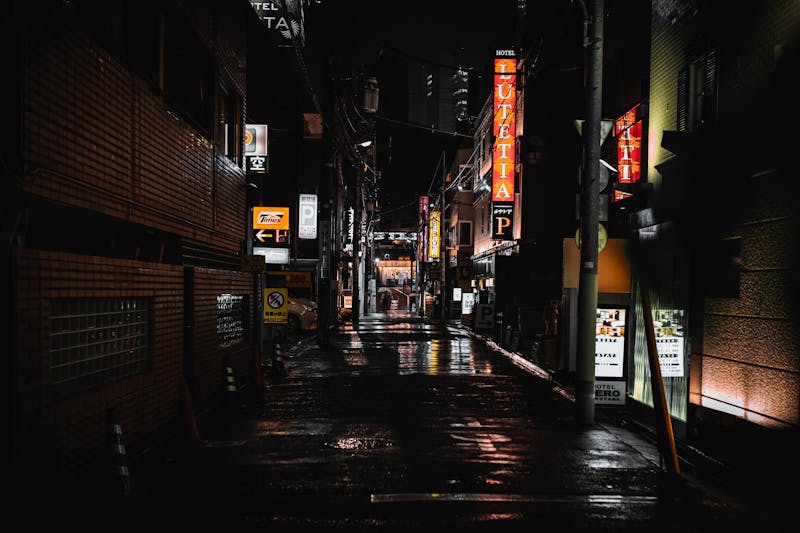
We’ve had some of our favourite Tokyo memories on rainy days. Streets are quieter. Queues shorter. There’s something about ducking into a warm ramen shop while rain hammers the pavement outside that just feels right. Trains run on time. Shops stay open. Kids in yellow raincoats splash through Ueno Park. Life carries on.
If you’re planning a longer stay, our guide to where to stay in Tokyo with kids covers the best areas for families. And for broader trip planning, have a look at our family travel Japan guide, which pulls everything together.
Pack an extra pair of socks. Buy the cheap umbrella. Get out there. Tokyo in the rain is still Tokyo — and Tokyo with kids is brilliant, whatever the weather.