
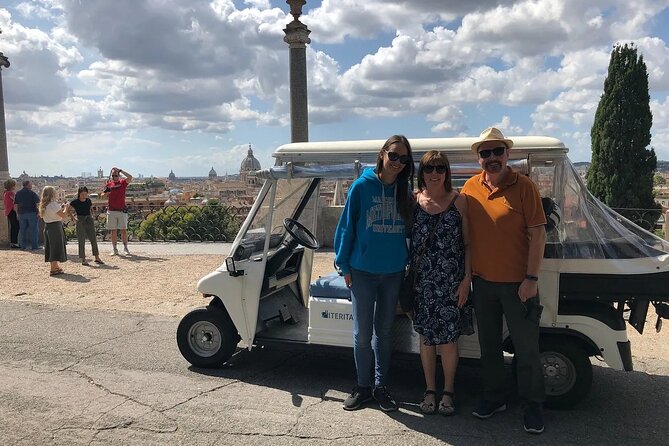
I like this experience for a simple reason: in about 3 hours, you cover a lot of Rome without the punishment of constant walking. You’ll ride a private golf cart (or eFiat), get an English-speaking driver, and hop between major landmarks plus lesser-expected viewpoints.
What I really like is how the tour is set up for your time and energy. Reviews highlight that guides (like Francesco, Yvonna, Hadi, and Mario) are knowledgeable and willing to tailor stops, and the route is designed to use quieter backstreets to avoid traffic snarls.
One thing to keep in mind: like any guided experience, quality can vary by guide. A small number of travelers felt their guide didn’t talk much, so you may want to choose the departure time and confirm who’s leading your tour when possible.
- Key points before you go
- How a golf cart tour changes Rome fast
- Price and logistics: what you’re really paying for
- Pickup and meeting: start smooth, not stressed
- Private tour pace: short stops that add up
- The route: what you’ll see in order (and why each stop works)
- Pantheon: fast context, easy orientation
- Piazza Navona: Baroque Rome in a lively square
- Trevi Fountain: quick hit, classic photo moment
- Spanish Steps: a short climb, big visual payoff
- Campo de’ Fiori: color, noise, and a darker story in the center
- Villa Borghese: park time without the big commitment
- Palatine Hill: the “first nucleus” idea sticks
- Circo Massimo: ancient entertainment, seen from modern streets
- Aventine Hill: one of the Seven Hills, quieter vibes
- Piazza del Popolo: a classic finishing snap
- Chiesa di Sant’Ignazio di Loyola: church details you may otherwise miss
- What guides get right (based on travelers’ stories)
- Comfort, crowds, and cobblestones: plan for Rome reality
- Photo strategy: how to get good shots with short stops
- Value check: is it worth 3.26?
- Weather and timing: how departures help
- Cancellation policy: low risk planning
- Should you book the Rome golf cart tour?
- FAQ
- How long is the Rome golf cart tour?
- What does the tour cost?
- Is hotel pickup included?
- Do I need entry tickets for the stops?
- What sites are included on the route?
- Is lunch included?
- Is the tour in English?
- Is this a private tour?
- What is the cancellation policy?
Key points before you go
 1 / 6
1 / 6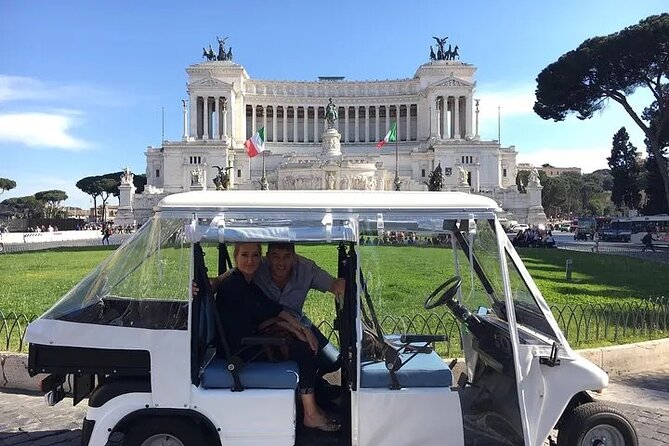 2 / 6
2 / 6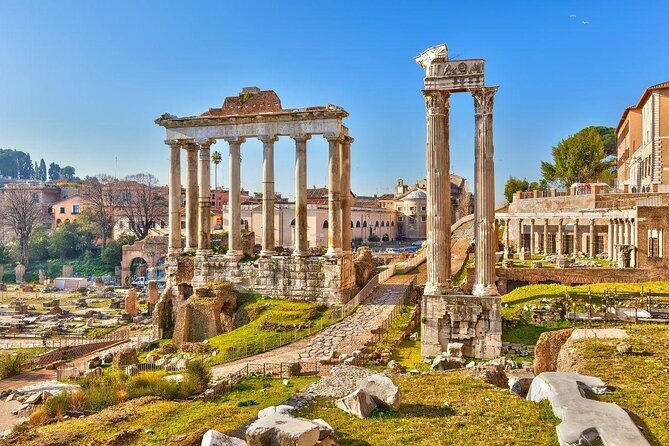 3 / 6
3 / 6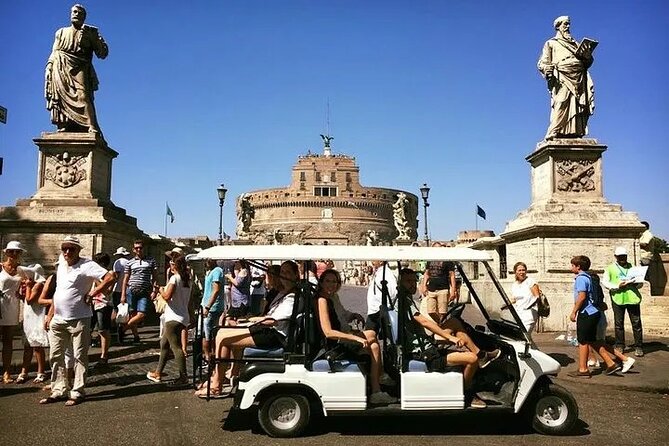 4 / 6
4 / 6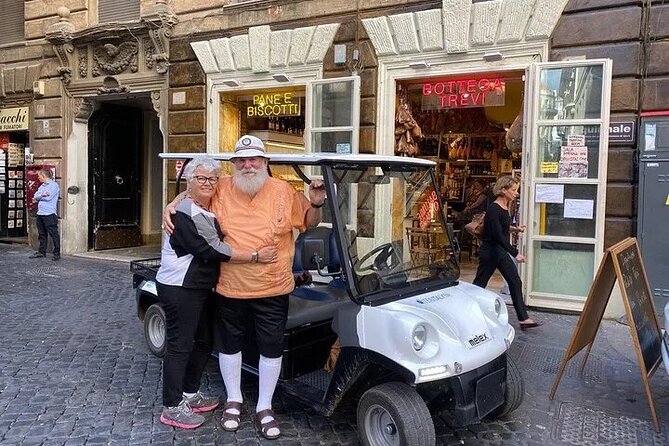 5 / 6
5 / 6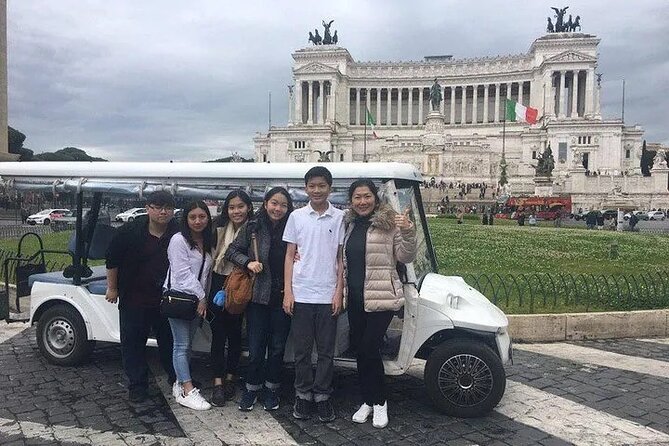 6 / 6
6 / 6- Hotel pickup in central Rome: Start relaxed instead of wrestling with taxis and landmarks.
- Private group: Only your group rides together, which keeps the pace comfortable.
- Big sights plus smart photo stops: Pantheon, Navona, Trevi, Spanish Steps, and more, with frequent short stops.
- Skip some traffic: The whole pitch is using backstreets to keep the tour moving.
- Free cancellation up to 24 hours: Easy to change plans if Rome weather or timing shifts.
- Entry tickets and lunch aren’t included: Budget separately for anything you need to pay for inside.
How a golf cart tour changes Rome fast
Rome is wonderful, but it can be slow. Streets are crowded, sidewalks get swallowed by crowds, and the distance between the “must-sees” is more than you think. This tour’s big advantage is that it’s built for efficient sightseeing while still giving you time to look around and take photos.
You also get the benefit of a guide who can explain what you’re seeing while you’re in motion. In reviews, people repeatedly praised drivers for turning a quick stop into something memorable, not just a photo opportunity. And since you’re not walking between each highlight, you stay fresher for later plans.
Price and logistics: what you’re really paying for
At $163.26 per person for roughly 3 hours, you’re paying for transport, a trained English-speaking guide/driver, and a route that can be hard to manage on your own in limited time.
Here’s the value logic I’d use if I were deciding for myself:
- If it’s your first trip, you’ll get quick orientation and a sensible circuit through central Rome.
- If you’re traveling with kids, mobility limits, or you just don’t want a leg-burning day, the cart is a real comfort upgrade.
- If you’re trying to hit a long list (Pantheon, Navona, Trevi, Spanish Steps, and more), grouping those stops into one guided route can be worth it.
What’s not included is important: entry tickets aren’t included, and lunch isn’t included. Also, meeting point details matter. The tour starts at Pic Nic – Just Amir srl, Piazzale delle Canestre, SNC, 00197 Roma. If you’re not in central Rome, pickup may be arranged via a private car if you contact them.
Pickup and meeting: start smooth, not stressed
One of the most traveler-friendly parts is the free hotel pickup for private experiences in central Rome. Reviews mention that guides were on time and accommodating, and some travelers noted the guide waiting for them when getting a cab was tricky.
If you’re staying outside the pickup zone, plan to contact the operator ahead of time. The tour notes that if you’re not in Rome center, they might arrange a private car—so you’ll want that confirmed instead of hoping you’ll find a spot easily on arrival.
Private tour pace: short stops that add up
This is a private tour/activity, meaning only your group participates. That tends to make the experience more relaxed than big-group bus tours, especially for questions and photo moments.
The itinerary is built around lots of short stops—often around 5 to 15 minutes—so you’re constantly seeing new streets and landmarks. It’s not the kind of tour where you linger for an hour in one place, but it’s ideal when you want a broad overview and you’ll come back later for deeper visits.
The route: what you’ll see in order (and why each stop works)
Below is the stop-by-stop plan, plus how each one tends to feel from the cart.
Pantheon: fast context, easy orientation
You start at the Pantheon, a former Roman temple that became a Catholic church in 609 AD. The stop is listed as 15 minutes, and the entry ticket is marked free.
Why this matters: even if you’ve seen photos, the Pantheon’s scale and layout hit harder in person. In a short visit, a good guide can help you notice the big features without turning it into a 2-hour lecture.
Piazza Navona: Baroque Rome in a lively square
Next is Piazza Navona, built on the remains of the Stadium of Domitian. You get another 15-minute stop, and entry is marked free.
This is a smart stop because the square itself is the attraction. You can take photos, watch street life, and get a feel for how Rome turns ancient space into everyday life.
Trevi Fountain: quick hit, classic photo moment
Then comes Trevi Fountain, a signature 18th-century fountain associated with Nicola Salvi and later completion work by others. The stop is 10 minutes, with entry marked free.
A quick note on expectations: Trevi can be packed. A guided cart tour helps because you’re usually arriving as part of a plan, not wandering in circles. You’ll still want to keep your photos moving efficiently.
Spanish Steps: a short climb, big visual payoff
You’ll stop at the Spanish Steps for 5 minutes. This is plenty to see the layout—between Piazza di Spagna and Piazza Trinità dei Monti, dominated by the church at the top.
Best use of this time: look up and down the staircase, snap a few photos, and decide if you want to return later for a longer walk.
Campo de’ Fiori: color, noise, and a darker story in the center
Next is Campo de’ Fiori for 5 minutes. The square centers on the statue of philosopher Giordano Bruno, burned alive in the piazza’s center.
This stop is valuable because it shows another side of Rome: not only postcard monuments, but also places where history includes uncomfortable truths.
Villa Borghese: park time without the big commitment
The itinerary includes Villa Borghese, described as a large public landscape garden with buildings, museums, and attractions. No set minutes are listed for this stop, but it’s included as part of the circuit.
This is the kind of stop that can feel like relief from dense crowds. If your guide gives you pointers on what to notice from the cart or where the atmosphere shifts, it can be a nice reset.
Palatine Hill: the “first nucleus” idea sticks
You also visit Palatine Hill, described as one of the oldest parts of Rome and called the first nucleus of the Roman Empire. Again, the plan lists it but doesn’t give specific minutes.
If you’re the type who loves understanding why Rome is where it is, Palatine Hill is a great anchor. Even a brief stop can make later visits to the Roman Forum and Colosseum make more sense.
Circo Massimo: ancient entertainment, seen from modern streets
The tour includes Circo Massimo (Circus Maximus), listed for 5 minutes, with entry marked free. It was the first and largest stadium in ancient Rome.
This one works well in a golf cart format because you’re seeing how the ancient venue fits into the city’s layout today—wide open space where a guide can help you picture the scale.
Aventine Hill: one of the Seven Hills, quieter vibes
Next is Aventine Hill, one of Rome’s Seven Hills. Like the other hill stops, it’s included as part of a short overview rather than a long hike.
If you like Rome’s viewpoint moments—where the city feels bigger than you expected—Aventine Hill is usually a good palate cleanser after more tightly packed areas.
Piazza del Popolo: a classic finishing snap
You end the sightseeing loop at Piazza del Popolo for 5 minutes, inside the northern gate area once called Porta Flaminia.
This stop is often a nice “you made it” moment. It also gives you a central-ish place to reconnect with the rest of your day.
Chiesa di Sant’Ignazio di Loyola: church details you may otherwise miss
Finally, there’s Chiesa di Sant’Ignazio di Loyola for 5 minutes, and entry is marked free.
Why include a Jesuit church in a highlights tour? Because it’s a masterclass in design: the itinerary notes its inspirations from the nearby Church of the Gesù and details the pilasters, columns, windows, niches, and architectural inspiration. Even in five minutes, a guide can point out the parts you’d otherwise walk past.
What guides get right (based on travelers’ stories)
The praise in reviews is consistent: guides and drivers don’t just “drive and point.” People talk about storytelling, local driving knowledge, and answering questions in a way that makes the landmarks click.
Some guide names you’ll see in traveler feedback:
- Francesco (multiple mentions for professionalism, friendliness, and excellent English)
- Yvonna (praised for knowledge and friendliness)
- Hadi (praised as a great storyteller and going above expectations)
- Mario and Claudio (praised for knowledge and effort)
- Pietro and Alessi (praised for local insight and route knowledge)
- Ivanka and Alexxis (praised for accommodating, fun, and knowledgeable guiding)
- Sabrina (praised for spectacular views and history, with a note that cobblestones are serious)
A few reviews also mention comfort details like seatbelts (one traveler specifically noted them). That’s not stated as a universal feature in the core tour description, but it’s a good sign to ask about if you care.
Comfort, crowds, and cobblestones: plan for Rome reality
Golf carts sound easy, but Rome is still Rome. Expect cobblestones and uneven surfaces during turns and short transitions. One traveler called out that it’s a bumpy ride because of the cobblestones—fun, but not the smoothest.
If you’re sensitive to bumps, plan to sit where you feel most secure and keep expectations realistic. The upside is that you’re avoiding long stretches of walking between stops.
In terms of who this suits, reviews and the tour notes point to broad participation: most travelers can participate, and service animals are allowed.
Photo strategy: how to get good shots with short stops
With many stops under 15 minutes, you’ll get the best photos if you move quickly and think in advance:
- Take one wide shot first, then step in for close details.
- If a stop is crowded (Trevi Fountain often is), don’t fight the crowd for a perfect angle—aim for a clear frame and keep moving.
- Use your cart moments for perspective. A good guide often knows where you’ll see the landmark best from the route.
The best tours feel timed, not rushed. Multiple reviews say the carts were comfortable and the experience felt flexible, with time for photo breaks and quick questions.
Value check: is it worth $163.26?
For me, this tour earns its price when you match it to your travel style:
- You want major highlights without spending your whole day walking.
- You want a guide to connect facts to what you’re seeing.
- You want a first-day layout so your later self-guided time feels smarter.
It may not be as good value if you’re already deeply comfortable navigating Rome on foot and you’d rather spend the same day doing longer individual visits at your own pace.
One more value note: the reviews report a 4.9 rating with 96% recommending the experience. That’s a strong signal, but one low score also mentions a guide who didn’t provide much narration and seemed distracted. That’s a reminder that guide personality matters here.
Weather and timing: how departures help
The tour description notes numerous departure times, which helps you dodge the worst traffic and choose a time that fits your energy level.
If you’re doing this on a first day, you’ll benefit from the orientation. If you’re fitting it into a tight schedule, the cart format is also a lifesaver because you don’t lose half the day just getting between neighborhoods.
Cancellation policy: low risk planning
Good news: free cancellation is available. You can cancel up to 24 hours in advance for a full refund. If you cancel less than 24 hours before the start time, the amount paid isn’t refunded.
Also, the experience has a minimum traveler requirement. If it doesn’t meet that minimum, you’ll be offered another date/experience or a full refund.
Should you book the Rome golf cart tour?
If it’s your first time in Rome or you want a smart way to hit a lot of highlights without over-walking, I’d call this a strong yes. The winning ingredients are guides, great views from the route, and a format that makes Rome feel manageable.
Book it if you:
- Want an efficient highlights overview in about 3 hours
- Prefer less walking and more seeing
- Like having an English-speaking guide explain what you’re seeing
- Need hotel pickup to reduce stress
Think twice if:
- You dislike rides with cobblestones or you need long, slow museum-style time at one site
- You’re the type who only trusts self-guided wandering and doesn’t care much about narration
If you book, take advantage of the short stops: show up ready to move, ask your guide one or two questions right away, and plan to return later to any site that pulls you in.
Rome Golf Cart Tour: Highlights of the Eternal City
FAQ
How long is the Rome golf cart tour?
It runs for about 3 hours.
What does the tour cost?
The listed price is $163.26 per person.
Is hotel pickup included?
Yes. There is free hotel pickup in central Rome for private experiences. If you are not in Rome center, you should contact the operator to see if a private car can be arranged.
Do I need entry tickets for the stops?
Entry tickets are not included. The itinerary notes some stops with free admission, but you should still expect you may need tickets depending on the specific site.
What sites are included on the route?
Stops include the Pantheon, Piazza Navona, Trevi Fountain, Spanish Steps, Campo de’ Fiori, Villa Borghese, Palatine Hill, Circo Massimo, Aventine Hill, Piazza del Popolo, and Chiesa di Sant’Ignazio di Loyola.
Is lunch included?
No. Lunch is not included.
Is the tour in English?
Yes. The tour is offered in English.
Is this a private tour?
Yes. It’s a private tour/activity, and only your group participates.
What is the cancellation policy?
You can cancel for a full refund up to 24 hours in advance. If you cancel less than 24 hours before the start time, the amount paid isn’t refunded.