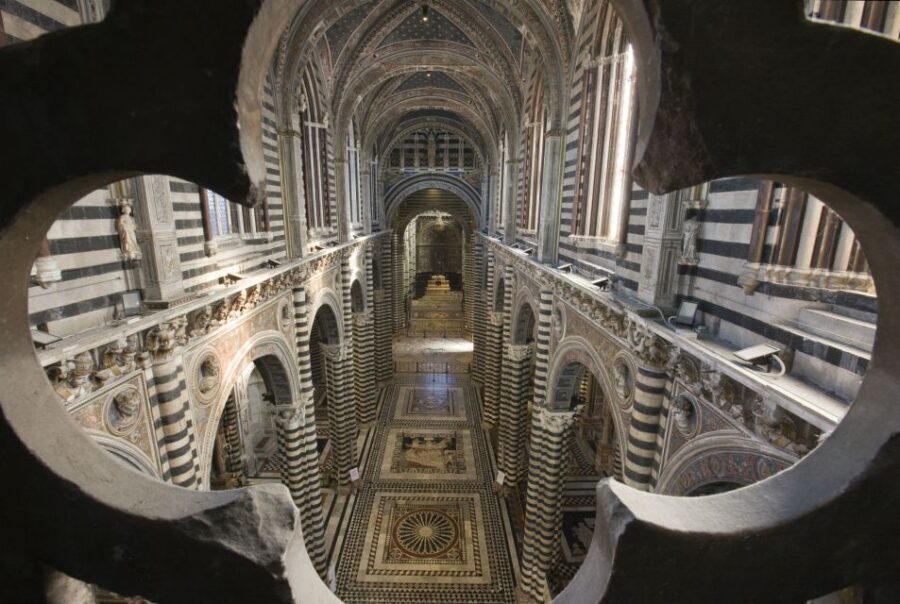
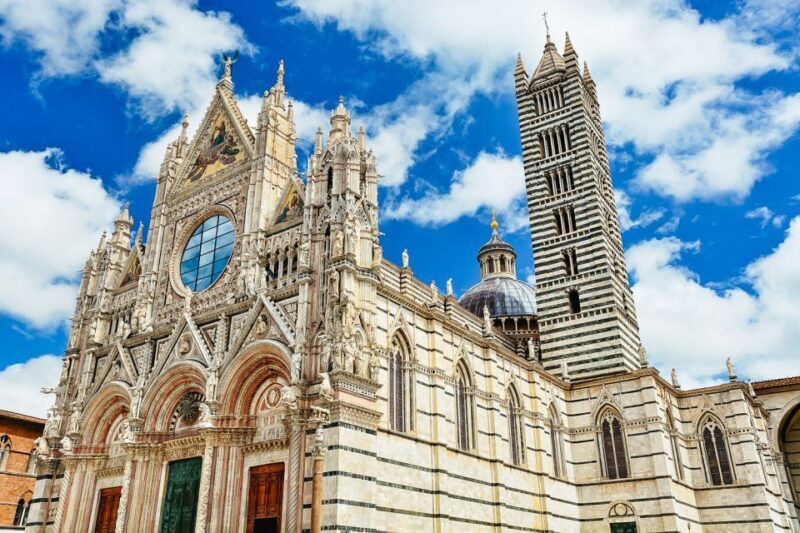
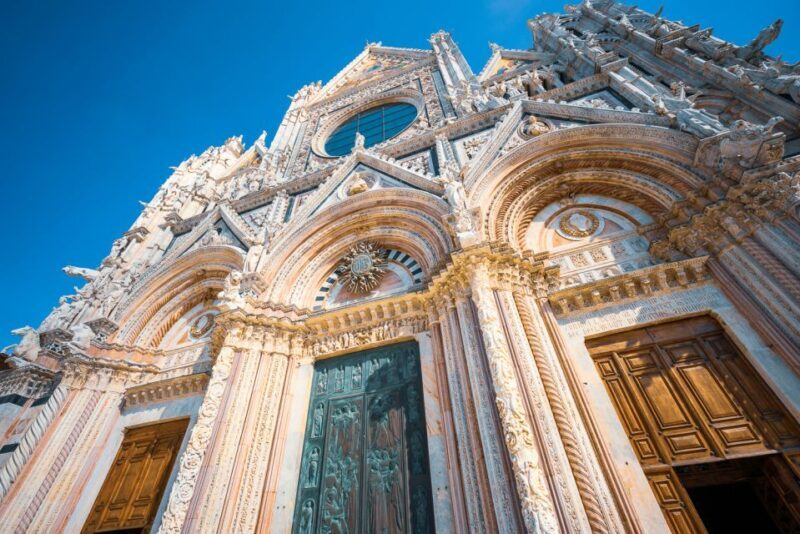
Siena’s Cathedral complex is one of Tuscany’s great art-and-architecture stops, and this Siena Duomo complex pass (OPA SI PASS) is a smart way to see the big highlights at your own pace. You’ll get access to the Duomo, Crypt, Baptistery of San Giovanni, Piccolomini Library, Museo dell’Opera, Oratory of San Bernardino, and the Facciatone viewpoint (not the rooftop).
What I like most is the combo of practical value and structure: the pass includes the major spaces you want in one go, plus a digital audio guide to make the stones and sculptures mean something. I also love that it’s designed for independent touring, so you can move when the light feels right and not just when a group is shuffling along.
One thing to plan around: it’s self-guided and the pass excludes the rooftop (the Gate of Heaven / roof area), so if that rooftop view is a must for you, you’ll need a separate option. Also, exchange logistics at the ticket office can be a little confusing at first.
- Key takeaways before you go
- OPA SI PASS overview: what this ticket really covers
- Price and value: is worth it?
- Valid for 3 days: how the timing and voucher rules work
- Where you exchange your voucher: Cripta del Duomo office tips
- A self-guided game plan: how to tour the complex without missing things
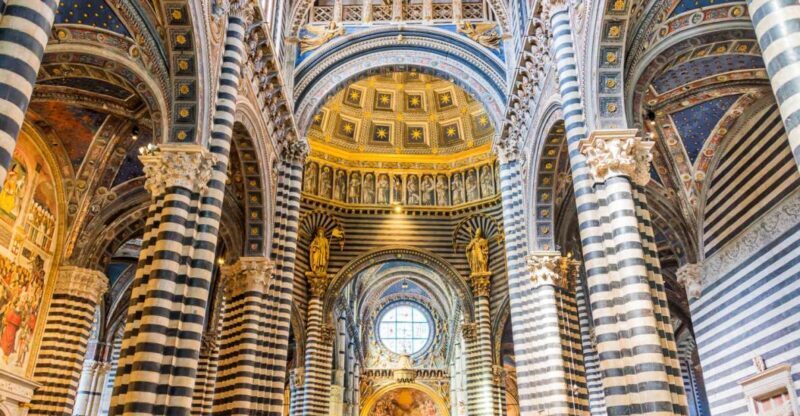
- Entering the Duomo interior: scale, mosaics, and standout sculptures
- Baptistery of San Giovanni: the Baptismal Font moment
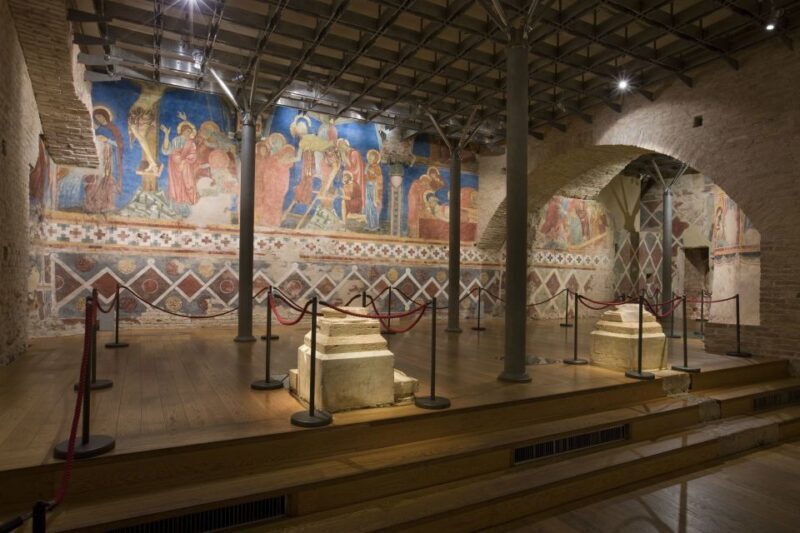
- Crypt under the Duomo: where history stayed underground
- Piccolomini Library and Pinturicchio: fresco storytelling by Pope Pius II
- Museo dell’Opera: artifacts from the cathedral’s past
- Oratory of San Bernardino: Diocesan Museum of Religious Art
- Facciatone viewpoint: the best payoff, with one timing catch
- Using the digital audio guide: how to make it work on a busy day
- Crowd levels and pacing: when Siena feels easy (and when it doesn’t)
- What’s not included: rooftop Gate of Heaven and the live-guide gap
- Who this pass suits best
- Should you book the Siena Cathedral Complex Pass?
- FAQ
- What does the OPA SI PASS include?
- Is the rooftop included?
- How long is the ticket valid?
- Where do I exchange my voucher?
- Do I need a live guide?
- Can I use the voucher on any day within 3 days?
- What is the last entry time?
- Is there free cancellation?
- Does the audio guide require my phone?
- The Best Of Siena!
- More Self-Guided Tours in Siena
- More Guided Tours in Siena
- More Tour Reviews in Siena
Key takeaways before you go
- Access to the core Duomo complex: Crypt, Baptistery, Piccolomini Library, Museo dell’Opera, Oratory, and Facciatone viewpoint are included.
- Audio guide that helps you read the building: smartphone narration and an easy map download help you make sense of what you’re seeing.
- Good value if you want several stops: paying once covers multiple high-demand areas.
- Crowd timing matters: some visitors report lines for ticket exchanges even with a pass, and the Facciatone viewpoint can take extra time because exits are narrow.
- Bring your own phone and keep it charged: the audio guide uses your smartphone.
👉 See our pick of the Which Siena Pasta Experiences To Choose? We Rank The 7 Best
OPA SI PASS overview: what this ticket really covers
This pass is built for people who want to tour Siena’s Duomo complex in a logical loop without a live guide. You’re basically buying access to the places that make the cathedral area famous—plus a digital audio guide delivered through your phone.
The included sites are the big hitters:
- Duomo of Siena entry
- Baptistery of San Giovanni entry
- Crypt entry
- Piccolomini Library entry
- Museo dell’Opera entry
- Facciatone viewpoint access
- Oratory of San Bernardino (Diocesan Museum of Religious Art)
It also notes that the pass is access-all-areas excluding the rooftop. In plain terms: you won’t be doing the Gate of Heaven roof experience with this ticket.
You can also read our reviews of more guided tours in Siena
Price and value: is $21 worth it?
At about $21 per person, the value depends on how you’re touring Siena. If your plan is to do only the Duomo and call it a day, you might wonder if it’s overkill. But if you want the Baptistery, the underground Crypt, the Piccolomini Library, and the museum spaces, this ticket stops you from playing the “buy tickets one by one” game.
Here’s why the value works:
- You get multiple high-demand interiors tied to one entry pass.
- You’re not paying for a live guide. Instead, you get narration that you can pause and replay.
- You’re paying for time-savings where it counts. Reviews frequently mention skipping lines and avoiding the worst of the queue stress.
In short: it’s a good deal when you actually use most of the included spaces.
Valid for 3 days: how the timing and voucher rules work
Your ticket is listed as valid for 3 days, but it also says you should check availability to see starting times. That matters because many cathedral-area tickets are time slotted behind the scenes.
Two practical rules to stick to:
- The voucher must be used on the booked date.
- The last entry to Siena Cathedral is 30 minutes before closing time.
So don’t book a “flexible” date and then treat it like a week-long pass. Plan your Duomo day so you’re not sprinting at the end.
Where you exchange your voucher: Cripta del Duomo office tips
The meeting point is straightforward on paper: exchange your voucher at the official ticket office at Cripta del Duomo di Siena. But at least one visitor noted that finding the right exchange spot can be confusing.
A helpful detail from visitor experience: the correct ticket exchange may be to the left of the entrance in a reserved ticket line. If you arrive and don’t see it immediately, don’t panic. Slow down, scan for reserved signage, and ask staff where to exchange the voucher.
Also note the format: you start at the ticket office and the activity ends back at the meeting point. Since this is self-guided, you’re essentially free to pace your route inside the complex.
More Great Tours NearbyA self-guided game plan: how to tour the complex without missing things
This pass is not a one-room museum. It’s a set of spaces that each reward a slightly different pace.
I suggest you think in “layers”:
- Surface layer: the Duomo interior and its artworks.
- Craft-and-devotion layer: Baptistery and the Piccolomini Library.
- Memory layer: the Crypt and the Museo dell’Opera.
- View layer: the Facciatone viewpoint at the end when your eyes want a break.
If you have limited time, start early and do the interiors before the late-day crowds build.
You can also read our reviews of more tours and experiences in Siena

Entering the Duomo interior: scale, mosaics, and standout sculptures
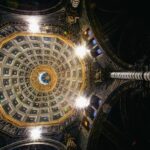
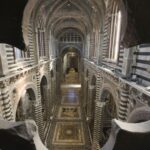
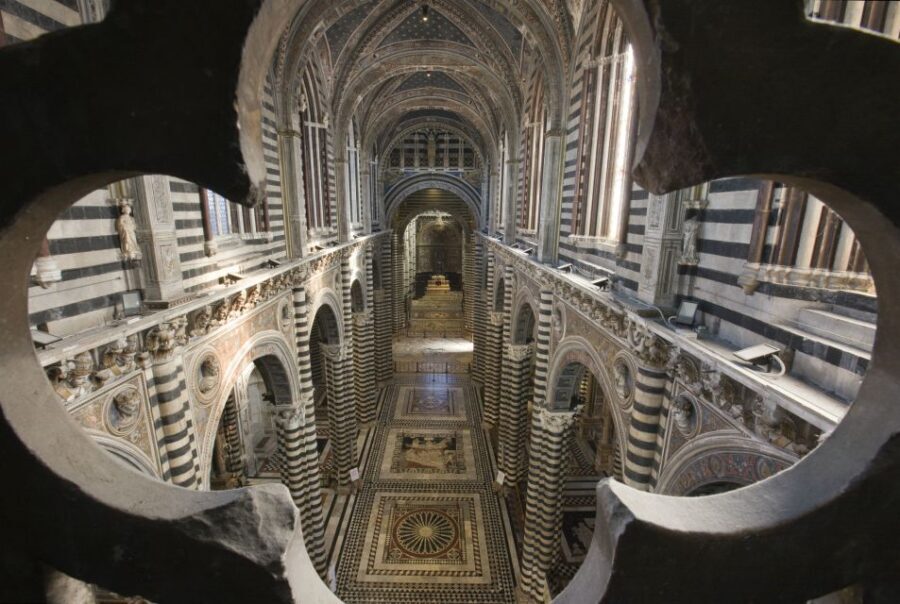
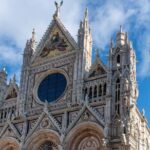
Once you’re inside, you’re walking into one of Italy’s most impressive cathedral interiors. The most memorable visual element mentioned is the mosaic marble floor—worth your slow steps. It’s one of those details that makes the whole Duomo feel like a living story.
The pass includes entry to artworks and sculptures placed around the cathedral area. Specific highlights named include:
- The Feast of Herod by Donatello
- St. Paul by Michaelangelo
If you’re not a museum person, focus on how the art connects to the space. The cathedral is not just architecture. It’s a statement about faith, civic pride, and artistic power—built to be seen over and over by ordinary people and pilgrims.
Baptistery of San Giovanni: the Baptismal Font moment
The Baptistery of San Giovanni is a stop you’ll feel immediately. It’s compact compared to the Duomo, but it hits hard because the main draw is the Baptismal Font.
In practice, this is a great spot for audio listening. You’ll get narration that helps explain what you’re looking at, so you don’t just admire the surface. You understand why the design and symbolism mattered in Siena.
Crypt under the Duomo: where history stayed underground
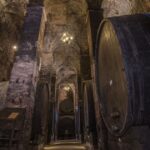
One of the best parts of this pass is the Crypt. The description notes it remained hidden for more than seven centuries—which is exactly the kind of detail that makes you feel like you’ve stepped into a secret.
The Crypt is also singled out by visitors for its beauty and atmosphere. If you like sites that feel intimate and slightly mysterious, this is your anchor stop. In a full day, I’d treat the Crypt like a “reset.” Let your eyes adjust. Then continue upward.
Piccolomini Library and Pinturicchio: fresco storytelling by Pope Pius II
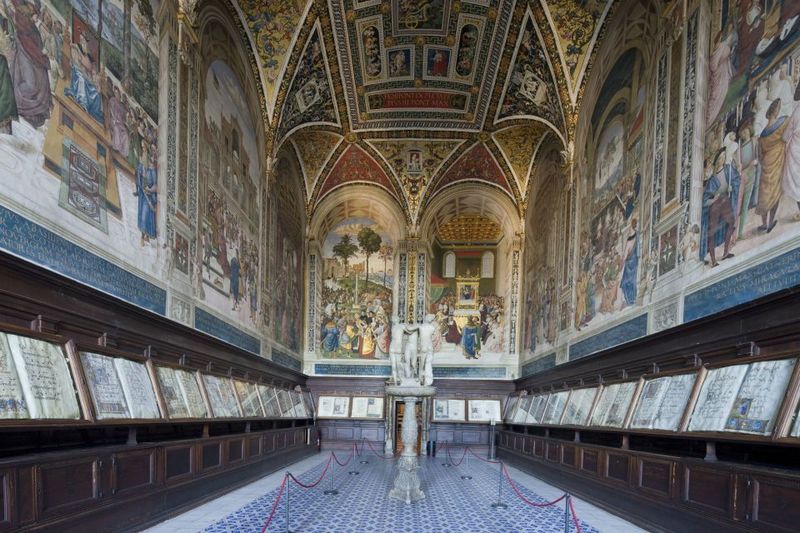
The Piccolomini Library is where Siena’s art history goes from impressive to unforgettable. The ceiling and walls are known for frescoes, and this pass gives you access.
A key highlight here is Pinturicchio, with fresco cycles depicting ten episodes from the life of Pope Pius II. That detail matters. If you walk in without any context, you might appreciate the color and skill but miss the narrative structure.
That’s where the smartphone audio guide earns its keep. You can listen while facing the frescoes, not while trying to juggle a map in a noisy crowd.
Museo dell’Opera: artifacts from the cathedral’s past
Next up is the Museo dell’Opera, which helps you understand that cathedrals don’t stay frozen in time. This museum holds archaeological fragments and artwork once part of the cathedral complex.
Specific artistic names mentioned in the description include:
- Gothic sculptures by Giovanni Pisano
- Paintings by Ambrogio Lorenzetti and Pietro Lorenzetti
If you love “how did they make this” energy, this is a great counterbalance to the cathedral itself. In the museum, you get objects that explain what happened to the cathedral over time—repairs, replacements, and shifts in artistic taste.
One visitor also mentioned that the museum route includes a sky-walk and said it’s worth doing. Since that detail isn’t spelled out in the main inclusions list, treat it as a “maybe” in your planning—but it’s a good reminder to leave room in your schedule for extra viewpoints.
Oratory of San Bernardino: Diocesan Museum of Religious Art
The Oratory of San Bernardino is included via access to the Diocesan Museum of Religious Art, with its focus in the upper oratory chapel.
What’s especially useful here is the timeframe: the museum is described as having Siennese paintings from the 13th to the 18th century. That broad range helps you see how styles and religious art changed across centuries, rather than treating every image as the same “category” of old painting.
If you’re traveling with someone who enjoys quieter museum moments, this can be a calming stop after the cathedral’s scale.
Facciatone viewpoint: the best payoff, with one timing catch
The last major experience in the pass is the climb to the Facciatone viewpoint. The reward is a view over Siena and the rolling Tuscan countryside.
Important practical note: one reviewer warned that visitors are sent out sporadically in small groups (around 15–20) because of a narrow way out and back. Translation: even if you think you’re done, the viewpoint section can take longer than the others.
So don’t schedule this as a “quick photo break” if you’re on a tight timeline. It’s one of those stops where you’ll want a few minutes to actually look.
Using the digital audio guide: how to make it work on a busy day
This pass includes a digital audio guide. The key practical tip from visitor experience: bring your own smartphone, since the narration comes as a download and includes an easy-to-use map.
My advice:
- Keep your phone charged. A cathedral day can eat battery fast.
- Use the audio like a flashlight, not background noise. Pause, then step closer and listen to the exact point you’re seeing.
- If you’re the type who hates headphones indoors, you can still do the route without audio. But you’ll probably miss some of the “why” behind the artworks.
Interestingly, one visitor said they didn’t even use the audio and still loved the sites. Still, most people seem to benefit because the Duomo complex can be overwhelming at first glance.
Crowd levels and pacing: when Siena feels easy (and when it doesn’t)
Siena can be calmer than larger Tuscan cities. One visitor noted they went in January and found it less crowded, letting them see everything early.
But don’t assume it will always be that gentle. Another visitor said they still had to wait in ticket lines during peak periods, even with the pass. That suggests the pass helps a lot with access, but your first step—voucher exchange—can still be queue-heavy at busy times.
If you want the smoothest day:
- Start early.
- Plan for short waits at exchanges.
- Accept that some indoor areas are paced with timed entry style logistics.
What’s not included: rooftop Gate of Heaven and the live-guide gap
Two “read the fine print” items matter here.
First: the pass excludes the rooftop Gate of Heaven entrance. If rooftop views are your top priority, you’ll need an additional ticket or tour.
Second: there’s no live guide included. The experience is built around self-guided exploring with audio.
One visitor mentioned that a Gate of Heaven tour could be added separately (they cited a price of 5 EUR), but that’s not part of the core pass description. Treat it as an optional add-on you might be able to find on-site.
Who this pass suits best
This pass is a strong match if:
- You want many Duomo-area sites without arranging multiple separate tickets.
- You like exploring at your own pace, with context provided by a smartphone audio guide.
- You’re the kind of traveler who enjoys seeing how art, faith, and civic life all meet in one place.
It may be less ideal if:
- You specifically want rooftop experiences included.
- You strongly prefer a live guide for everything, not just audio narration.
Should you book the Siena Cathedral Complex Pass?
Yes, you should book this pass if your goal is to see the main Siena Duomo complex highlights in one trip, especially the Crypt, Piccolomini Library, and Museo dell’Opera. At about $21, it’s the kind of ticket that pays off when you actually use most included spaces rather than treating it like a single-site entry.
Before you book, do two quick checks:
- Confirm how your booked date/time lines up with your visit plan, since the voucher must be used on the booked date.
- Decide whether the rooftop Gate of Heaven matters to you. If it does, you’ll likely need a separate plan.
If you’re ready for a self-guided day that mixes big cathedral drama with art-history details, this pass is a solid, practical choice in Tuscany.
Siena: Cathedral Complex Pass with Audio Guide (OPA SI PASS)
FAQ
What does the OPA SI PASS include?
It includes entry to the Duomo of Siena, Baptistery of San Giovanni, Crypt, Piccolomini Library, Museo dell’Opera, Oratory of San Bernardino, and access to the Facciatone viewpoint. It also includes a digital audio guide and a booking fee.
Is the rooftop included?
No. The pass is described as excluding the rooftop, including the Gate of Heaven entrance.
How long is the ticket valid?
The pass is listed as valid for 3 days, but you should check availability to see starting times.
Where do I exchange my voucher?
You exchange your voucher at the official ticket office at Cripta del Duomo di Siena.
Do I need a live guide?
No. This is a self-guided experience with a digital audio guide.
Can I use the voucher on any day within 3 days?
No. The information says the voucher must be used on the booked date.
What is the last entry time?
The last entry to Siena Cathedral is 30 minutes before closing time.
Is there free cancellation?
Yes. It offers free cancellation up to 24 hours in advance for a full refund.
Does the audio guide require my phone?
Yes. The audio guide uses a smartphone, so you should bring your own cell phone.
You can check availability for your dates here: