
If you want your visit to the Van Gogh Museum to feel like a clear story—not a random walk—I like this small-group guided tour. You follow Van Gogh’s path across Paris, Arles, Saint-Rémy, and Auvers with a guide who points out what to look for and why it matters.
Two things stand out right away. First, the Whisper system makes the guide easy to hear even when the museum gets crowded. Second, the pacing and selection of paintings help you understand his development, not just spot famous titles.
One thing to consider: the route is structured with set time at each stop (including a strong focus on portraits and early works). If you’re mostly there for later landscapes and gardens, you may wish you had a bit more freedom during the earlier segments.
- Key highlights to know before you go
- How this tour fits into your Amsterdam art plan
- Meeting point: start smart at Cobra Café
- The Whisper system: why it matters more than you think
- Small group size (max 14): better questions, less squeezing
- Admission included: you’re paying for time with an expert
- The route: how the story moves across Van Gogh’s career
- Stop 1: self-portraits and how Van Gogh set the stage (about 20 minutes)
- Stop 2: Millet and Breton influences, plus peasant faces (about 20 minutes)
- Stop 3: Paris, 1886–1888—experiments and city scenes (about 20 minutes)
- Stop 4: Arles and the South of France, 1888—color and place (about 20 minutes)
- Stop 5: Saint-Rémy-de-Provence—later works and mood shifts (about 20 minutes)
- Stop 6: Auvers—final period energy in just 15 minutes
- What you’ll learn: techniques, context, and why guides get you more value
- Timing and pacing: set stops keep you from missing the museum’s core
- End point inside the museum: your ticket to extra wandering
- Special exhibitions: not included, so plan accordingly
- Cancellation and flexibility: free cancellation up to 24 hours
- Who this tour is best for
- Should you book? My honest recommendation
- FAQ
- What language is the tour offered in?
- How long is the Van Gogh Museum Amsterdam small group guided tour?
- How many people are in the group?
- Is museum admission included?
- Do I get to see special exhibitions during the tour?
- Where does the tour start?
- Where does the tour end?
- What is the cancellation policy?
Key highlights to know before you go
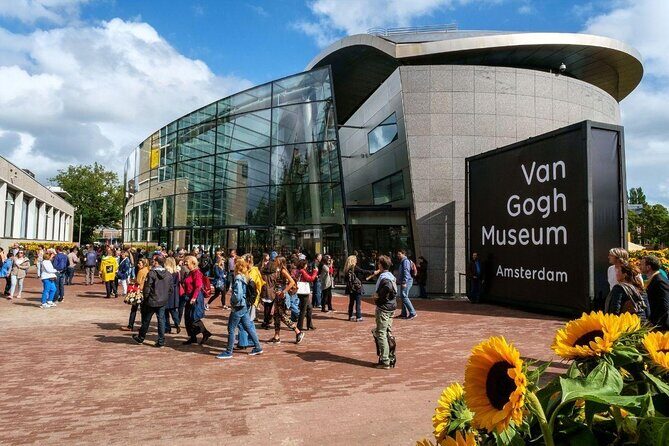
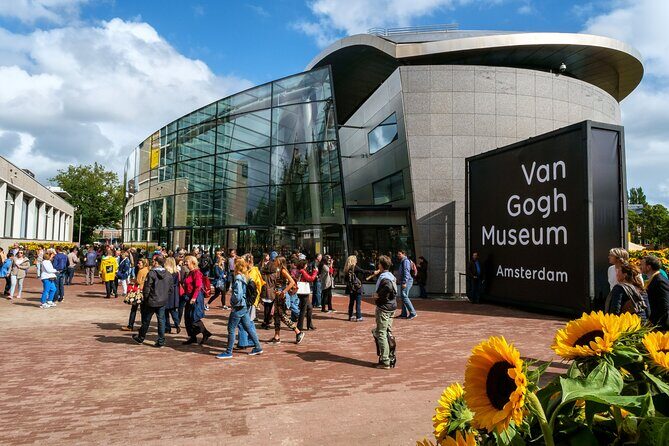
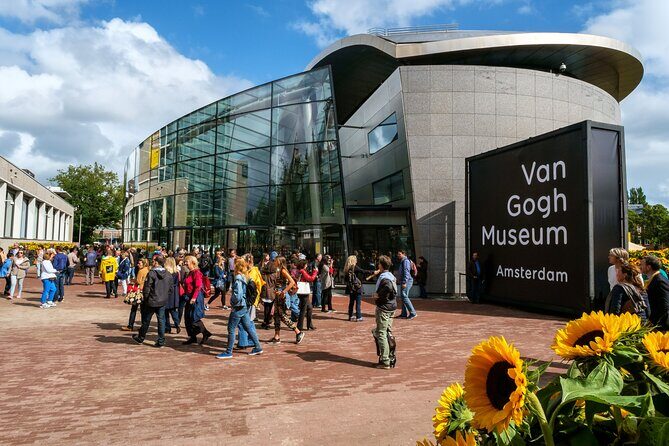
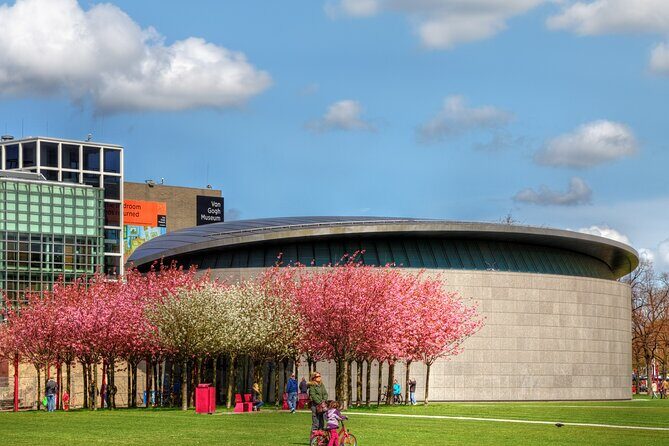
- Small group size (max 14) helps with questions and personal attention
- Whisper headset system keeps audio clear in a busy museum
- Admission to the museum collection is included so you can focus on art, not tickets
- A guided timeline from Paris to Arles to Saint-Rémy to Auvers
- You choose morning or afternoon, and the tour ends inside the museum for self-guided exploring
- Adult-only (18+) keeps the experience geared to adults
How this tour fits into your Amsterdam art plan
Amsterdam has plenty of art stops, but the Van Gogh Museum is the one where you should slow down. This tour is built for that. It’s about 2 hours (approx.) in English, with a guide who keeps the museum moving at a human pace.
The big practical win is the structure. Instead of wandering room to room trying to connect paintings across years, you get a guided sequence that lines up with where Van Gogh was in his life. That makes the museum feel less like a warehouse of masterpieces and more like a conversation you can actually follow.
And yes, the museum is popular. Even then, the wireless headphone setup helps you catch every explanation without doing the awkward “can you repeat that?” dance.
Meeting point: start smart at Cobra Café
You meet at Cobra Café, Hobbemastraat 18 (1071 ZB Amsterdam). The advantage here is simple: it’s a clear, fixed start point, and it’s described as near public transportation, which makes it easier to build this into a day that already includes canals or other museums.
If you’re arriving early, don’t panic about finding your group inside the chaos. Instead, take a minute to get your bearings outside first. The tour begins with a walk-in rhythm—quick, efficient, and then you’re in the museum.
The Whisper system: why it matters more than you think
A lot of museum tours claim audio support. This one specifies a Whisper System (a wireless headphone setup). In real terms, that means the guide stays audible while you’re moving and while other visitors do what other visitors do: chat, take photos, and accidentally block your view.
From what travelers mention, the headset is especially helpful if you have hearing aids. That’s not a small detail. Museum audio is often the difference between getting the value of the guide—or just hearing a muffled voice from somewhere in the crowd.
Small group size (max 14): better questions, less squeezing
This tour caps at 14 travelers. That changes the experience. With bigger groups, you often end up behind shoulders and hoping for a moment at the front. With a smaller group, the guide can do more than read labels.
Travelers highlight that guides take time to answer questions and help people notice the right details. With fewer people, you can also adjust—lean in for a closer look, step back to let others pass, and actually follow the narrative without feeling rushed.
Admission included: you’re paying for time with an expert
The tour price is $77.43 per person, and admission tickets are included. That’s part of the value equation: you’re not paying separately for entry, then paying again for the “please look at this painting” service.
Is it worth it? For many first-time Van Gogh visitors, yes—because this museum is big and the works are dense. A good guide helps you spend your limited attention where it counts. You also get a consistent arc of his development rather than random “wow” moments.
Of course, if you already know Van Gogh deeply and you love reading labels at your own speed, you might be tempted to skip a guided tour. But for most people, the extra cost pays back in understanding.
The route: how the story moves across Van Gogh’s career
This tour runs through a focused set of highlights in the permanent collection. Special exhibitions are not included, so you can visit those after the guided portion if you want—but your guided time is reserved for the main works.
Each stop has a set amount of time, and the guide uses that to keep the flow moving. Think of it as a curated path through the museum rather than a free-for-all.
Stop 1: self-portraits and how Van Gogh set the stage (about 20 minutes)
You begin at the Van Gogh Museum with self portraits. This works well because it frames how Van Gogh thought about identity and expression. It also gives you visual anchors. Once you’ve seen him “looking back,” later portraits and figure paintings make more sense.
A small caution: some travelers felt the self-portrait time could be a bit long. If you’re especially focused on late landscapes and bold colors, you may want to stay aware that early parts of the tour are building context.
Still, even if you only catch a few key ideas here, it helps the rest of the museum click into place.
Stop 2: Millet and Breton influences, plus peasant faces (about 20 minutes)
Next up is the first-floor foyer area, where the tour points you toward paintings tied to influences and everyday life. You’ll see works described like Woman Lifting Potatoes, plus a “Head of a Peasant Woman” portrait wall and pieces connected to The Potato Eaters.
Why this matters: Van Gogh didn’t paint in a vacuum. Even when his style later becomes unmistakably his own, you can trace influences in his subjects and how he built emotional intensity.
This segment is also a good place to train your eye. Pay attention to how figure paintings communicate mood through faces and posture, not just color.
Stop 3: Paris, 1886–1888—experiments and city scenes (about 20 minutes)
Then the story shifts to when Vincent moved to Paris between 1886 and 1888. You’ll hit works like Self Portrait with Felt Hat, Still Life with Absinthe, In the Café: Agostina Segatori in Le Tambourin, and Garden with Courting Couples.
This stop is where you can feel the “Vincent changes gears” energy. Paris was a big turning point—new people, new visual ideas, new ways of mixing everyday life with art.
Practical tip: in a museum crowd, the temptation is to speed-read. Instead, slow down for one or two works and look for what feels different here compared with earlier rooms. The guide’s explanations are built to help you see that shift.
Stop 4: Arles and the South of France, 1888—color and place (about 20 minutes)
In 1888, the tour moves to Arles and the South of France. Highlights include Sunflowers, Almond Blossoms, The Bedroom, and the Japanese paintings (copies from prints). You also see The Yellow House.
If there’s a “must see” cluster, this is it. Travelers often mention favorites like Sunflowers and The Bedroom, and for good reason: these are vivid, iconic, and loaded with personality.
The Japanese-themed work (copies from prints) is also a smart inclusion. It helps you understand how Van Gogh looked outward for inspiration. And when the tour connects these paintings to where he lived and what he was trying to express, the works stop feeling random and start feeling intentional.
Stop 5: Saint-Rémy-de-Provence—later works and mood shifts (about 20 minutes)
On Level 3, you’ll shift to Saint-Rémy-de-Provence. The itinerary includes Almond Blossoms, Wheatfield with a Reaper, Iris, and Pieta (After Delacroix).
This is the stop that often turns “I like his paintings” into “I understand what he was doing with emotion.” Even if you don’t catch every detail, the guide’s job is to help you notice how his work changes with time, place, and inner world.
Watch for the way subjects are framed—how fields, plants, and faces can feel both grounded and symbolic.
Stop 6: Auvers—final period energy in just 15 minutes
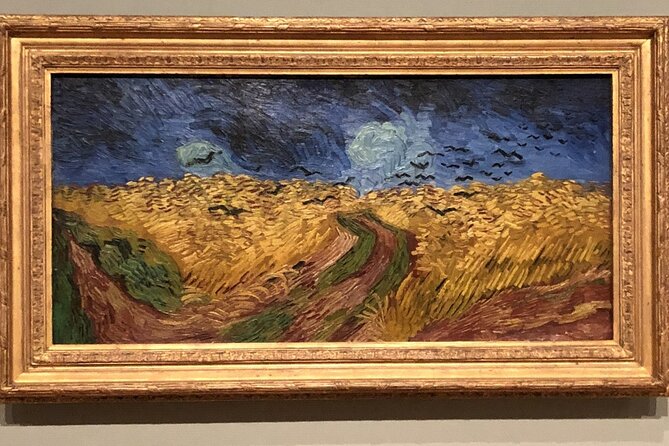
The last guided stop is the Auvers Room on Level 3, with works including Tree Roots and Wheatfield with Crows. Time here is shorter (about 15 minutes), which means the guide usually aims for the most important takeaways fast.
If you want to linger, plan to do it after the tour. That’s one of the smarter parts of this experience: it ends inside the museum, so you’re not forced to rush out the moment the headset stops working.
What you’ll learn: techniques, context, and why guides get you more value
Even when people don’t use the same words, the theme is consistent: the guide makes Van Gogh’s development make sense. Travelers mention learning about painting styles across early-to-later years and how techniques evolve. Some guides also use visual aids like an iPad to explain points more clearly.
In plain terms, a great guide helps you answer questions like:
- Why does the brushwork feel different over time?
- Why do these subjects keep returning?
- How does the life story connect to what’s on the canvas?
Based on traveler comments, guides like Martina, Clare, Kawika, Roland, Sylvia, Marlene, Holly, Caroline, and Claire W are named often, and the common thread is confident knowledge paired with a friendly teaching style.
You won’t just be looking at famous works. You’ll be learning how to look.
Timing and pacing: set stops keep you from missing the museum’s core
The itinerary uses timed blocks at each area, which keeps the tour efficient and prevents the classic problem: you get stuck in one room for 45 minutes and then realize you’ve rushed everything else.
At the same time, a timed plan can feel tight if you’re the type who wants to stare. Still, the tour ends inside the museum so you can slow down afterward.
If you hate rushing, I’d do two things:
- Bring the mindset that the tour is your roadmap, not your entire visit.
- Stay afterward during your un-guided time for the pieces you liked most.
End point inside the museum: your ticket to extra wandering
The tour ends at Museumplein 6, 1071 DJ Amsterdam, and importantly, it ends inside the Van Gogh Museum. That means you can stay and explore until closing time.
So the best strategy is to treat the guided portion as a “greatest hits with meaning,” then use your extra time for whatever pulled you in—maybe the works you didn’t get enough time on during the timed stops, or special exhibitions you want to see on your own.
Special exhibitions: not included, so plan accordingly
Special exhibitions are not included in the guided tour. That isn’t a dealbreaker—just a planning note.
If you’re the type who loves temporary shows, check what’s running during your dates. Then decide whether you want to add extra time after the tour to see those displays yourself.
Cancellation and flexibility: free cancellation up to 24 hours
If plans change, the cancellation policy is clear: you can cancel for a full refund up to 24 hours in advance. Canceling within 24 hours doesn’t get refunded.
This is helpful if you’re balancing multiple Amsterdam activities. It also explains why this tour is often booked about 26 days in advance on average—people like having an art plan locked in.
Who this tour is best for
This works especially well if you:
- Love Van Gogh but want clear context beyond museum labels
- Prefer a guided timeline instead of aimless wandering
- Want audio help with a Whisper system
- Are traveling with another art fan and want shared “aha” moments
It may not be as ideal if you:
- Want maximum freedom inside the museum during the guided part
- Are only interested in a very narrow slice of his work and don’t want time spent on early portraits and influences
Should you book? My honest recommendation
I’d book this tour if you want the Van Gogh Museum to feel like a guided story from early influences to later masterpieces. The small group size, headset audio, and admission included create solid value for the time you buy.
If you’re the kind of traveler who loves museum labels and going solo, you might skip it. But if you want to learn how and why the paintings changed, and you like the idea of leaving with a better sense of Vincent’s journey, this is one of the better ways to use your Amsterdam time.
Van Gogh Museum Amsterdam Small Group Guided Tour
FAQ
What language is the tour offered in?
The tour is offered in English.
How long is the Van Gogh Museum Amsterdam small group guided tour?
The duration is about 2 hours.
How many people are in the group?
The tour has a maximum of 14 travelers.
Is museum admission included?
Yes. Admission tickets are included as part of the tour stops through the permanent collection.
Do I get to see special exhibitions during the tour?
No. Special exhibitions are not included, but you can visit them afterward at your own pace.
Where does the tour start?
The start location is Cobra Café, Hobbemastraat 18, 1071 ZB Amsterdam.
Where does the tour end?
The tour ends inside the Van Gogh Museum at Museumplein 6, 1071 DJ Amsterdam, and you can stay until closing time.
What is the cancellation policy?
You can cancel for a full refund up to 24 hours before the experience. If you cancel less than 24 hours before, the amount paid is not refunded.