When you’re planning a trip to Split, you face a common traveler’s dilemma: do you wander the old town alone with a guidebook, or invest in a tour that actually explains what you’re looking at? We’ve reviewed this walking tour extensively, and we can tell you that booking Toni Šare’s history tour lands somewhere between a smart investment and a steal.
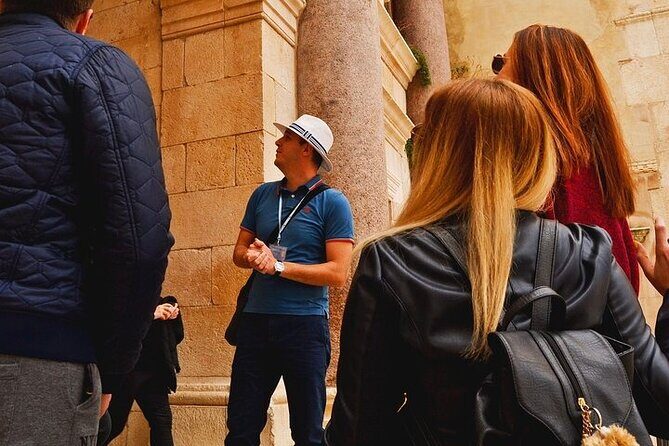
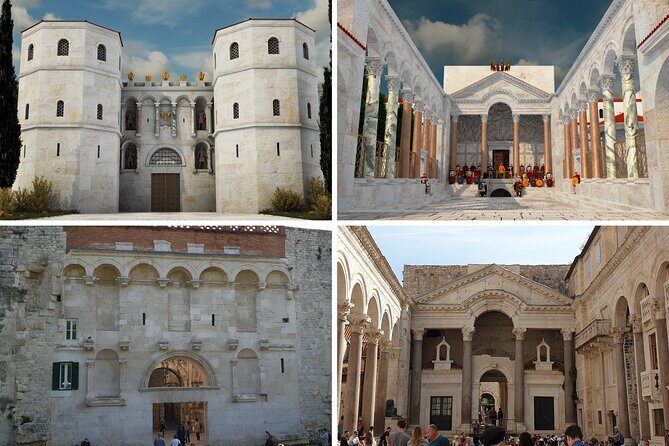
What really sets this experience apart is the guide himself—a historian who genuinely grew up in Split and studied its history professionally. Rather than delivering rehearsed scripts, Toni brings personal context and scholarly depth to every corner of Diocletian’s Palace. He also brings something unusual to the table: custom 3D reconstructions that help you visualize how the palace looked in its glory days, before medieval and Renaissance layers accumulated on top of the Roman foundations.
The main consideration is that this tour doesn’t enter paid attractions—you’re exploring exteriors and public spaces. For travelers who want to see the Cathedral interior or Temple of Jupiter from the inside, you’ll need to budget extra time and money for those visits separately. However, this actually works in your favor if you’re budget-conscious or prefer flexibility in your schedule.
This tour is ideal for history enthusiasts, first-time visitors to Split who want proper context before exploring on their own, and anyone curious about how Roman, medieval, and Renaissance architecture coexist in this remarkable city.
- Why This Tour Delivers More Than You’d Expect
- A Detailed Breakdown of What You’ll Actually See
- What Makes Toni Šare Stand Out as a Guide
- Practical Details That Matter
- Value for Money in Context
- What You Should Know Before Booking
- Frequently Asked Questions
- The Bottom Line
- The Best Of Split!
- More Walking Tours in Split
- More Tours in Split
- More Tour Reviews in Split
Why This Tour Delivers More Than You’d Expect
 1 / 7
1 / 7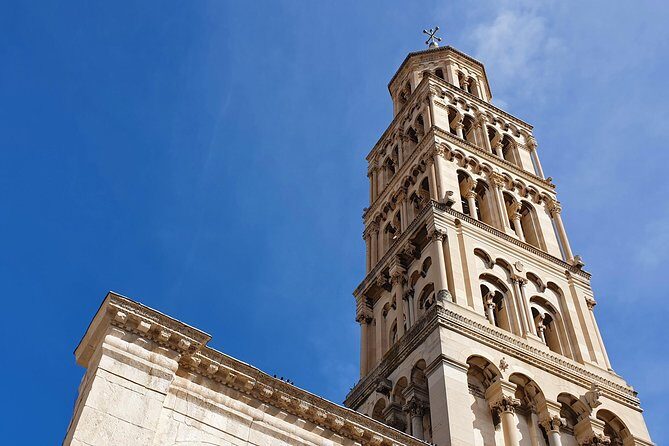 2 / 7
2 / 7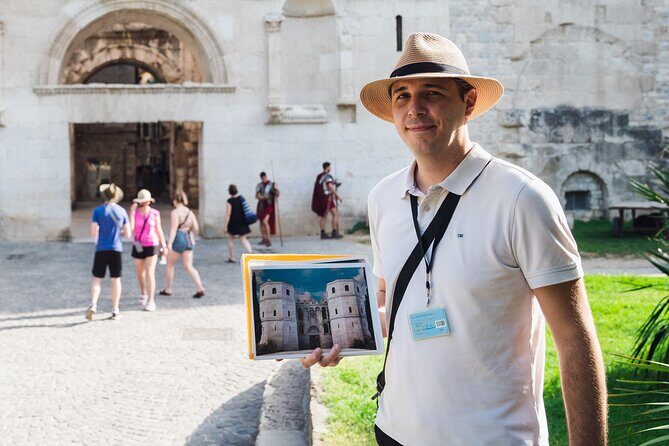 3 / 7
3 / 7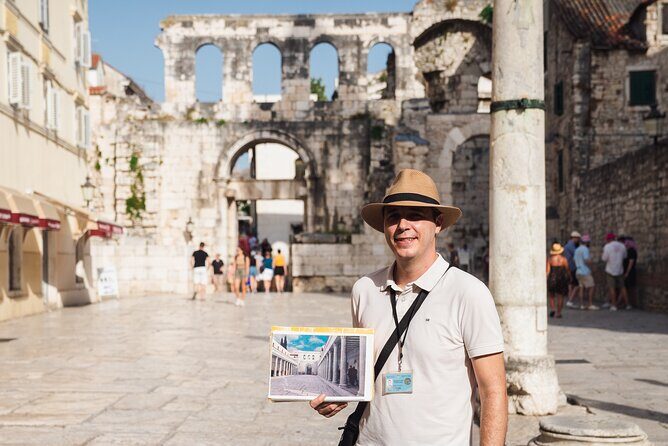 4 / 7
4 / 7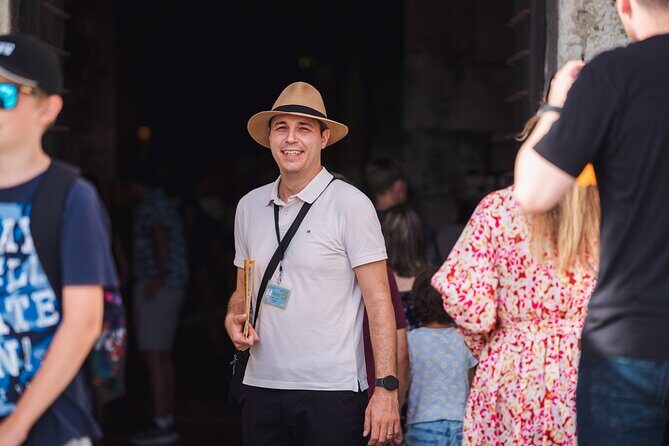 5 / 7
5 / 7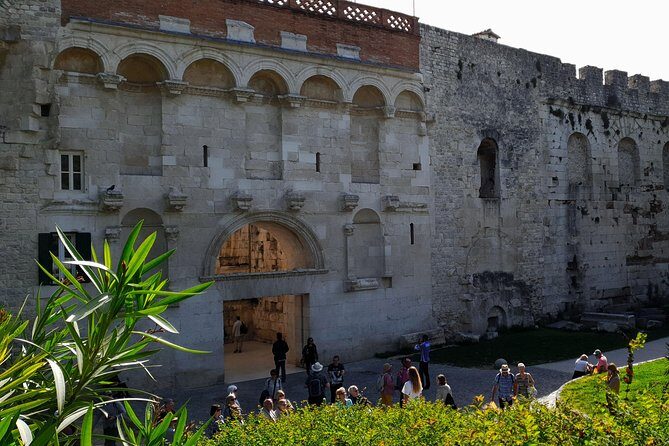 6 / 7
6 / 7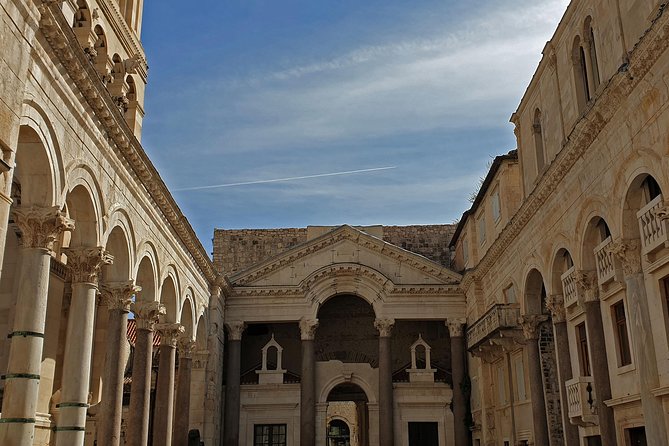 7 / 7
7 / 7At $34.83 per person, this falls into that sweet spot where the value proposition is genuinely compelling. You’re not paying premium prices for a luxury experience, but you’re getting something far better than a budget option: a guide whose expertise makes the entire city suddenly make sense.
The 1 hour 40 minute duration proves surprisingly efficient. Rather than a leisurely stroll that leaves you wondering what you’ve learned, Toni has clearly designed this route to hit the essential sites while maintaining momentum. One reviewer who’d done multiple tours across Europe noted: “Of the numerous tour guides that we’ve experienced in our travels, he was the best. By far.” That’s the kind of comparison that matters when you’re evaluating whether to book.
The small group size—maximum 18 people—means you’re not herded through narrow medieval streets like cattle. You can actually hear the guide, ask questions without holding up forty other people, and have genuine interactions rather than being one face in a crowd. Several reviewers mentioned how the intimate group size made it easier to gather in quieter spaces and actually absorb what was being said.
👉 See our pick of the 3 Best Shore Excursions In Split
A Detailed Breakdown of What You’ll Actually See
Starting at the Riva Harbor
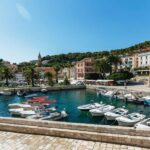
Your tour kicks off at the Brass Gate (Porta Aenea) along the Riva—Split’s waterfront promenade and the city’s social heart. This isn’t just a scenic opening; it’s strategic. From here, Toni uses graphic models and his own renderings to introduce what you’re about to explore inside the palace. You’ll see the southern wall of Diocletian’s Palace from this vantage point, which provides essential context before you venture into the labyrinth of narrow streets.
Locals essentially live on this waterfront. Watching Split’s residents interact with this space while learning its history gives you insight into how a 1,700-year-old structure remains genuinely alive rather than just a museum piece.
The Peristyle: The Palace’s Sacred Center
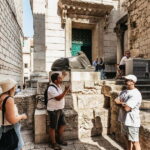
This is where Diocletian’s power becomes tangible. The Peristyle is the central courtyard of the palace, and it’s one of the most important public squares in Split today. What makes Toni’s explanation valuable here is that he brings 3D reconstructions showing how much of what you see is original Roman work versus medieval modifications.
This distinction matters. When you see weathered columns and arches, understanding which ones Diocletian’s builders actually placed versus what medieval residents added helps you read the architecture like a language. One traveler noted: “His 3D rendering of the original Diocletian palace were so vivid for us to see the changes throughout the history.”
The Cathedral of Saint Domnius
This stop perfectly illustrates how Split’s history works. The building was originally Diocletian’s mausoleum—his grave. When early Christians took control of the city, they converted it into a cathedral, and it’s still functioning as a place of worship today. You won’t enter, but Toni explains everything you need to know about the structure, the bell tower, and the fascinating conversion process that transformed an emperor’s tomb into a Christian sacred space.
This kind of cultural and religious layering is what makes Split so compelling, and having someone explain the why behind these transformations elevates the experience beyond just looking at old buildings.
The Temple of Jupiter
One detail that stands out in Toni’s approach: he points out construction mistakes the Romans made while building this temple. Most guides skip these details, but they’re actually fascinating because they humanize the builders. The Romans weren’t infallible, and seeing evidence of their errors—visible even today—makes the history more real.
The Temple of Jupiter ranks among the world’s best-preserved late-Roman temples, which alone makes it worth your time. You’ll view it from outside, but Toni’s knowledge ensures you’re not just looking at old stone—you’re reading a specific moment in Roman construction history.
The Eastern Silver Gate and Grgur Ninski Statue
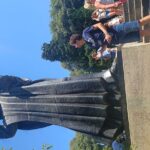
These stops might seem quick—just five minutes each—but they serve important purposes. The Silver Gate offers one of the best views of the palace’s eastern facade, and you’ll see where the original Roman road once ran. The Grgur Ninski statue, a recognizable Split landmark, connects you to Croatian medieval history and the development of the Croatian language.
These aren’t filler stops; they’re context. Understanding who Grgur Ninski was and why he matters to Croatian culture adds another layer to your appreciation of the city.
The Vestibulum and Golden Gate
The Vestibulum was Diocletian’s private entrance to his residence. Walking through this space and around the remains of his private quarters creates an intimate connection to the actual person who commissioned this massive palace. This isn’t just architecture; it’s someone’s home, designed 1,700 years ago.
The Golden Gate, where the tour concludes at the palace itself, is the most decorated and best-preserved of the four palace entrances. From here, you can see the entire northern wall and understand how medieval residents ingeniously repurposed Roman fortifications for their own defense.
The Renaissance Palaces and Old Town Hall
As you move through the palace and old town, you’ll see various noble family palaces from medieval and Renaissance periods. These structures show how the city evolved after the Roman period. The tour concludes at the Old Town Hall on Narodni Square (Piazza), which has served as the city’s main square since medieval times.
This ending point makes practical sense—it’s where you naturally orient yourself for exploring the rest of the city on your own.
You can also read our reviews of more walking tours in Split

What Makes Toni Šare Stand Out as a Guide
The reviews are remarkably consistent on one point: this guide genuinely loves his city and its history. That’s not something you can fake for 1 hour 40 minutes. One traveler captured it perfectly: “You can tell that Toni is passionate over the city of his birth. He also showed us his own personal renderings of how the palace of Diocletian looked like during its glory years.”
Another reviewer made an interesting observation: “I would have loved history class if my teacher would have been as enthusiastic about history as Toni is.” That’s the difference between a guide who delivers information and a guide who makes you actually care about what you’re learning.
Multiple reviews mention that Toni answered questions extensively even after the formal tour ended. He wasn’t watching the clock; he was engaging with people who wanted to learn more. That kind of generosity with knowledge speaks to genuine expertise and passion rather than just professional obligation.
Practical Details That Matter
Timing and Logistics
The tour runs approximately 1 hour 40 minutes to 1 hour 50 minutes, making it efficient enough to fit into a full day without consuming your entire morning or afternoon. The fact that you can book evening tours is valuable—one reviewer specifically chose the 6pm tour to “beat the summer heat,” which is smart thinking if you’re visiting during July or August when Split’s narrow streets become ovens during midday.
You’ll receive confirmation at the time of booking, and the tour includes a mobile ticket option, so you don’t need to print anything or worry about paperwork.
Group Size and Experience Quality
Maximum 18 travelers means you’re not experiencing Split as part of a massive tour group. This matters more than it might seem. In narrow medieval streets, even 25 people can feel crowded. At 18, you maintain the ability to actually see what the guide is pointing out and hear what he’s saying without straining.
Accessibility
Service animals are allowed, and the tour is near public transportation. Most travelers can participate according to the listing, though it’s worth noting you’re walking through an old city with uneven streets, some stairs, and narrow passages. If you have mobility concerns, it’s worth confirming with the provider before booking.
Value for Money in Context
At $34.83, this tour costs less than a decent meal in many European cities. Compare that to other Split history tours, and you’re looking at one of the better values available. Group discounts are offered, so if you’re traveling with friends or family, you can reduce the per-person cost further.
The fact that 100% of travelers recommend this tour (based on 1,122 reviews, with 1,115 five-star ratings) suggests people feel they got their money’s worth. That kind of consensus doesn’t happen by accident.
What You Should Know Before Booking
Museum Entries Aren’t Included
The tour doesn’t include admission to paid sites like the Cathedral interior or museums. If you want to enter these spaces, budget an additional 50-100 kuna (roughly $7-15) and plan time after the tour. However, Toni’s exterior explanations are so thorough that many travelers find they don’t feel they’re missing essential information.
Weather Dependency
This is an outdoor walking tour, so it’s weather-dependent. If conditions are poor, you can reschedule for another date or receive a full refund. Split enjoys 300+ days of annual sunshine, so this is rarely an issue, but it’s worth checking the forecast before your tour date.
Book in Advance
On average, this tour is booked 31 days in advance. While you can sometimes find last-minute availability, booking ahead ensures you get your preferred time slot, especially during peak season.
You can also read our reviews of more historical tours in Split

Frequently Asked Questions
Q: Is this tour suitable for people with no background in history?
A: Absolutely. Toni structures the tour to be accessible to everyone, from history enthusiasts to casual travelers. He explains context and significance rather than assuming prior knowledge. One reviewer noted: “This tour gives you an introduction into the history of the city and the area, which gives you a sense of what you are looking at when roaming these winding alleyways.”
Q: What should I wear and bring?
A: Comfortable walking shoes are essential—you’ll be on uneven medieval streets for nearly two hours. Bring water and sun protection, especially if you’re visiting during summer months. The tour operates in all but the worst weather conditions.
Q: Can I do this tour if I don’t speak much English?
A: The tour is offered in English. If English isn’t your strong language, you might want to sit closer to the guide or let him know at the start that you’d appreciate speaking clearly. However, much of the experience is visual, so even if you miss some words, you’ll still benefit from seeing the sites and the 3D reconstructions.
Q: How early should I arrive at the meeting point?
A: The meeting point is at the Brass Gate (Porta Aenea) on Obala Hrvatskog narodnog preporoda. Arriving 10-15 minutes early is standard practice for tours. One reviewer mentioned: “Toni was there early,” suggesting he’s punctual and professional about start times.
Q: Is there a private tour option?
A: Yes, the listing mentions you can upgrade to a private tour if you prefer a more exclusive experience. Contact the provider directly for pricing and availability on private options.
Q: What if I need to cancel?
A: You can cancel free of charge up to 24 hours before the tour. Cancellations within 24 hours forfeit your payment. This is a standard and fair cancellation policy.
Q: Will the tour mention Game of Thrones filming locations?
A: Yes, if your group is interested, Toni will point out Game of Thrones filming locations as you pass them. He even mentions there’s a fan shop nearby if you want to explore that angle. This is a nice bonus for fans of the series without being the focus of the tour.
Q: How do I contact the tour operator if I have questions?
A: The tour is operated by DiocleSpot Tours, owned by Toni Šare. You can reach them at [email protected] or by phone at +385953505958 for any pre-tour questions or special requests.
Walking Tour of Split with a ‘Magister’ of History
The Bottom Line
This tour represents genuine value in a travel market often cluttered with mediocre experiences. You’re paying a modest price for a guide whose expertise, passion, and local knowledge transform a walk through old streets into an actual education about how cities evolve over centuries. Whether you’re a history buff or just someone who wants to understand what you’re looking at while exploring Split, this tour delivers. The consistent five-star reviews from over 1,100 travelers—many of whom specifically noted this was among the best-guided experiences they’ve had anywhere—aren’t exaggerated. Book this tour early in your Split visit so you have context for exploring the rest of the city on your own. You’ll wander those medieval streets with fresh eyes and genuine understanding, which is exactly what good travel is about.