I’m sharing a practical look at this Warsaw Old Town Highlights walking tour, a 150-minute walk that strings together the Royal Route and the rebuilt symbols of the city’s hard-won survival. It starts near the Nicolaus Copernicus Monument, then works its way through Old Town landmarks you can’t miss, including the Royal Castle reconstruction and the stop connected to Chopin’s heart.
What I like most is how confidently the guides handle both beauty and pain. Guests often mention guides like Michael and Andrzej for clear English, solid context, and a sense of humor that keeps the pace light even when the stories get heavy. Second, the route packs major sights into one walk, so you get the essentials without spending your whole day zigzagging across town.
One consideration: you’re outside most of the 150 minutes, and the tour notes comfortable shoes, weather layers, and that food and drinks aren’t included. So plan like it’s an active city walk, not a sit-down sightseeing day.
- Key things to know before you go
- Warsaw Old Town in 2.5 Hours: What This Walking Tour Really Delivers
- Meeting Point and Finding Your Guide by the Yellow Umbrella
- Copernicus Monument Start: Getting Oriented on Krakowskie Przedmieście
- The Royal Route Highlights: Presidential Palace and University Buildings
- Chopin’s Heart Site: The Cultural Stop That Changes the Mood
- Krakowskie Przedmieście and Old Town Walls: Color, Stone, and Street-Level Reality
- Royal Castle (Reconstructed): Why It Matters After WWII
- Warsaw’s Tragic Twists: Two Uprisings and the Road to Rebuilding
- How the Guides Make History Work: Humor, Clarity, and Names You’ll Remember
- Pace, Weather, and Comfort: Shoes, Cover Plans, and Group Size
- Wheelchair Accessible and Practical Logistics That Matter
- Price and Value: Is Worth It in Warsaw?
- Should You Tip on a Pay-as-You-Wish Tour Setup?
- Who This Tour Suits Best (and Who Might Skip)
- Should You Book This Warsaw Old Town Highlights Walking Tour?
- FAQ
- Where does the tour start?
- How long is the Warsaw Old Town Highlights walking tour?
- What is the price?
- Is the tour offered in English?
- Is hotel pickup or drop-off included?
- Are food and drinks included?
- Is the tour wheelchair accessible?
- What should I bring?
- What happens if it rains or gets cold?
- Is free cancellation available?
- The Best Of Warsaw!
- More Walking Tours in Warsaw
- More Tours in Warsaw
- More Tour Reviews in Warsaw
Key things to know before you go
 1 / 5
1 / 5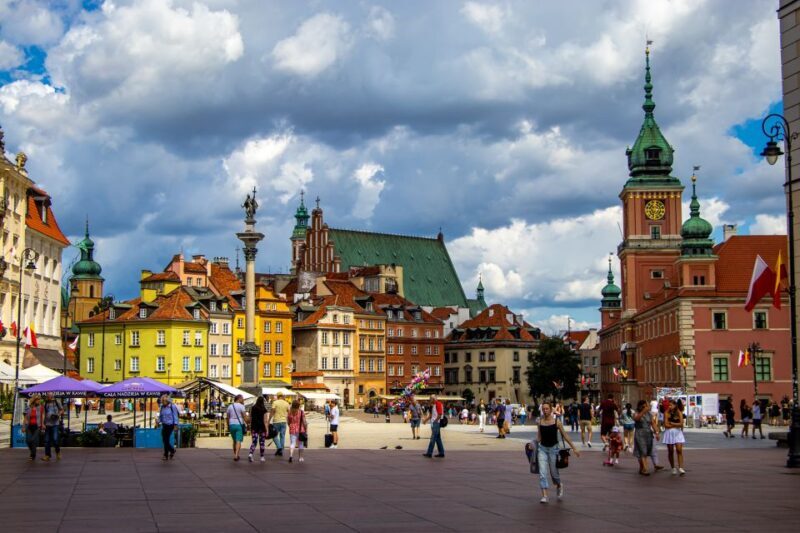 2 / 5
2 / 5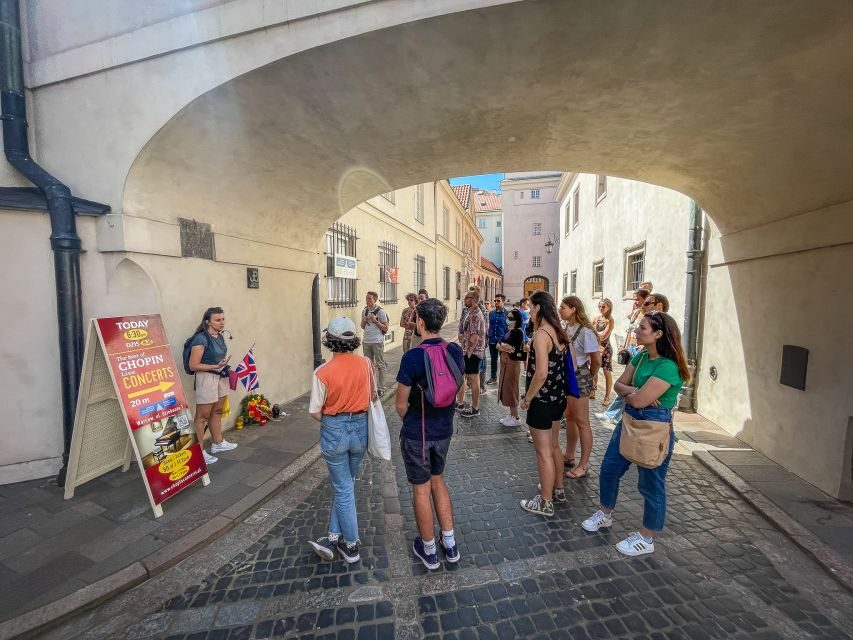 3 / 5
3 / 5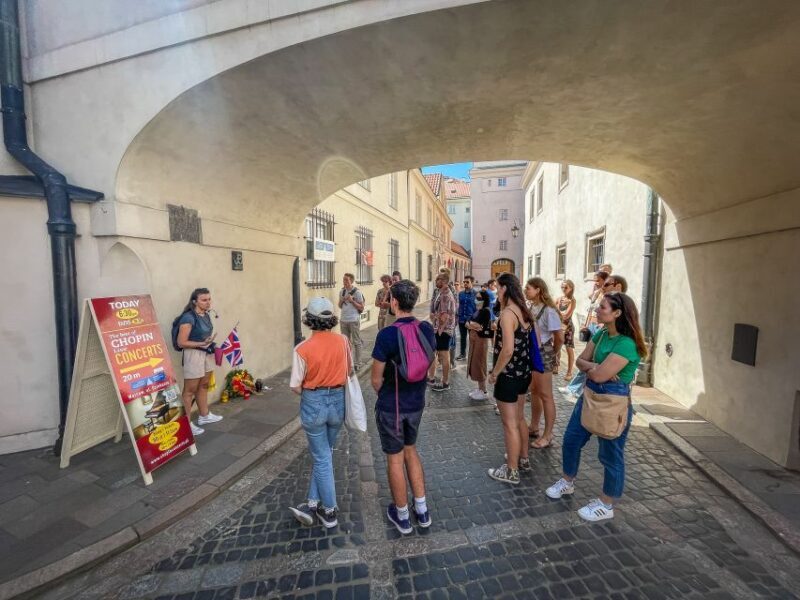 4 / 5
4 / 5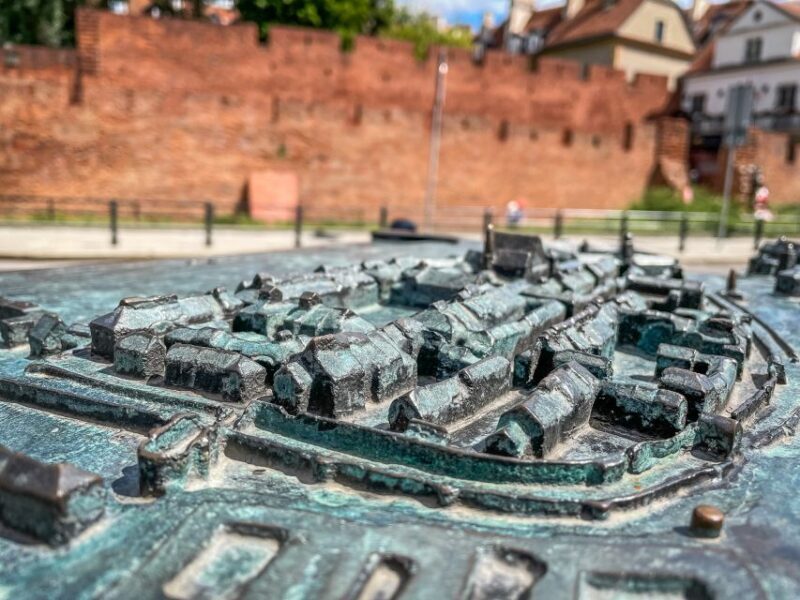 5 / 5
5 / 5- Copernicus to the Royal Route: Start at Krakowskie Przedmieście and build your bearings fast.
- Chopin’s heart site: A short cultural moment that helps explain why Warsaw feels deeply personal.
- Old Town walls and color: You’ll see Krakowskie Przedmieście and the Old Town look that people come for.
- Reconstructed Royal Castle: One of the big “why it was rebuilt” stops after WWII.
- Presidential Palace and Warsaw University: Classic Warsaw institutions show up early in the route.
- Rain or cold cover: The tour runs in bad weather, with help if conditions get unpleasant.

👉 See our pick of the Warsaw’s 10 Best Workshops & Classes
Warsaw Old Town in 2.5 Hours: What This Walking Tour Really Delivers
If you have limited time and you want the main Warsaw story without a headache, this walking tour is built for you. You get a tight loop through the Old Town area and the walk along the Royal Route, plus the kind of historical context that makes the sights feel connected instead of random.
I also like the balance. Warsaw’s rebuilding is the headline, but the tour doesn’t gloss over the darker chapters. The result is a city walk that gives you names, causes, and consequences, not just postcards.
And yes, it’s exactly the kind of tour that makes the 2.5 hours feel shorter than they sound, mainly because the guides keep the narrative moving.
You can also read our reviews of more walking tours in Warsaw

Meeting Point and Finding Your Guide by the Yellow Umbrella
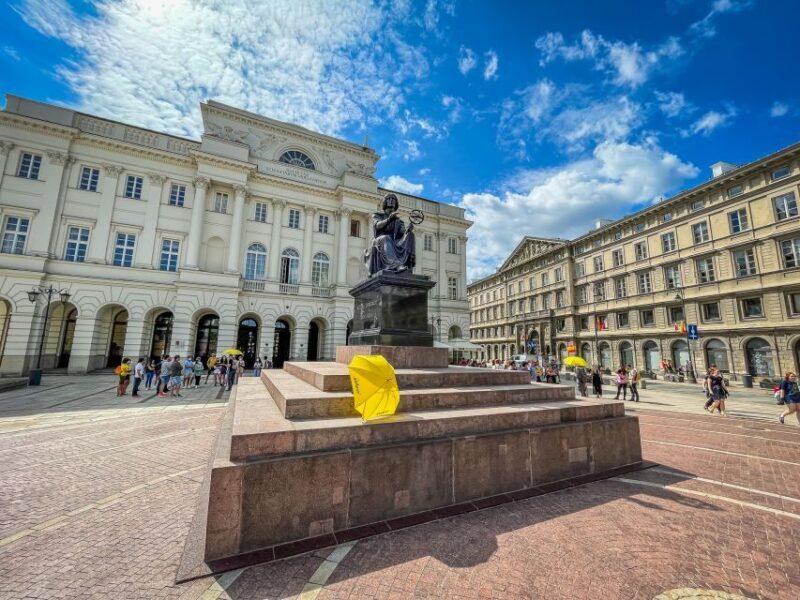
Your starting point is next to the Nicolaus Copernicus Monument on Krakowskie Przedmieście Street 2. This matters because the area is busy and it’s easy to waste time searching.
Look for the guide with a yellow umbrella. If anything feels off, the tour notes you should get in touch right away rather than guess. That small detail saves stress, especially if you’re arriving from a train or another timed activity.
Also keep in mind the guide and group are meeting there rain or shine, so you’ll want to arrive a few minutes early and be ready to start moving.
Copernicus Monument Start: Getting Oriented on Krakowskie Przedmieście
The tour begins with Copernicus, which is a smart choice. It instantly ties Warsaw to European intellectual history, and it helps you understand why this city’s “center” has always mattered.
From there, you’re guided along Krakowskie Przedmieście and into the Royal Route flow. You’ll see the kind of street-front energy that makes Warsaw feel like a living capital, not a museum district. The guide uses this opening walk to set expectations: what you’ll see, how it connects, and how the city rebuilt its identity after the worst of the 20th century.
If you’re the type who likes to understand where you are before you start taking photos, this is the part that works.
The Royal Route Highlights: Presidential Palace and University Buildings
As the walk continues along the Royal Route, you hit classic Warsaw institutions tied to modern governance and education. The tour specifically mentions the Presidential Palace and Warsaw University buildings as key stops.
Why this works: it anchors the story in more than one time period. You start with the cultural and civic heartbeat of the city, then the guide layers in what happened when history went sideways. You don’t just hear about the past. You understand why the present looks the way it does.
Practical note: this section is often more “city walking” than “wow architecture.” If you want constant skyline moments, you may have to lean into the guide’s storytelling to keep it exciting, which many guests say they do well.
More Great Tours NearbyChopin’s Heart Site: The Cultural Stop That Changes the Mood
One of the standout highlights is the place connected to Chopin’s heart burial. It’s the kind of stop that shifts the mood. Suddenly, you’re not just walking through monuments. You’re walking through memory.
The guide typically connects Chopin to Warsaw’s larger cultural identity, and it fits the tour’s theme: the city is shaped by people as much as by politics. Guests mention learning names and stories that connect to the sites, and this is one of those anchors.
It’s also a useful pause. After the civic and route-walking, this moment slows things down just enough to make the rest of Old Town hit harder.

Krakowskie Przedmieście and Old Town Walls: Color, Stone, and Street-Level Reality
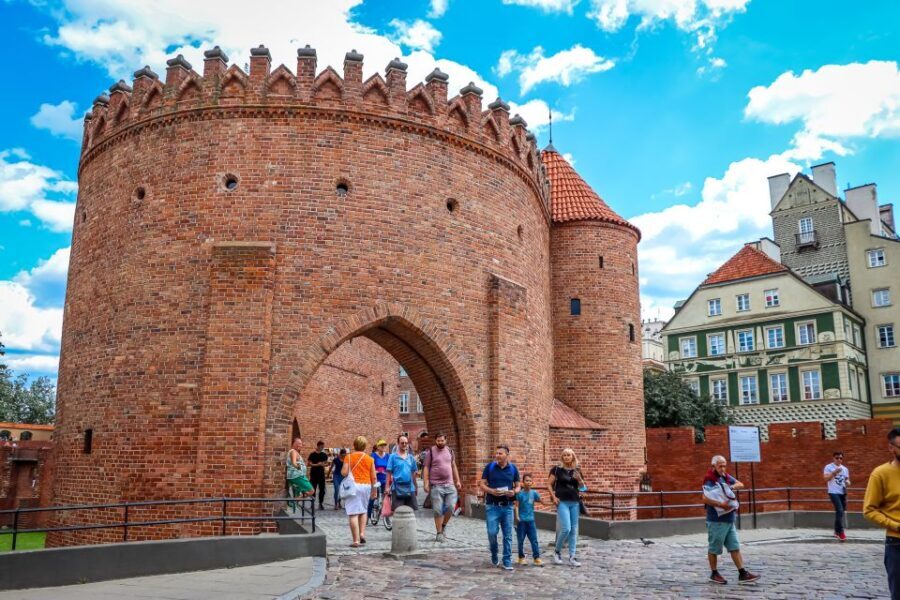
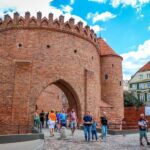
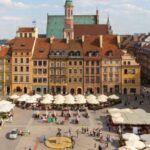
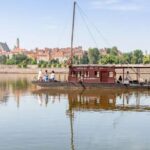
You’ll spend time around Krakowskie Przedmieście and the Old Town area, including the sense of being within the historic city walls. This is where Warsaw looks most like the images you’ve seen online, but the tour adds what photos can’t: why the streets, buildings, and layout matter.
The guide’s job here is to help you read the place. What looks like pretty architecture also becomes a signpost for resilience, rebuilding, and cultural continuity. You’ll likely also hear explanations about how the city’s identity was shaped over time, including the relationship between regional, city, and national history.
If you’re traveling with someone who wants “what do I do in Warsaw?” this section keeps both sides happy: recognizable landmarks, plus context that makes them more meaningful.
Royal Castle (Reconstructed): Why It Matters After WWII
The Royal Castle is one of the big “stop and stare” moments. The tour emphasizes the reconstructed Royal Castle, and that framing is important. You’re not just seeing a palace-like building. You’re seeing a public decision to rebuild a core symbol.
For me, this is where the walking tour becomes more than sightseeing. It turns into a story about identity and restoration. Why rebuild this? What does a reconstruction try to repair—loss, memory, legitimacy, or something else? The guide’s explanations aim at those questions.
Drawback to expect: if you’re hoping for lots of time inside buildings, this is a walking tour focused on seeing and learning outside. You’ll get context and viewpoints, but you likely won’t have long indoor museum-style time unless you add something later on your own.
Warsaw’s Tragic Twists: Two Uprisings and the Road to Rebuilding
A major theme of the tour is Warsaw’s tragic, complex WWII history. The highlights specifically point to the city being devastated and the guide covering the two largest uprisings against Nazi rule that blazed the city to the ground.
This section can be emotional, and the best guides handle it with clarity. Guests consistently mention guides with the ability to explain history in a way that stays understandable, even when the subject matter is hard.
The tour also frames Warsaw’s comeback: after a dark period, the city rose from the ashes and now acts as a center of European trade, tourism, education, and politics. That contrast helps you remember the point of visiting a place like this. Warsaw isn’t stuck in the past. It survived, rebuilt, and moved forward.
How the Guides Make History Work: Humor, Clarity, and Names You’ll Remember
The tour is only as good as the person leading it, and the results here are strongly consistent: guests highlight guides as knowledgeable, engaging, and funny.
You’ll see names like Michael, Andrzej, Anna, Olivia, Lucas, and Jack popping up in guest comments. The common thread isn’t just expertise. It’s delivery. People mention clear English, good pace, and a way of telling the story that makes you feel like you’re getting the inside view rather than a memorized script.
That matters because Warsaw’s history isn’t simple. A guide who can sort the big ideas into a timeline you can follow is worth paying attention to.
If you’re nervous about tours where you won’t understand the guide, this is one of the better bets. Many guests specifically call out easy-to-follow English and an ability to answer questions.
Pace, Weather, and Comfort: Shoes, Cover Plans, and Group Size
This is a walking tour, and it spends most of the time outdoors. So the basics matter: wear comfortable shoes, and don’t dress like you’re going to a restaurant.
The tour also says it runs rain or shine, and if it rains or gets cold, they find cover. That’s a real quality-of-life detail. It means you won’t just stand around in miserable weather with nothing to do.
Group size is described by at least some guests as manageable, not huge. That’s important because it helps you hear the guide and ask questions without feeling lost.
If you’re the kind of traveler who hates being cold, consider layering. If you’re the kind who hates being wet, bring a compact rain layer. Either way, you’ll enjoy the tour more.
Wheelchair Accessible and Practical Logistics That Matter
The tour is listed as wheelchair accessible, which is a big plus for travelers who need that flexibility.
You’ll also want to know what’s included and what isn’t. The tour includes a guided walking tour and the guide. Hotel pickup and drop-off aren’t included, and there are no food and drinks.
That means you should plan your day so you’re not relying on this tour to solve meals or transportation. In practical terms, you’ll get the history and sights. You’ll handle the logistics around it.
Price and Value: Is $26 Worth It in Warsaw?
At $26 per person for a 150-minute guided walk, the price-to-time ratio looks solid. You’re paying for an expert who can connect multiple locations—Royal Route, Old Town, key reconstructed symbolism—into one coherent story.
And there’s another layer to the value: this booking is described as a general pay as you wish setup. The amount you pay covers the reservation fee and the guide’s payment. If you feel the guide earns more, the setup lets you reward them accordingly.
From a traveler perspective, that can be a good deal. You’re not just buying access to sights. You’re buying explanation, context, and pacing, and you have the chance to match your tip to what you actually experienced.
Still, be realistic. This isn’t a private tour. If you want total control over pace and questions, you may prefer a smaller private option. The note says they can organize that if you let them know.
Should You Tip on a Pay-as-You-Wish Tour Setup?
Because the tour is described as pay as you wish (with the paid amount covering reservation and guide payment), it’s reasonable to plan to reward the guide if you enjoyed the experience.
Many guests mention humor, clarity, and energy as key reasons they recommend it. If your guide feels like that—someone who keeps the group moving and makes history make sense—you’ll probably want to tip generously.
If you don’t like variable tipping, you can still book. Just understand the system is built around guest appreciation.
Who This Tour Suits Best (and Who Might Skip)
This works best if you:
- Want a fast, meaningful overview of Warsaw Old Town
- Like guided context more than solo wandering
- Enjoy history that explains why places look the way they do now
- Prefer a route with major landmarks plus a narrative
You might consider skipping or pairing differently if you:
- Want lots of time inside buildings
- Hate outdoor walking for any reason
- Are looking for mostly entertainment rather than serious history
For most first-timers, this tour is a strong foundation. For repeat visitors, it can still be worth it if you want a more connected story of reconstruction and identity.
Should You Book This Warsaw Old Town Highlights Walking Tour?
I’d book it if you’re coming to Warsaw for the big sights and you want the city’s story told in a way you can actually follow. The combination of iconic locations (Copernicus, the Royal Route, Chopin’s heart site, the Royal Castle) and strong guide quality is exactly what makes a short stay feel complete.
If you’re sensitive to weather or dislike walking for 2.5 hours, just plan better: shoes, layers, and a willingness to be outdoors. If those fit your travel style, this is a good-value way to understand Warsaw instead of just looking at it.
Warsaw: Old Town Highlights Walking Tour in English
FAQ
Where does the tour start?
The tour meets next to the Nicolaus Copernicus Monument on Krakowskie Przedmieście Street 2. Look for the guide with a yellow umbrella.
How long is the Warsaw Old Town Highlights walking tour?
The duration is 150 minutes.
What is the price?
The price is $26 per person.
Is the tour offered in English?
Yes, the live tour guide language is English.
Is hotel pickup or drop-off included?
No, hotel pickup and drop-off are not included.
Are food and drinks included?
No, food and drinks are not included.
Is the tour wheelchair accessible?
Yes, the tour is listed as wheelchair accessible.
What should I bring?
The tour advises bringing comfortable shoes.
What happens if it rains or gets cold?
The tour takes place rain or shine, and if it rains or gets cold, they find cover.
Is free cancellation available?
Yes, you can cancel up to 24 hours in advance for a full refund.
You can check availability for your dates here: