When we look at walking tours in Dublin, we consistently find that certain experiences transcend the typical sightseeing format. The 1916 Rebellion Walking Tour sits at the very top of that list—a tour that manages to be educational without feeling like a classroom, entertaining without sacrificing substance, and affordable without compromising quality.
We particularly appreciate two things about this experience. First, the guides genuinely care about the material and the people they’re teaching; this isn’t someone reading from a script, but rather a historian sharing their passion for a pivotal moment in Irish history. Second, the tour offers exceptional value at just $27.81 per person for two hours of expert guidance through some of Dublin’s most historically significant locations.
One consideration worth noting: the tour occasionally runs longer than the advertised two hours, and groups sometimes reach the maximum capacity of 30 people. But these minor logistics shouldn’t deter you from booking.
This tour works beautifully for history enthusiasts who want to understand the roots of modern Ireland, but equally for travelers with no prior knowledge of the 1916 Rising who want a crash course in revolutionary history delivered with genuine expertise and warmth.
- Why This Tour Matters More Than Most
- Meeting Point and Getting Started
- Walking Through Revolutionary Dublin
- City Hall and Dublin Castle
- The Four Courts and O’Connell Monument
- Jim Larkin Statue and the GPO
- Moore Street and the Old Parliament
- The Guides Make All the Difference
- Value and Practical Considerations
- Timing and What to Expect
- Who Should Book This Tour
- The Real Test: Repeat Visitors
- Final Thoughts
- Frequently Asked Questions
- The Best Of Dublin!
- More Walking Tours in Dublin
- More Tours in Dublin
- More Tour Reviews in Dublin
Why This Tour Matters More Than Most
 1 / 4
1 / 4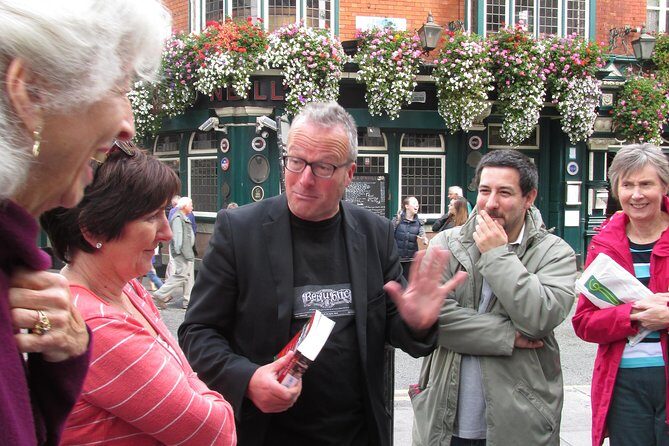 2 / 4
2 / 4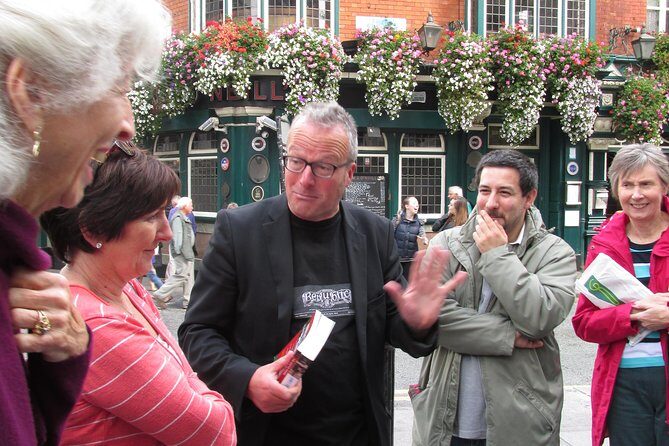 3 / 4
3 / 4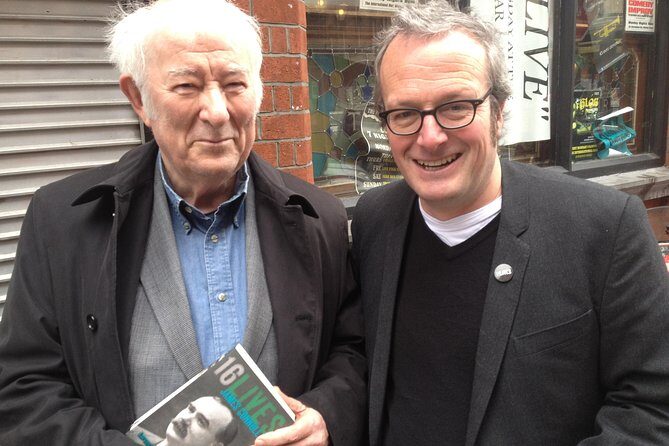 4 / 4
4 / 4Dublin’s streets hold stories that shaped a nation. The 1916 Easter Rising represents one of the most pivotal moments in Irish history—a moment that ultimately led to independence and fundamentally changed the trajectory of an entire country. Yet for many visitors, these events feel distant and abstract.
What makes this particular tour special is how it transforms those abstractions into tangible, personal history. You’re not just hearing dates and names; you’re standing where people stood, seeing the physical evidence of the uprising still visible on Dublin’s buildings, and hearing from guides who treat this history with the reverence it deserves.
The tour has been running since 1996, which means the operators have had nearly three decades to refine their approach. They’ve figured out what works, what captures attention, and how to make complex historical events accessible without oversimplifying them. That level of experience shows in every aspect of the tour.
👉 See our pick of the Discover 6 Great Shore Excursions In Dublin
Meeting Point and Getting Started
The tour begins at the International Bar on Wicklow Street in central Dublin. This isn’t just a random starting point—it’s been the home base for this tour since its inception. You’re welcome to arrive early and settle in with a drink while you read through introductory materials about the period. This relaxed beginning sets the tone for what follows: learning that feels conversational rather than formal.
The first part of the tour, still at the International Bar, provides crucial context. Your guide will walk you through the historical buildup to the 1916 Rising, starting with the Great Hunger of the 1840s. This foundation matters enormously. Understanding the centuries of Irish grievances, the failed uprisings, the political maneuvering, and the social conditions that preceded 1916 helps every subsequent stop on the tour make sense.
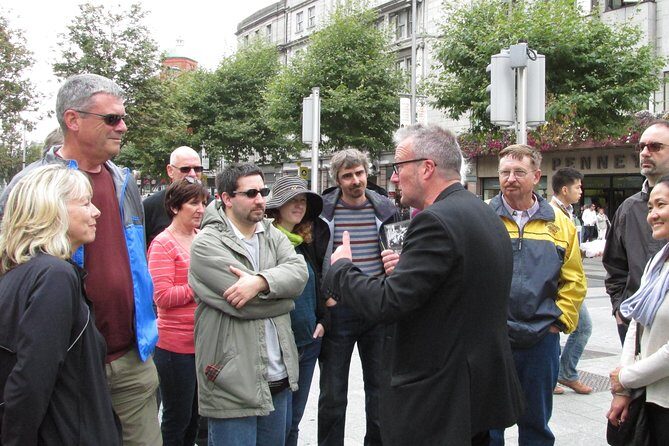
This is where guides earn their keep. As one traveler noted, “Throughout the tour he took time to take questions and offer insightful feedback. It was very much a conversation as well as a tour.” This collaborative approach means you can ask questions if something doesn’t make sense, and you can pursue topics that particularly interest you. It’s the opposite of being herded through a checklist.
You can also read our reviews of more walking tours in Dublin


Walking Through Revolutionary Dublin
After the introductory session, you’ll spend approximately two hours walking to various sites that played crucial roles during Easter Week 1916. The route varies depending on your guide and the day, which is intentional—the operators want to keep the experience fresh for both guides and repeat visitors. One traveler mentioned doing the tour three times and learning new information each time, which speaks to this thoughtful variety.
City Hall and Dublin Castle
Your first stops include City Hall, where the Irish Citizen Army occupied the building during the uprising, and Dublin Castle, the seat of British administrative power in Ireland. Standing outside these buildings while your guide explains what happened within their walls creates a visceral connection to history. You’re not reading about these events in a book; you’re seeing the actual architecture, understanding the tactical positions, and imagining the dramatic events that unfolded there.
The Four Courts and O’Connell Monument
The Four Courts, viewed from a bridge over the River Liffey, was occupied by revolutionaries in 1916 and again during the subsequent Civil War. Your guide will explain not just what happened in 1916, but how those events led to the civil conflict that followed. This longer historical perspective helps you understand that the Rising wasn’t an endpoint but rather the beginning of a complex process.
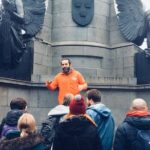
At the O’Connell Monument, you’ll see something that most casual travelers miss: bullet holes still visible from the fighting in 1916. As one traveler reflected, “being able to see the bullet holes still in the statues and pillars was a chilling experience.” These aren’t historical recreations or artistic interpretations. They’re physical evidence, preserved for over a century, that connects you directly to the events being described.
Jim Larkin Statue and the GPO
You’ll also pause at the statue of Jim Larkin, a union organizer and close associate of James Connolly, one of the Rising’s leaders. Understanding the labor movement’s role in the uprising provides another crucial layer of context—this wasn’t simply a nationalist uprising but also a social revolution that sought to improve conditions for Dublin’s working class.
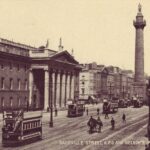
The General Post Office (GPO) is the crown jewel of this tour. This is where Patrick Pearse read the Proclamation of the Irish Republic, making it arguably the most important building in Irish national consciousness. Your guide will spend considerable time here—roughly 30 minutes—explaining the events of Easter Week in detail. This extended stop makes sense given the GPO’s centrality to the entire narrative.


Moore Street and the Old Parliament
Depending on timing and route, you may visit Moore Street, where the GPO garrison made their final stand during Easter Week, or the Bank of Ireland (the Old Parliament), where you can see another important piece of Dublin’s political history. These stops, while sometimes optional, add additional texture to your understanding of how the city’s geography shaped the uprising.
The Guides Make All the Difference
You’ll notice something consistent throughout the reviews: travelers consistently praise the guides by name. Lorcan Collins, Liz, Phelim, Adam, Phil, Donald, Donal, Elaina—these aren’t anonymous tour operators. They’re people who’ve clearly invested themselves in becoming experts on this period.
One review captures what makes these guides exceptional: “Liz was a brilliant tour guide: welcoming, informed, friendly, passionate—exactly what you’d want from a tour.” Another traveler noted that their guide “spoke with clarity and confidence and was highly informative. He was also very entertaining and his good natured sense of humour engaged all.”
Several guides apparently incorporate singing into their tours, sharing rebel songs that connect emotionally to the material. One traveler mentioned that “the singing that at times illustrated sights and information” was a special aspect of their experience. This isn’t cheesy entertainment; it’s using music to deepen the emotional resonance of the history.
What’s particularly impressive is how guides handle the emotional weight of the subject matter. These events involved real people who died, who suffered, and whose sacrifices had lasting consequences. The best guides balance the seriousness of the topic with appropriate humor and a genuine warmth that makes the experience feel personal rather than morbid.
Value and Practical Considerations
At $27.81 per person, this tour offers remarkable value. You’re getting two hours with an expert guide covering some of the most important history in Irish studies. For comparison, many historical walking tours in European cities cost $50 or more and often provide less expertise and engagement.
The tour is offered in English only, but the guides’ clear articulation and engaging delivery mean that non-native English speakers generally find the experience accessible. One review specifically praised a guide for speaking “clearly and loudly,” which matters when you’re walking through city streets.
The tour accommodates most physical abilities, though you should know you’ll be walking at a moderate pace through central Dublin. The maximum group size of 30 people means you won’t be lost in a massive crowd, but it also means you won’t get one-on-one attention. That said, guides are attentive to group dynamics—one review mentioned that a guide “looked out for the group, and was especially considerate for one person who used a walker.”
Booking is straightforward through mobile tickets, and you can cancel up to 24 hours in advance for a full refund. The tour is weather-dependent, but if poor weather forces cancellation, you’ll receive either an alternative date or full refund.
Timing and What to Expect
The advertised duration is two hours, though some travelers report the tour occasionally runs closer to three hours. This isn’t necessarily a problem—most people seem delighted to have more time with their guide—but if you have strict scheduling constraints, you might want to plan for 2.5 hours to be safe.
The tour typically books about 22 days in advance on average, which gives you some flexibility in planning but also suggests it’s popular enough that you shouldn’t wait until the last minute during peak season.
Who Should Book This Tour
This tour is ideal if you have any interest in Irish history, Irish independence, or how revolutionary movements actually work in practice. History buffs will find the depth of knowledge extraordinary. But travelers with no background knowledge will find themselves equally engaged—the guides excel at making complex historical events comprehensible and compelling.
If you’re visiting Dublin for just a few days and want to understand modern Ireland’s origins, this two-hour investment will pay dividends for the rest of your trip. You’ll see other sites around Dublin with fresh perspective, understanding how they fit into the broader narrative of Irish history.
This tour is less suitable if you’re looking for a leisurely stroll with minimal information, or if you prefer tours that focus on architectural details rather than social and political history. It’s also worth noting that this tour focuses specifically on 1916 and the events immediately surrounding it, rather than providing a rundown of all Irish history.
The Real Test: Repeat Visitors
One of the strongest endorsements we can give to any tour is when travelers come back. One person mentioned doing this tour three times and learning something new each time. That’s not typical for walking tours. It suggests the guides are genuinely knowledgeable enough to go deeper with each iteration, and that the experience isn’t just about hitting checkpoints but about genuine education.
The 99% recommendation rate among travelers tells you something important: this isn’t a tour that appeals only to a narrow audience. It works for diverse groups—Americans curious about immigration and Irish heritage, Irish people wanting to understand their own history better, Europeans interested in European history, and casual travelers who didn’t expect to care but found themselves captivated.
Final Thoughts
The 1916 Rebellion Walking Tour represents one of Dublin’s finest educational experiences, combining expert guides, historically significant locations, and genuinely engaging storytelling at a price point that makes it accessible to virtually any traveler. Whether you’re a dedicated history enthusiast or simply someone interested in understanding the events that shaped modern Ireland, this tour will deepen your appreciation for Dublin and the nation’s complex journey to independence. At less than $28 per person for two hours of passionate, knowledgeable guidance through the heart of Irish revolutionary history, it’s an investment that pays dividends throughout your entire visit to Ireland.
1916 Rebellion Walking Tour
Frequently Asked Questions
How long is the tour, and will I actually have time to see everything?
The tour is advertised as approximately two hours, though some travelers report it occasionally runs closer to 2.5 to 3 hours. The guides prioritize quality over rushing, so you’ll have adequate time at each stop. The General Post Office receives the most attention (about 30 minutes), which makes sense given its historical importance.
Do I need to know Irish history before booking this tour?
Not at all. The tour begins with a comprehensive introduction covering the historical context from the Great Hunger through to 1916, so you’ll have the foundation necessary to understand everything that follows. Many travelers with no prior knowledge report learning more in these two hours than in entire weeks of other historical tours.
What’s included in the price, and what costs extra?
The $27.81 price includes a professional guide and access to all outdoor sites (which have free admission). Alcoholic drinks are available for purchase at the starting point (the International Bar) before the tour begins, but these are optional and not included in the tour price.
How large are the groups, and will I feel crowded?
Groups are capped at a maximum of 30 people. While this isn’t a small group experience, guides are attentive to group dynamics and keep everyone together. The walking route through Dublin’s streets doesn’t feel cramped even with this number of people.
Is this tour physically demanding?
The tour involves walking at a moderate pace through central Dublin for approximately two hours. Most travelers of average fitness can participate comfortably. The tour accommodates most physical abilities, and guides are considerate of those with mobility considerations.
What if the weather is bad?
The tour is weather-dependent and may be canceled in poor conditions. If this happens, you’ll be offered either an alternative date or a full refund. Check the forecast before your tour day, but don’t let mild rain deter you—Dublin drizzle is manageable, and the tour’s educational value doesn’t diminish with a little weather.
Can I ask questions during the tour?
Yes, absolutely. Travelers consistently praise guides for encouraging questions and engaging in conversation rather than delivering a scripted monologue. This interactive approach is one of the tour’s greatest strengths.
Are there any sites where we go inside buildings, or is this entirely an outdoor walking tour?
This is primarily an outdoor walking tour where you view buildings from the street and hear their stories. You don’t enter buildings for tours within tours, which keeps the pace moving and focuses your attention on the guide’s narrative and the physical evidence of history visible on Dublin’s streets.
How do I book, and what’s the cancellation policy?
Booking is handled through mobile tickets. You can cancel up to 24 hours before the tour’s start time for a full refund. Cancellations made less than 24 hours in advance forfeit the full amount. The tour is near public transportation, making it easy to reach the starting point on Wicklow Street.