
This review covers a Marble Tour in Vila Viçosa (Alentejo, near Évora District) focused on how marble turns from rock to finished stone, with both craft and industrial processing in the mix. You’ll spend about 2 to 3 hours on-site, in an English-guided group limited to 10 travelers.
What I like most is the balance: you get clear marble geology and the real-world story of extraction and production, plus you’ll see both the manual workshop side and the mechanized processing side. The guides also get strong marks for being enthusiastic and easy to follow—people mention guides like João and Juaquina bringing the whole process to life.
One thing to plan for: you need your own vehicle to get between the meeting point and the visited sites. If you’re relying on public transport or a taxi, this part can be awkward.
- Key things to know before you go
- Vila Viçosa marble tour: the setting and why it matters
- Time on the clock: 2 to 3 hours that move at a good pace
- Who this tour suits best
- Price and value: what .25 includes (and what it doesn’t)
- The meeting point and how the tour actually starts
- Transportation reality: bring your car (or plan around it)
- Stop 1 in Vila Viçosa: from marble nucleus to finished products
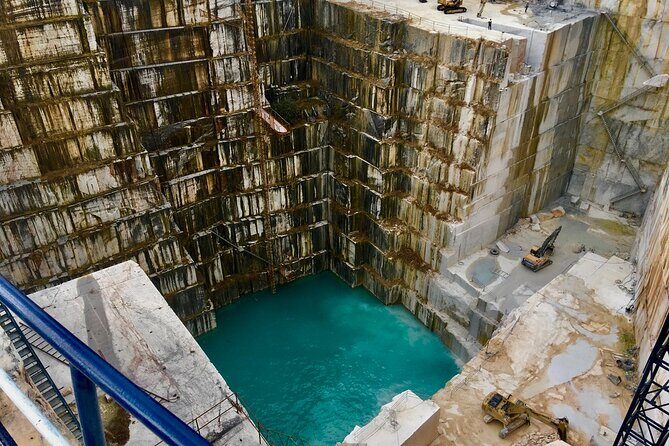
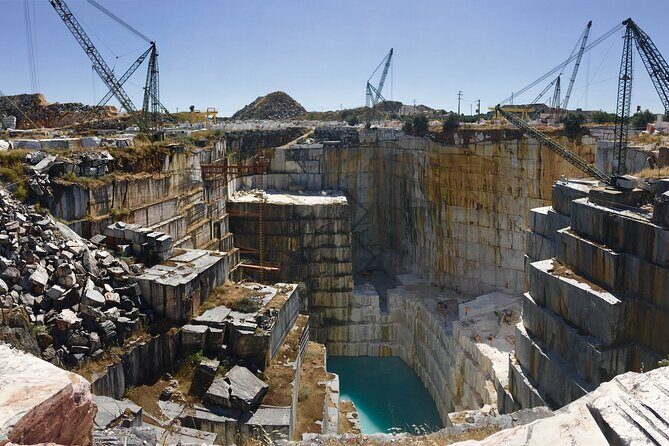
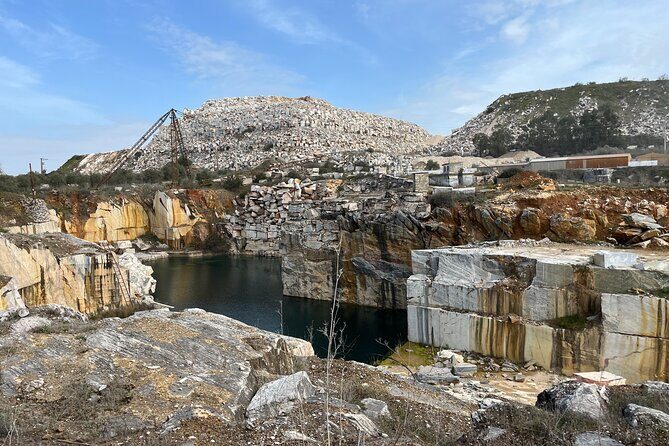
- The marble nucleus and extraction context
- Workshop time: manual transformation and personal craft stories
- Industrial milling/processing: mechanized work and finished examples
- What makes the guides so highly praised
- Comfortable planning: footwear and physical needs
- Group size, discounts, and the experience feel
- Weather and timing: when plans can change
- Cancellation policy: free up to 24 hours
- Food and drink: plan to sort it out yourself
- Practical tips to get the most from the tour
- Should you book this marble tour in Vila Viçosa?
- FAQ
- How long is the Marble Tour in Vila Viçosa?
- How much does the tour cost?
- Is the tour in English?
- Where do I meet, and where does the tour end?
- Do I get hotel pickup or drop-off?
- Do I need my own transportation?
- What should I wear?
- What is the cancellation policy?
Key things to know before you go
- Small group (max 10): more Q&A time and less waiting around.
- English guide with strong reviews: travelers praised the explanations and energy from guides like João and Juaquina.
- Craft + industrial marble processing: you’ll see handmade transformations and mechanized milling/processing.
- Real hazards and machinery context: the tour doesn’t just show pretty results; it talks about extraction risks and equipment.
- No hotel pickup: you start at a specific meeting point and return there.
- Closed footwear required: plan for some uneven, dusty, or industrial-looking areas.
Vila Viçosa marble tour: the setting and why it matters
Vila Viçosa is one of those places where the local “thing” isn’t just a souvenir idea—it’s the economy, the landscape, and the daily work of people nearby. This tour is built around that reality. Instead of treating marble like magic, it shows you the chain of work: geology → extraction → cutting/polishing → workshop transformation → finished products.
You’ll be in the Évora region of Portugal, and the tour runs from a base at Rota do Mármore Av. Duques de Bragança 4, 7160-209 Vila Viçosa, Portugal. It’s straightforward, but it’s also hands-on in the sense that you’ll be shown processes, tools, and safety considerations. That’s part of why travelers consistently rate it near the top.
Time on the clock: 2 to 3 hours that move at a good pace
Plan on about 2 to 3 hours total. Some descriptions note roughly 2 hours of on-the-ground experience, so don’t build an itinerary that needs you back early without buffer.
Because you’ll be switching between different points and environments (quarry area, workshop spaces, and an industrial processing stop), this tour works best when you keep the rest of your day flexible. You’ll get the most out of it if you don’t rush off immediately after the tour ends.
Who this tour suits best
This tour is a great fit if you fall into one (or more) of these groups:
- You enjoy hands-on industry and craft, not just museum facts.
- You want a simple, practical explanation of how marble is extracted and processed.
- You like geology when it’s tied to real machinery and real products.
- You prefer a small group experience over a big bus crowd.
It also states moderate physical fitness is recommended. That usually means you should be able to walk on uneven ground and handle some stairs or movement around work areas—nothing extreme is promised, but industrial sites can be less polished than sightseeing stops.
Price and value: what $30.25 includes (and what it doesn’t)
The price shown is $30.25 per person. For that, you get a professional but informal local guide and the tour structure that takes you through extraction context, workshop work, and industrial processing examples.
Two value points stand out:
- Admission ticket is free (as indicated in the tour details), so you’re not paying extra on-site just to enter key areas.
- The guide quality seems to be the main event. With a small group and strong feedback about guides like João and Juaquina, you’re paying for interpretation, not just access.
What’s not included matters for planning:
- No hotel pickup or drop-off
- No private transportation
- No food or drinks (unless specified otherwise, which isn’t stated here)
If you already have a rental car, this likely feels like a fair deal. If you don’t, factor in the cost and hassle of getting yourself to each stop.
The meeting point and how the tour actually starts
You’ll meet at Rota do Mármore Av. Duques de Bragança 4, 7160-209 Vila Viçosa, Portugal. The tour also ends back at the meeting point.
The day is designed so your guide can manage the presentation and the flow, but you’re not being picked up. You’re expected to show up, start on time, and then handle local movement with your own vehicle between the meeting point area and the visiting spots.
A mobile ticket is offered, and confirmation is received at booking. That’s helpful if you want a smooth check-in with minimal paperwork.
Transportation reality: bring your car (or plan around it)
Here’s the practical part that can make or break your day:
For transportation between the spot of encounter and the stones/locations, visitors need their own vehicle. That means:
- If you’re renting a car, you’re in good shape.
- If you’re staying without easy car access, you may need to arrange an alternative for getting between points.
This isn’t about the guide being inflexible. It’s about the sites themselves—marble work areas aren’t built like normal attractions with central parking and walking-only access.
If you go anyway without a car, you’ll want extra buffer time and a backup plan.
Stop 1 in Vila Viçosa: from marble nucleus to finished products
This tour’s main stop is the Vila Viçosa area, and it’s built as a process tour. You’re not just seeing a quarry and calling it a day.
The marble nucleus and extraction context
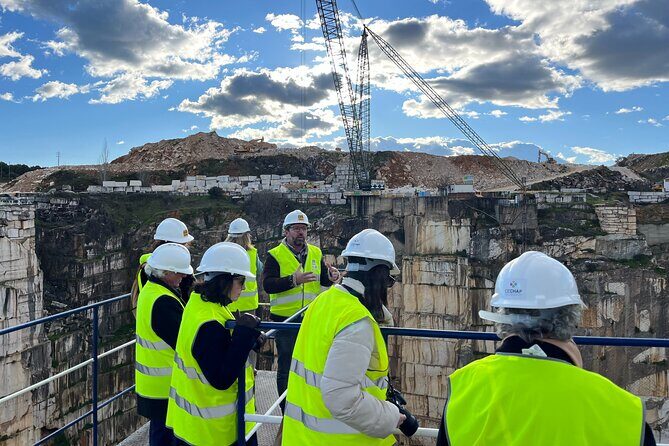
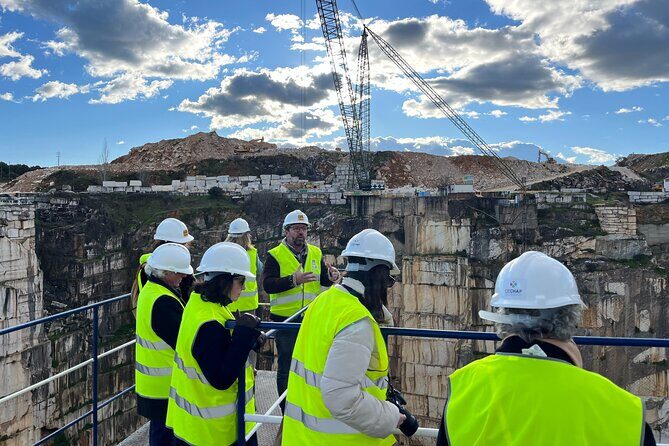
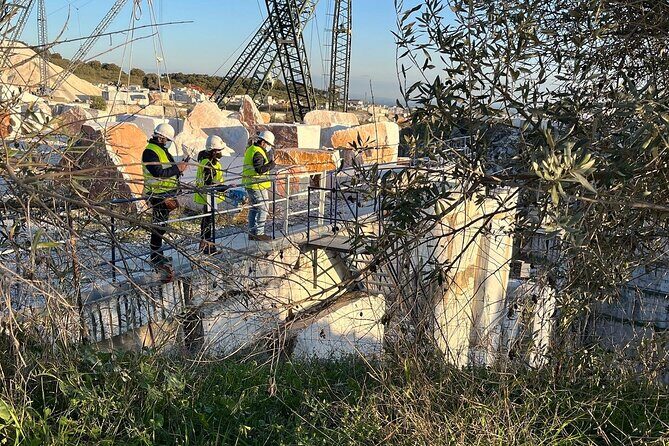
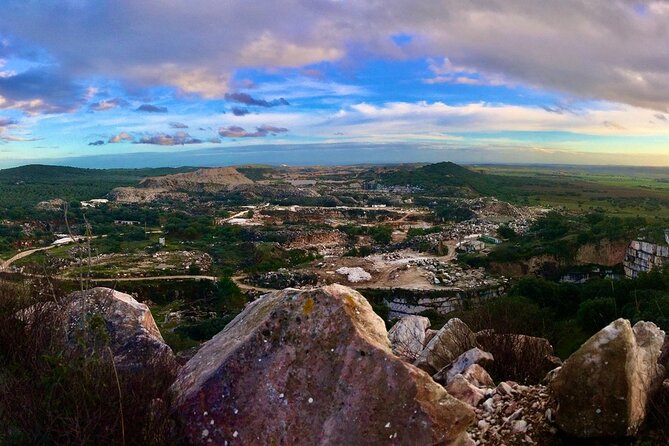
First, you’ll visit a Nucleus de Pedreiras de Marmore for the region. Expect a passage and presentation of different stones, with an explanation of:
- how marble extraction works
- the existing hazards
- the machinery used
- the economic and artistic aspects of the industry
Why this first segment matters: it gives your brain the right framework before you enter workshops or processing spaces. When people in your group ask questions like what machine does what, or why certain steps happen, this early grounding makes the rest feel clearer instead of random.
Workshop time: manual transformation and personal craft stories
Next comes a marble workshop (artisanal and manual transformation). This is where you shift from “industrial extraction” to “human technique.” The tour focuses on:
- the techniques of hand-based marble work
- the dangers that exist in the workspace
- the machinery used
- the final work
- personal stories of the master craftsperson
In traveler feedback, the workshop and guide-led explanations are a big reason people call the tour so interesting. This segment tends to be where you start noticing differences in finish and how small steps create the final look.
A practical note: workshops can feel dusty or busy. Bring patience, not expectations of a quiet, white-table experience.
Industrial milling/processing: mechanized work and finished examples
The tour then presents a marble milling / industrial workshop segment showing mechanized processing. You’ll see:
- the different machines used
- the existing hazards
- examples of final products
- the wider operational context of a marble mill
This is the “how production scales up” portion. If you only saw workshops, you might assume everything is hand-done. Here, you’ll see how industrial processing changes speed, output, and job roles. It also helps you understand why industrial safety and process control matter so much.
One practical consideration: industrial sites can be louder, more industrial-looking, and less comfortable than craft rooms. The tour is still guided and managed, but your comfort depends on what you’re used to.
What makes the guides so highly praised
Across the feedback, the common thread is that guides don’t just recite facts. They explain the logic.
People mention that the guide:
- gave information about marble geology
- took the group to a quarry to see cutting and polishing processes
- was entertaining and enthusiastic
- spoke good, clear English
Names that come up in reviews include João and Juaquina. Even if you don’t get the same guide, the consistent pattern suggests strong training and a tour style that keeps you engaged without turning it into a lecture.
If you care about a tour where you can ask questions and actually get answers, this is a major plus.
Comfortable planning: footwear and physical needs
The tour requires mandatory use of closed footwear. That’s not optional. You’ll likely be moving through areas where open sandals don’t make sense—think industrial spaces, quarry-adjacent ground, and surfaces that aren’t designed for comfort.
It also asks for moderate physical fitness. This doesn’t mean you need to be an athlete, but you should be comfortable walking and adjusting your pace around work environments.
If you wear supportive shoes, you’ll probably feel a lot better than someone who shows up in lightweight footwear.
Group size, discounts, and the experience feel
This activity has a maximum of 10 travelers. Smaller groups usually mean:
- fewer gaps in the explanation
- more flexibility for questions
- less time waiting for people to reposition
There are also group discounts, which matters if you’re traveling with friends or family and can book together. Since the group limit is small, it’s also a clue that this is designed to be more curated than mass-market.
Weather and timing: when plans can change
The tour requires good weather. If it’s canceled due to poor weather, you’ll be offered a different date or a full refund.
There’s also a minimum number of travelers requirement. If that minimum isn’t met, you’ll again get a different date/experience option or a full refund. That’s the kind of policy that protects you from paying for a tour that’s basically running as a solo act.
If you’re traveling in a season with unpredictable conditions, keep a little flexibility in your schedule.
Cancellation policy: free up to 24 hours
You get free cancellation up to 24 hours in advance for a full refund. If you cancel less than 24 hours before the start, your payment isn’t refunded.
Also, cut-off times use the experience’s local time. So if you’re booking from another time zone, double-check the timestamp.
This is a fairly traveler-friendly policy, especially if you’re still locking in your driving schedule.
Food and drink: plan to sort it out yourself
Food is not included, and drinks aren’t included either (unless otherwise specified, which isn’t shown in the details you have). This matters because 2 to 3 hours can turn into a snack-or-meal decision.
My practical advice: eat before you go, then plan to grab something after. If you get hangry, it’s hard to focus on processes like hazards and machinery—your brain needs energy to stay curious.
Practical tips to get the most from the tour
A few small choices can make a big difference:
- Wear closed shoes you’ve already broken in.
- Bring a light layer if the air feels cool in the morning or late afternoon.
- If you have questions about geology, quarry work, or polishing, jot them down on your phone so you don’t forget mid-tour.
- Since you’re using your own car, arrive early enough to park and regroup without stress.
And if you’re the type who loves the story behind craft—how techniques evolve and how workers think about quality—this tour should click.
Should you book this marble tour in Vila Viçosa?
If you like industry explained in plain language, and you want more than a quick quarry photo stop, I’d say yes. The biggest reason is the combination of clear guidance and the structured journey from stone to product—complete with both artisanal workshop work and industrial processing.
Book it if:
- You’re comfortable driving locally in Vila Viçosa.
- You want an English-speaking tour with a small group feel.
- You’re interested in how marble is extracted, processed, and finished, including safety and machinery context.
Skip it or think twice if:
- You don’t have easy access to a vehicle (since your own vehicle is required between points).
- You expected a fully guided “bus to everything” format with no self-navigation.
- You’re traveling with very limited mobility and don’t feel confident with moderate physical demands in industrial settings.
If you’re on the fence, look at your day logistics first. Then consider the guide-led process tour angle. With a 4.9 rating and 100% recommendation mentioned in the summary, chances are you’ll leave with a much better grasp of what you’re seeing—and why marble work is both an art and an engineering job.
Marble Tour in Vila Viçosa
FAQ
How long is the Marble Tour in Vila Viçosa?
It runs for about 2 to 3 hours (with some descriptions noting around 2 hours of experience time).
How much does the tour cost?
The price is $30.25 per person.
Is the tour in English?
Yes, it’s offered in English.
Where do I meet, and where does the tour end?
You meet at Rota do Mármore Av. Duques de Bragança 4, 7160-209 Vila Viçosa, Portugal, and the tour ends back at the same meeting point.
Do I get hotel pickup or drop-off?
No. Hotel pickup and hotel drop-off are not included.
Do I need my own transportation?
Yes. You need your own vehicle to travel between the meeting point and the places to visit.
What should I wear?
You’ll need closed footwear. The tour also expects moderate physical fitness.
What is the cancellation policy?
You can cancel for a full refund up to 24 hours before the start time. The tour may also be canceled due to poor weather, with a different date or a full refund offered.