
I’m reviewing the International Bomber Command Centre in Lincoln, a powerful stop for anyone interested in how World War II is remembered. You’ll get up close to the 31.09m metal memorial, plus interactive exhibitions that show the contentious history of Bomber Command through multiple perspectives.
Two things I really like here: the guided approach (including free tours in the memorial and gardens) and the way visitors can connect history to real people through the Losses Database and the names carved into the memorial. You’ll also find the overall visit works well for different ages, because the exhibitions are designed to keep things engaging without turning them into a gimmick.
One possible drawback: this is an emotionally serious subject, and some parts can feel intense—so it’s worth going in with calm expectations and giving yourself time to step outside and reset in the peace gardens.
- Key highlights to look for
- Where you go: International Bomber Command Centre (Lincoln, not Nottingham)
- Price and time: good value for an admission-included visit
- Tickets, cancellation, and the practical stuff
- What the visit feels like: remembrance with structure, not chaos
- Stop 1: The 31.09m metal memorial and views over Lincoln
- Finding names: the memorial and the Losses Database
- The exhibitions: interactive galleries and the Orchestra of Voices
- Free guided tours: what you gain with an experienced guide
- Peace gardens: a quiet reset after heavy content
- The Hub Café: a real break, with locally sourced food
- How long should you plan?
- Who this is best for (and who should rethink)
- Getting there and staying comfortable
- What to watch for in the memorial and photography spots
- Book it or skip it: my practical call
- FAQ
- Where do I redeem my ticket?
- What are the opening hours?
- How long should I plan for the visit?
- Is admission included in the ticket?
- Are there guided tours available?
- Is parking included in the price?
- Is the experience accessible for visitors with mobility needs?
- Are service animals allowed?
- What is the cancellation policy?
Key highlights to look for
 1 / 7
1 / 7 2 / 7
2 / 7 3 / 7
3 / 7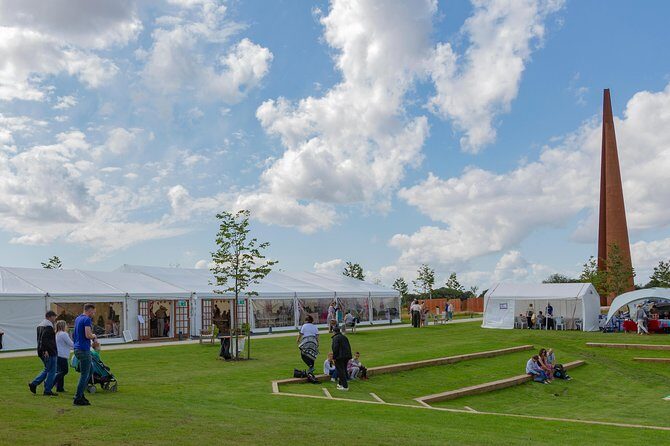 4 / 7
4 / 7 5 / 7
5 / 7 6 / 7
6 / 7 7 / 7
7 / 7- 31.09m metal war memorial with sweeping views over the city of Lincoln
- Names of almost 58,000 people linked to Bomber Command, including tools to explore them
- Interactive galleries built around perspectives from those involved on all sides
- Free guided tours of the memorial and landscaped gardens
- Peace gardens that offer a quiet pause after the exhibitions
- Hub Café with locally sourced food and drink on site
Where you go: International Bomber Command Centre (Lincoln, not Nottingham)
The experience is marketed under Nottingham, but the ticket redemption point is clearly in Lincoln: International Bomber Command Centre, Canwick Ave, Lincoln LN4 2HQ. That matters for trip planning—so double-check you’re heading to the right town before you set off.
The centre’s opening hours run Tuesday to Sunday, 9:30 AM to 4:00 PM (with the listed date range for the schedule). Confirmation is sent at booking, so you’ll want to have that handy in case staff asks for it at check-in.
Price and time: good value for an admission-included visit
At $15.94 per person, this is priced like a solid local ticket—especially because the admission model is straightforward. The duration is listed as 2 to 5 hours (approx.), which gives you flexibility: you can move quickly if you’re on a tight schedule, or linger if you want to search names and read slowly.
You’re also covered for all fees and taxes, and the experience explicitly notes that parking fees are not included. In other words, you’re likely to pay only for the ticket (and then any parking you choose to add).
Tickets, cancellation, and the practical stuff
This experience offers free cancellation up to 24 hours in advance for a full refund. If you cancel less than 24 hours before the start time, you won’t get your money back, so plan your day buffer accordingly.
Service animals are allowed, it’s described as near public transportation, and there’s a Changing Places Facility. If accessibility is a concern, it’s a comforting sign that the centre plans for visitors with specific needs.
What the visit feels like: remembrance with structure, not chaos
This isn’t just a monument you walk past. The design cues you to move step-by-step: first the memorial experience, then the exhibitions, then the calm break in the gardens. The result is a visit that feels guided even when you’re reading on your own.
And the tone is careful. The Orchestra of Voices concept is meant to present material through the eyes of those who were there, on all sides. That approach shows respect for the fact that World War II bombing is still debated and personal to many families.
Stop 1: The 31.09m metal memorial and views over Lincoln
Your visit begins at the International Bomber Command Centre, where you’ll see the UK’s tallest metal war memorial at 31.09m. It’s tall in a literal way, but also symbolic: it makes the site feel big enough to hold the weight of what’s being remembered.
There’s a practical payoff too. The centre notes you can enjoy fantastic views over the City of Lincoln. Several visitors highlight how photogenic the memorial is, especially the way the structure and site layout help you take in the scale.
Finding names: the memorial and the Losses Database
One of the strongest reasons people keep talking about this place is the chance to make history personal. The memorial includes the names of almost 58,000 individuals who lost their lives serving Bomber Command in WWII.
You can also use the Losses Database to learn more about individuals connected to those losses. That combination—names in a physical memorial plus the ability to explore—turns a one-off visit into something more like research, even if you only spend a short time searching.
The exhibitions: interactive galleries and the Orchestra of Voices
Inside, you’ll find three interactive and immersive exhibition galleries. The key selling point here is perspective: you’re not only hearing a single storyline. Instead, the experience is designed to present this period through multiple angles, using the Orchestra of Voices.
Visitors often describe the exhibitions as both informative and engaging, including elements that work well for families. One theme that comes through in what people say is that the centre avoids vague generalities and instead focuses on people, roles, and the realities of service.
Free guided tours: what you gain with an experienced guide
Even if you plan to read everything yourself, you’ll benefit from the free tours. The centre includes free guided tours of the memorial and gardens with experienced guides, which is especially helpful for a topic as complex and emotionally loaded as this one.
In feedback, visitors repeatedly mention that the guides are knowledgeable and that the explanations make the exhibits click. If you’re a visitor who likes to understand context before you start reading labels, this is a smart way to spend part of your visit.
Peace gardens: a quiet reset after heavy content
After the memorial and indoor galleries, the centre offers two landscaped peace gardens. They’re not an afterthought. The gardens give you a place to slow down, look around, and process what you just learned.
More than one visitor notes the value of stepping outside—especially when a guided visit has you thinking about the personal costs of the war. The gardens help balance the emotional intensity with space to breathe.
The Hub Café: a real break, with locally sourced food
Between galleries and outdoor time, you’ll want a break. The on-site Hub Café offers a delicious range of locally sourced food and drink, which also makes it easier to plan a half-day without hunting for meals nearby.
People mention that the café is a highlight on its own—so if you’re traveling with kids or you simply don’t like eating on the go, this can be a big practical plus. It’s also a good place to recharge before a second pass at the exhibitions or another walk around the memorial area.
How long should you plan?
Because the experience is listed as 2 to 5 hours, you can build your day based on what you want most.
- If you mainly want the memorial views and a quick guided pass, 2 to 3 hours may feel right.
- If you want to search names, read more carefully, and take time in the gardens, plan closer to 4 to 5 hours.
A tip from how visitors describe the experience: don’t rush the indoor galleries if you’re going to the point of looking up details about individuals. Those name-based stops can take longer than expected, in a good way.
Who this is best for (and who should rethink)
This is best for:
- Travelers who want memorial sites that explain context, not just monuments
- Anyone interested in WWII history and how it’s remembered
- Families who want a structured visit that still includes human stories
- People who like photo-worthy architecture and viewpoints
You might want to rethink your timing if:
- You’re not comfortable with emotionally heavy material
- You’re short on time and can’t afford a slower visit with reflection
Since it’s designed to be accessible to most travelers and includes on-site facilities, it’s also a solid option when you need a single destination that does a lot in one place.
Getting there and staying comfortable
The centre is noted as near public transportation, which helps if you don’t want to coordinate parking. If you are driving, remember that parking fees aren’t included, so factor that into your day budget.
Also note the presence of a Changing Places Facility. That’s the kind of detail that can make a big difference for comfort and ease, especially for visitors who need more than a standard accessible restroom.
What to watch for in the memorial and photography spots
The memorial is described as architecturally striking and easy to appreciate from multiple angles. Visitors also point out features like a map showing where bombs dropped, and the overall site design helps you connect the physical structure to the geography and scale of the war.
If you care about photos, treat the memorial like a viewpoint stop. Move slowly, look up, then step back for wider shots. You’ll also likely want to photograph the tranquil peace gardens after the more intense exhibition areas.
Book it or skip it: my practical call
Book this if you want a thoughtful WWII memorial visit that combines guided context, interactive learning, and a quiet outdoor reset. At $15.94 with admission included and free guided tours available, it’s strong value for a high-impact half-day.
Skip it only if you’re uncomfortable with the subject matter or you need something lighter and purely entertainment-focused. Otherwise, this is the kind of place where you leave knowing more than you started—and where the remembrance feels structured, not chaotic.
A Story of Discovery, Education and Remembrance
FAQ
Where do I redeem my ticket?
You redeem at International Bomber Command Centre, Canwick Ave, Lincoln LN4 2HQ, UK.
What are the opening hours?
Opening hours are listed as Tuesday to Sunday, 9:30 AM to 4:00 PM (for the posted date range).
How long should I plan for the visit?
The experience is listed as 2 to 5 hours (approx.).
Is admission included in the ticket?
Yes. The admission ticket is included with the experience.
Are there guided tours available?
Yes. You can enjoy free tours of the memorial and gardens with experienced guides.
Is parking included in the price?
No. Parking Fees are not included.
Is the experience accessible for visitors with mobility needs?
A Changing Places Facility is available, and the experience notes that most travelers can participate.
Are service animals allowed?
Yes, service animals are allowed.
What is the cancellation policy?
You can cancel for a full refund up to 24 hours in advance. If you cancel less than 24 hours before the start time, the amount paid is not refunded.