
Pompeii is big, uneven underfoot, and easy to misunderstand without a guide. This 2-hour small-group Pompeii tour focuses on the core sights and explains what you’re looking at, not just what it is. You’ll meet at Via Villa dei Misteri, 1 and then start the walk toward the western entrance, with guides like Ricardo, Rafaele, Ornella, and Antonio often mentioned as the kind of archaeologist who makes the stones feel human.
What I really like is the emphasis on meaning: Forum life, worship spaces, and everyday buildings are tied together so the city stops being a random collection of ruins. And the logistics are smart for a place that attracts crowds—there’s a separate priority line so you waste less time at the gate.
One consideration: the Pompeii entry ticket is not included (it’s €19 per adult), and the tour covers the best highlights rather than everything (for example, you may not see the amphitheater or every famous stop). Plan comfortable shoes and a bit of walking patience, especially in busy seasons.
- Key things to know before you go
- Pompeii in two hours: how this tour keeps it manageable
- Meeting point at Via Villa dei Misteri, 1 (and what to expect)
- Priority line and the Porta Marina Superiore start
- Your route, stop by stop: what you’ll actually see and why it matters
- Tempio di Venere: understanding a city’s patron goddess
- Basilica in the Forum: power, paperwork, and public life
- Sanctuary of Apollo: worship at the street’s strategic spine
- The Forum as the daily heartbeat
- Temple of Jupiter: a skyline viewpoint with historical context
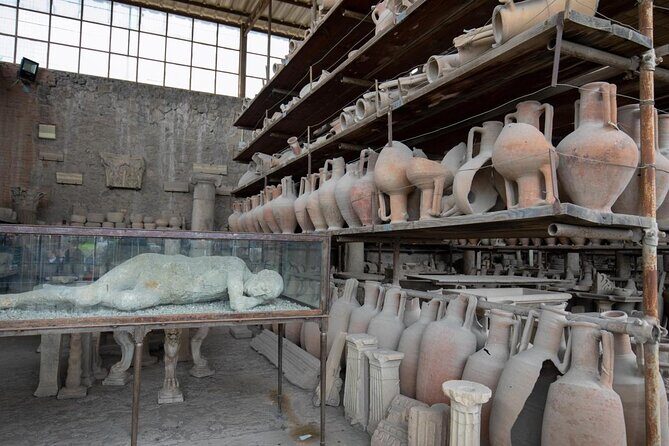
- Macellum: market life and the famous plaster casts
- Forum Baths (Terme del Foro): split entrances and social rhythms
- Thermopolium: a fast food stop from Roman times
- Casa del Fauno and the House of the Vettii: grand homes and Latin on the sidewalk
- Via dell’Abbondanza: the ancient main street experience
- Teatro Grande: the performing arts angle
- Guide quality is the difference maker here
- Tickets and pricing: where the real cost comes from
- Group size and comfort: small enough to hear the story
- What’s included—and what’s not included
- Timing and weather: the tour runs on real-world conditions
- Cancellation policy: straightforward and traveler-friendly
- Where this tour fits best (and who should skip it)
- Should you book this Pompeii archaeologist tour?
Key things to know before you go
- Archaeologist guide: an expert in archaeology leads the walk, so explanations are about how we know, not just what things look like
- Priority entry help: you use a separate line to reduce gate delays
- Tickets split in two: the tour ticket is not your site entry ticket; park admission must be bought separately
- Small group size: max 15 travelers, usually close to a dozen for a more relaxed pace
- Seasonal openings: some house interiors may be open or closed depending on the season
- Major highlights only: you get the Forum core, key temples, baths, a thermopolium, and a big-street walk in two hours
Pompeii in two hours: how this tour keeps it manageable
Pompeii can overwhelm you fast. Streets crisscross, buildings repeat, and even the famous landmarks blur together if you don’t have a map in your head. This tour solves that with a tight route and an archaeologist guide who keeps the story moving.
The pacing is built around staying long enough at each stop to understand what you’re seeing—without turning the day into a marathon. At about two hours, you’ll hit a concentrated version of Pompeii’s “greatest hits”: temples, the Forum, markets and baths, and a look at daily life through homes and street scenes.
Meeting point at Via Villa dei Misteri, 1 (and what to expect)
You start at Via Villa dei Misteri, 1, 80045 Pompei. The location is near public transportation, which is helpful if you’re pairing Pompeii with Naples or the Amalfi Coast.
From there, you’ll arrive at the park entrance area and begin the walk as a group. One traveler tip that shows up in the tour experience: follow the meeting and check-in steps carefully, because tour participation and site entry are separate purchases.
Priority line and the Porta Marina Superiore start
Your guide meets you near the Archaeological Park of Pompeii at Porta Marina Superiore, with a sign reading Pompeii Vip. Porta Marina Superiore is the western entrance, and the word Marina connects to the road that once led toward the sea.
Why this matters: getting into Pompeii is often the bottleneck. This tour aims to reduce your waiting time by using a separate priority line, so you spend more energy on ruins and less on standing around.
Your route, stop by stop: what you’ll actually see and why it matters
Tempio di Venere: understanding a city’s patron goddess
The first major stop after entering is the Tempio di Venere (Temple of Venus). You’re not just looking at columns; your guide explains why this matters in a town with strong civic and religious routines.
A good guide will help you connect worship spaces to street life. Even if you’ve seen photos of Pompeii before, this is where the city starts to feel like a place with habits—people returning to the same spiritual center over and over.
Basilica in the Forum: power, paperwork, and public life
Next comes the Basilica, described as the most lavish building in the Forum. It was used for business management and for administering justice.
This stop is one of the reasons a guided walk is worth it. The Forum can look like a big open area until someone explains who used it, what happened there, and how public buildings shaped daily decisions. You’ll leave with a clearer sense of where politics, trade, and law overlapped.
Sanctuary of Apollo: worship at the street’s strategic spine
Then you’ll walk toward the Sanctuary of Apollo, one of Pompeii’s oldest worship sites. It sits along the route that leads from Porta Marina to the public heart of the city.
This is a smart stop because the guide can show the “gravity” of a city center—religious space right on the path people used, so faith was built into ordinary movement.
The Forum as the daily heartbeat
The tour includes the Forum (Main Square) as a key stop. It’s easy to think you’re simply moving between ruins. In reality, the Forum is where daily life concentrated: meetings, commerce, announcements, and the kind of public gatherings that define a town.
If you’re the type who likes to understand how people lived, this area is your payoff. It turns Pompeii from scenery into a functioning urban machine, stopped by disaster.
Temple of Jupiter: a skyline viewpoint with historical context
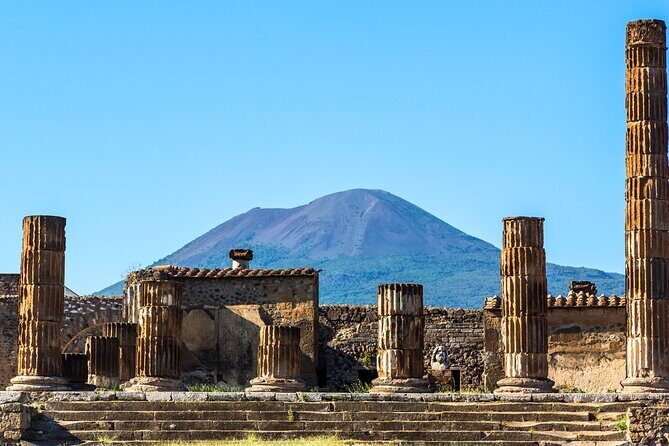
On the northern side of the Forum you’ll find the Temple of Jupiter (Tempio di Giove Capitolino). The tour also frames the view with the dramatic backdrop of Vesuvius rising behind it.
Even if you only catch a partial sight line, your guide’s explanation helps. Pompeii wasn’t built in a vacuum; the city was oriented toward its landscape and the forces people feared and respected.
Macellum: market life and the famous plaster casts
The tour then heads to the Macellum, a monumental market building used for the sale of food and daily consumer products. This is where archaeology gets extra interesting.
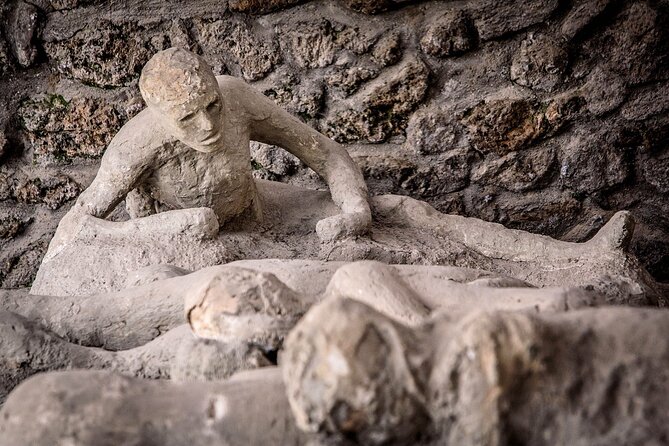
You may be able to see plaster casts of bodies (often referred to as the preserved forms as discovered after the eruption) inside this stop area. It’s not morbid for the sake of drama; it’s how archaeologists reconstructed what happened when the eruption overtook the city.
This is also a good place to ask questions. A guide can explain how interpretation works, why evidence is trustworthy, and what parts remain uncertain.
Forum Baths (Terme del Foro): split entrances and social rhythms
Next are the Forum Baths (Terme del Foro), noted as one of Pompeii’s best-preserved elements. A key detail is that male and female bathing areas had separate entrances.
That single design choice speaks volumes about social structure. It’s a practical reminder that daily routines had rules and boundaries, even for something as physical as bathing.
Thermopolium: a fast food stop from Roman times
The tour includes the Thermopolium of Vetuzio Placido, essentially an old diner—food and refreshment for inhabitants. If you want to see Pompeii as lived-in, this stop helps.
You’ll likely understand that “street life” wasn’t just shopping and walking. It included quick meals, social contact, and practical convenience in the middle of the day.
Casa del Fauno and the House of the Vettii: grand homes and Latin on the sidewalk
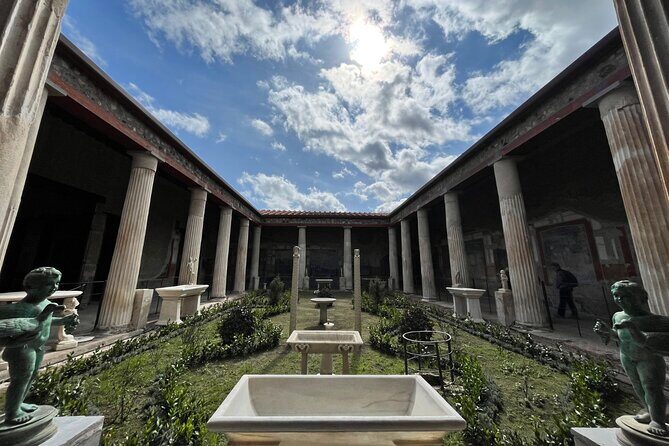
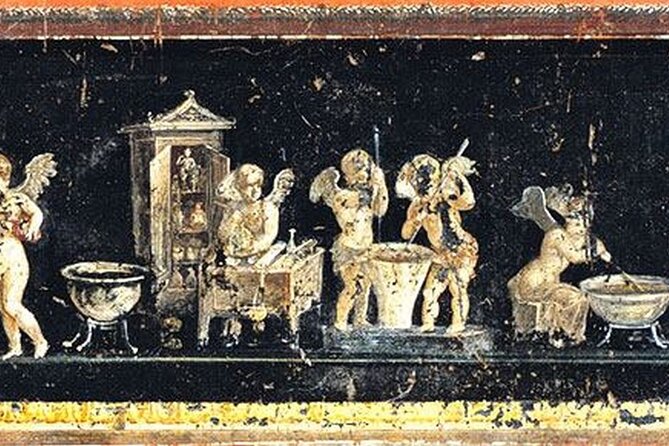
The tour visits Casa del Fauno, one of Pompeii’s largest houses. The sidewalk bears a Latin welcome inscription (listed as HAVE). The itinerary also includes the House of the Vettii, a richly decorated home under the protection of Priapus, god of prosperity.
One practical note: these houses can be seasonally open or closed, so don’t assume every interior is guaranteed. If something is closed, the guide will still help you understand what you can see from the outside and from accessible areas.
This is also where the value of a true archaeologist pops. Houses can look like pretty facades until you learn what rooms were used for and how wealth shaped decoration and routine.
Via dell’Abbondanza: the ancient main street experience
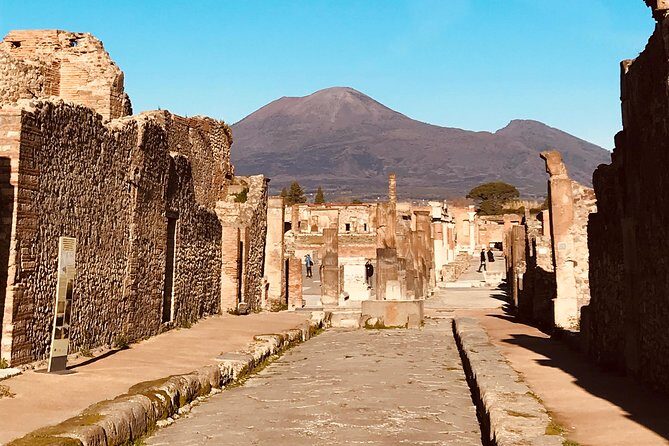
You’ll walk down Via dell’Abbondanza, described as the ancient main street (decumanus maximus). This is the “connective tissue” of Pompeii: it shows how neighborhoods linked to the center.
This street stop helps you build your own mental map. Even if your guide points out the most important features, you’ll start seeing how to move through the city when you explore on your own later.
Teatro Grande: the performing arts angle
The route ends with a look at the Teatro Grande. The theater was used for comedies and tragedies in the Greco-Roman tradition.
This is a great final stop because it balances the city’s heavy themes—commerce, justice, worship—with entertainment and culture. In a place famous for tragedy, it’s a reminder that Pompeii also staged ordinary joy and public performance.
Guide quality is the difference maker here
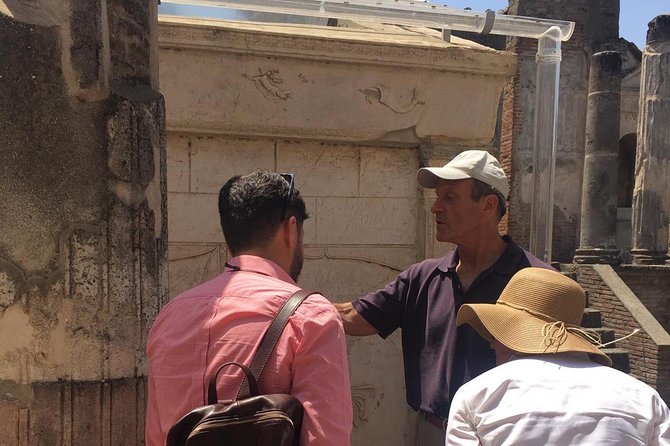
The strongest theme across traveler feedback is that the guides don’t just point. They explain clearly and confidently, often answering questions in a way that shows how they think.
You’ll see names like Ricardo, Rafaele, Antonio, Ornella, and Raffaele mentioned often, and many travelers highlight how the guide made archaeology feel practical: not a lecture, but a way to interpret what you’re standing in front of.
There’s also a useful caution that came up: if you use an audio device/earpiece provided for group listening, make sure it’s working. One traveler reported their earpiece didn’t function and there was no quick fix. If your device seems odd, flag it early.
Tickets and pricing: where the real cost comes from
The tour price is listed at $30.25 per person for about two hours. That fee is for the guided experience and logistics, not the Pompeii park entry ticket.
Pompeii admission is listed as €19 per adult (free for under 18). So your “all-in” cost is tour fee plus site ticket. The tour provider helps you with a link to skip-the-line tickets, and they say you’ll receive the link the afternoon before your tour.
Important distinction: the ticket you buy for the tour is not the same thing as the entry ticket for the archaeological site. If you’re the type who likes everything in one place, write this down so you don’t end up stuck at the gate.
Group size and comfort: small enough to hear the story
This tour caps at 15 travelers. Several people mention the small-group feel as a reason it stays relaxed and personal.
That said, one traveler noted a group size closer to 20 than the maximum listed. Most groups still seem small compared with the big bus tours, but if you’re very sensitive to crowding, arrive ready to adapt.
Comfort tip: Pompeii is uneven and you’ll be doing repeated short walks. Comfortable shoes matter more than you think—especially on days with damp or windy weather. One traveler even mentioned sheltering when conditions got rough, which is exactly when a guide helps you keep moving without panic.
What’s included—and what’s not included
Included:
- Authorized archaeology expert guide
- Tour logistics, meeting, and route management
- A link to help you buy skip-the-line style tickets online
- Tour participation as a small group
Not included:
- Pompeii Archaeological Park admission ticket (€19 per adult is referenced)
- Any additional entries beyond what’s part of the standard park experience
Also: there’s no mention of wine or tastings in the provided tour details. Some guides may suggest dinner nearby, but if you want an actual wine experience, you’ll need to plan that separately.
Timing and weather: the tour runs on real-world conditions
This experience is approximate two hours and requires good weather (it’s stated the tour may be canceled due to poor conditions). If weather cancels the tour, you’ll be offered a different date or a full refund.
Because it’s outdoors, bring the basics: water, sun protection, and a light layer if you’re going in shoulder season. If rain shows up, the stones get slippery and visibility drops. A guide can help you choose better viewing spots, but your footing is still your responsibility.
Cancellation policy: straightforward and traveler-friendly
You can cancel for free up to 24 hours in advance for a full refund. Changes within 24 hours aren’t accepted, and late cancellations don’t get refunded.
The tour also depends on a minimum number of travelers, and if it doesn’t meet that threshold, you’ll be offered a different option or refunded. If you like certainty, booking earlier—this one is commonly booked about 25 days in advance—can improve your chance of a good time slot.
Where this tour fits best (and who should skip it)
This tour is a strong match if you want:
- A guided Pompeii highlight route without spending a whole day lost
- An archaeology-first explanation (how evidence and reconstruction work)
- A small group where you can ask questions and get answers
You might choose a different option if you:
- Want a longer, more exhaustive tour that includes every famous site
- Are hoping for an emphasis on areas not covered in this route (some big-ticket spots like the amphitheater and brothels are not included in the described stops)
- Prefer to wander completely on your own with an audio guide instead of a human expert
If you’re traveling as a family, this can still work well. One traveler mentioned going with kids aged 11 and 14, and they enjoyed it—though you’ll still want to keep expectations realistic for heat and walking.
PompeiI Exclusive Tour with your Archaeologist in a Small Group
Should you book this Pompeii archaeologist tour?
If you’re short on time or you don’t want Pompeii to feel like a maze of ruins, I think it’s an easy yes. The value comes from guide expertise, a route that hits the city’s key themes fast, and the logistics that reduce gate chaos with priority entry help.
Book it especially if:
- You like learning the why, not just the what
- You want a small-group pace with time for questions
- You’ll plan your entry ticket (€19 per adult) in advance and use the provided skip-line link
Pass or compare if:
- You want a full-day Pompeii deep dive with every major landmark
- You’re counting on the tour fee to include admission (it doesn’t)
- You’re not comfortable walking uneven stone for two hours
Bottom line: pay attention to the ticket split, wear good shoes, and go in ready to ask questions. With a guide like Ricardo, Rafaele, Antonio, or Ornella, Pompeii stops being just a famous tragedy and starts turning into a real city you can picture.