
I love how this Etna excursion stays on the northern side, where you get dramatic 2002 eruption terrain with far fewer crowds than the classic viewpoints. It’s a guided walk that mixes big volcanic landmarks with practical pacing and real volcanology talk, often led by guides like Giuseppe or Luca.
The starting point is Piano Provenzana, and you’ll head out on foot across major lava fields, past old flows, and toward the 2002 eruptive fracture.
Two things I like a lot: you get a real authorized volcanological guide (with accident insurance included), and the hike itself is built around specific eruption features, not just generic hiking.
One possible drawback: you need the right footwear. If your shoes aren’t adequate, you’re not covered by accident insurance, and vertigo can be an issue since the route includes crater-edge walking.
- Key Points at a Glance
- The Big Picture: A North-Slope Etna Trek Focused on the 2002 Eruption
- Price and Value: What About .55 Actually Buys You
- Meeting Point and Timing: Ufficio Guide Vulcanologiche Etna Nord at 9:15
- Stop 1: Piano Provenzana (The Quiet Launch Point)
- Stop 2: The Guided Hike Across 2002 Lava and Crater Terrain
- What you’ll hike (the route highlights)
- Terrain and why it matters for your comfort
- Stop 3: Piano Provenzana Again (Wrap-Up and Return)
- The Guide Experience: What Makes This Tour Feel Worth It
- How Hard Is It, Really? Walking Stats vs. Real-Life Effort
- Gear and Clothing: The Non-Negotiables (Footwear Especially)
- Trekking shoes
- Hat, gloves, poles, and layers
- Socks and pants
- Weather, Snow, and Season Notes
- Parking and Getting There: Budget for Car Arrangements
- Safety and What’s Included (Accident Insurance Reality Check)
- Who Should Book This North-Slope Etna Hike
- Should You Book 2002 Crater Excursion – Northern Etna?
- FAQ
- Is this tour available in English?
- How long is the excursion?
- Where do I meet the guide?
- Do I need to bring trekking shoes?
- Is water included?
- Is parking included in the price?
- What should I wear in colder seasons?
- What is the hike distance and elevation?
- Does it run in poor weather?
- Can the itinerary change?
Key Points at a Glance
- North slope, less crowded: A quieter Etna experience than the busier south-side routes.
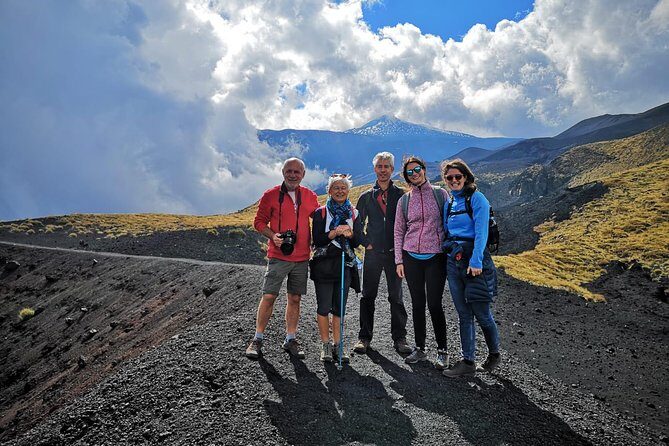
- Small group feel: Maximum of 20 travelers for a more personal guide style.
- Guided to named eruption features: You’ll cover the 2002 lava flow, older eruptions, craters, and the eruptive fracture area.
- Short but punchy: About a 5 km round trip with ~300 m ascent/descent over roughly 2.5–3 hours.
- Good value if you’re ready: Even at about $43.55, you’re paying for expert guidance, insurance, and a focused itinerary.
- Plan for gear and terrain: Shoes (or rental), long pants, and attention to unstable volcanic soil matter.
The Big Picture: A North-Slope Etna Trek Focused on the 2002 Eruption
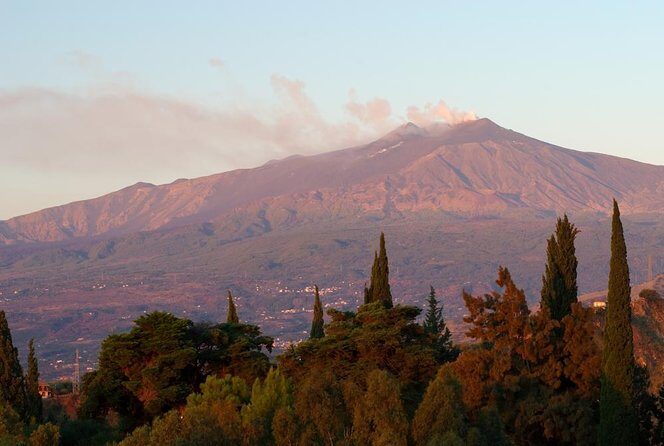
If you picture Etna as a single, iconic mountain, this tour will correct that. You’re not just going to see Etna—you’re walking across the aftermath of the October 2002 eruption, where the landscape still tells the story.
This is a guided trek on the north side from Piano Provenzana. The walking route takes you over a major 7.2 km lava flow, then connects to older sections like the 1911 and 1923 flows, plus a set of craters with deep shafts. The goal is to show you how the mountain builds, erupts, and reshapes itself—without making you spend a whole day on a bus.
Also, you get the kind of guide you want on a volcano: the person who can explain what you’re standing on, why it matters, and what to watch your step for on volcanic ground.
Price and Value: What About $43.55 Actually Buys You
At $43.55 per person, this feels like strong value for a few reasons:
- You’re not paying only for a walk. You’re paying for an authorized volcanological guide plus accident insurance.
- The itinerary is specific (2002 lava flow, older flows, craters, eruptive fracture) rather than a vague “Etna hike, enjoy the views” plan.
- The group is capped at 20. That matters when you want real attention and pacing that doesn’t turn into a single-file shuffle.
Now for the part you should budget for: it’s not fully gear-included. You may pay for trekking shoe rental (€5) and you might still want gloves, a hat, trekking poles, or winter/snow gear depending on the season. Parking isn’t included either.
So I’d summarize it like this: the base price is fair, and the “extras” are manageable if you plan ahead.
Meeting Point and Timing: Ufficio Guide Vulcanologiche Etna Nord at 9:15
The tour starts at 9:15 am at:
Ufficio Guide Vulcanologiche Etna Nord, Via Provenzana, 35, 95015 Linguaglossa CT, Italy.
The activity ends back at the same meeting point. There’s no pickup service from your accommodation, so you’ll need your own car or arrangement to reach Piano Provenzana.
One more practical note: you’ll receive confirmation at booking, and you’ll have a mobile ticket. Service animals are allowed.
Stop 1: Piano Provenzana (The Quiet Launch Point)
Piano Provenzana is your base on Etna’s north side. The good news is that it’s easy to reach by fully paved public roads by private or rental car.
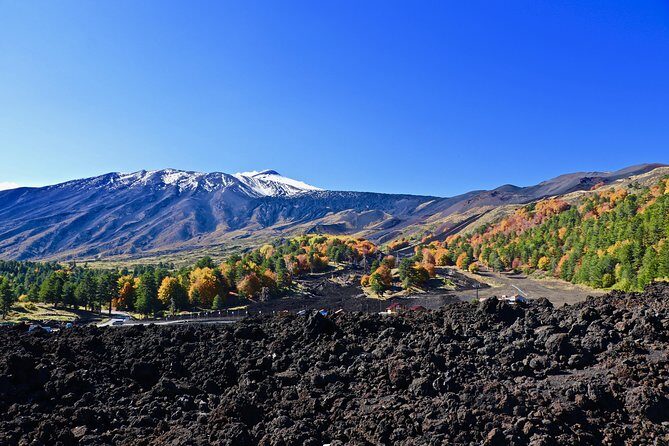
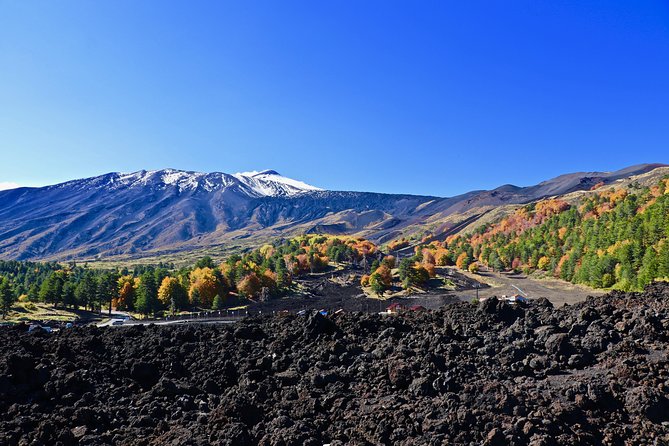
This station is surrounded by pine forest and dramatic lava fields. After the October 2002 eruption destroyed the original facilities, the area took on a raw, volcanic look that has real historic interest. It also serves different roles depending on the season—ski resort in winter and a hike starting point in summer.
What you’ll likely appreciate here:
- There are shops, cafés, and bars for coffee or breakfast, plus places to refill water bottles.
- Parking areas are clearly marked (blue-lined), and you’ll meet the guide at on-site meeting points if you booked the tour.
- It’s generally less crowded than other Etna stations, so the whole experience starts calmer.
The stop is listed at about 30 minutes, so think of it as orientation, gear check, meeting the guide, and settling in before the hike.
Stop 2: The Guided Hike Across 2002 Lava and Crater Terrain
This is the heart of the day. The trek explores the wild, less-touristic north side of Europe’s highest active volcano.
What you’ll hike (the route highlights)
Expect about 5 km round trip with roughly 300 m ascent/descent. Timing is typically 2.5 to 3 hours, depending on your pace.
The walk includes:
- Crossing a vast 7.2 km lava flow from the 27 Oct 2002 eruption, where you can still see the “buried future” of that event: hotels, shops, restaurants, and a large car park are now beneath the lava, with only a roof of one hotel visible.
- Continuing through forest and moving through 1911 and 1923 flows.
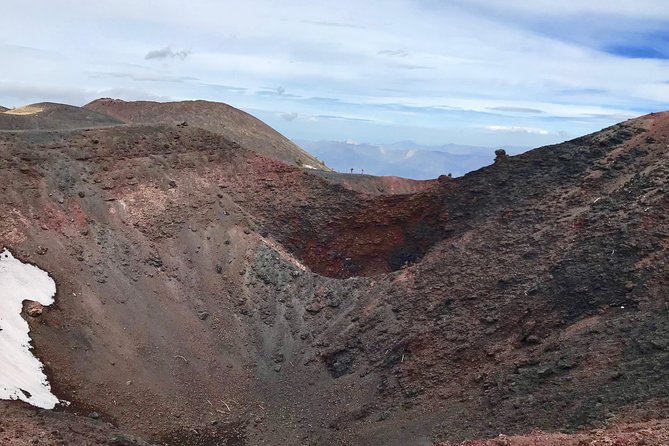
- Passing a chain of 1911 craters with shafts about 7–40 m deep.
- Climbing to the crest of the huge 2002 eruptive fracture, described as a canyon-like area filled with volcanic bombs.
- Reaching the vent that produced the destructive flow and other large explosive mouths (up to around 2,100 m).
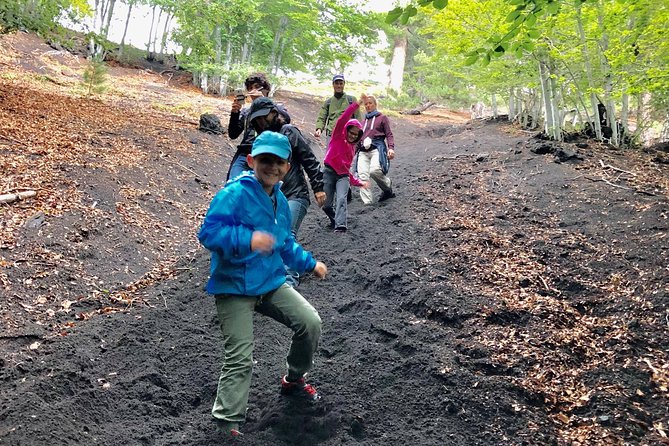
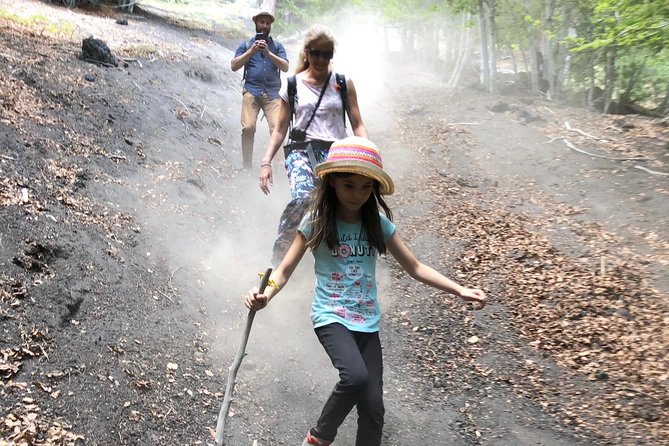
- Descending via soft ash channels through beech forest and ski-slope areas back toward the start.
Terrain and why it matters for your comfort
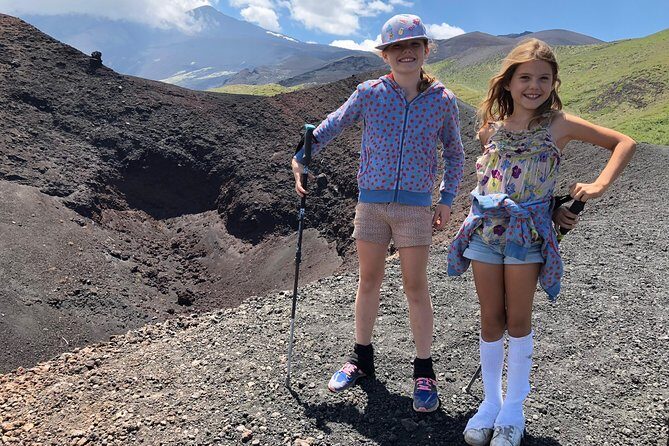
This is not a “just stroll” hike. Volcanic soil can be incoherent and unstable, so your footing matters. You’ll also be dealing with irregular ground across soft ash areas and lava rock crossings.
Vertigo is another consideration. The route includes parts along crater edges, and the tour specifically notes that sensitive subjects may struggle.
Stop 3: Piano Provenzana Again (Wrap-Up and Return)
After the hike, you come back to Piano Provenzana and end the experience at the same meeting point.
This return matters because it keeps the day manageable. You’re not trying to get across Etna or jump to another bus stop. You finish where you started, which reduces stress if you want to drive afterward, grab food, or just decompress.
Even if the hike feels like the whole story, that final return is part of why the excursion stays efficient—about 3 hours total, roughly.
The Guide Experience: What Makes This Tour Feel Worth It
The best Etna guides are the ones who turn rocks and scars into clear stories, and this tour leans hard into that.
In the field, guides like Giuseppe and Luca are described as extremely knowledgeable and friendly, with explanations that don’t feel like a textbook. Some guides also keep the group engaged with humor, plus smart stop timing for breaks that keep the hike doable.
You should also expect practical guidance. One review-style takeaway that shows up repeatedly is that guides help with pacing and downhill tips—especially when lava rock and steep bits start to feel like a challenge.
If you enjoy learning while walking, you’ll likely like this format: you’re constantly seeing something new, and the guide is constantly naming what you’re looking at and why it happened.
How Hard Is It, Really? Walking Stats vs. Real-Life Effort
On paper, it’s straightforward:
- ~5 km round trip
- ~300 m ascent/descent
- ~2.5–3 hours
- “Easy and absent of particularly difficult passages” is how the tour frames it in terms of overall difficulty.
In real life, volcanic ground is its own thing. Even when the climb isn’t “mountain hard,” volcanic paths can be uneven. You’ll likely feel the difference from normal dirt trails on the soft ash channels and lava sections.
The tour also says trekking is not recommended if you usually do little motor activity. And it notes suitability for people in good physical health without cardio/respiratory/hypertension pathologies.
Gear and Clothing: The Non-Negotiables (Footwear Especially)
This is one area where I’d plan like a grown-up, because the tour is explicit about safety and insurance.
Trekking shoes
- Trekking shoes are not included.
- You can rent them on site at authorized rentals for €5 per pair.
- Without adequate shoes, you are not covered by accident insurance.
That’s a big deal. Even if you’re tempted to do it in day sneakers, don’t. Etna terrain punishes bad footwear.
Hat, gloves, poles, and layers
The tour notes:
- Hat and gloves are especially useful in winter/spring/autumn.
- Trekking poles can help (they’re not included).
- Bottled water isn’t included.
Socks and pants
Not every season feels cold on Etna, but long pants can protect you from rough, coarse rocks. In colder periods, bring warmth; in milder periods, bring protection.
Weather, Snow, and Season Notes
This excursion requires good weather. If it’s canceled due to poor weather, you’ll be offered a different date or a full refund.
Season matters too:
- In winter, Piano Provenzana becomes a ski resort.
- In winter, there’s a mention of snowshoe rental at €15 per person, paid on the spot.
If you’re visiting in winter, ask yourself if you’re comfortable walking on snow with rentals. If you’re visiting in warmer months, you’ll still want the right shoes because the volcanic ground is still volcanic ground.
Parking and Getting There: Budget for Car Arrangements
Pickup isn’t offered, so your logistics matter.
Parking fees are not included:
- €5 for the entire day on weekdays
- €8 on Sundays and public holidays
If you’re driving, that’s easy to plan for. If you’re using a driver, build that into the agreement.
Safety and What’s Included (Accident Insurance Reality Check)
Included:
- Accident insurance
- An authorized volcanological guide in accordance with the law
Not included:
- Bottled water
- Trekking shoes (rental optional)
- Hat and gloves
- Trekking poles
- Parking fees
- Snowshoe rental in winter (€15 on the spot)
The tour also notes the excursion may be altered or interrupted if environmental, atmospheric, or volcanic conditions change and safety is affected.
One last safety detail I appreciate: volcanic soil can be unstable, and the guide wants you to know your health conditions. If you have any cardio/respiratory issues, make sure this fits you.
Who Should Book This North-Slope Etna Hike
I think this tour fits best if you:
- Want a less crowded Etna experience on the north side.
- Like structured learning from a real guide, not just “go stand near the crater.”
- Are comfortable with a moderate hike and uneven ground.
- Care about seeing the specific 2002 eruption features, including lava flow fields and crater areas.
You might want to choose something else if you:
- Have vertigo sensitivity due to crater-edge sections.
- Usually do little motor activity or need lower-impact walking.
- Have conditions mentioned by the tour for cardio/respiratory/hypertension concerns.
Should You Book 2002 Crater Excursion – Northern Etna?
If your goal is the 2002 story told by the land itself, this is a strong pick. For the price, you get expert guidance, a focused route, and the calmer north-slope setting. It’s not just the volcano—it’s the explanation, the pacing, and the chance to walk through a landscape that still looks “reshaped” rather than “historic photo.”
I’d book it if you can bring proper shoes (or rent them right away) and you’re okay with uneven volcanic terrain. If you’re sensitive to vertigo or you’re not comfortable with moderate walking, consider a different style of Etna visit.
Either way, come ready to walk. Etna rewards people who show up on foot.
2002 Crater Excursion – Northern Etna
FAQ
Is this tour available in English?
Yes. The tour is offered in English.
How long is the excursion?
The duration is about 3 hours.
Where do I meet the guide?
Meet at Ufficio Guide Vulcanologiche Etna Nord, Via Provenzana, 35, 95015 Linguaglossa CT, Italy at 9:15 am.
Do I need to bring trekking shoes?
Trekking shoes are not included. You can rent them on site for €5 per pair. The tour also notes that without adequate shoes you are not covered by accident insurance.
Is water included?
No. Bottled water is not included.
Is parking included in the price?
No. Parking fees are €5 for the day on weekdays and €8 on Sundays and public holidays.
What should I wear in colder seasons?
The tour specifically suggests bringing a hat and gloves, especially in winter, spring, and autumn.
What is the hike distance and elevation?
It’s about 5 km round trip with around 300 m ascent/descent.
Does it run in poor weather?
It requires good weather. If it’s canceled due to poor weather, you’ll be offered a different date or a full refund.
Can the itinerary change?
Yes. The excursion may be changed or interrupted if environmental, atmospheric, or volcanic conditions change and safety is affected.