
- Why We Think Every Family Should Try a Ryokan
- Why Ryokans Actually Work Brilliantly for Families
- Onsen with Kids: The Bit Everyone Worries About
- What to Look for When Choosing a Family Ryokan
- Our Favourite Family Ryokans
- Hakone Kowakien Tenyu — Hakone
- Kinsuikan — Miyajima Island, Hiroshima
- Togetsutei — Arashiyama, Kyoto
- Kinosaki Onsen — A Whole Town of Hot Springs
- What About Ryokans That Aren’t Worth It?
- Surviving Kaiseki Dinner with Children
- How to Book and What It’ll Cost
- Quick Reference: Family Ryokan Cheat Sheet
Why We Think Every Family Should Try a Ryokan
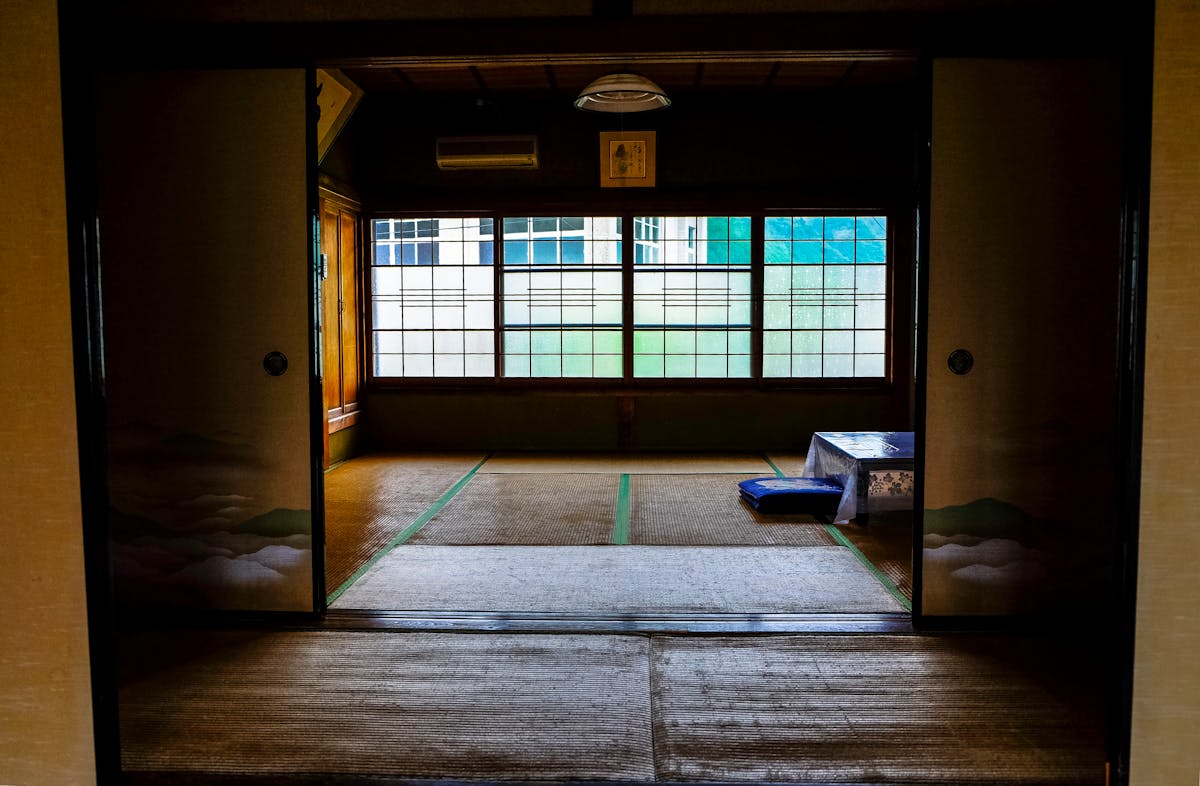
Let’s get straight to it. A ryokan stay was the single best night of our entire Japan trip. Not Tokyo. Not the bullet train. Not even the deer in Nara (though they came close). It was lying on futons in our tatami room, kids zonked out in matching cotton robes, the smell of cedar drifting in from the bath outside our door.
A ryokan is a traditional Japanese inn. Think sliding paper doors, straw tatami mats underfoot, low wooden tables, and futon beds rolled out each evening by staff who move so quietly you barely notice them. You’ll wear yukata — lightweight cotton robes tied with a sash — and yes, your children will look ridiculously cute in them. Everyone does.
The whole experience is built around slowing down. There’s no TV blaring in the lobby, no kids’ club, no pool with inflatables. It’s quieter than that. And honestly? Our kids responded to it. Something about the simplicity, the ritual of it all, seemed to settle them in a way a Holiday Inn never could.
Why Ryokans Actually Work Brilliantly for Families
Here’s what surprised us. We’d expected the kids to moan about sleeping on the floor. Instead, they thought it was the greatest thing that had ever happened to them. Futons on tatami are genuinely comfortable — firm but cushioned — and there’s zero risk of a toddler tumbling off a high hotel bed at 2am. You just spread out across the room. More futons, more space, no arguments about who sleeps where.
The room setup helps too. Most ryokan rooms are one large open space. No separate bedroom you can’t see into, no bathroom with a dodgy lock. You can see the kids from everywhere in the room, and they can see you. For younger children especially, that matters.
Then there’s dinner. At many ryokans, kaiseki dinner is served in your room. A private, multi-course Japanese meal brought to you course by course. No restaurant behaviour expectations. No dirty looks from other diners when your three-year-old drops rice on the floor. Just your family, your room, and some extraordinary food.
And the culture is real. Our eldest came away understanding more about Japanese traditions from one ryokan night than from three days of sightseeing. How to take off shoes at the door. How to sit at a low table. How to fold a yukata properly. She was quietly proud of herself, and so were we.
Onsen with Kids: The Bit Everyone Worries About
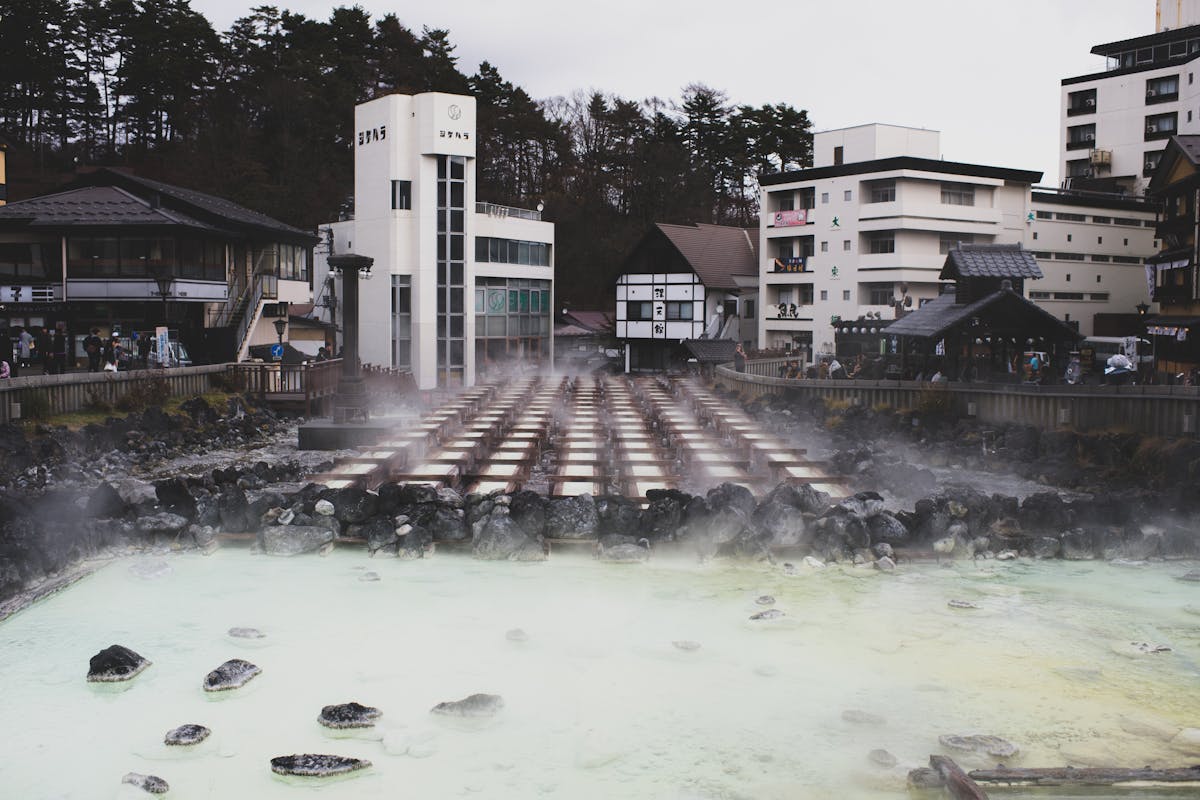
Right, let’s talk about the naked bathing. Because this is the part that makes British parents go a bit pale.
Most ryokans have an onsen — a natural hot spring bath. Traditional communal onsen are gender-separated. Everyone bathes nude. You wash thoroughly at shower stations before getting in. Hair goes up. No towels in the water. These are the rules, and they’re non-negotiable.
For adults, once you get past the initial “oh god” moment, it’s genuinely one of the most relaxing experiences you’ll ever have. For children, it really depends on the child. Our seven-year-old was completely unfazed. Our ten-year-old needed some convincing but came round. Some kids flatly refuse, and that’s perfectly fine.
The water temperature sits around 40-43°C, which is properly hot. Young children often can’t tolerate more than a few minutes. That’s normal. Let them sit on the edge and dangle their feet. Don’t force it.
The solution most families need: private onsen. Look for “kashikiri buro” (literally “reserved bath”) or ryokans with in-room outdoor baths. A private onsen means your family bathes together, at your own pace, with no audience. It transforms the whole experience from stressful to lovely.
Some ryokans charge extra for private bath sessions (typically ¥2,000-4,000 / for 45 minutes). Others include a private rotenburo (outdoor bath) right on your room’s balcony or terrace. That second option is what we’d recommend if budget allows. Worth every penny.
What to Look for When Choosing a Family Ryokan
Not all ryokans welcome families. Some high-end places have minimum age restrictions — no children under six, sometimes under twelve. Always check before you book. Nothing worse than arriving with kids and getting turned away.
Here’s our checklist:
Private onsen access. Either in-room or bookable by the hour. This is non-negotiable for us with children.
Room size. You want a minimum of 10-tatami-mat room for a family of four. Anything smaller and you’ll be climbing over each other once the futons are laid out. Twelve tatami is better if you can get it.
Children’s meals. Good family ryokans offer a simplified kaiseki set for younger guests — fewer courses, less raw fish, often including grilled meat or prawns and rice. Confirm this when booking, not on arrival.
Mixed Japanese-Western rooms. These have proper beds on one side and a tatami area with futons on the other. Brilliant compromise if anyone in the family has dodgy knees or a bad back. The kids get their futon adventure, the adults get a mattress. Everyone wins.
Location. Think about how you’re getting there. A remote mountain ryokan sounds romantic, but dragging suitcases and tired children up a mountain path at 4pm is less so. We favour ryokans near train stations or those offering shuttle services.
Kid-sized yukata. The best family places provide small yukata and children’s slippers. It’s a small detail that makes a big difference.
Our Favourite Family Ryokans
We’ve stayed at ryokans across Japan and been disappointed by a few (looking at you, overpriced Hakone places with paper-thin walls and a “no children after 8pm in common areas” policy). These are the ones we’d actually go back to.
Hakone Kowakien Tenyu — Hakone
This is the one we recommend to families who’ve never done a ryokan before. Every single room has its own private open-air bath on the balcony. Every one. That alone removes the biggest barrier to families enjoying the ryokan experience.
The rooms are spacious and modern without losing the traditional feel. Views over the Hakone mountains are gorgeous, particularly at dusk. Staff are used to families and nothing feels stuffy or unwelcoming. It’s about 90 minutes from Tokyo by train, making it the most accessible ryokan option if you’re based in the capital.
Expect to pay around ¥35,000-55,000 per person per night, including kaiseki dinner and breakfast. Yes, it’s a splurge. But for a first ryokan experience with kids, we think it’s the safest bet.
Book Hakone Kowakien Tenyu on Booking.com
Kinsuikan — Miyajima Island, Hiroshima
Miyajima Island is already magical for families — the famous floating torii gate, wild deer wandering the streets, cable car rides up Mount Misen. Most visitors come as a day trip from Hiroshima. We’d argue you should stay overnight.
Kinsuikan sits right on the island, and once the day-trippers leave around 5pm, you get a completely different Miyajima. Quiet streets, golden hour light on the torii, deer settling down for the evening. It’s special.
The ryokan offers both pure Japanese rooms and mixed Japanese-Western rooms, so you can choose what suits your family. Private onsen is available. Staff are warm and clearly experienced with families — they had children’s yukata ready without us asking.
Around ¥30,000-45,000 per person with dinner and breakfast.
Togetsutei — Arashiyama, Kyoto
If you’re spending time in Kyoto (and you should be), Togetsutei is our pick. It overlooks the Oi River in Arashiyama, which means you wake up to river views and can walk to the bamboo grove and Iwatayama Monkey Park within minutes.
What sets Togetsutei apart for families is their children’s kaiseki. It’s not just a plate of fried stuff — it’s a proper multi-course meal adapted for younger palates. Smaller portions, milder flavours, beautifully presented. Our kids felt like they were getting the real experience, not a consolation prize. That matters.
Private bath options are available, and the larger rooms comfortably fit a family of four or five. The natural hot spring water here is silky and slightly alkaline, which is supposedly good for skin. Our daughter declared it “the best bath ever,” which is high praise from someone who usually protests bath time.
Around ¥35,000-50,000 per person with meals.
Kinosaki Onsen — A Whole Town of Hot Springs
This isn’t a single ryokan. It’s an entire town in Hyogo Prefecture built around seven public bathhouses, and it’s our favourite onsen experience in Japan. Full stop.
The concept is simple. You check into your ryokan, change into your yukata and wooden geta sandals, and spend the afternoon and evening walking between bathhouses, trying each one. The town is tiny, flat, and safe. Willows line a little canal. Lanterns light up at dusk. It feels like stepping into a Studio Ghibli film.
Kids absolutely love the novelty of walking around a real town in robes and wooden sandals. The bathhouses range from small and intimate to larger ones with outdoor sections. Some have family bathing options. The Kinosaki tourism board lists kid-friendly ryokans in the town, and most are moderately priced at ¥20,000-35,000 per person including meals.
Getting there takes about 2.5 hours from Kyoto or Osaka by train. It’s a bit of a journey, but completely worth it. We’d suggest two nights if you can manage it.
What About Ryokans That Aren’t Worth It?
We should be honest. Not every ryokan experience is wonderful.
Some of the ultra-luxury places in Hakone and Atami are geared entirely towards couples and actively don’t want children there. You’ll feel it in the atmosphere even if they technically allow kids. Staff sighing when your toddler toddles. Other guests giving looks. It’s not relaxing for anyone.
We’ve also stayed at budget ryokans (under ¥15,000 per person) that were essentially just old inns with tatami rooms and a shared bathroom. No onsen, mediocre food, thin walls. At that price point, you’re better off in a good hotel.
The sweet spot for families is ¥25,000-45,000 per person per night. Below that, quality drops noticeably. Above that, you’re often paying for exclusivity and adult-oriented luxury that children won’t appreciate.
Surviving Kaiseki Dinner with Children
Kaiseki is a multi-course Japanese dinner — typically 8 to 12 courses of seasonal dishes, each one small and exquisitely presented. It’s one of Japan’s great culinary traditions, and at good ryokans, it’s genuinely exceptional.
For adults, it’s a highlight. For children, it requires some preparation.
The courses arrive slowly over 60-90 minutes. Sashimi, tempura, grilled fish, simmered vegetables, steamed dishes, rice, miso soup, pickles, and a small dessert. Adventurous young eaters will be thrilled. Fussy eaters will stare at raw fish and ask for pasta.
Our advice: request a children’s set meal when you book. Most family-friendly ryokans offer them — simpler dishes, less raw food, often with grilled chicken or prawns. Some places prepare them automatically for under-12s; others need advance notice.
And here’s the tip nobody tells you. Bring backup snacks. A couple of onigiri from a convenience store, some crackers, maybe a banana. Stash them in your bag. If your child genuinely won’t eat the kaiseki, you’ve got a safety net. No child has ever been culturally enriched by going to bed hungry and crying.
How to Book and What It’ll Cost
Two platforms dominate ryokan bookings for international travellers: Booking.com and Rakuten Travel. Booking.com is easier to navigate in English. Rakuten Travel sometimes has better rates and more ryokan listings, but the English interface can be clunky.
Book as far ahead as you can. Three to four months minimum for popular ryokans during peak seasons (cherry blossom in late March-April, autumn colours in November, Golden Week in early May, New Year). The best family-friendly rooms go first because there aren’t many of them.
Cost reality: A ryokan stay with dinner and breakfast will run ¥25,000-60,000 per person per night. For a family of four, that’s ¥100,000-240,000 for one night. It’s not cheap. We won’t pretend otherwise.
But consider what’s included. Two meals — a multi-course dinner and a full Japanese breakfast — that would cost ¥8,000-15,000 per person at a decent restaurant. The onsen. The cultural experience. The yukata. When you factor all that in, the gap between a ryokan and a hotel-plus-two-restaurant-meals narrows considerably.
Our recommendation: build one or two ryokan nights into your Japan family trip. You don’t need to stay in ryokans the whole time. One night in Hakone on your way from Tokyo, or a night in Kinosaki while you’re exploring the Kansai region. That’s enough to give your family the experience without blowing the entire holiday budget.
Quick Reference: Family Ryokan Cheat Sheet
Best for first-timers: Hakone Kowakien Tenyu — private baths in every room, close to Tokyo, modern facilities.
Best for island adventure: Kinsuikan on Miyajima — combine with deer, torii gate, and cable car. Stay after the crowds leave.
Best for Kyoto base: Togetsutei in Arashiyama — river views, proper children’s kaiseki, walkable to major sights.
Best overall experience: Kinosaki Onsen town — walking between bathhouses in yukata. Kids adore it. Adults adore it. Moderately priced.
Budget per person per night (with meals): ¥25,000-60,000 /
Book on: Booking.com or Rakuten Travel. Months ahead.
Don’t forget: Backup snacks for fussy eaters. Check age restrictions. Request children’s meals at booking. Choose rooms with private onsen.