
Nara is forty minutes from Osaka or Kyoto by regular train. You walk out of the station, and within five minutes there are deer on the pavement. Over a thousand of them roam free through the park, the temple grounds, and occasionally the car parks. They bow for crackers. Sometimes they skip the bowing and just nudge you.
It’s Japan’s first permanent capital, a UNESCO World Heritage Site, and home to a 15-metre bronze Buddha inside one of the world’s largest wooden buildings. Most people do it as a half day. That’s enough. But if you stay overnight, the day-trippers leave by 5pm and the town goes quiet — lantern-lit streets, no crowds, deer settling down for the evening.
Getting There
From Osaka: Kintetsu line from Nipponbashi or Namba to Kintetsu Nara, about 40 minutes. Or JR Yamatoji line from Osaka Station, about 45 minutes — covered by the JR Pass.
From Kyoto: JR Nara line, about 45 minutes, JR Pass covered. Or Kintetsu from Kyoto Station.
Saturday mornings the Kintetsu from Osaka gets crowded — metro-style seating, standing room by 9am. Weekdays or earlier departure fix this.
Doesn’t matter which station you use. Both are walkable to the park.
Coin Lockers
If passing through between cities, the lockers outside the elevator near Ciao Presso cafe at Nara Station are ¥100 cheaper than the ones inside. Plenty available even on weekends.
The Deer
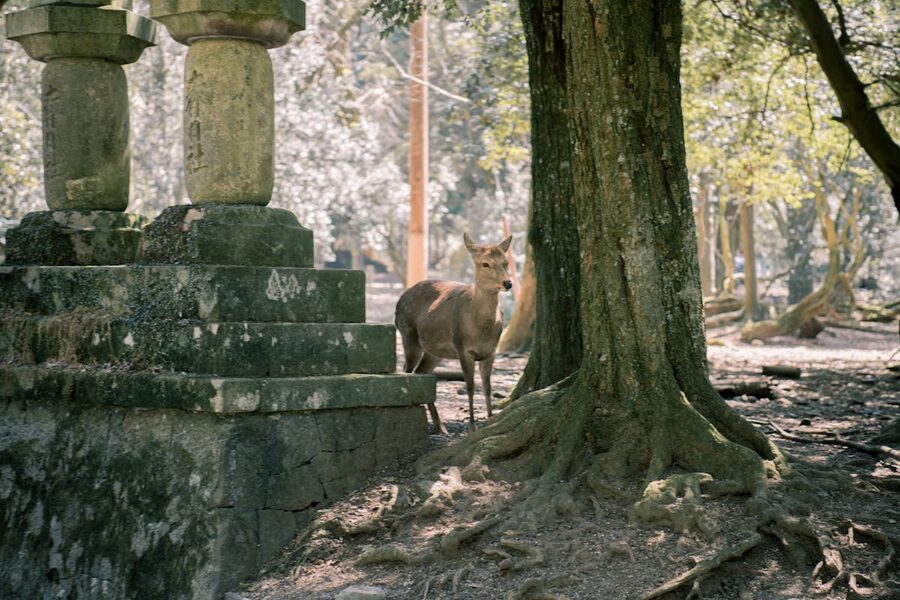
Roughly 1,200 wild sika deer in Nara Park. Buy deer crackers (shika senbei) from vendors for ¥200 per packet — cash only.
Some deer bow before taking the cracker. Give a slight head nod back and they’ll bow again. Don’t bow from the waist — they can read it as a threat. Others skip pleasantries and grab at clothes or bags. They’re not dangerous but they’re persistent, and they’re stronger than they look. Small children can get knocked off balance when three deer converge at once.
The crackers attract deer fast. Break each one into 8-10 pieces and feed from a flat palm to reduce accidental nips. When you run out, show empty hands or clap and say “oshimai” (finished). Walk away calmly. They lose interest immediately.
Keep bags closed. Don’t pet fawns — mothers get protective. Avoid males with antlers in October-November (mating season). Baby deer appear April through July.
And deer droppings are absolutely everywhere. Warn the kids. Then warn them again. Pushchair wheels are a lost cause.
Buy crackers gradually — grab a packet, walk, feed, buy another. Spreading the interactions stops you getting mobbed at one spot.
Todai-ji Temple
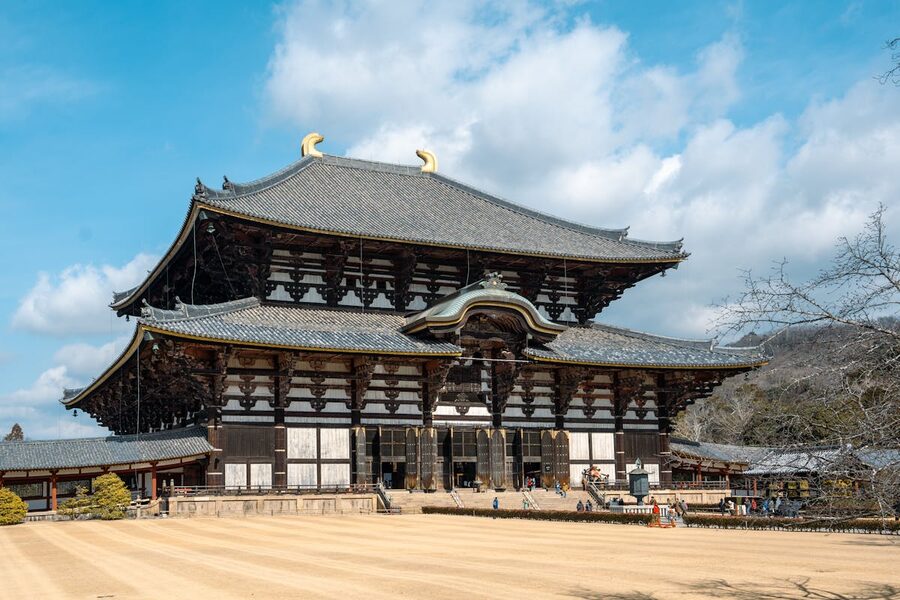
A 15-metre bronze Buddha inside one of the world’s largest wooden buildings. ¥600 adults, ¥300 children. Opens 7:30am.
The building is staggering. Even kids who’ve seen too many temples react to this one — the scale catches everyone off guard. It gets surprisingly crowded inside, though. Hold onto small children. Easy to get separated in the shuffle around the Buddha.
The Pillar Hole
A support pillar has a rectangular hole at its base — said to be the same size as the Buddha’s nostril. Crawling through it supposedly grants enlightenment. Kids queue for this. Adults sometimes try and get stuck. The queue can be enormous on busy days — if it matters, come early.
Kasuga Taisha Shrine
Deeper into the park. A forest path lined with thousands of stone lanterns — moss on stone, dappled light, deer wandering between them. Much quieter than the Todai-ji area. Easier to interact with deer without the crowds.
At the entrance, a deer-shaped water fountain for the hand-cleansing ritual. Free to walk the grounds. Inner shrine ¥500.
Wakakusayama Hill
A grassy hillside with views over the city. ¥150 adults, ¥80 children. Deer graze on the slopes. The meadow area is manageable for families. The full climb to the observatory is steeper but the panorama at the top is worth it. Exposed — skip on hot days.
Kofukuji Temple
You’ll pass it walking from Kintetsu Nara Station to the park. Five-storey pagoda that photographs well. Interior entry is paid but only the ground floor is accessible and no photos allowed inside — not worth the ticket honestly. The exterior and Sarusawa Pond reflection at dusk are the real image.
Naramachi and Beyond
South of the park. Narrow streets of old merchant houses — machiya townhouses now converted to small shops, galleries, cafes. More atmospheric than the tourist zone and worth wandering if you have a full day.
Higashimuki Street near Kintetsu Nara Station is a covered shopping arcade — souvenirs, snacks, less touristy than the stalls near Todai-ji.
Shoka Saru Kitsuke Building, five minutes from Kintetsu Nara Station, is a restored building with craft stores, coffee shops, and small restaurants. Easy to walk past if you don’t know it’s there.
Where to Eat
The tourist restaurants near Todai-ji are overpriced. Better options exist if you know where to look.
Azekuraya — inside Nara Park near Todai-ji. Cold soba, ramen, udon. ¥1,000-2,000 per person. English menu, high chairs, matcha ice cream.
Naraya — in the plaza. Kamameshi sets and udon. High chairs, self-serve utensils, dessert included with sets.
Kura Sushi Nara Furuichi — conveyor belt sushi, 8 minutes by taxi from station (about ¥2,000 ride). 156 seats, no reservations, fully automated, smoke-free. ~¥1,500 per adult. Gluten-free filter on the iPad menu. Out in the suburbs, so you’re eating with locals.
Onwa — gluten-free and vegan cafe, 7 minutes from JR Nara. The shojin karaage bowl is good. Wed-Sun midday to 8pm.
Le Case — uphill walk but surprisingly good Japanese-French quiche. Different from everything else around here.
Nakatanidou — next to Kintetsu Nara Station. Watch high-speed mochi pounding, then buy one. ¥200, cash only. 10am-7pm. Five minutes of entertainment.
Pack snacks. Once off the main road, konbini and vending machines get scarce. The 7-Eleven in the Nara Prefectural Office has tables and chairs for a sit-down konbini meal. Don’t eat near deer — they will come for your food.
Getting Around
Everything is walkable from the station. Park is ten minutes, Todai-ji another ten. Flat, wide paths, pushchair-friendly.
Bike rental at JR Nara Station through Yamato Kanko Rental Cycle (closed Wednesdays) — children’s bikes available. Good for reaching Kasuga Taisha and Wakakusayama without the tired-leg discussions. Jinrikisha (rickshaw) tours also available through the park.
Passing Through Between Cities
Nara works well as a stop between Osaka and Kyoto. Drop bags in coin lockers, do the deer and Buddha, have lunch, catch a train onward. The Kintetsu limited express to Kyoto has reserved seats — slightly pricier but guaranteed seating. Ciao Presso near the lockers does decent coffee while waiting.
How Long
Half a day: deer, Todai-ji, lunch. The core experience.
Full day: add Kasuga Taisha, Wakakusayama, Naramachi. With a toddler, the half day is the right call — skip the longer walks and protect the nap.
Staying Overnight
The evening transformation makes it worth considering. Two options that work for families:
Miroku Nara — rooms for 2 or 4, restaurant on-site, coin laundry, deer visible from the dining terrace. 11 minutes from Kintetsu Nara Station.
Novotel Nara — 5 minutes from Shin-Omiya Station, rooms sleep 4+, gym, room service.
Practical
- Pushchairs: Fine on main paths. Some temples have stairs. Nara Visitor Centre rents strollers (15-20kg kids), 8am-8pm.
- Nappies: Changing stations near 7-Eleven by the station and at Todai-ji Plaza restrooms. Bathrooms get scarce in the park — Nara Bus Terminal Tourist Info Centre is another option.
- Cash: Bring ¥10,000 minimum. Most places don’t take cards. Temples, crackers, restaurants — cash.
- Heat: June to September is brutal. Horiuchi Kajitsuen does fancy kakigori (shaved ice) with seasonal fruit if you’re stuck here in summer.
- 100-yen shop: Seria at Nara Station, 10am-9pm. Stationery, bath bombs, character socks — all ¥100. Kids disappear into this for longer than you’d expect.
- Visitor Centre: Free wifi, money exchange, and free kids’ activities — colouring, origami, calligraphy.
- Budget: ¥3,000-5,000 for a family of four (crackers, temple entry, lunch). One of the cheaper day trips in Japan.