
Nikko is the day trip from Tokyo that actually lives up to the hype. Two hours north into the mountains and you’re standing in front of the most lavishly decorated shrine in Japan, surrounded by cedar forests and stone lanterns, wondering why you nearly didn’t bother. We went expecting “another temple day” and came back genuinely blown away. The kids too. That doesn’t happen often.
It’s doable as a day trip, but staying overnight opens up waterfalls, a mountain lake, and a brilliantly odd samurai theme park. Here’s how we’d plan it.
Getting to Nikko From Tokyo
Two main options, and the right one depends on whether you’ve got a JR Pass.
Tobu Railway from Asakusa Station: The cheaper, more direct route. About two hours on the limited express, roughly ¥1,400 one way (~£7). Not covered by the JR Pass, but it drops you right at Tobu Nikko Station with minimal fuss. There’s also a discounted return pass that bundles bus travel in Nikko — worth looking into if you’re heading up to the lake.
JR lines via Utsunomiya: Covered by the JR Pass, so technically “free” if you’ve already bought one. You take the Shinkansen to Utsunomiya then switch to the JR Nikko Line. Bit slower overall and the connection isn’t always smooth, but if you’re already holding a pass it makes sense.
Either way, trains run frequently in the morning. Aim to leave Tokyo by 8am if you’re doing a day trip — you’ll want every hour.
Toshogu Shrine — The One That Stops Kids in Their Tracks
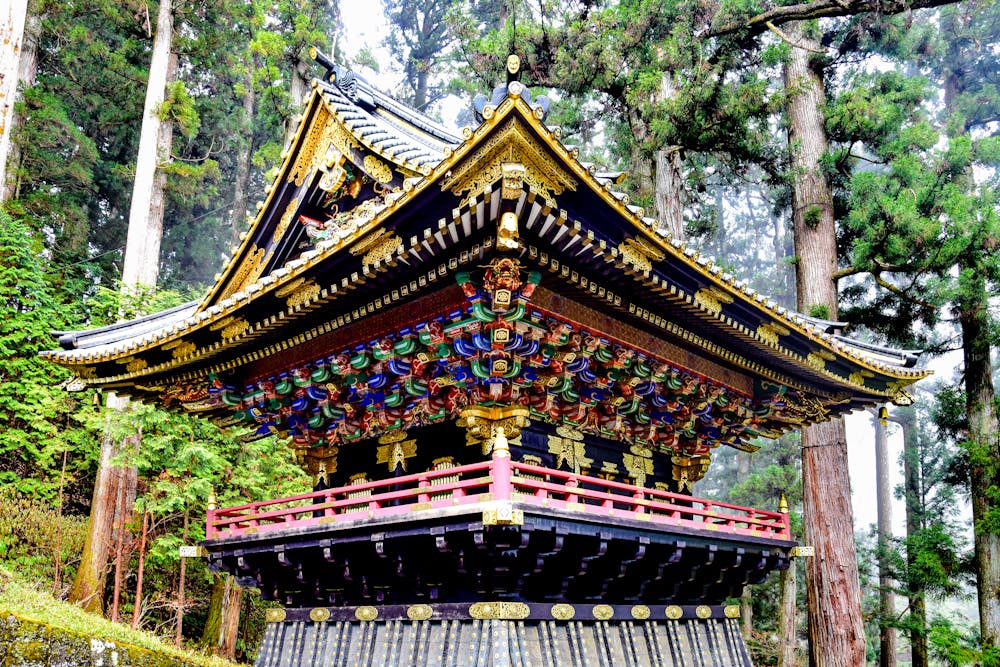
This is why most people come to Nikko, and rightly so. Toshogu is a UNESCO World Heritage Site and it’s unlike any other shrine in Japan. Where most shrines go for understated elegance, Toshogu goes completely over the top. Every surface is carved, painted, gilded. Dragons, elephants, flowers, mythical creatures — thousands of carvings packed into the buildings and gates. It’s borderline excessive and absolutely brilliant.
The famous “see no evil, hear no evil, speak no evil” three wise monkeys? They’re here, carved above the sacred stable. Kids love spotting them. There’s also a tiny sleeping cat carving (Nemuri-Neko) that’s become oddly iconic — it’s smaller than you’d expect and easy to miss if you’re not looking.
The five-storey pagoda near the entrance is striking. Hundreds of moss-covered stone lanterns line the paths through the cedar forest. The whole place feels ancient and slightly magical, even with other travelers around.
Admission is ¥1,300 for adults and ¥450 for children (~£7/£2.40). Budget at least 90 minutes, more if your lot are the type to examine every carving. Ours were, which surprised us.
One warning: the paths are steep and uneven in places. Stone steps, gravel, tree roots. Fine for kids who can walk confidently, but you’ll struggle with a pushchair. Carry younger ones.
Shinkyo Bridge
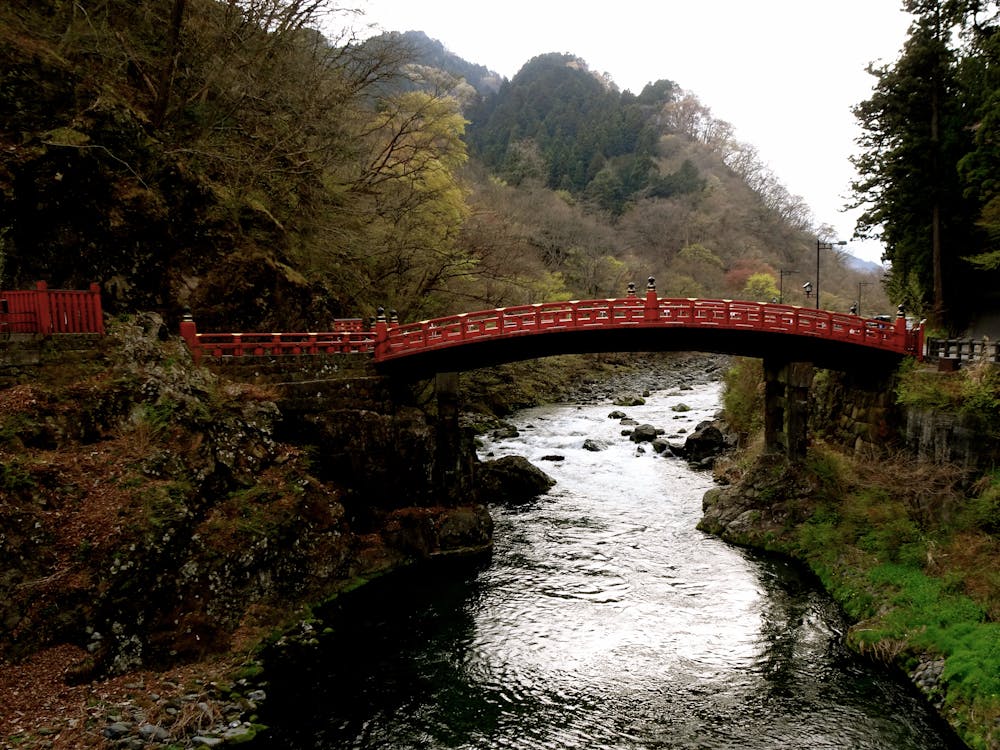
The sacred red bridge over the Daiya River, about a five-minute walk from the station on the way to Toshogu. It’s gorgeous — bright vermillion against the green gorge, with the river rushing below. The classic Nikko photo.
You can pay ¥300 (~£1.60) to walk across it, but honestly, the best view is from the road bridge right next to it. Free. The kids weren’t fussed about walking across. They were fussed about throwing sticks into the river from the other bridge. Priorities.
Stop here on your way up to Toshogu. Five minutes is enough unless you want photos without other people in them, in which case good luck.
Kegon Falls
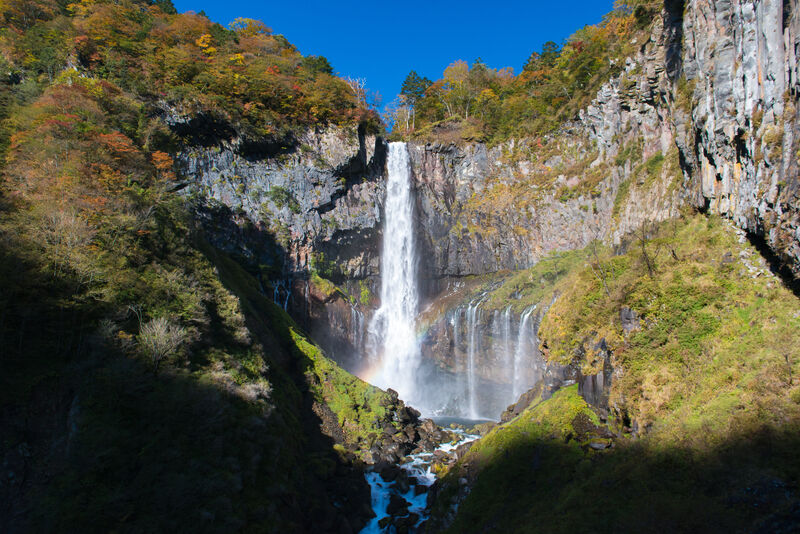
One of Japan’s most impressive waterfalls. Ninety-seven metres of water dropping off a cliff into a misty gorge. It’s properly dramatic — not one of those waterfalls that looks better in photos than real life. This one delivers.
It’s about 40 minutes by bus from the Nikko station area, up a winding mountain road to Lake Chuzenji. At the falls, there’s a lift (¥570/~£3 per person) that takes you down to a viewing platform at the base. Worth paying for. The view from the top is fine, but from below you get the full scale of it, plus the spray on your face if the wind’s right.
The falls are impressive year-round. Autumn is the standout — the surrounding forest turns orange and red and the whole scene looks unreal. In winter, parts of the falls freeze. Summer, when Tokyo is sweltering, Nikko’s mountain air feels like a different country.
Lake Chuzenji
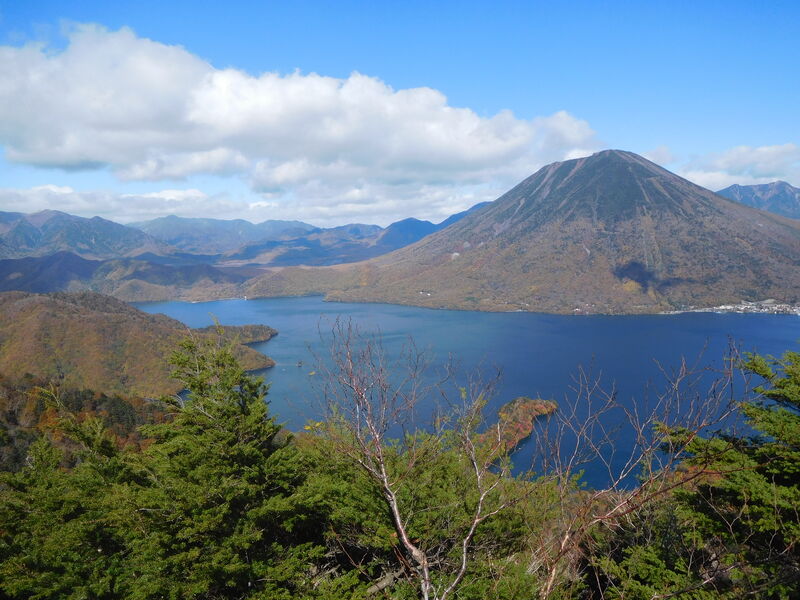
Right next to Kegon Falls, this mountain lake sits at about 1,200 metres altitude. It’s calm and pretty, ringed by mountains, with a couple of boat cruise options if the kids need a sit-down after all the walking.
The lakeside path is a pleasant stroll — flat, easy, nothing strenuous. There are a few restaurants and souvenir shops near the bus stop. It’s not a destination in itself, but paired with Kegon Falls it rounds out a solid half day in the highlands.
Boat rides run about 55 minutes and loop around the lake. A nice way to rest your legs while still feeling like you’re doing something.
Edo Wonderland (Nikko Edomura)
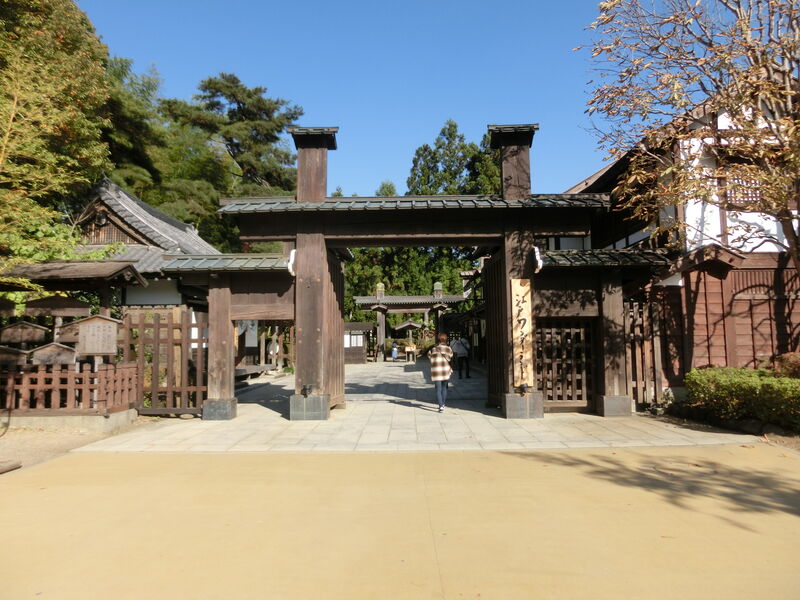
Right. This is a samurai and ninja theme park set up to look like an Edo-period town. Streets lined with wooden buildings, actors in costume everywhere, ninja shows, samurai sword demonstrations, and — the thing our kids talked about for weeks afterwards — you can dress up as a ninja or samurai and walk around the park in full costume.
It’s not cheap. ¥5,800 for adults and ¥3,000 for children (~£31/£16). The costumes are extra on top. But if your children are into anything remotely ninja-related, they will lose their minds. Ours did. The ninja maze, the haunted temple, the outdoor shows — it’s genuinely entertaining, not just a tourist trap with a gift shop attached.
Allow at least half a day. We spent four hours and the kids would’ve stayed longer. It’s about 20 minutes by bus from Nikko station.
One thing: it’s quite spread out and involves walking on gravel paths. Comfortable shoes. And check the show schedule when you arrive so you don’t miss the ninja performances — they’re the highlight.
How Long to Spend in Nikko
A day trip from Tokyo works if you focus. Toshogu Shrine plus Shinkyo Bridge plus one other thing — either Kegon Falls or Edo Wonderland, not both. You’ll be tired but satisfied.
Staying overnight is better. It gives you a proper morning at Toshogu without rushing, an afternoon at Kegon Falls and Lake Chuzenji, and a second day for Edo Wonderland. There are some lovely ryokan (traditional inns) in the area, several with private onsen baths — a treat after a day of walking mountain paths.
If you’re building a wider Japan itinerary with kids, Nikko slots in naturally as a one or two-night stop between Tokyo and wherever you’re headed next.
Best Time to Visit
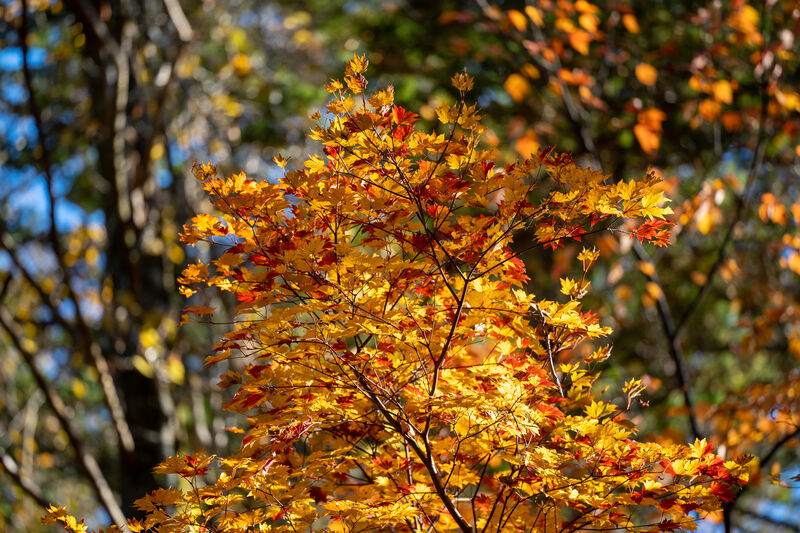
Autumn. Full stop. October and November turn Nikko into something extraordinary. The mountains blaze with colour — reds, oranges, deep yellows — and Toshogu surrounded by autumn foliage is one of the most photogenic things in Japan. Book accommodation early because everyone else knows this too.
Summer is the runner-up. When Tokyo hits 35 degrees and the humidity makes you question every life choice, Nikko sits several degrees cooler in the mountains. Genuinely refreshing. The waterfalls are at their fullest after the rainy season.
Spring has cherry blossom, though Nikko blooms later than Tokyo (mid to late April usually). Winter is quiet and cold, with potential snow — atmospheric at the shrines, less fun at the outdoor attractions.
Practical Bits
Weather changes fast. Nikko is in the mountains at altitude. We’ve had sunshine turn to heavy rain within an hour. Bring layers. Bring a waterproof. Don’t assume the forecast for Tokyo applies up here.
Steep paths. Toshogu involves stone steps and uneven ground. Kegon Falls has the lift but also some walking. Edo Wonderland is mostly flat but gravelly. Sturdy shoes, not sandals.
Buses. The bus system in Nikko connects the station to Toshogu, Kegon Falls, Lake Chuzenji, and Edo Wonderland. A day pass covers most routes and saves money versus individual fares. Buy one at the station.
Food. Nikko’s local speciality is yuba (tofu skin) — it’s in everything. The kids were not interested. There are more conventional restaurants near the station and around Toshogu, plus convenience stores for emergency onigiri. Pack snacks if you’re heading up to the lake area where options thin out.
Pushchairs. Manageable on the main roads and at Edo Wonderland. Not practical at Toshogu or on the trails near Kegon Falls. If you’ve got a little one, a carrier is better for the shrine visit.
Is Nikko Worth It With Kids?
Yes. Unequivocally. Toshogu alone justifies the trip — it’s the one shrine in Japan where even temple-weary children pay attention, because there’s so much to look at. Add a thundering waterfall, a mountain lake, and the chance to dress up as a ninja, and you’ve got one of the strongest family day trips from Tokyo.
It’s not the easiest outing. The travel time is real, the walking adds up, and the mountain weather can be fickle. But it’s worth the effort. Nikko gave us one of our favourite days in the whole of our Japan family trip, and the kids still talk about the sleeping cat and the ninja costume. That tells you everything.