
Snow Monkeys With Kids
There’s a moment, about ten minutes into the forest walk, when your five-year-old stops complaining about the cold. The trees are heavy with snow, the path narrows, and somewhere ahead you can hear water. Then you round a corner and there they are. Wild Japanese macaques, huddled together in a steaming hot spring pool, snow settling on their fur, tiny pink faces peering out through the mist. Nobody speaks. Not even the kids.
That’s Jigokudani Monkey Park. It’s one of those rare travel experiences that genuinely lives up to the photos. Better, actually, because photos can’t capture the smell of sulphur, the sound of monkeys chattering, or the look on your child’s face when a baby macaque climbs onto its mother’s back three metres away.
What Is Jigokudani Monkey Park?
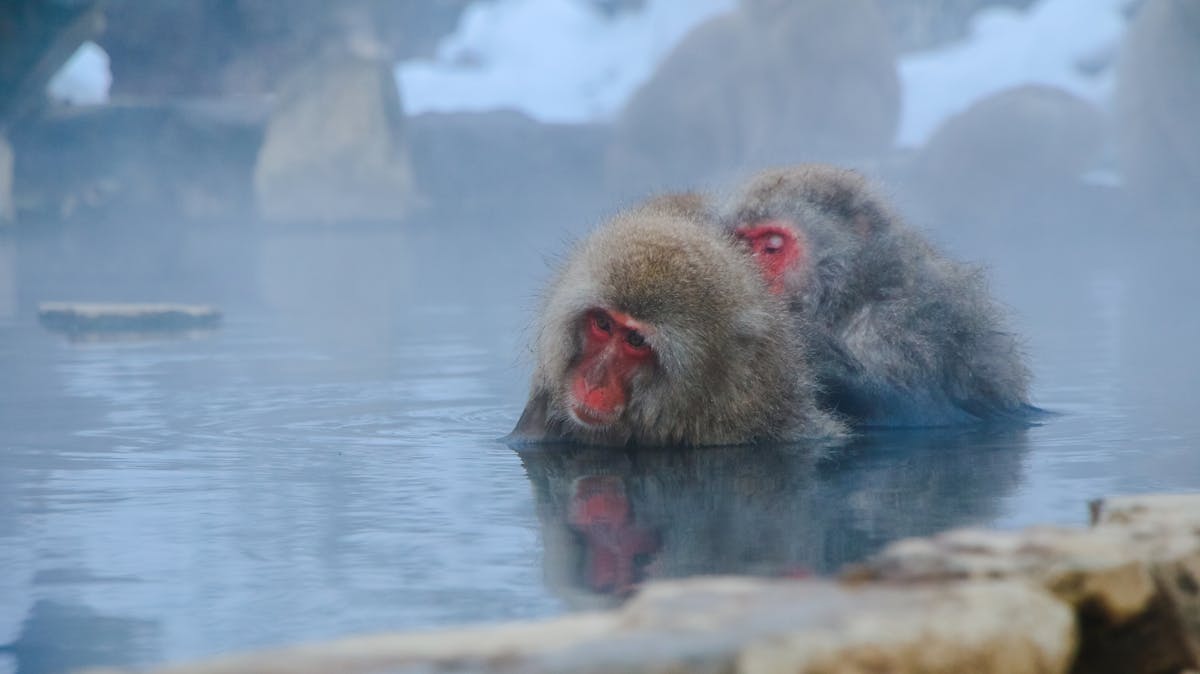
Jigokudani sits in Nagano Prefecture, in the mountains of central Japan. The name translates to “Hell’s Valley” — dramatic, but fair. It’s a steep, narrow gorge where volcanic hot springs bubble up through the rock. Wild Japanese macaques have been coming here to bathe for decades, drawn by the warm water during the brutal mountain winters. The park was established in 1964 and has become one of Japan’s most iconic wildlife sites.
These are genuinely wild monkeys. Not a zoo. Not a sanctuary. They come and go as they please. The park staff maintain the hot spring pool and feed the monkeys to keep them returning, but otherwise the animals are free-roaming. You’ll see them grooming each other on rocks, play-fighting in the snow, and — the image that makes this place famous — sitting in steaming water while snowflakes drift down around them. It’s extraordinary.
Getting There From Tokyo
Not going to sugarcoat this: it’s a trek. Budget about three hours each way.
First, take the Hokuriku Shinkansen from Tokyo Station to Nagano. That’s the straightforward bit — roughly 1 hour 20 minutes, comfortable seats, Mount Fuji views if you’re lucky. Covered by the Japan Rail Pass if you’ve got one, which you should.
From Nagano Station, catch the Nagaden Express Bus bound for Kanbayashi Onsen. About 40 minutes, and the buses run regularly. You can also take the Nagano Electric Railway train to Yudanaka Station and bus or taxi from there, but the direct bus is simpler with children.
Then comes the walk. From the trailhead at Kanbayashi Onsen, it’s 1.6 kilometres through the forest to the park entrance. Allow 25 to 35 minutes depending on conditions and the length of small legs. More on that walk in a moment, because it deserves its own section.
Total journey time from Tokyo: roughly three hours door to door. It’s a long day trip. Doable, but long. We’d strongly recommend staying overnight in the area if your schedule allows.
The Forest Walk — What to Expect
Right. The walk. This is the bit that catches families off guard.
The path is 1.6 kilometres, mostly flat, running alongside a river through dense forest. In summer or autumn, it’s a pleasant stroll. Pretty, even. In winter — which is when you want to visit — it’s a different story. The path gets covered in compacted snow and ice. It can be slippery. Proper winter boots with decent grip are non-negotiable. We saw several people in trainers looking absolutely miserable, and one dad went down hard on a patch of ice while carrying a toddler. Don’t be that dad.
Strollers are a firm no in winter. Forget it. If you’ve got a child under three, bring a carrier. A good backpack carrier with a rain cover works brilliantly. Our youngest was two when we visited and rode on my husband’s back the entire way, perfectly content and significantly warmer than the rest of us.
The walk itself is gorgeous, though. Snow-covered trees, the river rushing below, occasional glimpses of monkeys in the branches overhead. Even our seven-year-old, who’d spent the bus journey asking if we were there yet, went quiet and wide-eyed once we got into the forest.
What You’ll See at the Park
The main attraction is the hot spring pool. It’s a natural-looking stone pool fed by volcanic springs, and on a good winter day you’ll find dozens of macaques soaking in the warm water. They sit with their arms draped over the rocks, eyes half-closed, looking impossibly relaxed. Steam rises around them. Snow piles up on their heads. Baby monkeys cling to their mothers or chase each other around the pool’s edge.
It’s mesmerising. We stayed for over an hour and could have stayed longer.
Beyond the pool, monkeys roam freely around the viewing area. You’ll see them grooming each other — picking through fur with intense concentration — play-fighting, nursing babies, and generally going about their business as if you aren’t there. Because to them, you aren’t. They’re completely habituated to humans. They’ll walk right past you, sometimes within arm’s reach.
Which brings us to the rules. Do not touch the monkeys. Don’t try to feed them. Don’t crouch down to their eye level or stare directly at them — they can interpret eye contact as a threat. And absolutely do not eat or carry visible food near them. They’re wild animals. Mostly calm, occasionally unpredictable. We drilled these rules into our kids before we arrived and they were brilliant about it, but keep a close eye on younger ones who might instinctively reach out.
Entry Fee
Refreshingly reasonable. Adults pay ¥800 (~£4.20) and children aged 5 to 17 are ¥400 (~£2.10). Under-fives free. For what you get — unlimited time watching wild monkeys in hot springs surrounded by snow — it’s absurdly good value.
Best Time to Visit
Winter. Full stop.
The monkeys live in the area year-round, and the park is open every day of the year. But the reason you’re going — the reason everyone goes — is to see monkeys bathing in hot springs with snow falling around them. That happens from December through March, with January and February being the peak snow months.
Visit in summer and you might see monkeys, but they’ll be scattered through the forest rather than clustered in the pool. The iconic snow-and-steam image? That’s a winter thing. We visited in late January and conditions were perfect. Thick snow, freezing temperatures, and the monkeys were packed into the pool like commuters on the Central Line.
Go early in the morning if you can. Fewer crowds, better light for photos, and the monkeys tend to be most active in the pool during the colder morning hours. By early afternoon, the day-trippers from Tokyo arrive in force and viewing spots around the pool get crowded.
Visiting With Kids — The Honest Version
Children aged four and up generally handle this trip fine. Ours were two and seven, and both managed it, though the two-year-old was carried the entire way and the seven-year-old needed regular encouragement on the walk back.
The cold is the main challenge. We’re talking mountain cold. Not Tokyo cold. Temperatures regularly drop to minus five, sometimes minus ten. Dress your children in proper layers: thermal base layers, fleece mid-layers, waterproof outer layers, warm hats, thick gloves, and those boots I keep banging on about. We also brought disposable hand warmers, which were absolute lifesavers. Stick them inside gloves and coat pockets. You can buy them at any convenience store in Japan for about ¥100 (~50p) a pair.
Under-fours? Doable with a carrier, but hard work for whoever’s carrying. The path is manageable but the cold is relentless, and a small child who gets uncomfortable has no way to warm up until you walk all the way back. We packed a flask of warm milk and extra blankets for our two-year-old. Honestly, if you’ve got a baby or young toddler and the forecast is particularly brutal, consider whether this is the right trip for this visit. There’s no shame in coming back when they’re older.
For families travelling Japan with a mix of ages, this works best with kids roughly school-age. They’re old enough to walk the path, stay warm enough, follow the rules about the monkeys, and actually remember the experience afterwards. Our seven-year-old still talks about it as his favourite thing we did in Japan. Above the bullet trains. Above the temples. The monkeys won.
Day Trip or Overnight?
Both work. But overnight is better. Significantly better.
A day trip from Tokyo means leaving early, spending three hours each way on transport, and arriving at the park already a bit frazzled. You’ll have maybe two hours at the park before you need to start the return journey. With children, that’s a lot of travelling for not much time on the ground.
Staying overnight in the Yudanaka or Shibu Onsen area transforms the experience. These are traditional onsen towns — narrow streets, steam rising from drains, old wooden ryokans with private hot spring baths. You arrive in the afternoon, settle in, soak in your ryokan’s onsen, eat a spectacular kaiseki dinner, sleep on futons on tatami mats, and walk to the monkey park first thing next morning when it’s quiet and magical.
Shibu Onsen is particularly charming. There’s a tradition of visiting nine public bathhouses dotted around the village, each with different mineral properties. You get a pair of wooden sandals and a towel from your ryokan and wander between them. Our seven-year-old treated it like a treasure hunt. The baths are hot — some eye-wateringly so — but children find the whole ritual hilarious and brilliant.
Ryokan prices in the area vary. Budget options start around ¥12,000 (~£63) per person including dinner and breakfast. The nicer places run ¥20,000 to ¥30,000 (~£105 to £158) per person. Yes, per person. Japanese ryokans price that way. It’s not cheap for a family, but the experience is unforgettable and the food alone is worth it.
What Else to Do Nearby
Nagano Prefecture has plenty to fill extra days if you’re making a longer trip of it.
Nagano city itself is worth a few hours. Zenko-ji is one of Japan’s most important Buddhist temples, founded in the 7th century, and the approach road is lined with shops selling oyaki (stuffed dumplings) that children devour. The city hosted the 1998 Winter Olympics and there’s still an Olympic museum if your kids are into that sort of thing.
If you’re visiting in ski season, you’re surrounded by some of Japan’s best family skiing. Nozawa Onsen is about 40 minutes from the monkey park and has a wonderful combination of excellent slopes and a traditional hot spring village. Hakuba, site of several Olympic events, is about 90 minutes away and has bigger resorts with more English-language infrastructure. Japanese powder snow is legendary for good reason.
The whole region is dotted with onsen towns worth exploring. Hot springs and kids might sound like an odd combination, but Japanese children grow up bathing in onsen and most places are welcoming to families. Just check the etiquette — tattoo policies, washing procedures, the fact that you bathe naked — and prep your kids accordingly. Ours thought the naked bit was the funniest thing that had ever happened to them.
Practical Tips — The Quick List
Wear proper winter boots. I’ve said it three times now. I’ll say it again.
Bring hand warmers. Buy them at any konbini. They cost almost nothing and make a massive difference to small frozen fingers.
Pack snacks for the journey but eat them before the park. No food near the monkeys.
Bring a good camera or make sure your phone battery is full. Cold drains batteries fast. Keep your phone in an inside pocket close to your body between shots.
Toilets are available at the trailhead car park area but not at the monkey park itself. Sort everyone out before the walk in.
The park opens at 8:30am in winter (9am in spring/autumn, 8:30am in summer). Aim to arrive at opening for the smallest crowds and the best monkey-watching.
If the weather forecast shows heavy snow, check the park’s website or call ahead. The path is maintained but extreme conditions can occasionally close it.
Is It Worth It?
Completely. Without hesitation.
Yes, it’s a long journey from Tokyo. Yes, the walk is cold and occasionally slippery. Yes, you’ll spend a small fortune on hand warmers and vending machine hot chocolate. But watching your children stand in silent awe as wild monkeys bathe in steaming water while snow falls around them — that’s the kind of travel moment you plan entire trips around.
We’ve done a lot of things with our kids in Japan. Theme parks, temples, cities, beaches. The snow monkeys remain the single experience they talk about most. There’s something about seeing wild animals behaving completely naturally, in a setting that looks like it belongs in a nature documentary, that captures children’s imaginations in a way that no amount of screen time ever could.
Go in winter. Stay overnight. Wear the boots. You won’t regret it.