
Berlin wasn’t a city we’d thought much about for a family trip. It felt serious. Historical. A bit grown-up. We kept imagining cold war museums and techno clubs, which — fair enough — are both very much part of the picture. But a friend who’d taken her three there over half term came back saying it was one of the most family-friendly cities she’d visited in Europe. Better than Barcelona, she reckoned. We raised an eyebrow. Then we went. And she was right.
Berlin is brilliant with kids. Genuinely brilliant. It’s affordable for a European capital, stuffed with green spaces and playgrounds, the public transport is excellent, and there’s a kind of relaxed energy to the place that means children are welcome pretty much everywhere. Even the beer gardens. Especially the beer gardens, actually.
Here’s what we’d tell a friend before they booked.
Getting There
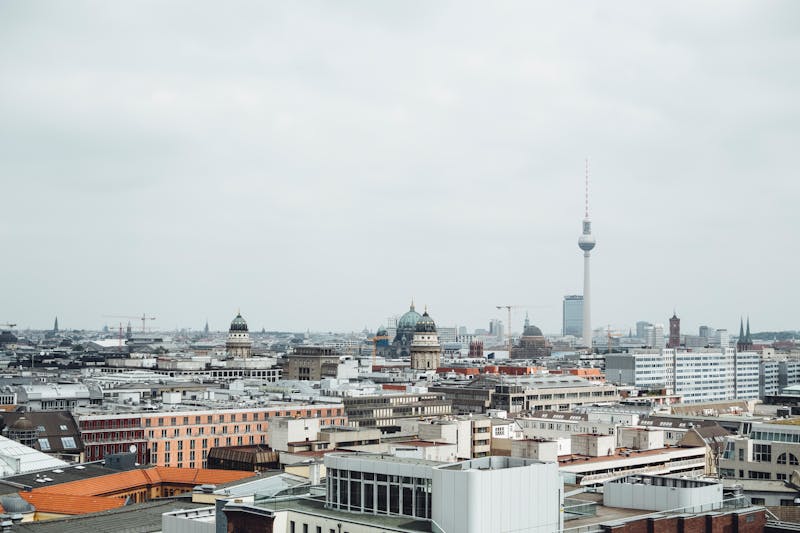
About two hours from most UK airports. Direct flights run from Heathrow, Gatwick, Stansted, Manchester, Edinburgh, and a handful of others depending on the season. Budget airlines cover the route well, so if you book ahead you can get reasonable fares. Nothing complicated.
If flying isn’t your thing — or if your lot are old enough to appreciate a proper train journey — you can take the Eurostar to Brussels, change for a fast train to Cologne, then on to Berlin. It’s a long day. Six to eight hours door to door, depending on connections. But it’s a proper adventure if you’ve got the patience for it, and the scenery through Belgium and Germany is lovely. Our kids spent the whole time with their faces pressed against the window, which is about the best you can hope for on any journey lasting more than forty minutes.
Why Berlin Works for Families
A few reasons, and they add up quickly.
First, the cost. Berlin is cheap by capital city standards. Noticeably cheaper than London, Paris, or Amsterdam. A currywurst from a street stand is €4-5. A döner kebab — and Berlin has the best döner outside of Turkey, this is not even controversial — is €5-6. You can feed a family of four lunch for under €20 without trying very hard. That changes the entire feel of a trip.
Second, green space. The city is full of parks. Massive ones. And inside those parks are playgrounds, and not the sad, rusty kind either. Proper, imaginative, well-maintained playgrounds that kids actually want to spend time in. We lost half a day to a playground in Prenzlauer Berg that had a zip line and a climbing wall and a sandpit the size of a tennis court. Nobody complained.
Third, public transport that actually works. The U-Bahn and S-Bahn run frequently, the stations are clean, and a day pass for the AB zone costs €8.80 for adults. Under 6s travel free. You can get almost anywhere in the city within thirty minutes, which matters because Berlin is huge. Seriously sprawling. Don’t try to walk it all. Use the trains.
Brandenburg Gate and the Reichstag
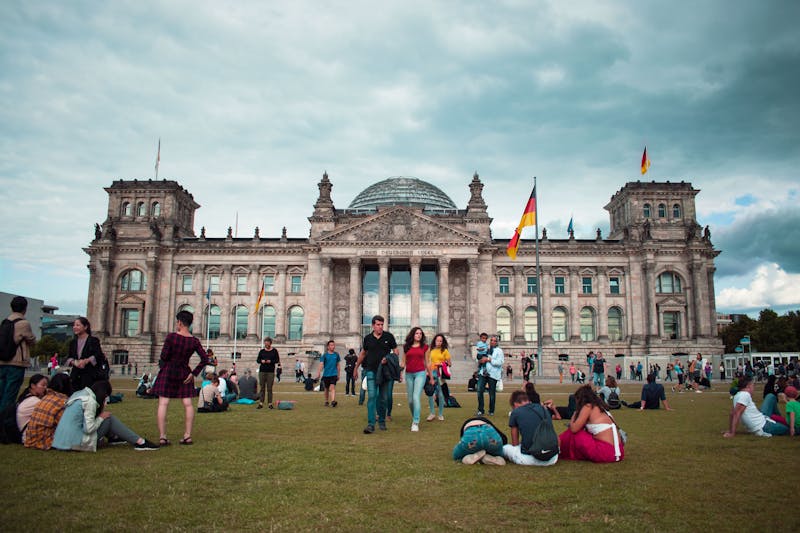
Start here. Everyone does, and for good reason. The Brandenburg Gate is one of those landmarks that actually lives up to the hype — it’s enormous, it’s imposing, and if you tell the kids even a little bit about its history (Napoleon marched through it, it was trapped behind the wall for decades, people partied on top of it when the wall came down) they’ll be interested. The area around it is pedestrianised and open. Free to visit, obviously.
The Reichstag is right next door and it’s worth the effort, but you need to plan ahead. The glass dome on the roof is free to visit — completely free — but you must register online in advance. Do it as soon as you know your dates because slots go quickly, particularly in school holidays. Once you’re up there, there’s a spiral walkway that takes you around and up the inside of the dome, with audio guides explaining what you’re looking at across the Berlin skyline. Our kids treated the spiral walk as a race, which slightly undermined the educational element, but they enjoyed themselves and the views are stunning. On a clear day you can see for miles.
The Berlin Wall and East Side Gallery
You can’t go to Berlin with kids and not talk about the wall. It’s the single most powerful piece of history the city has to offer, and children find it fascinating once you explain it properly. The idea that a wall went right through the middle of a city, splitting families, and that people tried to escape across it — kids get that. They understand it in a way that more abstract history sometimes doesn’t land.
The East Side Gallery is the longest remaining section of the wall, 1.3 kilometres of it, covered in murals painted by artists from around the world after it came down. It’s free, it’s outdoors, and you can walk the whole thing in twenty minutes or take your time and discuss the paintings. Some are political. Some are funny. Some are just odd. The kids had opinions about all of them, which is sort of the point.
Checkpoint Charlie
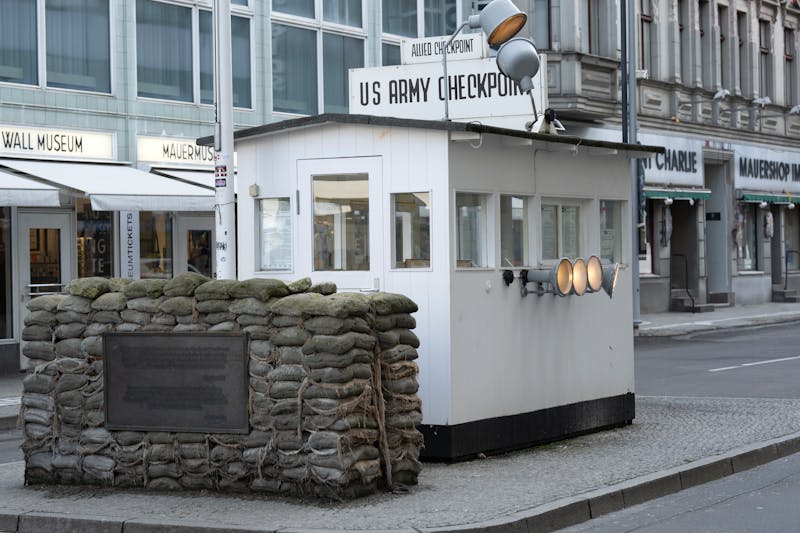
We’ll be honest. Checkpoint Charlie itself is a bit naff these days. The famous guardhouse is a replica, surrounded by tourist tat shops and people in fake military uniforms charging for photos. The museum is overpriced and not particularly kid-friendly. We’d skip it.
But. The free outdoor exhibition panels along Friedrichstrasse are genuinely good. They tell the story of the checkpoint, the escape attempts, the cold war division, with photos and text that even older children can follow. Walk past, read a few panels, take a photo, move on. Ten minutes and you’ve covered it. Don’t spend a whole morning here.
Museum Island
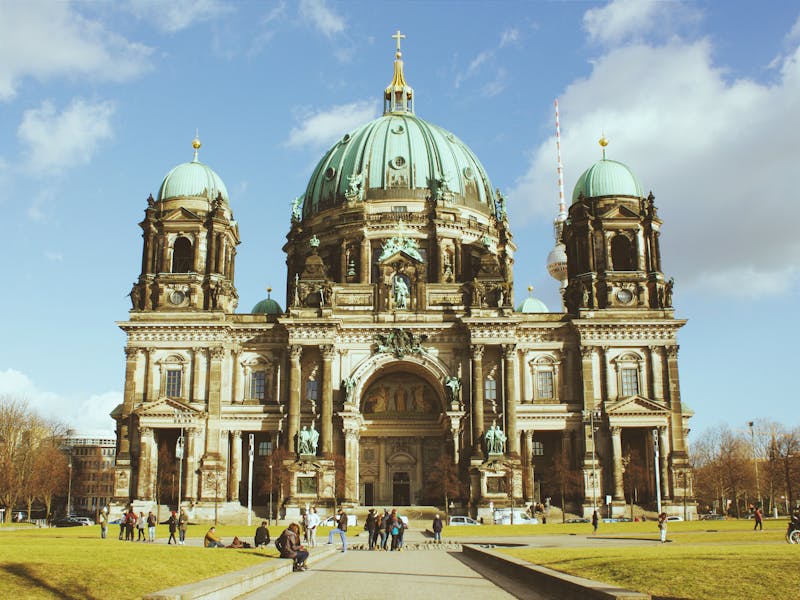
Five museums clustered together on an island in the River Spree. It’s a UNESCO World Heritage site and it’s impressive even from the outside. A combo day ticket for all five is €22 for adults, and under 18s get in free. Free. For world-class museums. That’s hard to argue with.
The Pergamon Museum is the most famous, but it’s been under renovation for years and large sections are closed. Check before you go. The Neues Museum is the one we’d recommend for families — the Egyptian collection is superb. Mummies, sarcophagi, the bust of Nefertiti. Our eight-year-old was transfixed. The six-year-old mainly wanted to know if the mummies were real dead people, which led to a conversation we hadn’t entirely prepared for, but that’s parenting.
One museum per visit with children. Seriously. Don’t try to cram in two or three. You’ll burn out, they’ll mutiny, and nobody will remember anything. Pick one, do it properly, then go and find an ice cream.
Natural History Museum
This one isn’t on Museum Island but it deserves its own mention because it is, without exaggeration, one of the best natural history museums we’ve taken the kids to. €11 for adults, under 18s free.
The star attraction is a colossal T-Rex skeleton — one of the best-preserved in the world — displayed in the main dinosaur hall alongside a towering Brachiosaurus that made our children’s jaws physically drop. The whole dinosaur section is superb. Beautifully lit, well explained, and the kind of thing that makes a four-year-old whisper “wow” and an adult do exactly the same.
Allow one to two hours. Could easily do more if your kids are really into it, but that’s a good amount before the legs start complaining.
Legoland Discovery Centre
Indoor, reliable, and perfect for a rainy afternoon or when everyone needs a break from history. It’s aimed squarely at ages 3-10, and within that range it delivers. A 4D cinema, build areas where the kids can go wild, a couple of small rides, and a miniature Berlin made entirely from Lego that’s more impressive than it has any right to be.
Tickets are around €21.50 if you book online in advance. Don’t pay the door price. Allow two to three hours. It’s not a full-day attraction, but it doesn’t pretend to be, and our lot came out buzzing.
Mauerpark on a Sunday
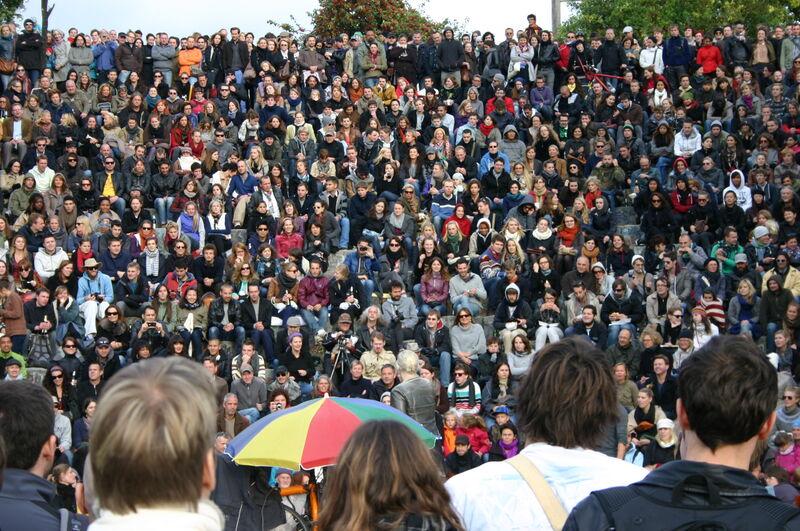
If you’re in Berlin on a Sunday, go to Mauerpark. Non-negotiable. The flea market alone is worth the trip — stalls selling vintage clothes, old records, handmade jewellery, random bits and pieces. The food stalls are excellent. But the real draw is the outdoor karaoke.
In an old amphitheatre in the park, a man called Joe Hatchiban runs a free karaoke session every Sunday afternoon. Hundreds of people gather on the stone steps, someone gets up on stage with a microphone, and the whole crowd sings along. It’s joyful. It’s ridiculous. A teenager sang Bohemian Rhapsody and the entire amphitheatre joined in for the operatic section and our kids were beside themselves. Free. Completely free. One of the best afternoons we’ve had anywhere.
Tiergarten
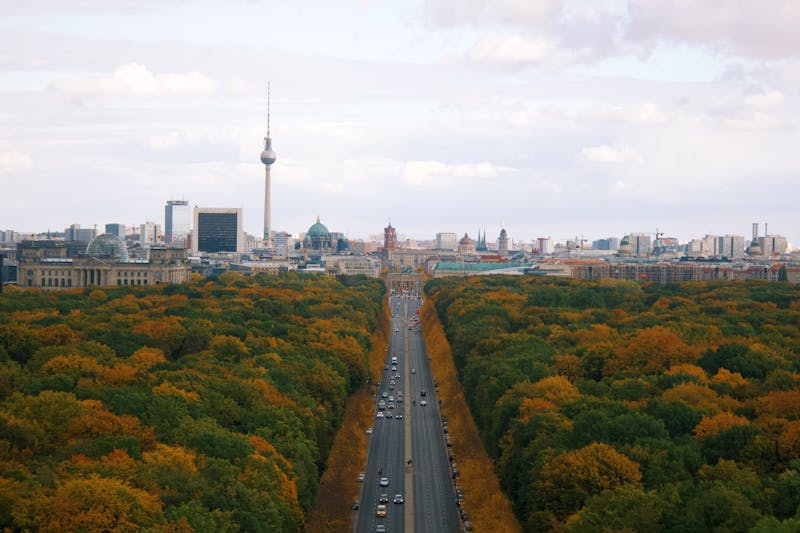
Berlin’s central park, and it’s massive. Bigger than Hyde Park. Proper woodland paths, lakes, meadows, playgrounds dotted throughout, and a café or two when you need a sit down. It’s the kind of park where you can spend an entire morning without covering half of it.
We went on a Tuesday afternoon and barely saw another family. The kids ran, climbed trees, threw sticks into a pond, and declared it “better than the park at home.” High praise. Free, obviously. Bring snacks.
Berlin Zoo and Aquarium
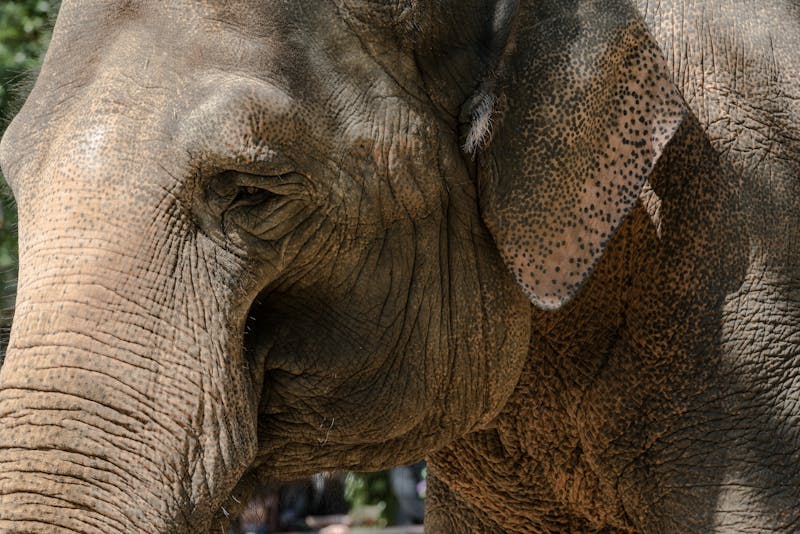
One of Europe’s oldest zoos, right on the edge of the Tiergarten, and it’s good. Not just “fine for a zoo” good. Properly good. €18.50 for adults, €9.50 for children, and that includes the aquarium, which is housed in a separate building next door and is well worth ducking into.
The zoo itself has a huge range of animals — pandas, elephants, gorillas, penguins — spread across nicely designed enclosures. The aquarium has an entire floor dedicated to insects and reptiles that our kids spent far too long looking at. Half a day minimum if you want to see both, and bring a picnic because the food inside is pricey by Berlin standards.
Food
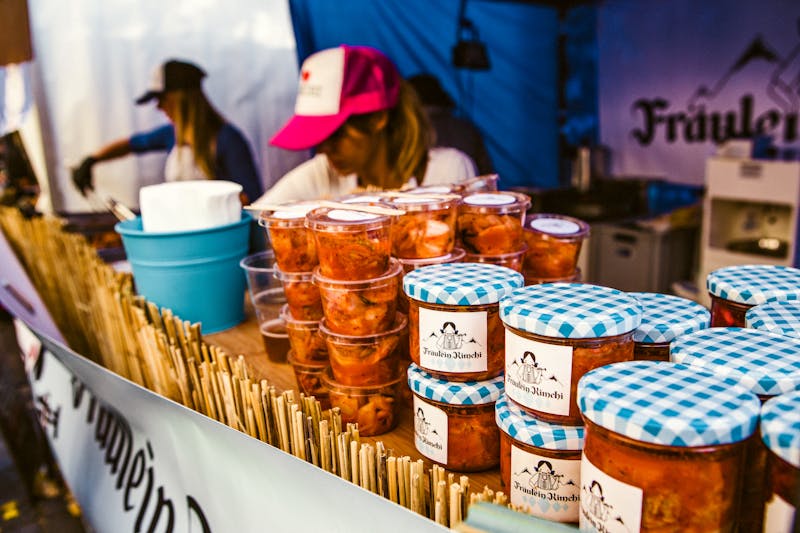
Berlin’s food scene is one of its strongest selling points for families, mostly because it’s cheap and casual. Street food is the default here.
Currywurst is the city’s signature dish — a sliced pork sausage with curry ketchup and a dusting of curry powder. Sounds odd. Tastes great. Kids love it. €4-5 from any street stand, and they’re everywhere.
Döner kebabs are the other staple, and Berlin’s are legitimately world-class. The bread is fresh, the meat is properly cooked, the salad is crisp, and a good one costs €5-6. Our kids would have eaten one every single day if we’d let them. We nearly did.
For something a bit different, Markthalle Neun in Kreuzberg runs a street food Thursday every week. It’s a beautiful old market hall filled with food vendors doing everything from Korean fried chicken to handmade pasta to artisan doughnuts. Buzzing atmosphere, lots of variety, and the kids can pick exactly what they fancy rather than being stuck with whatever restaurant mum and dad have chosen. Brilliant.
Where to Stay
Three neighbourhoods worth considering, depending on what suits your family.
Mitte is the central district. Close to Museum Island, Brandenburg Gate, and most of the big sights. Hotels and apartments here are pricier than elsewhere but still reasonable by London standards. Best if you want to be within walking distance of the main attractions.
Prenzlauer Berg is the one we’d recommend for families. It’s a residential neighbourhood full of cafés, independent shops, tree-lined streets, and playgrounds on practically every corner. Lots of young families live here, so everything caters to them. The organic bakeries are almost aggressive in their frequency. Slightly north of the centre but well connected by tram and U-Bahn.
Kreuzberg is edgier. More street art, more nightlife, more of that Berlin grit that the city’s famous for. But it’s also where the best food is, and during the day it’s perfectly fine for families. Apartments here tend to be good value. Just don’t expect it to be quiet at midnight.
Getting Around
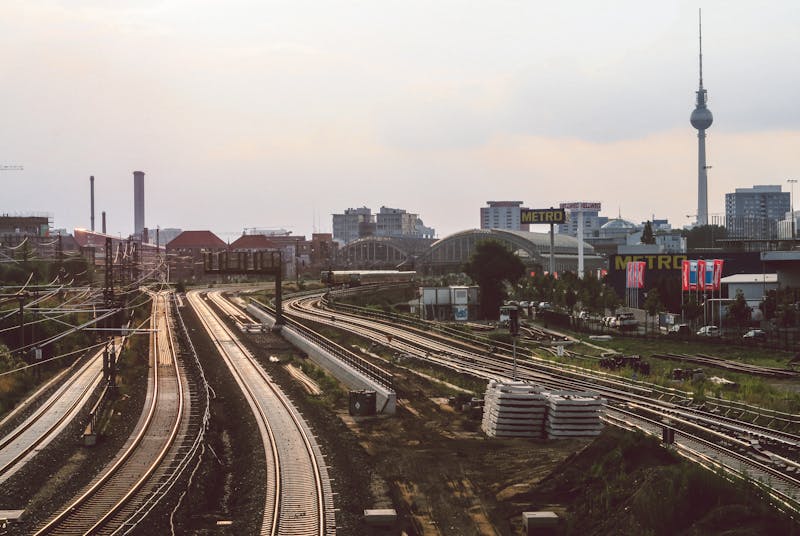
The U-Bahn (underground) and S-Bahn (overground rail) are your best friends. Frequent, reliable, and easy to navigate even if your German is limited to “danke” and “ein Bier, bitte.” A day pass for the AB zone — which covers everything you’ll want to see — is €8.80 for adults. Under 6s ride free.
Berlin also has trams in the eastern half of the city, which the kids found more exciting than the underground for reasons we couldn’t entirely explain. Buses too, though the trains are generally faster.
The city is big. Much bigger than you expect. Distances between attractions that look walkable on a map turn out to be forty-minute treks, and with children that’s a recipe for mutiny. Use the trains. Don’t be a hero.
Practical Bits
A few things worth knowing before you go.
Berlin is very spread out. Plan your days geographically — group nearby sights together rather than zigzagging across the city. Your legs and your children will thank you.
Beer gardens welcome kids during the day. This is Germany, not the UK. Children run around on the grass while parents have a beer and nobody bats an eyelid. It’s civilised and lovely and we wish it would catch on at home.
The city is remarkably affordable compared to London or Paris. We spent noticeably less per day in Berlin than we have in most other European capitals, even with paid attractions. That takes the pressure off, and a holiday without financial stress is a different kind of holiday entirely.
Most Berliners speak excellent English, but a few words of German go down well. “Bitte” and “danke” will get you a long way.
Berlin doesn’t try to be pretty. Not in the way Prague or Paris does. Parts of it are rough around the edges. There’s graffiti everywhere, some buildings are still scarred from the war, and the architecture can be brutalist in places. But that’s the character. The kids found it more interesting than any picture-postcard city, and honestly, so did we. It feels real. Alive. And they were asking to go back before we’d even landed at Gatwick.