
Sardinia With Kids
We’d heard people banging on about Sardinia for years. “The beaches are incredible.” “It’s like the Caribbean but in Europe.” “You won’t believe the water.” Honestly, we half thought they were exaggerating. They weren’t. Not even slightly. Sardinia is one of those places that genuinely stops you in your tracks — and travelling with three kids in tow, that takes some doing.
This Italian island sits plonked in the middle of the Mediterranean, south of Corsica and west of mainland Italy. It’s big enough that you could spend a fortnight here and barely scratch the surface, yet somehow it flies under the radar compared to the Amalfi Coast or Santorini. Which, frankly, is part of its charm.
Getting There
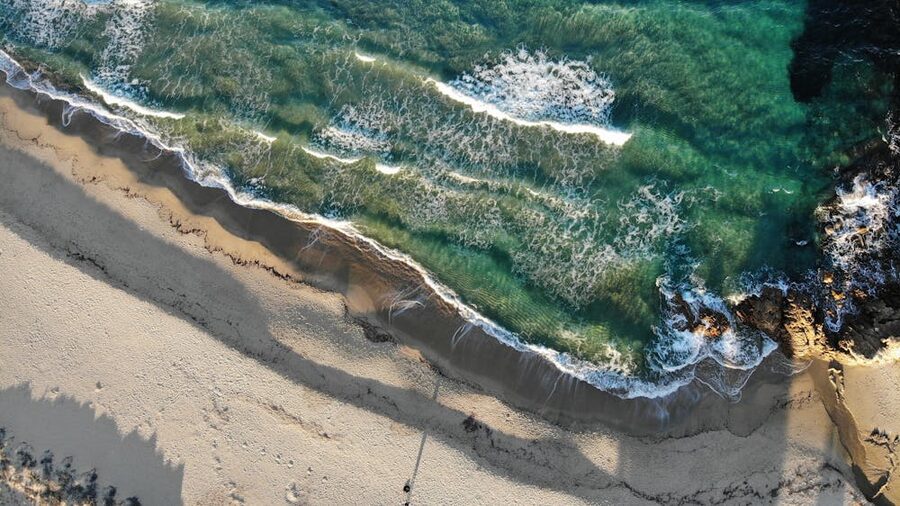
Sardinia is a surprisingly easy hop from the UK. Ryanair and easyJet run seasonal flights into both Cagliari in the south and Olbia in the north, and you’re looking at roughly two and a half hours in the air. That’s shorter than flying to some of the Greek islands, which always catches people off guard. Direct flights run from around April through to October, though the exact schedule shifts each year so worth checking early. We flew into Olbia and out of Cagliari on separate trips, and both airports are small, manageable, and mercifully quick through baggage reclaim.
Why Sardinia Over Everywhere Else
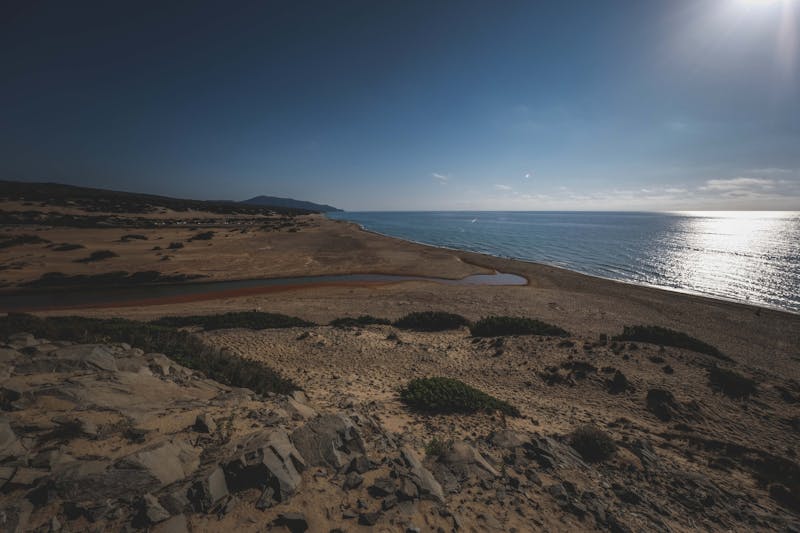
Right, here’s the thing. Sardinia has beaches that rival anything in the Caribbean. Genuinely. White sand, turquoise water so clear you can see every pebble on the seabed, and that gorgeous warm Mediterranean temperature that means even toddlers can paddle without the screaming-cold-shock drama. But unlike the Caribbean, you don’t need an eight-hour flight and a second mortgage to get there.
It’s also far less hectic than the usual Mediterranean hotspots. We’ve done Positano. We’ve done Mykonos. Both gorgeous but absolutely rammed in summer, and navigating cobbled streets with a buggy while dodging Instagram influencers isn’t our idea of relaxation. Sardinia has a totally different pace. Families are welcomed properly here — not just tolerated. Italian culture revolves around children, and you feel that everywhere. Restaurants don’t bat an eyelid at small people. Waiters bring bread to the table before you’ve even sat down because they know hungry kids and hungry parents need feeding fast.
North vs South
This is the big decision, and it matters. The north and south of Sardinia feel like different holidays entirely.
Up north, you’ve got the Costa Smeralda — the famous stretch where billionaires park their superyachts and a coffee costs about the same as a meal elsewhere. It’s undeniably stunning but eye-wateringly expensive. Don’t let that put you off the whole north, though. Head slightly further along the coast to Olbia or San Teodoro and things become much more reasonable. San Teodoro in particular is brilliant for families — lovely beaches, a small town centre with gelato shops on every corner, and easy access to the Maddalena islands. The north tends to be greener, more rugged, with granite boulders scattered along the coastline like something from a fairy tale.
The south, based around Cagliari, is a different beast. More authentic, less polished, noticeably cheaper. Chia beach is spectacular. Villasimius feels like a proper Italian seaside town rather than a tourist creation. If you want Sardinia without the gloss, head south. We loved both, but if we had to pick for a first visit with kids, we’d probably say south for the value and the vibe.
The Beaches (Brace Yourselves)
We need to talk about the beaches because they’re the main event and they are absolutely ridiculous.
La Pelosa, up near Stintino in the northwest, is regularly voted one of the best beaches in Europe and it deserves every bit of that reputation. Shallow turquoise water stretching out forever, fine white sand, and a little medieval watchtower perched on a rock just offshore. For kids it’s perfect — the water stays knee-deep for ages so little ones can splash about safely. It does get busy in peak summer, and there’s now a daily visitor cap, so arrive early or book your spot online.
Cala Brandinchi, nicknamed “Little Tahiti,” is just south of San Teodoro and honestly looks photoshopped. The water is that shade of blue-green that you assume only exists in travel brochures. It doesn’t. It’s real and it’s right there.
Spiaggia del Principe on the Costa Smeralda is a stunner too — a sheltered cove surrounded by rocks, with calm water that’s great for snorkelling with older children.
Then there’s Is Arutas on the west coast, which is properly unusual. Instead of sand, the beach is made of tiny quartz pebbles in shades of white, pink, and green. The kids were fascinated. It’s not the softest underfoot, mind — water shoes are genuinely useful here and honestly worth packing for Sardinia generally. Rocky coves and pebbly stretches pop up everywhere, and there’s nothing worse than a child hopping about shrieking because the stones are too hot.
Cagliari — Don’t Skip The Capital
A lot of families fly into Cagliari and drive straight to their villa. Mistake. Give the city at least a day. The Bastione di Saint Remy viewpoint is free and gives you panoramic views across the rooftops and out to sea — the kids thought it was brilliant, especially the lift that takes you up. Wander the old quarter afterwards, through narrow streets with washing strung between the buildings and tiny restaurants tucked into archways.
Poetto Beach is Cagliari’s city beach and it stretches for eight kilometres. Eight! It’s sandy, it’s clean, there are beach bars and playgrounds, and locals treat it as an extension of their living room. We spent an entire afternoon there and the children didn’t want to leave.
If you’ve got a child who’s into history — or even one who’s mildly curious — the archaeology museum is worth a visit. It’s around €7 for adults and covers Sardinia’s fascinating ancient civilisations. Small enough that nobody gets museum fatigue.
Boat Trips To The Maddalena Archipelago
If you do one excursion in Sardinia, make it this. Boats leave from Palau in the north and take you island-hopping around the Maddalena Archipelago — a cluster of small islands with some of the most absurdly beautiful water we’ve ever seen. Most trips include several swimming stops where you jump off the boat into crystal-clear sea. Our lot talked about it for months afterwards. Expect to pay around €30-45 per person depending on the boat and the route, with under-fives often free. A full day out and worth every cent.
Nuraghi — Sardinia’s Ancient Stone Towers
Here’s something you won’t find anywhere else on earth. Sardinia is dotted with thousands of nuraghi — conical stone towers built around 3,500 years ago by the Nuragic civilisation. Nobody is entirely sure what they were for. Fortresses? Meeting places? Temples? The mystery is half the appeal.
The big one to visit is Nuraghe Su Nuraxi near Barumini, a UNESCO World Heritage Site. It’s a complex of towers and rooms that you explore with a guide, and it’s genuinely impressive. Entry is around €14 for adults and €8 for children. We’d say kids find it interesting for a solid thirty to forty-five minutes — enough time for the guided tour without anyone melting down. It helps that it feels a bit like exploring a castle or a maze. Ancient history that children can actually clamber around rather than stare at behind glass. Brilliant.
The Food (Oh, The Food)
Sardinian food is hearty, simple, and absolutely delicious. And here’s a bonus — it’s noticeably cheaper than mainland Italy. A pasta dish in a proper restaurant runs about €8-12. Pizza €7-10. For a family of five, that’s the difference between eating out every night and rationing restaurant visits.
Culurgiones are the local stuffed pasta — little parcels filled with potato, pecorino, and mint, pinched shut in a pattern that looks like a wheat ear. Gorgeous. Porceddu is whole roast suckling pig, cooked slowly over myrtle wood, and it’s as good as it sounds. Not one for the squeamish, perhaps, but the flavour is unbelievable. Pane carasau is a paper-thin crispy flatbread that appears on every table and that children demolish like crisps.
For pudding, you want seadas. Fried pastry filled with stretchy cheese, drizzled with honey. Yes, fried cheese with honey. It shouldn’t work but it absolutely does. The kids declared it the best dessert they’d ever had, which felt like a betrayal of every birthday cake we’ve ever made, but there you go.
You Need A Rental Car
No way around this one. Sardinia doesn’t really have a train network to speak of, and buses exist but run infrequently and won’t get you to the best beaches. A rental car is essential. Expect to pay around €25-40 per day depending on the season and how far ahead you book. The roads are generally good, properly maintained, and reasonably well signposted. Coastal stretches can be winding — spectacularly scenic but not ideal if anyone in the family suffers from car sickness. Stock up on travel sweets.
Parking at popular beaches can be a challenge in high summer. Some charge €3-5 for the day. Others are a free-for-all with cars wedged onto verges. Getting there before 10am solves most problems.
Where To Stay
For families, we’d strongly recommend an apartment or villa with a pool over a hotel. Having your own space, a kitchen for breakfast and snacks, and a pool for that late-afternoon swim when everyone’s too sunburnt for the beach — it makes all the difference. Plenty of options on the usual booking sites, and they’re often surprisingly affordable outside July and August.
If you fancy something more characterful, look into agriturismo stays. These are working farms that offer accommodation and home-cooked meals — think rustic rooms, sprawling grounds for kids to explore, and dinner made from ingredients grown on site. Half board typically runs from €60-100 per person per night, which sounds steep until you realise that includes enormous multi-course evening meals. Some of the best food we’ve had in Sardinia came from agriturismo kitchens. No menus, no choices — you eat what nonna cooks. And it’s always fantastic.
When To Go
June or September. Full stop. These are the sweet spots. Warm enough for proper beach days, sea temperature comfortable for swimming, and crucially — half the crowds and half the prices of peak season. July and August are scorching (regularly above 35°C), packed with Italian and European holidaymakers, and accommodation costs roughly double. It’s manageable but not ideal with small children who wilt in extreme heat.
May is a gamble worth considering if your kids aren’t yet school-age. Some days will be warm enough for the beach, others might need a light jacket. But the island is green and gorgeous in spring, the wildflowers are spectacular, and you’ll have major sites practically to yourselves.
Sardinia surprised us. We went expecting nice beaches and came home genuinely smitten with the place — the food, the history, the pace of life, the sheer beauty of it all. It’s one of those rare destinations where travelling with kids doesn’t feel like a compromise. It feels like the whole point.