When you’re planning a Dublin itinerary, Saint Patrick’s Cathedral deserves a prime spot on your list—and this straightforward entry ticket gets you inside one of Ireland’s most significant buildings without the hassle of advance booking complications. We appreciate that this experience offers genuine flexibility combined with exceptional value, plus the cathedral’s accessibility means nearly anyone can experience its majesty regardless of mobility level. The main consideration is that without a dedicated guide, you’ll need to be intentional about using the audio tour to get the full historical context—though most visitors find this actually enhances their experience rather than detracting from it.
This visit works beautifully for history enthusiasts, architecture lovers, anyone curious about Jonathan Swift’s legacy, and travelers seeking a peaceful, contemplative space away from Dublin’s bustling streets. Even if you’re not particularly religious, the building’s sheer historical significance and architectural beauty make it compelling.
- Understanding What You’re Getting: More Than Just Entry
- The Cathedral Itself: Eight Centuries of Architecture and Stories
- The Jonathan Swift Connection: Literature and Legacy
- What the Audio Tour Adds (and Why It Matters)
- The Practical Experience: What to Expect When You Arrive
- Timing Considerations and Crowd Management
- The Real Value Proposition
- Accessibility and Inclusivity
- Potential Drawbacks and How to Navigate Them
- Who This Experience Is Best For
- Booking and Cancellation Details
- The Best Of Dublin!
- More Tickets in Dublin
- More Tour Reviews in Dublin
Understanding What You’re Getting: More Than Just Entry




At $13.91 per person, this entry ticket represents genuinely good value for accessing Ireland’s largest cathedral. You’re not paying for a guided tour experience here—you’re purchasing admission to explore at your own pace, with the option to rent or use an audio guide (which reviewers consistently praise). The approximately 45-minute duration mentioned is conservative; most visitors spend significantly longer once they’re inside, often 1.5 to 2 hours when they engage fully with the audio content and architectural details.
What makes this particularly appealing is the flexibility. You’re not locked into a tour group’s schedule or pace. You can arrive when it opens at 9:30 AM to beat the crowds, spend as much time as you want at any particular spot, and linger in quiet corners for reflection. One visitor noted, “Self guided tour was thorough and allowed touring the cathedral at one’s own pace. Recommend going first thing when it opens before the tour busses arrive to allow for less crowded experience.” This is practical wisdom you won’t find in standard guidebooks.

👉 See our pick of the Discover 6 Great Shore Excursions In Dublin
The Cathedral Itself: Eight Centuries of Architecture and Stories
Saint Patrick’s Cathedral isn’t just old—it’s genuinely ancient by North American standards, with roots going back over 800 years. The building you’ll walk through represents multiple historical periods, architectural styles, and significant moments in Irish and British history layered on top of each other.
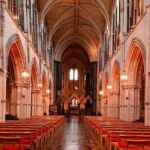
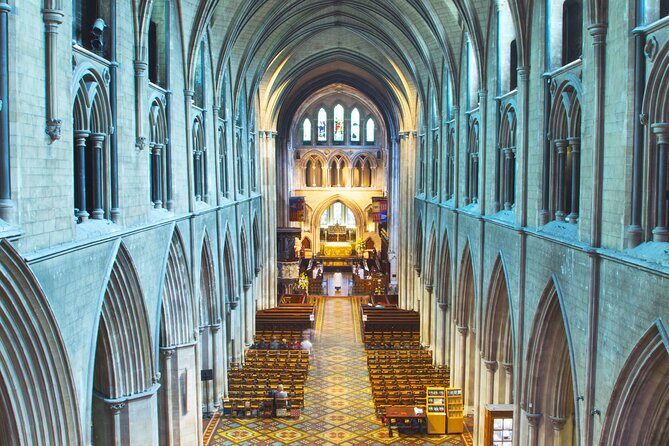
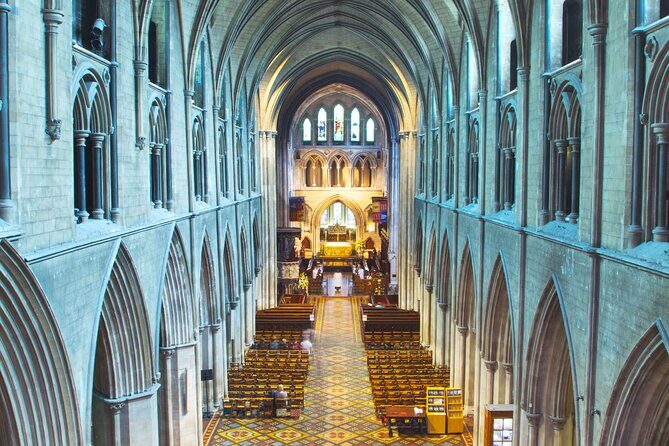
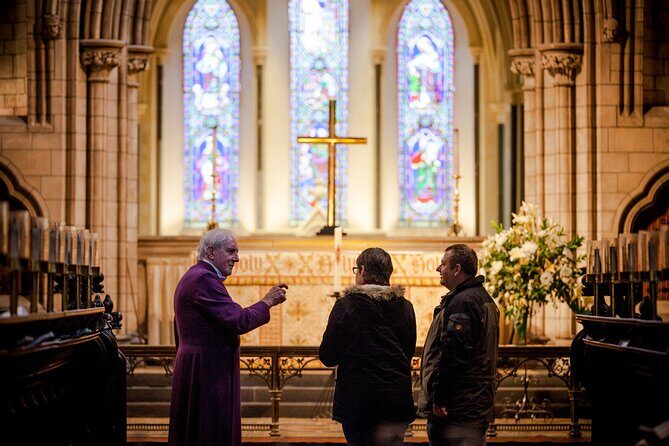
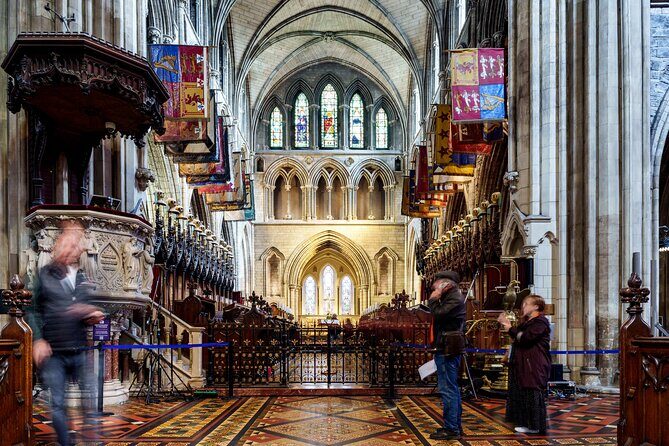
The Gothic architecture is the first thing that strikes you. Soaring vaulted ceilings draw your eyes upward, while intricate stone carvings and stained-glass windows catch and refract light throughout the day. These aren’t tourist-trap reproductions; they’re genuine medieval craftsmanship and later Victorian additions that somehow work together. One reviewer captured this perfectly: “Stunning historical cathedral. This historical site well worth the visit. The stained glass windows are spectacular.”
What often surprises visitors is the cathedral’s religious affiliation. It’s actually a Protestant cathedral now, though it was Catholic at various points in its history—something that reflects Dublin’s complex religious past. Multiple reviewers mentioned being surprised or educated by this fact, which speaks to how much history is embedded in the building itself.
You can also read our reviews of more tours and experiences in Dublin



The Jonathan Swift Connection: Literature and Legacy
One of the cathedral’s most fascinating draws is its connection to Jonathan Swift, the famous satirist who wrote “Gulliver’s Travels.” Swift served as Dean of the Cathedral, and you’ll encounter artifacts, exhibits, and information about his remarkable life and legacy throughout your visit. This isn’t dusty academic history—it’s the story of a brilliant, complicated figure whose wit and social commentary still resonate today.
For literature lovers or anyone interested in Irish intellectual history, this aspect alone justifies the visit. You’re standing in the same building where Swift walked, worked, and left his mark on both the institution and Irish culture. The audio tour provides context that makes these connections meaningful rather than just names on a plaque.
What the Audio Tour Adds (and Why It Matters)
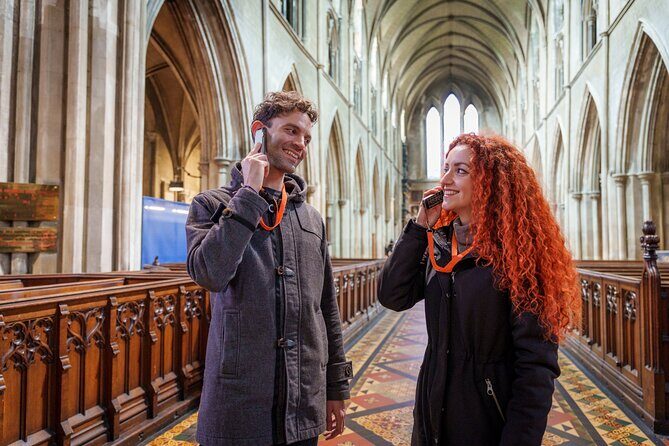
While this is technically a self-guided experience, the audio tour is genuinely worth using. Reviewers repeatedly emphasized this point: “You must follow the audio tour. Very informative especially if you choose the additional information described by the question mark.” Another visitor spent two hours and noted, “Audio guide was included. Great place to learn Irish history.”
The audio guide typically includes 18 stations throughout the cathedral, each providing historical context, architectural details, and stories you’d completely miss without narration. The guides are available in multiple languages, which is helpful for international visitors. More importantly, they’re thorough without being overwhelming—you can engage at whatever depth appeals to you.
One practical tip from experienced visitors: download the tour ahead of time if possible. As one solo traveler mentioned, “If you can, download the tour ahead of time cause internet is slow during high tourism.” This is genuinely useful advice for anyone traveling with a smartphone.
The Practical Experience: What to Expect When You Arrive
The cathedral is open Monday through Saturday from 9:30 AM to 4:30 PM (during the stated period of January 2026 through February 2027). It’s located near public transportation, so getting there from anywhere in Dublin is straightforward. The building is wheelchair accessible, which matters more than you’d think—many historic churches in Europe present accessibility challenges.
Staff members are consistently described as friendly and helpful. One visitor mentioned, “Friendly staff and easy to get around. I would do this again and again.” This might seem like a small detail, but when you’re navigating a large historic building, having approachable staff who can answer questions makes a real difference.
There’s a gift shop on-site if you want to pick up a memento or book to deepen your knowledge later. Restrooms are available, which is important for longer visits. The cathedral also has a park area outside that visitors mention enjoying—it’s a pleasant spot to sit and process what you’ve seen before heading back into Dublin’s bustle.
Timing Considerations and Crowd Management
The 45-minute estimate is genuinely misleading in a helpful way. That’s the bare minimum if you’re just walking through quickly. Most visitors who engage with the audio tour and take time to really look at the architecture spend 1.5 to 2 hours. Plan accordingly—don’t squeeze this into a 30-minute gap between other activities.
Crowds are a real consideration, especially if you’re visiting during peak tourism season. The self-guided format actually helps with this; you can move at your own pace rather than getting stuck behind a tour group. Several reviewers specifically recommended arriving first thing when the cathedral opens: “I would recommend going first thing when it opens before the tour busses arrive to allow for less crowded experience.” This is genuinely valuable advice that could significantly improve your experience.
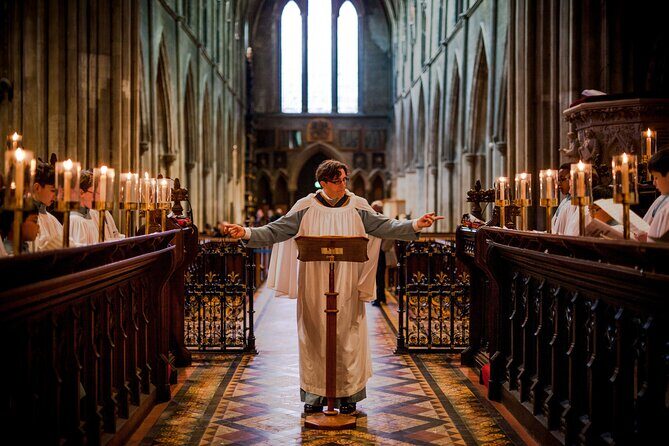
Be aware that if services are underway, some areas may be off-limits. This is appropriate and respectful, but it’s worth checking the calendar beforehand to see what’s scheduled. As one visitor noted, “If a service is underway, then some areas will be off limits.”



The Real Value Proposition
At under $14, this represents excellent value for a major historical attraction in a European capital city. Many travelers spend twice this amount on cathedral entry fees in other cities and receive far less information and flexibility. You’re getting genuine admission to one of Ireland’s most significant buildings, optional audio narration in multiple languages, friendly staff, accessible facilities, and the freedom to explore at your own pace.
The 95% recommendation rate among travelers speaks volumes. Out of 548 reviews, an overwhelming majority gave this experience five stars. Even the few critical reviews acknowledged the cathedral’s beauty and worth—they were more about personal expectations or logistical choices (like not allowing enough time) rather than problems with the experience itself.
Accessibility and Inclusivity
The cathedral’s wheelchair accessibility is genuinely important. Historic buildings often present challenges for visitors with mobility issues, so knowing you can navigate this space comfortably matters. Service animals are also welcome, which extends access even further.
The “most travelers can participate” designation reflects that this isn’t physically demanding. You’re walking around a building at your own pace with plenty of opportunities to sit and rest. Children are welcome as long as they’re accompanied by an adult, making this a genuinely family-friendly activity.
Potential Drawbacks and How to Navigate Them
A few visitors mentioned that without a human guide, they felt they missed context or deeper stories. One reviewer said, “Less inspirational than I expected. More museum. Still a nice place. Learned about the area and church.” This is a fair perspective—the self-guided format means you get what you put into it. If you’re the type who benefits from someone telling you stories directly, you might want to book a separate guided tour (which the cathedral offers) or ask staff for recommendations on specific areas to focus on.
The audio tour being on a handheld device means you’re managing another piece of technology. This is minor but worth acknowledging if you’re hoping for a completely unplugged experience.
Time management is another consideration. Don’t rush this. One visitor who had only 20 minutes mentioned wishing they’d booked a guided tour and had more time—their disappointment was really about insufficient planning rather than the experience itself. Allocate at least 1.5 hours, preferably 2.
Who This Experience Is Best For
This works wonderfully for independent travelers who enjoy exploring at their own pace, history enthusiasts who want to absorb details without group pressure, literature lovers interested in Jonathan Swift, architecture aficionados, and anyone seeking a peaceful, contemplative space in Dublin. It’s also ideal for visitors on a budget who want major-attraction access without premium pricing.
Saint Patrick’s Cathedral Dublin Entry Ticket
Booking and Cancellation Details
You’ll receive confirmation at the time of booking, and the mobile ticket format means no printed paperwork needed. The free cancellation policy is generous—you can cancel up to 24 hours in advance for a full refund, which gives you flexibility if plans change. Just remember that cancellations within 24 hours forfeit the payment.
What’s included in the entry ticket?
The entry ticket gives you admission to the cathedral itself. The audio guide is available for use, with most reviewers indicating it’s included or available for a minimal additional fee. You get access to all public areas of the cathedral, restrooms, and the gift shop.
Is there a guided tour option available?
While this listing is for self-guided entry, several reviewers mentioned taking advantage of guided tours led by staff members. You can inquire about these options when you arrive, or contact the cathedral directly to book a guide in advance.
How long should I plan to spend at the cathedral?
While the listing suggests 45 minutes, most visitors spend 1.5 to 2 hours to properly experience the space and engage with the audio guide. Plan for at least 90 minutes to avoid feeling rushed.
What time should I arrive to avoid crowds?
Arriving at opening time (9:30 AM) is your best bet for a less crowded experience. One reviewer specifically recommended this strategy, noting that tour buses typically arrive later in the morning.
Can I attend a church service while I’m there?
The cathedral does hold services, and one visitor mentioned wishing they’d had the opportunity to attend. Check the cathedral’s schedule beforehand if this interests you. Be aware that during services, some areas may be off-limits to visitors.
Is the cathedral accessible for people with mobility challenges?
Yes, the building is wheelchair accessible, and service animals are welcome. You can explore at your own pace with plenty of opportunities to sit and rest.
What languages is the audio tour available in?
The audio tour is offered in multiple languages. English is definitely available, and reviewers mentioned having choices, though the specific list of languages isn’t detailed in the standard information.
Do I need to download the audio tour ahead of time?
It’s recommended. One visitor noted that internet can be slow during peak tourism periods, so downloading ahead of time ensures smooth access to the audio content.
What’s the cancellation policy?
You can cancel up to 24 hours before your visit for a full refund. Cancellations within 24 hours forfeit payment. The experience may be rescheduled or refunded if canceled due to poor weather.
Bottom line: Saint Patrick’s Cathedral deserves its place on any Dublin itinerary, and this entry ticket offers straightforward, affordable access to one of Ireland’s most historically significant buildings. At under $14 per person with a 4.5-star rating from nearly 550 travelers, you’re getting exceptional value combined with genuine flexibility. The self-guided format works in your favor, especially if you arrive early and use the audio tour to deepen your understanding. Whether you’re a history buff fascinated by Jonathan Swift, an architecture enthusiast drawn to Gothic craftsmanship, or simply someone wanting to experience a building that’s shaped Irish culture for over 800 years, this is money well spent. Just give yourself adequate time—90 minutes minimum—and you’ll leave with a richer understanding of Dublin’s past and the stories embedded in these ancient stones.