
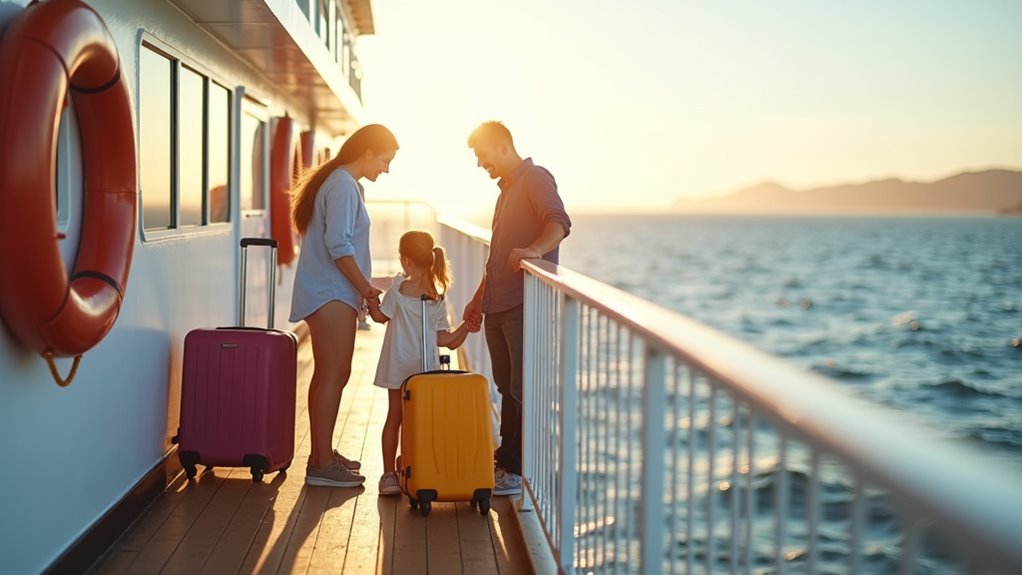
You’ll save money by researching age-based discounts since children under certain ages often travel free, and multiride passes can cut costs by 21%. Pack essential documents like birth certificates for kids under 16, and consider booking private cabins for longer journeys. Choose mid-ship seating near the waterline to minimize motion sickness, and take advantage of onboard play areas and baby facilities. Load your car strategically for unlimited luggage space while enjoying this eco-friendly alternative to flying that reduces your carbon footprint considerably compared to air travel.
- Take Advantage of Child Discounts and Free Tickets for Toddlers
- Ensure All Children Have Valid Travel Documentation
- Book Private Cabins for Overnight Crossings Over 3 Hours
- Pack an Easily Accessible Overnight Bag With Essentials
- Utilize Onboard Play Areas and Baby Facilities
- Explore Kids’ Clubs and Age-Appropriate Entertainment Zones
- Let Professional Staff Organize Games and Educational Activities
- Follow Safety Guidelines on Decks and in Shared Spaces
- Choose Strategic Seating to Minimize Motion Sickness
- Pack Smart With Favorite Toys and Appropriate Clothing
- Maximize Luggage Benefits by Loading Your Car
- Consider Ferry Travel as an Eco-Friendly Alternative to Flying
- The Sum Up
Take Advantage of Child Discounts and Free Tickets for Toddlers
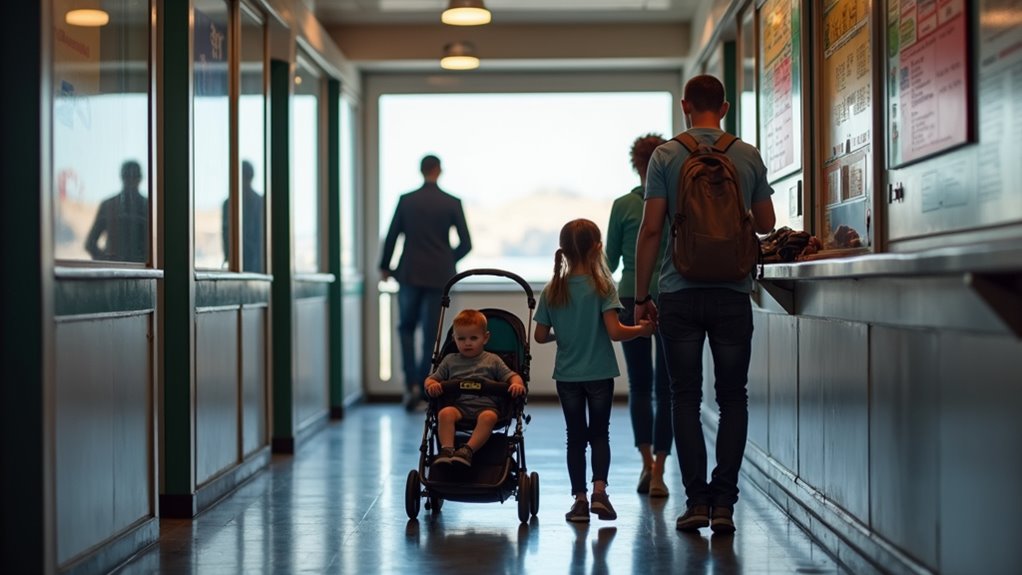
When planning your family ferry trip, you’ll want to research age-based discounts before booking your tickets. Most ferry systems offer free passage for young children, though age limits vary markedly.
Washington State Ferries provides free travel for all youth 18 and under, while Golden Gate Ferry covers children 4 and under. Cape May-Lewes Ferry offers free rides for kids 6-13 during off-season periods.
You’ll find substantial savings with school-age children too. Washington State Ferries charges just $5 for authorized school groups, and Golden Gate Ferry offers youth rates comparable to senior discounts. NYC Ferry offers children under 44 inches ride free, providing excellent value for families with toddlers and preschoolers.
Don’t forget to check for multiride passes – Washington State Ferries provides up to 21% savings for frequent travelers, making regular family trips much more affordable.
Ensure All Children Have Valid Travel Documentation
After securing those money-saving tickets, you’ll need to gather the proper documentation for each child before departure day. For children under 16, you’ll typically need an original or certified birth certificate from your state – hospital certificates won’t cut it. Kids 16 and older must bring photo ID along with their birth certificate, like a driver’s license or even a school ID.
If you’re traveling without your child’s other parent, bring a notarized consent letter to avoid delays at customs. Different last names? Pack supporting documents like marriage licenses.
While some domestic ferry routes are flexible, international destinations often require passports for everyone. Remember that passport cards are acceptable alternatives to traditional passports for many routes. Don’t risk being denied boarding – check your specific route’s requirements well before departure.
Book Private Cabins for Overnight Crossings Over 3 Hours
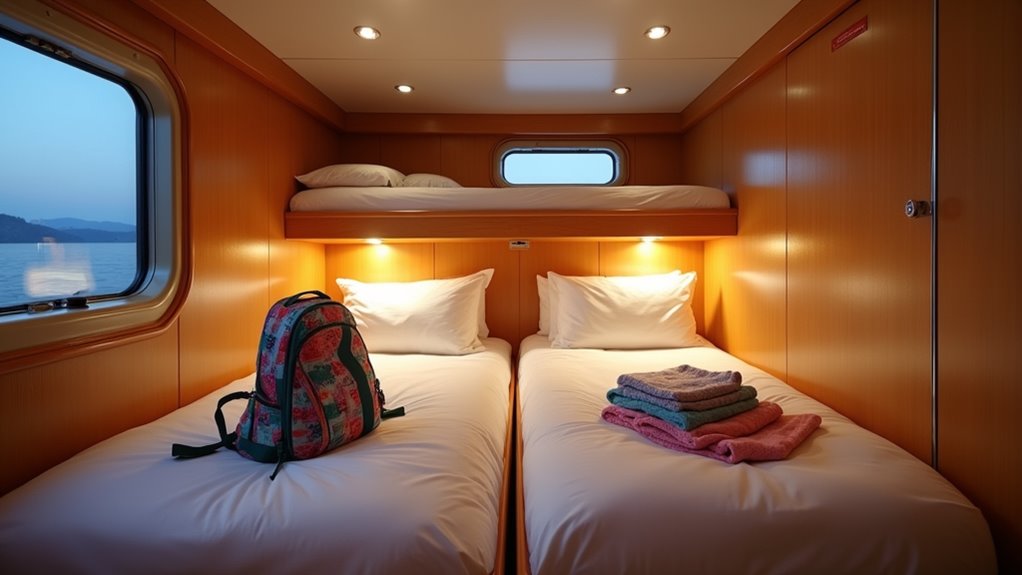
Once your ferry journey stretches beyond three hours into overnight territory, you’ll want to seriously consider booking a private cabin for your family. These dedicated spaces offer comfort and privacy away from crowded passenger areas, letting your children rest undisturbed during longer crossings.
Modern cabins come fully equipped with private washrooms, linens, towels, and essential amenities—so you won’t need to pack extensive bedding supplies. Many feature vaulted ceilings and thoughtful design elements that enhance the overall comfort of your journey.
You’ll find multiple bed configurations available, from two-bed layouts to four-bed bunk arrangements, accommodating various family sizes up to 5-6 people.
Budget options start around $48 nightly, while standard cabins range from $99-$149 depending on season. Weekly discounts immensely reduce costs for extended trips.
Book early since maximum occupancy limits and minimum night requirements can affect availability.
Pack an Easily Accessible Overnight Bag With Essentials
Even with a comfortable private cabin waiting for you, you’ll need quick access to essential items without digging through your main luggage. Pack a soft-sided backpack with exterior pockets for quick retrieval of must-haves. Include one change of clothes per person: pants, shirt, underwear, and socks. Don’t forget pajamas for overnight comfort.
Create a toiletries kit with toothbrushes, toothpaste, deodorant, and prescription medications in original packaging. Pack electronics strategically—phone chargers, portable batteries, and headphones for entertainment. Use packing cubes to organize contents and Ziploc bags for wet items. Avoid leaving empty space in your bag to prevent the temptation of overpacking unnecessary items.
Include family safety essentials like a first-aid kit, hand sanitizer, and travel sickness tablets. Keep snacks and water bottles in the top compartment for easy access during your ferry journey.
Utilize Onboard Play Areas and Baby Facilities
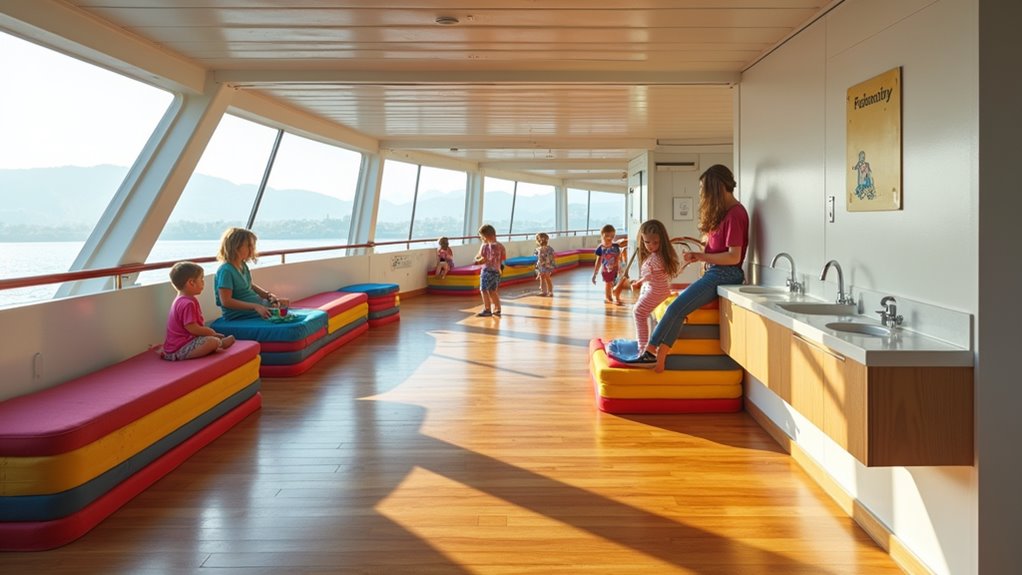
While your children might feel restless during longer ferry crossings, most modern vessels offer dedicated play areas that’ll keep them entertained for hours. You’ll find toys, games, and drawing supplies in entertainment zones, plus ball pools and soft play areas great for toddlers.
Vessels like Manxman and Manannan feature purpose-designed spaces with bench seating nearby so you can supervise comfortably.
Don’t overlook the baby care facilities either. Dedicated changing rooms make infant care convenient, and en-suite cabins offer shower facilities for families.
You’ll get priority access to lifts and special parking signs for vehicles with small children.
The panoramic lounges near play areas let you monitor activities while relaxing, and staff-supervised kids’ clubs provide extra support during peak seasons. However, some routes like Poole-Jersey and Guernsey-St Malo may lack designated play zones, so it’s wise to bring additional entertainment items for these journeys.
Explore Kids’ Clubs and Age-Appropriate Entertainment Zones
Most modern ferries structure their kids’ clubs around specific age groups, ensuring your children connect with peers and enjoy activities tailored to their developmental stage. You’ll find toddler programs for ages 0-3, junior clubs for 3-12 year-olds, and specialized tween and teen zones for older kids.
These themed spaces feature immersive environments with popular characters and interactive games that blend entertainment with education. Your tweens can enjoy karaoke, video game tournaments, and scavenger hunts, while teens access dedicated lounges with mocktail bars, foosball, and dance floors.
Look for special activities like magic workshops, DJ academies, and movie screenings. Certified staff lead these curated programs and activities throughout the ship. Trained counselors supervise all programs, giving you peace of mind while your kids socialize safely.
Check the daily schedule onboard for specific activities and timing.
Let Professional Staff Organize Games and Educational Activities
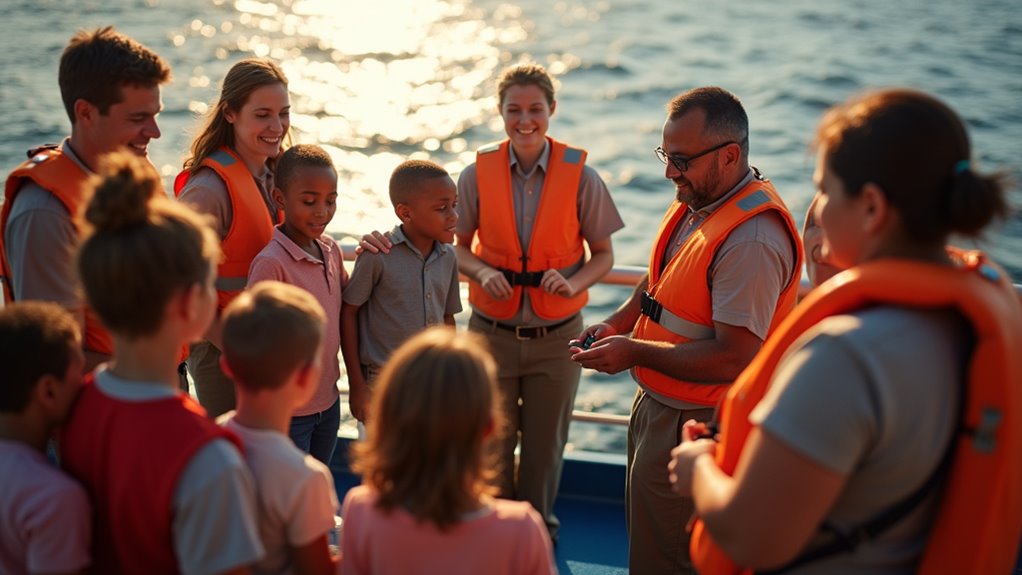
Beyond the structured kids’ clubs, you’ll discover that ferry staff excel at bringing families together through professionally organized games and educational activities. These experienced coordinators create engaging programs that span all age groups, from trivia nights and sing-downs to interactive workshops focusing on marine ecology and safety.
You’ll appreciate how staff use action learning approaches, connecting fun activities to real-world situations through thoughtful debriefings. Your family can participate in intergenerational events like talent shows, parades, and evening socials that bring everyone together naturally.
The “challenge by choice” philosophy means no one’s forced to participate, yet the activities are designed so appealingly that most families find themselves ardently joining sandcastle contests, scavenger hunts, and educational sessions about ocean life and navigation. These well-planned activities create enhanced trust among family members as they work together toward common goals during the voyage.
Follow Safety Guidelines on Decks and in Shared Spaces
When your family steps aboard a ferry, you’re entering a unique environment where safety rules differ markedly from land-based travel. Guarantee children remain seated while sailing, as sudden vessel movements can cause falls. Running on decks or in lounges isn’t just discouraged—it’s prohibited due to slippery surfaces that become dangerous quickly.
Never allow anyone to lean over railings, and exercise extra caution near stairs and doors where the ship’s motion creates injury risks. One adult or traveler aged fourteen or older must supervise children thirteen and under at all times. Fortunately, crew assistance is available for safety concerns, ensuring families receive professional support when needed.
Use these moments to teach safety through questions like “What’s the safest place to stand?” Respectful behavior toward other passengers and crew maintains everyone’s safety in shared spaces, making the journey enjoyable for all families aboard.
Choose Strategic Seating to Minimize Motion Sickness
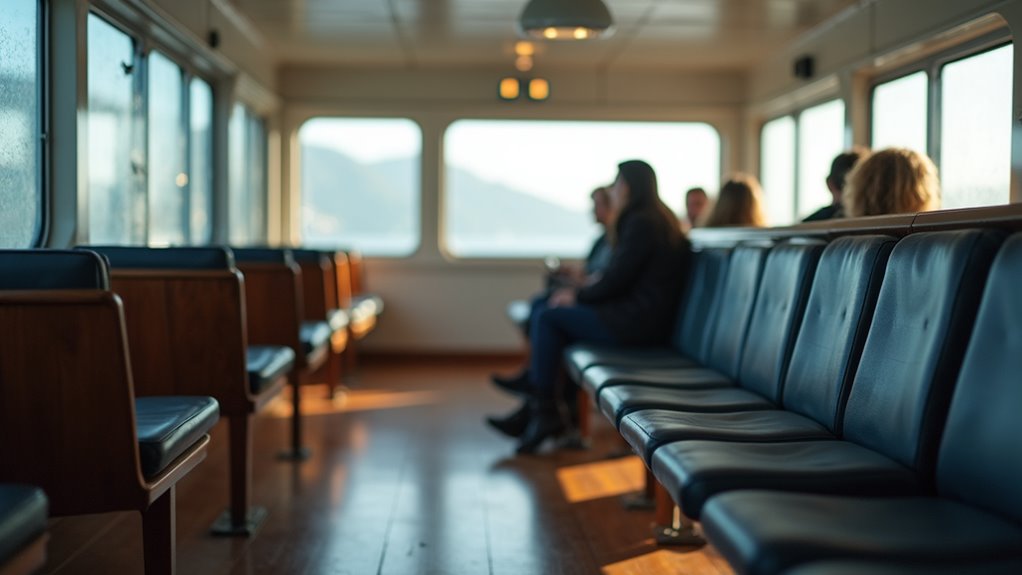
Since ferry motion affects every passenger differently, your seating choice becomes essential for preventing motion sickness in family members. Book mid-ship cabins or seats positioned close to the waterline where motion feels minimal compared to bow or stern locations.
Lower decks in the ferry’s center provide the most stability, reducing extreme rocking that amplifies on upper levels.
Prioritize seats with windows or deck access so your family can focus on the distant horizon, which helps align visual and inner ear signals.
Fresh air circulation is important—choose well-ventilated areas and avoid enclosed spaces with fumes or odors. Consider that factors like stress, dehydration, and fatigue can make family members more susceptible to motion sickness, so address these issues before boarding.
Skip the bow and stern entirely, as these zones experience pronounced swaying.
Discourage reading or phone use during the journey, as close-up activities worsen queasiness.
Pack Smart With Favorite Toys and Appropriate Clothing
While ferry journeys can stretch for hours, thoughtful packing keeps your family comfortable and entertained throughout the trip. Start with familiar comfort items like your child’s favorite blanket, small stuffed animals, or pacifiers with backups.
Pack age-appropriate entertainment: lightweight books and rattles for babies, interactive books and magnetic blocks for toddlers, or preloaded tablets with new apps for older kids.
For clothing, bring one outfit per day for adults but pack extras for spill-prone children. Layer strategically with lightweight cardigans and hoodies for temperature changes on deck. Wear your heaviest items during travel to save suitcase space.
Use packing cubes for organization and roll clothes to maximize room. Don’t forget quick-dry athletic wear and leave 20% empty space for souvenirs. Pack electronics in carry-on with adequate padding to prevent damage during ferry boarding and travel.
Maximize Luggage Benefits by Loading Your Car
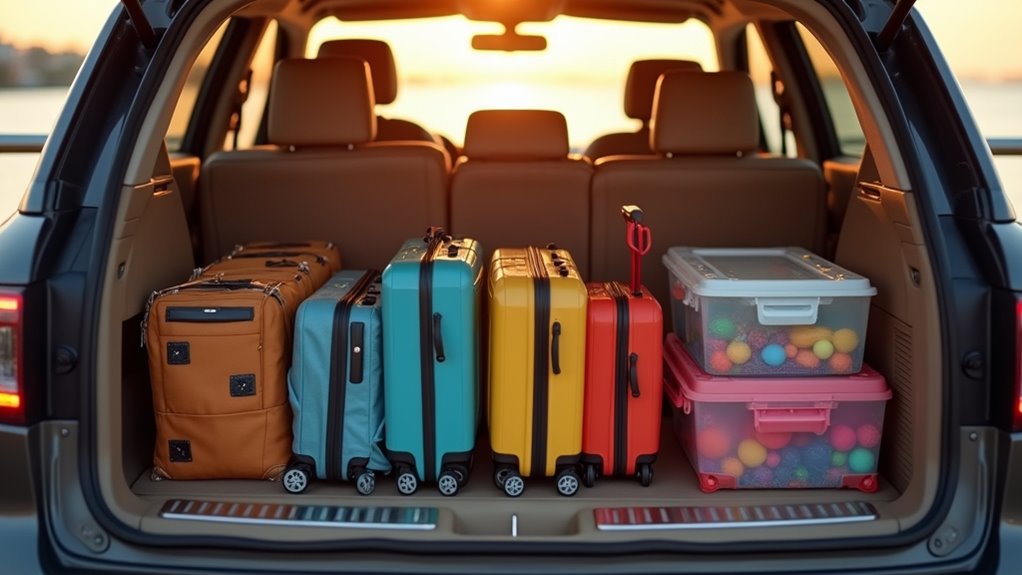
Unlike air travel’s restrictive baggage policies, ferry journeys with your vehicle transform your car’s trunk into unlimited storage space. You’ll load suitcases, strollers, coolers, beach parasols, and sporting equipment without worrying about weight limits or excess fees.
It’s incredibly cost-effective compared to hiring cars or arranging transfers at your destination.
Secure heavier items low and centered for stability, using nets or straps to prevent shifting during the crossing. Avoid placing loose objects that could become projectiles. Traveling with a vehicle also simplifies luggage handling and eliminates the typical hassles of airport check-in procedures.
Since you can’t access your car deck once boarding begins, prepare a carry-on bag with essentials like nappies, snacks, chargers, and spare clothes.
Upon arrival, you’ll drive straight off with everything intact – no taxi queues or rental car hassles. Your family’s complete travel arsenal travels with you.
Consider Ferry Travel as an Eco-Friendly Alternative to Flying
Beyond the practical advantages of bringing your belongings, ferry travel offers significant environmental benefits that make it an appealing choice for eco-conscious families.
You’ll dramatically reduce your carbon footprint compared to flying—ferries emit just 22.54g CO2 per passenger-kilometer for foot passengers, while trains cut emissions by 90% compared to flights on routes like London-Paris.
When you combine ferry and train travel, you’re often matching or beating flight emissions. For example, the Belfast-Birkenhead ferry plus train produces 117kg CO2, comparable to a 114kg flight average.
Short flights under 1000km are particularly carbon-intensive, making ferries an excellent alternative. Sleeper trains use even less energy and produce fewer emissions than high-speed trains, making overnight ferry crossings followed by train connections an exceptionally eco-friendly option.
You’ll also avoid airport hassles while teaching your children about sustainable travel choices that benefit the planet.
The Sum Up
Ferry travel with kids doesn’t have to be stressful if you’re prepared. You’ve got the tools now—from booking the right cabin to packing smart and keeping everyone entertained. Remember, it’s not just about getting from point A to B; you’re creating memories together. Trust yourself, stay flexible when things don’t go perfectly, and embrace the adventure. Your family ferry journey can become one of those trips you’ll all talk about for years.