When you’re planning a trip to Krakow, there are moments that demand your attention—moments that transcend typical sightseeing. The Auschwitz-Birkenau Museum and Memorial Guided Tour is one of those experiences. After reviewing the feedback from over 1,500 travelers and examining what this tour actually delivers, we believe this is one of the most important journeys you can take while in Poland.
We particularly love two things about this tour. First, the quality of the guides consistently shines through in traveler feedback—these aren’t rushed tour operators spouting facts, but knowledgeable professionals who treat the camps with the gravity they deserve. Second, the logistics are genuinely well-organized, from the convenient pickup system to the included transportation and museum admission, which removes friction from what is emotionally demanding travel.
One consideration worth noting upfront: this is a full 7-hour commitment, and the experience is intentionally sobering. You won’t leave feeling entertained or uplifted in a traditional sense. You’ll leave changed.
This tour works best for travelers who want to understand the Holocaust’s historical reality rather than just check another UNESCO site off their list. It’s particularly valuable for families wanting to pass this history to younger generations, as several reviewers mentioned bringing their children and grandchildren. If you’re seeking meaningful engagement with history rather than surface-level tourism, this experience belongs on your itinerary.
- What Makes This Tour Different
- The Journey Begins: Transportation and Logistics
- Auschwitz I: Walking Through the Prison Blocks
- Birkenau: Confronting the Unimaginable
- The Practical Experience: Timing, Breaks, and Comfort
- What’s Included and What Isn’t
- The Human Element: What Guides Actually Deliver
- Value for Money and Booking Considerations
- Honest Considerations and Potential Drawbacks
- Who Should Book This Tour
- Practical Tips from Experienced Travelers
- The Bottom Line
- Frequently Asked Questions
- The Best Of Krakow!
- More Guided Tours in Krakow
- More Tours in Krakow
- More Tour Reviews in Krakow
What Makes This Tour Different
 1 / 8
1 / 8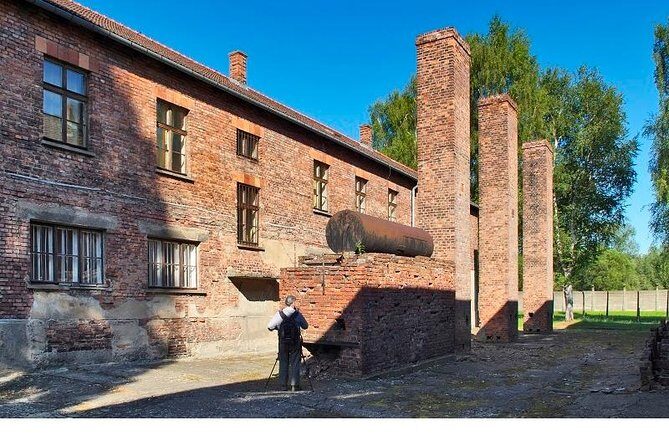 2 / 8
2 / 8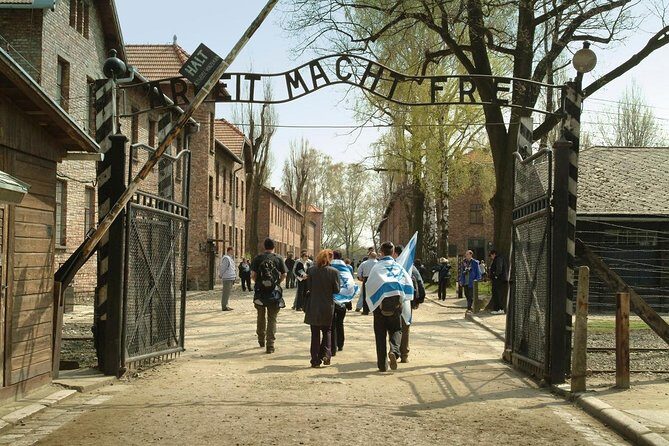 3 / 8
3 / 8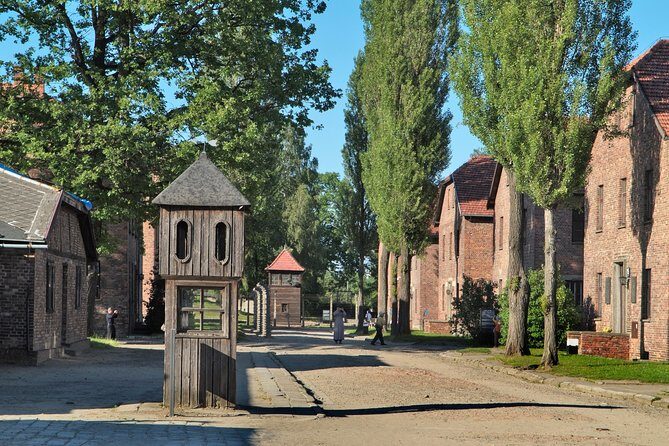 4 / 8
4 / 8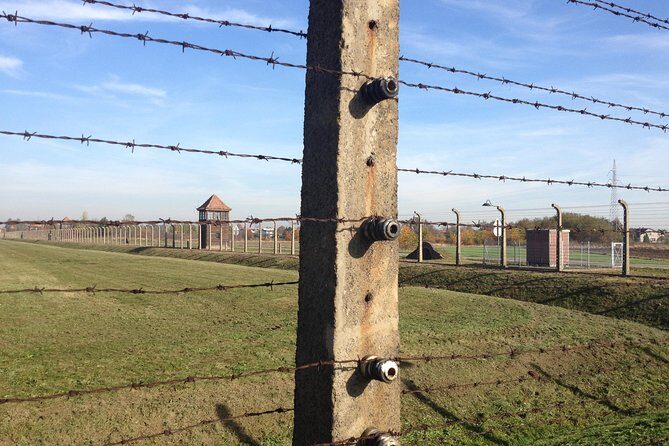 5 / 8
5 / 8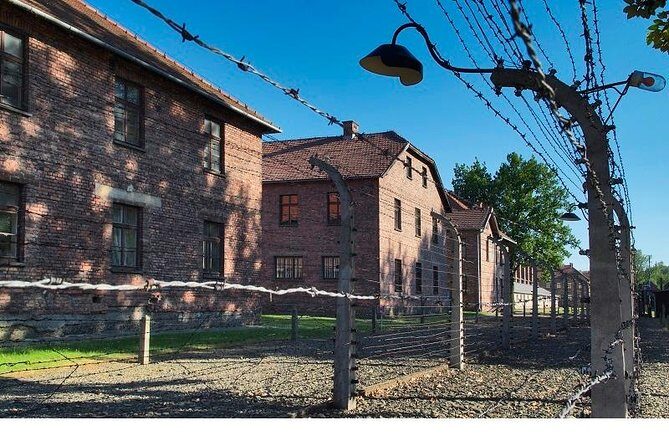 6 / 8
6 / 8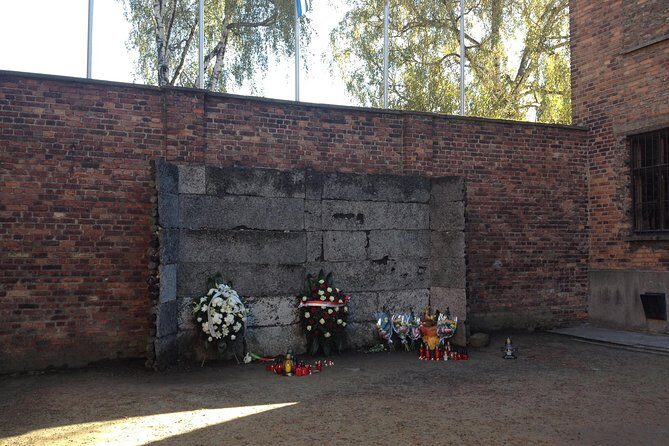 7 / 8
7 / 8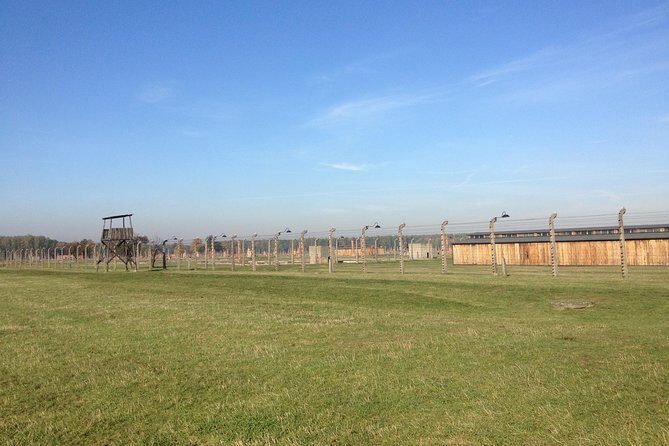 8 / 8
8 / 8The Auschwitz-Birkenau complex represents one of history’s darkest chapters. Established in the early 1940s as a detention camp for Polish political prisoners, it evolved into something far more sinister—the Nazi regime’s primary extermination center that killed approximately 1.1 million people, predominantly European Jews. Understanding this context before you arrive changes how you experience the day.
What distinguishes this particular tour from self-guided visits or less organized options is the human element. You’re not wandering through exhibits alone, trying to piece together what you’re seeing. Instead, you have a live guide walking alongside you, providing context, answering questions, and most importantly, helping you process what you’re witnessing.
One traveler captured this perfectly: “The guide had to skip parts of the tour” due to time constraints, yet still managed to convey the essential story. That’s the balance these guides strike—fitting as much meaningful education as possible into the time available while maintaining the emotional and intellectual space visitors need.
👉 See our pick of the Our Picks For The 12 Best Spa & Hot Springs Experiences In Krakow
The Journey Begins: Transportation and Logistics
Your day starts early, with pickup times ranging from 7:00 AM to 1:00 PM depending on your booking. You’ll receive your exact departure time the evening before via message, which gives you clarity for planning breakfast and final preparations. The tour company picks you up either at your Krakow hotel (30-40 minutes before departure) or at the central meeting point near the Main Post Office at 2 Wielopole Street.
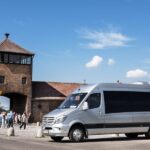
The transportation itself deserves mention. You’ll travel in an air-conditioned minibus with a maximum of 30 people, which keeps the group intimate enough for genuine interaction with your guide. The ride to Oswiecim takes roughly 1.5 hours, and the company uses this time productively—a documentary about WWII and the Holocaust plays on board, beginning your educational journey before you even arrive at the camps.
Travelers consistently praise the transportation component. One reviewer noted their driver was “excellent and very knowledgeable,” while another mentioned their driver “made us all feel safe” and was “very friendly.” This matters more than you might think on a day dealing with heavy historical content.
You can also read our reviews of more guided tours in Krakow
Auschwitz I: Walking Through the Prison Blocks
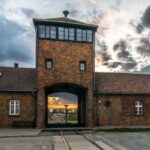
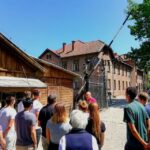
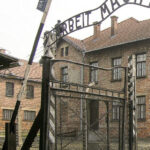
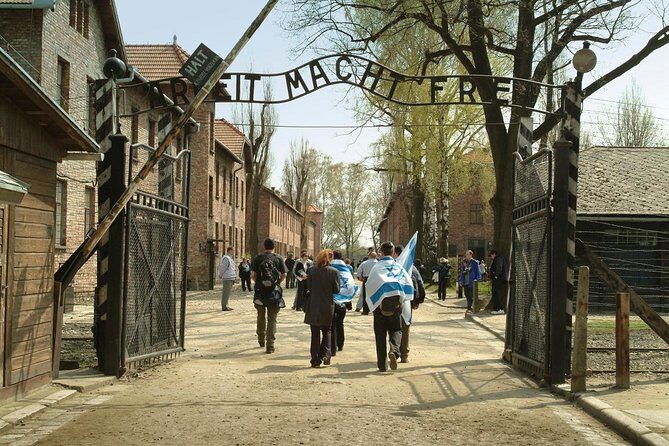
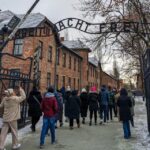
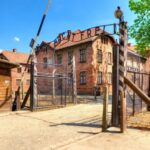
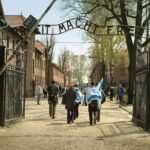
Upon arrival, you’ll pass through the infamous gate bearing the inscription “Arbeit Macht Frei” (Work Sets You Free)—words that carry unbearable irony given what happened behind those gates. Your guide will explain how the complex functioned, the progression from detention to mass murder, and the systematic nature of the crimes committed here.
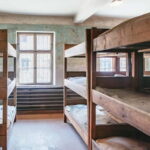
You’ll spend approximately the first three hours exploring Auschwitz I, which consists of the original prison blocks. Inside these buildings, you’ll see exhibitions that document prisoner experiences, Nazi operations, and the scope of the atrocity. The guide discusses this history in a deliberately sensitive manner—not sanitized, but respectful to the victims and their memory.
One particularly moving review described a guide who “kept a three minute silence while we stood next to Block 11” and later conducted what he called a “memorial walk” along the railroad tracks toward the crematoriums in Birkenau. These moments of structured reflection, guided by someone who understands the weight of the location, transform the experience from educational to truly transformative.
The physical walk through these buildings requires moderate fitness—you’ll be on your feet for extended periods, moving between blocks and through exhibitions. One traveler wisely advised bringing comfortable shoes, sunscreen, and adequate water, especially if visiting during summer months. The first section has some shelter, but you’re still covering considerable ground.
Birkenau: Confronting the Unimaginable
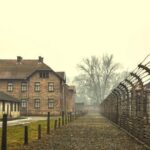
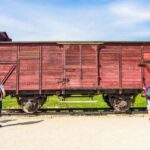
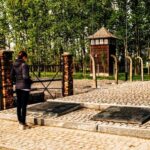
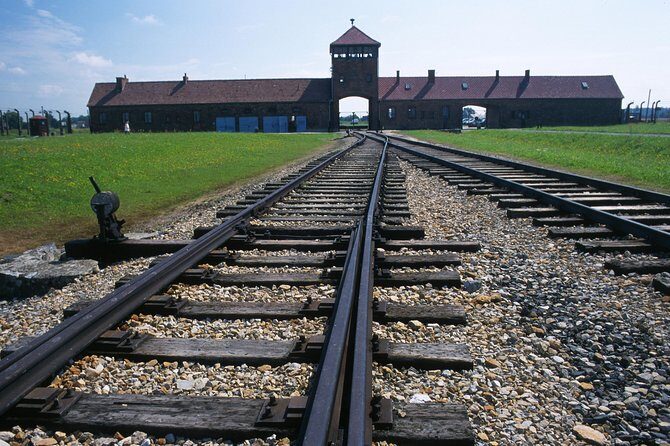
After examining Auschwitz I, you’ll proceed to Birkenau (Auschwitz II), the larger camp specifically constructed for mass murder. This is where the scale of the genocide becomes viscerally apparent. You’ll see the watchtowers, the extensive barbed wire fences, the barracks where thousands were imprisoned, and the remnants of the gas chambers and crematoriums.
This section is entirely outdoors, which means weather becomes a factor—summer heat or winter cold affects your ability to absorb what you’re seeing. One traveler mentioned struggling with the outdoor portion during summer heat, describing it as “quite hard” but still worthwhile. The psychological weight of standing where such horror occurred, combined with physical discomfort, creates a uniquely challenging experience.
What separates a good guide from a great one becomes obvious here. A guide helps you see the individual stories within the statistics. One reviewer noted their guide was “incredibly knowledgeable” and “keen to answer any questions,” which transforms Birkenau from a collection of ruins into a memorial space where you can genuinely contemplate individual lives lost.
The Practical Experience: Timing, Breaks, and Comfort
The tour spans approximately 7 hours total, including transportation. Within that time, you’ll have roughly one 25-30 minute break, which typically occurs at the camp’s facilities. This is the only place where you can purchase food and drinks, and reviewers universally recommend eating before arrival or bringing provisions. One practical traveler noted that water costs 8 PLN at the camp but only 2-3 PLN elsewhere in town—a helpful money-saving tip.
This limited break time is a legitimate consideration. One reviewer appreciated the early pickup time (5:30 AM) because “it gave us the opportunity to have the rest of the day to ourselves,” suggesting that if you book an afternoon departure, you’ll return to Krakow quite late. The compressed schedule means you’re moving fairly steadily through both camps, which some travelers found rushed.
The group size of 30 maximum helps mitigate this. You’re not herded through like a massive tour group—your guide can actually interact with people, answer questions, and adjust pacing slightly based on group needs. Several reviews mention guides by name (Tomas, Mikael, Pawel, Magda, Michael), suggesting these are experienced professionals, not interchangeable tour operators.
What’s Included and What Isn’t
Your $83.44 per person includes transportation, a live English-speaking guide, museum admission to both camps, and headsets to hear your guide clearly in group settings. This represents solid value when you consider that museum admission alone would cost separately if you arranged a self-guided visit.
What’s not included: food and drinks (except water at the camp facilities, which you’ll pay for separately), and any personal comfort items. The company also requests that you bring a picture ID, which is required for entry.
The mobile ticket system means you’ll receive everything digitally—no paper tickets to worry about. Confirmation comes immediately upon booking, and communication continues through to the evening before your tour when you receive your exact departure time.
You can also read our reviews of more museum experiences in Krakow
The Human Element: What Guides Actually Deliver
Reading through 1,510 reviews, one pattern emerges clearly: guide quality makes an enormous difference. Reviewers frequently mention guides by name and describe their knowledge as “unreal,” “fantastic,” and “incredibly knowledgeable.” One traveler stated they “could easily have spent the whole day with Mikael just listening to him share his knowledge.”
This isn’t hyperbole. These guides have studied this history deeply, and many bring personal investment to their work. They’re not just delivering information—they’re facilitating understanding. One review noted that a guide showed “great respect to the victims,” which speaks to the emotional intelligence required for this work.
However, not every experience is identical. One reviewer felt “rushed” and mentioned the guide “started talking before we caught her,” suggesting that pacing and communication clarity can vary. Another noted that “other tour guides [were] louder,” which can be an issue in a crowded camp with multiple groups.
Value for Money and Booking Considerations
At $83.44 per person, you’re paying for convenience, expertise, and logistical coordination. If you were to arrange this independently—renting a car, navigating to the camps, purchasing admission, and trying to understand the history on your own—you’d likely spend more time and money while gaining less context.
The 49-day advance booking window (average) suggests this tour fills regularly, so advance planning is wise. The free cancellation policy (24 hours notice required) provides flexibility if circumstances change.
One important note from the reviews: some travelers reported last-minute changes to pickup times. One person was originally scheduled for 9 AM but received notification at 11 PM the night before of a 6:15 AM pickup. While the company’s FAQ explains that departure times are tentative and will be confirmed the evening before, this can be frustrating if you’re not expecting an earlier start. Build flexibility into your schedule.
Honest Considerations and Potential Drawbacks
We should address what doesn’t work perfectly about this tour. A few travelers reported cancellations, with one reviewer stating they were cancelled the day before and offered a 4:30 AM departure instead with no guarantee of museum entry. This is clearly problematic and appears to be an overselling issue on the operator’s part—not typical based on most reviews, but worth being aware of.
Secondly, the minibus comfort varies. One taller traveler found the back row “extremely uncomfortable” with no legroom during the 1.5-hour drive each way. If you’re tall or have mobility concerns, request a seat with more space when booking.
Third, the experience is deliberately emotionally heavy. One reviewer titled their five-star review “Sad visit”—not because they disliked the tour, but because the subject matter is inherently devastating. This isn’t a criticism of the tour; it’s a recognition that you should mentally prepare for a challenging day.
Finally, some reviewers felt the pacing was rushed, particularly if you’re someone who processes experiences slowly. The 7-hour timeframe, while generous for a day trip, is still compressed when you consider the emotional and informational density of what you’re absorbing.
Who Should Book This Tour
This tour works exceptionally well for several types of travelers. First, those visiting Krakow who want to understand the region’s WWII history in context. Second, families wanting to teach younger generations about the Holocaust—several reviewers brought their children and grandchildren with meaningful results. Third, history enthusiasts who appreciate expert-led interpretation over self-guided experiences.
It works less well for travelers with limited mobility, those uncomfortable with emotionally heavy content, or people seeking a “fun” day trip. The experience is intentionally serious, and that’s exactly as it should be.
Practical Tips from Experienced Travelers
Based on the reviews, here’s what actually helps:
Bring sunscreen, a hat, sunglasses, and an umbrella—you’ll spend hours outdoors at Birkenau. Wear comfortable, sturdy walking shoes; you’ll cover considerable ground. Eat before arrival or bring food, as the break is short and the camp’s prices are marked up. Bring a water bottle (or buy water before arrival to save money). Dress respectfully—reviewers noted that modest clothing is appropriate for a memorial site. Bring your picture ID, which is required for entry.
One traveler advised bringing a “mini fan” for summer visits, which speaks to the physical demands of the outdoor section during warm weather.
The Bottom Line
This tour represents one of the most important historical experiences available from Krakow. While emotionally demanding and physically taxing, it’s precisely this weight that makes it valuable. The guides, well-organized logistics, and included admission create a genuinely educational journey through one of history’s darkest chapters. At $83.44 per person, you’re paying for expertise and convenience that transforms a self-guided visit into something far more meaningful. Book this if you want to truly understand this history, not just observe it. Avoid it if you’re seeking entertainment or light tourism. For everyone else—particularly history-minded travelers, educators, and families—this tour deserves a place in your Krakow itinerary.
Auschwitz-Birkenau Museum and Memorial Guided Tour from Krakow
Frequently Asked Questions
Q: What time will my tour actually start?
A: Departure times vary based on availability, ranging from 7:00 AM to 1:00 PM. You’ll book a preferred time, but you’ll receive confirmation of your exact departure time the evening before via message. This allows the company to optimize routes and group sizes. Plan for flexibility and check your messages the night before your tour.
Q: Is hotel pickup really available, and how does it work?
A: Yes, complementary hotel pickup is available from selected hotels throughout Krakow. You must request this in the “Special Requirements” section during checkout, or contact the supplier within 24 hours of booking. Pickup occurs 30-40 minutes before your scheduled departure time, depending on your hotel’s location. If your hotel can’t accommodate pickup, you’ll meet at the central point near the Main Post Office at 2 Wielopole Street, where you should check in 15 minutes early.
Q: How long is the actual time spent at the camps versus travel time?
A: The total tour is approximately 7 hours. Travel time from Krakow to Oswiecim takes about 1.5 hours each way (3 hours total), and you’ll spend roughly 3 hours at the camps themselves. The remaining time accounts for breaks, transitions between sites, and the return journey to Krakow.
Q: What’s included in the $83.44 price, and what do I need to pay for separately?
A: Included: transportation in an air-conditioned minibus, a live English-speaking guide, museum admission to both Auschwitz I and Birkenau, and headsets to hear your guide. Not included: food and drinks (except you can purchase these at the camp facilities during your break). You’ll need to bring your picture ID, which is required for entry.
Q: Can I cancel if plans change, and what’s the refund policy?
A: Yes, you can cancel free of charge up to 24 hours before your scheduled departure time for a full refund. If you cancel less than 24 hours before departure, your payment is non-refundable. Changes made less than 24 hours before departure won’t be accepted, so plan accordingly.
Q: How physically demanding is this tour, and what should I wear?
A: The tour requires moderate fitness. You’ll spend extended periods on your feet, moving between prison blocks at Auschwitz I (which has some shelter) and walking through the extensive outdoor grounds at Birkenau. Wear comfortable, sturdy walking shoes and dress respectfully—reviewers noted that modest clothing is appropriate for a memorial site. Bring sunscreen, a hat, sunglasses, and an umbrella, particularly if visiting during summer.
Q: What if I have dietary restrictions or need to eat during the break?
A: You’ll have one 25-30 minute break, typically at the camp’s facilities where you can purchase food and drinks. Prices are marked up compared to Krakow—water costs about 8 PLN at the camp versus 2-3 PLN elsewhere. Multiple reviewers recommend eating before arrival or bringing provisions to save money and ensure you have food options that meet your needs.
Q: How large are the tour groups, and will I be able to interact with the guide?
A: Groups are limited to a maximum of 30 people, which keeps the experience relatively intimate compared to massive commercial tours. This size allows your guide to interact with participants, answer questions, and adjust pacing based on group needs. You’ll receive headsets to hear your guide clearly in group settings, ensuring you don’t miss information even if you’re not standing directly next to them.