
When you’re planning a first day in Budapest, figuring out where to focus your limited time is half the battle. We’ve reviewed this Castle District walking tour extensively, and what stands out immediately is the combination of exceptional value and consistently passionate local guides who genuinely care about sharing their city’s layered past. You’ll cover the major historical landmarks of Buda’s castle neighborhood without paying entrance fees to multiple museums, and the guides consistently earn praise for making 800 years of Hungarian history feel relevant and engaging rather than like a textbook recitation.
That said, this tour involves substantial climbing—we’re talking genuine uphill walking with plenty of steps—so you’ll want to be honest about your fitness level before booking. The Castle District sits elevated above the Danube, which creates those stunning panoramic views everyone raves about, but it also means this isn’t a leisurely stroll through flat terrain.
If you’re visiting Budapest for the first time and want to understand the Buda side’s historical significance without breaking your travel budget, or if you prefer walking tours led by local experts over crowded bus trips, this experience deserves serious consideration.
- The Real Value Proposition: What You’re Actually Getting for .62
- Understanding the Itinerary: Eight Stops That Tell Budapest’s Complex Story
- Stop 1: Batthyány Square and the Castle District Introduction
- Stop 2: Matthias Church and the Layers of Budapest’s Population
- Stop 3: Fisherman’s Bastion and the Free View Secret
- Stop 4: Medieval Jewish Prayer House
- Stop 5: National Archives and the Wartime History
- Stop 6: Hospital in the Rock Nuclear Bunker Museum
- Stop 7: Buda Castle and the Royal History
- Stop 8: Prince Eugene of Savoy’s Equestrian Statue and Panoramic Views
- What Travelers Actually Experienced: Insights From 630+ Reviews
- Practical Logistics That Actually Matter
- When to Book and How to Prepare
- Who Should Book This Tour
- Final Thoughts: Genuine Value in an Expensive City
- Frequently Asked Questions
- The Best Of Budapest!
- More Walking Tours in Budapest
- More Tours in Budapest
- More Tour Reviews in Budapest
The Real Value Proposition: What You’re Actually Getting for $3.62
 1 / 7
1 / 7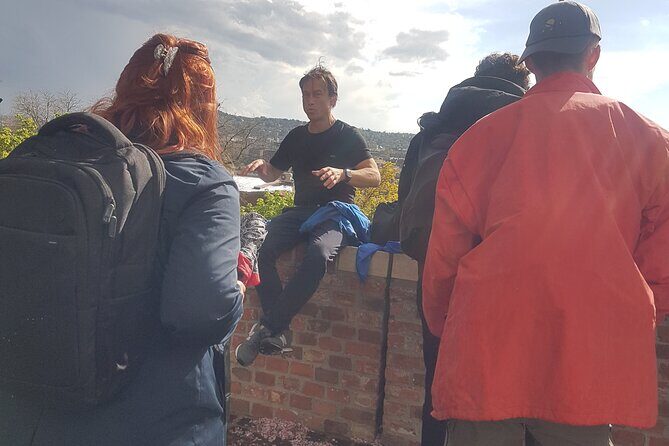 2 / 7
2 / 7 3 / 7
3 / 7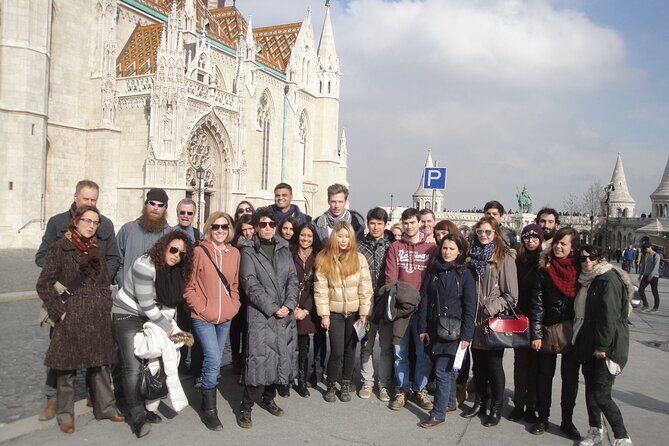 4 / 7
4 / 7 5 / 7
5 / 7 6 / 7
6 / 7 7 / 7
7 / 7Let’s talk about price first, because honestly, at $3.62 per person, this tour represents one of the better values in European city tourism. To put this in perspective, you could spend that amount on a single coffee in central Budapest. What you’re getting instead is two hours with a licensed local guide—someone born and raised in Budapest who can explain not just what happened in these places, but why it matters to understanding modern Hungary.
The tour operates on a tip-based model, which is increasingly common with free and budget walking tours across Europe. The $3.62 booking fee covers administrative costs rather than the guide’s earnings. This means guides genuinely depend on tips from satisfied travelers, which creates an interesting dynamic: you’re supporting someone who’s passionate enough about their city to lead tours for modest compensation. Most travelers tip between $10-20 per person based on the review comments, which still keeps the total cost remarkably reasonable.
We found this pricing structure refreshingly honest. You’re not paying an inflated price that includes massive markups for middlemen—you’re paying a small administrative fee and then directly supporting a knowledgeable local who wants to share their city’s stories.

👉 See our pick of the 15 Top-Rated Budapest Wine Tours
Understanding the Itinerary: Eight Stops That Tell Budapest’s Complex Story
The tour covers eight distinct stops across approximately two hours, starting at Batthyány Square metro station. Let’s walk through what you’ll actually encounter at each point.
You can also read our reviews of more walking tours in Budapest



Stop 1: Batthyány Square and the Castle District Introduction
You’ll meet your guide at the metro exit in the park, where they’ll immediately give you context for what you’re about to explore. This isn’t just geography—your guide will explain that the Buda Castle District comprises the Royal Palace, Matthias Church, Fisherman’s Bastion, and various other significant buildings, plus an underground cave system that’s been used for centuries. Think of this opening as getting the mental map before diving into the details.
Stop 2: Matthias Church and the Layers of Budapest’s Population
Matthias Church has witnessed roughly 800 years of history, and your guide will explain what that actually means in practical terms. You’ll learn about the German, Jewish, and Hungarian populations who lived here, how their daily lives intersected, and how wars and occupations shaped the district. One reviewer noted their guide provided “in-depth commentary,” which suggests these aren’t surface-level observations—you’re getting real historical context about how different communities coexisted and were affected by major historical events.
The guide points out the architecture without requiring you to pay entrance fees, which is smart touring. You get the visual impact and the historical explanation without the extra cost.
Stop 3: Fisherman’s Bastion and the Free View Secret
Here’s where the tour gets fun. Your guide will share the unexpected connection between Walt Disney and this iconic Budapest landmark—apparently Disney was influenced by the Bastion’s fairy-tale architecture when designing Cinderella’s castle. They’ll also explain the symbolism of different cross types (one, two, or three strips) that appear throughout the district.
Crucially, your guide will show you how to enjoy a free view from Castle Hill, which matters because Fisherman’s Bastion itself can get crushingly crowded. As one reviewer mentioned, “the area around Fisherman’s Bastion to be incredibly crowded,” which is a real consideration. Your guide’s insider knowledge about where to stand for the best views without battling tour groups becomes genuinely valuable.
Stop 4: Medieval Jewish Prayer House
This stop connects you to Budapest’s Jewish heritage, which is substantial and often overlooked by casual visitors. The medieval prayer house and surrounding baroque residential buildings tell the story of Jewish life in the district before the devastating events of World War II. Your guide will provide context that helps you understand not just what you’re seeing, but why this community’s presence here mattered.



Stop 5: National Archives and the Wartime History
This stop does important work: it shows you the massive destruction from World War II, explains where the Nazi stronghold was located, and points out where wealthy Hungarians historically lived. Your guide will also mention the Gül Baba mosque, a site of pilgrimage for followers of the Ottoman Turkish monk and soldier, which illustrates the layers of cultural influence that have shaped Budapest over centuries.
Stop 6: Hospital in the Rock Nuclear Bunker Museum
This is the tour’s most unusual stop. Your guide will explain the underground cave system beneath Castle Hill and its role in defense throughout history. You’ll learn about the “huszar”—light cavalry fighters with a reputation as womanizers—and see some of Budapest’s “funniest public statues.” The underground bunker system is genuinely fascinating; it’s the kind of detail that makes Budapest different from other European capitals.
Stop 7: Buda Castle and the Royal History
The Royal Palace is massive, and your guide will explain its significance as the former residence of Hungarian kings, the multiple reconstructions due to war damage, and the current location of the president and prime ministers’ offices. One reviewer noted they learned about “the mythical bird of the Hungarians,” which shows the guides go beyond political history into cultural symbolism.
This is where the uphill walking becomes most noticeable. Multiple reviewers mentioned “lots of stairs” and “uphill steps,” but they also noted that good guides “keep it moving” and “find shade,” which helps manage the physical challenge. One traveler appreciated that their guide was “great at finding shade,” suggesting guides are conscious of making the experience comfortable despite the terrain.
Stop 8: Prince Eugene of Savoy’s Equestrian Statue and Panoramic Views
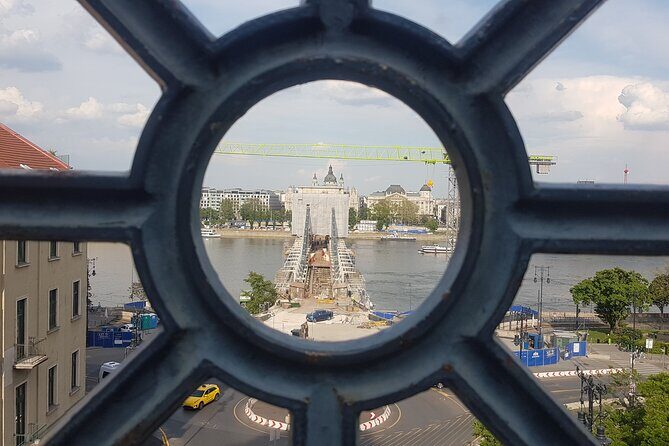
The tour concludes at a terrace with what multiple reviewers called “world class” views of the Pest side of the Danube. Your guide will finish with practical information about Budapest and answer remaining questions. One reviewer noted they wished they’d had more time here “for photos,” which tells you these views are genuinely worth capturing.
What Travelers Actually Experienced: Insights From 630+ Reviews
The tour has an exceptional 4.9-star rating across 630 reviews, with 599 five-star ratings. That’s not just good—that’s remarkably consistent quality. But we learned more from reading what actual travelers said than from the star ratings alone.
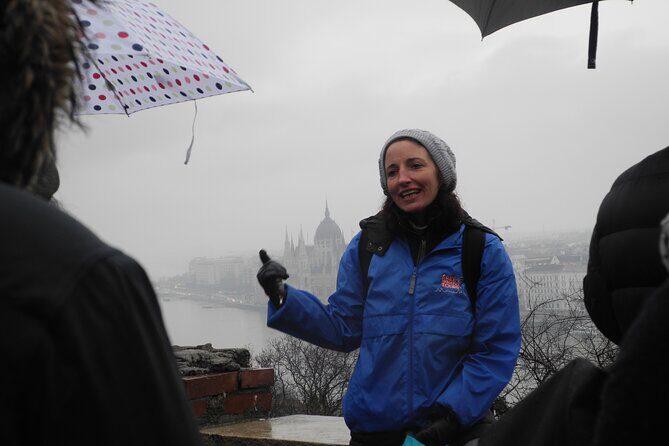
On Guide Quality: Reviewers consistently praised guides by name—Dora, Zsofia, Rita, Gary, Judy, Sophia, Valeria, Emma, and others. One traveler said their guide was “the right amount of information, wit, cheer and history.” Another noted a guide “kept it moving, kept us learning, and kept it all fun and intriguing throughout the cold and climbing of steps.” This suggests the tour attracts guides who are genuinely engaged, not just reading from scripts.
One reviewer had a different experience: “his delivery was a little dry, bordering on monotonous.” Interestingly, the tour operator’s response noted that the same guide “is actually one of our most popular guides, highly appreciated by many guests for his deep knowledge.” This reminds us that guide styles vary—what resonates with one person might not click with another.
On Physical Demands: Nearly every review mentioned the stairs and uphill walking. Rather than seeing this as negative, most travelers seemed to view it as worthwhile. One person joked, “We could skip the gym today!” Another appreciated that “the guide spoke very quickly so we missed a few things but loved what we heard.” The physical challenge is real, but guides seem skilled at managing the pace.
On Value: Multiple reviewers specifically mentioned value for money. One said it was a “great value for money” experience. Another called it a “great free walking tour,” emphasizing that the minimal cost doesn’t mean minimal quality. You’re genuinely getting expert local knowledge at a price that’s almost absurdly low.
On Crowds: One reviewer was honest about the challenges: “we found the area around Fisherman’s Bastion to be incredibly crowded, which made it difficult to fully appreciate the views.” This is worth noting—Fisherman’s Bastion is one of Budapest’s most visited spots, so you won’t have it to yourself. However, your guide’s knowledge about alternative vantage points helps mitigate this issue.
On Engagement: Several reviewers mentioned guides encouraged questions and interaction. One said their guide was “accessible for questions.” Another appreciated that a guide “gave us time to rest in between walk and ensured no one was left behind.” These details suggest the tour is structured to feel like a conversation with a knowledgeable local rather than a lecture.
Practical Logistics That Actually Matter
The tour meets at Batthyány tér 1, right at the metro exit, which is genuinely convenient. You can take the metro directly there without needing to figure out where to go. The meeting point is in a park, which is pleasant for gathering before starting.
Tours are capped at 30 people maximum, which keeps groups intimate enough for meaningful interaction. This is notably smaller than many city tours, where you might find yourself in a group of 50 or more.
The tour takes approximately two hours total, with the conclusion happening at Prince Eugene of Savoy’s statue, which is about a 30-minute walk from where you started. That matters for logistics—you won’t end up back where you began, so plan accordingly if you have reservations or other activities scheduled.
You’ll need a moderate fitness level. The tour operator specifically mentions “a 10 minute uphill walk” as something to consider, though reviewers suggest the actual climbing is more substantial than that. If you have mobility concerns, this tour might not be the best fit.
The tour is offered in English and operates in various weather conditions, though it will be canceled and rescheduled if weather becomes truly problematic. The 24-hour cancellation policy is generous—you can cancel anytime up to 24 hours before the start and get a full refund.
When to Book and How to Prepare
The tour is booked on average 16 days in advance, which suggests it’s popular but not impossible to get last-minute. However, booking ahead makes sense if you have specific dates in mind.
Wear comfortable walking shoes—this isn’t negotiable. Multiple reviewers mentioned the stairs, and you’ll want footwear that supports you through significant elevation gain. Bring water; one reviewer helpfully noted that “you can refill water bottles at the castle,” which is useful information.
Dress for the weather, but be prepared for temperature changes. One reviewer took the tour in 18-degree Fahrenheit weather and found their guide kept the experience enjoyable despite the cold. Another mentioned a “sweltering hot day” affecting their experience. The Castle District is elevated and exposed, so weather impacts the experience more than it would on a sheltered city tour.
Bring cash for tipping your guide. While the tour is nominally “free,” tips are how guides earn their living. Based on review comments, $10-20 per person seems to be the general range, though the amount is genuinely at your discretion.
Who Should Book This Tour
This tour makes the most sense if you’re visiting Budapest for the first time and want to understand the Buda side’s historical significance without spending all day in museums. If you prefer walking tours led by passionate locals over bus-based tourism, this delivers that experience at a remarkable price.
It’s excellent for history enthusiasts who want context rather than just sightseeing. The guides consistently provide the “why” behind the “what,” which transforms the experience from snapshot-collecting to actual understanding.
If you’re traveling with teenagers or adult children, multiple reviewers mentioned teenagers being “fascinated and loved the tour,” so it works across age groups—as long as everyone is comfortable with substantial walking.
It’s less ideal if you have mobility limitations, if you’re exhausted from travel and need a gentler introduction to the city, or if you strongly prefer the structure of paid tours with guaranteed specific itineraries. The guide-dependent nature means quality can vary somewhat based on who’s leading that particular tour.
Final Thoughts: Genuine Value in an Expensive City
This tour represents something increasingly rare in European tourism: an experience that genuinely prioritizes authentic local knowledge over profit margins. At $3.62 plus tips, you’re supporting a knowledgeable local guide who’s chosen to share their city rather than pursuing more lucrative work. The Castle District itself is undeniably beautiful and historically significant, and having someone who actually lives in Budapest explain what you’re seeing transforms it from a scenic walk into real education. Yes, you’ll climb stairs, yes you might encounter crowds at certain spots, and yes, the experience depends partly on your guide’s particular style. But the consistency across 630+ reviews suggests this tour delivers genuine value. If you’re in Budapest and want to spend two hours learning from someone who knows this city deeply, without spending a day’s food budget on a single activity, this is worth booking.
Budapest Castle District Walking Tour
Frequently Asked Questions
How much should I tip my guide?
While tips aren’t required, guides depend entirely on them for income. Based on traveler reviews and comments, most people tip between $10-20 per person, though the amount is genuinely at your discretion. The tour is structured this way so you’re directly supporting local guides rather than paying markups to tour companies.
Is this tour suitable for people with mobility limitations?
The tour involves substantial uphill walking and “lots of stairs,” as multiple reviewers mentioned. The operator specifically notes that travelers should have moderate physical fitness and be comfortable with a 10-minute uphill walk. It’s not wheelchair accessible. If you have mobility concerns, you might want to consider alternative tours that focus on the Pest side or include transportation between stops.
What’s included in the $3.62 price?
The booking fee covers administrative costs. All eight stops are exterior views without paid museum admissions—you’re not entering Buda Castle or paying to go inside Matthias Church. Your guide provides all the historical context and explanation. You’ll need to budget separately for tips and any food or drinks you purchase during the tour.
Can I cancel if the weather is bad?
Yes. The tour operates in various weather conditions, but if weather becomes problematic, the tour will be canceled and you’ll be offered either a different date or a full refund. You can also cancel up to 24 hours before the start time for any reason and receive a full refund.
What time of day does the tour operate, and how early do I need to arrive?
The tour information doesn’t specify exact start times, but you’ll receive confirmation at the time of booking that will include the specific time. Plan to arrive a few minutes early to find your guide at the Batthyány tér metro exit. The tour takes approximately two hours total.
Where does the tour end, and how do I get back?
The tour concludes at Prince Eugene of Savoy’s statue, which is about a 30-minute walk from where you started at Batthyány Square. You’re not transported back to the starting point, so plan accordingly. You can either walk back down to the metro, find a taxi, or explore more of the Buda area from there.