

This Budapest tour is built for getting your bearings fast. You ride the hop-on hop-off bus with 24, 48, or 72-hour access, then add a guided walking tour that hits key spots the bus can’t reach as well. Expect big-ticket sights like the Hungarian Parliament Building, Chain Bridge, Buda Castle area, and Dohány Street.
What I like most is the flexibility: with 20 stops you can hop off, wander, then get back on later without having to “power through” everything in one day. Second, the included walking tour (starting daily at 11am) helps you understand Budapest beyond the bus windows, especially around St Stephen’s Basilica, Parliament, the Shoes on the Danube Bank, and along Váci Fashion Street.
One consideration: the Red Route timing is limited. The first bus leaves Stop 1 at 9am and the last departure is 5pm, and a full loop takes about 90 minutes. Also, the Danube boat cruise is sometimes not included depending on your travel date.
- Key Points to Know Before You Ride
- Taking Budapest in Two Directions: The Bus + Walking Tour Combo
- Price and What You Actually Get for About
- Red Route Timing: 9am to 5pm and a 90-Minute Loop
- Finding the Bus: Meeting Point and Getting on Smoothly
- The 20 Red Route Stops: How to Use Them Like a Local
- Parliament, Chain Bridge, and the Riverfront Feel
- St Stephen’s Basilica: A Natural Start (and a Natural Re-Stop)
- Jewish Quarter: Dohány Street Synagogue and Memorial Area Time
- Buda Side Without the Over-Planning: Castle Garden, Gellért Square, and More
- Heroes’ Square and Andrassy Avenue: When Budapest Looks Like a Postcard
- The Guided Walking Tour (11am): Where the Bus Can’t Go
- Audio Guide in 15 Languages: Useful on the Move
- Discount Booklet: Stretching Your Budget the Smart Way
- Accessibility and Rules: What to Know Before You Board
- The Danube Boat Cruise Add-On: Included or Not, Depending on Date
- What the Reviews Signal (Without Overpromising)
- Who Should Book This Hop-On Hop-Off and Walk Package
- Should You Book This Tour?
- FAQ
- How long is the hop-on hop-off bus pass valid?
- What times do the Red Route buses run?
- How long is one complete loop on the bus?
- When does the guided walking tour start, and where?
- What languages are available on the bus and walking tour?
- What major sights are included in the walking tour?
- Is the Danube boat cruise included?
- Are tickets to attractions included?
- Are vouchers accepted on the tour?
- More City Tours in Budapest
- More Tours in Budapest
- More Tour Reviews in Budapest
Key Points to Know Before You Ride

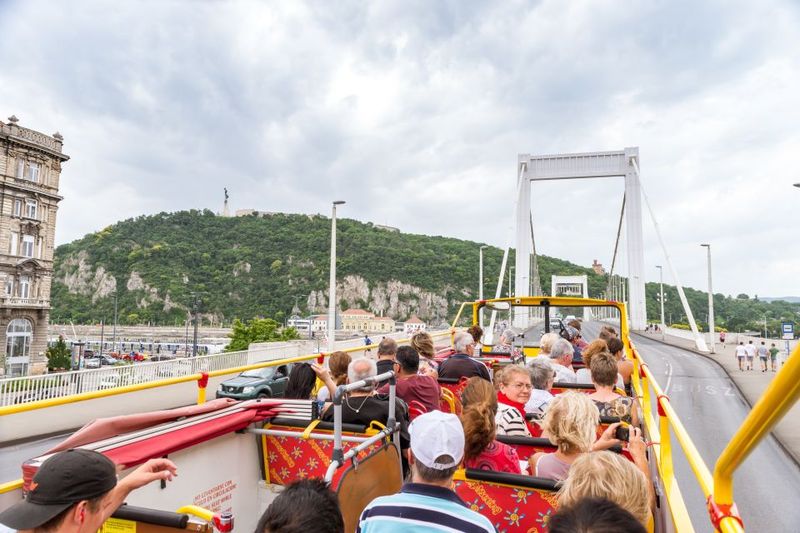
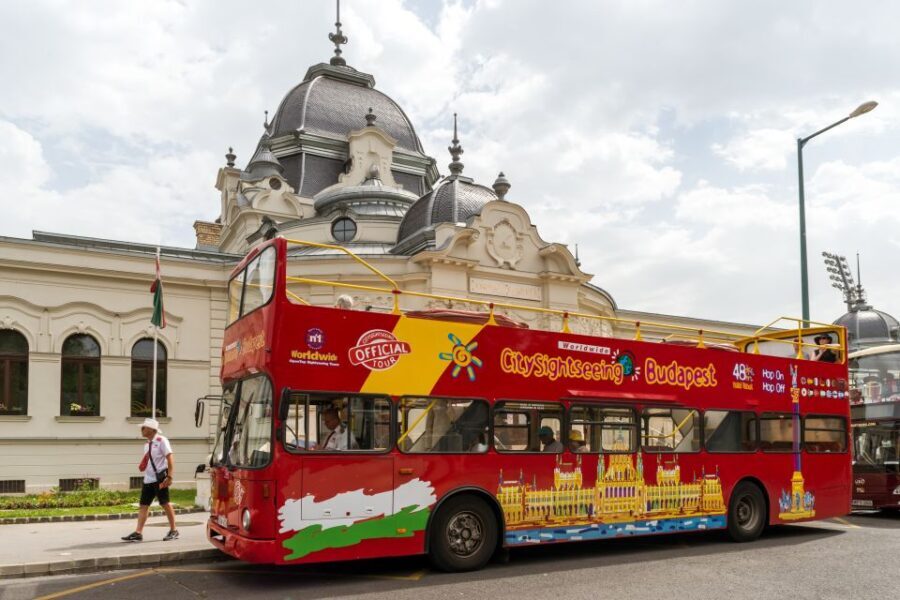

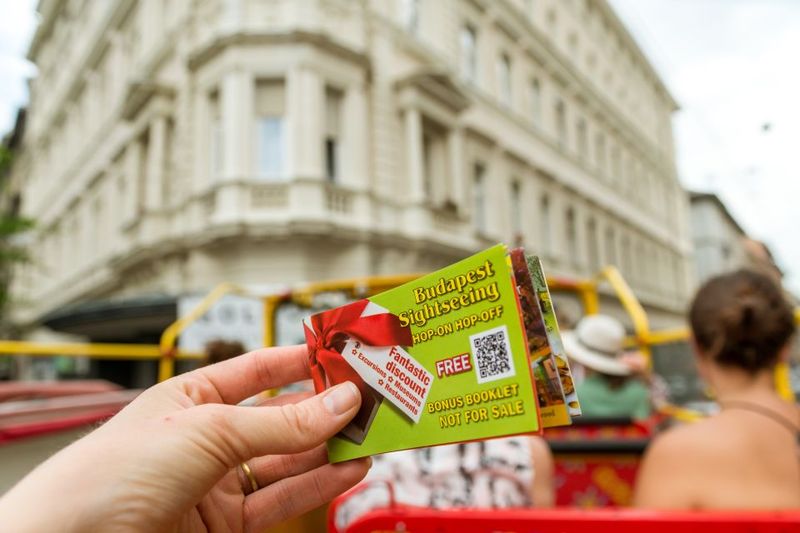

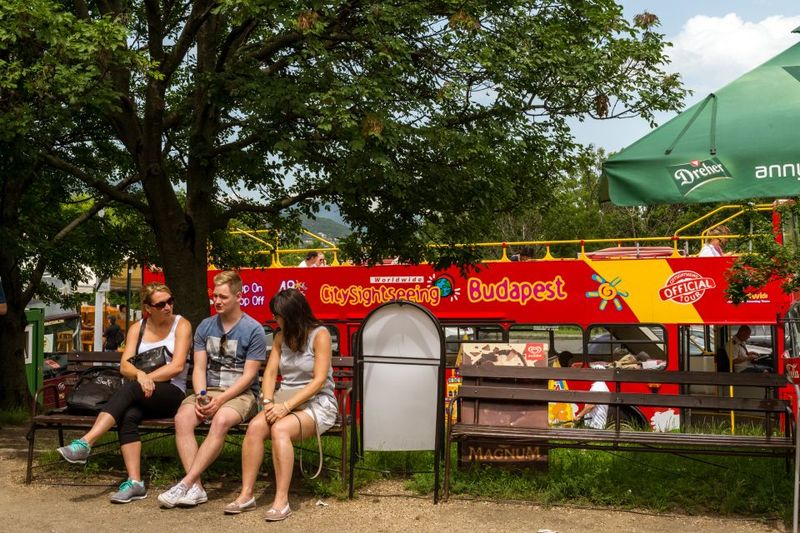
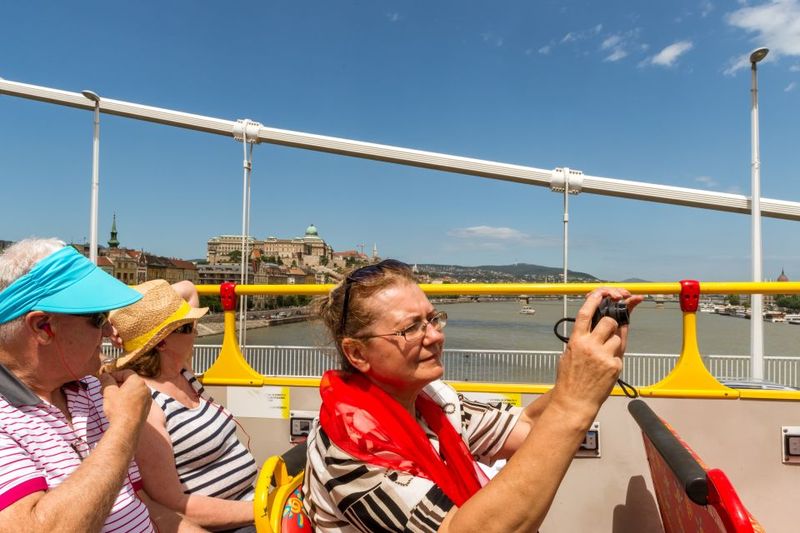

- 20 red-route stops across both Pest and Buda, including Parliament, St Stephen’s Basilica, Chain Bridge, and the Jewish Quarter area
- Daily 11am walking tour in English only, designed to cover gaps like Shoes on the Danube Bank and the Danube Promenade
- Audio guide in 15 languages on the bus, so you can learn while you move
- Astoria stops are temporarily closed (listed as temporarily closed on the route), so plan for potential skipping at those points
- Danube boat cruise rules can change by date, with a stated discount process if it is not included
- Wheelchair accessible buses plus clear rules (no pets, no smoking, service dogs only)
Taking Budapest in Two Directions: The Bus + Walking Tour Combo
Budapest is one of those cities where the best views are split between two worlds. The grand riverfront and civic landmarks sit in Pest, while the hillier Buda side brings castles, viewpoints, and a very different rhythm. This tour tackles both with an easy structure: ride the hop-on hop-off bus when you need speed, then walk with a guide where streets and viewpoints demand it.
For a lot of travelers, the biggest win is simple: you stop wasting energy figuring out transit. Instead of mapping routes in your head (or giving up mid-afternoon), you use the bus like a moving base and choose your own pace.
And because the bus includes an audio guide in 15 languages, you’re not limited to whatever language the driver feels like speaking that day. The narration is there for you as you pass major sights.
You can also read our reviews of more city tours in Budapest



Price and What You Actually Get for About $41
The listed price is $41 per person, and that number matters because Budapest can be pricey if you build a “private tour” day. What makes this value idea work is the bundle effect:
- A 24, 48, or 72-hour bus pass (so you can ride more than once)
- A guided walking tour (so you get human explanations, not just audio)
- Audio commentary in many languages while you ride
- A discount booklet that’s meant to reduce costs at popular attractions
- Stops near major sights across Pest and Buda
If you’re the type who likes to see a lot, then go back later for the best photos, you’ll feel the value quickly. If you’re the type who only wants one short sightseeing loop and calls it a day, the cost per hour might feel higher. In that case, a shorter pass can still be enough, as long as you plan your hop-offs well.
Red Route Timing: 9am to 5pm and a 90-Minute Loop
Here’s the practical schedule. The Red Route starts with the first departure from Stop 1 at 9:00am, and the last departure from Stop 1 is 5:00pm. Buses run about every 10 to 20 minutes, and a full loop is about 90 minutes.
Why this matters: Budapest traffic can slow things down, and you’ll lose time if you assume you’ll be able to ride late into the evening. Also, if you hop on mid-loop, you may not catch a full loop that day. I like this system for daytime orientation, not for late-night wandering.
One more heads-up: some stops on the route list Astoria as temporarily closed (Stop 5 and Stop 12). If your plan depends on that area, you’ll want to be flexible about where you hop off.
Finding the Bus: Meeting Point and Getting on Smoothly
The meeting point can vary by option booked, so treat your first day like an arrival day. Once you’re at the correct stop, getting on is straightforward, and you can use either a mobile or printed voucher at the stops along the route.
Two practical points from traveler experience that help a lot:
- Some people report the map given in practice can differ from what they expected online, so rely on the bus stop info and printed material you receive.
- If you plan to do the walking tour the same day, build in a little extra time so you don’t end up hunting the meeting spot at the last minute.
The 20 Red Route Stops: How to Use Them Like a Local
The bus route is the backbone of this experience. With 20 stops, you’re not tied to one fixed sightseeing “route.” You hop off, explore, then hop back on when you’re ready.
Here are some of the big ones and what you’ll use them for:
- Stop 1: St Stephen’s Basilica
Great starting point. It’s a natural anchor for your day, and it’s easy to build a route from here. - Stop 2: Chain Bridge (Pest)
You get the bridge as a landmark moment. Even if you don’t spend much time here, it helps you understand how Pest faces the river and connects across to Buda. - Stop 4: Dohany Street Synagogue
This is your Jewish Quarter highlight. Expect a meaningful visit route once you get off and explore on foot. - Stop 6: Andrassy Avenue
Useful for seeing the grand boulevard side of Budapest. It’s one of those “walk if you can, bus if you must” areas. - Stop 7: Hungarian State Opera House
A classic exterior photo stop. If you’re opera-curious, this stop sets you up for deeper exploration later. - Stop 9: Heroes’ Square
Perfect for first-timers because it reads like a monument scene. If you want symmetry and wide views, this is your stop. - Stops 14 to 18: Gellért Square, Castle Garden, Funicular, Batthyány Square
This is where Buda begins to feel like a different city. You’ll get hill views and castle-area atmosphere, with the Funicular stop acting like a natural access point. - Stop 20: Parliament
This puts the Hungarian Parliament Building at the center of your route. The building’s Gothic Revival façade is one of those sights you don’t forget after one pass. - Other stops that help with real planning
Liszt Ferenc Square, Keleti Railway Station, Margaret Bridge, and WestEnd Shopping Centre give you practical hop-off options when you want transport convenience or a break.



Parliament, Chain Bridge, and the Riverfront Feel
You’ll see the Hungarian Parliament Building from the bus, and it’s often the moment that makes people sit up straight. The façade style is part of the appeal, but what you really get is scale and placement—this is a civic landmark built to dominate the view.
Chain Bridge is the other emotional anchor. From the bus, it’s not just a landmark. It’s a moving map: you can watch how Pest’s grand avenues connect and how the river becomes your travel line through the city.
If you want the riverfront experience with context, the walking tour adds what the bus can’t: the Shoes on the Danube Bank and the Danube Promenade are on the list for the 1-hour walking segment.
St Stephen’s Basilica: A Natural Start (and a Natural Re-Stop)
St Stephen’s Basilica is Stop 1, which means you can use it as your day’s first anchor and also come back later if you want the light to change. The area is also one of the easiest places to align your bus time with your energy level.
One practical advantage: you can begin early, hop off, then return for another look if you realize you missed a detail. Reviewers often liked the ability to do a full loop first just to see where things are, then return selectively. This stop is perfect for that strategy.
Jewish Quarter: Dohány Street Synagogue and Memorial Area Time
Dohány Street Synagogue is one of the route’s key stops, and this part of the city deserves more than a drive-by glance. The good news is the bus drop gets you close enough to explore at your own pace.
Also included in the walking tour coverage is the broader set of stops you’ll connect with on foot, like the Shoes on the Danube Bank and key central river routes. If you want your sightseeing to have both beauty and weight, this combination works well.
Buda Side Without the Over-Planning: Castle Garden, Gellért Square, and More
The Buda stops are what many people come for, even if they don’t climb far. You’ll get:
- Gellért Square for hill views and skyline perspective
- Castle Garden to orient yourself toward the castle district energy
- Funicular access point for getting up and around
- Batthyány Square as a useful Buda-side connection
- Margaret Bridge (Buda) for a bridge moment from the other side
A tip that shows up in traveler comments: some visitors prefer the bus for the initial route because Buda hills can wear you down fast. If you’ve got limited time, using the bus to reach the right starting points is a smart way to avoid turning your day into a vertical workout.
Heroes’ Square and Andrassy Avenue: When Budapest Looks Like a Postcard
Heroes’ Square feels like a city statement. Even if you only spend a short time there, it helps you read Budapest’s “imperial” feel. It’s also easy to pair with Andrassy Avenue nearby, since the bus route places you within reach of both.
The Opera House stop (Hungarian State Opera) is a good example of why this bus works for different travel styles. If you only want the exterior, you can do a quick hop-off. If you want to linger, you can.
The Guided Walking Tour (11am): Where the Bus Can’t Go
The included walking tour starts every day at 11:00am from Szent Istvan ter 1, 1051, Hungary and lasts about 1 hour. It’s narrated in English only.
This is the piece that turns a simple bus ride into an actual Budapest day. The walk covers areas the bus doesn’t cover as well, including:
- St Stephen’s Basilica
- Parliament
- Shoes on the Danube Bank
- Váci Fashion Street
- Danube Promenade
And here’s a reason travelers talk about this part: the guide quality can be excellent. Several walking-tour guide names showed up in traveler notes, including Claudia, Joan, Rebecca, and Souvar. People described them as energetic and knowledgeable, with good pacing and humor.
One thing to watch: some travelers mention the walking tour meeting logistics weren’t always obvious. If you’re doing this on your first day, I’d treat the meeting point like an appointment and confirm where to meet based on the signage or stop staff.
Audio Guide in 15 Languages: Useful on the Move
The bus includes an audio guide in 15 languages, including English, French, German, Italian, Spanish, Russian, Arabic, Hebrew, Hungarian, Greek, Japanese, Portuguese, Polish, Finnish, Turkish, and Chinese.
This matters because Budapest moves fast once you start riding between stops. You might not have time to read every plaque, and audio helps you keep up while you’re seated.
One practical caveat from traveler comments: you might not always hear everything clearly if the bus microphone system isn’t great on your specific vehicle or if it’s noisy. If that happens, the printed route info and quick visual scanning become your best backup.
Discount Booklet: Stretching Your Budget the Smart Way
The ticket includes a discount booklet for popular Budapest attractions. Your exact savings depend on what’s on the booklet during your visit, but the structure is smart: instead of paying full price for every ticket, you can pick and choose where discounts matter.
This is also where you can steer the trip toward your interests. If you’re more museum-focused, you’ll likely use it differently than someone who wants mostly outdoor viewpoints.
Accessibility and Rules: What to Know Before You Board
If you need accessibility support, the good news is the buses are wheelchair accessible.
Rules to keep in mind:
- No smoking
- Pets not allowed
- Service dogs only permitted on the bus
It’s also worth planning your day around the loop and hop-off rhythm. Some stops are closer to major landmarks than others, so time your walk breaks where you want to be.
The Danube Boat Cruise Add-On: Included or Not, Depending on Date
The experience notes that a boat tour is part of the ticket, but with a date change: from Wednesday 10th December, the boat tour is no longer included in the ticket. If that applies to you, you can buy the boat ticket for HUF 3500 instead of HUF 5000 if you show your bus ticket at the boat departure point. Bookings made before that date are said to be honored.
Why this matters for planning: if you’re counting on a cruise for your skyline views, check your travel date and confirm how the reduced-rate process works at the departure point.
Many travelers do describe the river cruise as a standout “extra,” since it gives you a different angle on Budapest’s hills and landmarks.
What the Reviews Signal (Without Overpromising)
The overall rating is 4.1 from a large number of travelers, and the common themes are practical:
- Convenience matters. Many people said the buses made it easy to get to multiple attractions without stress.
- Guides matter. Walking tour guides like Claudia, Joan, Rebecca, and Souvar show up as examples of how good narration can make the difference.
- Value matters. Travelers often felt it was worth it, especially with multi-day passes.
- Service issues show up sometimes. Some mention traffic delays, occasional lack of clarity around where to meet for the walking tour, and occasional audio challenges.
A balanced takeaway: this is a solid first-pass sightseeing tool. If you expect a perfectly tailored private experience, you may be disappointed. If you want efficiency and flexibility, it tends to fit.
Who Should Book This Hop-On Hop-Off and Walk Package
This is a great match if you:
- Are seeing Budapest for the first time and want a fast orientation
- Like to mix structured stops with your own wandering
- Want a day that covers Pest and Buda without spending hours on transit planning
- Appreciate getting historical context from a human guide during the 11am walking tour
It may not be ideal if you:
- Only want one or two short stops and hate waiting for buses
- Travel with strict late-afternoon plans, since the Red Route last departure is 5pm
- Need non-English narration for the walking tour (it’s English only)
Should You Book This Tour?
If your goal is to see major Budapest highlights without turning your itinerary into a spreadsheet, I’d book it—especially if you’re choosing a 48 or 72-hour pass. You’ll get more than a one-time ride because you can revisit areas as you figure out what you like.
But if your priorities are ultra-specific (one museum, one viewpoint, one neighborhood), check whether a shorter pass and a targeted walking plan might fit better. The biggest reason people love this combo is that it gives you freedom, plus the walking tour gives you the context you would otherwise miss.
If you’re going soon, pay attention to two timing details: the 9am–5pm Red Route window, and whether your travel date is after the boat cruise inclusion change.
Budapest: City Sightseeing Hop-On Hop-Off Bus Tour & Extras
FAQ
How long is the hop-on hop-off bus pass valid?
You can choose a 24, 48, or 72-hour pass for the hop-on hop-off bus.
What times do the Red Route buses run?
The first departure from Stop 1 is at 9:00am and the last departure from Stop 1 is at 5:00pm. Buses run about every 10 to 20 minutes.
How long is one complete loop on the bus?
A full Red Route tour takes about 90 minutes.
When does the guided walking tour start, and where?
The walking tour starts daily at 11:00am from Szent Istvan ter 1, 1051, Hungary and lasts about 1 hour.
What languages are available on the bus and walking tour?
The bus audio guide is available in 15 languages. The guided walking tour is narrated in English only.
What major sights are included in the walking tour?
The walking tour includes areas such as St Stephen’s Basilica, Parliament, Shoes on the Danube Bank, Váci Fashion Street, and the Danube Promenade.
Is the Danube boat cruise included?
It can be included depending on your travel date. From Wednesday 10th December, the boat tour is no longer included in the ticket, but you can buy a boat ticket for a reduced price if you show your bus ticket at the departure point.
Are tickets to attractions included?
No. Attraction tickets are not included.
Are vouchers accepted on the tour?
Yes. Both mobile and printed paper vouchers are accepted, and they can be redeemed at stops along the route.
You can check availability for your dates here: