
If you want Brussels after dark without feeling stuck in tourist-land, this evening tour is a smart pick. It links famous Sablon landmarks with the Marolles neighborhood and works in the city’s darker, less-polished past along the way.
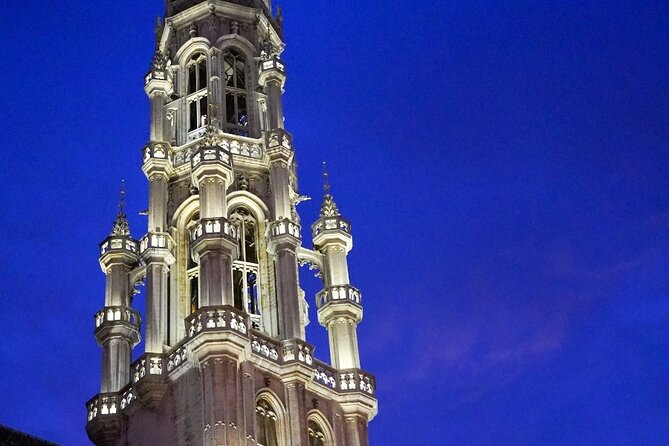
I like it for two main reasons: you get guides who explain what you’re seeing, and the route hits major architecture that looks better at dusk than in daylight. One thing to consider: the tour is called The Dark Side of Brussels, but multiple travelers say it’s more a night history walk with less-grim, town-crime-style stories than pure scandal.
- Key things to know before you go
- Price and Logistics: how much this walk really costs
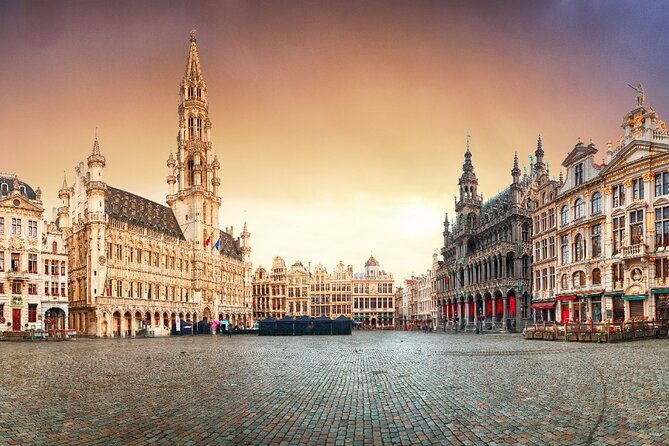
- Meeting at Grand Place: don’t let the packed square win
- The vibe: “dark side” without the scare tactics
- Group size and pacing: good for walking, not for strollers
- Stop-by-stop: what you’ll see and why it matters
- 1) Place du Grand Sablon: starting in the stylish Sablon zone
- 2) Place Saint-Jean: a small historic square with a big church
- 3) Tour Anneessens: a neighborhood with modern Brussels energy
- 4) Rue de Rollebeek: cobblestones and slow strolling
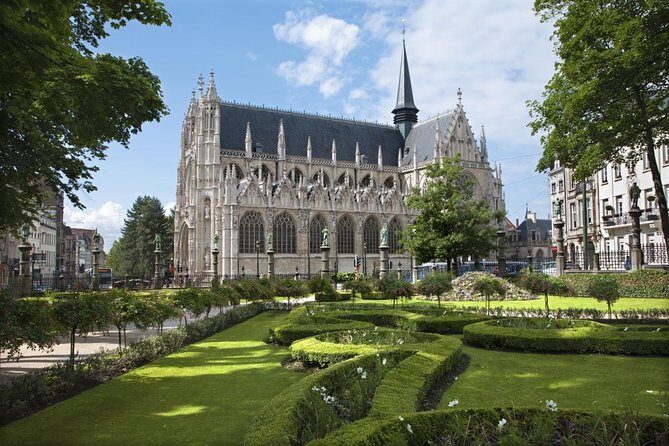
- 5) Notre-Dame du Sablon (Esglesia de Nostra Senyora del Sablon): gothic details you might miss alone
- 6) Palace of Justice: the imposing courthouse and the hill views
- 7) Square du Petit Sablon: the garden square with 48 bronze statues
- 8) Place du Jeu de Balle: Marolles flea-market energy
- 9) Ending at Église Notre-Dame de la Chapelle (Kapellekerk): a quieter finish in the Marolles
- Guides: the main reason this tour earns its high marks
- What kind of traveler should book this?
- Where it may disappoint: honesty checks from traveler feedback
- Cancellation and timing: build your evening buffer
- Final verdict: should you book The Dark Side of Brussels?
- FAQ
- How long is the evening tour?
- How much does it cost?
- What language is the tour offered in?
- Where does the tour start and where does it end?
- Do I need to print anything?
- What is the cancellation policy?
Key things to know before you go


- Start at Grand Place (Grote Markt), then walk through central Brussels toward the end at Kapellekerk
- 2 hours approx. with a group cap of up to 35 and a small-group feel in practice
- English with a mobile ticket
- The price is listed as $3.62 per group (up to 6), so it can be great value if you’re traveling with friends
- Travelers note it’s not always strictly “dark,” more like night history with some unsettling themes
- Free cancellation up to 24 hours before start, with a minimum number of travelers required
Price and Logistics: how much this walk really costs
The listing price is $3.62 per group (up to 6), which is unusually low for an organized guided walk. That doesn’t mean the tour is “free”—it’s more like you’re paying a small booking fee so the guide can take you out at night. A number of travelers explicitly recommended budgeting for a tip if the guide does a great job, since guides rely on tips for income.
How to think about value:
- If you’re traveling with 3–5 friends, the per-person cost can be tiny.
- If you’re solo, the booking fee still may feel affordable, but the real value is still in the guide and the storytelling—so it’s worth showing up on time and being ready to walk.
Logistics are straightforward:
- Duration: about 2 hours
- Mobile ticket: yes
- English: yes
- Meeting point: Grand Place/Grote Markt (1000 Brussels)
- End point: Kapellekerk area, Rue des Ursulines (1000 Brussels)
- Transportation: it’s near public transport, and since you end in a popular neighborhood, you can hop back to a tram/metro or continue exploring nearby.
Also, there’s a minimum number of travelers. If it doesn’t meet that threshold, you’ll be offered a different date or a full refund. And cancellation is free up to 24 hours before start.
Meeting at Grand Place: don’t let the packed square win
Grand Place is gorgeous, but it’s also a human magnet. One traveler reported they had trouble finding the guide even though they arrived early and the square was packed. The good news: other travelers said the guide was easy to spot once they looked in the right place—so the best move is simple.
My practical advice:
- Arrive early, but don’t panic if you don’t see the group right away.
- Give yourself extra time to move through the crowds to the meeting spot.
- If you’re using metro/tram, plan for slower foot traffic than daytime.
If you’ve got a tight evening schedule, this is a tour that favors calm timing. The start is on the main square; your best strategy is to get there before you’re stressed.
The vibe: “dark side” without the scare tactics
Call it “dark side” marketing. In practice, it’s more about night history and Brussels stories you don’t usually hear on a daytime highlights tour.
Multiple travelers said:
- It’s not all dark.
- You’ll hear unsettling themes (some mentioned torture, punishment, and grim topics), but the tone often stays informative and fun.
- Guides handle the balance well—one traveler even called it authentic, interesting, and not too grizzly.
So if you’re expecting a horror-movie level walk, you might feel it’s lighter than the title implies. If you want a tour that explains how the city became what it is—through politics, crime, punishment, and urban change—this is right on target.
Group size and pacing: good for walking, not for strollers
The tour has a maximum of 35 travelers, which usually means you’re not stuck in a huge crowd. Still, it’s an evening walking route, and at times you may be in busier squares and narrow lanes.
One traveler noted it can feel a bit more strenuous than the description, but they still found it doable with reasonable walking fitness. If you have mobility limits, it’s worth taking that seriously. Cobblestones and short transfers between stops can add up.
The pacing also depends on the guide and the group size. One traveler felt the itinerary on the app didn’t match what they experienced, suggesting the exact order or timing may shift based on conditions.
Stop-by-stop: what you’ll see and why it matters
1) Place du Grand Sablon: starting in the stylish Sablon zone
The tour begins around the Sablon area—specifically Place du Grand Sablon (noted as tied to the Grand Marché marketplace in the stop description). This is a good opening because it sets the tone: Brussels isn’t just one vibe. Here, you get an active central feel—markets, crafts, and everyday city life.
Why it works at night:
- The streets feel more relaxed than peak daytime.
- You’ll get your first batch of “this is how locals move through the city” energy right away.
Potential downside:
- If the market area is quiet when you arrive, the “market” aspect may feel less lively than you’d expect. That said, the square itself is still visually appealing.
2) Place Saint-Jean: a small historic square with a big church
Next comes Place Saint-Jean, a charming older square with cafes and historic atmosphere. The star is St. John the Baptist Church. Even when you’re not going inside, it anchors the stop with real presence.
What you’ll likely appreciate here:
- The square gives you a breather between “bigger” sites.
- It’s a people-watching moment that also sets up the tour’s theme of layers—Brussels keeps changing, but these cores remain.
3) Tour Anneessens: a neighborhood with modern Brussels energy
Tour Anneessens is described as a district with a vibrant atmosphere and a blend of architectural styles. This stop matters because it moves you away from the postcard-only center. It’s about the city’s living fabric—history next to everyday movement.
If you like tours that explain “Brussels as a whole system,” this is a key moment. It adds context beyond architecture.
4) Rue de Rollebeek: cobblestones and slow strolling
Rue de Rollebeek is a smaller street stop—cobblestones, cafes, and boutique storefronts. This is where the tour becomes more of a walk-with-stories kind of experience rather than a “run from landmark to landmark” checklist.
Why it’s useful:
- It breaks up the heavier sites.
- You get a sense of scale and street texture—how Brussels feels on foot.
5) Notre-Dame du Sablon (Esglesia de Nostra Senyora del Sablon): gothic details you might miss alone
You’ll visit Notre-Dame du Sablon, described as a magnificent gothic church with stained glass and intricate detailing. Even if you only see the exterior, churches like this are hard to truly clock without guidance—there are details that reward a closer look.
At night, stained glass and architecture feel different. You’re also in the right district for it—Sablon is made for this kind of stop.
6) Palace of Justice: the imposing courthouse and the hill views
Then comes the showpiece in many people’s memories: the Palace of Justice. It’s described as an imposing courthouse with commanding neoclassical architecture, one of the largest courthouses in the world, and it sits atop a hill with sweeping views over Brussels.
Why this stop is especially valuable:
- You’ll get both story and geometry. It’s architecture tied to power—courts, law, punishment, governance.
- The hilltop vantage gives your brain a “map” moment. You can orient yourself and see how neighborhoods connect.
Practical note: the hill and long lines of sight mean you’ll want good shoes and a moment to pause. This isn’t a “look for five seconds and move on” stop if the guide does a good job explaining.
7) Square du Petit Sablon: the garden square with 48 bronze statues
Next is Square du Petit Sablon, described as a garden square with 48 small bronze statues representing medieval guilds. It’s a peaceful patch of green and craftsmanship in the center of town.
Why it’s a highlight:
- It feels like a reset after big monumental architecture.
- The statues give you something to study while the guide explains guild history and how Brussels organized itself.
8) Place du Jeu de Balle: Marolles flea-market energy
The tour then leans into the neighborhood vibe at Place du Jeu de Balle, where people often associate Brussels’ Marolles with its daily flea market. Expect a welcoming atmosphere and the sense that locals use the space constantly—second-hand clothing, old photos, vintage items, and the kind of clutter that’s actually interesting.
Even if you’re not shopping, it’s a strong “city life” stop. It also fits the darker-history theme: markets and neighborhoods have always been where stories happen.
9) Ending at Église Notre-Dame de la Chapelle (Kapellekerk): a quieter finish in the Marolles
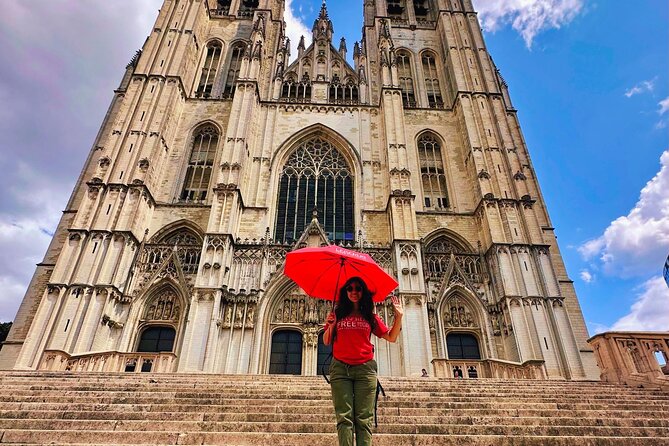
The tour ends at the Gothic Kapellekerk (notre dame de la chapelle), in the vernacular Marolles neighborhood. The chapel name references a chapel founded here in 1134.
This is a fitting end because it’s calmer and older. The vibe shifts from busy street energy to something more reflective—good for closing the loop on a tour that mixes architecture and human stories.
Guides: the main reason this tour earns its high marks
Across traveler feedback, one theme rises to the top: the guides know their stuff and can tell stories without turning it into a lecture.
You’ll see praise for guides such as Den, Sebastian, Gunny, Rahim/Rahiem, Ian, and David, plus others like Ann Marie. Travelers commonly mention:
- Clear communication in English
- Storytelling that makes history click
- A lively, attentive style—sometimes funny, sometimes serious, but always guided
A key tip from several travelers: the tour is often booked at a low fee, so bring euros for tipping. If your guide helps you connect the dots, tipping is part of being a good guest.
What kind of traveler should book this?
This tour is a great fit if you:
- Want Brussels at night but still want real landmarks
- Like history that includes politics and social change, not just kings and dates
- Prefer walking tours where a guide explains what you’re looking at
It might be less ideal if you:
- Need a fully “dark” themed horror style tour (this is more night history with unsettling themes)
- Have limited mobility or find cobblestones hard
- Expect the exact stop order to match a mobile app perfectly, with no variation
Where it may disappoint: honesty checks from traveler feedback
Even with high ratings, there are a few recurring caution flags worth noting:
- The title can over-promise. Several travelers said it’s not strictly about the dark side in the way they expected.
- It sounds like the itinerary can be flexible depending on guide mood and group size. That doesn’t always mean it’s bad—just know it may vary.
- One traveler mentioned vouchers for another stop didn’t work out for everyone because of availability.
- Another traveler complained they couldn’t locate the guide in a crowded square and felt frustrated. That’s avoidable with extra buffer time and being at the meeting spot early.
Cancellation and timing: build your evening buffer
This experience has free cancellation up to 24 hours. It can also be canceled if the minimum traveler requirement isn’t met, in which case you’ll get a different date or a full refund.
For same-day plans, I suggest:
- Don’t schedule a tight train departure immediately after the tour ends.
- Give yourself buffer time to reach your next stop from Kapellekerk / Rue des Ursulines.
One traveler missed their group because of a tight train schedule to Amsterdam, so it’s not a place to “wing it” if you have a hard deadline.
Final verdict: should you book The Dark Side of Brussels?
I’d recommend it if you want a guided evening walk where you’ll come away with a better mental map of Brussels—and you’ll hear human stories connected to the city’s institutions and neighborhoods.
Book it if:
- You value excellent guiding and clear explanations
- You like Gothic churches, courthouse architecture, and Marolles street life
- You’re open to “dark-ish” history rather than nonstop grimness
Skip or rethink it if:
- You need a very literal, scary dark-themed experience
- You can’t handle cobblestones and a full evening walking route
- You’re the type who gets upset if the itinerary shifts slightly
If you do book, show up early at Grand Place, wear comfy shoes, and bring a few euros for a tip. That’s where the evening turns from a walk into a story you’ll remember.
Evening Tour: The Dark Side of Brussels
FAQ
How long is the evening tour?
It lasts about 2 hours.
How much does it cost?
The price is listed as $3.62 per group (up to 6).
What language is the tour offered in?
The tour is offered in English.
Where does the tour start and where does it end?
It starts at Grand Place / Grote Markt, 1000 Brussels and ends at Kapellekerk near Rue des Ursulines, 1000 Brussels.
Do I need to print anything?
No. You’ll have a mobile ticket.
What is the cancellation policy?
You can cancel for a full refund up to 24 hours before the experience starts. The experience may also be canceled if the minimum number of travelers isn’t met, with a different date offered or a full refund.