I’m reviewing a full-day Munich to Salzburg by train trip that focuses on the people and places behind Mozart and The Sound of Music, then gives you time to wander on your own. You’ll ride through the Alps, get an organized orientation walk, and hit the big sights like Domkirche Cathedral and the fortress views at Festung Hohensalzburg if you choose to go.
Two things I really like: the guide-led walking time is practical (and the guides are consistently praised, including names like Cristian, Maxine, and Emanuella), and the schedule still leaves room to breathe. Also, the focus on food stops and local favorites shows up again and again, including tips for classic places like St. Peter’s and Salzburg candy like Mozartkugel.
One thing to consider: this is a long day (about 9.5 hours total), and you’ll be on the move—plus train schedules can change, so you’ll want to stay flexible and follow your guide’s plan.
- Key Highlights You’ll Actually Feel on the Day
- First Impressions: Salzburg Shows Up Fast After the Scenic Train Ride
- The “Full-Day, Not a Marathon” Schedule (and Why Timing Matters)
- Meeting in Munich: Know the Exact Starting Point
- The Train Ride: Scenic, Comfortable, and Not Wasted Time
- Guided Orientation Walk: Getting Your Bearings Fast
- Following Mozart: Birthplace, Residence, and the Streets He Walked
- The Sound of Music Stops: Mirabelle Gardens and More
- Domkirche Cathedral: The Big Visual Anchor in the Center
- Old Town Wandering: Chapels, Palaces, and UNESCO Streets
- Lunch and Desserts: Where Food Tips Matter
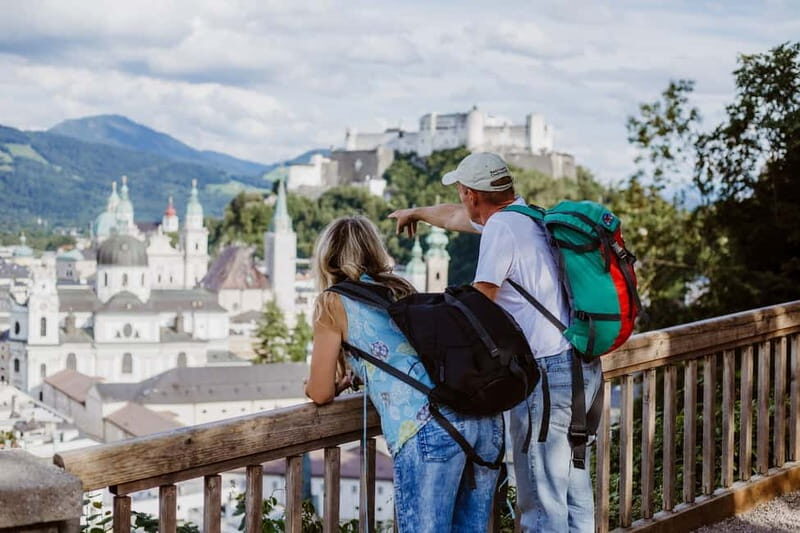
- Festung Hohensalzburg: The 900-Year-Old Fortress Optional Moment
- Free Time Strategy: How to Use Those 3 Hours Smart
- Accessibility, Language, and Real-World Notes That Help
- Value for Money: Why Can Feel Like a Deal
- What Travelers Praise Most: Guides, Views, Food, and Smooth Handling
- Who This Day Trip Fits Best
- Should You Book? My Honest Recommendation
- FAQ
- How long is the Munich to Salzburg day trip?
- How do you travel between Munich and Salzburg?
- What’s included in the price?
- Are hotel pickup or drop-off included?
- Are entry fees included?
- Do I need a passport?
- Is the tour wheelchair accessible?
- What language is the guide?
- Where is the meeting point in Munich?
- More 1-Day Tours in Munich
- More Tour Reviews in Munich
Key Highlights You’ll Actually Feel on the Day
 1 / 10
 2 / 10
 3 / 10
 4 / 10
 5 / 10
 6 / 10
 7 / 10
 8 / 10
 9 / 10
 10 / 10
- Mozart trail made for walking: birthplace and residence areas, plus the streets tied to his life
- Sound of Music filming locations: especially the Mirabelle Gardens connection
- UNESCO-protected old-town atmosphere: chapels, palaces, and baroque-era detail
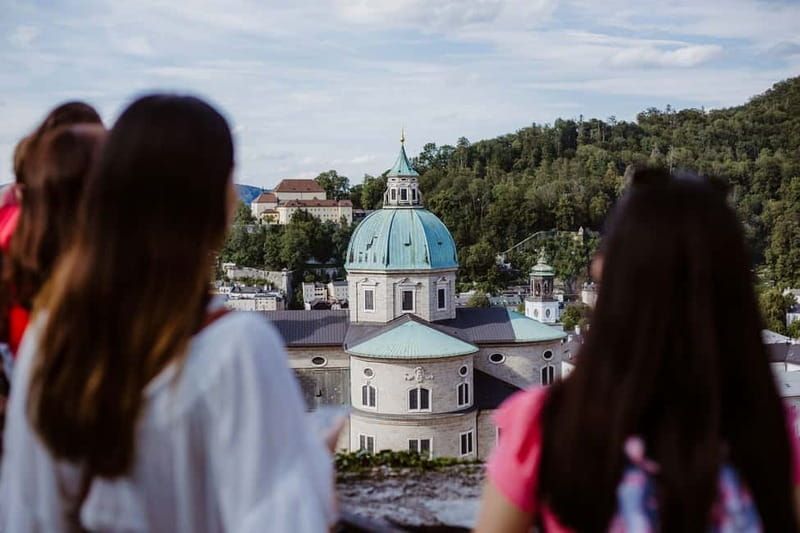
- Domkirche Cathedral stop: a must-see visual anchor for the center
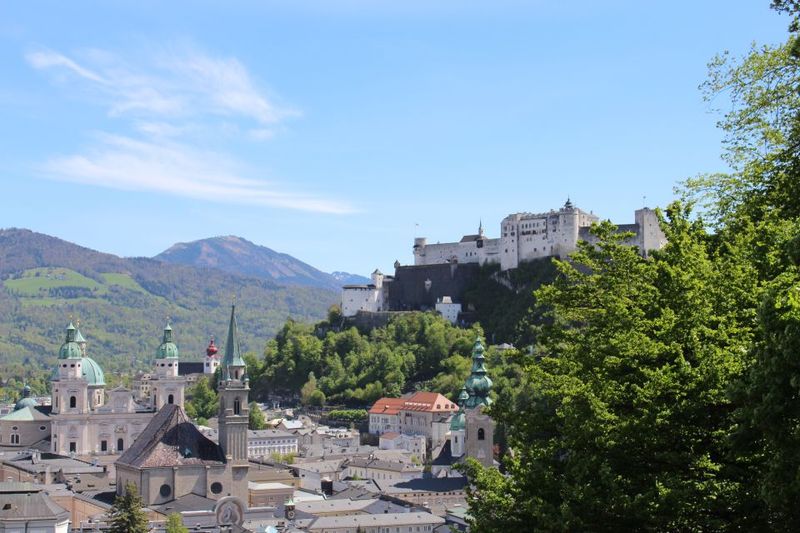
- Optional fortress visit: go up to Hohensalzburg for the skyline-and-mountains view
- Good value that includes the train: roundtrip rail tickets plus guided time, without locking you into paid entrances
First Impressions: Salzburg Shows Up Fast After the Scenic Train Ride
The best part of this day trip is that Salzburg hits you in layers. You’ll start with the train ride out of Munich—expect a classic alpine journey with mountains and winter scenery depending on season—and then you arrive ready to walk. When people say Salzburg feels like a set, they’re not exaggerating; the old town really does look movie-ready.
Once you’re in the city, the tour is built to give you confidence quickly. You don’t just get a list of sights. You get an orientation, a map of the historic center, and a guide who helps you understand how the streets connect—so your three hours of free time later don’t feel like wandering without a plan.
Two details I appreciate: the tour is English-guided, and it includes practical advice that helps you make choices fast (where to go, where to eat, and how to get back to the trains). Several travelers also mention that guides stayed extra helpful when the transport plan shifted.
You can also read our reviews of more tours and experiences in Munich

The “Full-Day, Not a Marathon” Schedule (and Why Timing Matters)
This tour runs about 570 minutes total—around 9.5 hours—so it’s not a casual half-day. But the structure is what makes it manageable: you’re not walking nonstop. You have guided time for the key blocks, then you get a meaningful chunk for exploring at your pace.
A typical rhythm looks like this:
- Train from Munich to Salzburg (about 2 hours)
- Guided orientation and major sights (around 2 hours, with early orientation time)
- Free time in Salzburg (about 3 hours)
- Return train (about 2 hours)
Why that matters: Salzburg rewards people who slow down, but you’re limited by the day trip format. This setup tries to balance both—enough guide time to avoid confusion, and enough independent time to chase the parts that interest you most (for example, fortress views or café time).
Meeting in Munich: Know the Exact Starting Point
You meet at the local operator’s office at Dachauer Straße 4, 80335 Munich. That detail matters because it keeps the day organized from the first step. No hotel pickup is included, so you’ll want to plan your Munich start based on your lodging and public transit timing.
Also, because you’re traveling from Germany to Austria by train, there’s a small but real chance of checks. The tour specifically notes:
- Bring your official passport
- Drivers licenses are not accepted
Passport checks aren’t common, but they can happen. If you don’t have the passport, this kind of day trip can turn into a stressful detour.
The Train Ride: Scenic, Comfortable, and Not Wasted Time
The roundtrip train tickets Munich–Salzburg are included, so you don’t spend mental energy figuring out connections. Travelers consistently mention the rail journey as part of the fun—especially when conditions are snowy or the scenery is clear.
Even when schedules get weird (and yes, trains can change), guides in past groups were described as quick to rework the plan. Some travelers report leaving earlier or shifting to alternate transport when needed. The takeaway for you: assume flexibility, bring your patience, and let the guide handle the logistics.
Guided Orientation Walk: Getting Your Bearings Fast
Right after arrival, you get a guided orientation tour plus a map of the old town. In plain terms: this is how you learn the city fast enough that you don’t lose time later.
The guide-led portion includes a spread of classic Salzburg landmarks and neighborhoods:
- UNESCO-protected old-town streets (the kind you’ll want to photograph as you walk)
- Squares and fountains
- Churches, monasteries, and baroque-era architecture
- Palaces and pleasure gardens
This orientation is also where your guide tends to connect Salzburg’s locations to the stories you care about—Mozart, medieval life, and the movie-era references people travel for.

Following Mozart: Birthplace, Residence, and the Streets He Walked
If you’re a Mozart fan, this portion is the heart of the day. You’ll visit Mozart-related highlights including his place of birth (optional) and his residence areas, plus the streets linked to his life.
What I like about this approach is that it gives you context. Instead of treating each stop as a random photo spot, your guide helps you understand why those buildings and streets mattered. Several travelers specifically call out guide knowledge as a major reason the tour felt worth it—people mention guides were able to explain history clearly and answer questions without making it feel like a lecture.
Depending on your interests, you’ll likely spend more time at the moments that click for you—Mozart’s early life, the cultural setting around him, or how the city shaped musicians and audiences.
The Sound of Music Stops: Mirabelle Gardens and More
Salzburg is famous for one big reason: The Sound of Music. This tour includes set-jetting locations so you can see what you remember from the screen.
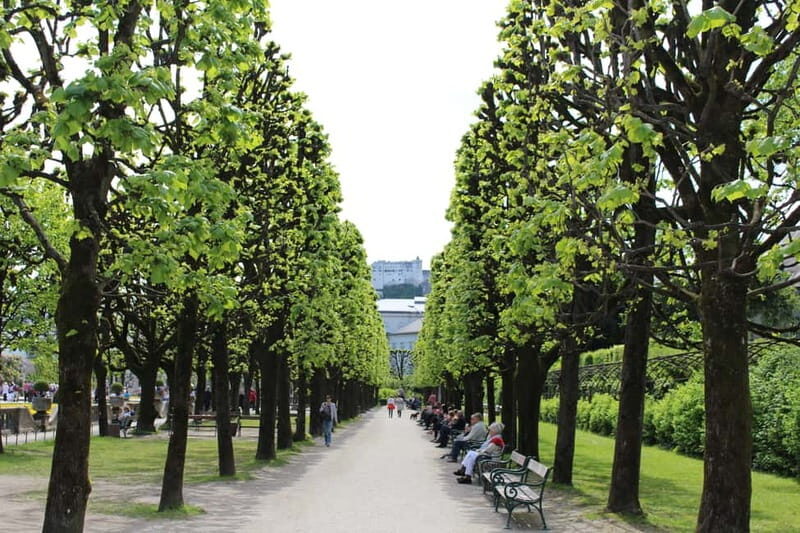
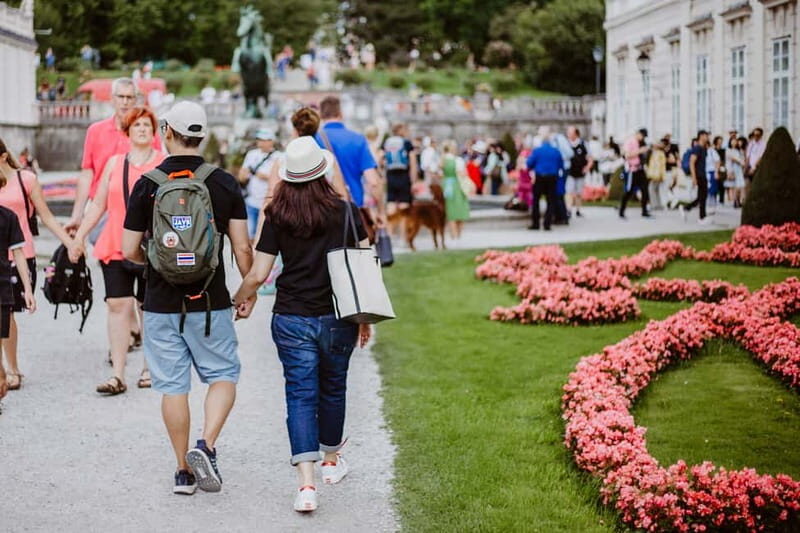
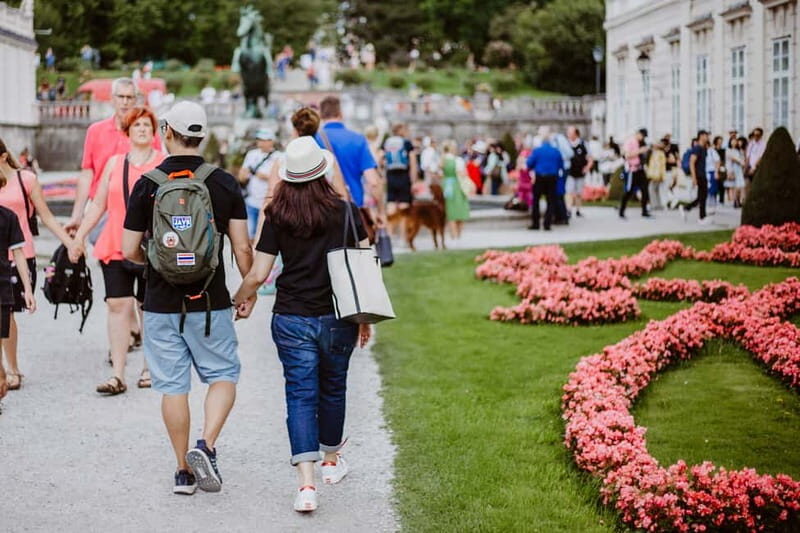
A key highlight is the Mirabelle Gardens, tied to the filming of Do-Re-Mi scenes with Julie Andrews and the children. If you’ve ever wanted to connect your memories to actual streets and views, this is your chance.
The guide also points out other related spots as you move through the center. You’ll still be in a real city, not a theme park—so the most satisfying part is watching how the locations fit into everyday Salzburg life.
Domkirche Cathedral: The Big Visual Anchor in the Center
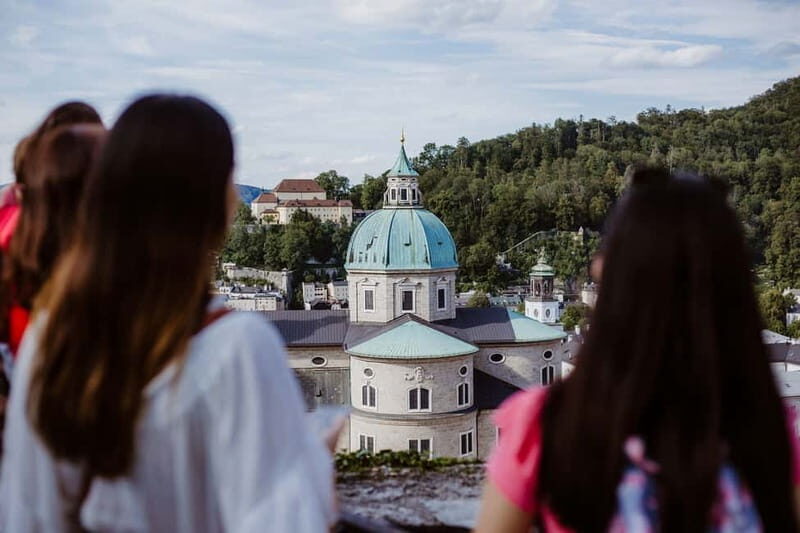
One of the clearest “you have to see this” moments is Domkirche (Salzburg Cathedral). It’s the kind of landmark that makes navigation easier because it’s hard to miss.
You’ll admire it during the guided section as part of the old-town walk. Think of it as your visual anchor: once you’ve seen it up close, the rest of the center starts to make more sense as a connected space rather than scattered attractions.
Old Town Wandering: Chapels, Palaces, and UNESCO Streets
The guided walk through Salzburg’s center gives you that rare combination—pretty streets with real architectural depth. You’ll see:
- Romantic winding shopping streets
- Venerable market places
- Chapels and palaces
- Church and monastery areas
- Catacomb references (where applicable during the walking route)
This is where Salzburg earns its reputation as a walkable, photogenic city. You’ll likely find yourself slowing down on side streets, not just at the famous points.
And if the weather isn’t perfect, that’s okay. Old town streets still work when skies are gray. You’ll just want to keep an eye on shoes—cobblestones are part of the charm and part of the friction.
Lunch and Desserts: Where Food Tips Matter
A big reason many travelers rate this tour highly is the food element. You’ll have time in the city, and guides are praised for making good recommendations.
A few specific details that show up in what you’re told to look for:
- St. Peter’s is mentioned as the oldest restaurant on the continent
- Salzburg classics come up in guidance, including Mozartkugel and other local sweets
Some travelers also mention reservations were handled for lunch at St. Peter’s, which removes one headache when you’re working with a tight day-trip clock. Even if reservations aren’t part of your exact day, the broader point is solid: you’re not left to guess what’s good.
Tip for you: if you want a sit-down lunch, plan to use part of your free time quickly. Popular spots can fill up, especially in peak seasons.
Festung Hohensalzburg: The 900-Year-Old Fortress Optional Moment
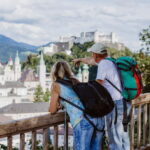
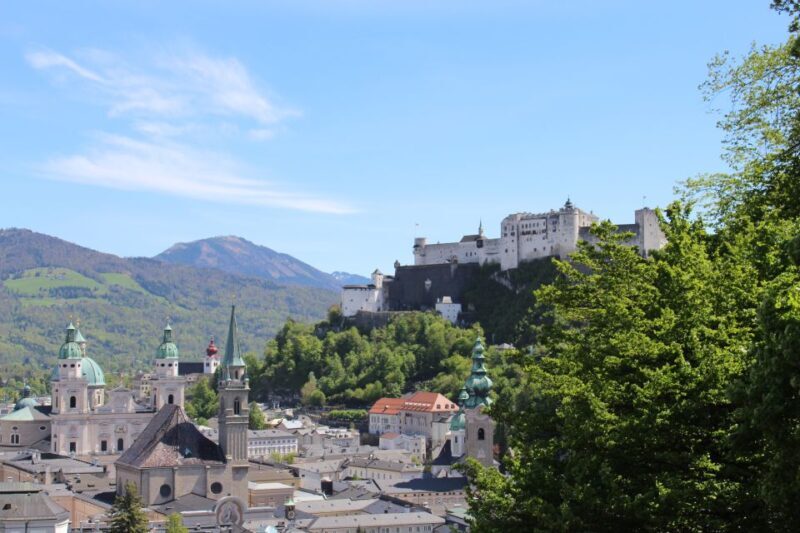
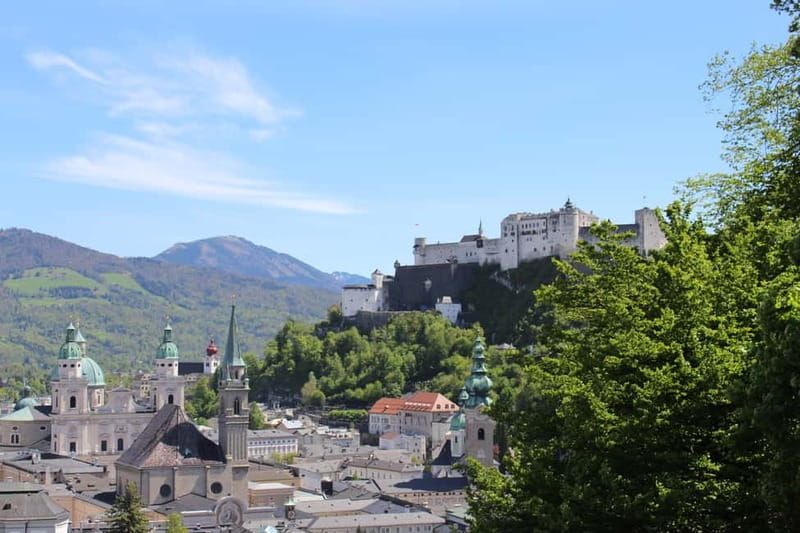
During your free time, you can choose to visit Festung Hohensalzburg, a fortress that dominates the skyline. It’s described as 900-year-old, and that’s not just a trivia flex—the view is the whole point.
If you go up, you’ll get the classic “Salzburg framed by mountains” feeling. It’s the kind of panorama that makes the train day feel worthwhile, because you see the city’s geography instead of only its architecture.
Two practical considerations:
- Fortress visits add walking and time, so decide quickly once free time starts.
- You’ll want to coordinate your return to the meeting point/trains based on your guide’s guidance, because this is a scheduled day trip.
Free Time Strategy: How to Use Those 3 Hours Smart
The tour gives you about 3 hours to explore on your own. That’s a generous window for a day trip, but it can still feel short if you don’t pick priorities.
Here’s how I’d play it:
- If Mozart and filming locations are your top interest, focus on the central streets first, then decide if the fortress fits.
- If you love views, go fortress early (before lines or before you lose energy), then use the remaining time for cafés and wandering.
- If you’re shopping, use the old town streets right after the guided walk—because you’ll remember what your guide pointed out.
Several travelers mention feeling glad they booked with a guide because navigation can be confusing when you’re short on time. So treat the guided portion as your map training day.
Accessibility, Language, and Real-World Notes That Help
This tour is listed as:
- Wheelchair accessible
- Guided in English
- Includes skip the ticket line (for the activities where that applies)
Entry fees aren’t included. So if you plan to go into sights beyond the included walking views (like fortress ticketed access), expect to pay separately.
Also, hotel pickup isn’t included, so the Munich logistics are on you. But once you’re at the meeting point, the rest of the day is organized.
Value for Money: Why $93 Can Feel Like a Deal
At $93 per person, you’re paying for more than just transit. The price includes:
- Roundtrip train tickets
- A fully guided orientation in Salzburg
- A map of the historic old town
- Personal advice from the guide
For a day trip, that’s meaningful value because you’re not just “getting there.” You’re getting guided context and help making decisions. If you tried to do the same day on your own, you’d spend time researching, mapping routes, and figuring out how much guided time you actually need to cover the highlights efficiently.
Where this price is especially fair:
- You’re time-limited
- You want Mozart and Sound of Music stops without missing key sights
- You want help with food choices
- You’d rather spend effort on exploring than on planning
Where it might not be perfect:
- If you already know the city well and hate group tours, you could build a cheaper DIY day. But you’d be trading convenience and local guidance for savings.
What Travelers Praise Most: Guides, Views, Food, and Smooth Handling
The repeated theme in traveler feedback is the human part. Guides are described as knowledgeable, friendly, and funny, and they’re proactive with recommendations. People also mention that guides help with navigation and getting everyone to the correct trains back in Munich.
Names that come up in praised guides include Cristian, Maxine, Emanuella, Markus, Nick, and Lucia—and the common thread is competence. You’ll feel it when questions come up, when timing shifts, and when you’re trying to match your interests to what’s possible in a single day.
Also highly praised: stunning views when fortress time is chosen, and the feeling that the food guidance isn’t random. It’s specific and useful.
Who This Day Trip Fits Best
This is a strong fit if you:
- Want a guided introduction to Salzburg without full-day planning
- Care about Mozart and want more than postcard stops
- Want Sound of Music locations you can actually see in the real city
- Like the idea of one optional “big view” moment at Festung Hohensalzburg
- Prefer having a guide help with restaurant choices
It’s also ideal for solo travelers. People frequently mention that the tour feels easy to follow and that guides help you navigate both the walking parts and the return train logistics.
Should You Book? My Honest Recommendation
I’d book this if you want the best version of a Salzburg day: real old-town walking, Mozart and Sound of Music highlights in a coherent route, and free time that doesn’t leave you guessing.
Skip it or consider a different option if:
- You hate the idea of a set schedule and prefer totally independent travel
- You want lots of museum time and long, slow meals (this tour prioritizes efficient sightseeing plus a guided structure)
- You’re allergic to walking on uneven streets
If you do book: bring your passport, wear good shoes, and treat the guided portion like your launchpad. Use your free hours with a priority list (views, filming locations, fortress, or lunch), and you’ll leave Salzburg feeling like you got the city—not just the highlights.
From Munich: Salzburg Day Trip by Train
FAQ
How long is the Munich to Salzburg day trip?
The total duration is listed as 570 minutes, which is about 9.5 hours.
How do you travel between Munich and Salzburg?
You travel by train both directions, with roundtrip train tickets included.
What’s included in the price?
Included are roundtrip train tickets Munich–Salzburg, a fully guided orientation tour, a map of historic old town of Salzburg, and personal advice from the guide.
Are hotel pickup or drop-off included?
No, hotel pickup is not included.
Are entry fees included?
No, entry fees are not included.
Do I need a passport?
Yes. The tour notes you must bring your official passport. Drivers licenses are not accepted.
Is the tour wheelchair accessible?
Yes, the tour is listed as wheelchair accessible.
What language is the guide?
The live tour guide is in English.
Where is the meeting point in Munich?
Meet at the local operator’s office at Dachauer Straße 4, 80335 Munich.
You can check availability for your dates here: