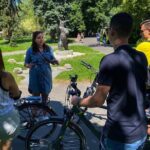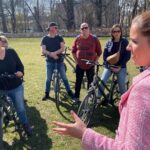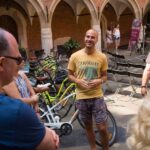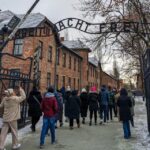
Krakow is one of those cities where you can walk yourself to the edges of your energy fast. This bike tour is a smarter way to get oriented, glide through car-free lanes, and see the big sights plus the Jewish Quarter in a single, easy stretch of time. You’ll roll with a local guide in English (mobile ticket included), usually about 3 to 4 hours.
What I like most is the mix of high-knowledge guiding and practical pacing. Guides such as Thomas, Chris, Alex, and Krzysztof show up prepared with stories that make places click, and the ride stays relaxed enough that you don’t need to be training for a road race. I also love the route’s variety: market squares and castles one moment, then quieter green cycling in Planty Park.
One thing to consider: a few stops are ticketed (like Wawel Royal Castle and Fabryka Emalia Oskara Schindlera), so you may want to plan ahead if those are must-sees for you. And because it’s weather-dependent, you’ll want to be flexible on day-of conditions.
- Key highlights at a glance
- Why this bike tour works in Krakow
- Meeting point and getting set up fast
- Ride style: how hard is it really?
- The guide factor: why the stories matter
- Stop-by-stop: what you’ll see and what to watch for
- Stare Miasto (Old Town main market area)
- Collegium Maius, Jagiellonian University
- Wawel Dragon monument and the hill story
- Wawel Royal Castle (sight from the hill)
- Glide through Krakow’s bike lanes for panoramic views
- Kazimierz, the former Jewish district
- The Market Square zapiekanka spot (former kosher meat market)
- Szeroka Street and film-set connections
- Plac Bohaterów Getta and the Pharmacy under the Eagle
- Fabryka Emalia Oskara Schindlera (Schindler’s factory area)
- Planty Park: the green cycling break
- Barbican fragments and the medieval fortifications
- St. Florian’s Gate, the medieval entrance
- What’s included (and why that matters for your budget)
- What to expect with timing and group size
- Weather, cancellations, and backup plans
- Who should book this tour?
- Should you book Full Bike Tour: Old Town, Jewish Quarter & the Ghetto with new bikes?
- More Cycling Tours in Krakow
- More Tours in Krakow
- More Tour Reviews in Krakow
Key highlights at a glance
 1 / 9
1 / 9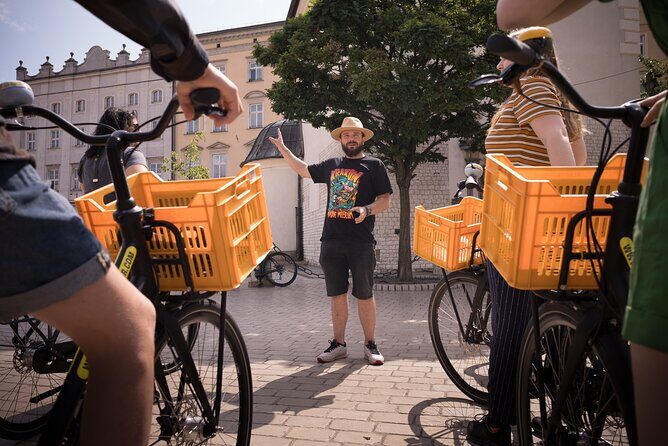 2 / 9
2 / 9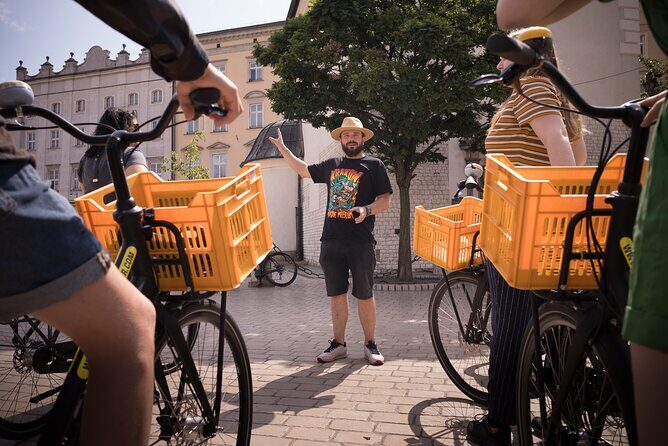 3 / 9
3 / 9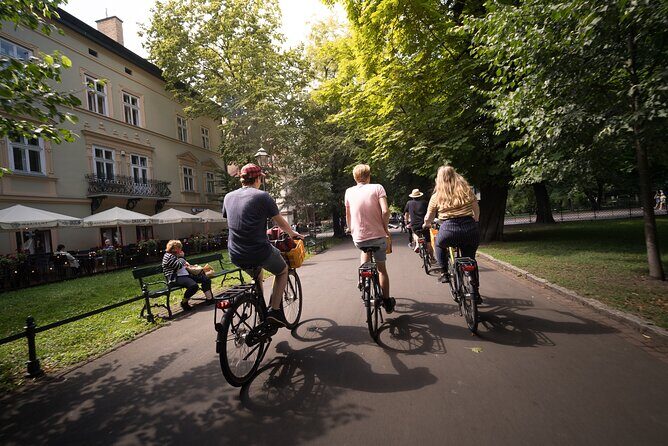 4 / 9
4 / 9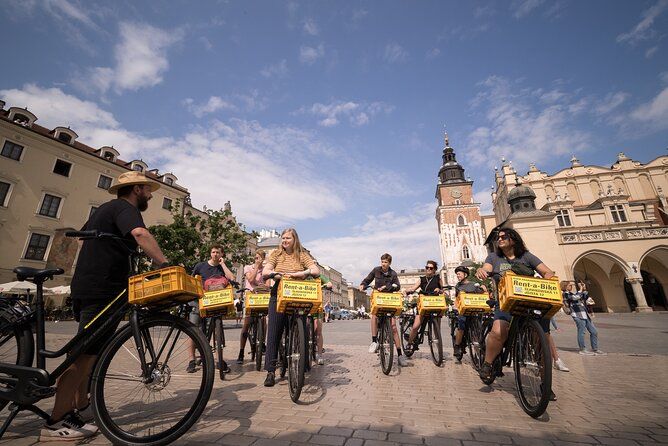 5 / 9
5 / 9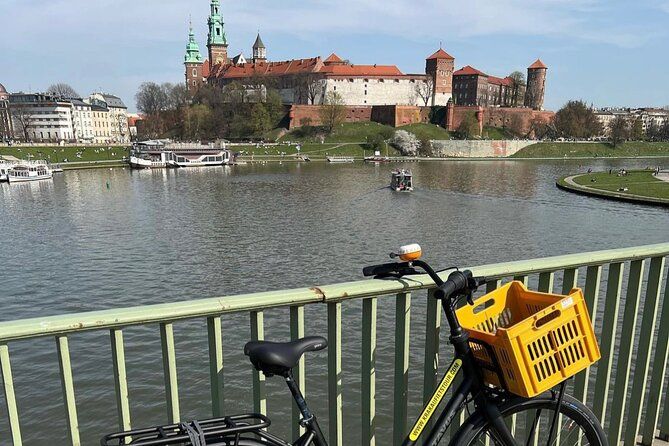 6 / 9
6 / 9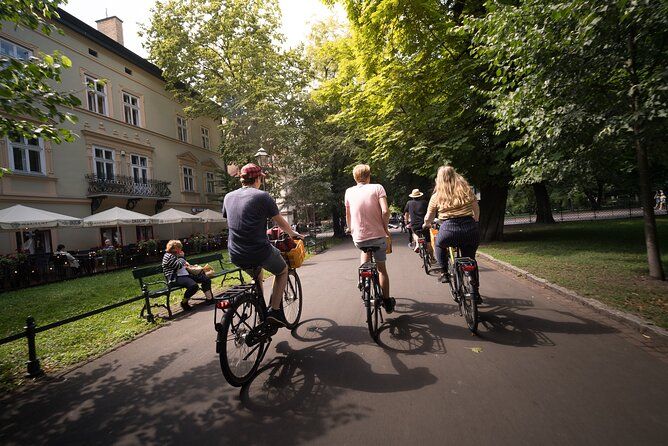 7 / 9
7 / 9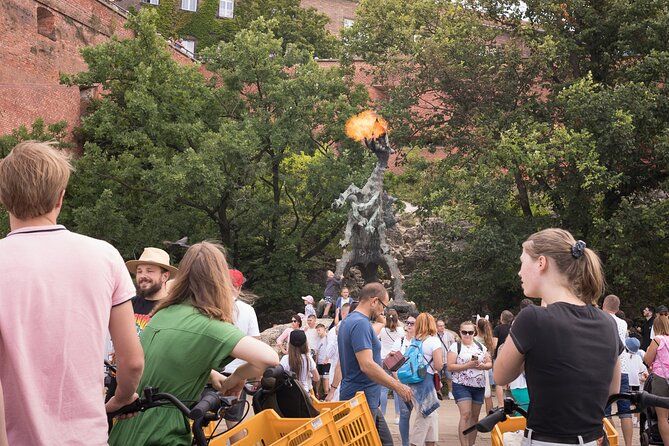 8 / 9
8 / 9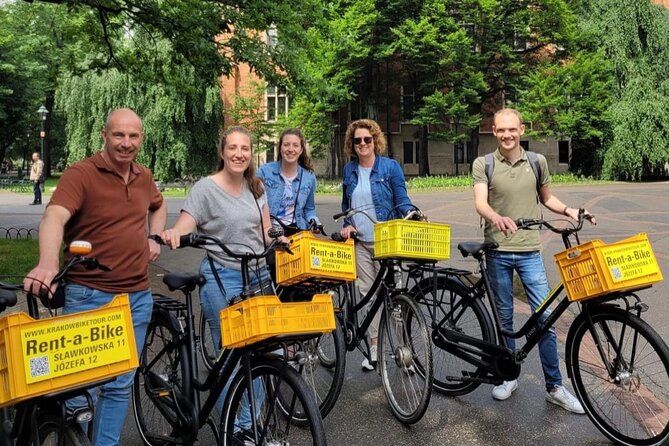 9 / 9
9 / 9- New bikes + easy city riding that many guests say feels safe, smooth, and mostly flat
- Guides who actually explain the what-and-why at each stop, with standout personalities like Thomas, Chris, and Alex
- Old Town core sights including the Cloth Hall area, Town Hall Tower area, and St. Mary’s Basilica zone
- Kazimierz and ghetto memorial stops that give context without turning the tour into a lecture
- Car-light cycling on Krakow bike lanes with panoramic viewpoints and a comfy pace
- Street-food moment at the WWII-era kosher meat market spot now known for zapiekanka
Why this bike tour works in Krakow
Krakow’s Old Town is packed. The streets are narrow, sights are close together, and it’s easy to waste time waiting in lines or walking back and forth. A bike tour solves the spacing problem by helping you cover ground with less fatigue, which means you can actually enjoy the places instead of just rushing through them.
This one keeps the group small (max 15), which matters. You’ll get time to ask questions, and you won’t feel like you’re trapped behind a marching line. Most importantly, you’re on a practical route: you’ll ride from medieval-market areas to university architecture, then up toward Wawel, and back through the Jewish Quarter and memorial sites.
You can also read our reviews of more cycling tours in Krakow
Meeting point and getting set up fast
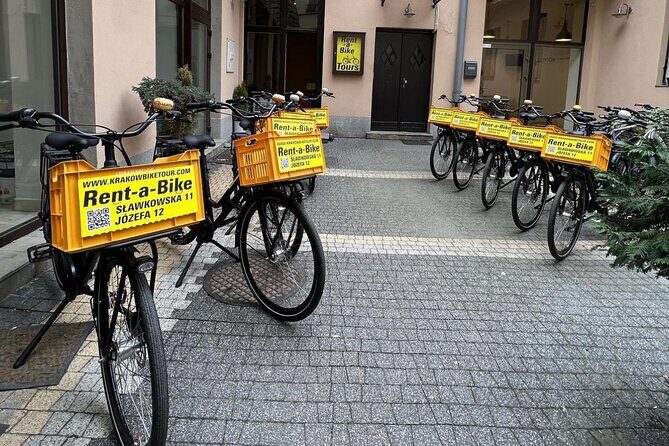
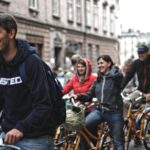
The tour starts at the rental shop listed on KrakowBikeTour.com: Sławkowska 11 in Krakow’s Old Town. The handoff is straightforward: you get your bike, a quick setup, and instructions if you need them. There’s also a toilet available at the start, which is a surprisingly big quality-of-life perk when you’re going to be out for a few hours.
If you’re arriving early, you’re not just waiting around. You can use the setup time to get comfortable with your bike before the first ride.
Ride style: how hard is it really?
This tour is designed for normal travelers, not athletes. Many guests specifically mention that the biking is easy and that the route is mostly flat. You’ll be spending your energy looking around and listening, not grinding hills.
That said, you should still expect city-bike motion: you’ll be pedaling and stopping frequently. The good news is that bike lanes and car-respectful streets help the ride feel calm. If you can ride a bike at a relaxed pace, you’re in good shape for this.
The guide factor: why the stories matter
The standout theme in guest feedback is not just that the guides are friendly—it’s that they’re informed and explain things clearly. People repeatedly mention guides like Thomas, Chris/Christopher, Alex, Krzysztof/Kris, and Mike as knowledgeable and accommodating.
A detail I found especially useful: one review notes Thomas spoke very good French as well as English, which can help if you’re part of a mixed-language group. You should still book expecting English, but it’s a nice reminder that these guides know how to connect.
This tour’s value is that you won’t just see names on buildings. Your guide helps you understand medieval trade patterns, legends linked to Krakow’s landmarks, and the meaning of ghetto-era memorial spaces. That context is what turns a sightseeing loop into a real Krakow introduction.
Stop-by-stop: what you’ll see and what to watch for
Stare Miasto (Old Town main market area)
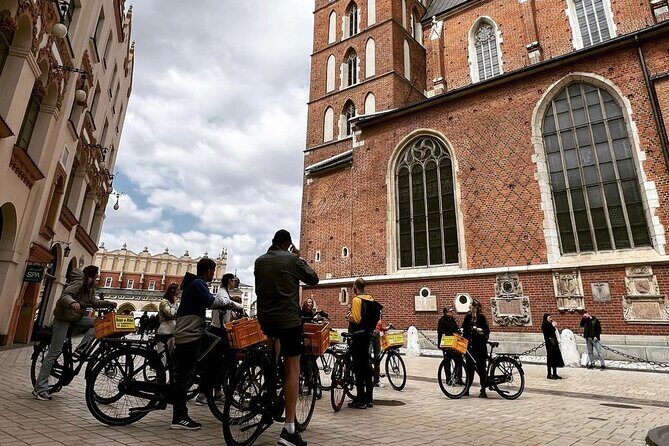
You’ll roll through Krakow’s medieval main market area, including the famous Cloth Hall zone and the Town Hall tower area, plus the general sights around St. Mary’s Basilica. This is the heart of the Old Town, so it’s a good first “yes, we really are here” moment.
What makes this stop feel worth it on a bike: you get the scale quickly. On foot, the market area can feel crowded and confusing. By bike, you get a smooth overview, then you’re ready for the later districts without losing time.
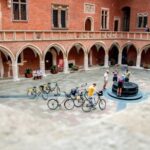
Collegium Maius, Jagiellonian University
Next up is the Collegium Maius building, which is tied to the idea of the oldest Polish university. One of the most memorable points guests mention is the connection to Copernicus and the Gothic-looking architecture.
Even if you’re not a museum person, you’ll likely appreciate this stop because it helps you see Krakow as an intellectual center, not just a postcard of medieval streets.
Wawel Dragon monument and the hill story
Then the tour switches tone in a fun way. You’ll hear the legend of the Wawel Dragon—terrorizing the city, until a clever craftsman outsmarted it. It’s the kind of story that makes travelers smile and helps the rest of Wawel feel more personal.
From a traveler perspective, this is a smart pacing move too. You’re getting history and culture, but you’re also getting a break from seriousness before you reach the castle area.
Wawel Royal Castle (sight from the hill)
You’ll stop by Wawel hill to hear stories about Krakow’s royal seat. Importantly, Wawel Royal Castle is not included in admission here. That means you can enjoy the overview with your guide without committing to a longer museum visit on the spot.
If Wawel is a top priority for you, you’ll probably want to add your own ticket visit after the tour. This stop works well as a teaser—enough to spark interest, without forcing a schedule.
Glide through Krakow’s bike lanes for panoramic views
You’ll get a ride segment described as among Krakow’s nicest bike lanes, with panoramic views and a good cycle path. This is the “feel the city” part.
Don’t rush it. Even if you’re listening closely, keep an eye out for sightlines you wouldn’t catch from street-level walking. It’s one of those travel moments that makes biking feel like more than just transport.
Kazimierz, the former Jewish district
Kazimierz is the center of the emotional and cultural heart of this tour. You’ll cycle through the former Jewish district, now known as a vibrant artistic area with galleries, cafes, and modern local energy.
This stop is valuable because it avoids a one-note approach. You’re not only hearing about tragedy—you’re seeing how the neighborhood lives today. That contrast helps you understand Krakow as a real place with layers, not just a memorial site.
The Market Square zapiekanka spot (former kosher meat market)
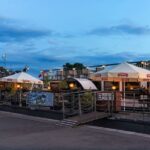
Next, you’ll reach the area tied to the WWII-era kosher meat market story. Today, it’s famous for zapiekanka, a small baguette-style street snack.
This is one of the best opportunities to taste Krakow’s modern street-food culture. Even if you don’t buy anything, it’s still a great moment to connect the past and present in a way that feels real.
Szeroka Street and film-set connections
You’ll ride along Szeroka Street, once described as the heart of the Jewish Quarter and tied to films such as Steven Spielberg’s Schindler’s List. This stop helps you understand how Krakow’s landscape became part of global storytelling.
The traveler takeaway: you’ll likely look at doorways, street widths, and corners differently after hearing how filmmakers used these spaces.
Plac Bohaterów Getta and the Pharmacy under the Eagle
Then you’ll stop at Plac Bohaterów Getta, a monument dedicated to Jewish ghetto victims. Nearby is the mention of the Pharmacy under the Eagle.
This is the moment where you should slow your pace mentally. Even with a relaxed bike ride, your guide’s explanation matters here, because memorial spaces carry meaning that you’ll miss if you’re only scanning for photos.
Fabryka Emalia Oskara Schindlera (Schindler’s factory area)
You’ll reach Fabryka Emalia Oskara Schindlera, tied to Oscar Schindler and the story of him saving more than 1,000 lives. Admission here is also not included, so you may choose to explore it further on your own time if you want deeper access.
Even without paying for entry, the stop can be powerful if your guide gives you clear context.
Planty Park: the green cycling break
After heavier content, Planty Park gives you a breather. This is a green ride around the Old Town area, described as a relaxed chill segment.
It’s not filler. It helps your brain reset so the later fortification stops and gate views land better. If you’ve been listening for the full first half, this park section is where you can breathe and just enjoy moving through the city.
Barbican fragments and the medieval fortifications
You’ll stop near the Barbican and fragments of Krakow’s medieval fortifications, though museum entry is not included. This is a good reality check moment: Krakow was defended, built, and rebuilt over time.
On a bike, you can cover the fortification vibe quickly and then decide if you want to follow up with additional time later.
St. Florian’s Gate, the medieval entrance
The tour ends with a stop at St. Florian’s Gate, once noted as a main entrance to Krakow. It’s a fitting closer because it gives you a sense of how people moved into and out of the city long ago.
From a practical standpoint, it’s also a strong final photo stop since gates and walls photograph well and help you remember the shape of the city.
What’s included (and why that matters for your budget)
This tour includes local taxes, a local guide, bike use, and a rain poncho if necessary. You also get a mobile ticket, and the tour is offered in English.
At $35.07 per person, it’s hard to beat for the amount of ground you cover. The best value is not just the bike—it’s the combination of guided context plus access to a ride route you likely wouldn’t piece together on your own in only a few hours.
Food and drinks are not included. Still, you do get at least one built-in food-related story moment around zapiekanka, and your guide can usually point you toward good places for when you’re hungry later.
What to expect with timing and group size
Most tours run about 3 to 4 hours, and you’ll stop regularly along the way. The format is built to keep the pace laid back. With a maximum of 15 travelers, the group doesn’t feel like a theme-park herd.
One more practical detail: confirmation happens at booking, and you’ll need to bring an adult if you’re traveling with children.
Weather, cancellations, and backup plans
This experience requires good weather. If it gets canceled due to poor weather, you’ll be offered a different date or a full refund.
The cancellation policy is generous: you can cancel for free up to 24 hours in advance for a full refund. Changes inside that window aren’t accepted, so if you’re juggling flights or hotel plans, set a reminder for the cutoff time.
Who should book this tour?
This is a great fit if:
- You’re in Krakow for a short stay and want a fast, meaningful orientation
- You like your sightseeing with explanations, not just stop-and-go photos
- You want both the Old Town highlights and the Kazimierz/ghetto-related memorial sites in one session
- You want an active plan that doesn’t beat you up
It might be less ideal if you want a totally museum-heavy itinerary with long indoor stops. Several key places have admissions not included, so you may need to add separate tickets later if you’re deeply into architecture or exhibits.
Full Bike Tour – the Old Town, Jewish Qtr & the Ghetto NEW BIKES
Should you book Full Bike Tour: Old Town, Jewish Quarter & the Ghetto with new bikes?
Yes, if you want an efficient, local-guided way to understand Krakow’s layout and meaning. The biggest draw is the guiding quality—people repeatedly mention knowledgeable, friendly guides who make the city feel understandable fast. Add in easy city riding, good views from bike lanes, and that zapiekanka snack stop, and you’ve got a strong value package.
Just plan for two things: bring your own appetite for meals later (food isn’t included), and decide in advance whether you’ll want to pay extra for Wawel Royal Castle or Schindler’s factory. If those are on your must-do list, you’ll get the most satisfaction by treating this tour as your “get the story, then choose what to enter” day.