
Hakone is the day trip from Tokyo that our kids still talk about. Pirate ships on a lake, cable cars over a volcanic valley, black eggs that supposedly add seven years to your life, and a sculpture park where climbing on the art is the whole point. All ninety minutes from central Tokyo.
We stayed overnight and that’s what we’d recommend. The difference between rushing through the highlights and actually enjoying them is a ryokan and a good night’s sleep.
Getting There
Two good options:
The Romancecar express runs from Shinjuku directly to Hakone-Yumoto. About 85 minutes, ¥2,330 per person. Reserved seats, big windows, a snack cart. The front observation car is worth booking early if your kids care about trains.
Alternative: shinkansen from Tokyo Station to Odawara — just 35 minutes — then a local Hakone Tozan bus up into the mountains (45-60 minutes depending on stops). One family blogger described their 4-year-old loving the shinkansen speed and the bento boxes they bought before boarding. This route works well if you have the JR Pass since the shinkansen portion is covered.
The Hakone Free Pass
Two-day pass: ¥6,100 adults, ¥1,100 children. Covers the Tozan Railway, cable car, ropeway, pirate ship on Lake Ashi, and most buses in the area. Worth it if you’re doing the loop.
Note: Gora Park entry is free with the pass — a detail many people miss.
Don’t Try to Do Everything in One Day
One family travel blog was refreshingly honest about this: they chose not to complete the full Hakone loop in a single day with young kids. Instead they picked the most doable parts — Tozan Railway, cable car, Owakudani, pirate ship — and skipped the rest. It made the day enjoyable instead of a forced march.
With kids, the full loop plus the Open-Air Museum plus a shrine visit is too much for one day. Pick your priorities.
The Hakone Loop
Hakone Tozan Railway — a mountain train that switchbacks up the hillside. The train literally reverses direction mid-journey. Kids are fascinated by this. It’s slow and winding and that’s the charm.
Hakone Ropeway — a glass-enclosed cable car between Sounzan and Togendai, crossing over Owakudani volcanic valley. One parent described their toddler saying it felt like “floating through the sky.” Panoramic views of the steaming landscape below, and on clear days, Mount Fuji.
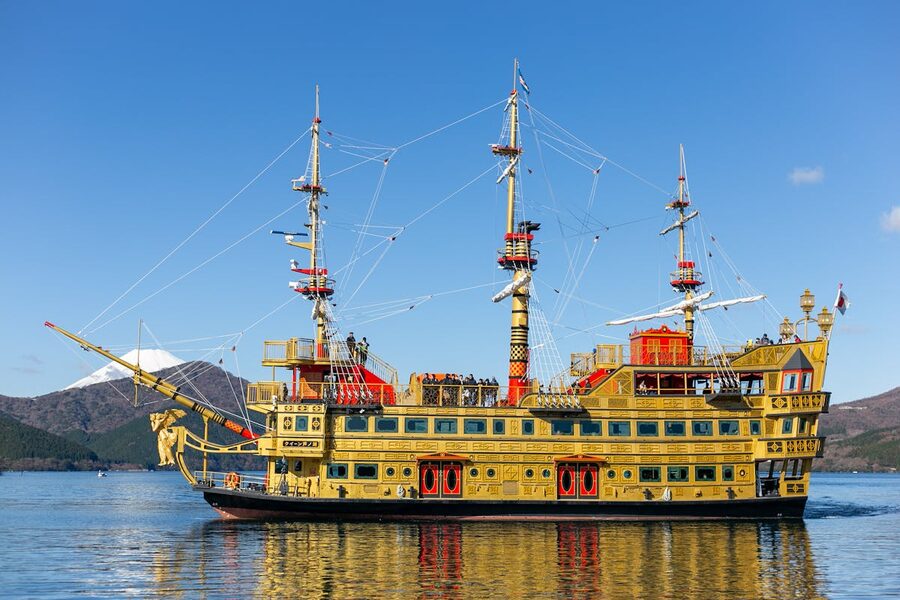
Lake Ashi Pirate Ship — actual replica pirate ships cruising the lake. The draw for kids is obvious. The draw for adults is the scenery — the lake ringed by mountains with, if you’re lucky, Fuji in the background. The Fuji view depends entirely on weather. Best odds: early morning, autumn, winter.
Owakudani
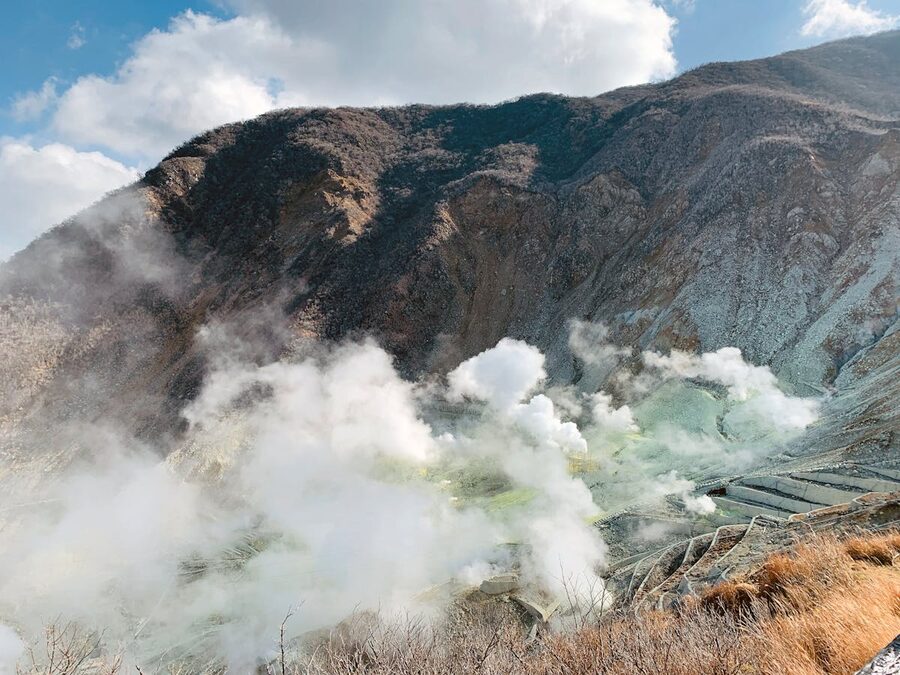
The volcanic valley at the ropeway’s high point. Steaming vents, barren earth stained yellow with sulphur, and a smell that hits you before you see it. The main activity is eating kuro-tamago — black eggs hard-boiled in the volcanic hot spring. The sulphuric water turns the shells jet black. They taste like regular eggs. Legend says each one adds seven years to your life. A bag of five costs ¥500.
Some kids love the otherworldly landscape. Others hate the smell. The area closes during volcanic activity or strong winds — check before making it the centrepiece of your day.
Hakone Open-Air Museum
¥1,600 adults, ¥800 children. A large sculpture garden where many pieces are designed to be climbed on, walked through, and played with. There’s a stained-glass tower kids can climb inside, a knitted crochet play structure, and a Picasso collection that surprised us.
One family blog noted Henry Moore and Barbara Hepworth sculptures alongside the interactive pieces — an unexpectedly world-class art collection in a mountain town. The grounds command views across the valley.
There’s a foot bath at the end where everyone soaks their feet. Allow two hours minimum, three if kids get into the climbing.
Six minutes’ walk from the museum is Gyoza Center — a small restaurant the Tokyo Chapter blogger recommends. Cash only, non-smoking, closed Thursdays. Good gyoza, simple.
Fifteen minutes further (or three minutes by taxi) is Gora Brewery — pizza, a gluten-free menu, and a footbath on site. Budget ¥3,000 per adult at lunch. Note: children can only dine here before 5pm. They also have a ¥500 table charge.
Hakone Shrine
A lakeside Shinto shrine with a famous red torii gate standing in the water. Free. The approach through tall cedar trees is atmospheric. Quick visit — twenty to thirty minutes — and it combines naturally with the pirate ship since both are on the lake.
Gora Park
Free with the Hakone Free Pass. Botanical garden, greenhouse, crafting workshops. Hakone Craft House inside the park offers hands-on activities — one family described their kids laser-etching designs onto leather bookmarks and keyrings. You pay for materials rather than tuition. Multiple activities available including glass blowing and pottery for older kids.
A good rest stop between the Tozan Railway and the ropeway section.
Dinner Reality
Dinner options in Hakone are extremely limited. This catches families off guard. Most ryokans include dinner in the room rate — that’s the traditional approach and the best one.
If you’re not eating at your accommodation, your options are essentially: restaurant at another hotel (requires reservation, expensive), Box Burger in Hakone (burger joint in a traditional Japanese house, open until 8pm), convenience store, or Burger King back at Odawara Station.
Plan dinner before you arrive.
Ryokan and Onsen
Hakone is the most accessible ryokan experience from Tokyo. Stay overnight, soak in the hot spring, eat kaiseki dinner served in your room. Our ryokan guide covers what to expect.
Ryokans with private onsen (in-room or bookable) remove the communal bathing stress for families. Budget ¥25,000-55,000 per person per night including dinner and breakfast.
Mount Fuji
The views from Hakone are weather-dependent and most visitors don’t see Fuji at all. One family blog titled their entire Hakone piece “In the elusive shadow of Mount Fuji” — that about sums it up. Autumn and winter mornings have the best chances. Don’t promise your kids.
Day Trip vs Overnight
Day trip: doable but rushed. Pick the loop OR the Open-Air Museum, not both.
Overnight: much better. Arrive afternoon, ryokan dinner, onsen. Next morning do the loop or museum unhurried.
Practical
- Pushchairs work on buses and trains but some mountain paths have steps. Carrier as backup.
- Weather can differ dramatically from Tokyo — cooler, foggier, wetter. Layers essential.
- One family compared Hakone town to Kendal near the Lake District — a tourist gateway town with hotels, restaurants, and shops.
- The area is spread out but the Free Pass makes moving between sections easy.