
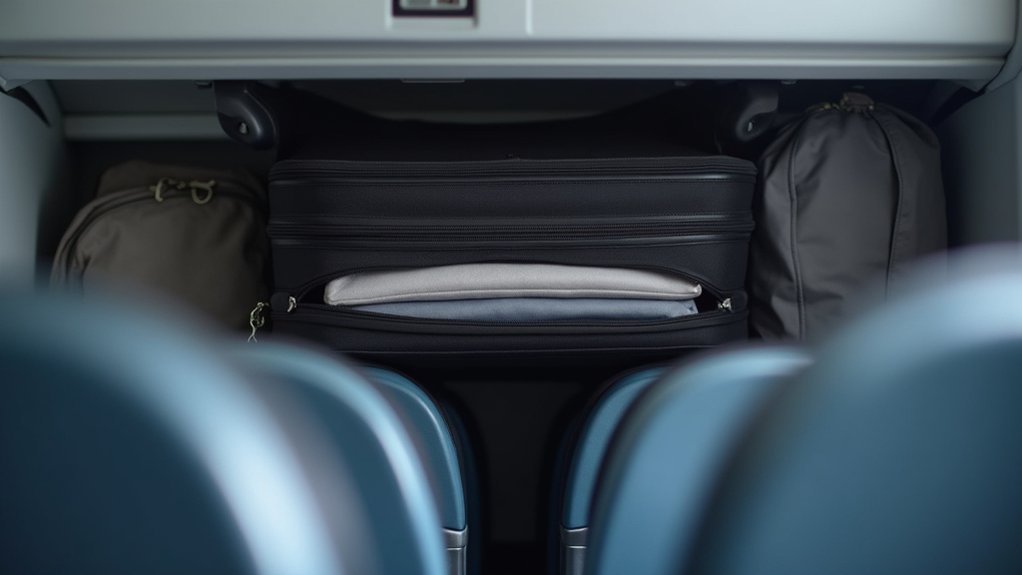
You’ll save hundreds on baggage fees by choosing bags under 22x14x9 inches, wearing your heaviest clothes during travel, and packing versatile items that work for multiple outfits. Follow the 3-1-1 liquid rule, use packing cubes for organization, and skip toiletries you can buy at your destination. Keep electronics and documents easily accessible for security screening, and distribute weight evenly to prevent strain on your family. These strategies unlock even more travel freedom and flexibility.
- Choose the Right Bag Type and Size for Your Airline
- Master the Art of Weight Management and Distribution
- Navigate Liquid Restrictions Like a Pro
- Maximize Space With Smart Packing Techniques
- Build a Capsule Wardrobe for Multiple Destinations
- Pack Electronics and Valuables Strategically
- Use Compression Tools to Double Your Capacity
- Wear Your Heaviest Items During Travel
- Skip Items You Can Buy at Your Destination
- Organize for Quick Security Screening
- Leverage the Hidden Benefits of Light Travel
- Last Words
Choose the Right Bag Type and Size for Your Airline
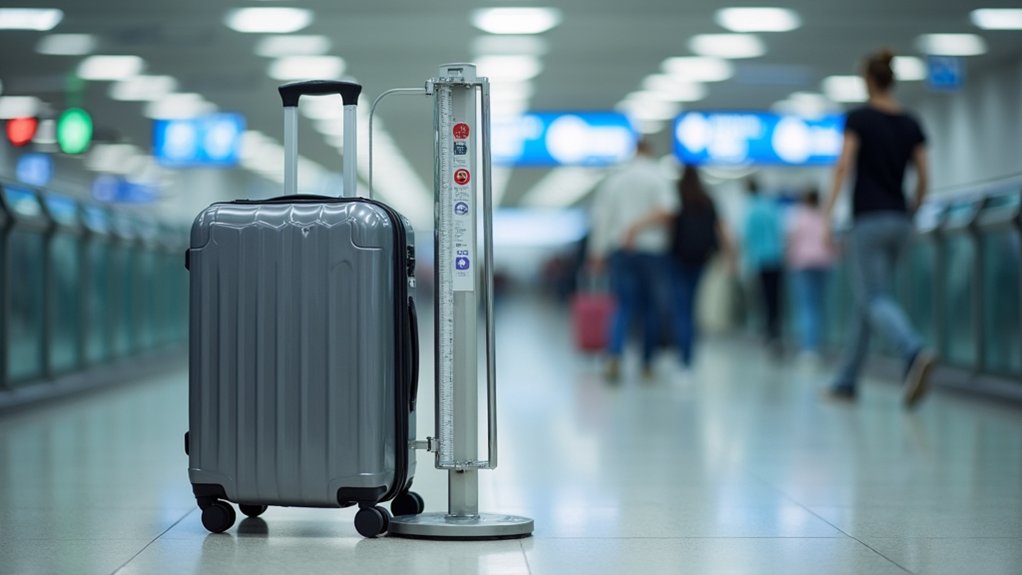
When you’re planning a family trip, selecting the right carry-on bag can save you hundreds of dollars in checked baggage fees while keeping everyone’s essentials within reach. Stick to the standard 22 x 14 x 9 inches for domestic flights, which works across major airlines like Delta, United, and American.
If you’re flying budget carriers like Southwest or Frontier, you’ll get extra room with their 24 x 16 x 10-inch allowances.
Choose hard-sided luggage to maintain consistent dimensions and protect your family’s belongings from crushing. Soft-sided bags offer flexibility but require re-measuring after packing.
Remember that wheels and handles count toward total size, so measure your complete bag. Always verify dimensions using airport bag sizers before boarding to avoid costly gate-check fees. For international flights, be aware that weight restrictions typically range from 15 to 26 pounds, even though actual weighing at the gate is uncommon.
Master the Art of Weight Management and Distribution
Since overweight luggage fees can cost your family $100-200 per bag, mastering weight distribution becomes as essential as choosing the right luggage size. You’ll need to weigh each bag accurately using a handheld scale or bathroom scale method, checking every piece individually to avoid per-bag penalties.
Distribute weight evenly across both sides of your luggage to prevent muscle fatigue during transport. Pack your heaviest items like electronics at the bottom center, medium-weight items in the middle, and light essentials on top. This positioning keeps your bag stable and comfortable to carry. Take regular breaks every 45-60 minutes when navigating through airports to prevent tension buildup in your shoulders and back.
Remove unnecessary items after weighing to stay under airline limits. Wear bulky clothing like jackets instead of packing them, and use compression bags to maximize space without adding weight.
Navigate Liquid Restrictions Like a Pro
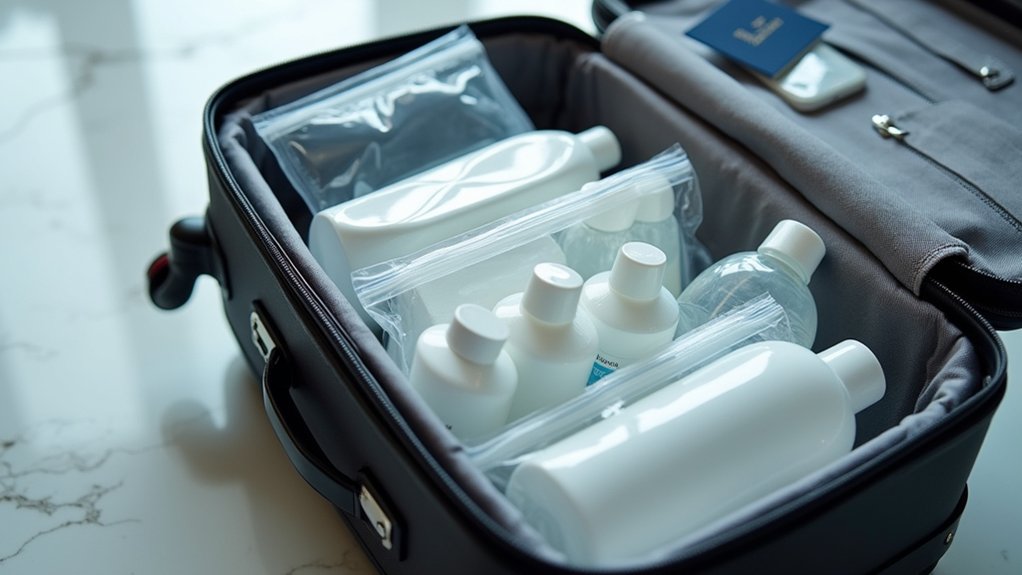
While liquid restrictions might seem complicated at first glance, understanding the 3-1-1 rule will save your family both time and money at security checkpoints. You’re limited to 3.4-ounce containers that fit into one quart-sized clear bag per person. This applies to liquids, gels, aerosols, and pastes.
Pack strategically by bringing empty reusable water bottles to refill after security, saving money on expensive airport drinks. Take advantage of exemptions for baby formula, breast milk, and documented medications.
If you’re traveling through airports with advanced CT scanners, eleven specific items are now exempt from standard restrictions. These CT scanners allow laptops and liquids to stay in bags during security checks, streamlining the process.
For larger quantities, pack liquids in checked baggage where there’s no size limit. Always keep your liquids bag easily accessible since you’ll remove it separately during screening.
Maximize Space With Smart Packing Techniques
As you prepare to pack your family’s hand luggage, mastering space-saving techniques can mean the difference between paying extra baggage fees and staying within your travel budget. Rolling garments tightly offers maximum space efficiency—lay items flat, fold in sleeves, then roll from bottom to top. This military-inspired method works perfectly for T-shirts, leggings, and casual wear.
For business travelers needing wrinkle-free clothes, try bundle wrapping. Stack shirts vertically, trousers horizontally, then wrap around a core item for excellent crease prevention.
Compression cubes eliminate air from bulky items like coats and sweaters. Organize by category—tops, bottoms, undergarments—for easy access throughout your trip.
Combine rolling with compression cubes to maximize your carry-on space while keeping everything organized and accessible. Remember to place heavier items at the bottom of your suitcase to maintain stability and prevent lighter garments from getting crushed during transport.
Build a Capsule Wardrobe for Multiple Destinations
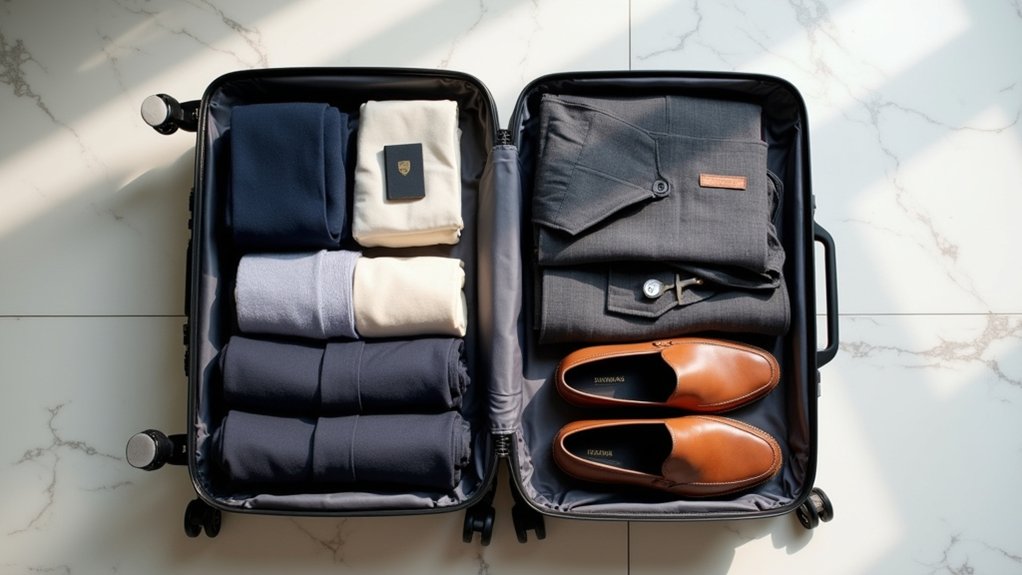
When you’re planning trips to multiple destinations with varying climates and activities, building a capsule wardrobe becomes your secret weapon for staying within luggage limits while looking polished everywhere you go.
The 54321 method works perfectly for families: pack 5 versatile tops, 4 bottoms, 3 pairs of shoes, 2 dresses, and 1 of each accessory. Choose pieces that work across scenarios—from beach days to city sightseeing.
You’ll save money by selecting mix-and-match items that create multiple outfits from fewer pieces. Prioritize lighter fabrics that adapt to temperature changes and select multi-use accessories like raffia bags for summer markets. Always check the weather forecast a few days before departure to avoid packing unnecessary heavy items.
Try on combinations beforehand and snap mirror selfies for reference, ensuring every piece earns its space.
Pack Electronics and Valuables Strategically
Since electronics and valuables represent some of your family’s most expensive travel investments, you’ll want to pack them with the same strategic care you’d give precious heirlooms. Always keep electronics in your carry-on luggage where they’re visible and protected from checked baggage risks like theft or lithium battery hazards. Airlines won’t reimburse damaged electronics from checked bags.
Invest in padded, waterproof cases that shield devices from bumps and spills. Choose multi-purpose electronics over single-function gadgets—your smartphone’s camera might replace that separate digital camera. Pack one universal adapter and multi-port charger instead of multiple charging devices. Update all devices with the latest security patches before departure to protect against cyber threats while traveling.
Secure valuables with RFID-blocking bags, personal locks, and Bluetooth trackers. Organize charging cables in separate pouches to prevent tangling and loss during your family adventures.
Use Compression Tools to Double Your Capacity
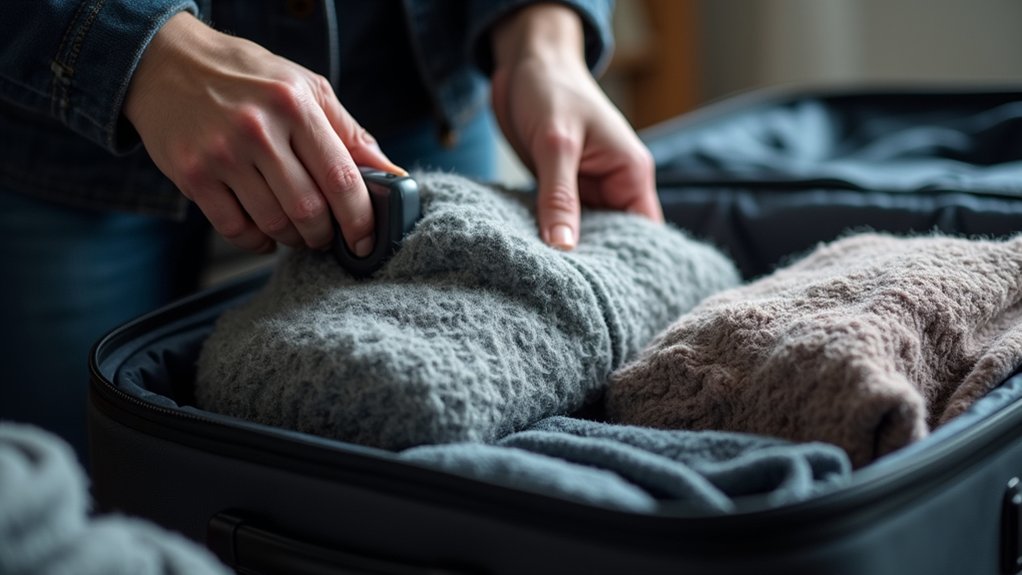
While protecting your family’s electronics keeps your expensive gadgets safe, smart packing tools can help you fit everything you need without checking bags or paying excess baggage fees. Compression packing cubes literally double your carry-on capacity by squeezing air out of clothes through their dual-zipper system.
You’ll pack normally in the expanded cube, then compress it down by up to 60% using the secondary zipper—like vacuum sealing without the machine. These lightweight organizers prevent wrinkles while creating room for everyone’s essentials: kids’ pajamas, extra sweaters, and toiletries.
Stack different cube sizes like Tetris pieces to maximize space efficiently. Some modern luggage features expandable designs that let you pull each side to create extra space when needed, then compress back down for secure overhead compartment storage. At your destination, pull them out like drawers for instant organization. Budget-friendly options start around $20, making this investment worthwhile for stress-free family travel.
Wear Your Heaviest Items During Travel
Instead of stuffing your heaviest clothes into already-packed bags, put them on your body before heading to the airport. You’ll avoid the $45 average excess baggage fee that 21% of U.S. travelers face when exceeding weight limits.
Wear your heaviest jeans, boots, and sweaters on the plane rather than packing them. This strategy keeps your carry-on compliant while maximizing pocket storage for electronics, chargers, and valuables.
Your coat’s pockets become extra luggage space, and you’ll stay comfortable during chilly flights. Since 42% of over-limit travelers discard items worth $22 on average, wearing heavy clothes prevents costly repurchasing later. Many travelers choose to leave behind light clothing when forced to reduce weight, making this wearing strategy even more practical.
This proven trick redistributes weight from bag to body, allowing hand-luggage-only trips without compression tools or upgrades.
Skip Items You Can Buy at Your Destination
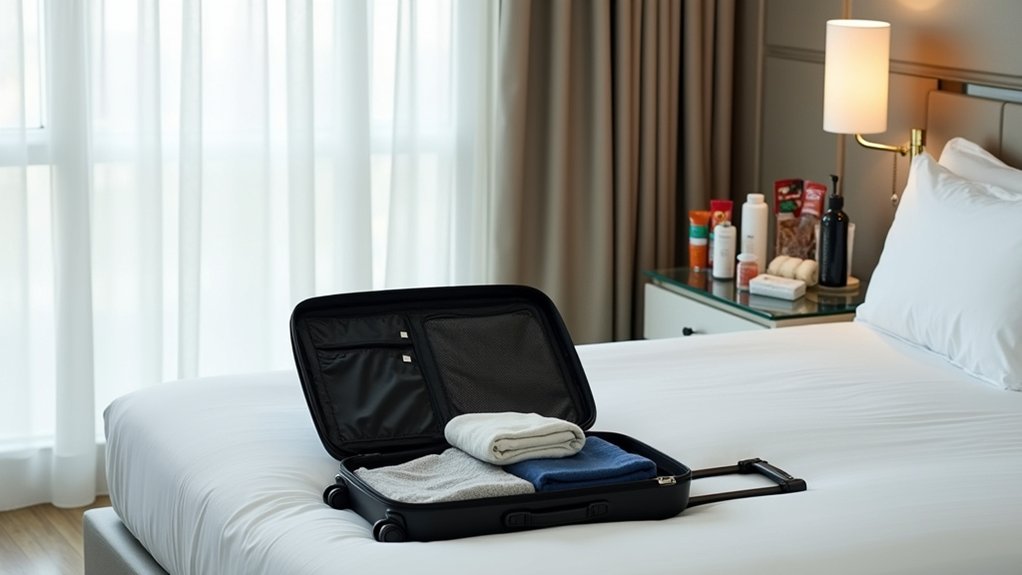
Beyond redistributing weight through strategic dressing, you can dramatically lighten your load by leaving behind items readily available at your destination. Skip packing toiletries like toothbrushes, toothpaste, and sunscreen—22% of travelers forget these anyway, and they’re easily found at local pharmacies.
Don’t stress about forgotten phone chargers either, as 19.1% of travelers experience this, yet electronics stores are everywhere.
Consider buying swimwear, hats, and clothing at your destination instead of packing them. You’ll save space while creating wearable souvenirs your family will actually use. Local purchases often cost less than airline baggage fees, and travel-sized toiletries bought on-site reduce weight for your return journey. Shopping for these items also taps into the vacation mindset that makes travelers more open to purchases they might not make at home.
This strategy transforms necessary shopping into part of your travel experience.
Organize for Quick Security Screening
Since security lines can turn into family stress zones when you’re unprepared, organizing your carry-on strategically before you leave home saves both time and sanity at the airport. Pack electronics, medications, and liquids at your bag’s top for quick access during screening. Use clear organizers or packing cubes to compartmentalize items—screeners can easily see what’s inside without digging through your belongings.
Keep your family’s boarding passes and passports in an easily accessible outer pocket. Place your 3-1-1 liquids bag where you can grab it quickly, since some airports still require removal. However, if you’re traveling through airports with newer CT technology, you can keep electronics and liquids in your bags for faster processing.
Label everyone’s luggage clearly and avoid overpacking, which creates cluttered bags that slow down the entire process for your family and other travelers.
Leverage the Hidden Benefits of Light Travel
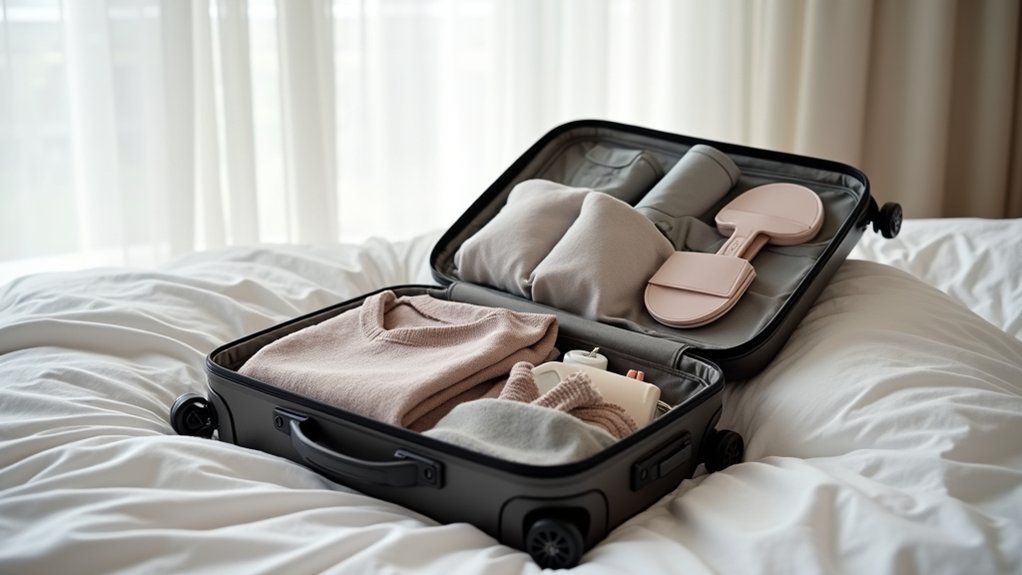
While most families focus on what they pack, the real game-changer lies in what you don’t bring. Traveling light transforms your entire trip experience and budget.
You’ll slash airline fees, move faster through airports, and gain flexibility to hop on buses or trains instead of expensive taxis. Your kids won’t struggle with heavy bags, and you’ll avoid the physical strain that ruins vacation energy.
Light packing forces smarter choices—multipurpose items and essentials only. This mindset saves money you’d waste on unnecessary purchases and redirects your budget toward memorable family experiences. Carrying less weight also reduces fuel consumption across all forms of transportation, lowering your family’s environmental impact.
You’ll sleep better, stress less, and return home energized rather than exhausted. Most importantly, your family learns to value experiences over stuff, creating lasting memories instead of accumulating travel clutter.
Last Words
You’ve got the tools to transform your family’s travel experience with just hand luggage. These strategies won’t just save you money on baggage fees—they’ll give you freedom to move quickly through airports and avoid the stress of lost luggage with kids in tow. Start with one or two tips for your next trip, then build your confidence. Your family will discover that less luggage means more adventure and fewer headaches.