La Pedrera with Kids: A Family Guide to Casa Mila

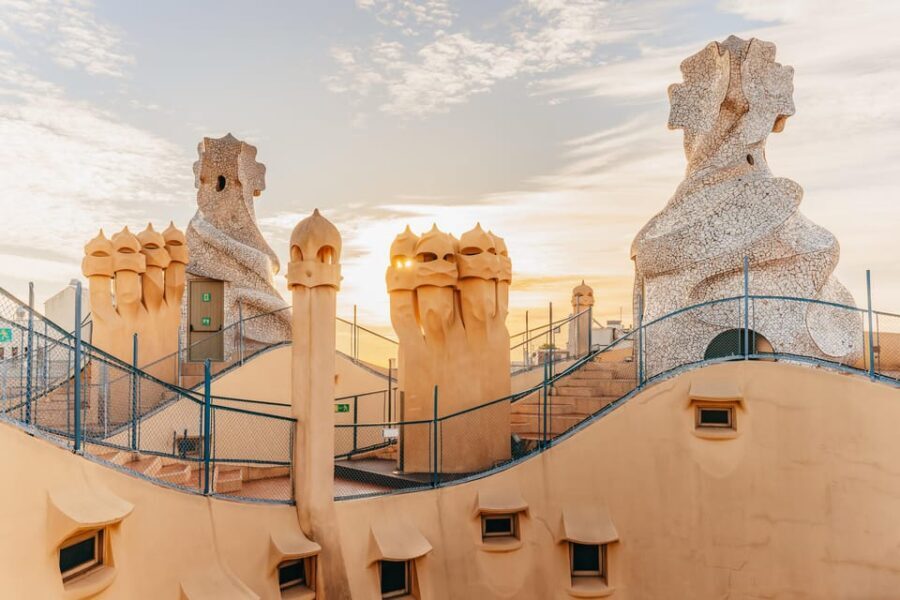
The warrior chimneys got them. I’d been worried my kids would be bored by another Gaudi house — we’d done Casa Batllo the day before and I wasn’t sure they had another building in them. But the moment we stepped onto La Pedrera’s rooftop and they saw those helmeted stone soldiers standing guard against the Barcelona sky, they forgot they were tired.
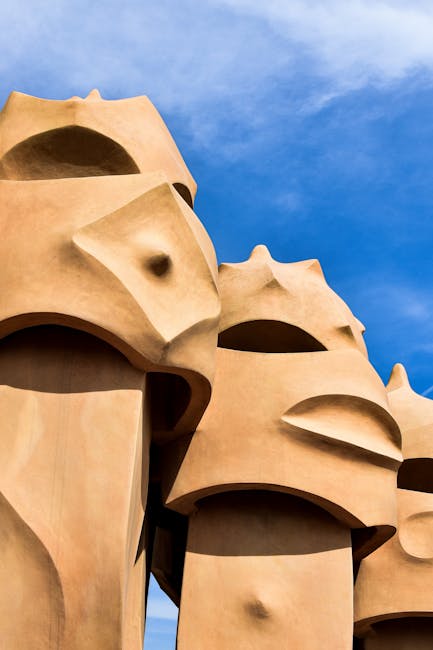
Warrior-shaped chimneys on the rooftop of La Pedrera Barcelona
These chimneys are the stars of La Pedrera. Every single one is different — some look like knights, some like aliens, some like abstract sculptures from a science fiction film. George Lucas apparently used them as inspiration for the Stormtroopers in Star Wars. Tell your kids that fact and they’ll spend twenty minutes up here comparing helmets.

La Pedrera (Casa Mila) is the other great Gaudi house on Passeig de Gracia. It gets less attention than Casa Batllo, which works in its favour — shorter queues, smaller crowds, and a rooftop that’s arguably more spectacular. It also has a dedicated children’s audioguide, which most families don’t know about.

Is it worth visiting with kids? Yes — but it’s different from Casa Batllo. Less interactive, more architectural. Here’s everything you need to know.
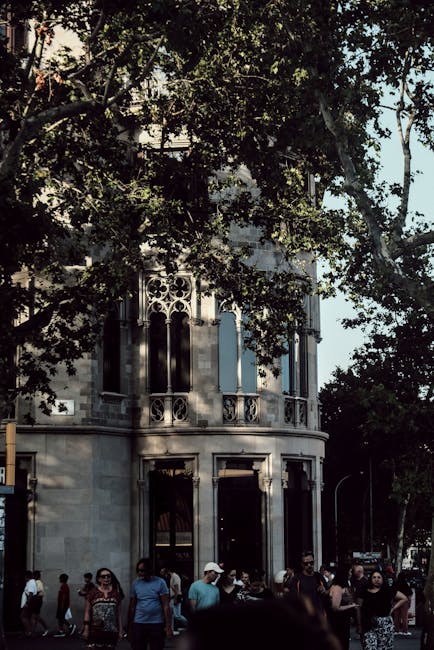
Tree-lined Passeig de Gracia boulevard in Barcelona
La Pedrera sits at the top end of Passeig de Gracia, Barcelona’s grandest boulevard. The walk up from Placa de Catalunya takes about 15 minutes and passes some of the city’s most beautiful building facades. If you’ve already visited Casa Batllo (400 metres south), the walk between the two is one of the best family strolls in Barcelona — wide pavements, shaded trees, and plenty of benches.
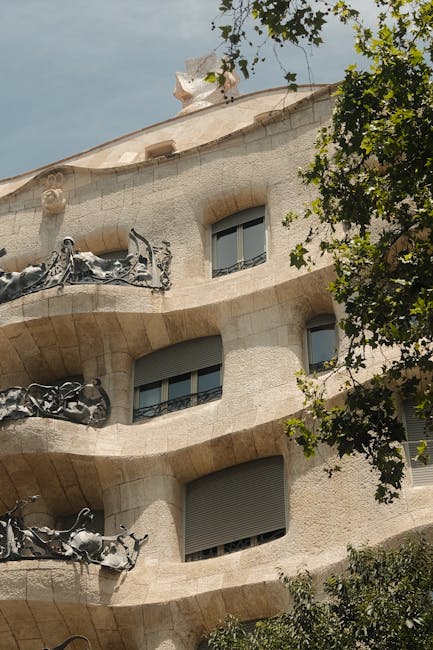
Wavy stone facade of La Pedrera Casa Mila in Barcelona
The facade looks like it’s melting. There isn’t a straight line anywhere. Gaudi designed the stone to undulate like ocean waves, and the iron balconies look like tangled seaweed. My son said the building looked “like a sandcastle that got rained on” which is surprisingly accurate. The locals originally hated it — they called it “La Pedrera” (the quarry) as an insult. The name stuck.

Short on Time? Here Are Our Top Picks

La Pedrera Ticket & Audio Guide — $33
The standard visit with children’s audioguide available. Self-paced, leave when you like.
Book Now
La Pedrera Night Experience — $47
Rooftop light show after dark. Magical for older kids, but late start time.
Book Now
Early Morning Guided Tour — $47
Empty building, expert guide. Best for families who want a calm experience.
Book Now

What Makes La Pedrera Different from Casa Batllo
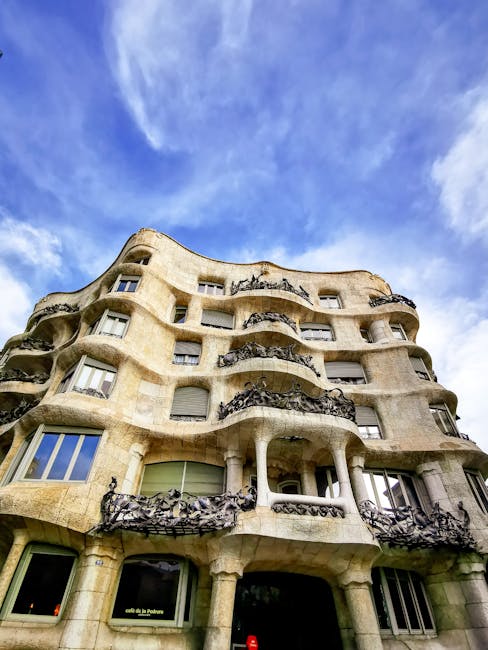
Undulating stone facade and iron balconies of La Pedrera
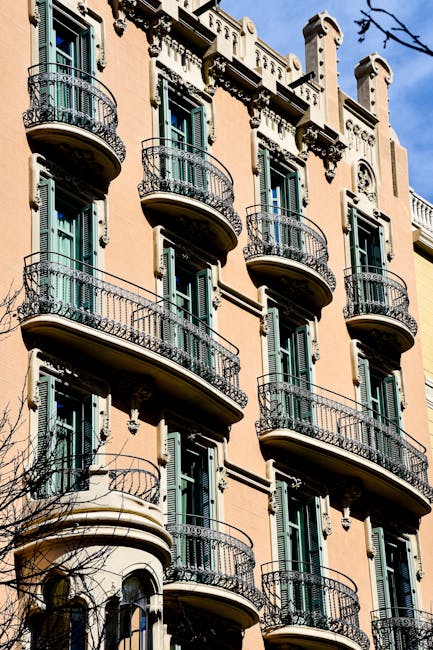
The wrought-iron balconies look like they were sculpted by the sea. Each one is different, like frozen waves caught mid-crash. Children find them fascinating to look at from across the street — you can see the whole facade from the corner of Carrer de Provenca. Better photo angle than trying to shoot it from directly below, too.

If you’ve just done Casa Batllo with children, here’s how La Pedrera compares. Casa Batllo tells a story — the dragon, Saint George, the bones. La Pedrera is more abstract. It’s about nature, movement, and light.

Casa Batllo has augmented reality and under-12s go free. La Pedrera has no AR but does have a dedicated children’s audioguide with puzzles and games designed for ages 6-12. Neither building allows buggies inside.

The rooftop is where La Pedrera pulls ahead. Casa Batllo’s rooftop is small and often crowded. La Pedrera’s is expansive, with 360-degree views of Barcelona and those unforgettable warrior chimneys. Children have room to explore without bumping into other visitors.
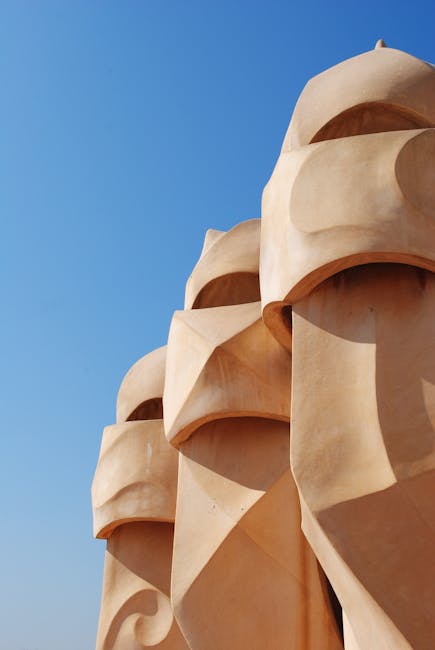
Close-up of Gaudi warrior chimney sculpture on Barcelona rooftop
Up close, the chimneys look even more like helmeted warriors. Kids immediately start making up stories about them. Mine decided they were an army of stone soldiers protecting Barcelona from dragons. Given that Gaudi built the dragon at Casa Batllo just up the road, this actually makes narrative sense. The rooftop is the single best outdoor space in any Gaudi building.

What It’s Like Inside with Children

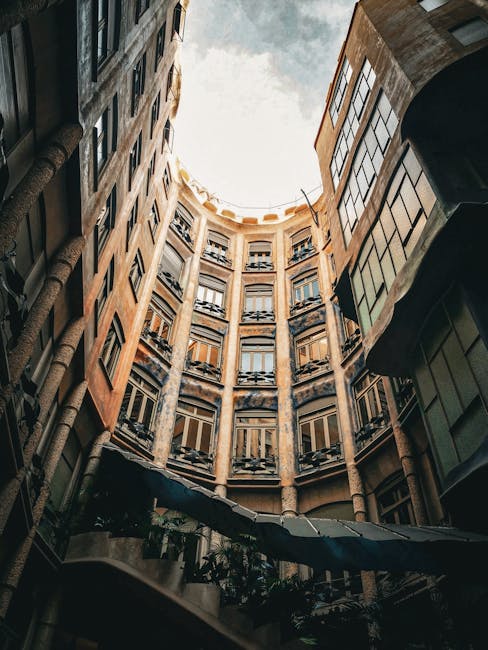
Interior courtyard of La Pedrera with curved walls and ornate ceilings
The interior courtyards are open to the sky and filled with natural light. Gaudi designed them so every apartment got sunlight and fresh air — revolutionary for 1910. Children look up and see these ornate painted ceilings above the courtyard. It’s a surprisingly peaceful space in the middle of a busy building. Good spot for a quick breather between floors.

The visit starts on the ground floor with the two inner courtyards. Gaudi designed La Pedrera as an apartment building — real people lived here until quite recently — and the courtyards were the lungs of the building. Natural light pours down through them. Children like looking up and seeing the sky framed by wavy walls.
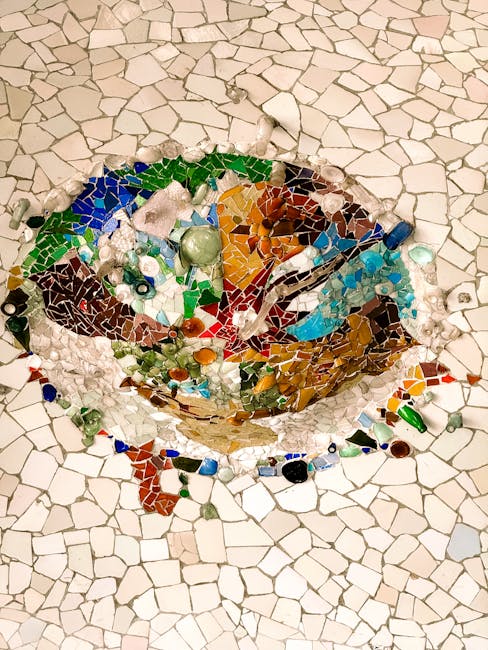
Close-up of colourful Gaudi mosaic tiles in Barcelona
Gaudi used colourful mosaic tiles (trencadis) throughout his buildings. At La Pedrera you’ll find them mainly on the rooftop chimneys, but the technique appears in details throughout the building. If your kids have already seen trencadis at Park Guell or Casa Batllo, challenge them to spot the differences in how Gaudi used the technique at each building.

A lift takes you to the attic, which is now a museum about Gaudi’s life and methods. This is where the children’s audioguide earns its keep. It leads kids through the exhibition with questions, puzzles, and challenges — “Can you find the model of the hanging chains?” “What animal does this arch look like?” It turns a potentially boring museum into an interactive hunt.
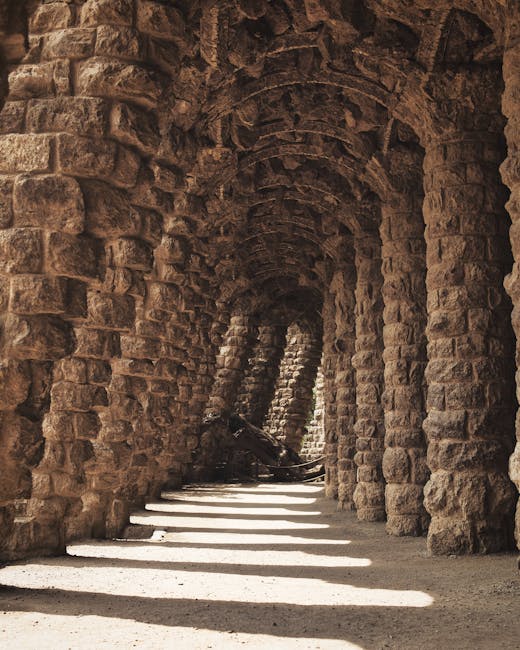
White parabolic arches inside a Gaudi building
The attic is all white parabolic arches — like being inside a giant ribcage. The children’s audioguide asks kids to guess what animal it looks like. Whale, snake, and dinosaur are the most common answers. All are correct. Gaudi studied animal skeletons to design these shapes, and the resemblance is unmistakable once you see it.

From the attic you step onto the rooftop. This is the moment. The warrior chimneys, the ventilation towers, the views. Children can spend 20-30 minutes up here easily, which is longer than they’ll spend in any of the interior rooms. Don’t rush this part.
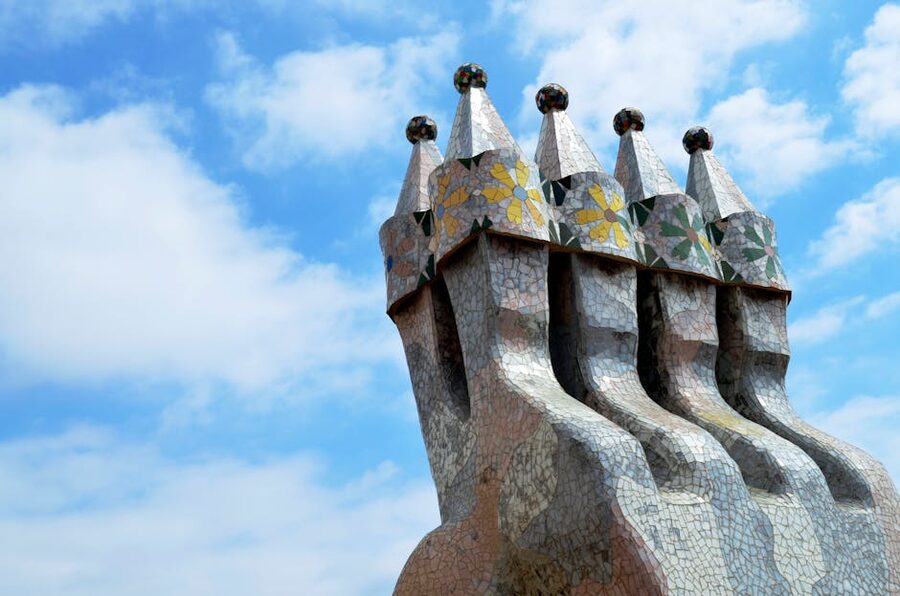
Colourful mosaic chimneys on a Gaudi rooftop
Some of the chimneys are covered in broken tile mosaics and others are smooth cement. Each chimney ventilates a different part of the building below. They’re functional engineering disguised as sculpture. My kids didn’t care about the engineering — they cared that some chimneys had “faces” and some didn’t. They named the ones with faces and ignored the others.

On the way back down, you walk through a recreated apartment showing how a bourgeois Barcelona family lived in the early 1900s. It’s nicely done but not the highlight for children. My lot glanced at the furniture and asked if we could go back to the roof.
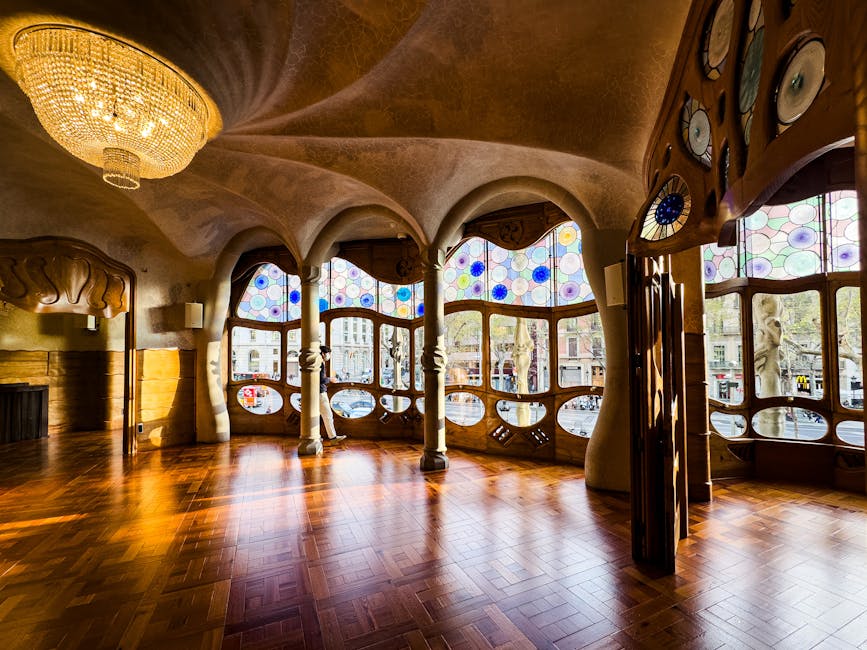
Exhibition about Gaudi inside La Pedrera museum space
The exhibition space covers Gaudi’s methods and inspirations. There are physical models kids can study — hanging chain models, bone structures, and wooden forms that show how he designed curves. My daughter found the hanging chain model genuinely mind-blowing when she realised you flip it upside down and it becomes an arch. That’s proper “wow” moment education.

The Children’s Audioguide

Ornate Art Nouveau architectural detail on a Spanish building
La Pedrera was one of the first Gaudi buildings to create a children’s audioguide, and it shows. It’s not a dumbed-down version of the adult one — it’s a completely separate experience with its own narrative, challenges, and pace. Available for ages 6-12. Ask for it at the audioguide desk when you pick up your device. No extra charge.

La Pedrera offers a dedicated children’s audioguide for ages 6-12. This is not just the adult version spoken more slowly. It’s a purpose-built experience with games, puzzles, and a narrative that leads kids through the building with specific things to spot.
Children playing in a sunny plaza in Barcelona
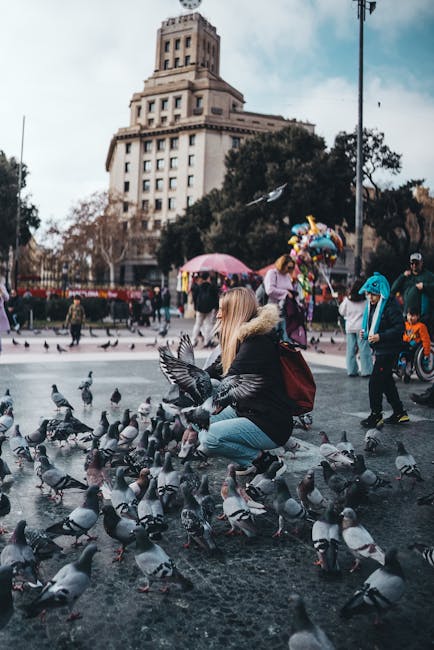
Build in a playground break. There’s a small plaza on Carrer de Rosello, two minutes from La Pedrera’s exit, where kids can decompress after 60-90 minutes of “look but don’t touch.” The audioguide keeps them engaged inside, but they’ll still want to burn off energy afterwards. This is a non-negotiable part of any Gaudi house visit with children.

You pick it up at the audioguide desk on the ground floor. It’s free with your ticket. Ask for it specifically — they don’t always offer it automatically. It works on the same handset as the adult version, so only one child can use it at a time (bring headphone splitters if you have two kids who’ll fight over it).

For children under 6, skip the audioguide and just let them look. The rooftop and the arched attic are the two spaces that work visually for any age.

The Best Tickets for Families

Barcelona city skyline seen from a rooftop terrace
The rooftop views stretch from the mountains to the sea. On a clear day you can see Sagrada Familia, Montjuic, and the Mediterranean. My kids tried to spot every landmark they’d visited during the holiday. They got about half of them. The viewpoint is the best justification for the ticket price — where else in Barcelona can you get views like this with warrior chimneys in the foreground?

1. La Pedrera Ticket & Audio Guide — $33

Undulating stone facade and iron balconies of La Pedrera
The standard ticket is the one most families should book. Self-paced, children’s audioguide included for free, and you can spend as long as you like on the rooftop. At $33 per adult, it’s also cheaper than Casa Batllo — though La Pedrera doesn’t offer free entry for under-12s. Children aged 7-12 get a reduced rate; under-7s are free.

The most popular option with over 15,000 reviews and a 4.7 rating. Skip-the-line entry, adult and children’s audioguides included, full building access including the rooftop. Self-paced so you can leave when the kids are done. Our full review explains the different ticket tiers and what each one includes. The best all-round option for families.

2. La Pedrera Night Experience — $47

La Pedrera night experience
The night experience includes a rooftop light and sound show projected onto the warrior chimneys. It’s genuinely magical but starts late — typically 9pm or after. For families with children over 8 who can handle a late night, it’s unforgettable. For anyone with under-7s, it’s probably past their limit. We did it with our 10-year-old and she still talks about it months later.

A special evening visit with a rooftop projection show. Over 4,600 reviews, rated 4.4. The chimneys light up with projections telling Gaudi’s story. It’s spectacular but the late start time (9pm+) makes it challenging for younger families. Our review covers the full evening experience. Best for families with children aged 8+ who are night owls.

3. Early Morning Guided Tour — $47
La Pedrera early morning guided tour
Empty building, expert guide, no crowds. If your family found Casa Batllo overwhelming with the crowds, this is the antidote. You arrive before everyone else, the guide explains everything at a pace that works for families, and you have the rooftop to yourselves for the photos. The premium is $14 more per adult but the experience is completely different.

Early access before the public with a live guide. Rated 4.7 from visitors who love the empty, calm experience. At $47 per adult it’s a premium, but you get an expert guide, no crowds, and a pace that works for families. See our review for what makes the early morning special. Best for families who prefer quiet, uncrowded cultural experiences.

Practical Tips for Families
Tree-lined Passeig de Gracia boulevard in Barcelona
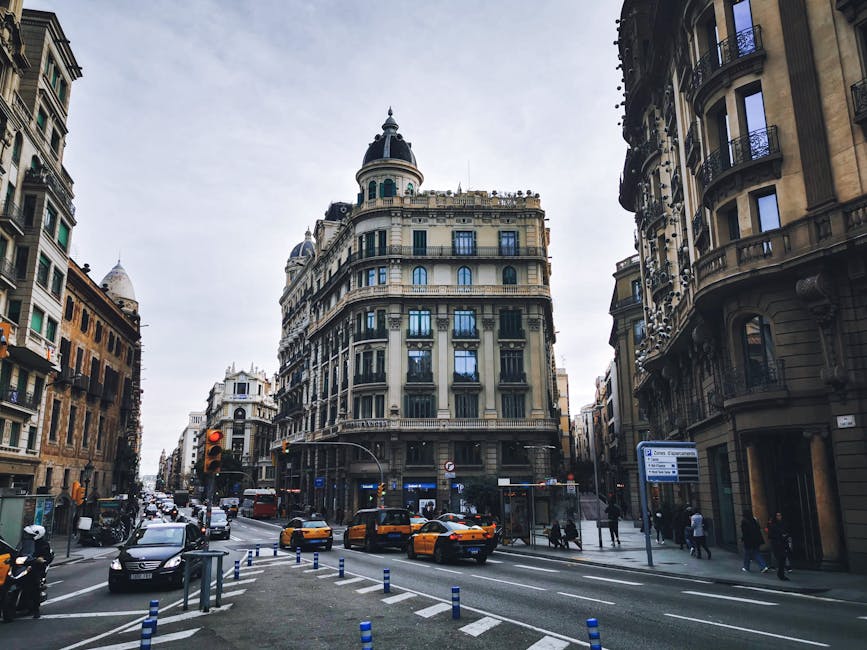
Passeig de Gracia is one of Barcelona’s most beautiful streets. Wide pavements, shaded by trees, easy with a buggy. La Pedrera sits at the northern end, Casa Batllo at the southern end, about 400 metres apart. If you’re doing both in one day, the walk between them is genuinely pleasant — stop at one of the benches along the way and let the kids people-watch.
Aerial view of Barcelona Eixample grid intersection
This is what the Eixample grid looks like from above — every block is identical with internal courtyards. La Pedrera was the last building Gaudi designed for a private client before dedicating the rest of his life to Sagrada Familia. It’s literally at the corner of one of these grid blocks. The neighbourhood is flat, wide, and pushchair-friendly — one of the easiest parts of Barcelona to navigate with kids.

No buggies inside. Same as Casa Batllo. Leave buggies in the entrance hall. A carrier is essential if you have a baby.

Allow 60-90 minutes. The attic museum, the rooftop, and the apartment take about an hour at a comfortable family pace. Add 15 minutes for the audioguide exhibition. Budget 30 minutes for the rooftop alone if the weather is good.

Under-7s are free. Ages 7-12 get a reduced rate. Unlike Casa Batllo (free for under-12s), La Pedrera charges for children aged 7-12. Factor this into your budget if you’re comparing the two.

Toilets. Available on the main floor. Clean and well-maintained.
Ornate Modernisme apartment building facade in Barcelona
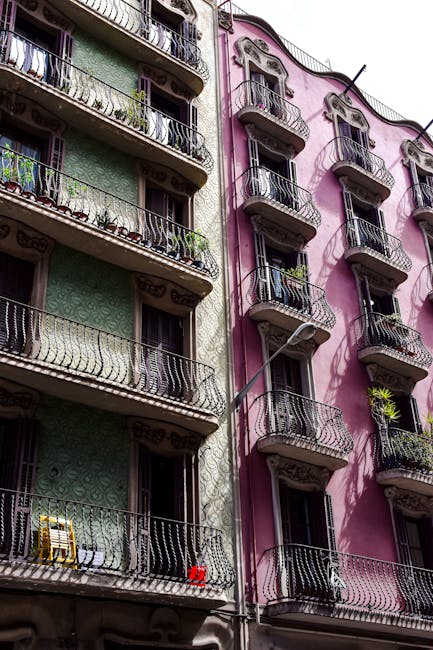
The Eixample neighbourhood around La Pedrera is packed with beautiful building facades. After your visit, just walk. No plan needed. Look up at every corner and you’ll see ornate balconies, mosaic tiles, and iron railings. My kids started rating the buildings out of ten. The one with the dragon gargoyle on Carrer de Mallorca got a unanimous ten from all three.

The rooftop in wind. La Pedrera’s rooftop is exposed. On windy days it can be genuinely blustery up there. Bring a jacket even in summer. My daughter’s hat flew off and we spent five minutes chasing it between chimneys. A funny story now. Less funny at the time.
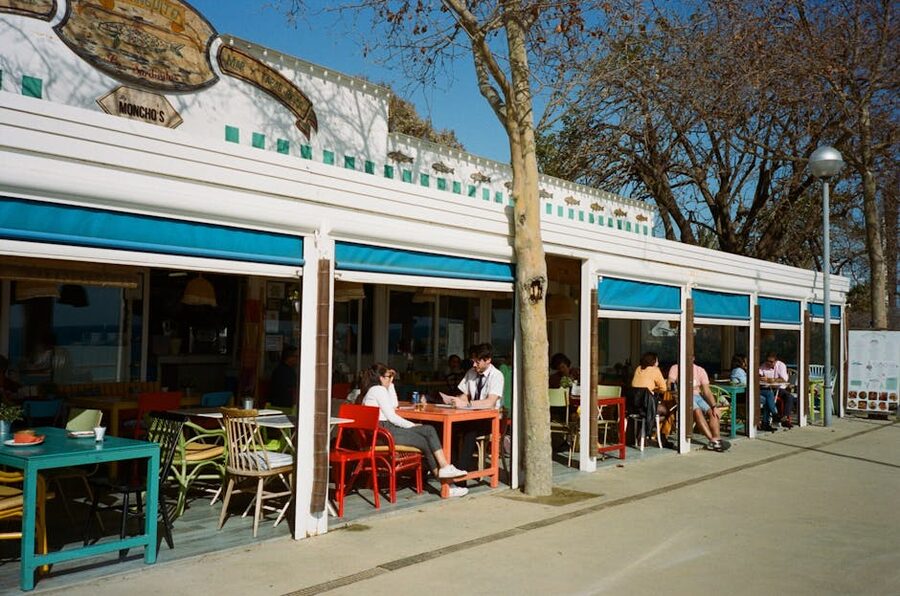
Outdoor cafe terrace on a Barcelona street with diners
Cafe Cosmo on Carrer d’Enric Granados is our family favourite for a post-La-Pedrera break. It’s a 5-minute walk, the terrace is shaded, and they do good hot chocolate and reasonable pastries. The tourist cafes on Passeig de Gracia itself are overpriced — one block either side and prices drop by half. This is a Barcelona survival tip for every family.

Combine with Casa Batllo. Both buildings are on Passeig de Gracia, 400 metres apart. If you’re doing both in one day, start with whichever one opens first, then walk to the other. Allow a cafe break in between — two Gaudi houses back-to-back without a snack stop is too much for anyone under 10.

A Bit of History
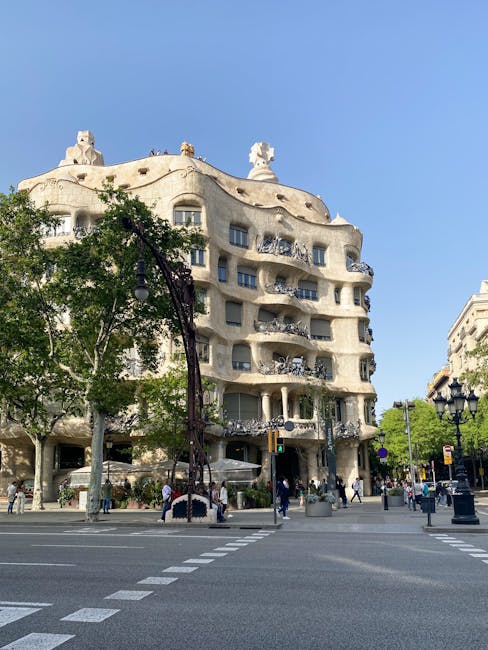
La Pedrera building illuminated at night in Barcelona
La Pedrera at night is worth seeing even if you don’t do the night experience. Walk past after dinner and the facade is lit up in soft golden light. The stone waves look even more dramatic after dark. Free to admire from the street. We did this on our last evening in Barcelona and the kids stood there open-mouthed. A fitting goodbye to Gaudi’s city.

La Pedrera was built between 1906 and 1912 as a luxury apartment building. Pere Mila and his wife Roser commissioned Gaudi to design their dream home on Barcelona’s most fashionable boulevard. What they got was the most controversial building in the city.

The locals hated it. They called it “La Pedrera” — the stone quarry — because they thought the wavy facade looked like a lump of unfinished rock. Cartoonists drew it as a parking garage for airships. The city fined Mila for building something that didn’t conform to regulations. Gaudi didn’t care.

The building was ahead of its time in ways that go beyond appearance. It was the first building in Barcelona with an underground parking garage. Each apartment had underfloor heating. The facade is self-supporting, which means the interior walls can be moved — every apartment has a different layout. For 1910, this was radical engineering.
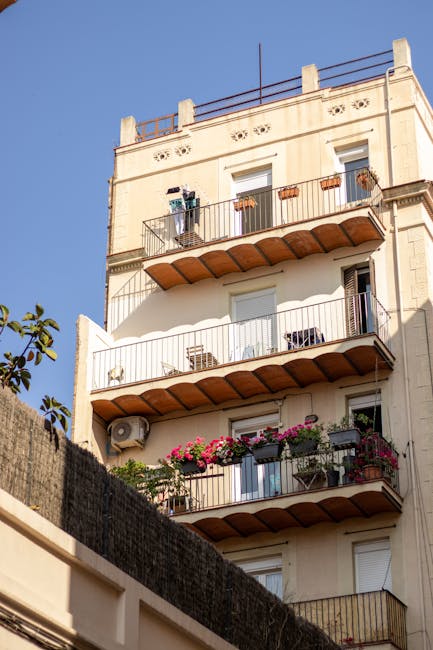
Barcelona building balcony decorated with flowers
Barcelona’s Eixample balconies are decorated differently on every building. La Pedrera’s iron balconies were mocked when they were new — critics said they looked like tangled kelp or old rope. Today they’re considered masterpieces of decorative ironwork. Gaudi never got to enjoy the praise. He was already consumed by Sagrada Familia by the time opinions shifted.

Tell your kids the building was originally hated. They’ll find it funny that something they think is amazing was once considered ugly. It’s a good lesson about art, taste, and the fact that being different isn’t always appreciated in the moment.

Getting There
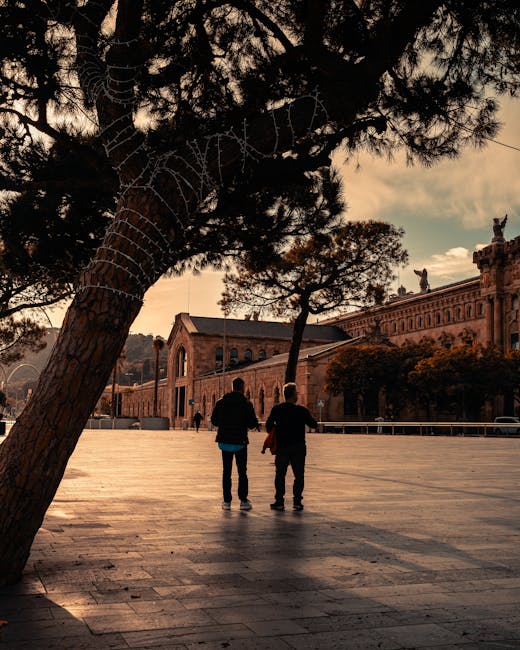
Family walking through Barcelona streets at sunset
The walk from Sagrada Familia to La Pedrera takes about 25 minutes and passes through the heart of the Eixample grid. It’s flat, shaded, and full of interesting buildings. We did it with a buggy and two walking children and nobody complained — though the ice cream stop halfway helped. If your legs are tired, it’s three Metro stops on the L5 line.
Barcelona Metro underground station platform
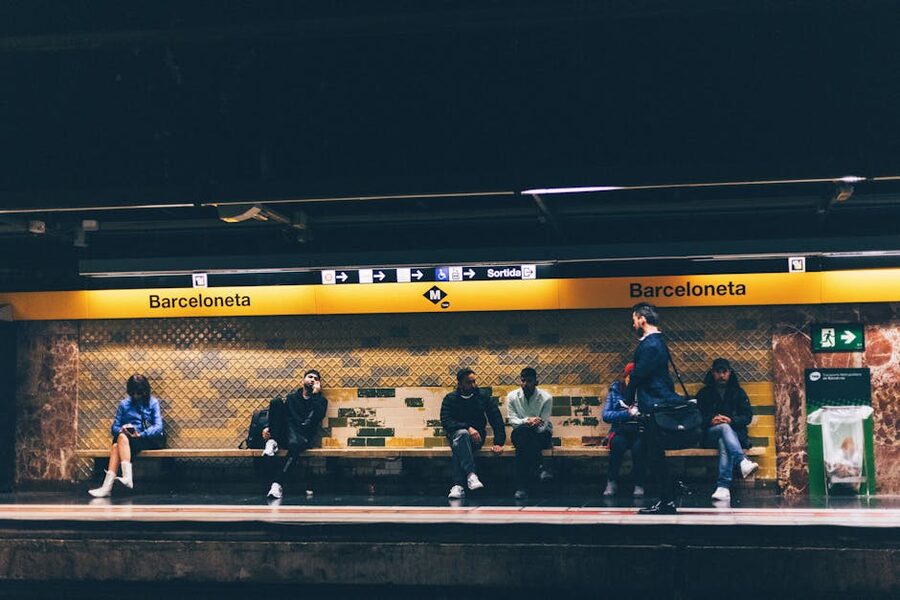
Diagonal station is steps from La Pedrera’s entrance. Three Metro lines converge here (L3, L5, and FGC trains) so you can reach it from almost anywhere in Barcelona without changing. With kids, the Metro is always faster and less stressful than trying to navigate surface buses. Buy a T-Casual card for 10 trips — works out much cheaper than single tickets.

Diagonal Metro station (L3, L5) is the closest, about a 3-minute walk. Passeig de Gracia station (L2, L3, L4) is also close, about 5 minutes on foot heading north.

If you’re walking from Casa Batllo, it’s 400 metres north along Passeig de Gracia. About 5 minutes at a dawdling-with-children pace.

The Hop-On Hop-Off bus stops right outside. Handy if you’re using it as your main transport for the day.

More Barcelona Family Guides
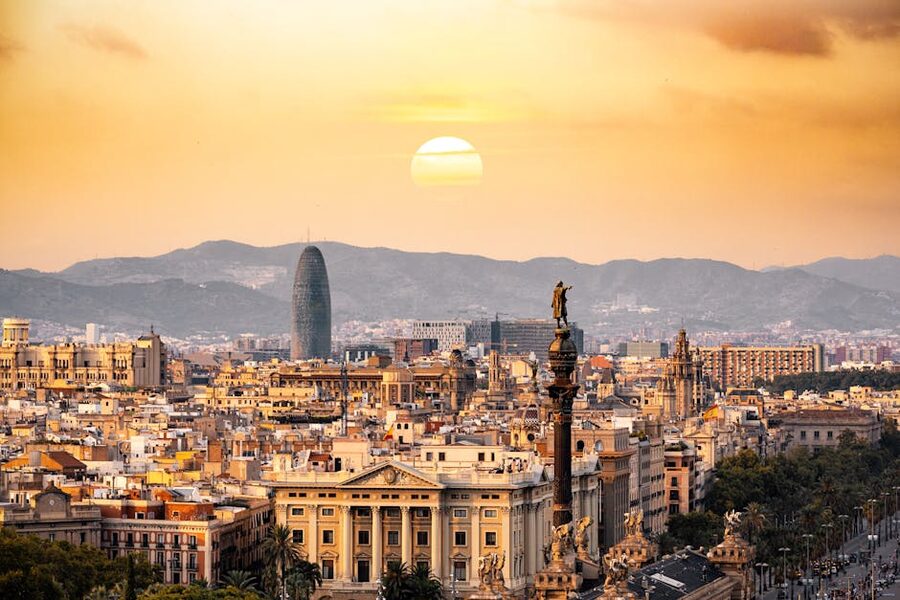
Barcelona skyline at sunset with city lights and mountains
Barcelona is one of those cities that gets better every time you visit with kids. Each trip we discover something new — a hidden playground, a quiet beach, a gelateria that does flavours we can’t get at home. The Gaudi buildings are the headline acts but the real magic is in the spaces between them.

If La Pedrera’s warrior chimneys captured your family’s imagination, Sagrada Familia with kids is Gaudi’s ultimate achievement — the interior will make your children forget every church they’ve ever seen. Casa Batllo with children is the obvious comparison piece and the augmented reality audioguide makes it more interactive for younger kids. Park Guell for families takes all that Gaudi magic outdoors, with room to run and mosaics to hunt. Together, these four make up the complete Gaudi family trail through Barcelona.